


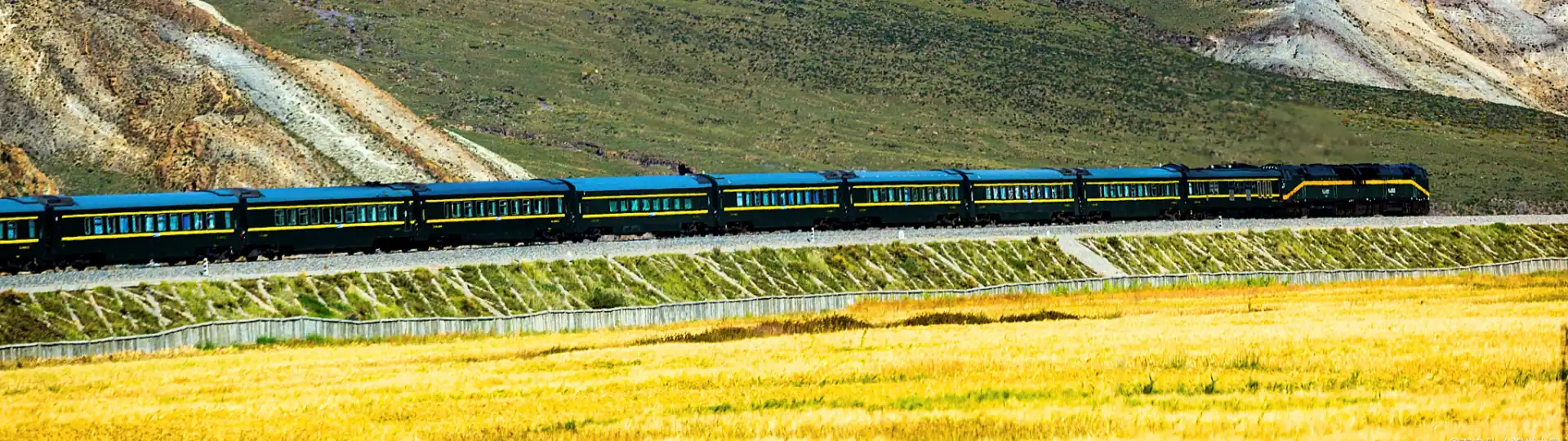
Are you expecting an unforgettable travel from Shanghai to Tibet? Recently, more and more people are planning a trip on this route for being captivated by the unique charm and breathtaking scenery of both destinations. If you’re now searching for the detailed information about how to travel between the the two places, then confidently stay, you’re just at the right page.
In this article, you can find everything you need to know about the Shanghai to Tibet flight and Shanghai to Tibet train, including travel time, distance, costs, required permits, and expert tips to plan the perfect Shanghai Tibet tour. From modern skylines to ancient monasteries, be ready, your adventure to the Roof of the World starts here.
Content Preview
- Why Travel from Shanghai to Tibet?
- Shanghai to Tibet Distance and Travel Time
- Option 1 – Taking a Flight from Shanghai to Tibet
- Option 2 – Taking a Scenic Train from Shanghai to Tibet
- Essential Travel Tips for Your Trip from Shanghai to Tibet
- How to Travel from Shanghai to Tibet to Kathmandu (Nepal)
- Recommended Shanghai to Tibet Itinerary
- FAQs about Traveling from Shanghai to Tibet
- Plan Your Shanghai–Tibet Tour with Us
Why Travel from Shanghai to Tibet?
From China’s Urban Pulse to the Roof of the World
Traveling from Shanghai to Tibet is taking a way through remarkably different atmosphere, scenery, and cultural depth. Along the way, you’ll see the city lights that never die in China’s most modern and energetic city gradually fades into the clear sky view above Tibetan Buddhism, dramatic Himalayan landscapes, and centuries-old traditions. Such experience makes this route one of the most memorable and soul-stirring travel experiences in China.
Shanghai: A Popular Gateway for Tibet Tours
Shanghai is the country’s largest metropolis and an international aviation hub. Thanks to the frequent international flights to/from Shanghai, many international visitors choose to start their China tours from Shanghai. Tibet tours from Shanghai is no exception.
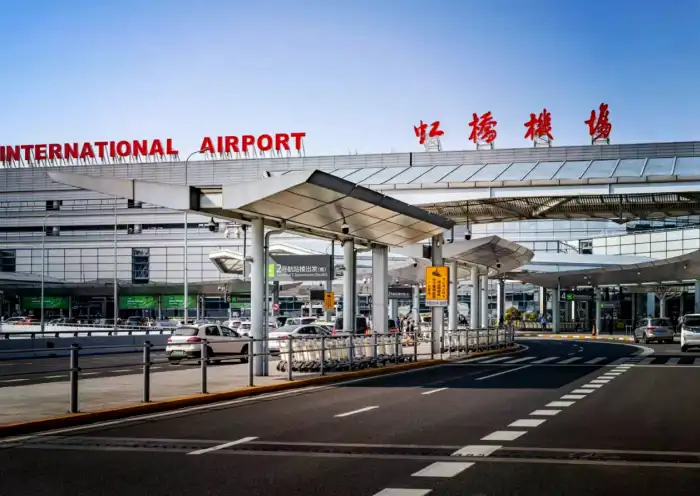
The city has some world-class transportation infrastructure, including Pudong and Hongqiao airports and an extensive high-speed rail network, so that it can provide unmatched convenience for domestic and international tourists alike. Many visitors would also enjoy a few days exploring the city’s rich culture, cuisine, and iconic skyline before heading west.


Transport Options Between Shanghai and Tibet: Flight, Train, or Road?
Flight and train are the main transplantation that can reach Tibet from Shanghai. Flights are definitely the fastest, while trains offer a scenic, but slower-paced journey across China’s interior and the Tibetan Plateau. Although technically possible, traveling by long-distance bus is not recommended for international visitors due to so many inconvenience like the excessive duration, limited comfort, and permit-related complications along the way.
Shanghai to Tibet Distance and Travel Time
The distance from Shanghai to Lhasa (the capital of Tibet) is approximately 4,300 kilometers (2,672 miles) by rail and about 3,000 kilometers (1,864 miles) by air. And this has created a sharp difference between the travel time: a direct Shanghai to Tibet flight takes around 6 to 7 hours, and the train journey would take roughly 47–50 hours. While both have their advantages, your choice should be depended on your own travel preferences, time constraints, and altitude acclimatization needs.
Option 1 – Taking a Flight from Shanghai to Tibet
Flying from Shanghai to Tibet is fast and convenient. And this way is ideal for travelers who have a tight schedule or those who don’t like long-distance train journeys. With both direct and connecting flights available, Shanghai to Tibet flight options are capable to fulfill the needs of visitors with all kinds budgets and schedules.
Direct Flights from Shanghai to Lhasa
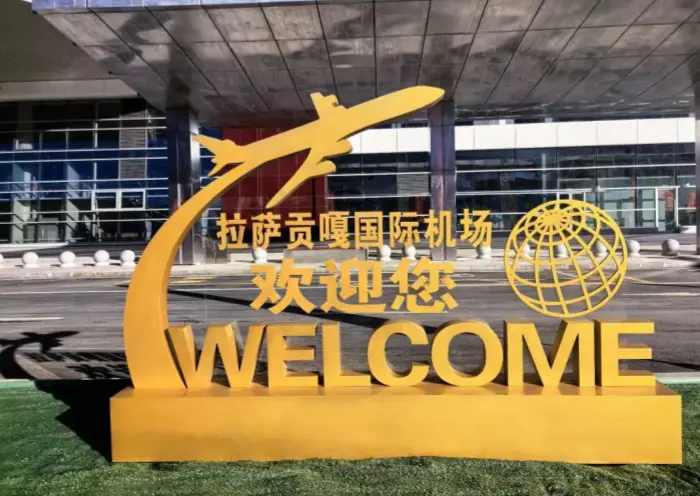
There are only two direct flights operating from Shanghai to Lhasa Gonggar Airport, with stopovers at either Xi’an or Chengdu. These two flights are primarily operated by major Chinese airlines: China Eastern Airlines and Tibet Airlines. Here are some detailed information of them:.
Airline |
Departure Airport |
Arrival Airport |
Flight Time |
Departure Time |
Arrival Time |
Approx. Price (USD) |
Stopover City |
Tibet Airlines |
Pudong (PVG) |
Lhasa Gonggar (LXA) |
6h 45m |
16:45 |
23:30 |
$300–$470 |
Chengdu
1h 35m |
China Eastern |
Hongqiao (SHA) |
Lhasa Gonggar (LXA) |
7h 40m |
06:45 |
14:25 |
$300–$470 |
Xi’an
1h 20m |
Indirect Flights with Stopovers
If the schedule of direct flights cannot meet your preference, there are still multiple indirect flight options which would transfer in cities such as Chengdu, Xi’an, or Chongqing. Here are reliable alternatives:
Airline |
Departure Airport |
Arrival Airport |
Flight Time |
Departure Time |
Arrival Time |
Approx. Price (USD) |
Layover City |
Layover time |
China Eastern / Air China |
Hongqiao (SHA) |
Lhasa Gonggar (LXA) |
6h 50m |
10:20 |
17:10 |
$260–$470 |
Chongqing |
1h 30m |
Sichuan Airlines |
Pudong (PVG) |
Lhasa Gonggar (LXA) |
7h 55m |
10:05 |
18:00 |
$140–$1220 |
Chengdu |
2h 15m |
Air China / Tibet Airlines |
Pudong (PVG) |
Lhasa Gonggar (LXA) |
8h |
15:30 |
23:30 |
$205–$465 |
Chengdu |
2h 15m |
Tibet Airlines |
Hongqiao (SHA) |
Lhasa Gonggar (LXA) |
8h 20m |
14:10 |
22:30 |
$250–$1500 |
Chengdu |
3h |
Pros and Cons of Direct Flights and Indirect Flights
Direct flights are always faster and more convenient, as it only takes about 6 to 7 hours for a trip. Moreover, the direct options can also reduce the risk of delays and offer passengers a smoother travel experience. However, since there are only two plans a day, seats will accordingly be more limited and expensive, especially during peak seasons like summer holiday. So that remember to book early and prepare for higher costs for a trip
Indirect flights offer more flexible departure options and the ticket prices are often cheaper. They can be a good choice when direct flights are full, overpriced or just cannot meet your schedule. On the downside, indirect flights take longer total travel time, also with a relatively higher chance of facing delays and rush during transfers.
Return Flights: Lhasa to Shanghai
Return flight from Tibet to Shanghai options mirror the outbound routes, even the departure and arrival times are similar. Besides, indirect flights via cities like Chengdu and Chongqing are also available with similar durations.
Travelers are advised to leave at least one buffer day in Lhasa before flying back to accommodate potential weather-related delays at high altitude.
When to Book Your Flight
Flight tickets for trips between Shanghai and Tibet will be in high demand from May to October. During this peak travel season for visiting Tibet, round-trip fares would typically range from $450 to $500 (economic class). Indeed, the costs are largely depended on whether you choose direct or indirect flights and how early do you start booking.
To secure the best rates and preferred schedule, it’s recommended to book your Shanghai to Tibet flight at least 4–6 weeks in advance. However, things can be overwhelming and it’s also a great idea to consider working with a licensed Tibet travel agency that can bundle flights with permits and guided tour.
Recommended Shanghai and Tibet Tours by Flight:
7 Days Classic Shanghai and Tibet Tour with Yamdrok Lake
6 Days Shanghai – Tibet Tour by Flight
Option 2 – Taking a Scenic Train from Shanghai to Tibet
The train journey not only offers a more affordable alternative for budget-sensitive travelers, but most importantly, it also provides passengers a slower and more scenic ascent to high altitude area, allow them to gradually adapt to Tibet’s elevation, which is helpful in minimizing the risk of altitude sickness.
Shanghai to Lhasa via Qinghai-Tibet Railway
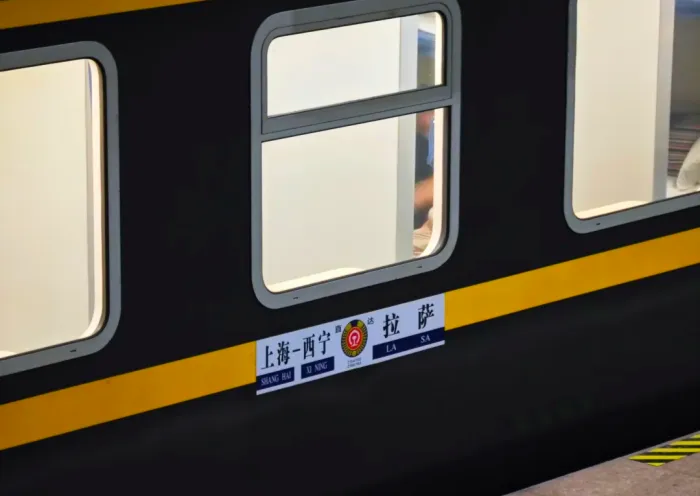
Travel from Shanghai to Tibet will offer one of the most breathtaking overland journeys in Asia. Departing from Shanghai Railway Station, the train travels through over 4,300 km of wind and cloud reach Lhasa, the city of sunlight.
Passengers will get approximately 46–48 hours to immerse themselves in the wonderful scenery while passing through diverse landscapes, including vast plains, high mountain passes, and the Tibetan Plateau. As part of the legendary Qinghai-Tibet Railway, it’s the world’s highest railway line and definitely an unforgettable way to lead you to the roof of the world.
There is usually one direct daily train from Shanghai to Lhasa (Z164), departing in the evening (18:33) and arriving two days later in the afternoon (15:30). However, since the timetable may shift slightly based on the season and the seats are really limited for all the time, it would be so difficult to book the ticket. As a result, it is recommended to book through a travel agency to secure your place and get up-to-date information.
Soft Sleeper vs Hard Sleeper Classes
The train offers different classes of service, but for getting a comfortable long-distance journey, soft sleeper is your best choice. These cabins are private rooms coming with four beds and bedding. Hard sleepers are more budget-friendly. They are compartments with six bunks in an open space with limited privacy. However, no matter which one you choose, there’s no need to worry about the basic facilities, both of them will give you access to toilets, hot water, and a dining car.
Soft sleeper tickets sell out quickly during holidays or peak seasons, so it’s best to reserve as early as possible—especially if traveling in a group or with family.
Scenery Along the Route
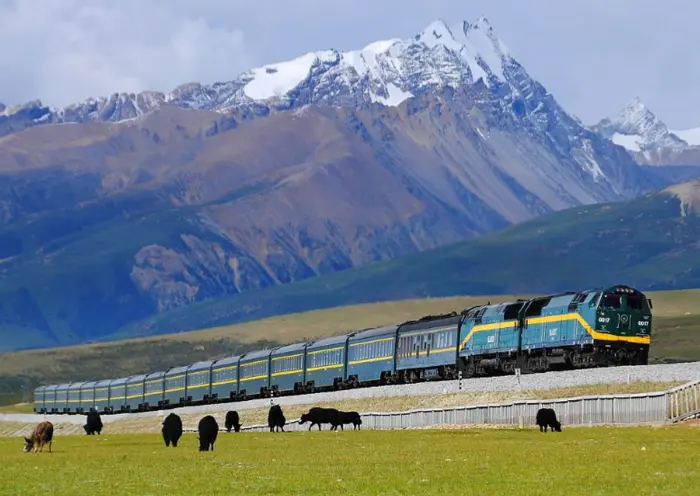
One highlight of the Shanghai to Tibet tour that you cannot miss is the stunning scenery. After entering the Tibetan Plateau, the train would pass Qinghai Lake—China’s largest saltwater lake known for its surreal blue color. Further west, it then cross the Tanggula Mountains, where the railway reaches its highest elevation at 5,072 meters. Watching the sunrise or sunset over these remote, untouched landscapes is one of the best parts of the journey and it would likely to be one of the best experience you’ll ever have in your life.
What to Expect on the Tibet Train
Altitude can affect a lot of travelers, especially after the train passing Golmud. To make passengers feel better, the train is equipped with an oxygen supply system that releases oxygen into the cabins to ensure everyone’s breathing comfortably. Additional oxygen ports are also available at each bed. It’s a good idea to avoid any strenuous movement, and remember to stay hydrated to ease the effects brought high altitude.
Meals are available in the dining car, though they’re all basic Chinese dishes — instant noodles, food and snacks that bought at departure cities are popular alternatives. Toilets are shared, with basic hygiene maintained by staff. Though not luxurious, the train offers a clean and functional experience for this two-day trip.
When to Book Your Tibet Train
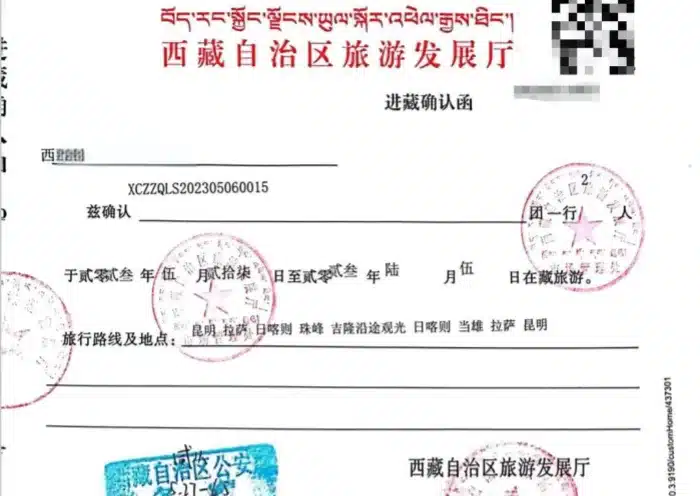
Shanghai to Tibet train tickets, just like flight tickets, are in high demand year-round, especially in summer and around Chinese holidays. Foreign travelers must also present a Tibet Travel Permit to board, which is another reason for you to work with a travel agency. Agencies can help you secure the permit, book the ticket, and even assist with sleeper class preferences.
For more information related to Tibet train tour, please see:
Shanghai-Lhasa Train Travel Guide
Recommended Shanghai Tibet Tour:
13 Days Beijing – Xi’an – Lhasa – Shanghai Tour
Essential Travel Tips for Your Trip from Shanghai to Tibet
1. Permits & Documentation
It is compulsory for foreign travelers to get a permit to visit Tibet (Tibet Travel Permit). And this document can only be applied and arranged through a registered tour operator in China. If you want to go to some sensitive places like Everest Base Camp, you’ll also need additional area-specific permits. Make sure to apply at least 2–3 weeks in advance.
2. Altitude Sickness Prevention
Lhasa sits at 3,650 meters (11,975 ft), so it’s important to spend 1–2 days acclimatizing before heading to higher altitudes. Some travelers take Diamox to ease symptoms—ask your doctor before using it. Stay hydrated, rest well, and avoid alcohol in the first few days.
Related reading: How to Avoid the High Altitude Sickness in Tibet?

3. Best Time to Visit
The best months to travel to Tibet are from May to October, when the weather is relatively mild and skies are becoming clearer. No wonder, this is the perfect time for sightseeing and photography. Winter (Nov–Feb) sees fewer tourists, but be prepared for harsh cold and limited accessibility in some areas.
For more winter tour information, please see: Things to Know before Visiting Tibet in Winter
How to Travel from Shanghai to Tibet to Kathmandu (Nepal)
Popular Overland Route (Lhasa to Kathmandu via Gyirong Port)
Traveling from Shanghai to Kathmandu via Tibet offers one of the most spectacular land journeys in Asia. You’ll begin in Shanghai, take a flight or train to Lhasa (as introduced above), and then continue westward overland through the dramatic Himalayan landscapes, where you’ll pass through Gyantse, Shigatse, and Everest Base Camp, before exiting China at Gyirong Port, and entering Nepal.
Traveling along this route combines cultural immersion, exploration of historical landmarks, natural wonders, and the unmatched experience of traveling from the “Roof of the World” into the lush valleys of Nepal:
Lhasa – Gyantse – Shigatse – Gyirong Port – Kathmandu (Route Duration: 7–10 days from Lhasa to Kathmandu)
Top Attractions En Route:
- Yamdrok Lake – Turquoise alpine lake which is sacred to Tibetans
- Karola Glacier – A photogenic glacier quite close to the highway
- Tashilhunpo Monastery – Seat of the Panchen Lama
- Everest Base Camp (optional) – Getting unforgettable sunrise views of the world’s highest peak
- Gyirong Valley – Lush Himalayan valley at the China-Nepal border
This overland route offers a rich mixed experience of exploring nature, spirituality, and adventure, a tour ideal for culture lovers and scenery seekers.
Border Crossing at Gyirong Port: What to Know
- The port will open Year-Round, but can close temporarily during extreme weather, some holidays and some other conditions.
- Nepal Visa on Arrival is available at the Gyirong checkpoint (bring passport photo + cash)
- Prepare for altitude variations—Gyirong lies at just 1,800m, which helps with acclimatization after the Everest leg
- Allow at least 2 buffer days in Lhasa for processing permits and adjusting to altitude
Recommended Tibet and Kathmandu Tours:
8 Days Lhasa to Kathmandu Overland Tour
8 Days Tibet Tour from Kathmandu
Recommended Shanghai to Tibet Itinerary
Itinerary Without Everest Base Camp (7 Days)
- Day 1: Take a flight or train from Shanghai to Lhasa, and take a rest for acclimatization.
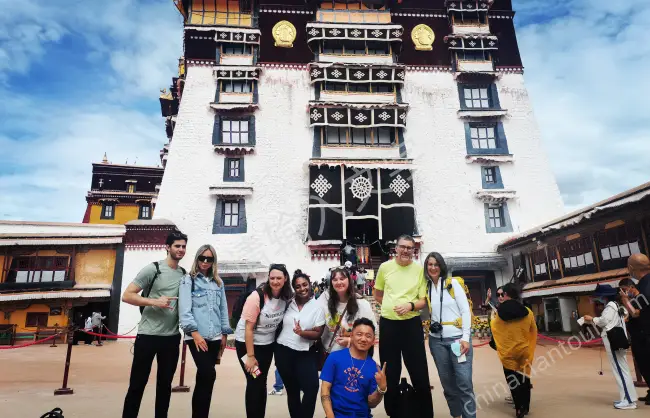
- Day 2: Visit the iconic Potala Palace and stroll around Barkhor Street.
- Day 3: Explore Jokhang Temple and enjoy a traditional Tibetan teahouse experience.
- Day 4: Take a scenic day trip to Yamdrok Lake, one of the most famous Tibet’s holy lakes.
- Day 5: Visit Ganden Monastery on the outskirts of Lhasa, and get a panoramic views of the valley.
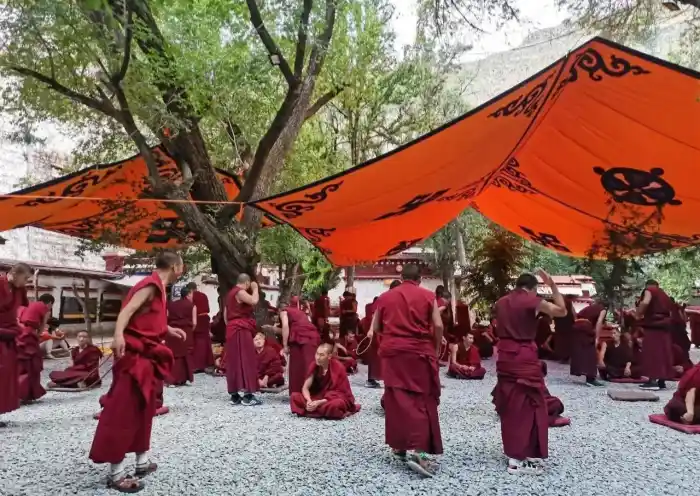
- Day 6: Free time for shopping or optional visit to Sera Monastery to watch debating monks.
- Day 7: Depart Lhasa and return to Shanghai.
For more information please see: 7 Days Classic Shanghai and Tibet Tour with Yamdrok Lake

Itinerary With Everest Base Camp (10–11 Days)
- Day 1: Fly or take the train from Shanghai to Lhasa; acclimatize upon arrival.
- Day 2: Visit Potala Palace and Jokhang Temple, two of Tibet’s most sacred sites.
- Day 3: Walk Barkhor Street and explore Sera Monastery’s famous monk debates.
- Day 4: Drive to Gyantse via Yamdrok Lake and visit Kumbum Stupa.
- Day 5: Continue to Shigatse and explore Tashilhunpo Monastery.
- Day 6: Travel through mountain passes to reach and visit Rongbuk Monastery.
- Day 7: Visit Everest Base Camp in the morning, where you can enjoy a stunning sunrise view that is unforgettable and astonishing.
- Day 8: Drive back to Shigatse, taking in wonderful views of the landscapes along the way.
- Day 9: Return to Lhasa and take a rest.
- Day 10–11: Spend a free day in Lhasa and transfer to airport/train station to return to Shanghai.
For more information please see: 8 Days Lhasa to Everest Base Tour
FAQs about Traveling from Shanghai to Tibet
What is the best way to travel from Shanghai to Tibet?
What makes the “best way” is largely depending on your personal travel style. Taking a flight is fast and convenient (around 6 hours) but more expensive, while the train offers breathtaking scenery and gradual altitude acclimatization, though it takes over 40 hours.
However, if you want both of these experiences, you can choose a combination just like some other travelers, for example, you can fly to Xining first, and then boarding the Qinghai–Tibet Railway for the most scenic part.
Can foreigners travel independently from Shanghai to Tibet?
No. Independent travel is not allowed for foreigners in Tibet. All non-Chinese passport holders, including expats with a valid Chinese visa or residence permit, must book a Tibet tour with a licensed travel agency. You’ll need a Tibet Travel Permit, which can only be arranged by tour operator on your behalf.
How to get a Tibet Travel Permit from Shanghai?
You don’t need to apply in person. Simply send your passport and Chinese visa/residence permit copy to your tour operator at least 15–20 days before departure, and they handle it for you.
What documents do I need to travel from Shanghai to Tibet?
You’ll need:
- A valid passport
- A valid Chinese visa
- A Tibet Travel Permit (pre-arranged by your tour agency)
- Additional permits (e.g., Alien’s Travel Permit or Military Permit) if traveling to remote areas like EBC or Mt. Kailash
And for more tips for traveling to Tibet, please have look on: Latest FAQs and Tips for Traveling to Tibet in 2025
Plan Your Shanghai–Tibet Tour with Us
Whether you’re a solo traveler, a couple, or a group of friends and family, we offer both private and small group tours from Shanghai to Tibet, which can be fully tailored to your schedule and interests. Our experienced team will handle all the logistics, including arrange the Tibet Travel Permit application, transportation, accommodation, and guide services, so you can travel fully worry-free and just focus on enjoy your time. Contact Us to Start Planning! Let us help you create your once-in-a-lifetime China tour from the modern east to the sacred Roof of the World.