




Terracotta Warriors and Street Dance
Written by Clementine |
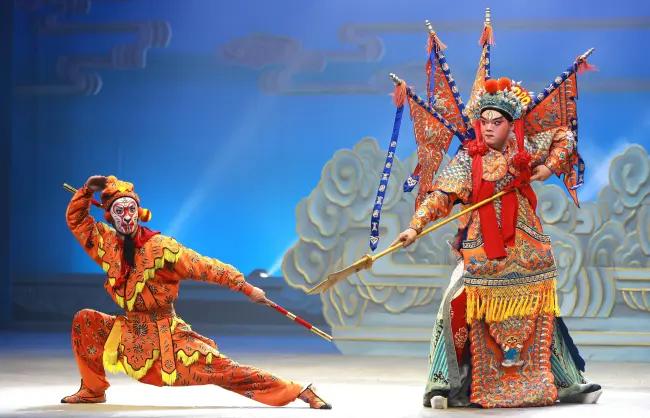
Qinqiang Opera (also called Shaanxi Opera, or Qin Opera) is traditional opera in northwest China, and is one of the national intangible cultural heritages. Mr. Jia Pingwa, a famous Chinese writer, said in his novel Abandoned Capital, “eight hundred li of Qinchuan land, 30 million people roar Qinqiang.” He also mentioned that Qinqiang Opera is a wonderful work in the Chinese opera garden.
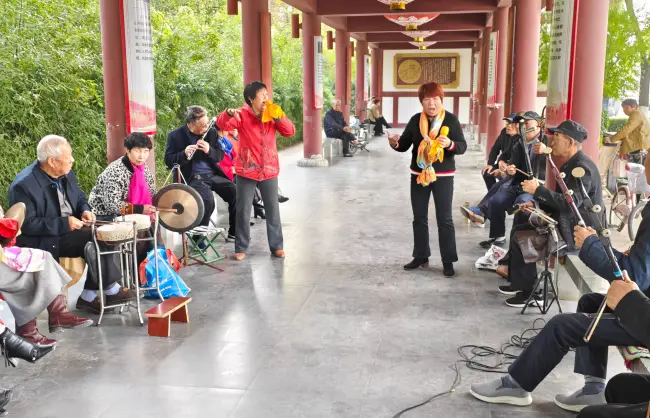
In Xi’an, there are many people who love Qinqiang Opera. And you can go to professional theaters, tea-houses, or some morning markets and parks to enjoy Qinqiang Opera during your Xi’an travel.
History of Qinqiang Opera
Qinqiang Opera is one of the oldest operas of the Han Chinese. It was originated in the Western Zhou Dynasty and matured in Qin Dynasty. In ancient times, Shaanxi and Gansu belonged to the State of Qin, so this opera was called “Qin Opera”. Qinqiang Opera is also called Bangzi Opera because it is often accompanied by jujube wooden clapper when performing in the early stage.
According to legend, Emperor Xuanzong of Tang Dynasty, once established a Liyuan (pear orchard) which performed both court music and folk songs. Li Guinian, the musician in Liyuan, was originally a Shaanxi folk artist. His “King of Qin Breaking Through the Enemy Array Music” is called King Qin Opera, which is probably the earliest Qinqiang Opera music that can be tested in history.
Qin Opera was flourished in the period of Qing Dynasty. During the reign of Emperor Qianlong (1736-1795), Qinqiang Opera was at its peak. At that time, there were many Qinqiang Opera troupes in many places of China, and altogether 36 troupes in Xi’an exclusively.
Features of Qinqiang Opera
Qinqiang Opera can be called “the forefather of all kinds of operas”. It characterizes in many contents of the performance, such as language, singing tune, music, roles, unique techniques, instruments, dress-up and costumes.
Qinqiang Opera is quite different from the mild and euphemistic Shaoxing Opera, Kunqu Opera and other southern China operas. Its style is rough, loud and passionate, and requires singing with a real voice, so that it is often called “Roaring Qinqiang”.
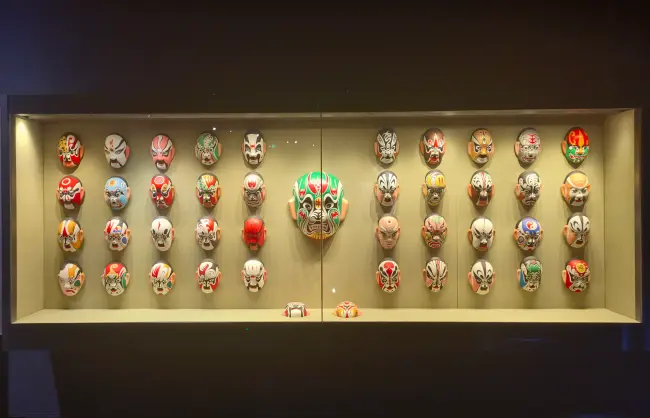
One of the characteristics of Qin Opera is that its singing and chanting are all based on the Shaanxi Guanzhong dialect, and also incorporated into the language of some poems in the Han and Tang dynasties. The performance skills are simple, rough, profound, exaggerated, full of life flavor, and rigorous procedures. The musical accompaniment of Qinqiang Opera is mainly string music and suona tunes. Qinqiang Opera mask (facial makeup) painting style is classical and unique with complete system. Together with Peking Opera facial makeup and Sichuan Opera facial makeup, they are the three major facial makeup systems of China.
As singer Zheng Jun said, “in China, there is no place where the music is as direct, bold, desolate, and shouting as Qinqiang Opera in Shaanxi. The music in other places is more implicit.” In Xi’an, a fertile land where Qinqiang Opera was once bred, rock and roll music is also sprouting and growing vigorously. Perhaps Shaanxi Qinqiang Opera is the ancestral rock and roll.
Xian Yisushe Grand Theater: The Palace of Qinqiang Opera Art
Founded by Sun Renyu in 1912, Xian Yisushe Grand Theater (易俗社) is recognized as one of the three oldest drama clubs in the world. The other two are Moscow Grand Theater and British Royal Theater.
On the eve of the Xian Incident (1936), in order to puzzle senior officials who followed Chiang kai-shek, Zhang Xueliang and Yang Hucheng arranged two Qinqiang Opera performances in Yisushe. Thus, the theater once played an important role in China’s revolutionary history.
There is also a Qinqiang Opera Art Museum in the Yisushe Cultural Street which showcases wonderful Qin Opera images. In your leisure time, sit in Yisushe Theater to listen to the strong and unique melody of northwest China, which is quite a special cultural experience and interesting thing to do in Xian.
- Address: No. 282, West 1st Road, Xincheng District, Xi’an City, Shaanxi Province
- Traffic: Takethe bus 4, 36, 707 or subway line 2, get off at Bell Tower Station, and walk 200 meters
Qinqiang Opera: A Novel Wrote by Jia Pingwa
Qinqiang Opera was first published in 2005. This novel is based on the Dihua Street, Jia Pingwa’s hometown. Through the evolution of a place called Qingfeng Street in the past 20 years and the life changes, grief and joy of all the people on Qinchuan land, it vividly shows the shocks brought to the countryside by the historical transformation of Chinese society.
Xi’an is not only one of the birthplaces of Qinqiang Opera, but also an important center for its inheritance and development. Welcome to start your Xi’an tours to feel the unique charm of Qinqiang Opera culture.
Recommended popular Xian Trips with Qinqian Opera:
You maybe also interested in:
- Kunqu Opera: Mother of All Chinese Operas
- Peking Opera (Beijing Opera): The Most Influential Opera in China


