

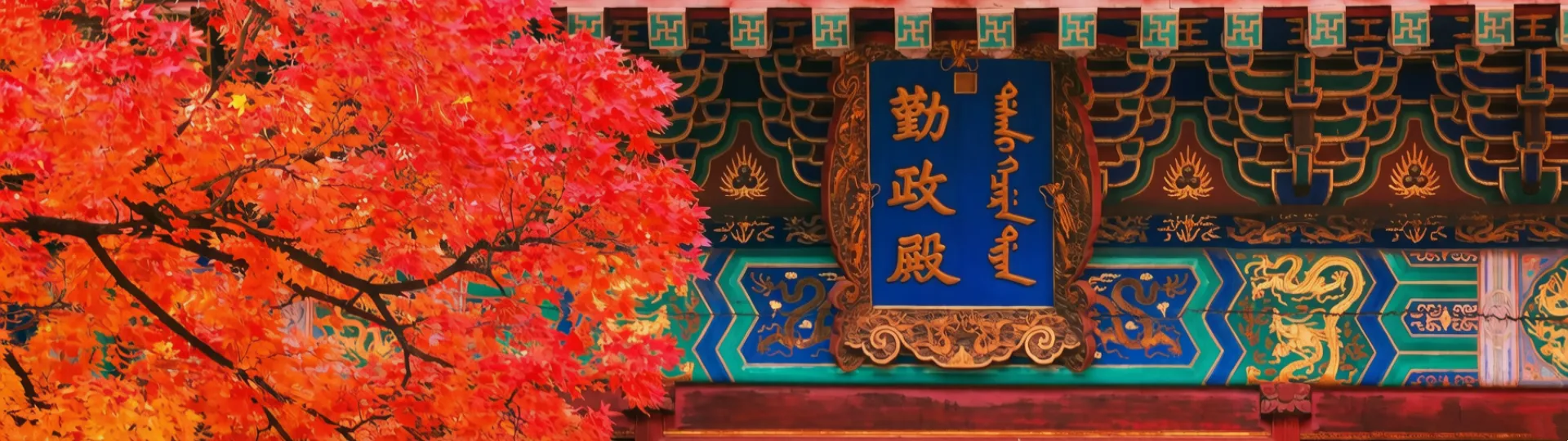
Nestled in Beijing, the Xiangshan Park (meaning Fragrant Hills Park in English) is an 800-year-old imperial garden and one of China’s most celebrated destinations for autumn foliage. It has always been a must-go-to for international visitors who would like to immerse themselves in Beijing’s autumn scenery.
The park is home to over 100,000 sumac and maple trees. Every autumn, the entire hillside turns into a breathtaking sea of crimson. Layer upon layer of red waves sweeping from the foot of the mountain all the way up would never cease to amaze the visitors.
The Red Leaf Festival, which was held every October and November, is one of Beijing’s biggest seasonal highlights. In 2025, the Red Leaf Festival achieved a legendary record by drawing over 850,000 leaf peepers.
Essential Travel Information:
- Location: No. 40 Maimai Street, Haidian District, Beijing
- Tickets:
Peak Season (Apr.1st– Nov.15th): 10 CNY/PPOff Season (Nov.16th-Mar.31st the next year): 5 CNY/PPBiyun Temple (Temple of Azure Clouds): 10 CNY/PP
- Opening hours:
Peak Season: 06:00-19:30(last entry at 18:30)Off Season: 06:00-19:00(last entry at 18:00)
- Time Needed: 2-4 hours
Content Preview
- Top 5 Spots & Best Times to Appreciate Red Foliage
- When to Visit for the Best Views?
- 3 Easy Routes for Reference
- How to Get to the Fragrant Hills Park
- Fun Facts about Fragrant Hills Park
- A Brief History of Fragrant Hills Park
- Plan a Beijing Trip with China Xi’an Tour
Top 5 Spots & Best Times to Appreciate Red Foliage
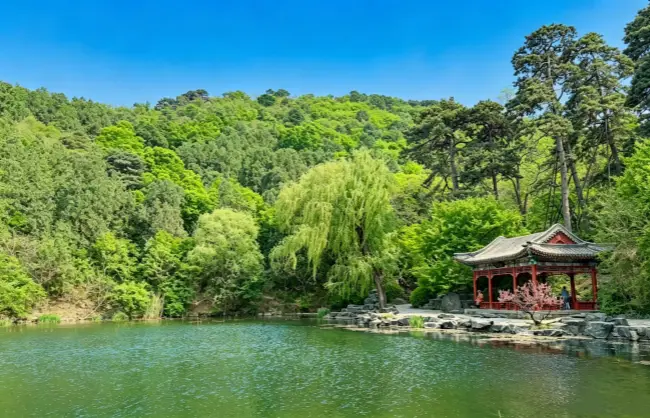
- Jingcui Lake (Best viewing: Oct 25 – Nov 9): It is only a 5-minute walk from the east gate. Surrounded by hills on three sides, with the lake mirroring the crimson foliage, it is a dream spot for photographers.
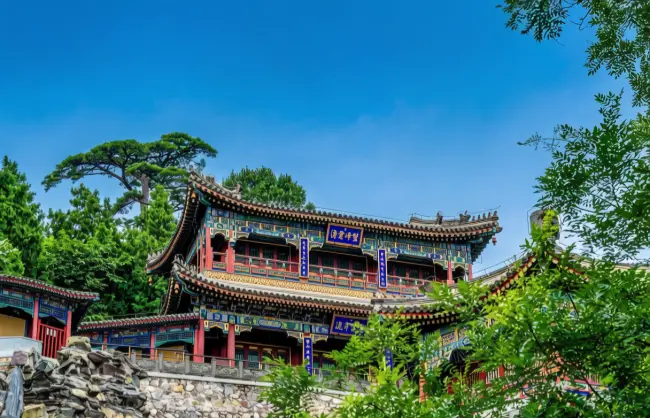
- Xiangshan Temple (Best viewing: Oct 18 – Nov 2): The grace of this millennia-old temple is well complemented by the glow of layers of red leaves. This is the right place for those who are fond of ancient architecture.
- Heshun Gate (Best viewing: Oct 25 – Nov 4): It is located halfway up the hill, adjacent to the red leaf forest. It is one of the few spots where you can reach out and feel the texture of the red leaves in your palm.
- Yuhua Gorge (Best viewing: Oct 18 – Nov 4): This most open and flat area in the park offers perfectly unobstructed views. You may take in the entire red-leaf valley spread out before you with ease.
- XiangWu Cave (Best viewing: Oct 15 – Nov 4): This hillside viewpoint is a hidden gem — quiet, uncrowded, and peaceful— where you can enjoy VIP view of Xiangshan’s autumn scenery.
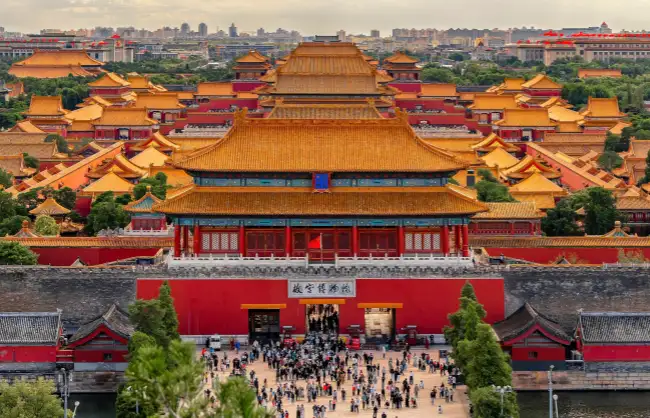
Experience Beijing's top imperial highlights on a 2-day layover tour visiting the Great Wall at Mutianyu, Forbidden City, Summer Palace, and Temple of Heaven.
Must-Visit Spots in the Park
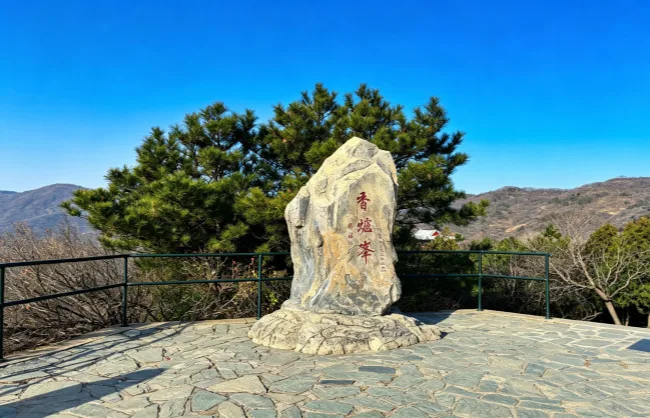
- Xianglu Peak (Incense Burner peak): It is the main peak and also Xiangshan’s highest point, with an altitude of 558 meters. Nicknamed as “Devil’s Despair”, the peak will reward you with extraordinary views over Beijing and the Western Hills.
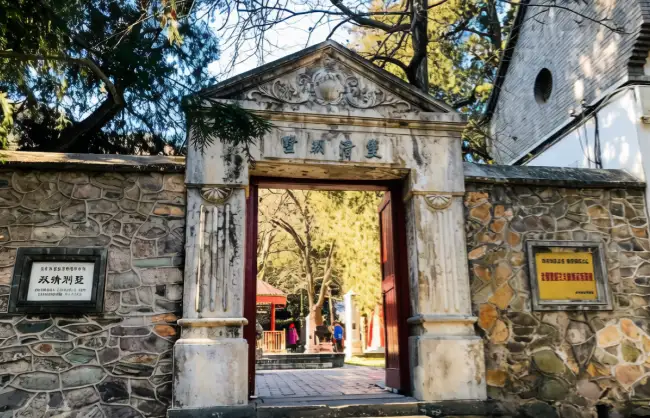
- Shuangqing Villa: “shuang” means “two” and “qing” refers to “clear spring water”. This villa is named after two natural springs. With deep cultural significance, this tranquil courtyard would be a must-visit for those who are curious about modern Chinese history.
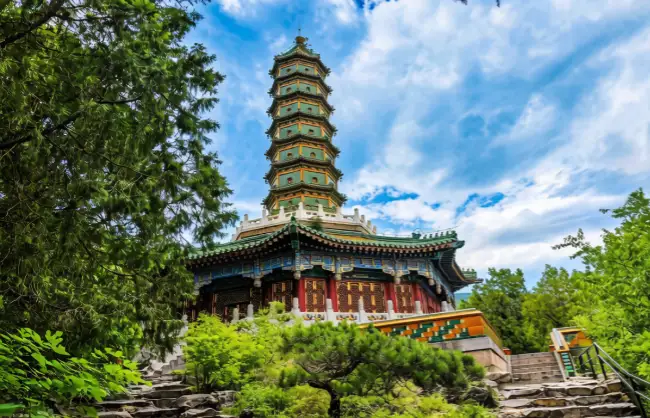
- Zhaomiao Temple: It is an imperial temple that gathers Han and Tibetan architectural styles. When the wind carries along the soft chime of the bell in the pagoda, the air is filled with a timeless sense of Zen calm.
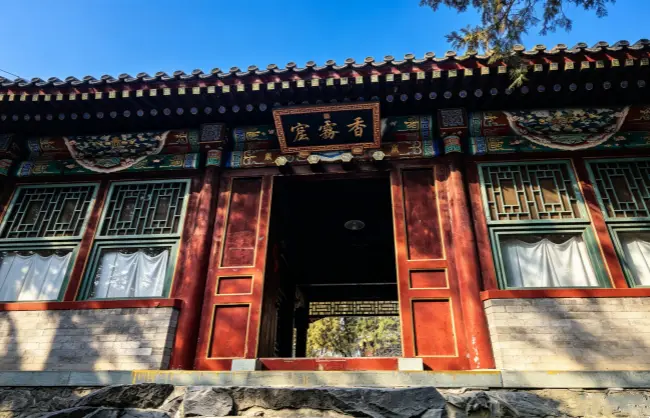
- Jianxin Studio: It is a delicate waterside courtyard tucked along the hiking trail. Being beautifully crafted and quietly charming, it is a perfect resort to pause, rest, and snap a few photos.
- Biyun Temple (Temple of Azure Clouds): This thousand-year-old Buddhist temple is renowned for its exquisite stone-carved Buddhist sculptures and the striking Diamond Throne Pagoda. It has gained great popularity among enthusiasts of ancient Chinese architecture.
When to Visit for the Best Views?
The answer is very straightforward: the Fragrant Hills look most stunning in autumn. Specifically, it is the red leaf season from late October to mid-November that transforms the park into a fairyland, when the hills are ablaze with sumac leaves. But don’t worry if you can’t make it in autumn, the park always has its “Seasonal Limited” throughout the year:
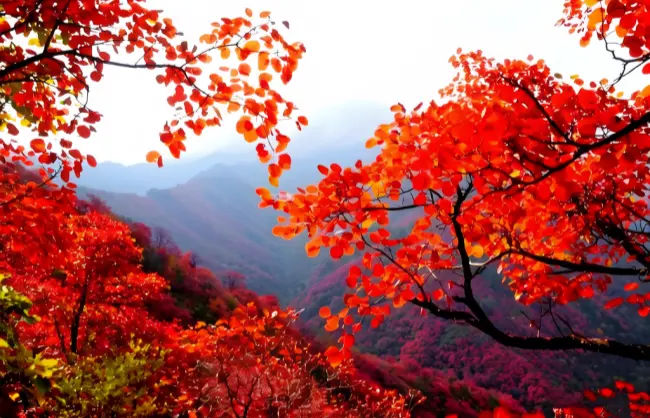
- Autumn (Mid-October to Early November)— Top Pick: The beauty of Xiangshan is at its peak. Red leaves blanket the entire hillside, making it an absolute must-visit on any Beijing itinerary. The only downside is that you may expect a sea of people in the sea of red leaves.
- Spring (March to May)— Spring Outing Destination: The wildflowers awaken the mountain from its hibernation in the crisp air and mild temperature. It would be a wonderful time to take a relaxed and refreshing walk through the park.
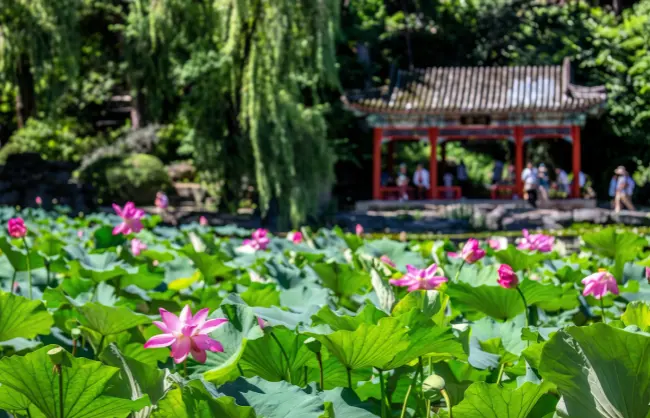
- Summer (June to August)— Natural Summer Retreat: The dense mountain forest keeps the temperature 3-5 ℃ cooler than downtown Beijing. It serves as Beijing’s natural air conditioner!
- Winter (December to February)— Hidden Gem for Snow Scenery: Crowds nearly vanish on weekdays, and all it needs is a fresh snowfall to transform the ancient temple and hills into a winter wonderland. “Snowy Western Hills on a Sunny Day” has been celebrated as one of the Eight Famous Scenes of Yanjing for centuries.
Note: January is generally not worth a special trip—no red leaves, no snow scenery, and the overall views are not strikingly fantastic.
Related reading: Tips for Visiting Beijing in Autumn
3 Easy Routes for Reference
Route 1: Easy& Leisurely (suitable for seniors, kids, and non-hikers):
- East Gate — Jingcui Lake — Shuangqing Villa — Xiangshan Temple — Heshun Gate — Peak
It takes 2 hours to walk through the route. There are only gentle paths and minimal steps in this relaxed loop. No strenuous hiking required for ticking off red leaves, and the key historic sites.
Route 2: Scenic Stroll (top choice for families):
- East Gate — Yuhua Gorge — Xiangwu Cave — Peak
What awaits are flat, well-paved paths with gentle slopes and wide-open views. Take a stroll at your own pace while the red-leaf scenery unfolds around you — it might be the most comfortable way to experience the park.
Route 3: Zero Hiking— Cable Car All the Way:
- North Gate — Cable Car Station — Peak
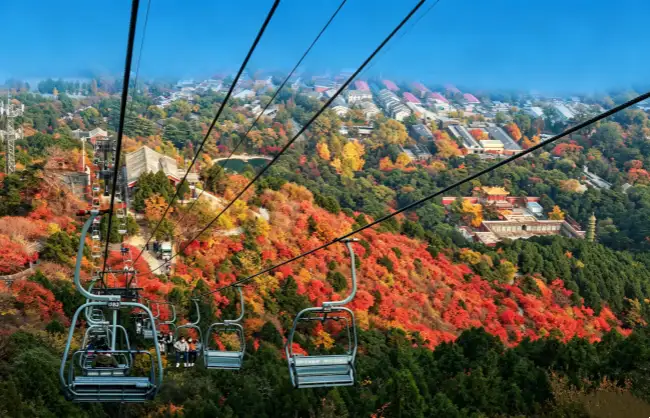
If you prefer not to walk at all, this is your option. Only a 5-minute walk from the north gate gets you to the cable car, which whisks you to the peak in just 20 minutes. While your feet are stress-free, enjoying a bird’s-eye view of the red-leaf forest and Biyun Temple from above can be a good stress relief for your mind, too. If you change your mind and feel like a bit of exploration on foot, the scenic route is always there on your way back.

Cover Beijing's top highlights including the Great Wall, Forbidden City, Summer Palace, Temple of Heaven, and Hutong Alley on this efficiently designed three-day private tour.
How to Get to the Fragrant Hills Park
By Car— Plan Ahead: Traffic jams and limited parking spaces make driving a headache during the peak season. If you are set on driving, consider setting off as early as you can.
By Subway— Most Recommended: It is the best way to skip the traffic jam entirely.
- Line 10: transfer at Bagou Station onto the Xijiao Line — get off at Xiangshan Station — 900m walk to the park entrance
- Line 4: get off at North Palace Gate Station (Exit A) — transfer to Bus 563 — direct to the East Gate of Xiangshan Park
Fun Facts about Fragrant Hills Park
- The Red Leaf Mix-Up: The famous red leaves are actually not maple leaves — they are sumac tree leaves! Rounder and softer in shape and texture, sumac tree leaves display a deeper, more intense red than maple leaves. The effect they create is more eye-catching.
- An Emperor’s Favorite Escape: Emperor Qianlong had a special fondness for Xiangshan. He paid several visits during his reign. Most of the pavilions and halls you see today were built specifically for his leisure.
- The Wind Chime Secret: Bronze bells were hung on every layer of Zhaomiao Temple’s glazed pagoda. When the breeze picks up, they ring softly in the air— quiet, enchanting, and healing. It is one of the details that impresses visitors.
A Brief History of Fragrant Hills Park
Founded in 1186 during the Jin dynasty, Xiangshan has been serving as an imperial retreat for over 800 years. A sweeping expansion was undertaken during the reign of Emperor Qianlong in the Qing dynasty, and it was renamed “Jingyi Garden”. It became the imperial family’s private summer resort.
Similar to the fate of the Yuanmingyuan and Summer Palace, Xiangshan suffered devastating damage at the hands of foreign forces in modern times. Consequently, most historic sites were destroyed. There followed decades of careful restoration conducted by the government, and now the park stands as one of Beijing’s Ten Great Gardens, where imperial splendor perfectly blends with the quiet beauty of nature’s wilderness.
Plan a Beijing Trip with China Xi’an Tour
A sea of red leaves, ancient temples, and tranquil courtyards— the Fragrant Hills/Xiangshan Park captures a unique autumn romance in Beijing.
Ready to witness the “red” miracle for yourself? China Xian Tour is here to tailor a Beijing trip exclusively for you— from Xiangshan’s flaming peaks to the city’s most iconic landmarks and hidden gems. With 20 years of expertise and a dedicated one-on-one travel consultant by your side, all you need is your passion and curiosity! Your itinerary, your pace, your trip!
Get in touch and start planning today.


