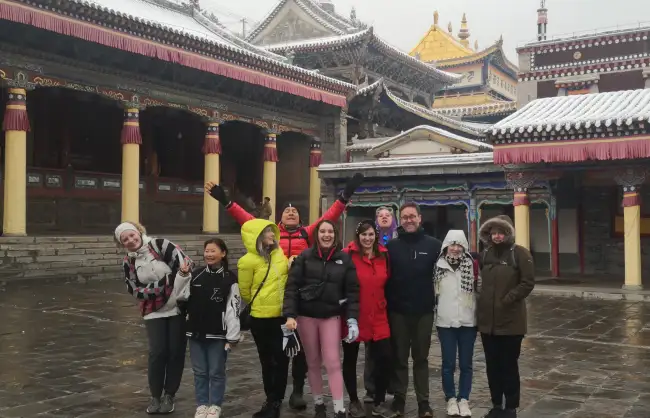


Kumbum Monastery, also known as Ta’er Monastery in Chinese, sits in Xining City, the capital of Qinghai Province in China. It was founded in 1379, named after the Great Silver Pagoda built in memory of Tsongkhapa, the founder of the Gelug school of Tibetan Buddhism, the Yellow Hat Sect. It is called Kumbum Jampa Ling in Tibetan, which means the sacred temple with 100,000 roaring lion statues.
Kumbum Monastery is one of the six greatest Gelug Sect monasteries of Tibetan Buddhism in China. It is also one of the top scenic spots and historical sites in Qinghai Province and a national key cultural relics protection unit. It has been listed as one of China’s “100 Wonders of the Northwest.”
Content Preview
- The History of Kumbum Monastery – A Legendary Story
- Kumbum Monastery Overview
- Fast Facts about Kumbum Monastery
- Main Structures of Kumbum Monastery
- The “Three Arts” of Kumbum Monastery
- Best Things to Do in Kumbum Monastery
- Essential Tips for Touring Kumbum Monastery
- Attractions Nearby Kumbum Monastery
- Plan Your Epic Qinghai Adventure including Kumbum Monastery with CXT
The History of Kumbum Monastery – A Legendary Story
Tsongkhapa was the founder of Kumbum Monastery. His mother gave birth to him while grazing the livestock. She cut the umbilical cord with a Tibetan knife and buried the placenta in the ground, which later grew into a Bodhi tree.
When Tsongkhapa studied Buddhism in Weizang, his mother missed the son. So she cut a lock of her white hair and wrote a letter to ask him to come back home to visit. Tsongkhapa had not yet completed his studies and decided not to go home. He replied to his mother’s letter, saying, “Building a pagoda in the place of birth is like meeting me.” Thus, his mother (in 1379) used stone chips to build a lotus gathering pagoda, which is the earliest building of Kumbum Monastery.
Kumbum Monastery Overview
Kumbum Monastery is well-known for its “Three Arts,” butter sculpture, murals, and barbola. In addition, many Buddhist classics and academic monographs on history, literature, philosophy, medicine, and legislation are collected in the temple. The Ta’er Monastery is also one of the high educational institutions that produced a large number of Tibetan intellectuals.
Ta’er Monastery is the center of Tibetan Buddhism in Northwest China. It also enjoys a good reputation in Southeast Asia. The central government of past dynasties highly praised the religious status of Kumbum Monastery. Many Dalai Lamas and Panchen Lamas have conducted religious services here.
Kumbum Monastery is a Buddhist complex with over 1,000 courtyards, 4,500 temples and monasteries. It is large in scale with palaces, Buddhist halls, sutras halls, sleeping quarters, and courtyards where lamas live. The architecture of the temple integrates both Han and Tibetan styles.
Fast Facts about Kumbum Monastery
- Location: No. 56 Jinta Road, Lushaer Town, Huangzhong District, Xining, Qinghai
- Area: 143 hectares (0.55 square miles)
- Altitude: 2,680 meters (8,793 feet)
- Opening Hours: 07:00 – 17:30 from April 1st to October 31st (the latest entry time is 17:30); 08:00 – 16:30 from November 1st to March 31st (the latest entry time is 16:30)
- Tickets: CNY 70
- Recommended Visit Time: 2-3 hours
- Best Time of the Year: April to October
- Suited to: culture lovers, spiritual travelers, anyone interested in Tibetan Buddhism
Main Structures of Kumbum Monastery
The architecture of Kumbum Monastery blends Han and Tibetan styles, primarily employing wood and stone structures. Its overall layout follows the contours of the mountain, distributed across a valley and two slopes of Lotus Mountain. It incorporates Han Chinese architectural elements such as three-tiered hip roofs and painted doors and windows, as well as Tibetan architectural features like flying eaves and hemp-walled structures, creating a vast and magnificent architectural complex.
1. Pagodas of Buddha Shakyamuni
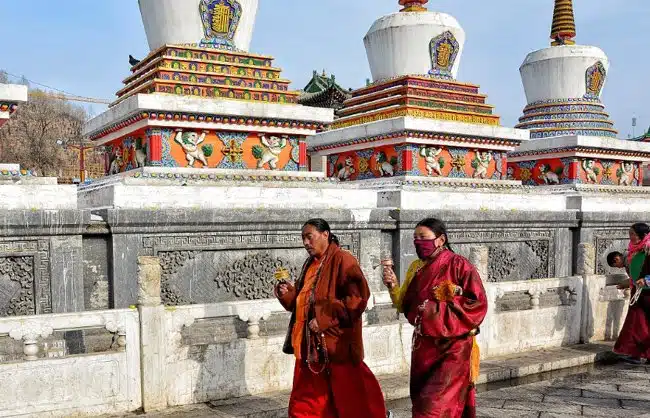
These white pagodas are the symbols of Kumbum Monastery, built to commemorate the eight major events of the Buddha Shakyamuni from birth to Nirvana. The towers are made of bricks, and decorated with shapes of flowers and clouds. The eight towers are like the eight guardians of the holy site.
2. Grand Golden Tiled Hall
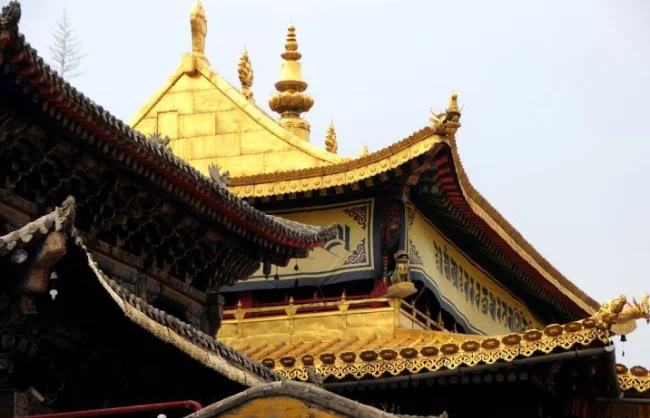
The Grand Golden Tiled Hall is placed in the center of the Monastery ground. It was built in 1560 AD. Its golden roof was constructed with 1300 taels of gold and more than ten thousand taels of baiyin (silver). The eaves are decorated with gold-plated clouds, and dripping lotus petals. Grand Golden Tiled Hall is certainly the most magnificent structure of Kumbum Monastery.
3. Main Assembly Hall
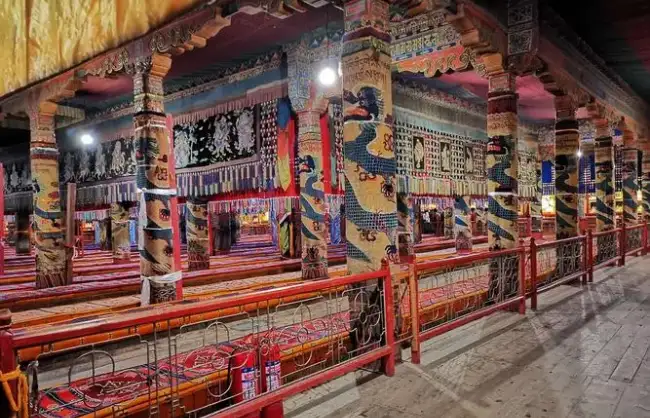
The Main Assembly Hall is the largest structure of Ta’er Monastery. It is a large sutra hall with 168 columns, first built in 1606 in the Ming Dynasty. It is the place where lamas chant sutras. The hall can contain more than 1,000 lamas at the same time.
Interior furnishings are very elegant, decorated with yellow, red, green, blue, and white streamers and curtains. You’ll also see large and precious works of barbola of the Buddha. The beams are painted with Tibetan-style patterns that are delicate and vivid. It is a magnificent sight that you can’t miss on your Qinghai tour.
4. The Small Golden-Tiled Hall
This small hall is named for its similar golden hip roof to the Grand Golden-Tiled Hall, but it is slightly smaller in size.
Inside the hall, there are specimens of wild oxen, sheep, bears, monkeys, etc. These animals symbolize that all evil spirits and demons have been conquered by the gods. The most eye-catching feature is the specimen of the white horse on the left side. According to legend, it was ridden by the Third Dalai Lama when he traveled from Lhasa, Tibet to Kumbum Monastery in Qinghai. After its death, it was made into a specimen and is still enshrined here.
The Small Golden-Tiled Hall is not only one of the most mysterious buildings in Kumbum Monastery but also houses the main deity of the esoteric Buddhism. Here, you can also enjoy one of the three wonders of the temple – the murals.
5. More Architecture of Kumbum Monastery to Explore
- In the Qishou Hall, it’s the details that catch your eye. Carved creatures-birds, beasts, blooms-wrap around pillars and beams. Gazed tiles decorate the walls. The real treasures are the hall’s wood carvings – some of the finest in the monastery.
- The Shakyamuni Buddha Hall houses not only a statue of the Buddha himself, but also images of his trusted disciples, Kasyapa and Ananda. For Buddhist devotees or Buddhist lovers, you will like it.
- The Manjushri complex brings together three halls together, dedicated to Simhanada Buddha, Manjushri, and Tsongkhapa separately.
- And then the Dalai Lama’s Omniscience Hall, built to honor the Third Dalai Lama, who played a key role in building this place. Inside rests his wooden stupa, along with a silver statue he personally blessed and the very vajra scepter he once held.
The “Three Arts” of Kumbum Monastery
1. Butter Sculpture
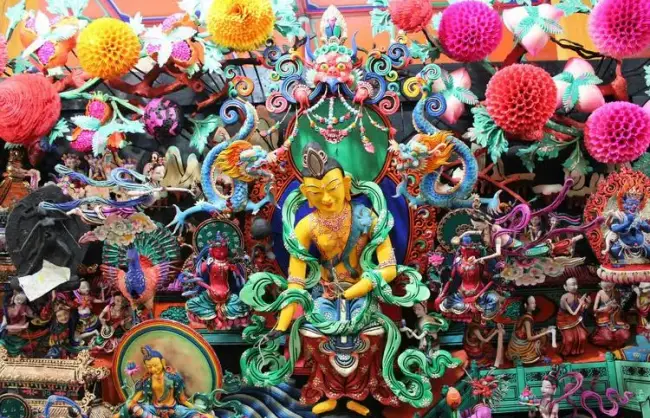
The Butter Sculpture Exhibition Hall showcases the “best art of Ta’er Monastery.” The making and displaying of butter sculptures at Kumbum Monastery has been a tradition since 1612. They are vivid and colorful sculptures of the Buddha, flowers, birds and animals, pavilions and structures with oil extracted from butter.
The process of making a butter sculpture is incredibly difficult. It is usually made in the freezing winter because the shaping and coloring are done on frozen butter. Frozen butter is so particular about temperature, that even the temperature of the artisans’ hands might cause it to melt, so they have to constantly dip their hands in ice water in the sculpting process.
2. Murals
Murals are a distinctive art form at Kumbum Monastery. They are bright and expressive, painted with stone mineral pigments. The mural subjects are mostly drawn from the Buddhist sutra. Most of them are painted on drapes; some are painted directly on walls and beams. At the Sutra Meeting held in June each year, the drapes are put out on display, which is called “Shaidafo” (drying the Buddha).
3. Barbola
The subject of barbola is generally similar to the murals but in a different art form. Barbola is the art of trimming colorful silk and satin into various shapes of Buddha figures, flowers, and animals and filling them with wool and cotton. The embroideries are made three-dimensional and lifelike.
Best Things to Do in Kumbum Monastery
Appreciating architectural treasures
It includes more than 9,300 buildings such as the Great Golden Tile Temple, the Great Sutra Hall, the Maitreya Hall, the Nine-Room Hall, the Flower Temple, the Small Golden Tile Temple, the Juba Zhacang, the Dingke Zhacang, the Manba Zhacang, the Great Lhalang, the Great Kitchen, and the Ruyi Pagoda.
Appreciating the Three Arts
The “Three Masterpieces of Art” at Ta’er Temple are truly astonishing. The butter sculptures depict lifelike Buddha images and flowers with vivid colors. The murals are painted on the walls of the main hall, covering Buddhist stories and historical legends. The pile embroidery, made by layering and embroidering with colored fabrics, is a unique artistic treasure of Ta’er Temple.
A Glimpse into Tibetan Culture
The temple houses four academic departments: Hinayana Buddhism, Mahayana Buddhism, astronomy, and medicine. Here, you can learn about the unique and mysterious Tibetan culture.
Experience Buddhist Grand Events
The Vajrayana Assembly held in January, April, June, and September each year is not to be missed. If the there is an Buddhist even or a festival, you can also watch thousands of people chanting scriptures in the Main Assembly Hall.
Essential Tips for Touring Kumbum Monastery
Best Visiting Hours
The best time to visit Kumbum Monastery is in the morning or in the afternoon. The morning light is soft. You can have a more appreciative view of the temple’s architecture and murals. The afternoon light is also gentle, best for capturing the panoramic view of the temple. You can have the perfect combination of the building and the natural scenery.
How to Get to Kumbum Monastery
To get to Kumbum Monastery, you need to travel to Xining first. Fly into Xining Caojiabao International Airport or take a train to Xining Railway Station. From Xining, take a bus from Xining Bus Station or Xining Railway Station to Huangzhong County. Or take a taxi from the city center to Ta’er Monastery, which is about 30 minutes away and costs CNY 100.
Qinghai Lake – Ta’er Temple: Approximately 150 kilometers, the driving time is about 2.5 hours. Welcome to use Chinaxiantour’s private car service.
Tacheng Salt Lake – Ta’er Temple: Approximately 287 kilometers, the driving time is about 4 hours. Welcome to use Chinaxiantour’s private car service.
More Tips to Keep in Mind
- Suggested tour route:Eight Treasures Pagoda – Dharma Protector Hall – Longevity Hall – Great Sutra Hall – Golden Tile Hall – Kalachakra Monastery – Butter Museum
- Respect religious customs. Photography is prohibited in the main hall, including the Buddha statues, monks, and those who are making long prostrations.
- Please remain quiet during the visit. Respect local religious customs and regulations. Do not disturb ongoing religious activities.
- If you’d like to turn aprayer wheel, do it in a clockwise direction.
- The Kumbum Monastery is at an altitude of 2,600 meters. Avoid strenuous exercise to prevent altitude sickness.
- Dress appropriately. Avoid overly revealing or disrespectful clothing. Generally, the dress code within the temple should cover the shoulders and above the knees.
- Wear comfortable shoes for walking.
Attractions Nearby Kumbum Monastery
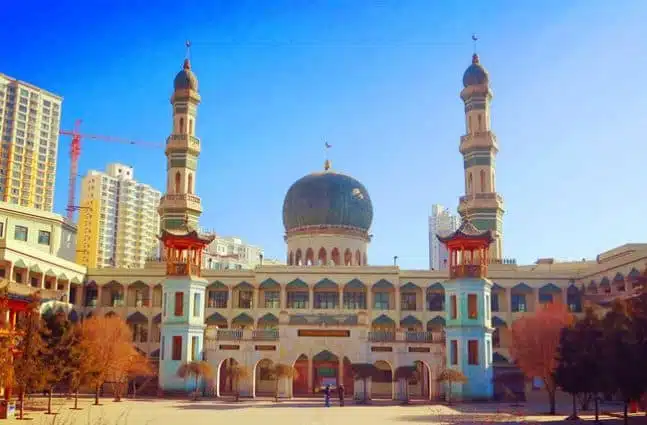
- Dongguan Mosque is the largest mosque in Qinghai Province. Its architecture demonstrates a skillful blend of traditional Chinese and Islamic styles. It is also renowned as the highest learning institution of Islam in the region.
- Qinghai Lake is the largest and most beautiful lake in China. You’ll find stunning scenery including mountains, grasslands, and fields of blooming flowers.
Plan Your Epic Qinghai Adventure including Kumbum Monastery with CXT
Are you planning a trip to Qinghai and want to include the iconic attractions of Qinghai like Kumbum Monastery and Chaka Salt Lake, as well as the hidden treasures? Feel free to contact us at China Xian Tour. You can trust us as one of the best travel agencies in China to create your own Qinghai travel itinerary. Our travel specialists are available 24/7 online to support you. Let’s talk about your journey to this mysterious land today!