
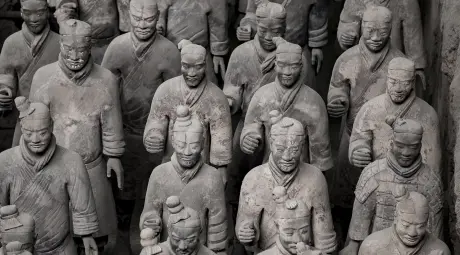

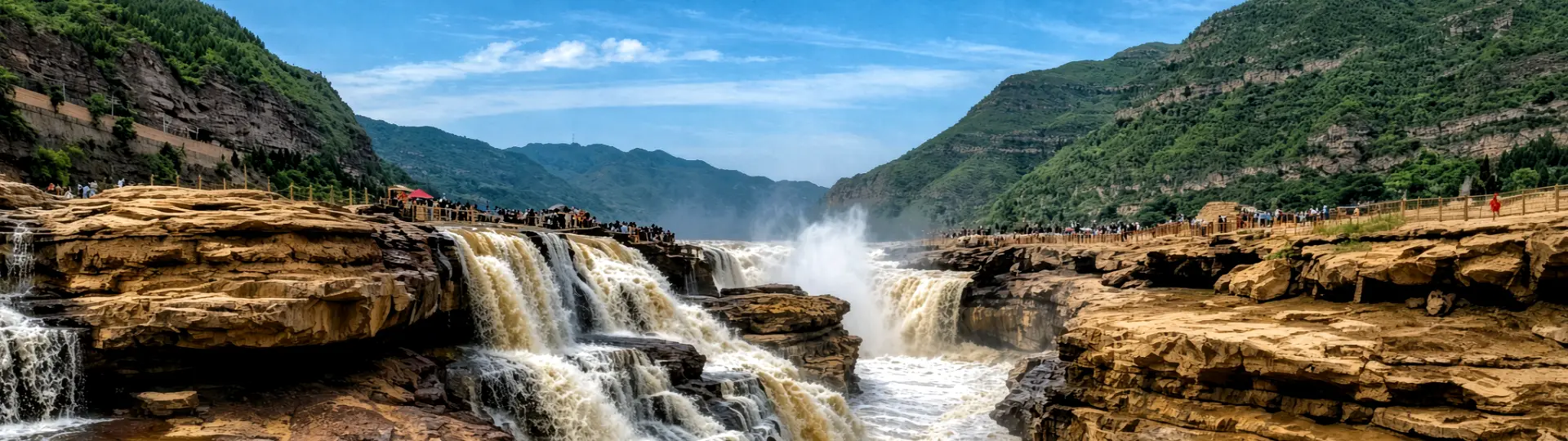
Known as China’s “Mother River”, Yellow River is home to many early civilizations. It was also an important center for several of China’s earliest dynasties.
Beyond its diverse landscapes—such as canyons, waterfalls, historic river crossings, and wetlands—the Yellow River is also closely connected with Chinese myths, traditional customs, and the history of river transport.
Content Preview
- The World’s Sixth-Longest River
- Why Is Yellow River Important to China?
- Why Is Yellow River Yellow?
- A “Hanging” River above the Land
- Yellow River Loess: From Yellow Water to Pottery and Cave Dwellings
- The Yellow River Appears in Many Famous Chinese Legends
- An Ancient Chinese Transportation Hub
- The Yellow River Looks Different in High- and Low-Water Seasons
- Explore the Yellow River with China Xian Tour
The World’s Sixth-Longest River
Yellow River, also called Huang He River, starts from the Qinghai-Tibet Plateau and ends at Bo Sea. It flows through nine provincial-level regions: Qinghai, Sichuan, Gansu, Ningxia, Inner Mongolia, Shaanxi, Shanxi, Henan, and Shandong.
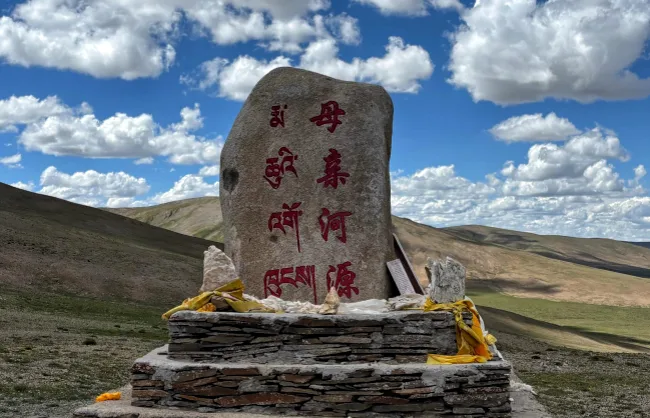
Stretching for 5,464 kilometer, Yellow River is the sixth-longest river in the world and the second-longest in Asia, just after the Yangtze River.
How long is 5,464 km? If you travel this distance by road and drive 500 km a day, it would take about 11 days to complete the journey.
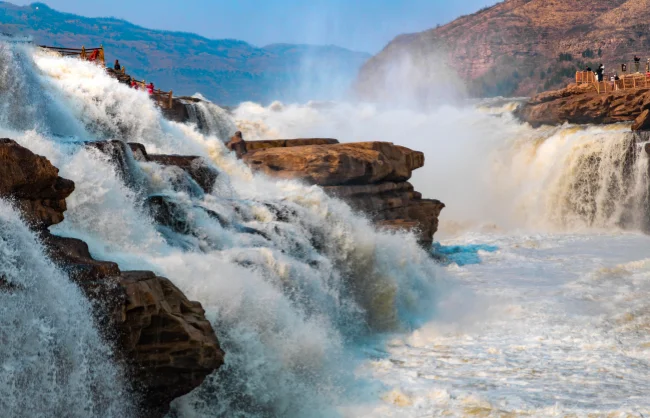
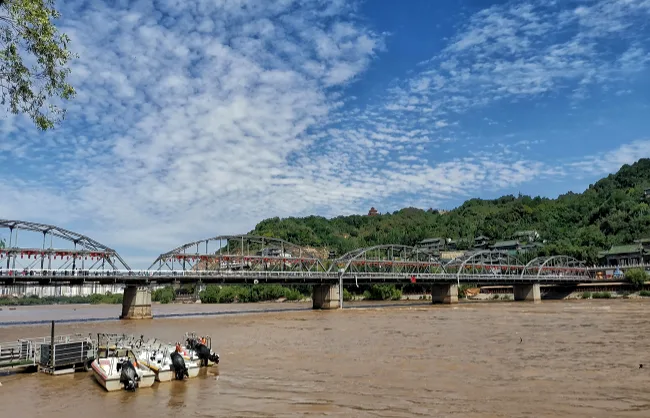
There are many attractions along the Yellow River and some of the most popular ones include Hukou Waterfall in Shaanxi and the Yellow River Scenic Area in Lanzhou, Gansu. Some travelers also enjoy visiting Qiankun Bay in Shaanxi.
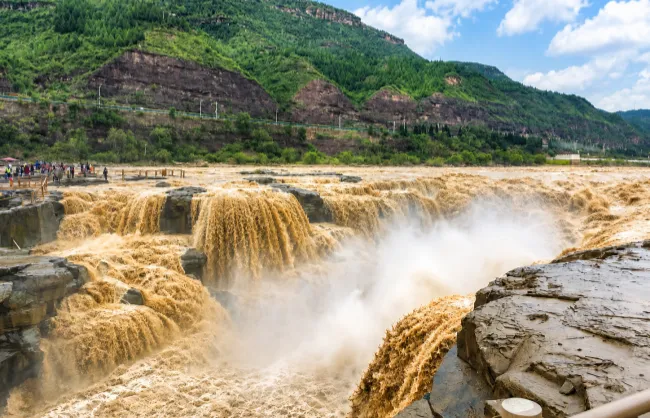
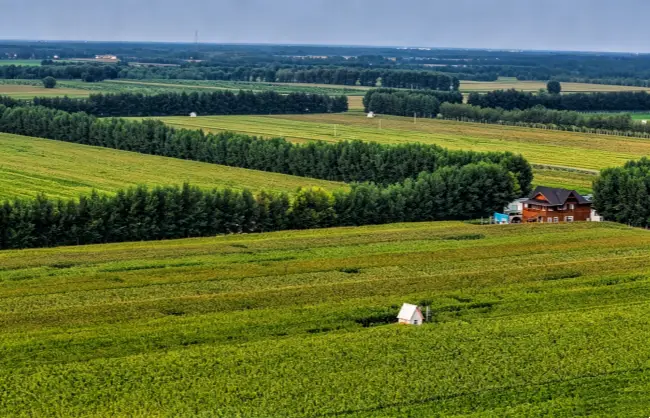
Start your day with a morning pick-up from your hotel as our driver takes you on a scenic journey to explore the unique terrain of the Loess Plateau in northern Shanxi Province.
Why Is Yellow River Important to China?
There are two reasons:
First, Yellow River is the Cradle of Chinese Civilization
Yellow River is one of the main birthplaces of Chinese civilization, including the Yangshao Culture (about 7,000 to 5,000 years ago) and Longshan Culture (4,600 to 4,000 years ago). China’s three earliest dynasties developed here: the Xia Dynasty (2070 BC to 1600 BC); the Shang Dynasty (1600 BC to 1046 BC); and the Zhou Dynasty (1046 BC to 256 BC).
Second, Yellow River Was a Birthplace of Agriculture in Northern China
The fertile land along the Yellow River attracted early communities to settle in the region, where they began growing millet and other crops. These early farming practices helped lay the foundation for agriculture in northern China.
To some extent, the Yellow River civilization laid the foundation for Chinese civilization.
Why Is Yellow River Yellow?
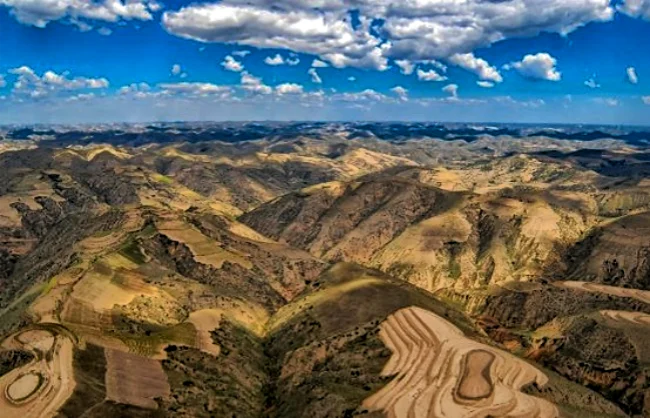
The Yellow River gets its yellow color from the Loess Plateau.
As the river flows through the plateau, large amounts of fine yellow soil were carried into the water, giving the river its yellow-brown color.
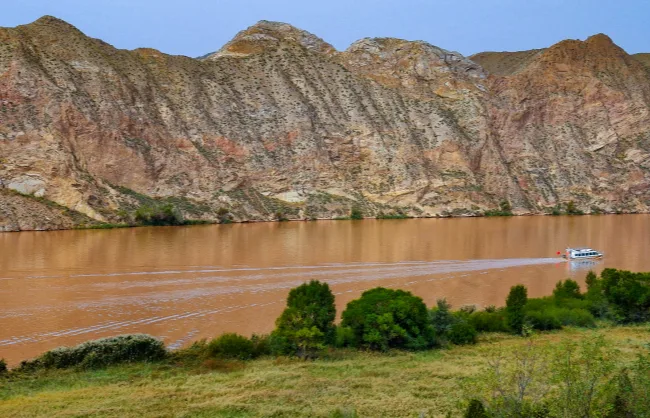
However, the river does not have the same color along its entire course.
Its colors vary in different seasons and on different reaches:
- In the upper reaches, before the river passes through the Loess Plateau, there is less sediment, so the water looks clear and green.
- In March and April, the section around Lanzhou usually turns gray-green because of melting snow.
- In September and October, the river in Ningxia may sometimes look light reddish-yellow after heavy rain.
- From December to February, parts of the river in Inner Mongolia can be covered with floating ice, creating a beautiful white winter scene.

In some places, such as Liujiaxia in Gansu, you can even see two streams of water with different colors meeting. The clear and yellow water remain clearly separated for a while, creating a striking two-color river.
A “Hanging” River above the Land
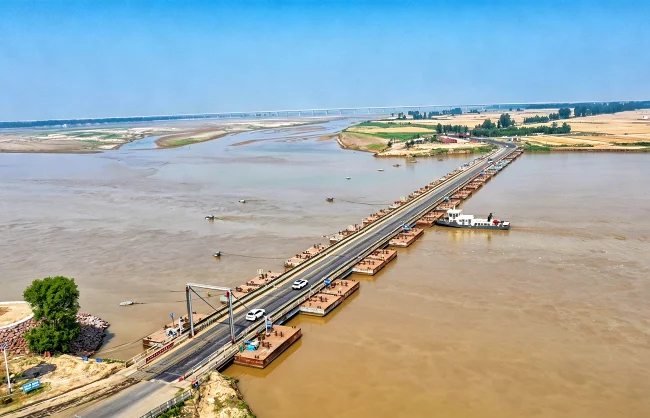
In some sections of its lower reaches, the Yellow River flows above the surrounding land. For most rivers, their riverbeds are lower than the surrounding land, even when the water level rises during the rainy season.
The Yellow River is different.
The soil and sand carried from the Loess Plateau were deposited farther downstream. Over many years, the riverbed is raised again and again. To prevent floods, people had to raise the riverbanks. As a result, some sections of the Yellow River now sit much higher than the cities around them.
In Kaifeng, the Yellow River is about 3 stories higher than cities. When you see boats traveling along the river, it can almost look as if they are sailing above the city.
Yellow River Loess: From Yellow Water to Pottery and Cave Dwellings
The soil of the Loess Plateau does more than turn the River yellow. It has also been used by Chinese people to build houses and make pottery for thousands of years.
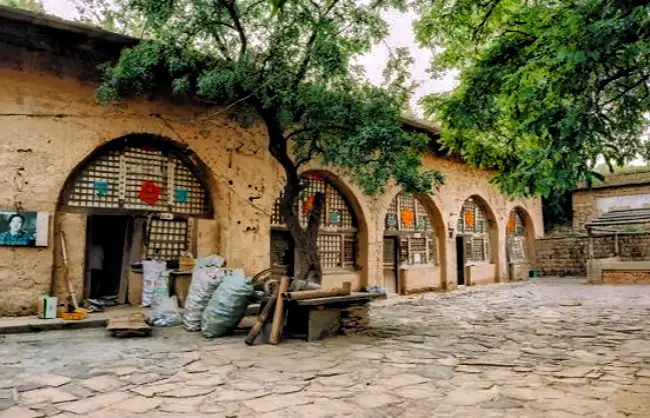
In Shaanxi and Shanxi, there is a traditional house: cave dwelling, which is built by digging into the soft loess directly. In Henan, on the edge of the Loess Plateau, you can also see unique underground courtyard homes called dikengyuan, which are also built by digging down into the ground.
In addition, the Yellow River is also an important area for China’s prehistoric painted pottery. Ancient Chinese used loess to make pottery. The Banpo Museum in Xi’an has many important examples, including the famous pottery basin decorated with a human-face and fish pattern.
When traveling along the Yellow River, you can not only enjoy the natural scenery, but also stay in a cave-dwelling guesthouse or visit museums to see beautiful pottery.
The Yellow River Appears in Many Famous Chinese Legends
Yellow River is deeply connected with some traditional myths and legends. Some of these stories are even linked to the origin of humanity.
According to one legend, Nüwa, a goddess in ancient Chinese mythology, came to the banks of Yellow River. She used yellow soil mixed with water to make human figures in her own image. This is how the first humans were born.
Another famous legend is related to Yellow River flooding. In ancient times, floods caused great suffering along the Yellow River. Yu the Great, a god in Chinese legends, saved the world by guiding the water toward the sea.
It is said that one of the valleys he opened was Longmen, or “Dragon Gate,” on the Yellow River. According to the legend, every March and April, carp would swim upstream to jump over the Dragon Gate to transform into a dragon.
Today, the phrase “carp jumping over the Dragon Gate” is often used by Chinese people to wish high school students success in the college entrance examination.

An Ancient Chinese Transportation Hub
In the past, parts of the Yellow River were important waterways in northern China. The river helped connect northwestern China with the Central Plains, supporting trade and travel between different regions.
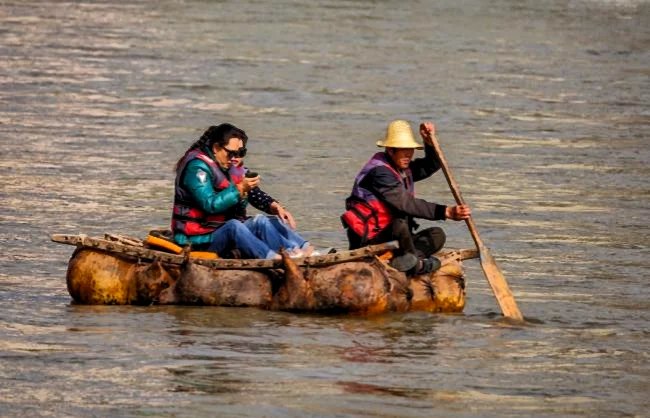
Apart from boat, there is one interesting river vessel in the upper Yellow River: sheepskin raft. It is made from inflated and treated sheep skins attached to a wooden frame. In the past, these rafts were used to carry people across the river and transport goods.
Today, they are no longer used for everyday transportation. Instead, riding a sheepskin raft has become a popular experience along the Yellow River in Lanzhou. Sitting on a sheepskin raft gives you a very different view of the River: the water rushes just below your feet while the raft moves slowly with the current and rises and falls with the waves.
The Yellow River Looks Different in High- and Low-Water Seasons
The Yellow River looks quite different between its high- and low-water seasons.
During the high-water season (July to October) , water levels are higher and the river often looks more powerful. In low-water season (November to June), many sections of Yellow River may look calmer.
However, Hukou Waterfall is an exception. Besides July to October, March to April is another great time to visit Hukou Waterfall. During this period, melting snow and ice upstream cause a small rise in the water level. At the same time, peach blossoms are blooming along the river.
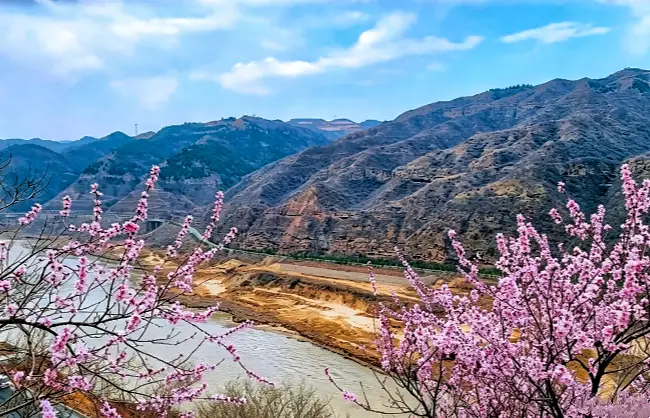
If you want to see the Yellow River at its most powerful, July to October is generally the best time to visit. If you travel during the high-water season, bring rain gear. The spray from the river can get your clothes and camera wet.
Explore the Yellow River with China Xian Tour
Usually, most foreign visitors would arrange their China tour by combining Xi’an and Hukou Waterfall in the same trip. For example, after their Xi’an tour, visitors would go to Hukou Waterfall by car and stay overnight near the scenic area. Then, they would return to Xi’an the next day. If you don’t know how to make preparations to save your time, feel free to contact China Xian Tour.


