
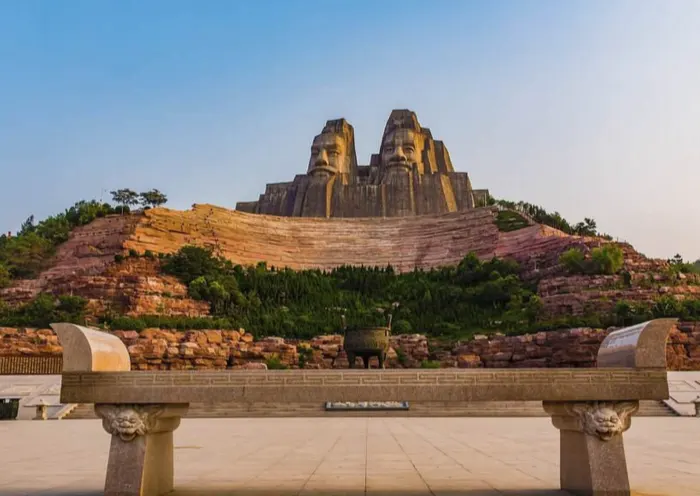
Chinese civilization is one of the oldest and longest-lasting in the world, and it’s cradle is the Yellow River. Yellow River is also called the “Mother River”, which nurtured early agriculture, governance, and religious practices with its water and fertile riverbanks. Emerging at around 5000 BC in the Huang He Valley, the Yellow River Civilization has influenced not only in China but also the broader East Asian culture in thousands of years.
Visiting the Yellow River region offers a memorable exploration of China’s profound cultural heritage. This article will walk you through the grandeur of the Yellow River Civilization from several perspectives.
Content Preview
- What is the Yellow River Civilization? – The Cradle of Chinese Civilization
- Key Facts About the Yellow River Civilization
- The Comprehensive Timeline of the Yellow River Civilization
- Religion & Major Achievements
- Where to Explore the Yellow River Civilization Today?
Quick Facts about Yellow River Civilization
Aspect |
Details |
Location |
Huang He Valley, Northern China |
Timeline |
Began ~5000 BC. Continued through Xia, Shang, Zhou dynasties |
Major Achievements |
Agriculture/ bronze metallurgy/ early writing/ political systems/ religion/ cultural traditions |
What is the Yellow River Civilization? – The Cradle of Chinese Civilization
The Yellow River Civilization refers to the whole series of cultures and dynasties developed along the middle and lower reaches of the Yellow River thousands years ago. It laid the foundations
Why the Yellow River Is Called the “Cradle of Chinese Civilization”
The Yellow River is often called the “Mother River of China” because its fertile loess soil has nurtured early farming communities. Later, the farming villages had gradually evolved into towns and eventually early dynasties.
Yellow River Civilization: Location and Map
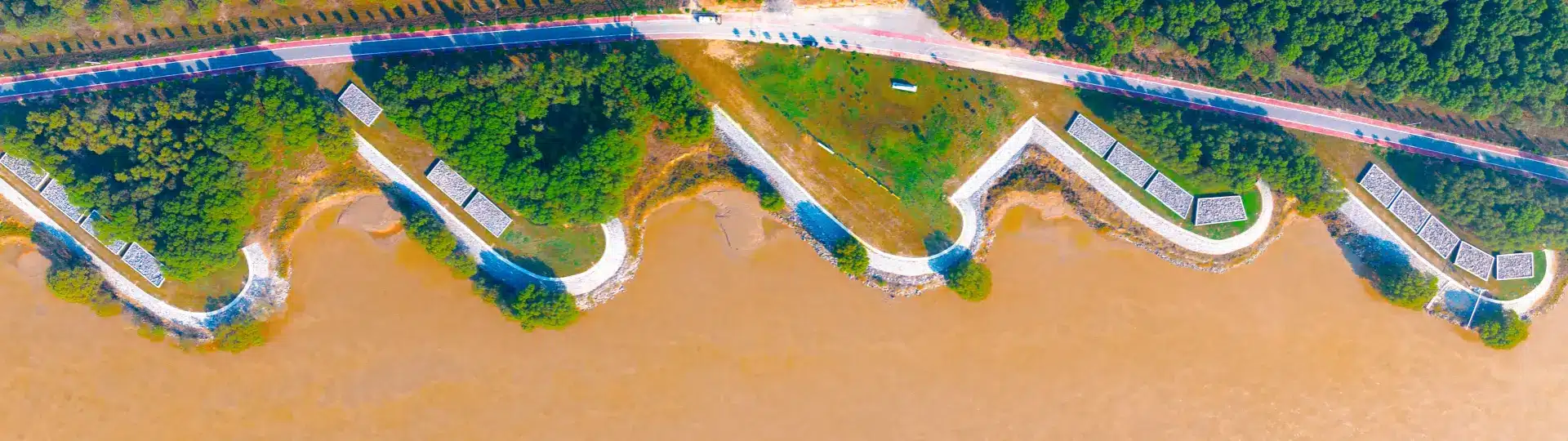
The Yellow River flows more than 5,400 km from its source in the Bayan Har Mountains (Qinghai) through the Loess Plateau and North China Plain, and eventually ends in the Bohai Sea. Its course travels through 9 provinces in China, including Qinghai, Gansu, Shanxi, and Shandong.
Feature |
Details |
Source |
Bayan Har Mountains, Qinghai |
Length |
5465 km |
Provinces along the river |
Qinghai, Gansu, Ningxia, Inner Mongolia, Shaanxi, Shanxi, Henan, Shandong |
Major ancient cities |
Xi’an, Luoyang, Zhengzhou, Kaifeng, Anyang, Jinan |
Notable sites |
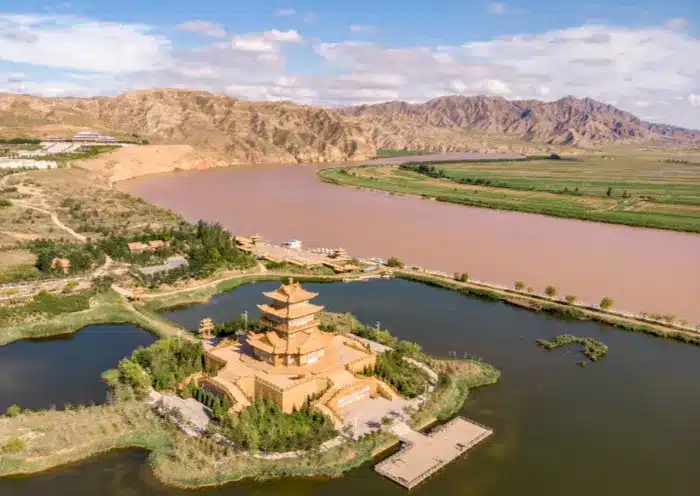
Hukou Waterfall (Shanxi–Shaanxi). Bingling Temple Grottoes (Lanzhou). Longmen Grottoes (Luoyang) |

Key Facts About the Yellow River Civilization
- Cradle of Chinese Civilization
The Yellow River nurtured the earliest well-organized societies in China. It was the major reason for the rise of agriculture, governance, and early dynasties. So it’s called the “Mother River of China” or the Cradle of Chinese Civilization.
- Most Sediment-Laden Major River
Unlike other great rivers in China, the Yellow River’s “yellow” comes from the vast quantities of loess in its water. The loess is so much that it’s considered the world’s muddiest major river.
- Birthplace of Early Dynasties
Sites along the river banks, like Erlitou, show evidence of palaces, bronze workshops, and urban layouts. All can be linked to the legendary Xia dynasty. The Shang and Zhou dynasties also emerged along its banks.
- Neolithic Musical Traditions
At Jiahu, archaeologists found bone flutes dating back over 9000 years, recognized as the oldest playable musical instruments in the world. This little evidence actually reflects a sophisticated ritual and communal culture thriving along the Yellow River.
- Innovations in Water Management
The Yellow River’s volatile behavior had inspired early marvels of hydraulic engineering, from rudimentary levees to later large-scale irrigation. The need and hope to tame the river greatly shaped ancient Chinese approaches to infrastructure and governance.
- Early Capitals Along the River
Many political and cultural centers arose along the Yellow River, including Xi’an, Luoyang, Zhengzhou, Kaifeng, Anyang, and Jinan. The water formed a long-standing hub of power and culture.
- Agricultural Advancements
The Yellow River’s fertile loess soils allowed millet, wheat, and rice to grow. Agriculture later enabled population growth, trade, and the rise of complex societies along the river.
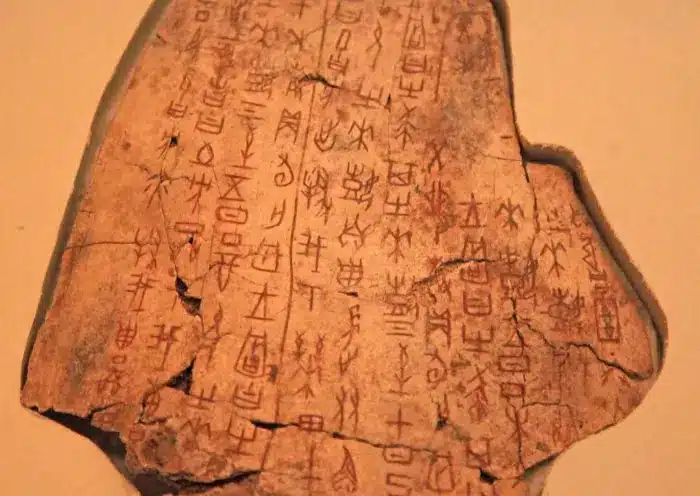
- Oracle Bone Script
Oracle bones were once used for divination. Archaeological discovery shows that people liked to record predictions of luck on an oracle. Chinese characters were also born in this early writing system.
- Innovations in Science and Technology
Many inventions were born in the Yellow River civilization. Some of China’s most famous items, including the four great inventions (compass, paper making, gunpowder and printing), were all results of the Yellow River civilization.
See more interesting facts about the Yellow River.
The Comprehensive Timeline of the Yellow River Civilization
Key Neolithic Cultures
Culture |
Time |
Location |
Key Features |
Peiligang Culture |
c. 6000–5000 BC |
Henan (near Zhengzhou) |
Early farming
Grain cultivation Cave dwellings Red pottery |
Laoguantai Culture |
c. 6000–5000 BC |
Shaanxi (near Xi’an) |
Primitive agriculture Stone tools
Simple pottery Round houses |
Beixin Culture |
c. 6000–5000 BC |
Shandong |
Semi-underground dwellings
Stone & bone tools Tan pottery |
Cishan Culture |
c. 6000–5000 BC |
Hebei |
Millet farming
Stone tools Livestock raising Early ceramics |
Yangshao Culture |
c. 5000–3000 BC |
Henan (Yellow River middle reaches) |
Painted pottery Settled villages
Mixed economy |
Hougang Culture |
c. 5000–4000 BC |
Henan (Anyang area) |
Developed cave dwellings |
Dawenkou Culture |
c. 4300–2400 BC |
Shandong |
Advanced pottery. Early social stratification |
Yueshi Culture |
c. 3950–3500 BC |
Shandong |
Transitional features |
Longshan Culture |
c. 2500–2000 BC |
Shandong & Central Plains |
Black pottery
Social complexity Early urbanization Proto-bronze use |
The Bronze Age and Early Dynasties (c. 2000–256 BC)
Culture |
Time |
Location |
Significance |
Erlitou Culture |
c. 2000–1600 BC |
Henan (Yanshi) |
Early urban center Palaces Bronze casting |
Erligang Culture |
c. 1600–1400 BC |
Zhengzhou |
Large-scale bronze production
Early Shang expansion |
Lower Xiajiadian Culture |
c. 2000–1400 BC |
North China |
Regional bronze culture |
Early Dynasties:
Xia Dynasty (c. 2070–1600 BC): Traditionally seen as China’s first dynasty, while being partly legendary. It marks the early shift from tribal rule to hereditary monarchy. Erlitou remains (an imperial capital) shows early cities and state structures.
Shang Dynasty (c. 1600–1046 BC): This is the first historically confirmed dynasty. Shang is particularly known for bronze technology and oracle bone writing. Its capital, Anyang, shows an advanced urban society.
Zhou Dynasty (c. 1046–256 BC): Introduced the Mandate of Heaven and the feudal system. Later, major philosophies like Confucianism and Taoism emerged, shaping Chinese thought for centuries.
Religion & Major Achievements
Yellow River Civilization Religion and Beliefs
Religious belief was deeply intertwined with nature and family traditions. It centered on nature and ancestor worship. In ancient China, people said the sun, rivers, and mountains have forces that influence humans’ survival and agriculture.
Tribes were formed based on the patrilineal clan. Ancestor worship enhanced the unity within a tribe and stressed the importance of the bloodline. And in later Chinese dynasties, the imperial power was also centered on blood ties.
Such worship also made people believe that their ancestors could influence the living world and give blessings to their offspring. These traditions later contributed to the concept of the Mandate of Heaven, linking political authority and moral and spiritual legitimacy.
Over time, these early beliefs shaped major Chinese philosophies. Confucianism emphasized filial piety, Taoism promoted harmony with nature, and Buddhism, which was introduced later, further enriched the spiritual landscape.
Inventions and Technology
The Yellow River civilization was, indeed, a cradle of early technological progress.
- The Yellow River civilization was a center of early technological innovation.Bronze casting was a crucial technology used by artisans to create durable tools or weapons, elevating both agriculture and warfare.
- Early writing systemwas another shining achievement. It particularly featured oracle bone inscriptions, giving a foundation for Chinese logographic writing.
- In addition,silk production and craftsmanship also appeared along the river. They testified to the growing technical sophistication and economic development in ancient China.
Yellow River Civilization Architecture
Architecture in the Yellow River Valley reflected the rise of organized society. People developed the technique of using rammed earth (hangtu). So that people could design buildings with durable city walls and large structures.
Archaeological remains show early walled cities and palatial complexes. Looking into these remains, one can more clearly understand advances in urban planning, defense, and political organization.
Art and Pottery
Art in the Yellow River Valley expressed people’s focus on both aesthetic beauty and spiritual meaning. Painted ceramics coming from the Yangshao culture and the black polished wares of the Longshan culture also reflected people’s need for both practical use and artistic refinement.
Later, the Shang period produced highly sophisticated bronze ritual vessels, which were not only functional but also symbols of power and religious authority.
Where to Explore the Yellow River Civilization Today?
Cities Along the Yellow River
The Yellow River flows through 9 provinces, with different cities offering diverse attractions and experiences. If you want to have a Yellow River tour while exploring some of the cities with profound historic heritage, one recommended destination is Xi’an.
Traveling from Xi’an to the Yellow River (sites like Hukou Waterfall) only takes about 2–3 hours by car. This is a city that served as an ancient capital and a gateway to early dynasties. If you’re traveling from other major towns like Beijing, high-speed trains and flights are both convenient.
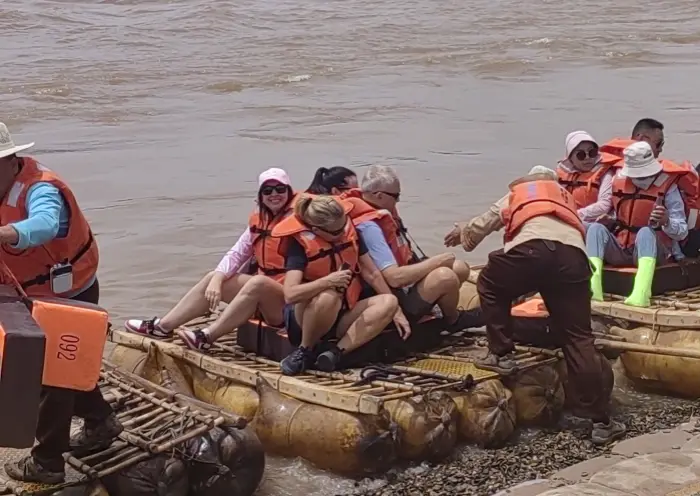
Unlike the Yangtze River, the Yellow River’s water condition is not suitable for long-distance cruise tours. However, some sections in cities like Lanzhou, Zhengzhou, and Inner Mongolia offer short sightseeing boat rides.
Other Rewarding Destinations:
City |
Province |
Highlights |
Xi’an |
Shaanxi |
Ancient capital, gateway to early dynasties, near Hukou Waterfall |
Luoyang |
Henan |
One of the oldest capitals, Longmen Grottoes |
Zhengzhou |
Henan |
Near Erlitou and Shang cultural sites |
Kaifeng |
Henan |
Historic capital, Northern Song heritage |
Anyang |
Henan |
Shang capital, oracle bones, Yin Ruins |
Jinan |
Shandong |
Lower Yellow River culture, springs and history |
Lanzhou |
Gansu |
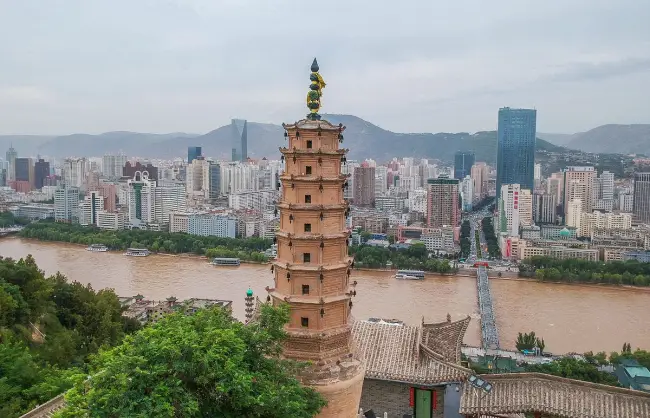
Key upstream city, Yellow River passes through urban center |
Top Museums
Museums are good places to actually see the civilization’s history through well-preserved artifacts and exhibitions.
Two of the most popular are the Henan Museum in Zhengzhou and the Shaanxi History Museum in Xi’an. One houses important relics from the Xia and Shang periods, the other one display bronze ware and oracle bones. Below is a list of some worth-visit places:
Museum |
Location |
Key Features |
Henan Museum |
Zhengzhou |
Bronze ware, oracle bones, Xia–Shang artifacts |
Shaanxi History Museum |
Xi’an |
Comprehensive collection of early Chinese dynasties |
Luoyang Museum |
Luoyang |
Artifacts from multiple ancient capitals |
Anyang Yinxu Museum |
Anyang |
Shang dynasty relics, oracle bone inscriptions |
Gansu Provincial Museum |
Lanzhou |
Silk Road and early regional culture |


Important Archaeological Sites Along the Yellow River
What are some important archaeological sites along the Yellow River?
The Yellow River basin is lined with numerous archaeological sites, which offer glimpses into early human beings’ life and cultural achievements. List below are some of the most outstanding ones based on the timeline:
Region and Era |
Core Site |
Time Period |
Human Origin Zone |
Lantian Man Site (Shaanxi) |
~1.15 million–650,000 BCE |
Prehistoric Settlement Zone |
Banpo Site (Xi’an, Shaanxi) |
~6700–6000 BCE |
Upper River Civilization Zone |
Lajia Site (Qinghai) |
~4000 BCE |
Upper River Civilization Zone |
Liuwan Site (Qinghai) |
~5300–4000 BCE |
Middle River Civilization Core Zone |
Taosi Site (Shanxi) |
~4300–3900 BCE |
Middle River Civilization Core Zone |
Erlitou Site (Henan) |
~3800–3500 BCE |
Middle River Civilization Core Zone |
Yinxu (Henan) |
~3300–3046 BCE |
Lower River Agricultural Civilization Zone |
Shuanghuaishu Site (Henan) |
~5300–4800 BCE |
Lower River Agricultural Civilization Zone |
Dawenkou Site (Shandong) |
~4300–2500 BCE |
Flood plain Civilization Belt |
Gaocheng Ancient City (Henan) |
Eastern Zhou Period |
Flood plain Civilization Belt |
Song State Ancient City (Henan) |
Zhou Dynasty–Southern Song Dynasty |

Discover the Yellow River Civilization with China Xian Tour
Exploring the Yellow River region is more than a journey through landscapes, it’s a walk into the cradle of Chinese civilization. Consider traveling with China Xian Tour, we’ll give you customized trips that are fully designed according to your own preferences. While traveling across China’s historic cities and provinces along the river, from Xi’an and Luoyang to Zhengzhou and beyond, you’ll develop a more comprehensive understanding of China’s history. Whether you’re fascinated by ancient capitals, cultural relics, or stunning natural scenery, we are here to create itineraries for you to bring the story of the Yellow River to life.