

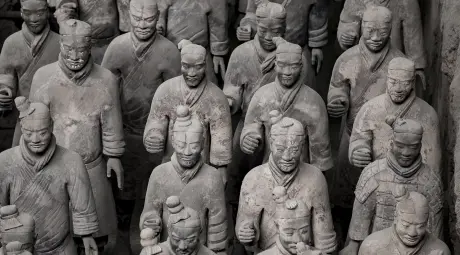


Shanxi Province is best known for its rich history and culture in China, especially its well-preserved ancient architecture. Datong is probably the best place to visit for a taste of ancient China. The largest and best-preserved temple of the Liao and Jin Dynasty, Huayan Temple, or Huayan Monastery, now sits in the ancient city of Datong.
First built in 1038, Huayan Temple covers an area of 66,000 square meters (710,418 square feet) with more than 30 buildings. In the Ming Dynasty, it was divided into upper and lower parts. The wonders of Huayan Monastery lie in its architecture, size, as well as its details. As you read through this article or when you embark on your Datong tour, look for:
- the largest wooden structuredBuddhist temple hall
- the largest colored glazed chiwens in Chinese architecture
- the “Oriental Venus,” a clay sculpture of the Liao Dynasty
- the “National Treasure” that is unique throughout the entire Chinese history
Fast Facts about Huayan Temple
- Location: Datong Ancient City Lower Temple Street No. 459, Pingcheng District, Datong City, Shanxi Province
- Hours: 8:30 am-5 pm
- Tickets: CNY 50
- Recommended Visit Time: 2-3 hours
- Best Time to Visit: March to May, September to November
- Suited to: those interested in Buddhist culture, history, architecture, and art
What to See and Do at Huayan Temple
1. Upper Huayan Temple – The Main Hall (Daxiong Palace)
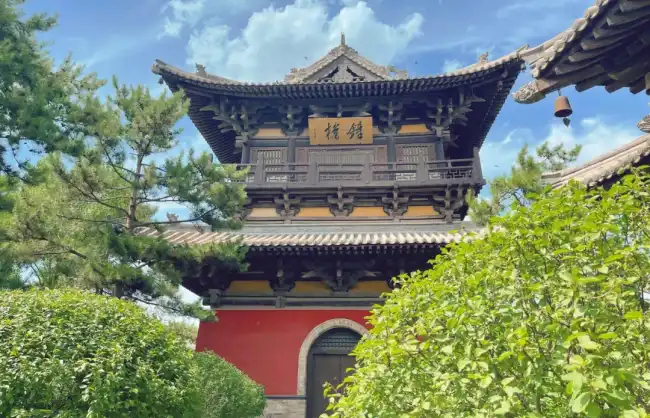
Upper Huayan Temple is centered around the Main Hall, which is known to epitomize the finest arts of the four dynasties, the construction of Liao, the architecture of Jin, the sculptures of Ming, and the murals of Qing.
The Main Hall of Huayan Monastery is the largest temple hall of the Liao and Jin Dynasty as well as the largest wooden structured Buddhist temple hall in existence. Upon a 4.2-meter-tall (14 feet) platform, the structure has a total construction area of 1559 square meters (16,781 square feet).
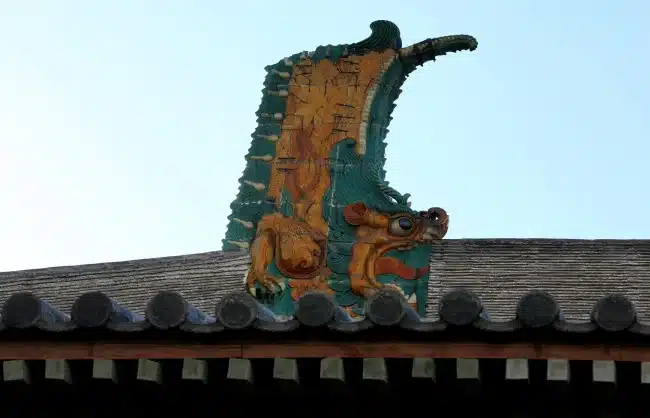
On the outside, apart from its size, another highlight is its chiwens. Chiwens are roof ornamental motifs of traditional Chinese architecture in the shape that mixes a dragon and fish. The pair on the roof of the Mail Hall is 4.5 meters (14.8 feet) tall, and are the largest colored glazed chiwens in Chinese architecture, even larger than the ones in Taihe Palace of the Forbidden City.
Inside the Main Hall, the ceiling is covered with 976 tiles of artwork featuring Buddhist symbols like dragons, phoenixes, cranes, floras, and Sanskrit writings. The walls, with a total area of 876 square meters (9,429 square feet), are covered in colorful murals. They depict over 5,000 Buddhist figures, and Buddhist tales. You can even see details of their different expressions and clothing.
2. Lower Huayan Temple – The Sutra Hall (Bojia Jiaocang Palace)
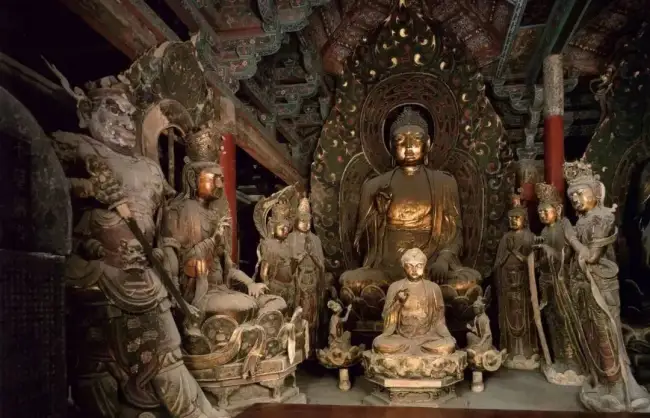
Lower Huayan Temple is centered around the Sutra Hall. It contains over 18,000 volumes of Buddhist sutras. Here are two of the most notable things to look out for.
On the central altar of the Sutra Hall, there are 29 (in a total of 31) colored clay statues of Buddha. They epitomize the beauty and craft of Liao Dynasty Buddhist sculpture art. And among them, the most exquisite one has to be the “Oriental Venus,” a smiling Bodhisattva showing her teeth.
She stands upon the lotus with bare feet at about 2 meters tall (6’ 7”). Her posture appears natural and at ease, resembling an “s” shape. She is smiling with her lips slightly parted, showing her bright teeth, which is incredibly rare in ancient Chinese art.
Around the Sutra Hall, you’ll find the only wooden architectural model of the Liao Dynasty in China. It has been called the “National Treasure” that is unique throughout the entire Chinese history by scholars and historians. This architectural model is in fact a two-story pavilion-styled cabinet for storing sutras, with a total of 38 compartments.
This cabinet is built completely realistic as a piece of architecture. It is a miniature pavilion with roofs, bridges, cornices, ridges, eaves, and beams, decorated with over 37 types of patterns. It is incredibly complicated and detailed considering its size.
3. Huayan Pagoda
Huayan Pagoda is the second largest mortise and tenon joint structured pagoda in China. It is most famous for its underground palace, which is made entirely of 100 tons of copper. It has been named the “Thousand-Buddha Underground Palace” because of the statues it contains.
How to Get to Huayan Temple
If you’re traveling to Shanxi from other cities or countries, fly into Taiyuan Wusu International Airport or Datong Yungang Airport. You can also take a train to Datong South Railway Station.
Once you’re in Datong, you can get to Huayan Monastery by taxi from almost anywhere in the city. Or take public bus No. 38 to Huayan Temple stop.
Attractions Nearby Huayan Temple: Other Things to Do in Datong
- Nine Dragon Screen is one of China’s finest screen walls with nine coiling dragons made of colored glazed tiles. Built in 1392, it is regarded as the most captivating of the three renowned Nine Dragon Screens in China, and also the oldest and largest.
- Yungang Grottoes in Datong is renowned for its more than 51,000 Buddha statues and engravings dating back to 5th and 6th century. There are 252 caves in total, spanning over 1 km.


