



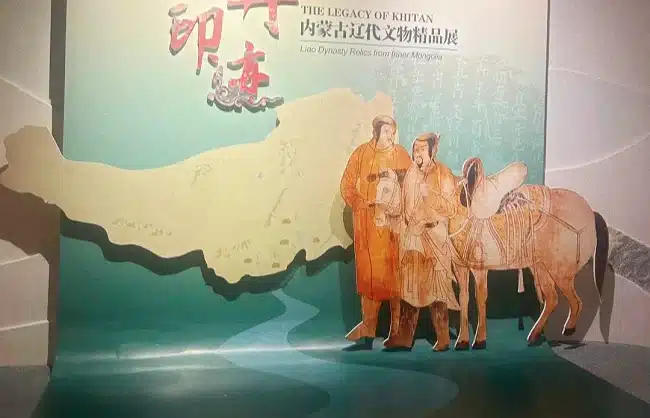
On the spectrum of ancient Chinese dynasties, the Liao dynasty often appears to be a “forgotten” empire. The Liao dynasty (907-1125 AD) was established by the Khitan people, a nomadic ethnic group in northeastern China. It was known as the Great Khitay and sometimes referred to as Dafan. It once co-existed with and rivalled the Northern Song dynasty.
Though the Liao dynasty receives disproportionate attention compared to other famous Chinese dynasties, its important influence remains undeniable–its pioneering nomadic-agricultural dual governance model was widely learned and put into practice by the subsequent dynasties such as the Jin, Yuan, and Qing.
Content Preview
- Key Facts of the Liao Dynasty: An Overview
- Liao Dynasty’s History and Timeline: The Rise of Khitan to The Collapse in Jin’s Attack
- Culture, Art, Religion & Daily Life of the Liao Dynasty
- Liao Dynasty Daily Clothing
- Military Organization & Conflicts
- Where to Explore Liao Dynasty Heritage Today
- Explore Liao Dynasty History and Heritage with China Xian Tour
Key Facts of the Liao Dynasty: An Overview
- Also known as: the Great Khitay or Dafan
- Chinese name: 辽朝 (liáo cháo)
- Time period: 907-1125 (some believe it should be 916-1125)
- Founder: Yelü Abaoji (the Emperor Taizu of Liao)
- Capital (main): Upper Capital Linhua Prefecture (the present-day Balin Left Banner, Chifeng City in Inner Mongolia)
- Territory: east to the Sea of Japan; west to the Altai Mountains; north to the Ergun River and Outer Xing’an Range; south to the Baigou River in central Hebei and northern Shanxi
- Highlights: governing according to local customs; Two- Council System; nomadic-agricultural dual model
Liao Dynasty’s History and Timeline: The Rise of Khitan to The Collapse in Jin’s Attack
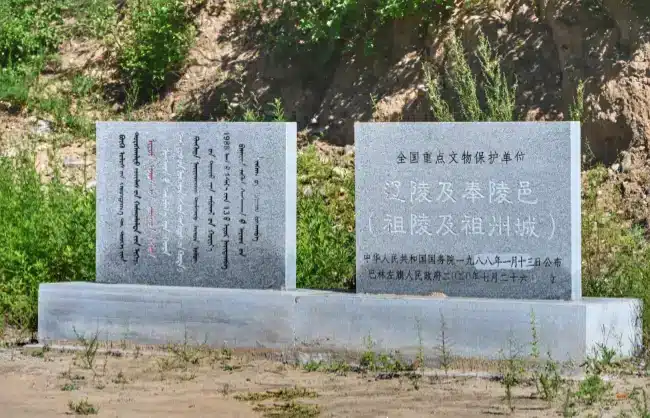
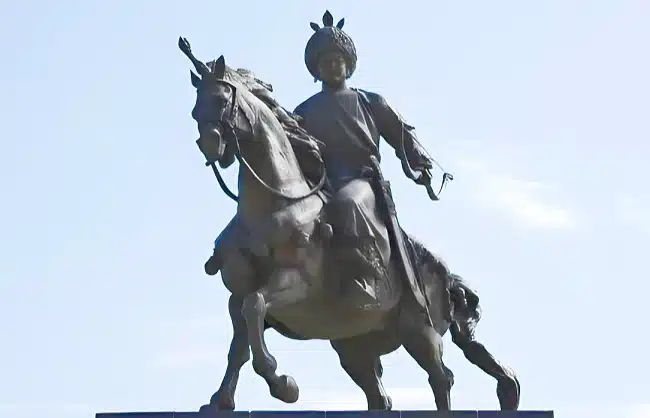
How Did the Liao Dynasty Start?
In 907, Abaoji (Emperor Taizu) rose to power as the Khan of the Khitan. Nine years later, Abaoji officially established “Khitay” as the title of his empire. When Abaoji’s second son, Yelü Deguang, led the army southward and captured Bianjing (the current Kaifeng, Henan) in 947, he took the throne as the Emperor and changed the state title to “Liao”.
The name “Liao” was said to be associated with the Khitan people’s origin– the Liao River, conveying the commemoration of their roots. Meanwhile, “Liao” had the same implication of “iron” as the name “Khitan” did. It was a symbol of their ambition and persistence.
Liao Dynasty Emperors, Key Rulers & Empress
- Yelü Abaoji/Emperor Taizu(r. 907-926)
- Shulü Yueliduo/Empress Chunqin (r.926-927)
- Yelü Deguang/Emperor Taizong (r.927-947)
- Yelü Ruan/Emperor Shizong (r.947-951)
- Yelü Jing/Emperor Muzong (r.951-969)
- Yelü Xian/Emperor Jingzong (r.969-982)
- Yelü Longxu/Emperor Shengzong (r.982-1031)
- Yelü Zongzhen/Emperor Xingzong (r.1031-1055)
- Yelü Hongji/Emperor Daozong (r.1055-1101)
- Yelü Yanxi/Emperor Gongzong (r.1101-1125)
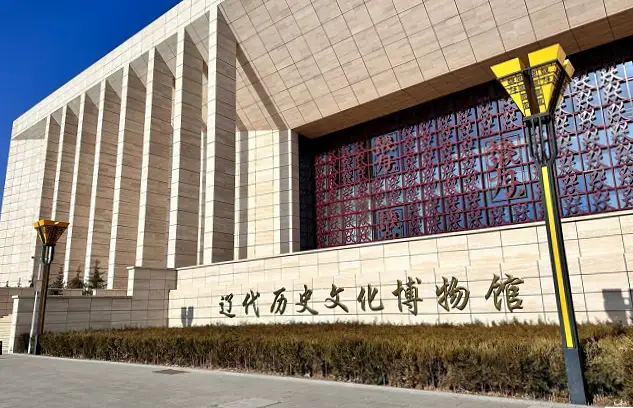
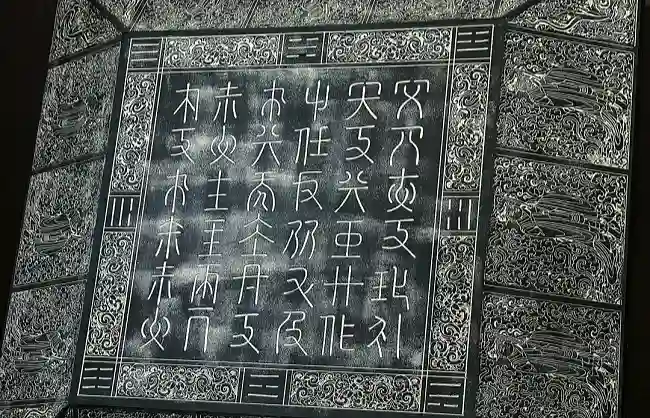
Liao Dynasty Timeline: Key Dates and Milestones
- 916 AD – Abaoji proclaimed himself the Khitan Emperor.
- 920 AD – Abaoji coined the Khitan Large Script to announce the empire’s cultural independence.
- 926 AD – The Khitan Empire annihilated the Bohai Kingdom (an ancient ethnic minority regime in the present-day northeastern China, the northeastern Korean Peninsula, and part of the Russian Far East).
- 936 AD – The empire included the Sixteen States of Yanyun (states centered on the current Beijing and Datong, Shanxi) into its territory.
- 947 AD – Yelü Deguang annihilated the Later Jin and took the throne. The state title was changed to “Liao”; a system of “Five Capital Cities” was carried out to facilitate administration.
- 982-1031 AD – The Emperor Shengzong implemented a series of reforms in the slavery system. These measures consolidated the feudal authority and contributed to the golden age of the Liao dynasty.
- 1005 AD – Liao and the Northern Song signed the Treaty of Tanyuan at Puyang, Henan. This treaty secured a century of peace between the two regimes.
- 1063 AD – Chongyuan, Emperor Daozong’s uncle, and his son Nerugu launched an imperial coup, but failed. Chongyuan ended up committing suicide. But this coup exposed the deep-rooted political struggles within the imperial court.
- 1112 AD – Emperor Gongzong held a fish banquet (using the first fish caught in the second month of the Chinese calendar) in the Jurchen Wanyan clan to pay homage to the nobles and tribe leaders. The banquet combined ritual, entertainment, and political functions.
- 1114 AD – Aguda, the leader of the Jurchen Wanyan clan, launched a rebellion against the Liao dynasty.
- 1115 AD – In the Battle of Hubu Da Gang, the 2500 soldiers of the Jin army defeated 700,000 Liao soldiers. It was a deadly blow to Liao’s military force.
- 1122 AD – One of the Liao capital cities, Xijin Prefecture, was captured by the Jin army.
- 1125 AD – Emperor Gongzong of Liao was captured.
The Fall of the Liao Dynasty
The decline of the Liao dynasty may have been discernible with the outbreak of Chongyuan’s Rebellion in 1063. Chongyuan and his son, being the major conspirators, allied with other 400 superior officers and rulers from the neighboring countries. Although the Rebellion failed, the conflicts between different factions continued and even escalated. This might have undermined the imperial authority internally.
When Emperor Daozong was in power, the political corruption aggravated due to his ignorance of treachery and the blind execution of loyal subordinates. What’s worse is that Daozong, as a loyal Buddhist, spent such a large proportion of fiscal revenue on Buddhist rituals and architecture that the national strength was further drained, while the social conflicts were stirred up.
The chaos in the imperial court and the emperor’s ineffective governance formed a mixed force that fueled the fall of the Liao dynasty.
Liao Dynasty Capital and Territory
As mentioned in the Timeline section, the Liao dynasty implemented a “Five Capital Cities” system in 947. The main capital city was the Upper Capital Linhuang Prefecture in Inner Mongolia.
And the other four capital cities were: Western Capital Datong Prefecture in Shanxi; Southern Capital Xijin Prefecture in Beijing; Eastern Capital Liaoyang Prefecture in Liaoning; as well as Middle Capital Da’ding Prefecture in Ningcheng County, Chifeng City of Inner Mongolia.
In its heyday, Liao’s territory reached Sakhalin Island to the northeast, the Selenge and Shilka Rivers to the north, the Altai Mountains to the west, and the line formed by the Hai River (Tianjin), Baxian County (Hebei), and Yanmen Pass (Shanxi) to the south.
This line in the south bordered the Northern Song, which ruled the Central Plains at that time. This confrontation created a stalemate between the two rival empires.
Culture, Art, Religion & Daily Life of the Liao Dynasty
Liao Dynasty Culture: Fusion of Khitan & Han Traditions
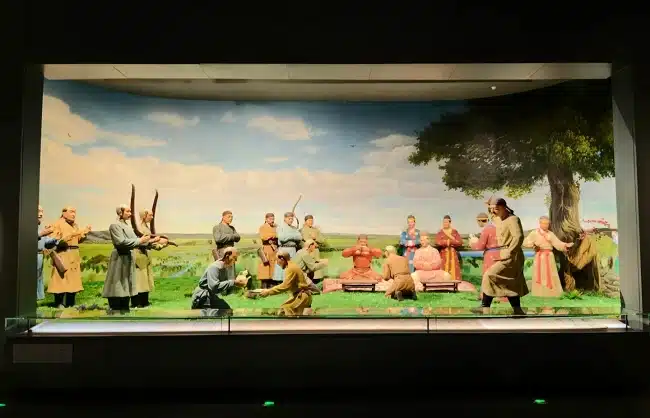
Although the Liao dynasty was established by the Khitan people, it absorbed certain Han traditions and policies. To begin with, Han scholars made considerable contributions to the creation of the Khitan Large Script because it imitated the shape of Han characters and borrowed phrases from the Han culture. That explains why Khitan nobles excelled at writing Han-style poems.
In addition, the Liao government adopted a similar Imperial Examination policy for official selection. There were hundreds of Han officials serving the Liao imperial court by the time of Daozong’s reign, and the Liao people learned more about Confucianism, which guided Han people’s morality and values. Meanwhile, traditional Han customs like drinking chrysanthemum wine and celebrating the Double Ninth Festival became trends among the Liao people.
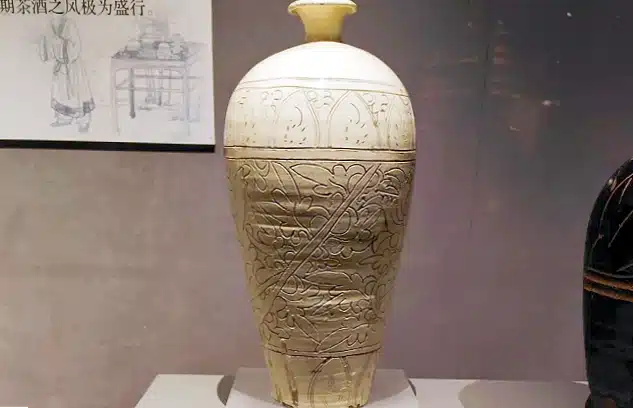
But that does not mean the complete assimilation of the Khitan culture. In fact, extant Liao dynasty mural paintings prove that the Liao people lived a nomadic life driven by the availability of water and grass. A “carriage tent” could be either a means of transportation or the palace of the emperor. Their major food sources came from keeping livestock, hunting, and collecting. Liao’s wine brewing technique also influenced the dietary habits of the Han and Bohai People living along the border.
Religion: Buddhism, Shamanism, Taoism
Shamanism was undeniably an ancient belief of the Liao Khitan people. It centered on mountain deity worship. This belief originated from the myth of the founding ancestor of the Khitan ethnicity and the emergence of the Eight Tribes in the Moya Mountain. Other traditional beliefs preserved by the Khitan people, such as sun worship and heaven worship, also had their roots in Shamanism.
The Liao dynasty inherited the Buddhist traditions from the prosperous Tang period and spread them northwards after the building of Kaijiao Temple in Longhua Prefecture in 902. Following the territorial expansion, especially the control over the Sixteen States of Yanyun, the region quickly rose as the center of Buddhist culture.
Emperors throughout the Liao dynasty adopted protective policies and revered Buddhism – Buddhism reached its peak during the reigns of Emperor Xingzong and Daozong.
At that time, not only did eminent monks interact closely with the imperial family, but large-scale projects for collating, editing, and printing Buddhist scriptures received substantial support. The Khitan Tripitaka, one of the most representative publications, held a special status in the history of Buddhism.
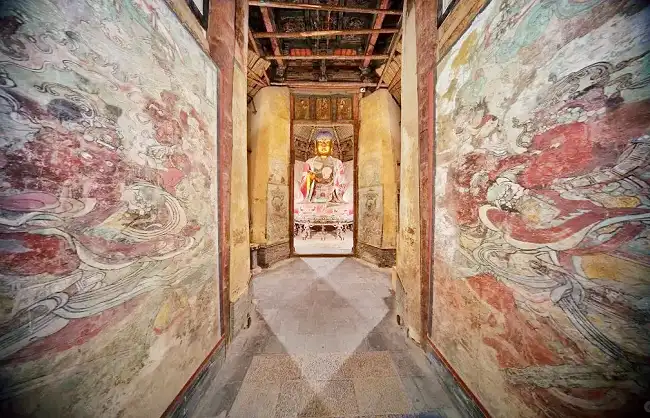
The extant Buddhist scriptures and mural paintings discovered at the Yingxian Wooden Pagoda and the Tianbao Temple Pagoda also showcased the remarkably high level that the Liao Buddhist art had reached.
Besides Shamanism and Buddhism, Taoism left its footprint in the Liao dynasty’s religious culture. The most influential part was the Taoist Feng Shui theory. For example, the Khitan people followed the burial principles and layouts directed by Taoist Feng Shui. Moreover, some Khitan experts of the Yin-Yang theory established a connection between the five signature colors and the five directions, which corresponded to the five Taoist legendary creatures.
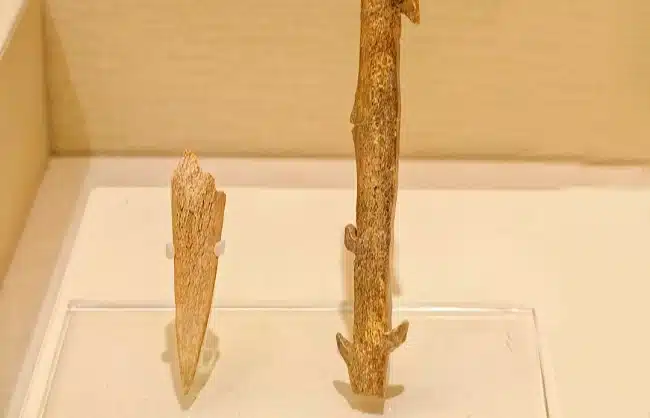
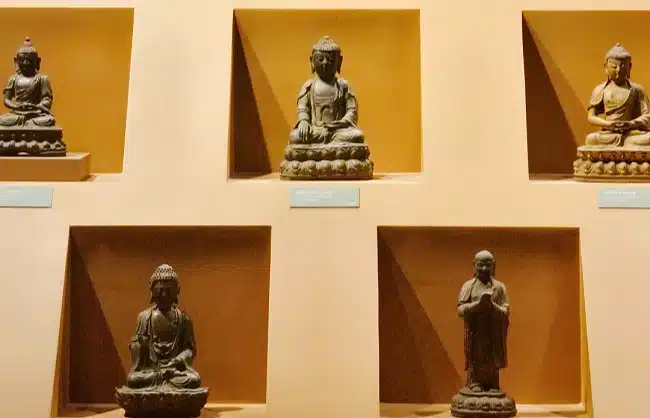
Liao Dynasty Buddhist Sculptural Art
Having Buddhist temples all over the country means that Buddhist sculptures were also familiar to the Liao people. The Liao Buddhist sculptural art inherited the vibrant and graceful style of Tang Buddhist art, while incorporating classic Khitan aesthetic characteristics into realistic artistic techniques learned from Northern Song Buddhist sculptures. The Liao masterpieces embodied both vigorous spirits and elegant charm.
Seated Guanyin Bodhisattva (c.10-12th century) was one iconic category of Liao Buddhist sculptures. Each of them presents quite similar designs–the Bodhisattva’s crown is generally flat, with a central hairpin often adorned with a jewel.
The Bodhisattva has a robust physique, featuring broad shoulders and a muscular chest. With a relatively long upper body, the Bodhisattva’s posture, whether seated or standing, might look a bit rigid and stiff, but the overall form is aesthetically striking and magnificent.
Liao Dynasty Daily Clothing
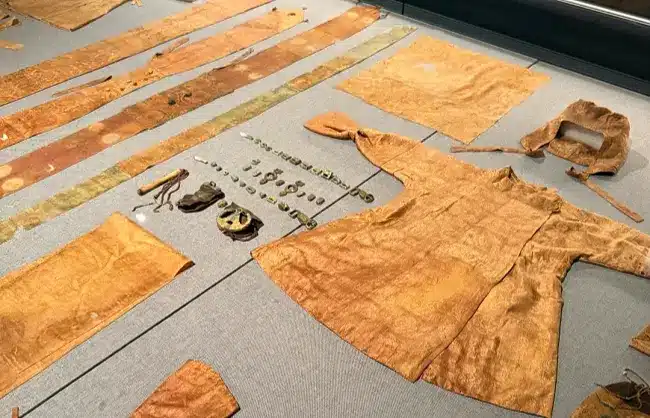
As the ethnic integration accelerated, the Khitan people gradually adopted Han-style attire–especially the imperial family and the upper class. Meanwhile, the Liao clothing still retained salient nomadic features to resist the harsh northern wilderness. It consisted of headwear, robes, trousers, and boots.
The typical Khitan male clothing was represented by tight-sleeved, narrow robes; waistbelts; and long boots. They were designed for mounted archery when hunting. The Khitan Women’s attire primarily featured blouses, skirts, robes, and sashes.
To survive the extremely cold winter, the Liao people not only utilized animal furs for warmth, but also mastered the techniques for applying high-quality fabrics and decorative, colorful patterns.
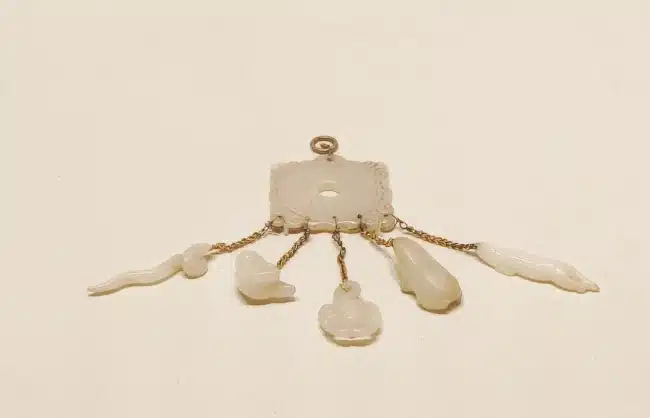
Military Organization & Conflicts
The military forces of the Liao dynasty could be broadly divided into four types: the imperial guard, tribal armies, Han troops from the Five Capitals, the Bohai Navy, and the armies of vassal states. These forces either served in the imperial palace or in garrisons across the states.
Among all the military conflicts between the Liao dynasty and its neighbors, the Liao-Song War was probably the most well-known. The trigger was the Liao’s conquest of the Sixteen States of Yanyun, which Emperor Taizu of Song wished to retrieve right after the establishment of the Northern Song.
The war included a series of battles from 979, when Emperor Taizong of Song annihilated the Northern Han, an ally of the Liao dynasty. Initially, the Song army secured the upper hand in the northward expedition against the Liao dynasty. However, the expedition ended up as a failure due to the shortage of supplies and forces.
The first 25-year phase of the War ended when the Liao signed the Treaty of Tanyuan with the Song. The two empires shared a peaceful stage in the following century. The founding of the Jin dynasty stimulated Song’s second attempt to defeat the Liao army.
Eventually, the Song-Jin maritime alliance received vehement resistance from the Liao army, and the mission ended in failure.
Where to Explore Liao Dynasty Heritage Today
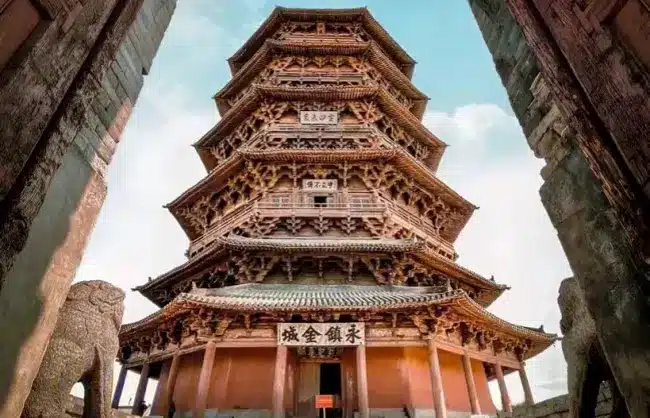
The Pagoda of Fogong Temple (Ying county, Shanxi province)
The Pagoda of Fogong Temple was described as “from afar, it resembles a pillar supporting the heavens; up close, it resembles a hundred-foot lotus”. This Liao dynasty Pagoda, built in 1056, was certified by Guinness World Records in 2016 as the “tallest wooden tower in the world”.
Being the “Museum of Bracket Systems”, there are 59 distinct forms of bracket sets for load-bearing and cushioning. Not a single iron nail was applied to the entire structure, but mortise-and-tenon joints interlocked all the wooden components. Each level of the five-storey Buddhist Temples progressively deepens in spatial ambiance and religious symbolism.
From the seated clay statue of the Shakyamuni Buddha, surrounded by murals of the Six Buddhas, to Wisdom Fist Mudra surrounded by the Eight Great Bodhisattvas, each masterpiece reveals the captivating artistry of the Liao dynasty Buddhism.

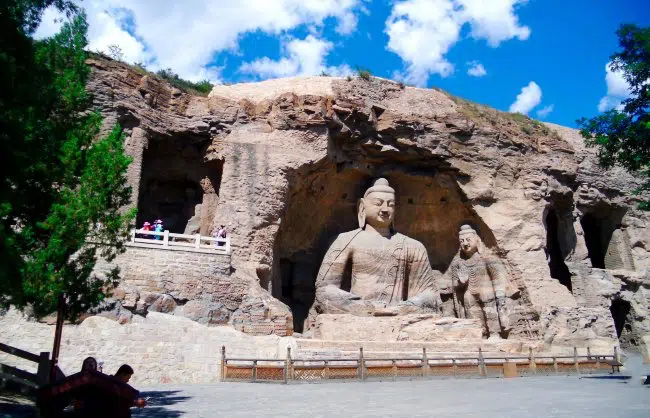
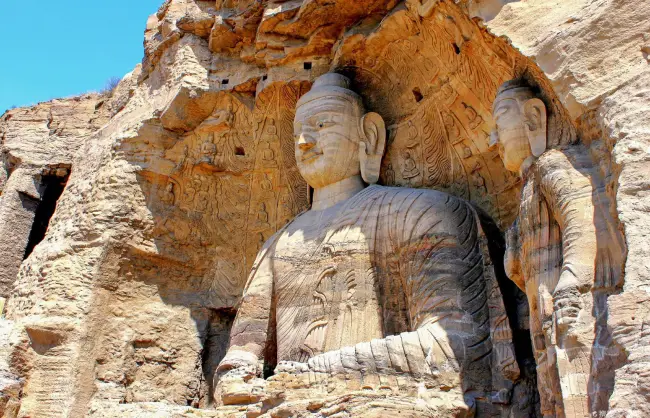
A high-speed train from Beijing takes you to Datong for the magnificent Yungang Grottoes, Shanhua Temple, Nine-Dragon Wall, Hanging Temple, and the ancient Yingxian Wooden Pagoda.
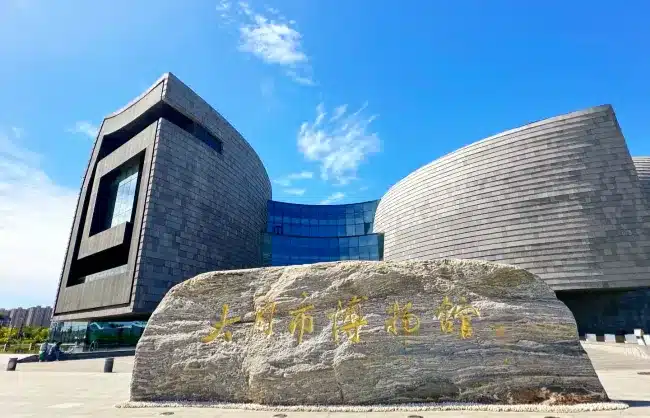
Datong Museum – Seated Guanyin Bodhisattva
As mentioned earlier, the sculptures of the seated Guanyin Bodhisattva formed a major category of the Liao dynasty’s Buddhist art. And one of the most famous Liao gilded bronze seated Guanyin sculptures was displayed in the Datong Museum.
The Guanyin holds the Dharma Seal in the right hand and the Meditation Seal in the left. The garments are splendid, adorned with intricate patterns–vivid, serpentine lines winding across the fabric. They are known as the serpentine drapery.
Besides, the Datong Museum also set up a Liao- and Jin-themed museum to introduce how the Khitan people constructed their cities on the Silk Road, how the Huayan Temple maintained a special status in the Liao imperial family, and how the commercial exchanges and ethnic integration developed between the Khitan people and their neighbors.
The Western Liao River Cultural Route– Hongshan Culture
If you prefer not to stick to one aspect of the Liao culture in your trip, the Western Liao River/Hongshan Cultural Route might be your pick. The route combines museums, architecture, and imperial mausoleums, so you can get diverse experiences at once.
The first stop is the Liao Upper Capital Museum in Balin Left Banner, where the mural paintings, tomb inscriptions, and carved stones record the Liao dynasty’s progress to a great empire that dominated the Eurasian Steppe.
The next stop includes the Liao dynasty’s founding emperor, Abaoji, and his empress’s mausoleum, and the Balin Right Banner Museum, which preserves unique Hongshan jade and burial objects from the imperial tombs.
The last stop is the Qingzhou Pagoda– this octagonal, seven-storey pagoda is a brick-and-wood structure standing 73.27 meters tall. It was commanded by Emperor Xingzong for the commemoration of his mother, Empress Dowager Xiao.
The body of the Pagoda is adorned with 856 bronze mirrors, 2240 wind chimes, and 56 Heavenly King’s relief carvings. Its exterior is pure white like jade, and inside the Pagoda are seven sealed chambers designed for the secret storage of Buddhist scriptures and relics.
Explore Liao Dynasty History and Heritage with China Xian Tour
When the history of the Song-Liao War remains a scholarly interest, when the decoding of the Khitan Large Script is underway, when a tourist is amazed by the vivid seated Guanyin sculpture…these are moments showing that the memory of the Liao dynasty is not wiped out throughout history.
If this guide kindles your interest in the Liao dynasty somehow, you are more than welcome to join China Xian Tour for a tour of the Liao dynasty legacies – let us know your preferences, and the rest is on us – our professional consultation and guide groups will come up with a personalized China tour itinerary exclusively for you. We are here to help with a perfect journey through Chinese history and culture!