

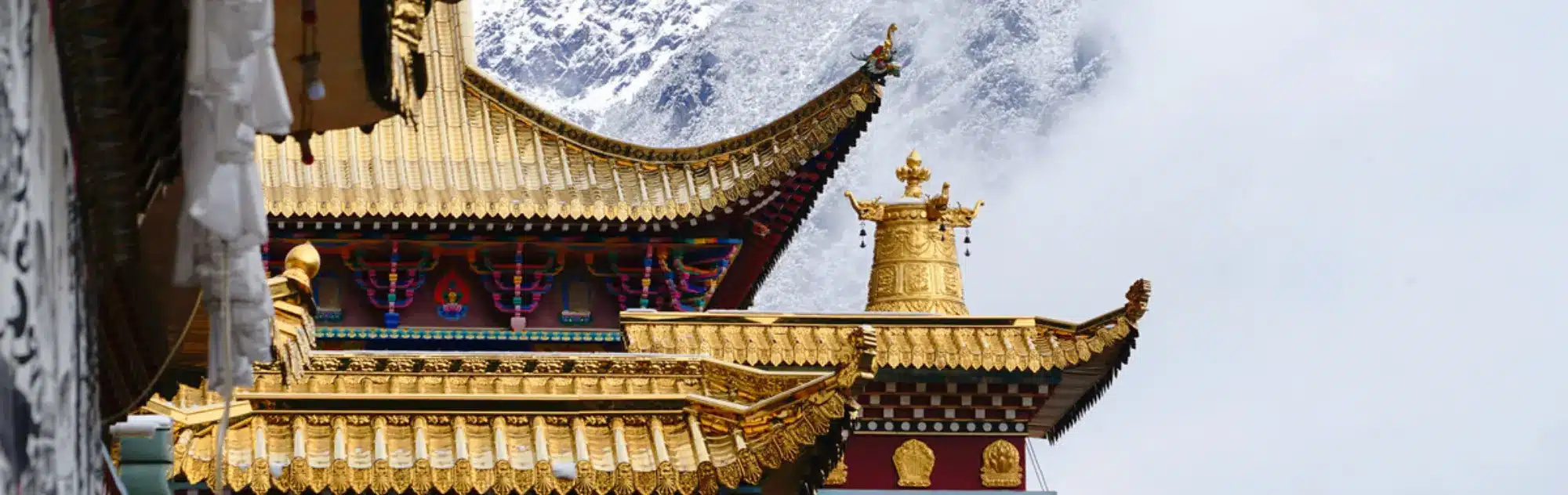
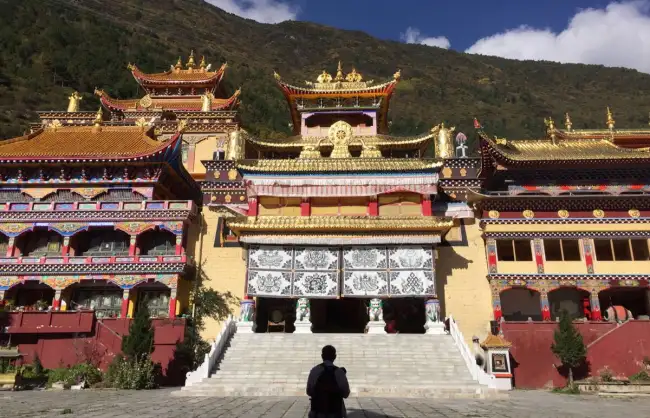
Nanwu Temple, located in the south of Kangding City, Sichuan province, is an ancient Tibetan Buddhist temple with a history of thousands of years. Today’s Nanwu Temple is one of the ten ancient attractions of Kangding City.
Nanwu Temple Facts
- Location: No. 66, Lucheng South Road, Nanwu Village, Kangding City, Garze Tibetan Autonomous Prefecture, Sichuan Province
- Opening Time: 8:00-16:00
- Ticket Price: Free of charge
History of Nanwu Temple
The predecessor of the Nanwu Temple is the “Namu Temple”, which means the “fairy temple”. It is said that Namu Temple was established during the Northern Song Dynasty (960-1127), and originally belonged to the White Sect of Tibetan Buddhism. However, in the late Ming Dynasty (1368-1644) it was destroyed in the war. Nanwu Temple was rebuilt until 1646, while it changed to a Yellow Sect of Tibetan Buddhist temple according to the instructions of the Fifth Dalai Lama.
During the Qing Dynasty (1644-1911), local officials went to Beijing to ask Emperor Qianlong for an inscription for the temple, and Qianlong mistook “Namu” for “Nanmu” of “Namo Amitabha” and wrote a plaque “Nanwu Temple”. Hence the name of Nanwu Temple has been continued.
On May 7, 2017, living buddha Daji passed away at Nanwu Temple at the age of 96. He is a prominent monk of the Gelugpa school of Tibetan Buddhism and enjoys a high reputation in both Tibetan and Chinese. Not only because of his profound knowledge of Buddhist theory but also because he was one of the most important masters who brought Tibetan Buddhism to the Han ethnic group inhabited areas.
What to See in Nanwu Temple
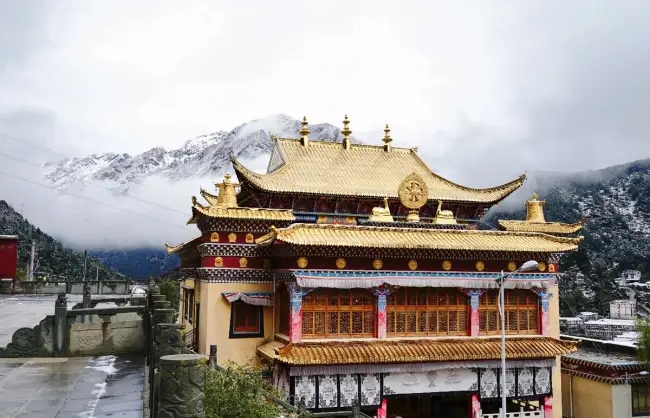
Nanwu Temple is built with a wood and stone structure, similar to a Beijing Siheyuan layout. It looks magnificent with the pavilions decorated with Tibetan paintings. The main hall of Nanwu Temple is about 20 meters high, with side halls on both sides. Various flowers are planted in the temple, and there are many animals released on the hill behind the Nanwusi temple, such as rabbits, peacocks, and pigeons. It not only brings vigor and vitality to this ancient temple but also shows the harmonious relationship between humans and nature.
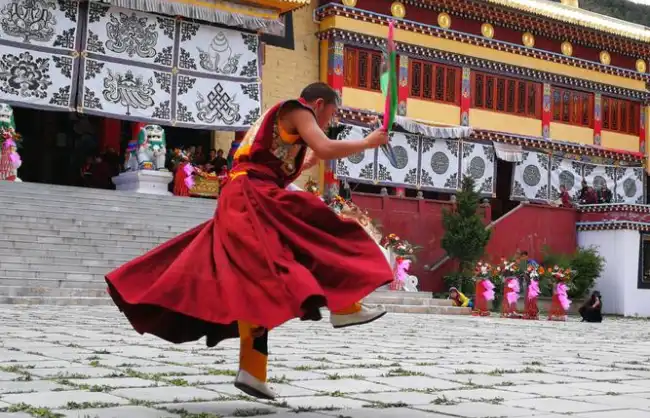
Every year on the eighth day of lunar April, the Vajra dance performance of Nanwu Temple is a great event. Vajra dance is a type of religious dance with both ornamental and sacred meanings. Monks dress in vestments with sacred instruments in their hands. Vajra dance performers wear special masks and colorful costumes, holding Buddha instruments to perform with solemn music. Each gesture has a corresponding Buddhist meaning, and each role represents a different Buddha.
Nanwu Temple is not only an important place for believers to carry out religious activities, but also a great place for tourists to get close to and understand Tibetan Buddhist culture. Various religious assemblies are also held in the Nanwu temple, such as the Vajra Dharma assembly, Prayer assembly, etc., attracting many people to visit.
How to Get to Nanwu Temple
From Chengdu: You can take a direct flight from Chengdu Shuangliu International Airport to Kangding Airport, then take a taxi to your destination. Or take a direct bus from Chengdu Xinnanmen Bus Station to Kangding then take a local bus to Nanwu Temple.
From Daocheng Yading: There are direct buses from Daocheng Bus Station to Kangding Bus Station. It departs at 6:10 am and takes around 10 hours with 150 yuan/person. Or you can drive along the S216 highway to Kangding City, passing Litang.
There are many attractions on the way to Kangding City, and if you want to stop by, we’d love to customize your travel to Kangding in Sichuan.
Attractions nearby Nanwu Temple
Paoma Mountain: You can overlook the whole view of Kangding City from Paoma Mountain. In order to commemorate Buddha Sakyamuni’s birthday, the locals hold a grand activity every year on the eighth day of lunar April.
Jingang Temple: It is located at the foot of Paoma Mountain and is one of the famous temples of Tibetan Buddhism Nyingma (Red Sect) in Kangding City.


