


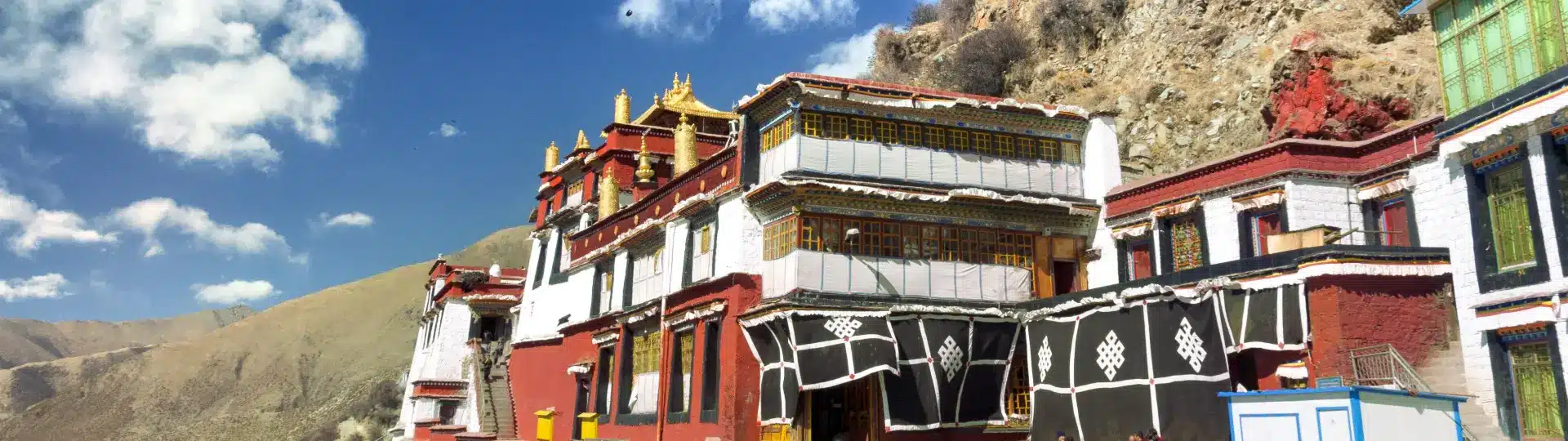
At an elevation of 4325 meters above sea level, the Tidrum Nunnery is situated northwest of Drigung Monastery, approximately 110 kilometres from Lhasa. Hermitage caves can be found in the hills that encircle the nunnery, which is situated in a charming valley. Prayer flag threads are strung from hill to hill along the valley. The nunnery has managed to elude the global trend of modernisation. It remains an oasis of solitude and peace and a hidden gem to visit for your Tibet Travel.
In 2010, there were 205 monks at the Tidrum Nunnery.
Quick Facts about Tidrum Nunnery
-
- In Chinese: 直贡梯寺
-
- Location: Menba Township, Mozhu Gongka County, Lhasa City, Tibet Autonomous Region
- Opening Hours: 6:00-16:00
Ticket Price: RMB45 - Highlights: Heavenly burial platform, Tidrum Hot Springs
The History of Tidrum Nunnery
The nunnery was established here because Yeshe Tsogyal, the consort of Guru Rinpoche and the wife of Tibet’s 37th King Trisong Detsen had a strong connection with the valley. The nunnery’s spiritual leader is believed to be a reincarnation of Yeshe Tsogyel.
In the past, Tidrum Nunnery held a very illustrious place in Tibetan religious history. It was the patriarch of the Zhigong Kagyu School of Tibetan Buddhism and the golden ancient path that connected the Lhasa Plain with the grasslands of northern Tibet.

The Layout and Architecture
Tidrum Nunnery is set up like a lengthy courtyard in accordance with the Buddhist sutra’s world order. The Odandan Bodhi Temple in Magadha, which was constructed by the ancient Baltic Dynasty of India, is the model for Tidrum Nunnery. The temple’s overall design is straightforward and regular. There are green spaces on the left and right sides of the area, along with stone statues and releasing ponds outside the temple gate.
The temple houses the tombs of India’s eight greatest Buddhist monks as well as the relics of the patriarchs of the Kagyu School. The Lingta Hall, the Buddha Hall, the meditation chamber, the Tashi Guomang Hall, and the Dharma protection Temple are the principal halls that run from south to north. Every hall features a roomy platform to enhance the setting of the historic temple.
The nunnery welcomes guests and even has a few rooms they rent out to travelers. In addition there is a guesthouse and a tent camp with rudimentary amenities. There is a small eatery which serves thukpa (potato curry soup) and a few local teahouses. Travelers looking for a truly unique experience among the locals in the open countryside of Tibet can customize a Tibet Trip which stops at the Tidrum Nunnery.
Tidrum Hot Springs
The nunnery was established near the Tidrum natural hot springs and pilgrims and visitors come here to bathe in the therapeutic waters. The springs are said to beneficial to those ailing from gastritis, arthritis, rheumatism and other illnesses. The waters rejuvenate the body and act as a detox for the soul washing away sins and impurities both physical and spiritual.
There are two pools separated by a wall; one pool for men and one for women. The water temperature is about 35°C and is beautifully translucent. Due to the popularity of the springs among locals it is recommended to visit the Tidrum hot springs on week days when there are fewer bathers.
Travel Tips
- Tidrum is a pedestrian-only community, and cars must park in a lot at the settlement’s outskirts to contribute to the tranquil ambiance.
- Be mindful of regional traditions and avoid going to a sky burial without authorisation. Avoid chasing or making loud noises when you attend a sky burial.
- Tourists who are fortunate enough to visit Tidrum Nunneryon their Tibet tours can enjoy a truly unique experience because of its isolated location and rural atmosphere.
- Taba Township in Mozhu Gongka is famous for its pottery production. The workmanship is primitive and simple, and you can visit if you are interested.


