
Tibet is a mystical place that draws numerous tourists because of its unmatched elevation, extensive historical and cultural legacy and unparalled natural wonders. For most visitors, traveling to Tibet means exploring the rich historical legacy and strong religious culture in addition to the breathtaking scenery of the lakes and mountains. In this article, we list 17 unmissable things to do in Tibet to help you grasp its best essence.
Content Preview
- 1. Visit the Potala Palace
- 2. Venture to the Mount Everest on the Tibetan Side
- 3. Driving the G318 in Tibet: Scenic Sections & Highlights Included
- 4. Enjoy Time at the Barkhor Street
- 5. Visit the Monasteries in Tibet
- 6. Discover Yamdrok Lake
- 7. Challenge the Mount Kailash Kora (or circumambulation)
- 8. Discover the Mysterious Guge Kingdom Ruins
- 9. Visit Tashilhunpo Monastery: Shigatse’s Spiritual Heart
- 10. Experience Lhasa’s Sweet Tea Culture
- 11. Yarlung Zangbu Grand Canyon
- 12. Hiking in Motuo
- 13. Samye Monastery
- 14. Visit Lake Namsto
- 15. Celebrate Festivals with the Tibetans
- 16. Tangra Yumco
- 17. Sakya Monastery
1. Visit the Potala Palace
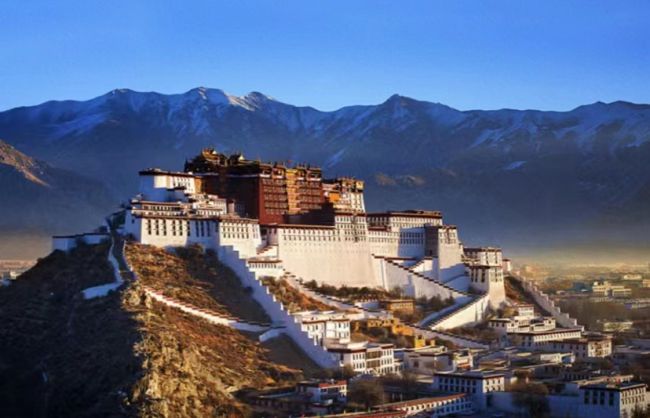
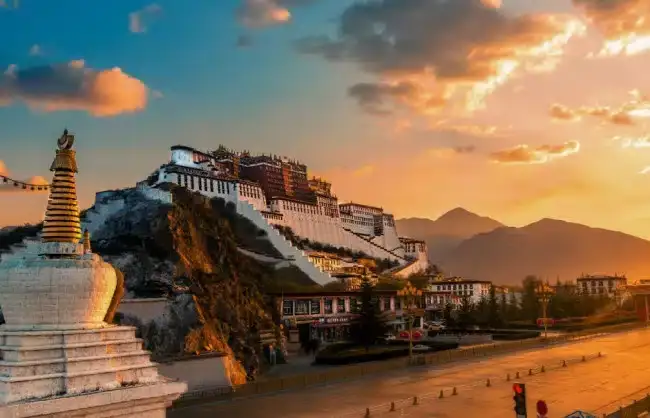
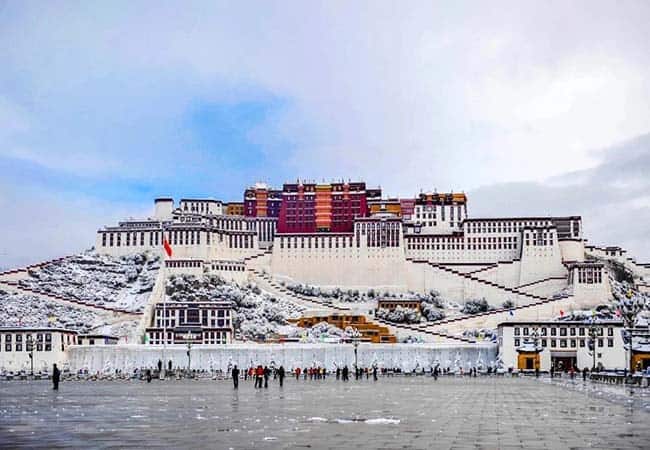
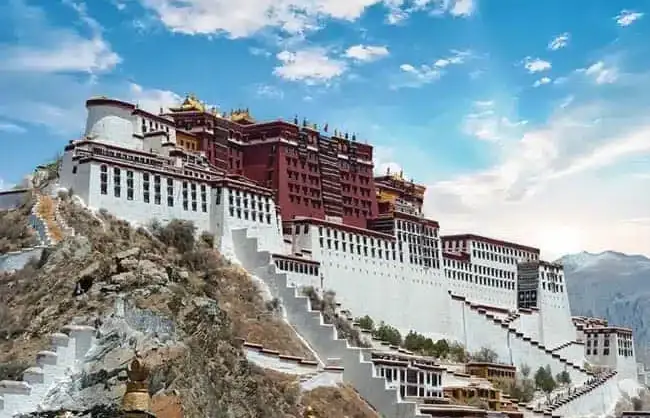
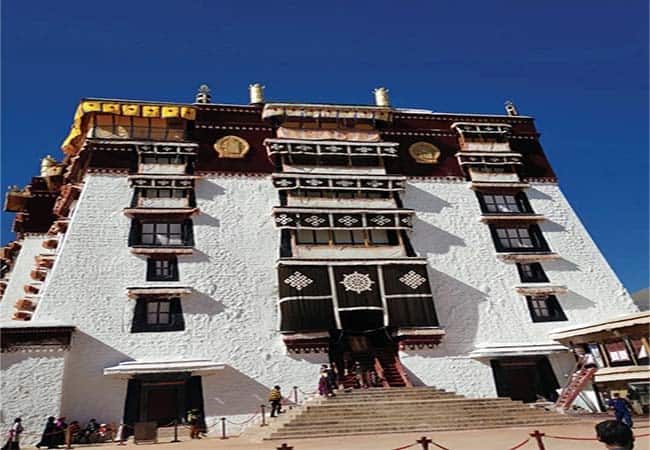
As an iconic symbol of the Tibetan Plateau, Potala Palace is, no doubt, one of the must-do things in Tibet for most visitors. Many visitors‘ first impression for Tibet should be its over 110 meters buildings standing on the Red Hill, with the surrounding snow-capped mountains as the background.
The palace covers an area of 360,000 square meters, with its main buildings standing about 117 meters high. It is very striking thanks to its distinctive red, white, and yellow exterior walls and tiered architectural complex. There are two sections within the palace, which are the White Palace and Red Palace.
As the exterior of the Potala Palace is awe-inspiring enough, it is still highly recommended to ascend the over 900 stairs to truly delve into its core value as a UNESCO World Heritage site. The globally rare treasures in its “three-dimensional Buddhist art museum,” such as the eight gold stupas and 2,500 square meters of millennia-old murals, will more than justify the entrance fee.
Tips for Visitors:
- Due to the high altitude (over 3,750 meters) and steep stairs, you’d better ascend slowly to mitigate the altitude sickness.
- Don’t touch artifacts, make loud noises or smoke while visiting.
- It’s now allowed to photograph inside the main buildings.
- Ticket: CNY 100 per person (CNY 50 from Mar. 16 – Apr. 30), please book the ticket 10 days in advance
- Opening Hours: 9:00-17:30
√Related reading: Tibetan Customs and Taboos Worth Knowing before Visiting Tibet
2. Venture to the Mount Everest on the Tibetan Side
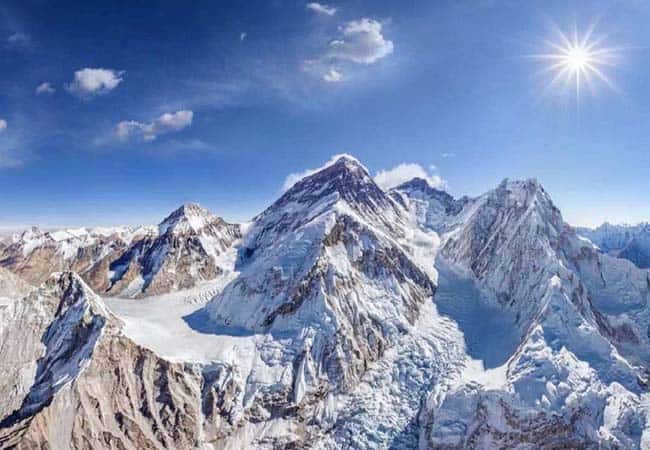
As the highest mountain in the world, boasting an elevation of 8848.86 meters, Mount Everest is the ultimate goal for many mountaineers worldwide. More than the Everest, the Himalayas are a continuous stretch of snow-capped peaks and abundant glaciers, with four peaks above 8,000 meters and 38 peaks above 7,000 meters scattering around this region. Also, you’ll likely to encounter some of the world’s most spectacular ice pinnacles during a Tibet tour to Mt. Everest.
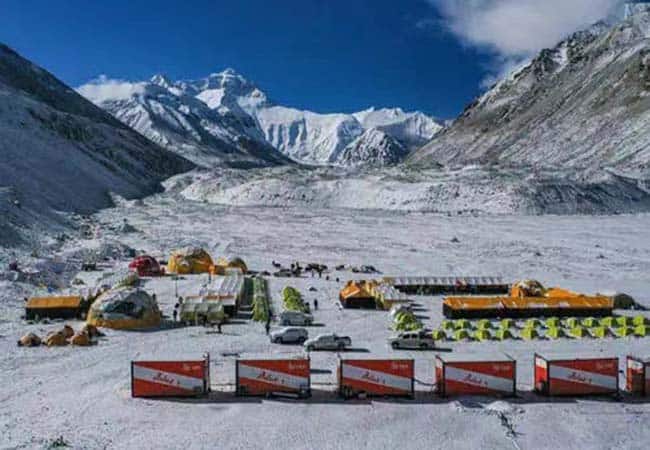
For most people, climbing Mount Everest is a challenging and expensive trekking trip. If you can’t climb Mount Everest itself, visiting Everest Base Camp at around 5,200 meters (17,060 feet) above sea level would be a great alternative. For many adventurous-seekers, staying one night at the EBC is a can’t miss thing to do during their Tibet travel. The camp base is about 19 kilometers (12 miles) from the mountain summit, offering awe-inspiring presences of Everest’s Golden Summit, and stunning high-altitude night sky. Along the way from Lhasa to the EBC, you’ll also encounter great viewpoints for other 8000+ meters high peaks, and visit Rongbuk Monastery (the world’s highest monastery).
- Best time to go: April to June: for stable weather, clear views of the snow-capped mountains. October to November: crisp and clear air, avoid the rainy season.
- Entrance fee for EBC: CNY 160 per person, CNY 120 for sightseeing bus.
- How far is the EBC from Lhasa: 600-700 kilometers
√Recommended Everest Base Camp Tours: 8 Days Adventure Tour of Lhasa-Gyantse-Shigatse-Mt. Everest
3. Driving the G318 in Tibet: Scenic Sections & Highlights Included
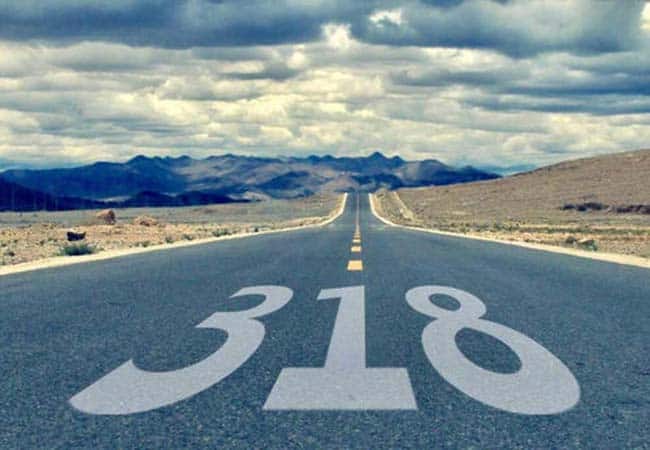
Whether you seek stunning natural views, thrilling adventures, or rich cultural encounters, driving along China National Highway 318 (G318) will be your lifetime experience. The journey will wow you with ever-changing snow-capped mountains, serene lakes, vast grasslands, and devoted pilgrims and kind nomads along the way.
Specific sections of the G318 features distinct breathtaking scenery. Below are some recommended segments of G318 in Tibet for your reference:
- Zuogong – Ranwu: Across the Nu River Bridge and the famous 72 Turns of Nu River. Marks the border between western Sichuan and Tibet.
- Ranwu – Nyingchi: Expect spectacular views of Tibet’s snow-capped mountains. When driving through Bomi, you’ll encounter beautiful sights like Ranwu Lake, Renlongba Glacier, and Laigu Glacier.
- Bomi – Nyingchi: Will pass through Lulang Town which features a Swiss landscape. Don’t miss local Lulang stone pot chicken, distance view of Mount Namcha Barwa, and sunset from Serkhym La Pass.
Nyingchi – Lhasa: The lower elevations and lush greenery make Nyingchi a popular destination in Tibet. Ready to be wowed by the view of Yarlung Tsangpo Grand Canyon during the journey.

4. Enjoy Time at the Barkhor Street
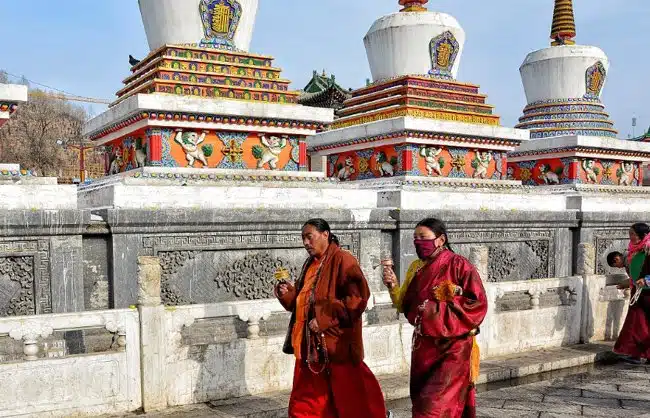
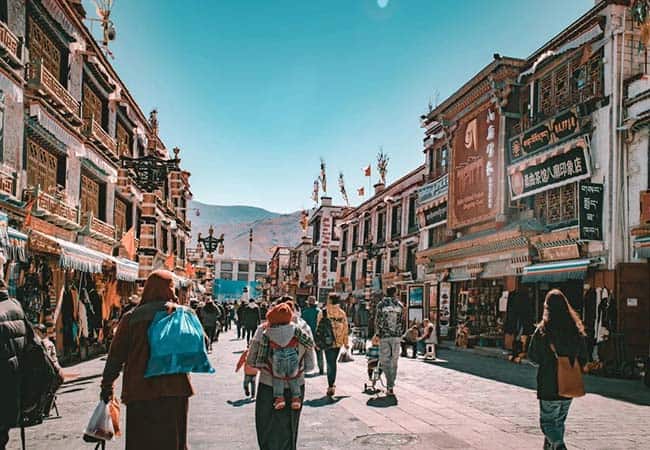
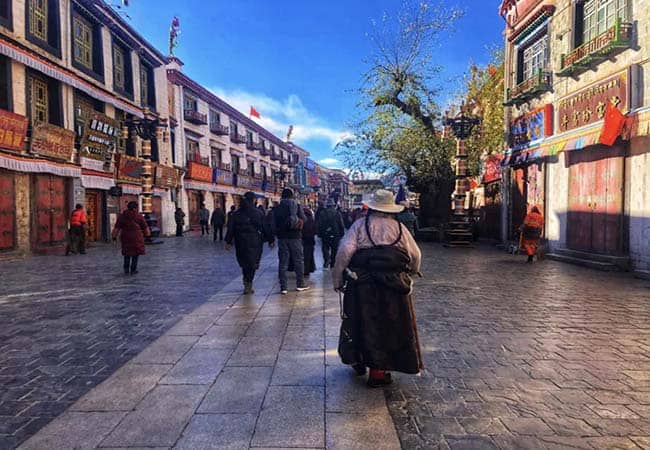
Wondering what to do in Lhasa? Barkhor Street should be your best choice. As the heart of Lhasa, Barkhor Street means “middle circle” in Tibetan. It is a circular pilgrimage route that encircles the Jokhang Temple – the end point for most pilgrimage. Everyday, there are large amounts of devout pilgrims walk clockwise along the street, spinning prayer wheels and chanting mantras. This ritual has been lasted for over 1,300 years.
More than pilgrims, the street is also a tapestry of Tibetan cultures. It is the neighborhood with over 20 ethnic groups, including Tibetans, Han Chinese, Hui, and Monpas. Over 120 handicraft shops lined up the street, offering precious souvenirs, such as Thangka paintings, Tibetan knives, and yak wool blankets.
Tips for visiting Barkhor Street in Lhasa:
- Early morning from 6:00-8:00 is the best time to witness the spectacular pilgrimage scene.
- The dusk moment, after 7:00 pm is a great time to capture photos of the golden Jokhang Temple.
- Don’t forget bargain when shopping. And Tibetan knives must be mailed.
- Please don’t photograph pilgrims’ faces without permission.
√Recommended Tibet tours:
5. Visit the Monasteries in Tibet
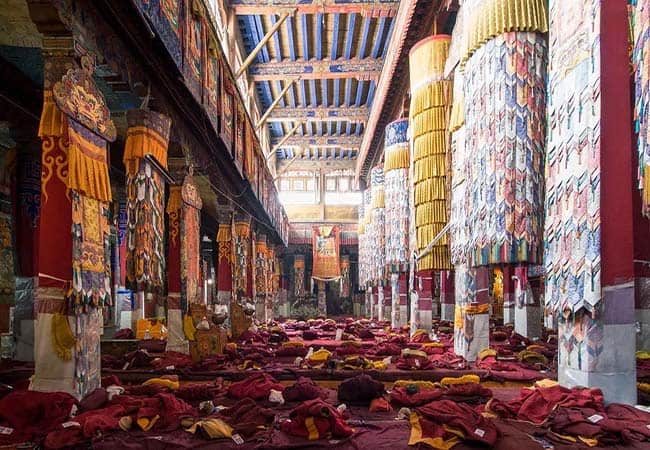
A top cultural thing to do in Tibet should be visiting some of the famous Tibetan monasteries. More than just religious sites, these monasteries and temples are the epitome of Tibetan culture, history, and spirit.
It is not an exaggeration to say that there are “one temple in one hundred steps” in Lhasa. In addition to the famous Jokhang Temple, there are also temples with various labels such as the “Four Great Forests”, “Three Great Temples”, and “Regent Residence”. Some temples are larger than villages, some are hidden in markets or residential houses, and those that used to be beautiful may be depressed and deserted.
Some people are obsessed with hanging out thangkas on the Seton Festival in Drepung Monastery, or prefer to go to Sera Monastery to watch a debate; others like to plunge into those unknown temples and listen to monks telling the legend that sounds unreal but has traces; more experienced players always run to the mountains in the northern suburbs, overlooking the city of Lhasa from those beautiful little temples.
Things to know when visiting a monastery or temple in Tibet:
- Please walk clockwise and don’t turn prayer wheels backward.
- Don’t point at Buddha statues with a finger, but use an open palm facing upwards.
- Please remove your hat and dress respectfully before entering.
- Do not touch Buddha statues, scriptures, Thangka paintings, or other religious objects.
- Photography is forbidden inside the main halls of Potala Palace and Jokhang Temple.
- Seek permission before photographing monks, pilgrims or local residents.
6. Discover Yamdrok Lake
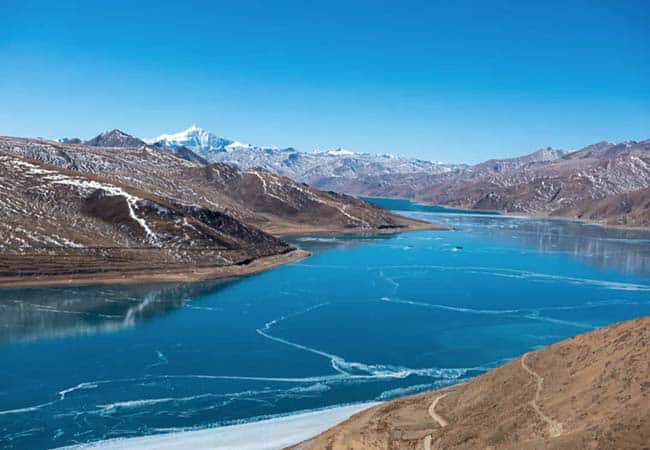
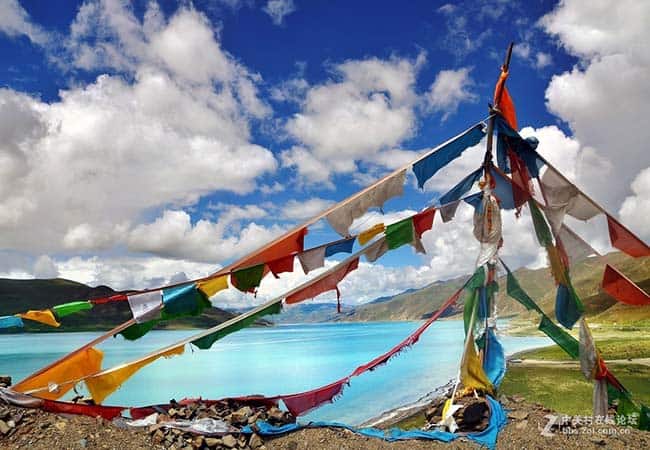
Yamdrok Lake is a must-visit place for most travelers to Tibet for the first time. But don’t think that you can definitely see the blue and clear lake in Yamdrok Lake, the weather is very important, only on sunny days, Yamdrok Lake will show you its most beautiful side. When you are amazed by the lake, you will be as convinced as the Tibetans that such a beautiful thing must be a gift from God.
A day trip from Lhasa is the most convenient way to visit Yamdrok Lake. You can also choose another way, choose self-driving, cycling, and even feel its vastness with your feet. Walk into the inaccessible islands, natural and unsophisticated villages, and see the other side of Yamdrok Lake’s kindness and detachment.
√Recommended Lhasa tours: 5 Days Lhasa Essence Tour with Yamdrok Lake
7. Challenge the Mount Kailash Kora (or circumambulation)
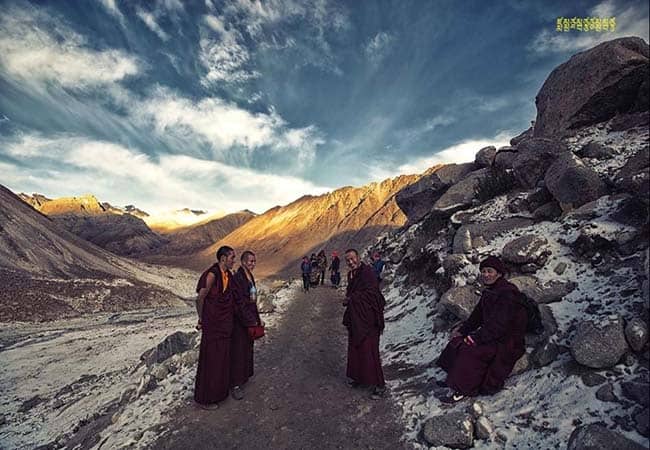
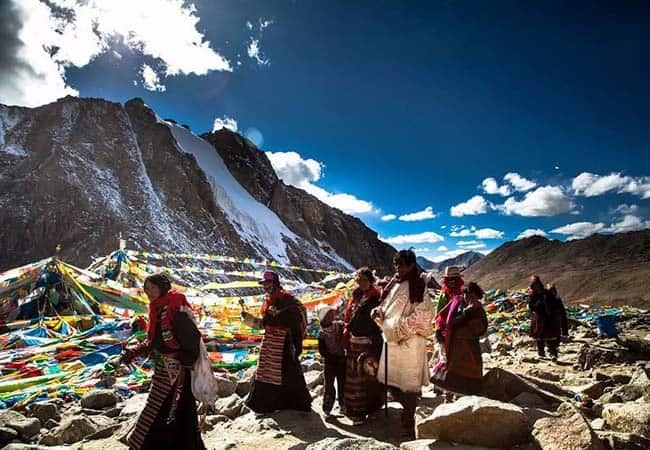
The Mount Kailash Kora, or circumambulation, is one of the most significant spiritual journeys in the world. This 52-kilometer (32-mile) loop offers unparalleled views of the sacred snow-capped peak from every direction. For thousands of years, Buddhism, Hinduism, Bon, and Jainism have made pilgrimages to the sacred mountain according to different rituals, but their firm footsteps and peaceful minds are the same.
If possible, try to embark on the incredible journey yourself. Then you can gaze up at the magnificent north face and the starry sky from Dira Puk Monastery, and ascend the Zhuomara Pass (at 5,630 meters) with other devout pilgrims. After that, relax or enjoy a cup of tea in a local nomad’s tent and clarify your mind.
Related reading: Best Time to Visit Mount Kailash
8. Discover the Mysterious Guge Kingdom Ruins
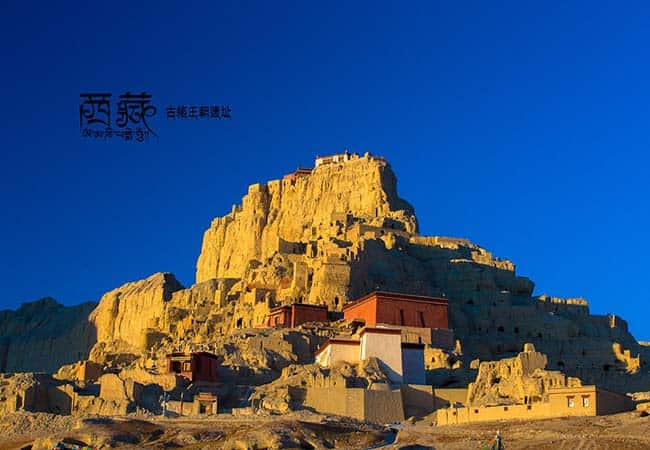
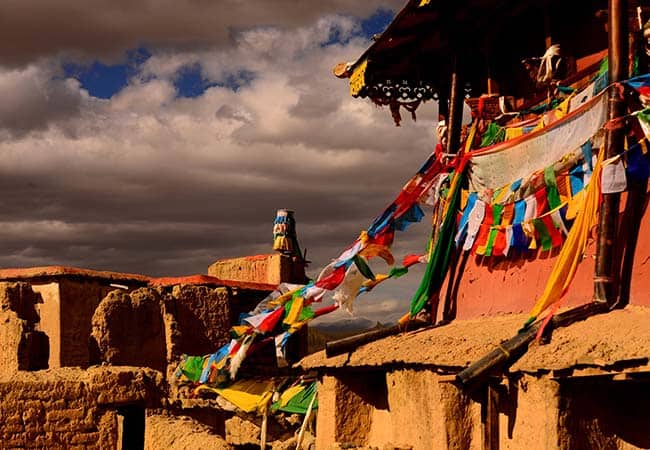
Nestled in western Tibet for over 700 years, the Guge Kingdom Ruins will introduce you to Tibet’s most awe-inspiring cultural and historical wonder. The Guge Kingdom was a regime established by the descendants of the last Tubo king in around the 10th centruy. Though has been mysteriously disappeared in the 17th century, the site still well preserved its massive architectural scale, military defense system, and unique artistic murals, sculptures, and scriptures. All the buildings here are built into a mountainside in tiered layout, with royal palace at the top, residential caves at the food and temples sandwiched by them.
The disappearance of Guge Kingdom is still an unsolved mysteries, adding to its allure. Try to follow a local guide to uncover of its secrets here.
√Related reading: 5 Colors of Tibet
9. Visit Tashilhunpo Monastery: Shigatse’s Spiritual Heart
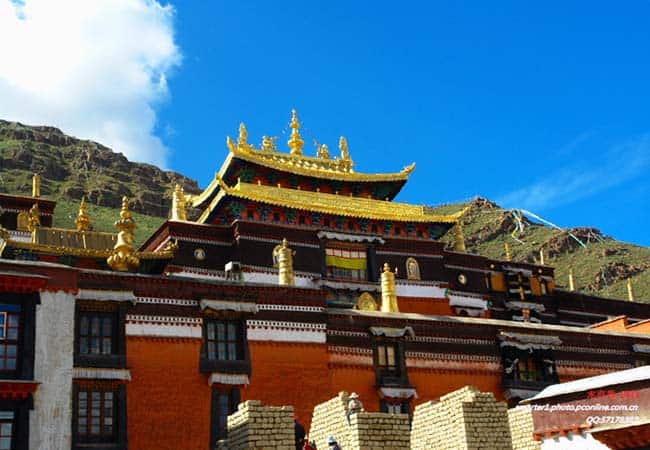
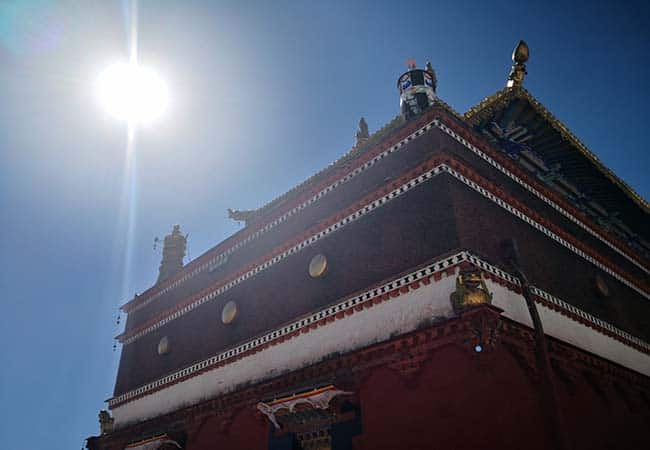
As long as you stay in Shigatse, you will not miss the Tashilhunpo Monastery. This Tibetan “auspicious Sumi Temple” is the spiritual highland of Shigatse. From the massive Jampa Buddha, whose nostrils can hold an adult, to the the magnificent gilded stupas, Tashilhunpo Temple will bring you the shock and wonder comparable to the excitement when you first saw the Potala Palace.
Join the locals along the outer turning scripture road to the back mountain, you will have the opportunity to overlook the city of Shigatse. If you come to Shigatse on April 15th of the Tibetan calendar (around mid-June of the Gregorian calendar), don’t miss the three-day Buddha Exhibition here. At that time, the current Buddha, the future Buddha, and the past Buddha will be displayed on the exhibition stand.
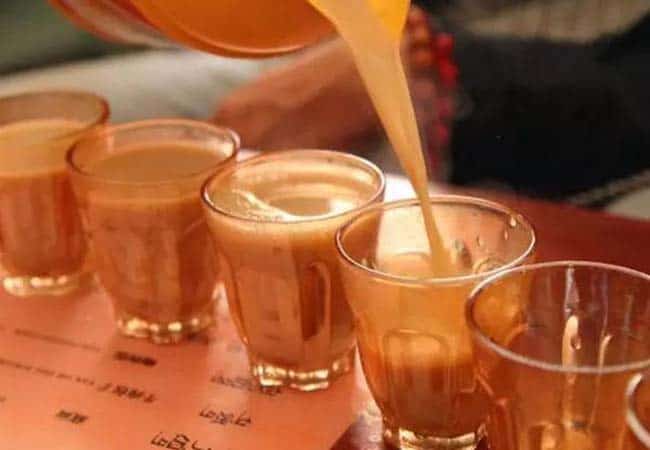
10. Experience Lhasa’s Sweet Tea Culture
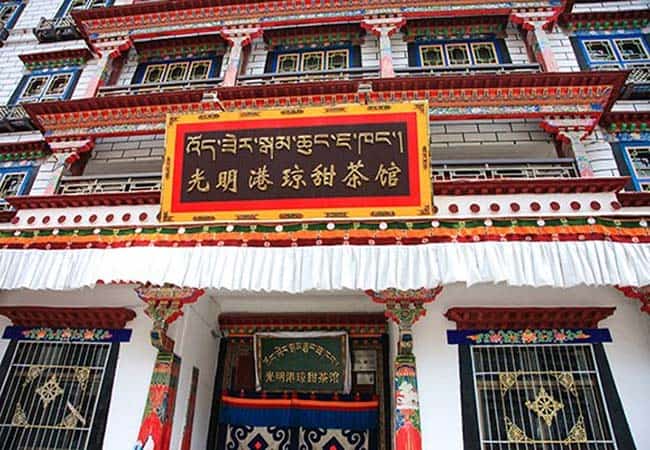
It is said that sweet tea is a way of life brought by the British. In the past, locals once saw eating or drinking as a sign of not well-off, and often avoided these public tea houses. Women, especially, typically didn’t go to tea houses at all.
While today, sweet tea houses have become a landmark of Lhasa. The many tea houses along Lhasa’s street are always bustling with all sorts people, including guys from every profession, yonger women, and older women. They may come here to enjoy food with their friends or just take a rest on their pilgrimage route.
Most of these tea houses are super simple, with just basic wooden tables and benches, yet, they are always packed. More than just a treat, it is a place to look into the everyday life in Lhasa.
√Related reading: What and Where to Eat in Lhasa and Shigatse: Top Tibetan Restaurants
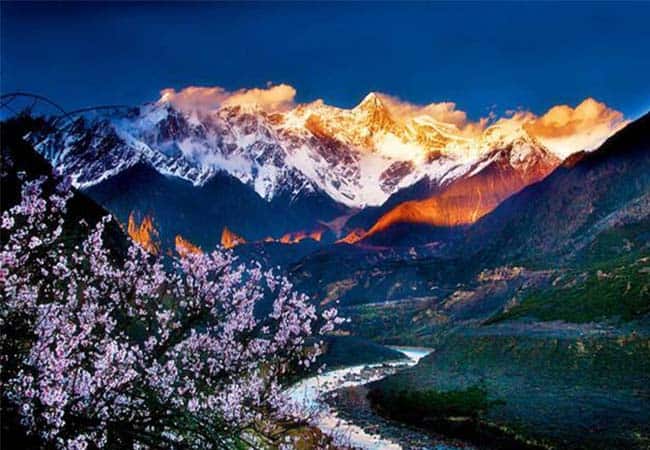
11. Yarlung Zangbu Grand Canyon
The Yarlung Tsangpo Grand Canyon holds the title of the world’s deepest and longest canyon, with a length of 504.6 kilometers and a maximum depth of 6,009 meters. A big highlight of the canyon is the peculiar horseshoe-shaped turn of the Yarlung Tsangpo River around the majestic Mount Namcha Barwa, which boasts the most beautiful mountain in China.
Also, the canyon features an over 2,500-meter drop, showcasing its diverse landscapes from icy glaciers and spectacular waterfalls to lush tropical rainforests.
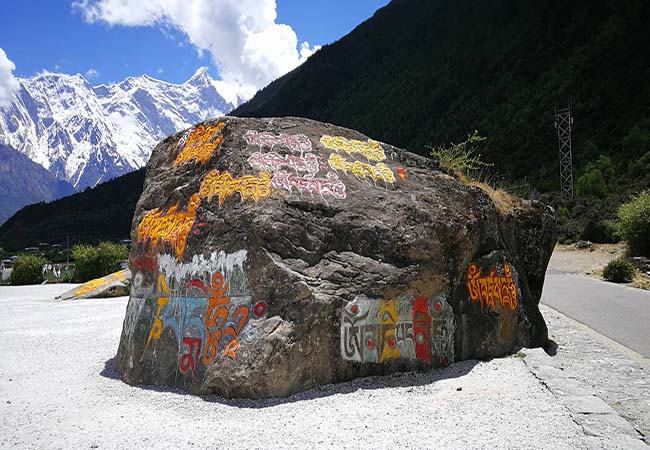
12. Hiking in Motuo
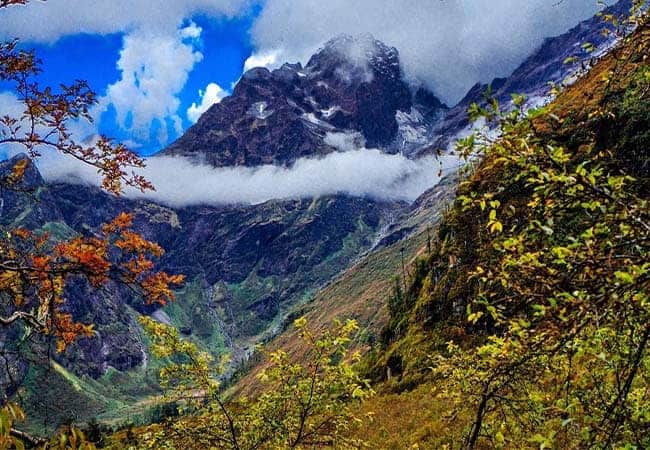
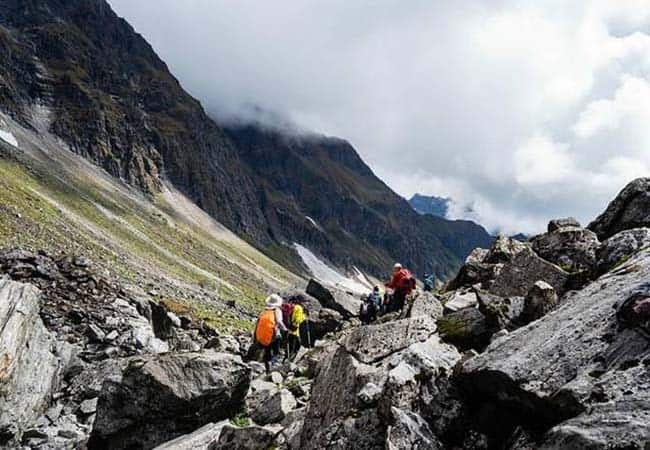
Hiking in Motuo is like walking into history, whether it is natural history or human history. In those high-rise forest sections, looking at trees that are thousands of years old, you will feel like the protagonist of a time-travel drama through the magical world by mistake. However occasionally there are Monba or Tibetans carrying goods, which makes you feel that you have returned to the era of opening up wasteland. From coniferous forests and snow-capped mountains to spruce forests and tropical forests, it is only separated by a mountain.
There is such a big difference between the upper and lower reaches of the Yarlung Zangbu River. If you hadn’t walked along this way for 3 days, you would not really understand the richness and wonders of this lotus land.
13. Samye Monastery
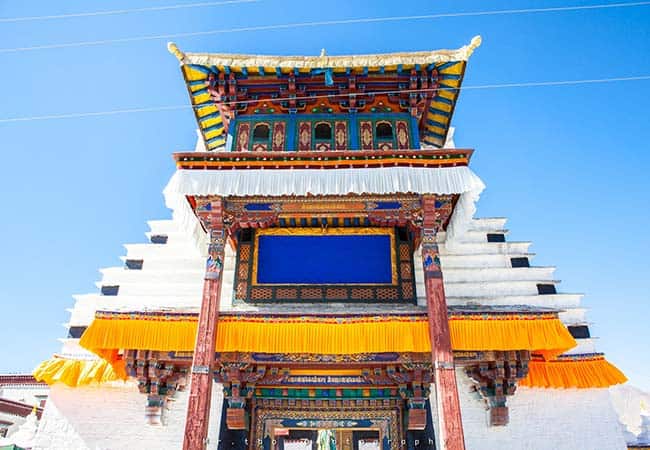
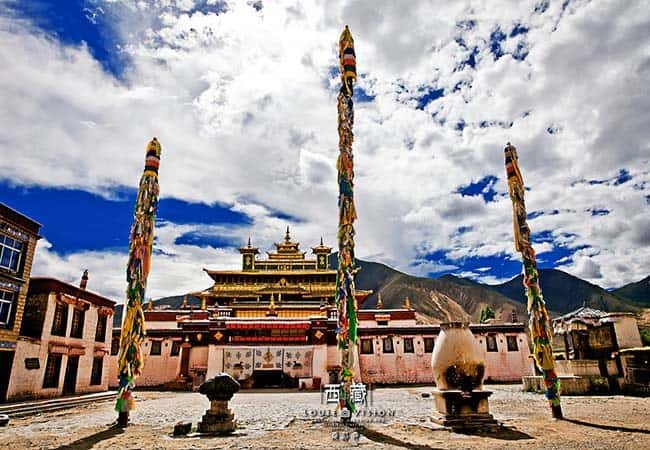
The shadows of the trees on the Yarlung Zangbu River are fascinating, and the Samye Monastery is a mandala on the sandbank beside the river. The creator used simple but complicated designs to build the entire world and the universe. The architectural layout of the temple seems to be loose, but in fact there are mysteries every step of the way, and even the location of a tree is particular designed.
You can easily find the corners of the aura in its subtle layout. That is your world. If you feel that you can’t see the pattern in the temple, you can climb the Haiburi sacred mountain guarded by Master Jihu, and look down at the temple and the river from the top of the mountain. The lightness and strength of the Samye Monastery that locks the entire Yarlung Zangbu Plain is extremely shocking.
√Recommended tour: 6 Days Lhasa and Tsedang Tour
14. Visit Lake Namsto
- Location: In the northern part of Damxung County, Lhasa City, about 240 kilometers from Lhasa.
- Entrance Fee: CNY 210
- Altitude: 4,718 meters
- Suitable for: Visitors seeking a balance of stunning natural beauty and rich religious atmosphere
Tibet is more than cultural immersion and towering peaks. One of the must on any Tibet tour also include visiting one of its beautiful sacred lakes. Tibet is home to over 1500 high-altitude lakes, with many boasting the most breathtaking ones in the world. Among them, Namtso stands out as a must-visit.
As the second-largest lake in Tibet, and the highest large saltwater lake in the world, Namtso attracts numerous visitors for its sea-like grandeur and pristine blue waters. Also, there are vast grasslands around the lake, which are home to wild yaks and Tibetan antelopes. In summer, the lake offers spectacular views of “golden mountains reflecting in the lake”.
15. Celebrate Festivals with the Tibetans
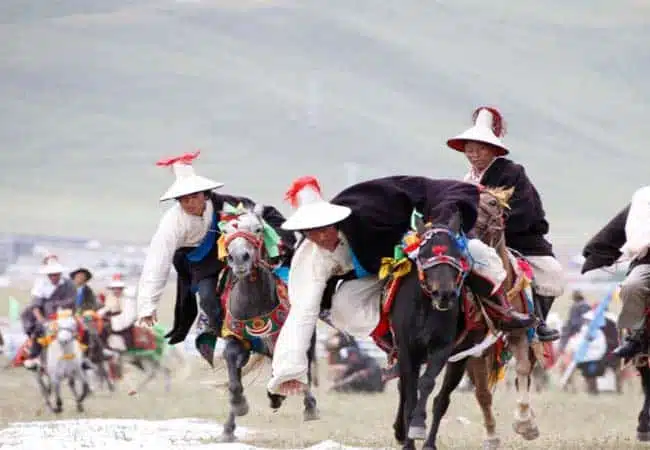
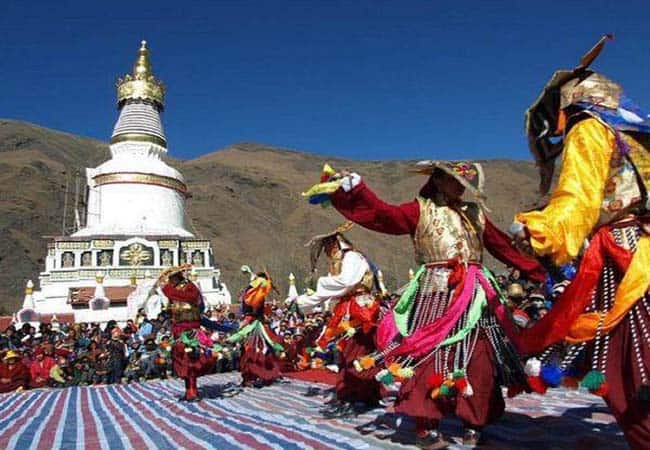
If you want to quickly feel the Tibetan customs, just join the local festival. During the Snowdon Festival, when the thangka of Drepung Monastery is slowly unfolding, no one does not excite for it; whether you are used to the smell of ghee or not, at the festival of ghee lanterns, you will be amazed by the works of art made by ghee; the Lantern Festival will have a city without darkness with stars and lights.
If you happenily meet with a Dafa ceremony in a temple, you will see Buddhist music and dances that have been circulating for thousands of years; what is even more exciting is the Fruit Festival of the countryside. During this festival, you can set your own date, sing and dance yourself; those who are greedy for beautiful scenery, of course, must rush to Nyingchi when the peach blossoms are in full bloom.
√Recommended tour: 7 Days Best Scenic Tour from Lhasa to Nyingchi
16. Tangra Yumco
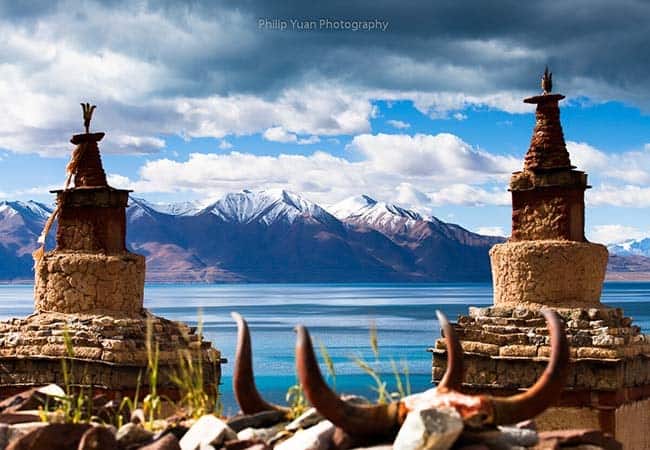
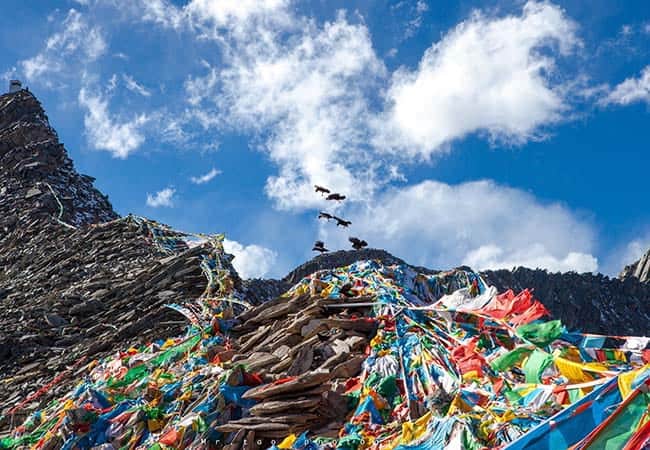
If you only see one lake in northern Tibet, then come to Tangra Yunco. In addition to the incredible blue, the mystery of the ancient Xiangxiong dynasty and the local Bon religious half-agricultural and half-pastoral life have injected deep and vivid characteristics into this beautiful lake. Living in a Tibetan-style family hotel, watching the color change of the holy lake outside the window; walking into the golden sands of the farmland and working with the locals on the hardest land; riding on the locals’ motorcycles to watch the turning scripture in the Bon religion of Qiongzong Divine mountain.
You will be thankful that you are here, and you kind of want to keep this secret deep in your heart.
17. Sakya Monastery
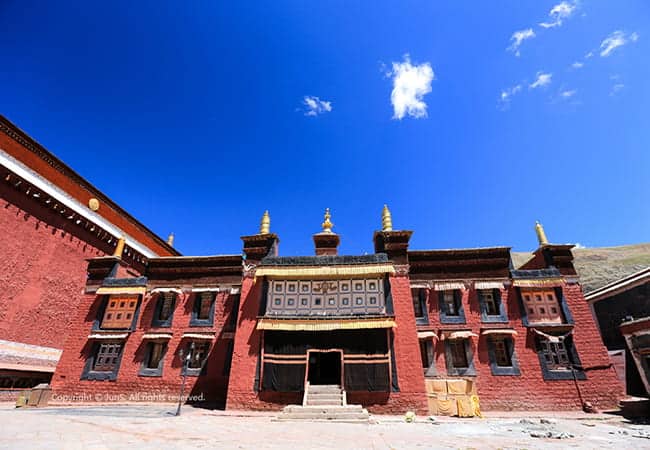
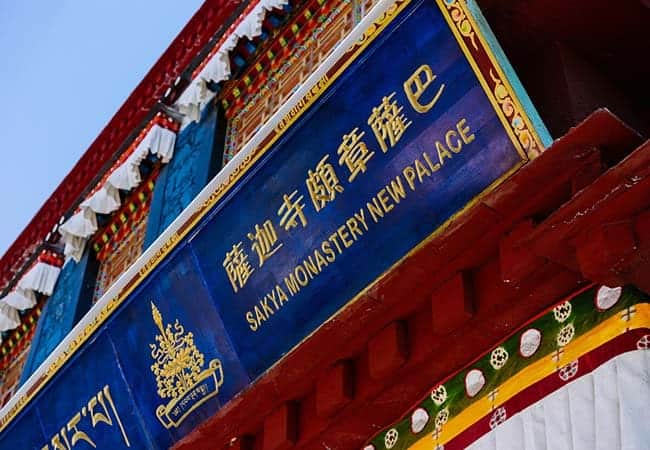
It is difficult for you to see such a unified scene of temples and dwellings elsewhere. Sakya, far away from the China-Nepal Highway, is not like Gyangze that can be visited by the way. Because of this, it has a purer religious atmosphere. Historically, the Sakya Temple was once the political and religious center of Tibet, with a rich and splendid cultural history. The rigorous South Temple and the North Temple, which can be called a “relic” separated by a river, built a complete Sakya Temple, and the Sakya Sect moved to Tibet from here. After watching the breathtaking treasures in the South Temple, slowly go up the mountain along the trails of the North Temple, overlooking the Zhongqu River slowly passing through Sakya City, you will want to sit down here quietly and imagine the once brilliant Sakya Dynasty.
Related reading:
- Lhasa Side Trip to Chentang Village in Shigatse, the Last Solitary Island in Himalayas
- How to Plan a Tibet Tour: The Ultimate Trip Planner for 2025