

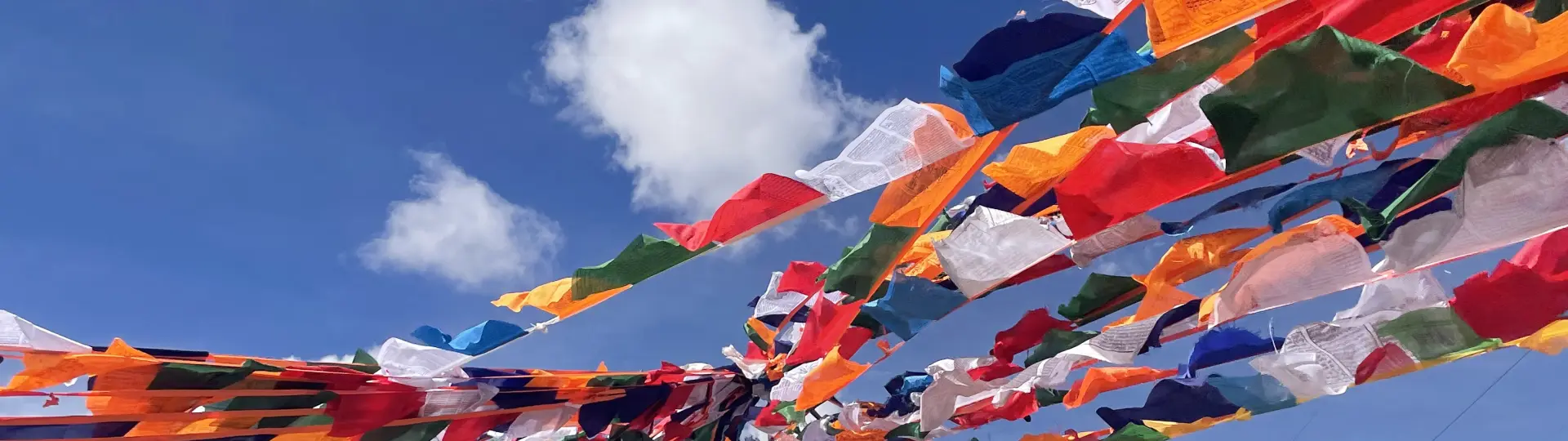
The various colors of Tibet are sacred in Tibetan Buddhism and provide visitors with a uniquely amazing experience. As long you have ever did a Tibet tour, you will never forget the colors of Tibet. They are concise and strong: the bright and limpid blue, the holy white, the vital red, the sacred yellow, the low-pitched gray, the plump green…
Blue Color in Tibet
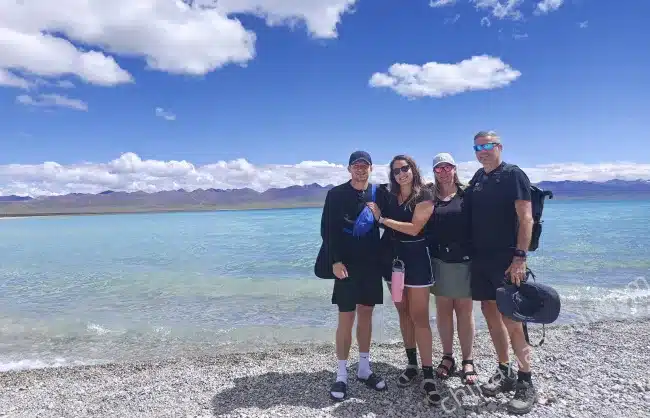
The word “blue” is frequently overused. However, this reality must still be used to describe Tibet. Both the lake and the sky are blue here. Tibet’s grounding colour is blue. This type of blue sky is the only one where the clouds seem whiter, the sky gets lower, people seem smaller, and your eyes and mind will see farther. One will lose oneself while strolling across Tibet’s vast natural landscape, venturing to the scared blue lakes like Yamdorktso, and Namtso, and focussing entirely on the sights they see along the way. Everything in Tibet is beautifully accentuated by the natural blue.
The mineral pigment known as malachite, which has been used for thousands of years in Tibet, has created a distinctive navy blue due to the region’s particular climate and topography.
Dark blue is primarily utilised to convey Thangka’s religious subject in murals featuring various furious and protective gods. It can enhance the portrayal of these deities’ majesty, temperament, and magical might and create a three-dimensional colour impact.
In everyday life, blue is widely utilised in Tibetan clothing, and rural men’s woollen wool always has blue collars and cuffs as decorative accents. In essence, blue fabric is used to weave or paste many fortunate patterns that suggest prosperity and good fortune on Tibetan tents and curtains with characteristically Tibetan traditional features.
White Color in Tibet
White is color of snow mountain. It is the most sacred color of Tibet. Snow mountain is the worshipped immortals of Tibetan people, and many of them are attached with beautiful legends. People living in Qinghai – Tibet Plateau have long and strong faith in white color. They believe the white color is the best carrier of human’s sincerity and purity. So Khatag–the most classic present in Tibet–is white.
The white clouds float in the sky, and the white Khatag dance under the blue sky. During your Tibet travel, you may be submerged in the sacred white color and be moved by the purity and sincerity.
It should be noted that male characters in Tibetan opera are denoted by white masks. To demonstrate auspiciousness, the elderly man will don a white coat decorated with a pattern of the sun and moon.
Red Color in Tibet
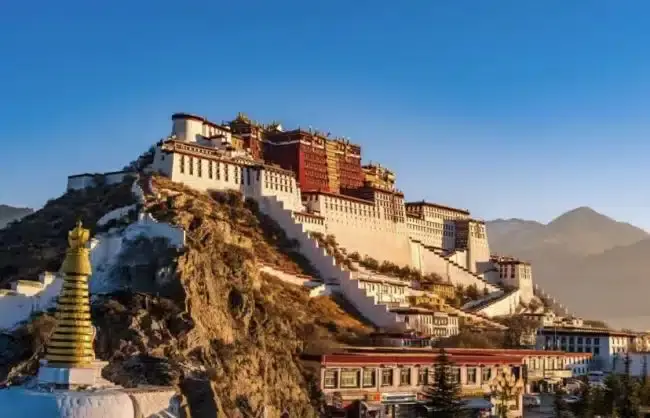
Red is eye-catching and holy in Tibet. The red cassock of Tibetan Buddhism monks, the red wall of Potala Palace, and the red costume of Tibetan girls are the most representative of the red color.
The ancient religion known as “Bon” on the snowy plateau may have something to do with the usage of red in Tibetan architecture. “Bon” separated “Ning Fu” into three realms: “God, human, and ghost.” Tibetans believe that a face painted with red ochre dye helps ward against ghost invasions. However, as the times have changed and people’s faith has grown, they no longer paint red on their faces but instead keep the building red.
Golden or Yellow Color in Tibet
In addition to being a symbol of wealth, yellow also represents the land. The Baosheng Buddha, which symbolises the south, is golden in the Buddhist sense of orientation. Therefore, yellow must be used to symbolise Shatan City’s south direction in Tibetan Buddhist paintings’ orientation portrayal.
One of the five main schools of Tibetan Buddhism, the Gelug School, likewise has a distinctive yellow color, and its monks dress in yellow monk’s robes. The mighty monk is symbolised by the yellow mask in Tibetan opera. When visiting Tibetan monasteries, like Samye Temple and Jokhang Temple, or watching the Tibetan Buddhist activities, you will notice that.
Yellow indicates a stable identity and has typical symbolic value. It is the most noble symbol and the colour of universal particular features. Generally speaking, regular monks and laypeople do not wear yellow because stone yellow, a type of mineral search for yellow pigments, is a specific colour found in many religious items, Buddha attire, particularly for monks, dwelling Buddha rooms, robes, etc. Although yellow is the colour sign of the yellow faith, it is also not used in private homes in any Tibetan region.
Golden brown is the color of sunlight and Buddha. No one dares to violate it. The golden brown refers to Tibetan people’s respect and bailment to Buddha. It is also the symbol of sunlight which can light the world and warm creatures on the plateau. Local people think golden brown as color of Buddha.
Green Color in Tibet
Among Tibet’s colour palette, green is considered a “civilian colour” and is connected to the ordinary people and rural life. For instance, Tibetan women frequently wear green robes, green blouses, turquoise jewellery, and green headscarves, all of which are considered lucky charms.
Green is used to symbolise the north in Tibetan Buddhist paintings. Green is the colour of water in the five-color prayer flags. In Tibetan opera, a woman’s morality, knowledge, beauty, and modesty are symbolised by the green mask.


