
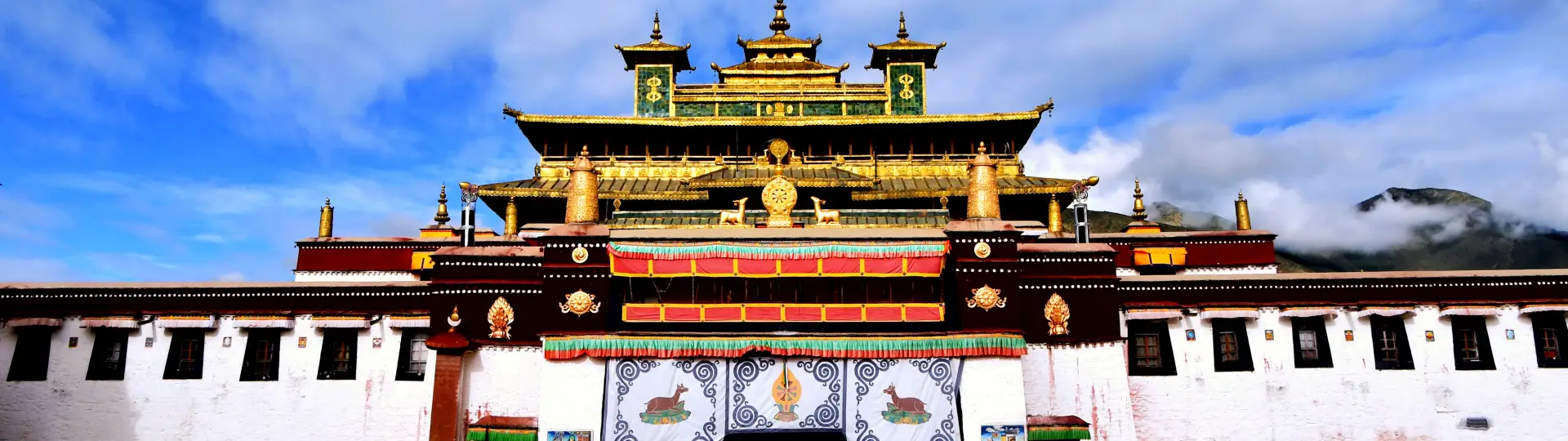
Samye Temple locates in the Chatang County, Lhoka (Shannan) Prefecture, at the north of the Yarlung Zangbo River, about 130km to Lhasa. It was the first temple in Tibet for the people to become monks by tonsure, also the first temple had all the Buddha, Dharma and Sangha in the history of Tibetan Buddhism.
The temple has had its layout based on the Buddhist cosmology, showing Indian, Tibetan and Chinese styles at its Main Hall, thus honored as “A Great Work in the Architecture History”.
Samye Temple is one of the best places to experience Tibet Buddhism during your Tibet travel.
Samye Monastery Facts
- Area: About 25,000 square meters
- Opening hours: 9:00-16:00
- Ticket price: The temple is free to enter, whereas Wuzi Hall costs 40 yuan.
- Best time to visit: From June to August
The History of Samye Monastery
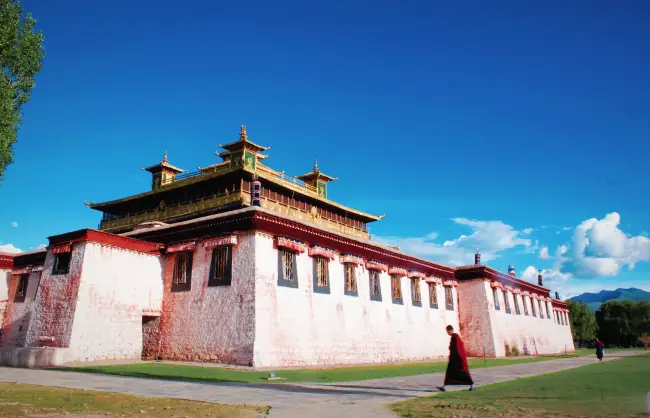
Taking the temple at Maghada in ancient Pallava time as the mold, Samye Temple was built from 8th century by the leading of Padma Sambhava, finished after 12 years later. It occupies more than 4900m2 today after the expansion of generations, in a quite large scale. In the dusk and dawn, when standing at the top of the mountain besides Samye Temple, you could have a great bird’s –eye view for the whole temple and the Yarlung Zangbo River, struck by the breathless beauty of the holy things.
There is an interesting legend about the name of Samye Temple. In the early constructing time of the Samye Temple, the Emperor was impatient to how it would look like when the temple finished. Padma Sambhava thus showed him the phantom for the finished temple in his palm. When seeing the magic and great scene, the Emperor can’t help to cry out: Samye! (It means “surprising”, “unbelievable” in Tibetan language), hence the name of Samye Temple.
√Discover more monasteries in Tibet:
The Architecture of Samye Monastery
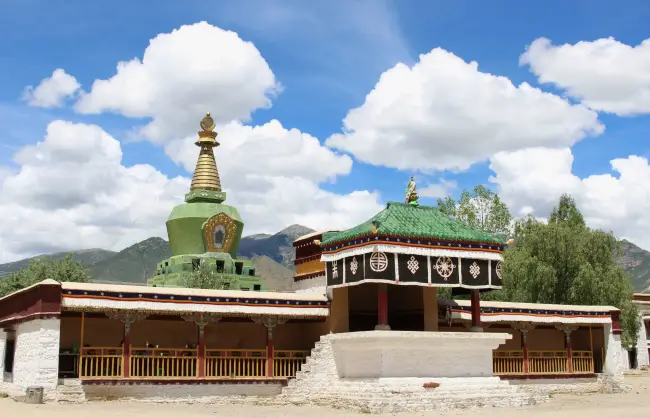
The whole Samye Temple faces south consisted of two parts: the center hall and the surrounded ambulatories. It takes the Wuzi Hall as the major body, representing the world center Mt. Xumishan. The four large halls around it represent four great continents and eight small continents. The bounding wall around the temple stands for the Mt. Tieweishan. There are four pagodas at the four sides of the main hall with red, white, green and black color to put down all the demons and stop from disasters.
All the Wuzi Hall and those ambulatories were painted with frescos, which shows various themes, like Tibetan history, Buddhist history, Buddhist images……All the paintings were fine, colorful and meaning.
What to See and Experience in Samye Temple
In the Samye Temple, people have chance to experience some local famous religious activities. Weisang Festival is usually in May or June in summer as the most popular religious ritual. People would burn a mixture of cypress leaves, Ciba (glutinous rice cake) and some spices in a special furnace to worship those Gods.
Another famous one is Jingang God Dance which is an ancient traditional religious dance. On each 10th, January and 15th-16th of May in Tibetan calendar, the monks would perform the God Dance in Samye Monastery to show their devoutness to the Buddhists and Gods.
√Further reading:
Travel Tips:
- Visitors should not wear short pants or dress exposing too much skin in the air when enter the temple, which would be thought a disrespect to the gods.
- There are hostels in the temple or near the temple at CNY 15-40 per person per night if you plan a stay there. But please note those hostels are not in as good condition as in the Lhasa downtown.
- It is prohibited to take photos in the inside of the temple.


