
In many people’s hearts, Tibet is always a mysterious land that must be visited at least once in a lifetime. But what are the reasons to travel to Tibet? The answer varies from person to person. Some may emphasize on the pristine landscape formed by brilliant blue sky, vast grasslands, limpid lakes and majestic snow mountains. Some may want to indulge themselves in the pure religious devoutness and get enlightened. Some intend to challenge themselves on the way of the long hard trek and behave like an ascetic monk.
For me, Tibet is not only the nearest place to heaven, but also a retreat from the secular society. Faced directly with the awe-inspiring nature there, we will feel the insignificance of human from the bottom heart and find answers to many puzzles in life. What about you?
Content Preview
- Why is Tibet Important?
- Tibet – The Roof of the World
- Majestic Landscapes – The Tibetan Plateau and the Himalayas
- Mount Everest Base Camp – The Ultimate Bucket List Adventure
- Sacred Mountains
- Pristine Alpine Lakes
- The Spiritual Heart: Tibetan Buddhism and Its Profound Traditions
- Unique Tibetan Festivals
- Tibetan Food & Hospitality
- Unique Tibetan Culture
- Epic Outdoor Activities in Tibet Adventure
- Untouched Nature & Wildlife
- Bucket-List Train Journey
- Tibet to Nepal Overland Journey
- FAQs about Tibet Travel and Tibet Facts
- Start Your Epic Tibet Journey with China Xian Tour
Why is Tibet Important?
The importance of Tibet basically lies in its critical role in guarding China’s southwestern border. The unique geographical environment of Qinghai-Tibet Plateau hinders foreign troops from penetrating deep into the hinterland of China. The invading troops may encounter severe altitude sickness due to the high altitude, thin air and low temperature. Therefore, Tibet is a natural barrier to obstruct foreign troops.
On the other hand, Tibet is important for its history, culture and traditions. In the Tang Dynasty, the Princesses Wencheng and Jincheng were sent to Tibet for marriage with the king. They brought the medicine, calendar, books, Buddhist sutras, and techniques on weaving, paper making, wine production, etc. Therefore, Tibet is a witness of the profound integration of culture.
Additionally, Tibet is the mecca for Tibetan Buddhism followers as well as a spiritual highland that can strike a chord with the mass.

Tibet – The Roof of the World
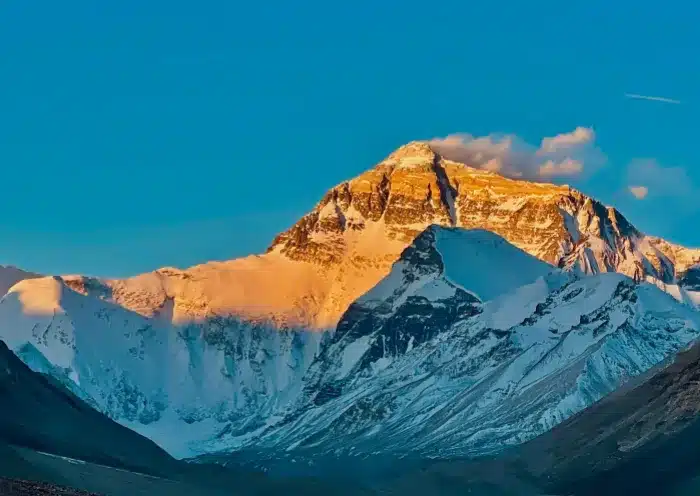
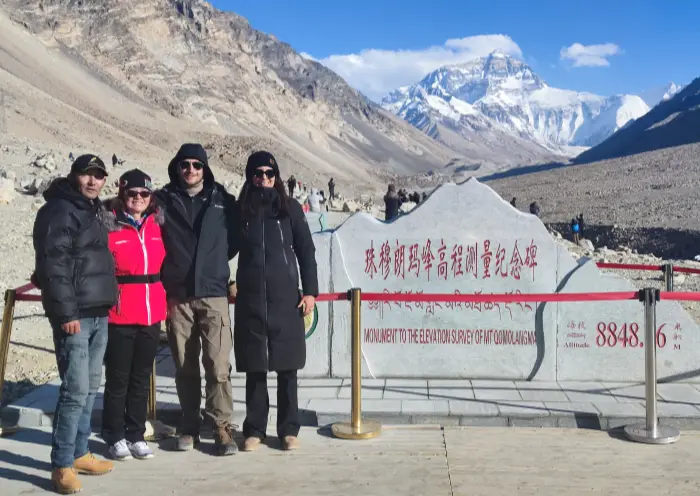
Why Tibet is called the Roof of the World? It’s mainly because of the high altitude and special geographical conditions. The average altitude of Qinghai-Tibet Plateau reaches over 4,000 meters. The Mount Everest stands as tall as 8848.86 meters, ranking the highest mountain in the world. Apart from it, Tibet is home to many other highest mountains in China, with 10 mountains surpassing the height of 8,000 meters. The magnificent rolling mountains look like a giant cover over the regions below, hence the name the Roof of the World.
Majestic Landscapes – The Tibetan Plateau and the Himalayas
Tibet is located at the core of Tibetan Plateau, featuring a dramatic stair-like terrain high in the northwest and low in the southeast. The plateau covers an area of 2.5 million square kilometers, nearly one quarter of China’s whole territory. The towering mountains circle or traverse the plateau like its skeleton. The north is dotted with numerous lakes while the fertile south is densely populated. The unprecedentedly high altitude endows Tibet with wide-open skies, no wonder it is regarded as the place nearest to heaven. With enormous glacier snow reserves second only to the North and South Poles, the Tibetan Plateau is known as the Third Pole.
The Himalayas spanning the southern border of Tibet, with Mount Everest being its main peak and over 100 peaks soaring above 7,200 meters. Since the beginning of the last century, it became the ultimate goal for many passionate climbers.
See also: How to Avoid the High Altitude Sickness in Tibet?
Mount Everest Base Camp – The Ultimate Bucket List Adventure
The Mount Everest Base Camp (EBC) sitting at a height of 5,200 meters, is a holy land for adventurers and nature lovers. It’s right here that they challenge themselves and explore the limits of their body. Taking a trek or overland tour to EBC from Tibet is always on one’s bucket list.
Setting out from Tibet means that we will arrive at the north face of Mount Everest. The scenery is totally different from that on the Nepal side. Standing in front of the pyramid shaped Mount Everest, we can see clearly the huge ice walls and crest lines, causing a sense of oppression and sacredness. In the morning and at dusk, when the sun colors Mount Everest golden from the top, it’s like the mountain is lightened by the God. At night, the starry sky resembles a black velvet drape decorated by diamonds. Everything seems still except our breath. It must be the one of the most unforgettable moments in your lifetime!
Recommended Tour: Best Tibet Tours with Everest Base Camp
Sacred Mountains
Tibet is unparalleled in its number of sacred mountains. They are not only geographical high peaks, but also a shrine of spirit. The locals believe that there is a deity in each sacred mountain in charge of blessings. Therefore, circling the sacred mountains becomes a way of praying.
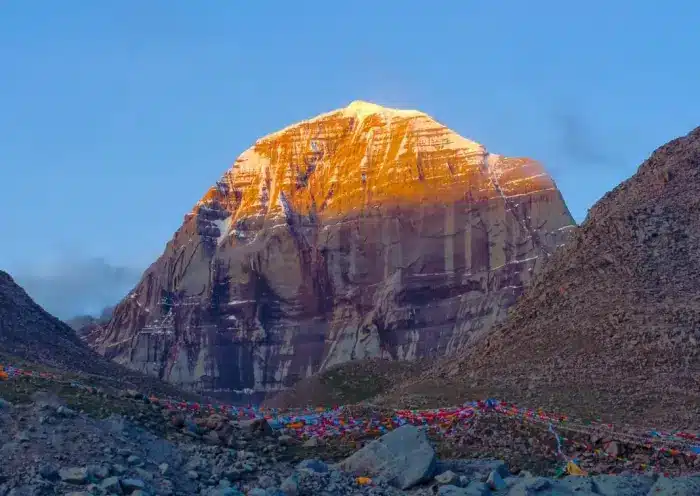
Mt. Kailash is the best known because it is the center of universe commonly recognized by Tibetan Buddhism, Bon Religion, Hinduism, and Jainism. It’s said that as long as you kora around Kaliash, your sins will be washed away. In the year of Horse, the effect is 13 times stronger.
Nyenchen Tanglha is the guardian mountain of Lhasa and the husband of Namtso Lake. The couple protects the northern Tibetan grasslands collaboratively.
Namcha Barwa is the highest peak in Nyingchi. Its name literally means a long spear spiking upward into the sky and thus is compared to the passage linking heaven and man’s world. Seldom can human see its appearance clearly, so it’s also called Shy Lady Peak.
Recommended Tour: 6 Days Mount Kailash Pilgrimage Tour with Lake Manasarovar
Pristine Alpine Lakes
The unspoiled alpine lakes are the most touching eyes on this highland. Despite their unique natural beauty, they are granted with a sacred status in religion. Namtso Lake, as the top one sacred lake in Tibet, is said to be the wife of Nyenchen Tanglha. Watching the flickering stars or sunrise by the azure blue lake is one of the reasons to visit Tibet, but it poses great physical challenges due to the high elevation plus the ever-changing weather.
Yamdrok is the most accessible lake from Lhasa, often honored as a turquoise eardrop left by a goddess. Its color changes with light, the depth of water, and weather, presenting a mixture of blue and green.
Lake Manasarovar enjoys the highest status in the hearts of the disciples of Tibetan Buddhism, Bon Religion, Hinduism, and Jainism because it’s respected as the center of the world.
Recommended Tour: 6 Days Lhasa and Namtso Lake Tour
The Spiritual Heart: Tibetan Buddhism and Its Profound Traditions
The mysterious Tibetan Buddhism is also what makes Tibet unique. For Tibetans, its significance is far beyond a religious belief. To be specific, Tibetan Buddhism has permeated every aspect of their life. It’s actually the core and soul of the unique culture of Tibet. In the 7th century, when Buddhism was first introduced to Tibet, it began to integrate with the indigenous Bon Religion and gradually became the dominant religion combining with politics. This condition persisted until the middle of the 20th century.
Nowadays, locals still follow the Tibetan Buddhism traditions, such as crawling and kowtowing to make a pilgrimage to Lhasa from hometown, circling around a holy site clockwise, piling up mounds of Mani stones, and hanging colorful prayer flags. The most reputed Tibetan Buddhism pilgrimage sites include the Potala Palace, Mt. Kailash, and Lake Manasarovar.
A Land Steeped in Devotion
As Tibetan Buddhism has long been deeply rooted in the daily life of Tibetans, it showcases the locals’ life philosophy and behavioral norms. In many households, there is a Buddhist shrine. After the housewife wakes up in the morning, the first thing is to light the butter lamp and incense and then bow to the Buddha statue to pray for a blessed day. If you observe carefully, you’ll find that almost all the seniors hold a prayer wheel in hand. Their fingers keep rotating the wheel whether they walk or sit. Meanwhile, they chant the classics of Tibetan Buddhism in a low voice. Prostration is another ordinary way of spiritual practice to express complete devotion and repentance.
Sacred Pilgrimage Sites
Kora rituals, or the behavior of circling around a sacred site, is the most representative religious practice in Tibetan Buddhism. The followers can circle around anything they deem sacred, including monasteries, mountains, lakes, pagodas, and Mani stones. In the Jokhang Temple in Lhasa, the followers usually kora along the winding corridor enclosing the life-sized 12-year-old Shakyamuni statue. The bustling Barkhor Street in the city center of Lhasa is a ring road for kora around the Jokhang Temple. The toughest kora is around Mount Kailash with a travel length as long as 52 kilometers.
The Life of Monks
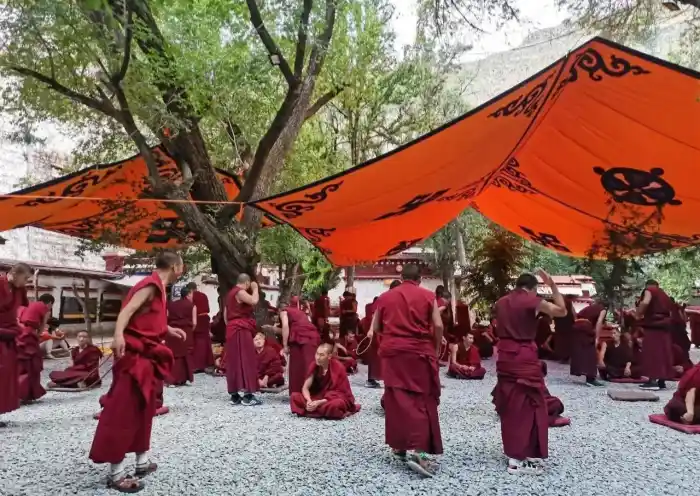
In others’ eyes, the monks lived a very ascetic and dull life. However, only they know it’s rewarding. Day after day, they get up early at four or five o’clock in the morning. After washing, the monks gather at the grand hall and chant together. Later, the novice monks learn and recite the scriptures while others attend monastic debates and listen to sutra lectures. After a simple lunch, here comes the climax of monastic debates. It’s a unique way to test one’s understanding of Buddhist scriptures. If we visit Sera Monastery in the afternoon on weekdays, we may see this exciting scene.
The monasteries play a fundamental role in Tibetans’ life as community centers. Important ceremonies like expiating the sins of the dead, praying for blessings, and abhiseca are all held there. Besides, they are the witnesses of all important occasions of the disciples from birth to death. In a word, they provide the disciples with spiritual comfort and answers to life.
Iconic Landmarks and Architectural Marvels
Why visit Tibet? The answer may be found out in its famous landmarks and architectural marvels. Whether the time-honored Potala Palace or the majestic Jokhang Temple are a window to know about the culture and belief of Tibet. The Tibetan monasteries and monks are an indispensable part of Tibet’s cultural heritage and demonstrating the unique ancient charm of this land.
The Potala Palace: A Symbol of Tibet
Standing on the top of the Red Hill in Lhasa, the Potala Palace is one of the prevailing reasons to visit Tibet. It’s a large architectural complex colored bright red and white. Inside it, you will have a feast for eyes with the great storage of murals and Thangka paintings. However, it’s not merely a museum to uncover Tibet’s culture and art, it also serves as Dalai Lama’s winter palace. In 1994, the Polala Palace was listed as a world cultural heritage by the UNESCO.
Jokhang Temple: The Spiritual Crossroads
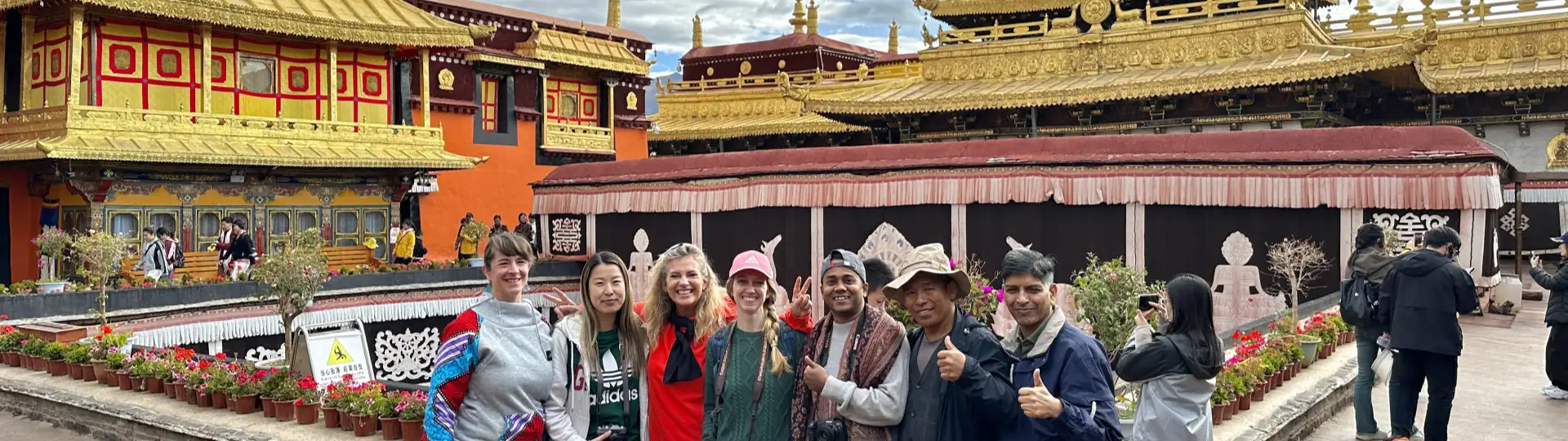
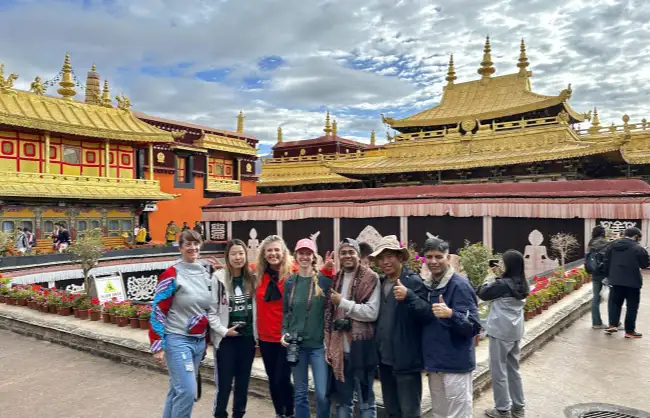
As a final destination for Tibetan Buddhist believers to worship, Jokhang Temple is not dwarfed by the Potala Palace at all. In fact, it enjoys an extremely noble and sacred position in Tibet. This temple was first built in the middle of the 7th century to place the 8-year-old statue of Shakyamuni brought by Bhrikuti from her hometown Kathmandu. In the 8th century, the life-sized 12-year-old statue of Shakyamuni brought by Princess Wencheng was transferred to Jokhang Temple and became a must-see attraction for tourists and worshippers.
On the surrounding Barkhor Street, you may see many devoted followers prostrating or circling around the Jokhang Temple. The scene is really impressive.
Ancient Fortress Monasteries
In ancient days, tribal deputes and sectarian conflicts frequently occurred in Tibet. To resist attacks, monasteries were usually constructed with high walls and small windows. Furthermore, this design well adapted to the local mountainous conditions. Therefore, many monasteries look like fortresses from a distance. Among them, Yungbulakang is the most notable as the first palace in Tibet. According to historical records, it was constructed in the 2nd century for the first king of Tibetan regime. During Srongtsen Gampo’s reign, it was changed into a monastery.
Unique Tibetan Festivals
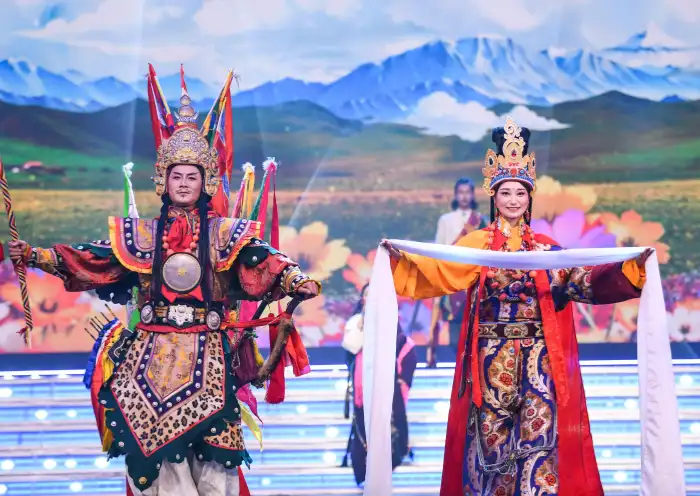
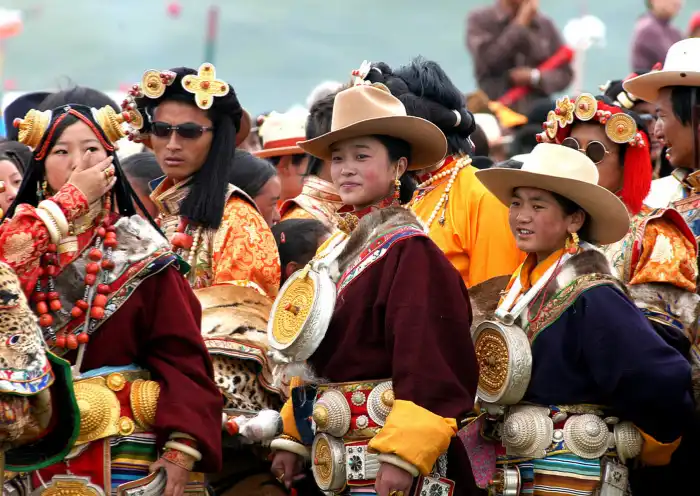
Tibet abounds in festivals that are filled up with religious atmosphere and cheerful folk customs.
Losar (Feb-Mar): Masked dances, butter sculptures
Losar falling on the first day of the first month (in January or February) in Tibetan Calender is the grandest festival in Tibet. It corresponds to the Spring Festival of the Han Chinese. On the eve of Losar, all families gather to have a special dinner named Guthuk, a kind of dough soup containing pebbles, peppers, and wool. From the second day of the new year, a large scale of folk activities will be held, such as horse racing, masked dances and wrestling. In some monasteries, we can appreciate the exquisite sculptures made of butter.
Saga Dawa (May-Jun): Celebrating Buddha’s enlightenment
This festival often takes place around April 15th on Tibetan Calender. This month, Buddhism believers will kora, prostrate, avoid eating meat and fish, and free captive animals. On April 15th, many will kora around the old town of Lhasa.
Shoton Festival (Jun-Jul): A feast of yogurt and Tibetan Opera
It lasts from the end of June to the early July on Tibetan Calender. In the morning of the first day, the huge Thangka of Shakyamuni will be laid on the mountain slope in Drepung Monastery, appealing thousands of pious followers to worship. In Norbulingka, you can watch Tibetan Operas.
Tibetan Food & Hospitality
Tibetan food stressing high calorie and plain cooking techniques may give you another reason to visit Tibet. Tsampa, mixed by baked highland barley powder, butter and cheese, is the staple food. The momo dumplings are also worth a try. They are bigger than traditional dumplings. The commonest fillings are yak meat and mutton, mixed with a little shredded scallions, salt and spices.
You can visit a tea house to warm up with locals over salty butter tea, or enjoy Tibetan style dumplings and noodles. If you drop by a local family, they will serve you with a cup of butter tea, made from tea brick, butter and salt. The host will immediately fill your cup up after you take a sip. Be careful not to drink it up unless you don’t want to drink anymore.
Unique Tibetan Culture
In Tibetan art and culture, the folk costumes, dances and music are the principal parts. Locals often dress a loose robe with long sleeves that can be taken off and fastened to waist while laboring. During festivals, they will definitely wear the most beautiful Tibetan robes as well as the most precious jewelry, form circles and perform Guozhuang dances to the beat of toasting songs.
Epic Outdoor Activities in Tibet Adventure
The arduous outdoor activities can surely explain why we recommend to travel to Tibet. As the paradise for trek lovers, Tibet is gifted with a number of the topnotch trekking routes. Despite the picturesque scenery, they give out a sense of religious sacredness. The traditional routes cover Kailash kora, Ganden to Samye Trek, and Mount Everest Base Camp trek. Note that those routes are best for physically fit and adventure travelers. Think twice before taking action.
Recommended Tour: 15 Days Mt. Kailash Trekking Tour
Untouched Nature & Wildlife
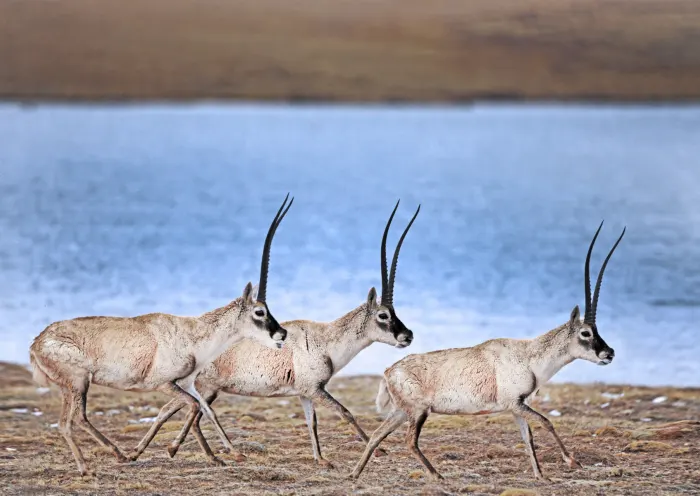
The ecosystem of Tibet is unique and fragile, consisting of a wide range of landforms from pristine plateau to mountains, grasslands and wetlands. The untouched nature is home to diverse rare species considered as the spirits of the Tibetan Plateau. Tibetan antelopes, once endangered, now amount to as more as 300 thousands and mainly dwell in Hoh Xil Nature Reserve. The black-necked cranes are honored as the sacred bird at Yamdrok Lake.
Bucket-List Train Journey
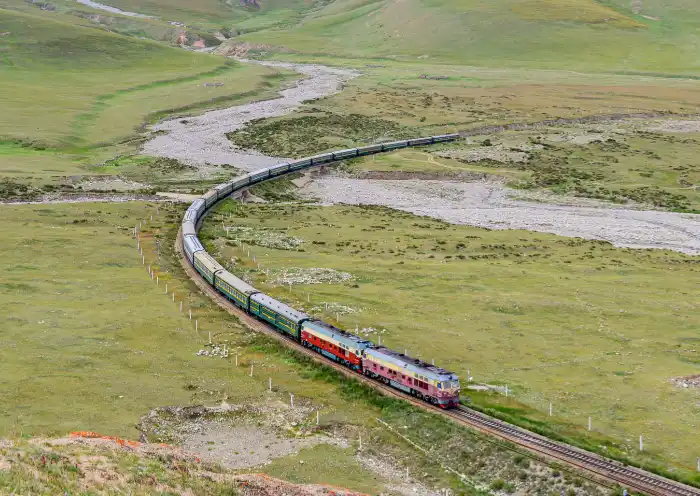
Qinghai-Tibet Railway, at the height of 5,072m, is the world’s highest rail line and reputed as the way to heaven. Passengers always start from Xining, passing by Golmud, Tanggula Pass, Nagqu Prefecture, and finally arrive in Lhasa. On the way, you can see snow-capped mountains, grasslands, salt lakes, and deserts. That’s exactly why we visit Tibet.
Recommended Tour: 7 Days Xining and Lhasa Tour by Qinghai Tibet Railway
Tibet to Nepal Overland Journey
For many adventurers, the reasons to visit Tibet is to take an overland trek from Lhasa to Kathmandu via Everest Base Camp. Many may choose Gyirong Port or Zhangmu Port to enter Nepal. You can find the most splendid scenes along the way at Mount Shishapangma, Zhangmu Valley, Yogurt Lake, and Gyirong Valley.
FAQs about Tibet Travel and Tibet Facts
What is the best time to travel to Tibet?
The golden time to travel to Tibet is from May to October when the weather is comparatively milder and the scenery is greener.
Do I need a visa or special permit to visit Tibet?
If you are not from a visa-free country, a China visa is required. In addition, you need to obtain a Tibet Travel Permit from a qualified travel agency. In case that you want to extend your trip to sensitive areas like EBC, Mount Kailash, Nyingchi, Ngari, Nagqu, Shigatse, and Shannan, you also need a military permit.
What are the top things to do in Lhasa?
You are advised to visit the Potala Palace, kora around the Barkhor Street, listen to the monastic debate in Sera Monastery, and take photos in Tibetan costumes and makeup.
What is the history of the Potala Palace?
Its story can be traced back to the Tibetan regime in the 7th century. Srongtsen Gampo, the then king commanded the construction of this palace to marry Princess Wencheng from mainland China and Princess Bhrikuti from Nepal. In the 9th century, it was destroyed in chaos caused by war. Until the 17th century, it was rebuilt. After several repairs and expanding in the later years, it was transformed into an architectural wonder that contains 1,267 rooms.
How much does a Tibet tour cost on average?
It actually depends on your accommodation level. A basic-standard 7-day Tibet tour may cost about CNY 5,000, exclusive of transportation expense to and out of China.
Is Tibet safe for solo travelers?
Yes, Tibet is rather safe in terms of social security, but you need to pay attention to your physical health and ensure you can adapt to the high altitude sickness.
How many days should I spend in Tibet?
A classic trip may last 5 to 7 days and an in-depth travel may need 8 to 12 days.
Start Your Epic Tibet Journey with China Xian Tour
If you are planning a trip to Tibet, don’t hesitate to contact China Xian Tour, as we are a qualified travel agency to obtain your Tibet Travel Permit. Our travel experts are 24 hours online to support you. Let’s expect a smooth exploration to this mysterious land!


