







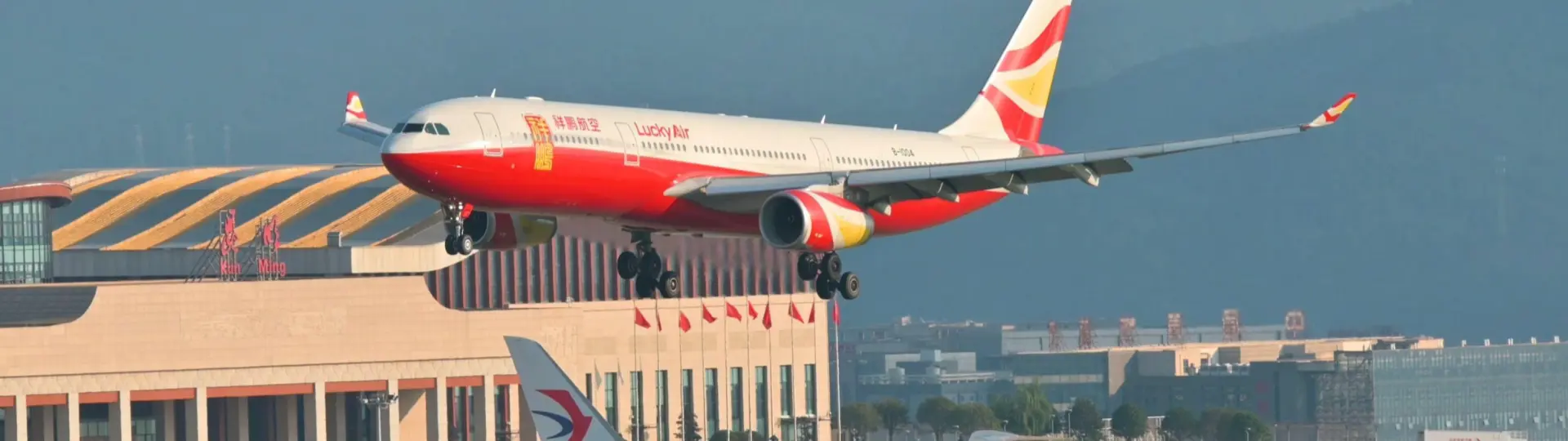
China has long been known for it’s world-class public transit system. While basically all regions in the country are well-connected by this net, just be assured that when traveling in China, no matter where you want to start or end your journey, you’ll always find a way to make it. Among all types of transportation, air travel is for sure one of the most considered, as it can smoothly and efficiently take people to move between China’s sprawling cities and breathtaking landscapes.
However, when using this service as a foreign passenger, you might come with some questions related to unique rules, booking systems, or airport procedures that differ from your home country. Indeed, that’s exactly why this guide is written, and we are here to help you better understand China’s air travel system and solve every problem you may encounter in this tour.
Content Preview
- Flying to China in 2026 – Visa & Entry Essentials
- China International Airports for Foreign Travelers
- Domestic Air Travel in China
- Major Chinese Airlines for International Travelers
- Extra China Air Travel Tips for Special Travelers
- Booking Flights in China as a Foreigner
- The Layover and Transit Guide
- At the Airport: Security, Rules, and Tips
- Onboard Experience: What to Expect
- How to Track Domestic Flights in China
- Dealing with Flight Changes and Issues
- FAQs on Air Travel in China for Foreigners
- China Air Travel with Chinaxiantour
Flying to China in 2026 – Visa & Entry Essentials
Do Foreigners Need a Visa to Fly to China?
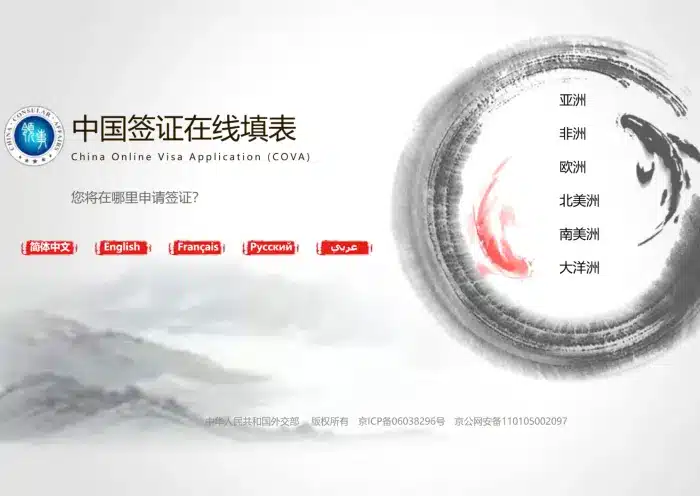
In many cases, yes, you still need to get a visa. But in recent days, it has become much easier and more flexible for foreigners to travel to China on account of expanded visa-free entry policies.
Citizens of 43 countries can now enter and stay in China for up to 30 days without a visa (see the full list on official website or check link attached below).
However, if the 30-day-visa-free policy doesn’t apply to you, you can go check the 240-hour visa-free transit policy. Since 12th June 2025, passport holders of 55 countries are now allowed to enter China through key cities like Beijing, Shanghai, Chengdu, or Xi’an (60 ports in total) and stay in China for 240 hours without a visa.
Apart from the two policies, if you don’t plan to spend that much time in China, remember that all nationalities enjoy the 24-hour transit exemption when staying in China for less than a day. For more detailed information about these three and other regional visa-free policies, please see: How to Visit China Without a Visa – Updates on China’s Visa-Free Policies

Direct Flights from USA, Europe, and Southeast Asia to China
For those decide to fly to China from major hubs in North America, Europe, and Asia-Pacific, you’ll probably get one of the best travel experiences for there’s of direct flights to cities in China.
Region |
Major Departure Cities |
Main Destinations in China |
North America |
Los Angeles, San Francisco, New York, Chicago |
Beijing, Shanghai, Guangzhou |
Europe |
London, Paris, Frankfurt, Amsterdam |
Beijing, Shanghai, Chengdu |
Southeast Asia |
Singapore, Bangkok, Kuala Lumpur, Tokyo |
Guangzhou, Shanghai, Shenzhen |
Australia |
Sydney, Melbourne |
Beijing, Shanghai |
China Entry Requirements for Air Travelers
To board flights to China, one thing that all travelers must hold is a valid passport, generally with at least six months’ remaining validity and blank pages for entry stamps. And if you want to apply for the visa-free transit (like the 240-hour visa-free transit), then proofs of onward journey are required (e.g. flight tickets).
However, if you’re arriving for longer stays such as work, study, or residence, you’ll have to provide, firstly, a regular visa and also other supporting documents related to your travel purpose (e.g. travel itinerary, invitation letters and more).
Transit Visa for China Airports & Layovers
China’s transit visa-free policies have made short-time layovers remarkably straightforward for all international travelers. As long as you’re with confirmed onward tickets to a third country, you’ll be qualified to apply for 24-hour visa-free transit in all accessible Chinese ports no matter where you from. So that even if you’re just stopping in China for a few hours during a layover, you can still take advantage of the this policy to briefly explore the city.
For more detailed information please see:
China 24-Hour Visa-Free Transit: A Complete Guide & FAQs
The Latest China Visa-Free Policy: 240-Hour Visa-Free Transit
China International Airports for Foreign Travelers
China has more than 200 airports, but not all of them can handle international services. So that it would be rather necessary for foreign travelers to known something about China’s major airport hubs. Indeed, all of them are supposed to be modern, well-connected, and equipped with all services (like bilingual signs) designed for transit passengers.
Beijing Capital & Daxing International Airports
There are two international airports in Brijing. In northeast of the city, you can see one of the busiest airports in the world: Beijing Capital International Airport (PEK). It’s a 4F-class airport with 81 international routes, remaining as the primary hub for Air China. This means you’ll be very likely to land at this airport if you’re traveling to Beijing with Air China.
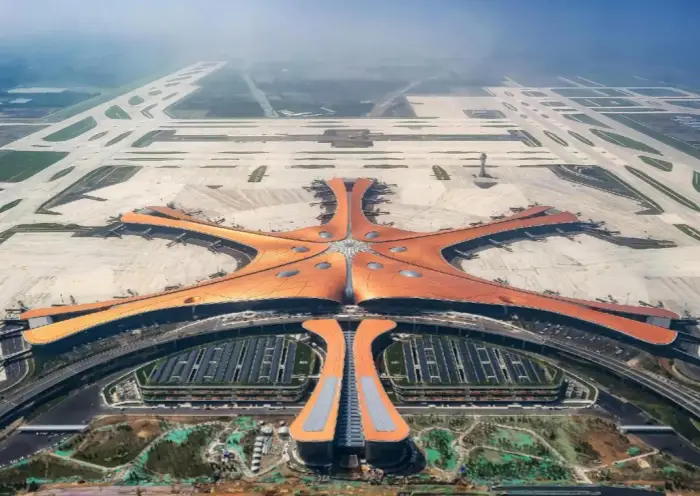
Meanwhile, the later established Beijing Daxing International Airport (PKX), has long been known as another state-of-the-art facility with incredibly convenient connections to central Beijing. Designed by the legendary architect Zaha Hadid, you may also be surprised by its avant-garde appearance and astonishing passenger throughput.
For more information, please see:
International Flights to Beijing: Updated Information
Shanghai Pudong & Hongqiao Airports
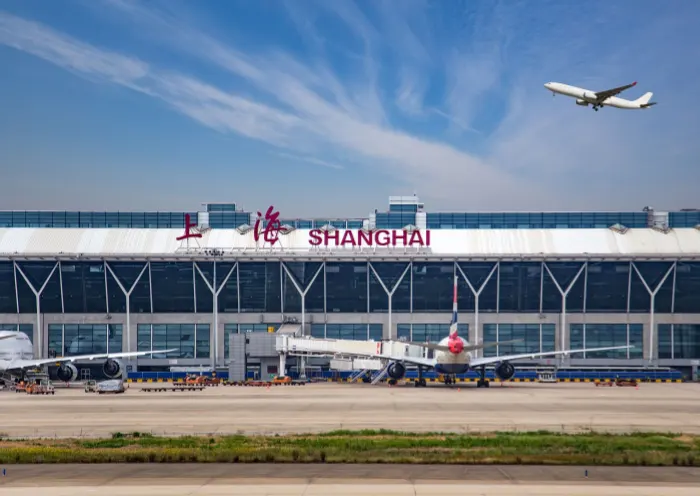
Shanghai is another major gateway for travelers flying into China, especially the eastern area. There are two airports in this city as well, and the first one is Shanghai Pudong International Airport (PVG), the busiest in China and also one of the busiest in the world. It’s worth noting that this airport has the most international routes among all its “peers” in the country (99 routes in total), so that you may be able to find more flights to it than to others.
However, Hongqiao Airport (SHA), though still handles a small number of international routes, it serves more domestic and regional flights. Together, both of them have made Shanghai an extremely strategic and convenient hub for people connecting to either domestic or international trips.
Suggested tours: China Tours from Shanghai
Guangzhou Baiyun International Airport
Guangzhou Baiyun International Airport (CAN) is likely to be the first destination for people traveling to Southern China. It’s the home hub of China Southern Airlines, and most of its international routes are connected to Southeast Asia, Australia, and the Middle East. Above all, airport is excessively used for layovers, and it’s proximity to downtown Guangzhou has provided passengers a great chance to have short and quick excursions in the city.
For more information, please see: China Tours from Guangzhou 2026
Other Major Hubs: Chengdu, Shenzhen, Xi’an
Except for the airports listed above, some other hubs are also rising rapidly as important international gateways. For example, if you’re bounding for a Panda tour or the beauty of western China (e.g.Tibet), Chengdu Tianfu International Airport is exactly where you should land in.
Besides, Shenzhen Bao’an Airport is also a busy hub providing strong links to Southeast Asia and Hong Kong. And Xi’an Xianyang International Airport, which is a major one that not only welcomes international flights but also serves as a popular entry point for visitors heading tosites like Terracotta Warriors.
All these well-developed hubs have made it possible for you to start your to choose your starting point with full flexibility.
Domestic Air Travel in China
One thing that makes flying the most efficient way to travel around China is the country’s vast geography. And that’s also why China has developed one of the world’s largest domestic aviation networks, which can connect basically every major city and tourist destination within a few hours.
China Domestic Airports & Regional Hubs
You can find airports in every provincial capital and many smaller cities in China. Indeed, Chinese people have put extensive efforts in airport development to make sure there’s always access to both major cities and remote regions.
While hubs like Beijing, Shanghai, and Guangzhou, as introduced above, are handling the highest passenger volumes, airports in Chengdu, Xi’an, Kunming are no less impressive. Together, with the existence of all of them, we finally get a dense network which makes air travel fast and reliable across the country.

Popular Domestic Flight Routes in China
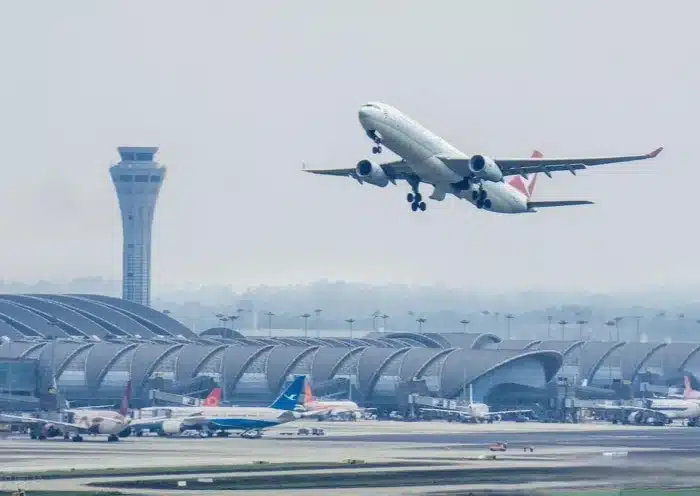
China’s busiest domestic routes are concentrated in major hubs such as Beijing, Shanghai, Guangzhou, Shenzhen, Hangzhou, Chengdu, and Chongqing. The Beijing–Shanghai corridor remains the most in-demand, connecting the country’s two largest centers without any rest. For international visitors, popular domestic flights often focus on tourist destinations and cultural landmarks across the nation. Examples include:
- Beijing to Xi’an – The must-try historical and cultural routes that most travelers would take
- Chengdu –One of the most popular China tour destination in recent year, which is known for the Giant Panda Base and spicy Sichuan cuisine. >> 3 Days Chengdu Panda Tour
- Guilin and Yangshuo– perfect for a tour centered on natural scenery, as you can never find the same experience that you received from the shockingly formed karst landscapes and river cruises.
- Lhasa, Tibet– It’s where to embark a journey to your soul while getting access to the Potala Palace, Jokhang Temple, and Himalayan scenery.
Other notable international-friendly connections include Hong Kong to Guangzhou and Hong Kong to Shenzhen, which provide quick access to southern China’s treasured cities and cultural experiences.
Recommended tour packages that include these destinations:
7 Days China Tour from Hong Kong to Shanghai and Beijing
4 Days Guilin & Yangshuo Private Tour from Hong Kong
Related reading: How to Travel from Shanghai to Chengdu
Major Chinese Airlines for International Travelers
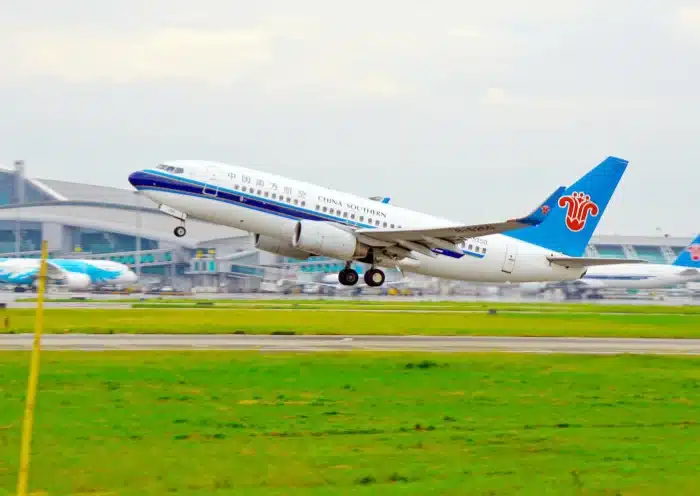
China has three major airlines (Air China, China Eastern, and China Southern) that dominate this industry, while there are also budget carriers like Spring Airlines offering affordable options for short-haul travel.
Air China – Beijing Hub
As China’s flag carrier, Air China operates most of its flights from the country’s capital, Beijing. And with typically strong international routes to North America, Europe, and Asia, it is, indeed, able to connect passengers to nearly every continent on the planet. Apart from, it also has extensive domestic services, which allows you to travel with them between all major cities.
China Eastern Airlines – Shanghai Hub
Based in Shanghai, China Eastern has long been one of the most competitive airline with a strong network of both domestic and international flights. And different from Air China, its international routes are mostly concentrated in East and Southeast Asia regions. With frequent flights and convenient connections, its visitor capacity has been steadily increasing in recent years.
China Southern Airlines – Guangzhou Hub
With Guangzhou serving as its main hub, China Southern is definitely the one dominating southern China’s domestic routes. And with a greater ambition, it has kept expanding its international business, particularly give a focus on to Asia-Pacific areas.

Hainan Airlines – Beijing & Haikou Hub
Hainan Airlines, which set its headquartered in Haikou and Beijing, has gradually emerged as a major player in the industry and grown into one of China’s most internationally recognized carriers. It’s expanding long-haul international flights to North America, Europe, and Asia, while its excellent service and modern aircraft has won the airline widespread praise.
Low-Cost Carriers in China
The budget-friendly flights have constitute the almost “unbreakable” competitiveness of low-cost carriers like Spring Airlines. However, be mindful that they will manage to charge additional fees in services are supposed to be free. For international visitors with multiple transfers and heavy luggage, this choice might not be the one that suits you the best.
Extra China Air Travel Tips for Special Travelers
In China, taking a flight is more or less the same as in any other country in the world – that is to say, it is very convenient. For special passengers (such as the elderly, wheelchair users, pregnant women, and infants), China’s domestic airlines and airports will also offer special service policies (variations may exist at different airports or airlines). Below, we list some of the most important tips. Please contact us for more information.
- Most importantly, all special services must be requested from the airline either at the time of booking or 48 hours/24 hours before the departure. Why? Otherwise, when you arrive at the airport, you might find that there are already other people queuing up ahead, or it might already not be possible to make the arrangements.
- Major domestic airlines (such as the “big four”) offer wheelchair users ground, passenger elevator, and in-flight wheelchair services, as well as the transportation of electric wheelchairs. Your assistance dogs, hearing dogs, and guide dogs will also be able to fly according to the relevant regulations.
- Services are provided for pregnant passengers who need special care – allowing expectant mothers to enjoy a comfortable journey together with their unborn babies.
- And, services are provided for elderly passengers aged 65/70 or above.
- Your children/teenagers without family accompaniment will travel alone in China by plane? There will be dedicated personnel to handle all check-in, customs, security, and luggage check-in procedures for the children.
- Plus, special care is given to infant passengers (for example, baby cribs are provided on board in Hainan Airlines flights).
Booking Flights in China as a Foreigner
How to Book Domestic Flights in China
There are multiple ways for foreign travelers to book domestic flights in China. Among them, online bookings through airlines’ websites is one of the most efficient and direct method, and the best thing is, they usually offer English-language versions. These sites will show flight information in a quite clear and detailed way, so that you can easily compare schedules, select seats, and pay directly once you pick the right one.
Tickets can also be purchased at airport counters if you prefer handling things in person, though you may encounter with long queue during peak travel periods.
In addition, many would also consider booking through travel agencies, as they can not only buy the ticket for you, but also help you figure out complicated itineraries and provide assistance with connecting flights when needed.
Using Chinese Airline Apps
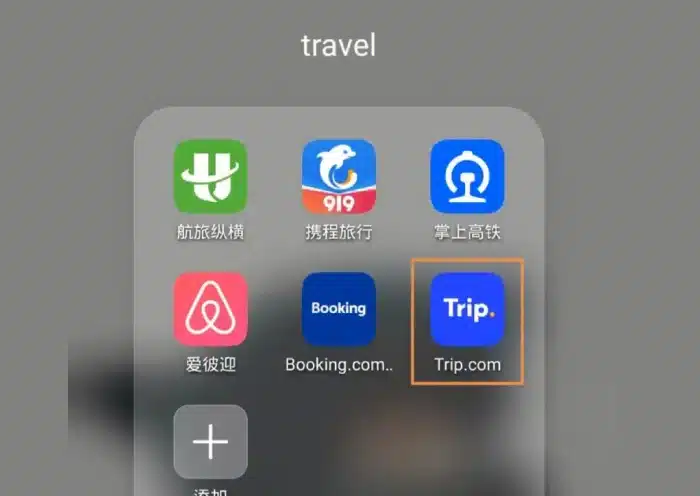
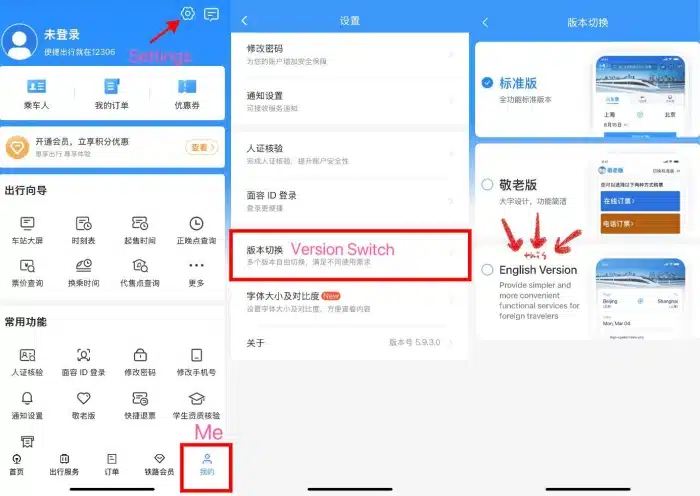
Mobile apps have long become one of the most convenient and popular platform to book and manage your flights. Apps like Ctrip, and Fliggy are widely used by both locals and foreigners to make all kinds of bookings (flight, train, attractions, hotels and even more), and all of them provide full English interfaces.
Major airlines also offer their own apps with English options, which can offer similar functionalities as other ticket booking app along with notifications for flight delays, gate changes, and boarding reminders.
Can Foreigners Use Foreign Credit Cards to Book?
Most airlines’ official websites and the major third-party platforms like Ctrip should be accepting payments made by international credit cards such as Visa, MasterCard, and American Express. However, some smaller or local websites may require you to pay with a Chinese-issued card, so it is better to process with well-known platforms to avoid payment issues.
The Layover and Transit Guide
Making the Most of a Long Layover in China
Expect for the 24-hour visa-free transit that anyone can apply, also consider a 240-hour visa-free transit which will allow you to stay in this country for up to 10 days. And to work it through, please first make sure your passport is issued in one of the 55 designated countries. Now, if you meet this requirement, then check the following list:
To qualify, you must:
- Enter and exit China only through the designated ports: There are 60 open ports in total that actually span across 24 provinces. Many of them are the most popular destinations such as Beijing, Shanghai, Guangzhou, Xi’an and Chengdu.
- Hold a valid passport: Your passport should be valid for at least three months(longer the better) beyond your intended stay.
- Have a confirmed onward ticket: You must provide proofs (e.g. flight tickets) showing that your next destination must be a third country or region, and you must depart within 240 hours (10 days) of your arrival.
- Stay within the allowed areas: You can only travel within the designated regions during your stay, don’t attempt to visit places that are not allowed
However, for those who don’t have that much time to travel around and just prefer to stay within the airport, you can use the convenient airport hotels and lounges to take a short rest. With all services provided, even long waits can turn to be comfortable. Check the airport map or ask staff for more details.
How to Handle a Connecting Flight in China
Domestic to International Transfers
When connecting from a domestic flight to an international one, there are several steps that you need to pay special attention to:
- Arrival at the International Terminal:Domestic flights and International flight services are usually separated into two different terminals. This means you have to prepare extra time to move between terminals, and, indeed, they could sometimes be very far from each other.
However, in major airports like Beijing Capital or Shanghai Pudong, you’ll see the dedicated transfer areas for international connections. But be careful that not all airlines have set their service counters in this area.
- Security and Immigration Checks:Even if you’re taking connecting flights, you still need to go through security and immigration checks once again. And also prepare an additional 10–30 minutes for potential bag checks or declarations.
- Baggage Handling: If your flights are on separate tickets or with different airlines, another time-consuming thing you will likely need to is collectingyour checked baggage at the baggage claim area and re-check it for your international flight. This is a standard procedure when flights are not on a codeshare agreement or linked booking.
- Proceed to Departure Gate:After completing all necessary steps, the relax and follow the signs to the international departure area and proceed to your departure gate.
Domestic to Domestic Transfers
For domestic-to-domestic connections, the process is generally more straightforward:
- Arrival at the Domestic Terminal: Upon arrival, follow signs toclaim baggage if you have checked one or two.
- Proceed to Next Flight: Thenproceed to the check-in counter or go directly to the security checkpoint to continue your next flight.
At the Airport: Security, Rules, and Tips
China Airport Security: A Step-by-Step Process
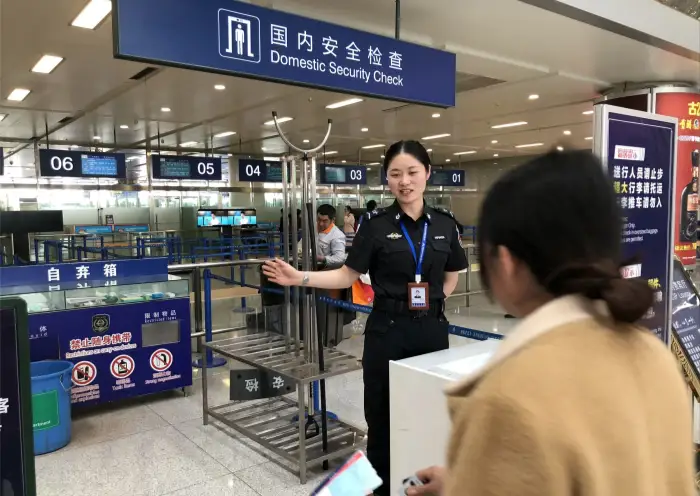
Chinese airports have some really strict security checks. Firstly, any liquids over 100 ml are not allowed to go with carry-on bags but have to be put in your checked luggage. Besides, laptops or large electronics must also go through screening separately. To save your time as much as possible, you’d better always keep your passports ready, as they’ll be checked at multiple points. Indeed, arriving 3 hours earlier than your than your departure time would help a lot.
Baggage Allowance for Domestic Flights in China
Most airlines would allow at least 20 kg of free checked baggage and another 5 kg of carry-on for economy passengers. However, if you’re travel with low-cost carriers, be adware that they often have stricter limits of luggage and more types of extra charges, so remember to confirm the rules with your airline before arriving at the airport.
Amenities: Wi-Fi, Food, and SIM Cards
Basically all airports will provide free Wi-Fi service, but the problem is they may requires a Chinese phone number for SMS verification. To stay connected, you can either consider buying a SIM card or eSIM in advance or request a temporary code at airport information desks.
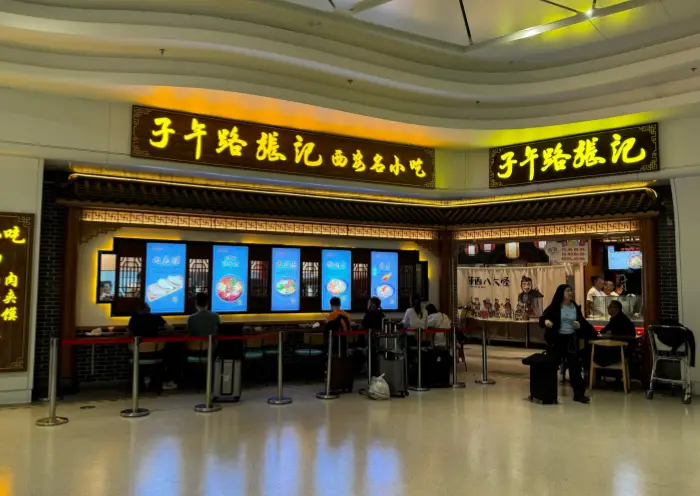
Except for duty-free stores, you can also find a wide range of restaurants in the airports, and most of them serve either fast food or local specialties. Though prices are generally higher than in the city, it’s still a good chance to keep one last memory of the city you just traveled.
Accessibility and Other Services
Wheelchair assistance is available at most airports, but you need to request it by the time you book your ticket. Large airports also have lounges, rest zones, and sometimes capsule hotels for layovers.
Related reading: How to Choose a Train Type & Seat Class in China?
Onboard Experience: What to Expect
In-Flight Service and Food
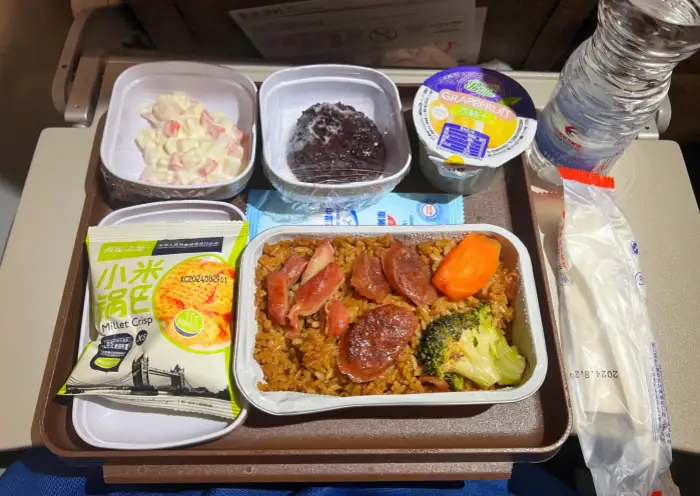
On Chinese airlines, the flight duration is what determines whether meals will be served on board. For domestic routes under two hours, passengers will often get just a small pack of snack and bottled water. However, on medium- and long-haul flights, hot meals are must provided, though the quality and variety can differ from airline to airline.
Special dietary requests—such as vegetarian, vegan, halal, or gluten-free meals—are available in theory, but it’s best to make your request when booking and reconfirm at check-in.
Entertainment and Comfort
When taking long-haul flight, the cramped space and hours without internet can seemingly slow down the passage of time. That’s when the in-flight entertainment facility really comes in handy.
However, while seat back entertainment systems are widely equipped, it could be a little disappointing that the English-language selection is, indeed, more limited compared to Western airlines. If you’re afraid that you can’t find anything you like on that system, bringing your own devices with download shows or music is more encouraged.
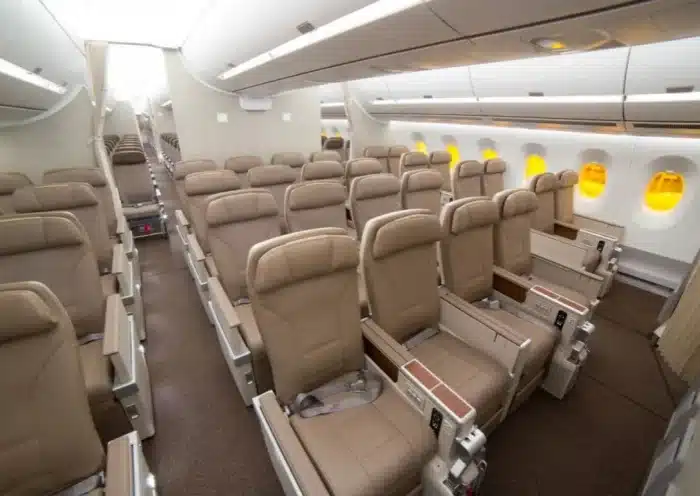
Seat comfort can be quite different on different aircraft and airline. Flag carriers like Air China, China Eastern, and China Southern generally maintain international standards, but still, the seat pitch and legroom can feel really tight in economy class. So bring equipment like your own travel pillow, eye mask, or noise-canceling headphones to add more comfort to this journey.
How to Track Domestic Flights in China
Will the heavy rain cause the flight to be delayed? Have you noticed that the boarding gate has been changed after passing through security checks? It’s best to learn how to track flight information in real time and obtain the latest information when travel in China by air. If you are on a China tour package with China Xian Tour, our travel experts and guides will keep track of your flight for you at any time. The good news is that there are many useful apps available now. For international tourists, many of them can provide English versions (and even some other languages).
If you already have FlightAware, which is sufficient to track global flight real-time information – even knowing the real-time flight trajectory clearly and with very accurate information. Besides, Variflight, Flightradar24, etc. are also good alternatives.
Dealing with Flight Changes and Issues
Understanding Your Rights: Delays and Cancellations
Air travel in China is generally reliable, but delays and cancellations are not something that hardly happen. They are, in fact, quite common during peak travel seasons, bad weather, or when air traffic control imposes restrictions.
Compensation and Assistance Policies:
4-8 hours delay or cancellations caused by the airline: In this case, the airline must provide passengers with compensation that equivalent to a 300 RMB voucher, mileage, or other forms of value. Besides, a cash compensation of 200 RMB is also accepted.
Delay of more than 8 hours: The airline must provide passengers with compensation equivalent to a 450 RMB voucher, mileage, or other forms of value, or a cash compensation of 300 RMB.
Weather or Air Traffic Control delays: In these cases, since the delay is made by the controllable factors (force majeure), then the airline will not take the responsibility to give compensation. However, airlines should help passengers with basic arrangements, such as offering discounted hotels or rescheduling assistance, but the costs should be borne by passengers.
Refunds: If passengers want to refund tickets due to reasons caused by the airline, then a full refund should be processed without any service fees.
If a flight is delayed by more than 4 hours, passengers will get the right to choose to cancel or reschedule the ticket for free, and except for this, the airline is also required to provide additional assistance, such as basic meals and accommodation.
How to Get Help: Language Barriers and Customer Service
For most international travelers, the most frustrating moment often comes when language barrier bringing communication to a halt. While it’s a relief that major international airports would have English-speaking staff, it won’t be the same case in smaller regional airports.
Practical Tips for Assistance:
Airline Service Counters: Look for your airline’s designated service desk inside the terminal. There should always be some people ready to solve passengers’ issues.
Hotlines and Apps: Most Chinese airlines have 24-hour customer service hotlines, but basically only the major airlines can provide efficient English service. So that you can also download the airline’s official app (Air China, China Eastern, etc.), and there you can more easily get to the full English page which will allow you to manage bookings, request refunds, or change flights directly.
Translation Tools: Apps like Google Translate, Baidu Translate, or WeChat’s built-in translation feature can help all bridge communication gaps with staff.
Airport Information Desks: Major airports are also equipped with information desks where professional staff is there waiting to assist in basic English.
FAQs on Air Travel in China for Foreigners
What is the highest-rated airline in China for foreigners?
Among Chinese carriers, China Southern Airlines, China Eastern Airlines, and Air China are the “big three,” however, with the rapid rise of Hinan Airline, the market is now said to be lead by the new “big four”. For foreigners, no matter which one of the four major carriers you’ll be travel with, the pleasant experience is assured.
Is domestic air travel in China safe?
Yes, it is considered very safe. All of Chinese airlines are operating under strict regulations overseen by the Civil Aviation Administration of China (CAAC). The safety record of major carriers like Air China and China Southern is always comparable to international standards.
Do I need to print my boarding pass in China?
In recent years, printing the boarding pass is no longer compulsory, since most airports and airlines in China are now supporting passengers to use digital boarding passes that can be generated on airline apps. However, different airports will have different regulations. So it’s always a good idea to arrive early and check local procedures.
Can I use WeChat Pay or Alipay at the airport without a Chinese bank account?
Yes, now use both WeChat Pay and Alipay can support users to make payment through an international credit or debit card (Visa, Mastercard, etc.).
China Air Travel with Chinaxiantour
Air travel in China can be extremely rewarding, but still, more complex than you may have imagined, especially for those who do not understand Chinese language at all. Indeed, considering the country’s vast network of airports and excessive flight routes, planning a smooth flight journey does require a touch of local experience. And that’s why Chinaxiantour is here waiting for you to join us in an air travel across China’s most breathtaking spots. With our experts taking care of all the preparation, all you need to do on the way is enjoying yourself and don’t let any piece of beauty slipped away from your eyes.