

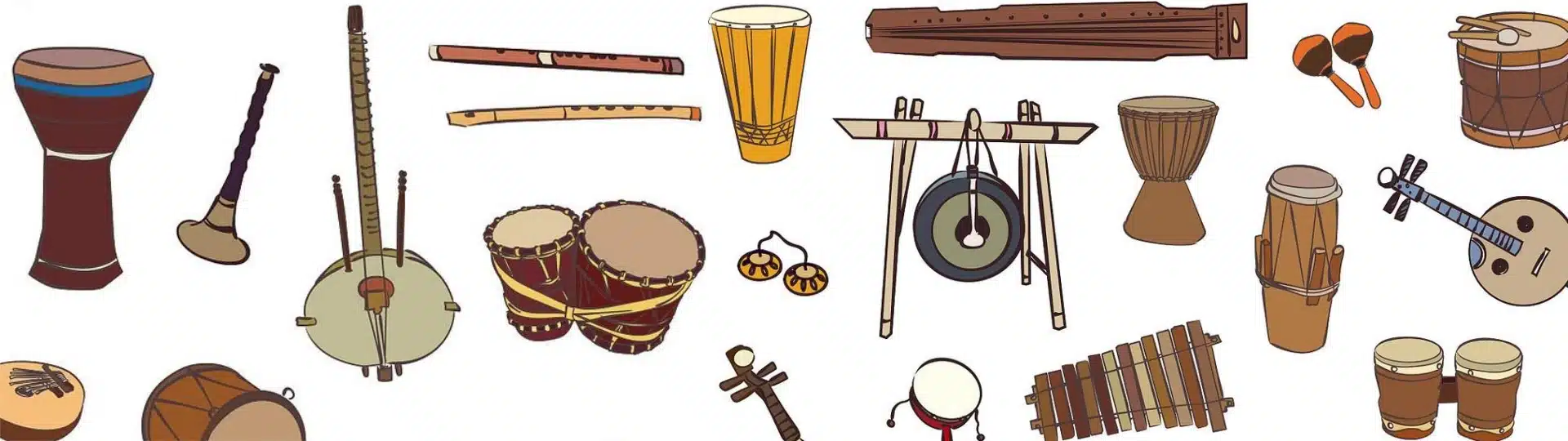
Traditional Chinese musical instrument, important symbols of Chinese culture, possesses a history lasting thousands of years.
It can be divided into eight types according to materials, namely mental, jade, clay, leather, strand, wood, gourd and bamboo. For example, flute is made of bamboo. Guqin is made of wood.
Each musical instrument has its own tone and melody to convey emotions from distress to pleasure. The harmonic of Guqin sounds like the echo from the universe. The glissando of Erhu can imitate the cries of people.
Traditional Chinese instruments have been widely used for court music and folk operas. They have their own tonalities to tell about long-standing Chinese stories, and bring us into the presence of the greatest music that have ever created.
Content Preview
- Classification of Traditional Chinese Instruments
- 1. Erhu: the Iconic Two-Stringed Instrument
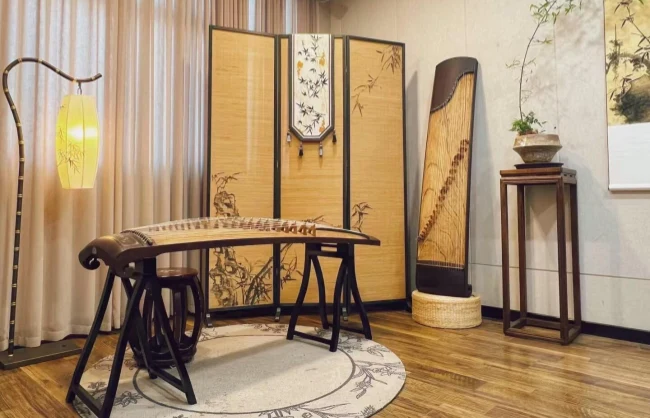
- 2. Guqin: the Ancient Seven-String Zither
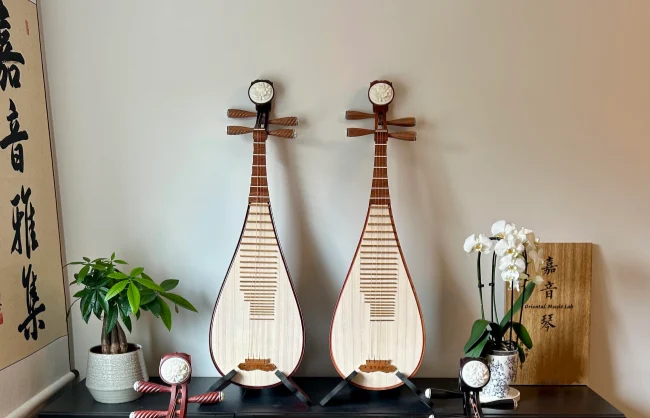
- 3. Pipa: the King of Bowed String Instruments
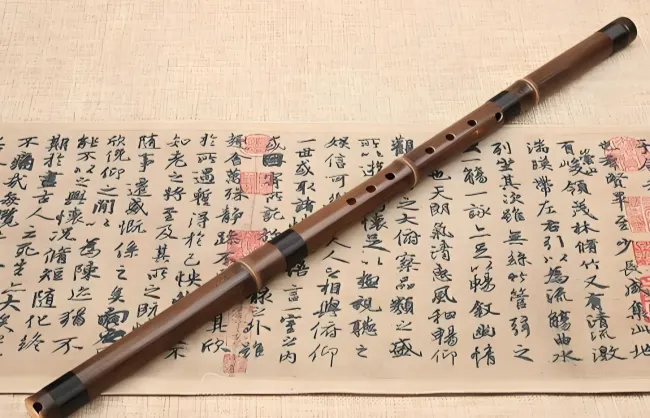
- 4. Dizi: the Chinese Flute
- 5. Guzheng: the Oriental Piano
- 6. Suona: the Chinese Trumpet
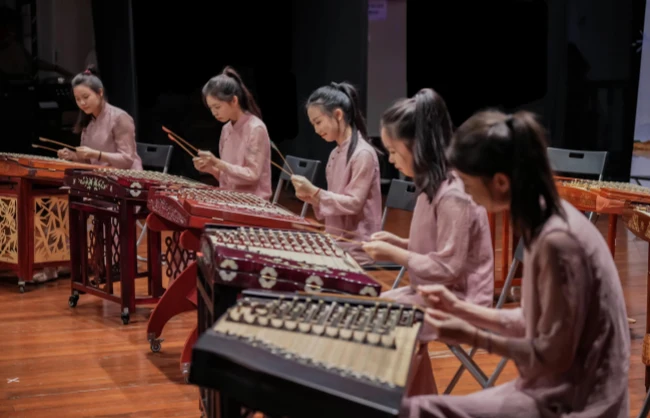
- 7. Yangqin: the Solo and Ensemble of Folk Music
- 8. Xiao: an End-blown Wind Instrument
- 9. Hulusi: a Wind Instrument of Ethnic Minority
- 10. Chinese Gongs and Drums: a Leading Role of Bustling Atmosphere
- How Traditional Instruments Shape Chinese Music
- Chinese Instrument Ensembles and Performance Styles
- Where to Experience Traditional Chinese Music Today
- Experience Traditional Chinese Music with Us
Classification of Traditional Chinese Instruments
Based on playing techniques, Chinese musical instruments can be classified into string instrument, wind instruments and percussion instrument.
String Instruments
Chinese string instruments have been developed for more than three thousand years. It can be mainly divided into plucked chordophone and bowed chordophone.
As its name suggests, plucked chordophones are instruments that produce sound by plucking the strings with fingers or a plectrum. While bowed chordophones refer to instruments that create sound by drawing a bow across the strings.
Guqin is one of the oldest plucked chordophones. It amasses much popularity because of an ethereal timbre. The United Nations has put it in the list of intangible cultural heritage of humanity.
Guzheng is another popular plucked chordophone. Its tone is as clear and smooth as brook. It can embody the artistic conception of fine rain and the wildness of windy and sandy weather.
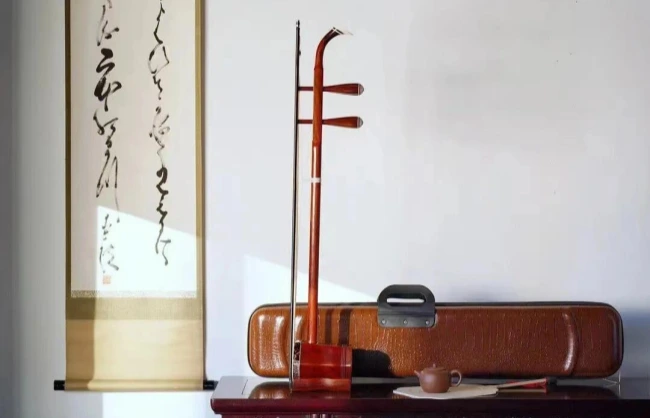
Erhu and horse-head fiddle are representatives of bowed chordophones. Erhu has a delicate and light sound, which can imitate birds’ twitter and horses’ whinny.
Horse-head fiddle is a traditional Chinese string instrument of Mongolians. It has a broad vocal range, as robust as strong wind.
Wind Instruments
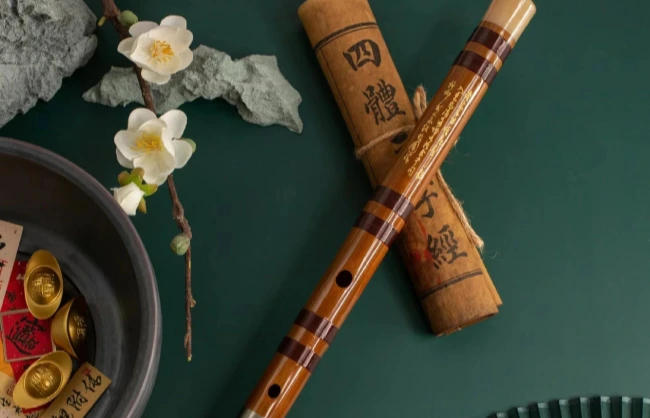
Chinese wind instruments can date back to the neolithic age. Its evolution has witnessed cultural exchange and Technological innovation of ethnic groups. Unlike some western wind instruments, Chinese wind instruments usually are made by natural materials, like bamboo, clay, or even gourds. They can produce incredibly vibrant, lifelike sounds and are deeply rooted in everyday life.
Dizi and Suona are the most common wind instruments. Dizi can play diverse rhythms. It is suitable for not only solo but also band ensemble.
Suona is an off-the-beaten musical instrument. Due to resonant and clear sound, it has a big role to play in creating atmosphere during performance.
Besides, Sheng is worth mentioning because it is the earliest free reed in the world.
Percussion Instruments
Chinese percussion instruments centered on bronze bells in the Xia and Shang dynasties, and further were in the prime during the Qin and Han dynasties. They are like a history book written in sound. For thousands of years, their noises have recorded the emotions of Chinese life. More than keeping rhythm, they can mimic the sounds of wind, thunder, galloping horses, and even human joys and sorrows, making the music a language in itself.
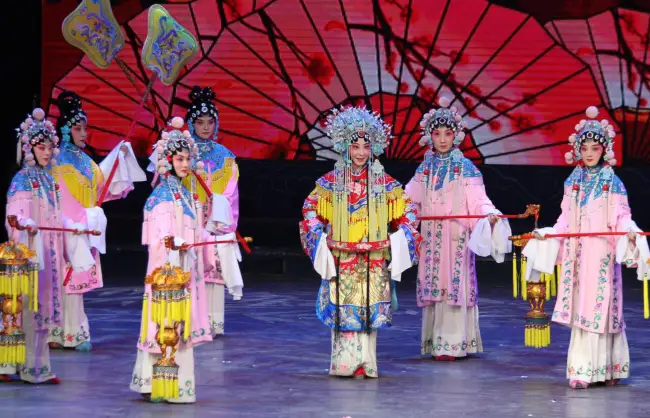
In traditional Peking Opera, people use the “Four Big Percussion Instruments” to convey to the audience whether the scene is tragic or joyful, a battle or a truce, all without a single word spoken.
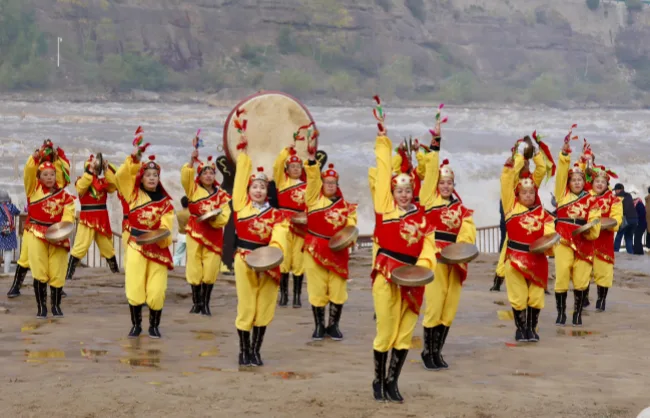
Moreover, the percussion instruments also serve as sonic symbols in traditional festivals. For example, people use gongs and drums to create a lively atmosphere during Chinese New Year celebrations. In lion dances, performers use the changing tempo of the drumbeat to mimic the lion’s heartbeat, bringing the lion vividly to life.
Chinese gongs and drums, typical percussion instruments, are of all sizes. Large drum has forceful and shocking sound, while small drums are flexible and vigorous rhythms.
1. Erhu: the Iconic Two-Stringed Instrument
- Chinese name: 二胡, èr hú
- Sound: clear sound and beautiful melody
- History: more than one thousand years; used in folk and orchestral music.
- Type: string instrument
- Popular tune: The Moon Reflected on Second Spring (二泉映月, èr quán yìng yuè)
Erhu, a two-stringed musical instrument, makes sound by rubbing bow and string. Its timber sounds like human voice and can give vent to emotions.
Relying on its graceful melody and strong expression, Erhu not only plays joyful and lively songs but also reflects deep and sorrowful feeling. The well-known tune of The Moon Reflected on Second Spring tells about miserable life and the eager for future.
2. Guqin: the Ancient Seven-String Zither
- Chinese name: 古琴, gǔ qín
- Sound: deep and lingering melody
- History: over three thousand years
- Type: string instrument
- Popular tune: The Spring Snow (阳春白雪, yáng chūn bái xuě)
Guqin is among the oldest plucked string instruments in China. It is hailed as the Father of Chinese Music or the Musical Instrument of Sages.
Guqin has its deep and lingering tune to convey a tranquil and unworldly feeling. It highly agrees with traditional Chinese philosophical thoughts and aesthetic concepts.
3. Pipa: the King of Bowed String Instruments
- Chinese name: 琵琶, pí pá
- Sound: penetrating
- History: over two thousand years
- Type: string instrument
- Popular tune: Ambush on All Sides (十面埋伏, shí miàn mái fú)
Among bowed string instruments, Pipa is invincible because of broad vocal ranges and various techniques. It can not only reproduce the cutthroat battlefield with majestic and seething tune but also describe serenity and gentleness in moonlight.
4. Dizi: the Chinese Flute
- Chinese name: 笛子, dí zi
- Sound: lingering and forthright
- History: over four thousand years
- Type: wind instrument
- Popular tune: Clapper Melody of the Fifth Vigil (五梆子, wǔ bāng zǐ)
Dizi, Chinese flute, is a compact wind instrument. It will make different sounds by blocking holes with fingers. It can perfectly play both melodious and straightforward tunes. In solo, it can show brisk melody. In band ensemble, it can also add highlights.
5. Guzheng: the Oriental Piano
- Chinese name: 古筝, gǔ zhēng
- Sound: melodious
- History: over three thousand years
- Type: string instrument
- Popular tune: Fishermen’s Song at Eventide (渔舟唱晚, yú zhōu chàng wǎn)
Guzheng boasts a wide vocal range and strong presentation. Playing strands with hands can make a sound of glissando and trill. Relaxing and melodious tune is of highly charm.
6. Suona: the Chinese Trumpet
- Chinese name: 唢呐, suǒ nà
- Sound: loud and clear
- History: over two thousand years
- Type: wind instrument
- Popular tune: Hundreds Of Birds Worshipping the Phoenix (百鸟朝凤, bǎi niǎo cháo fèng)
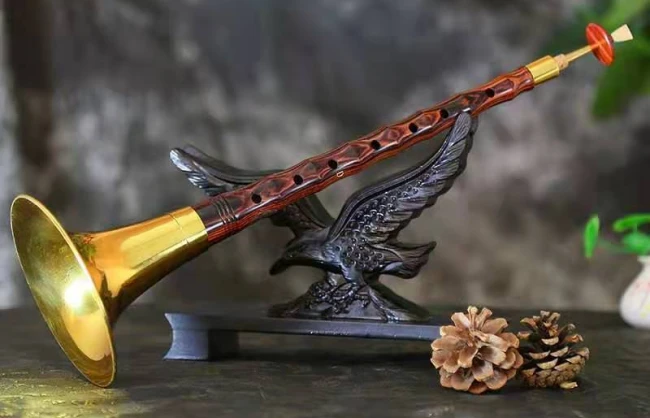
Suona was introduced into China from Persia in the 3rd century AD. After thousands of years, it becomes a national musical instrument with Chinese culture.
The salient feature of Suona is loud and resounding voice. This is why it is often used for big events, such as conflicts, festivals, weeding and funerals.
7. Yangqin: the Solo and Ensemble of Folk Music
- Chinese name: 扬琴, yáng qín
- Sound: loud and brisk
- History: over three hundred years
- Type: string instrument
- Popular tune: Autumn Moon on the Calm Lake (平湖秋月, píng hú qiū yuè)
Yangqin was introduced into China during the Ming dynasty (1573-1620). Affected by Chinese culture, it is characterized by loud sound and brisk melody.
If you play a slow tune, the sound is like a mountain spring that tinkles. If you play a quick tune, it sounds like a murmuring stream. In addition to that, traditional operas can be accompanied on Yangqin because of its strong expression.
8. Xiao: an End-blown Wind Instrument
- Chinese name: 箫, xiāo
- Sound: melodious and ethereal
- History: over seven thousand years
- Type: wind instrument
- Popular tune: The Old Drunkard (醉翁操, zuì wēng cāo)
Xiao and Dizi have a similar external appearance, but Xiao has a softer and mellower tune. It creates a melodious and ethereal melody, and makes people feel sorrow. This is why ancient people often play the Xiao to express their homesickness.
9. Hulusi: a Wind Instrument of Ethnic Minority
- Chinese name: 葫芦丝, hú lú sī
- Sound: gentle and mellow
- History: over 2,500 years
- Type: wind instrument
- Popular tune: Fernleaf Hedge Bamboo Under the Moonlight (月光下的凤尾竹, yuè guāng xià de fèng wěi zhú)
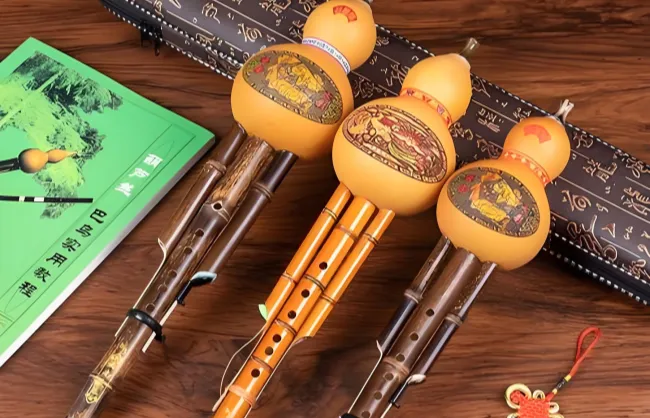
Hulusi is a wind instrument of ethnic minority from Yunnan province. It is made from gourd and bamboo. Due to its soft and charming tune, local people get accustomed to play the Hulusi on a moonlit night to express personal affection.
10. Chinese Gongs and Drums: a Leading Role of Bustling Atmosphere
- Chinese name: 锣鼓, luó gǔ
- Sound: resonant
- History: over four thousand years
- Type: percussion instrument
- Popular tune:
Chinese Gongs and Drums is the most common percussion instrument in China. It develops a separate school because of its resonant and loud sound. It is particularly suitable for a tense and fierce atmosphere. This is why you can find it in large events.
How Traditional Instruments Shape Chinese Music
Chinese music is based on the pentatonic scale, namely do (宫, gōng), re (商, shāng), mi (角, jué), sol (徵, zhǐ) and la (羽, yǔ). Its melody is as smooth as flowing water. Its rhythm is as free as breath. Working with traditional Chinese musical instruments, a unique feature of Chinese music comes into being.
Instruments of Classical Music vs. Folk Music
Classical music is widely used for high-brow music of royal courts or gatherings of scholars. It emphasizes imperial etiquette system and artistic conception.
Folk music concentrates on daily life and prefers cheerful tunes. It is often used for festivals and ceremonies to create atmosphere.
| Type | Musical Instruments | Features |
|
Classical Music |
Guqin | Simple and deep |
| Bells | Solemn and elegant | |
| Pipa | Wide vocal range, as clear as flowing water | |
|
Folk Music |
Erhu | Two-stringed instrument, strong expressive force, similar to human voice |
| Suona | Resounding and penetrating sound, suitable for weddings and funerals | |
| Guzheng | Clear and melodious melody |
Modern Fusion
Nowadays, traditional Chinese musical instruments have broken with stereotyped conventions to embrace electropop and rock music. For instance, the rock and roll is accompanied on Pipa to subvert its original impression of wallop.
Chinese Instrument Ensembles and Performance Styles
The Chinese instrument ensembles can be divided into three types.
The first is high-brow music of royal palace. It mainly contains bells and Guqin. The style prioritizes solemnity and magnificence.
The second features silk and bamboo instruments, which evokes the elegance of Jiangnan music.
The third is percussion music that mainly encompasses Suona, Chinese gongs and drums. Its resounding and passionate rhythms are particularly suitable for ceremonies.
What is an Ensemble of Traditional Chinese Instruments?
The ensemble of traditional Chinese instruments indicates that more than one Chinese traditional musical instruments work together to play the same composition. It can coordinate melody and timbre by commanding voice parts so as to present an ideal artistic effect.
The Role of Each Instrument in an Ensemble
Each musical instrument has its own role to play in an ensemble. Some dominate melody, such as Dizi and Erhu. Some hold rhythm, like Pipa and Yangqin. Some enhance artistic appeal by means of visual and auditory senses, such as Suona.
Famous Chinese Orchestras and Performers
China NCPA Orchestra, China Broadcast Traditional Orchestra and China Philharmonic Orchestra are top-class Chinese orchestras.
China NCPA Orchestra is well-known for opera and enjoys a high reputation among audiences. It had a concert tour in North America in 2014 and 2017 and did a show in Carnegie Hall.
China Broadcast Traditional Orchestra is adept at Chinese orchestra music. It developed the pattern of large orchestra music and set the stage for modern folk music.
China Philharmonic Orchestra was rated as one of top ten orchestras with the largest global influence by overseas media outlets. It has finished thousands of performances, including symphonies, operas, oratorios, theatrical music, ballet music, chamber music and musicals, etc.
Besides, China also embraces many internationally renowned performers, such as the pianist Lang Lang and the violinist Lyu Siqing. They often worked with orchestras and participated in international tours.
Where to Experience Traditional Chinese Music Today
Traditional Chinese music is still kept alive today in China. If you develop a taste for it, here are nice places for recommendation.
Best Places to See Live Performances
You can participate in the Beijing Traditional Music Festival that boats recitals of string and wind instruments, Kunqu opera and folk songs of northern Shaanxi. Or, you can go to Guiyang to visit roadside musical entertainments that embraces music of ethnic groups.
If live performances cannot satisfy you, museums have unique experience to offer by means of cultural relics. In Hubei Provincial Museum, you will have a chance to enjoy the ritual music during the period of Warring States (475-221 B.C.). That is played by the replicate of Zeng Houyi Bells (zēng hóu yǐ biān zhōng, 曾侯乙编钟). Or, Xinjiang Museum will bring you to visit historical relics of traditional Chinese musical instruments.
Famous Chinese Music Festivals
A wide range of Chinese music festivals will take you by surprise.
Beijing Traditional Music Festival has ten traditional Chinese musical instruments to offer. Centering on traditional instrumental music, you can pamper yourself with beautiful music of Erhu, Suona, Guzheng and Yangqin, etc.
China Indigenous Folk Songs Festival is a biennial event. It concentrates on folk songs of all ethnic groups throughout the country. You will have a chance to admire the performances of regional musical instruments.
China-Chic Music Gala is regarded as one of the most influential music festivals. It is characterized by Chinese traditional culture and popular music. You will delight in the integration of traditional Chinese elements.
If you take a fancy to traditional Chinese music, don’ miss these music festivals.
Learning Traditional Instruments (Workshops and Classes)
Learning a traditional Chinese musical instrument is a meaningful way to deepen your understanding of Chinese culture and music.
If you are an enthusiast of Chinese music and instruments, some short-term classes in local workshops will be great options for you. Or, if you are traveling to China with us, please let our travel consultants know your interests, and they will be happy to arrange related experiences for you. For example, try playing the horse-head fiddle in Inner Mongolia, or enjoy performances featuring traditional Chinese string and woodwind instruments in Suzhou.
Experience Traditional Chinese Music with Us
Traditional Chinese music is like a hidden gem. When you get closer, you will be exposed to more surprises. Do you want to create your own musical memory in China? If so, please feel free to contact us to customize an itinerary with chances to try your hand at playing simple melodies, enjoy an intimate erhu performance by a local master, or even visit a workshop to see how artisans produce traditional xun (埙) instruments.
Below are some of our China tours with local music and instruments experiences for your reference.