





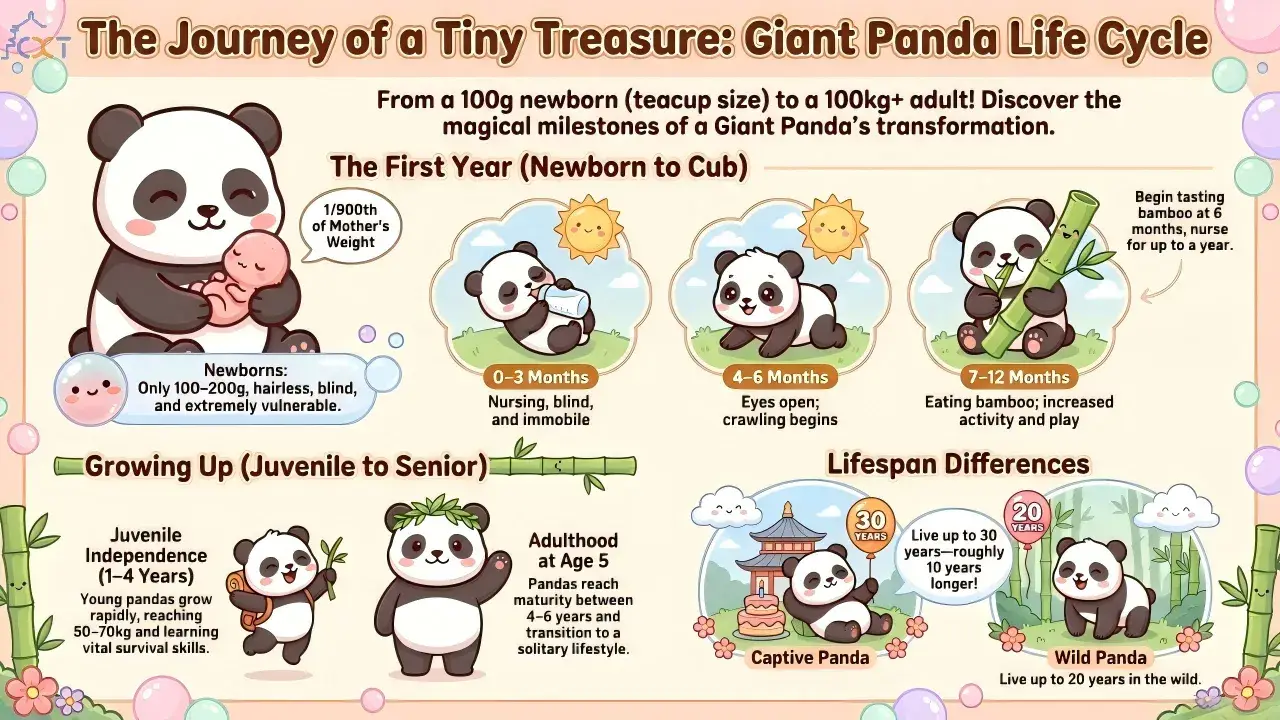
The giant panda, as China’s most beloved national treasures, has a quite fascinating life cycle which can reflect its unique biology and behavior. Understanding the life cycle of the giant panda requires people to first look into their delicate growth stages, from newborn cubs to adulthood, and also underlines the importance of conservation efforts to protect this endangered species.
If you are curious about the detailed life cycle of pandas, this article is just for you. From behaviors, breeding habits, and changes in growth in different stages to some interesting facts about their life cycle, we get all information you want covered. Whether you’re a panda enthusiast or you’re just now planning a China panda tour, learning about these gentle bears will greatly enrich your experience.
Content Preview
- Giant Panda Bears Life Cycle & Lifespan Overview
- Why Understanding Panda Stages Matters for Conservation
- Stage 1 – Pregnancy and Birth
- Stage 2 – Newborn Panda Cubs
- Stage 3 – Panda Cub Development (0–1 Year)
- Stage 4 – Juvenile Panda Growth (1–4 Years)
- Stage 5 – Adulthood and Reproduction
- Stage 6 – Later Life and Lifespan
- Fun & Interesting Facts About Panda Life Cycle
- Wild vs. Captive Pandas
- Helpful Information and Tips for Visitors
- Where to See Pandas at Different Life Stages
- Have a Panda Tour with China Xian Tour
Giant Panda Bears Life Cycle & Lifespan Overview
The giant panda bears’ life cycle is separated into several key stages. First it starts with mating and pregnancy, then followed by birth, cub development, juvenile growth, adulthood, and later life. So, what is the lifespan of a giant panda? In the wild, pandas only lives around 14-20 years on average, while in captivity, pandas’ lifespan is 5 – 10 years longer, which can reach 20 – 30 years, thanks to experts’ careful management and medical care.
To make the giant panda life‑cycle easier to understand, we have summarized each growth stage, age range, average weight and key developmental milestones in the table below. This quick reference helps you grasp the full growth process of giant pandas from newborn to senior.
Life Stage |
Age Range |
Average Weight |
Key Developmental Milestones |
Newborn |
0 – 3 Months |
100g – 4kg |
Pink, blind, and helpless; completely dependent on mother’s milk. |
Cub |
3 – 12 Months |
4kg – 30kg |
Starts walking, eyes wide open; begins to mimic eating bamboo at 6 months. |
Juvenile |
1 – 1.5 Years |
30kg – 60kg |
Fully weaned; leaves the mother to start an independent life. |
Adult |
4 – 20 Years |
80kg – 150kg |
Reaches sexual maturity; spends 12+ hours eating bamboo daily. |
Senior |
20+ Years |
Varies |
Slower movement, worn teeth; can live up to 30+ years in captivity. |
Why Understanding Panda Stages Matters for Conservation
Understanding the life cycle of a giant panda is the starting point for further research of breeding programs and conservation strategies. Even facilities like the Chengdu Panda Base or Wolong Panda Base, leading centers for giant panda research and breeding, have also put a lot of efforts in studying panda habitats and behaviors. This work allows them to better achieve their goal of, for example, increase panda population numbers and educate the public to know more about a panda.

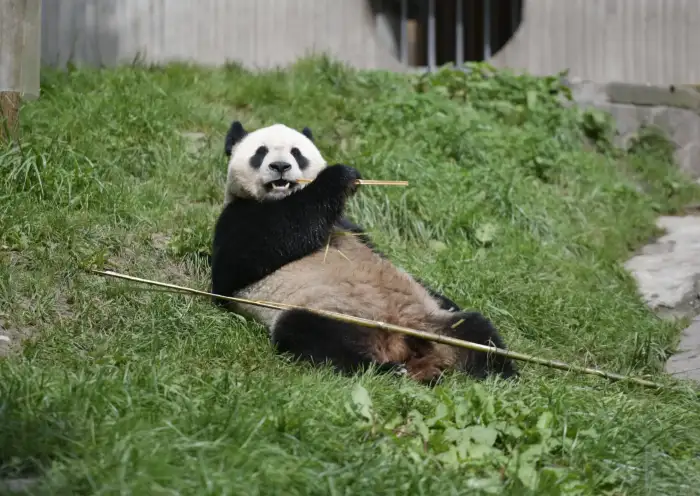
Stage 1 – Pregnancy and Birth
Giant Panda Mating Season and Breeding Habits
Pandas usually enter their mating season between March and May each year. However, it’s only a narrow window that lasts only a few days, and this is one of the reasons for the breeding of Panda always stay challenging. During this time, male pandas will compete for females, and successful mating is critical to the species’ survival.
Giant Panda Pregnancy and Gestation Period
How long is the Giant Panda’s gestation period? It varies a lot. After mating, the gestation period for a giant panda ranges from 95 to 160 days due to their typical delayed implantation, which will last for about 135 days on average. This variability helps ensure the best timing for giving birth to a small one, and the final decision is largely depending on environmental factors.
How Often Do Pandas Give Birth?
Female pandas typically give birth once every two years because raising cubs requires intensive care and energy. Twins are possible but rare, and usually, only one cub survives in the wild.
Stage 2 – Newborn Panda Cubs
What Does a Newborn Panda Look Like?
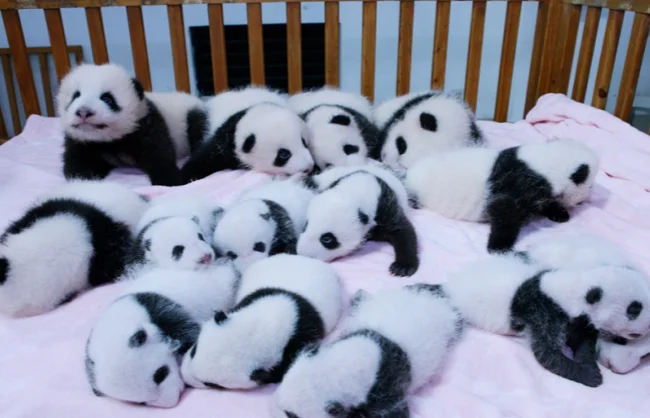
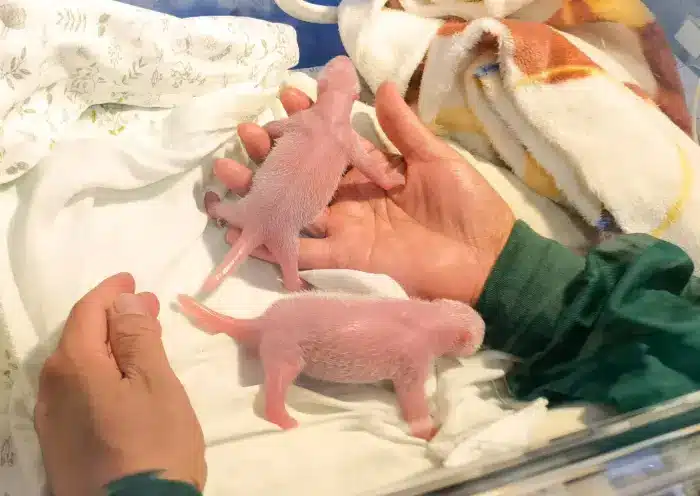
A newborn panda weighs only 100-200 grams, which is about 1/900th of its mother’s weight (equivalent to the weight of a stick of butter), and having roughly the size of a cup of tea. They are born hairless, blind, and extremely vulnerable due to the fact that they are all premature. The newborn period generally lasts from July to September, coinciding with the breeding timeline.
First Days: Weight, Blindness, and Vulnerability
In the initial days, cubs depend entirely on their mothers, as they are completely blind and even need stimulation to urinate and defecate. Their mother would carry and nurse them almost 99% of the time, providing them with warmth and protection from any possible harm (like predators and cold weather).
How Are Baby Pandas Raised in the Wild and Captivity?
In the wild, mother pandas would raise their cubs in seclusion, while in captivity, staff at panda centers will all participate in the breeding process and provide their specialized care, which includes incubators and veterinary support. These methods have significantly increased pandas’ survival rates.
Stage 3 – Panda Cub Development (0–1 Year)
Giant Panda Cub Milestones: Crawling, Teeth, Play
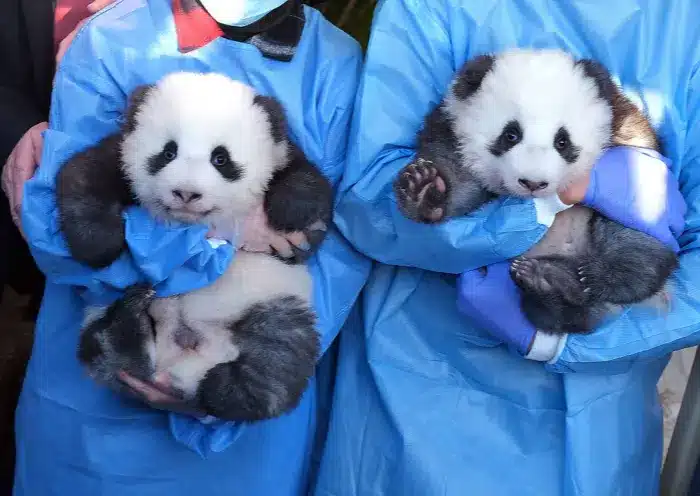
Within a few months, panda cubs shall begin to crawl, open their eyes, and grow tiny baby teeth. Soon after, they’ll embark on their very first exploration of their surroundings through playful behaviors like rolling, climbing, and gentle.
Diet Transition: From Milk to Bamboo
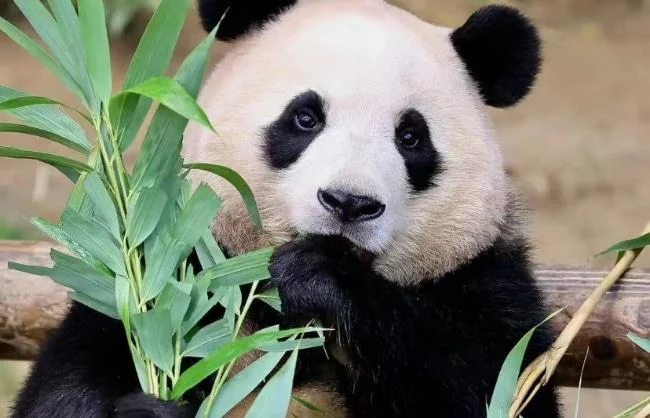
For the first three months, cubs rely entirely on their mother’s milk. However, when it comes to four to six months, they’ll begin to try the flavor of bamboo, though milk will still remain an important part of their diet until they’re about 8 to 9 months old. During this time, caretakers in captivity often introduce soft bamboo shoots to help with the transition.
Giant Panda Cub Development Chart
Age (Months) |
Developmental Milestones |
0-3 |
Nursing, blind, unable to move much |
4-6 |
Eyes open, crawling begins |
7-12 |
Eating bamboo, increased activity |
When talk about giant panda’ diet, here comes a question: how often do pandas go to the bathroom? Pandas have a huge appetite and digest quickly. An adult panda can defecate up to 40 times a day.
Stage 4 – Juvenile Panda Growth (1–4 Years)
How Do Pandas Grow?
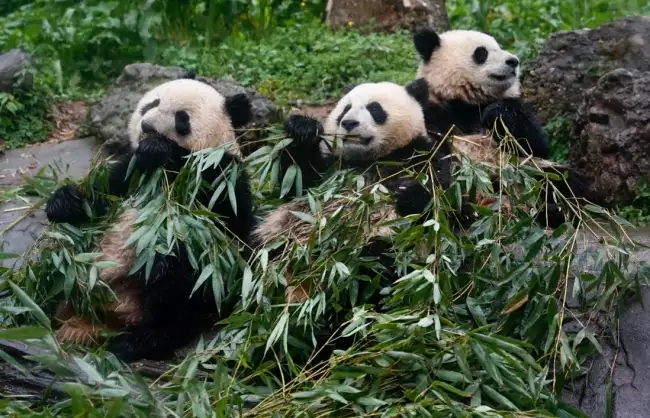
Juvenile pandas grow rapidly, and they will gain their strength and independence in an incredible pace. Their weight also increases substantially during this period, reaching about 50-70 kg on average by age 3-4.
Behavior and Socialization
It’s the best time for young pandas to start exploring the world. You’ll often see them climbing trees, and interacting with other pandas stay with or stay near them, even though sleep is still a crucial part of their days. This stage is important for them to learn survival skills, especially in the wild.
So, you maybe curious – do pandas sleep all day? Nope, but they also spend about half a day resting and sleeping.
When Do Pandas Reach Maturity?
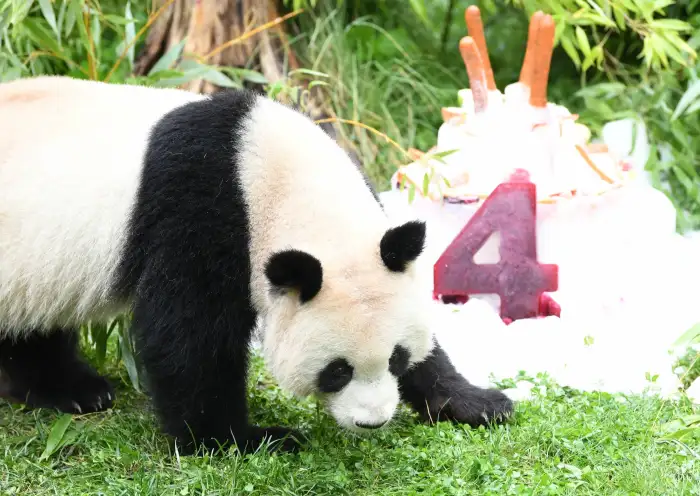
Pandas generally reach sexual maturity around 4 to 6 years old. They’ll gain more weight and grow into a larger size during this time. After which they may start breeding themselves.
Stage 5 – Adulthood and Reproduction
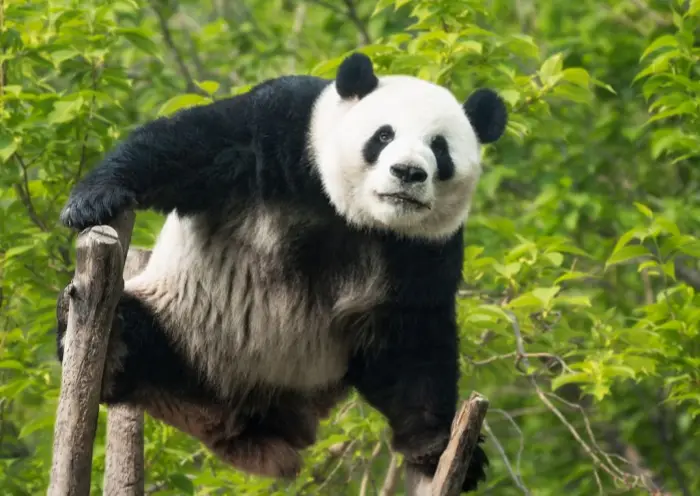
At what age are Giant Pandas considered fully grown adults? Usually, it is believed that pandas enter adulthood at the age of five and above.
Giant Panda Breeding in the Wild vs. Zoos
Adult pandas in captivity get more human focus and experience more controlled breeding conditions, boosting reproductive success compared to the wild, where habitat fragmentation keeps posing challenges on wild pandas’ living and breeding activities.
Adult Panda Behavior and Territory
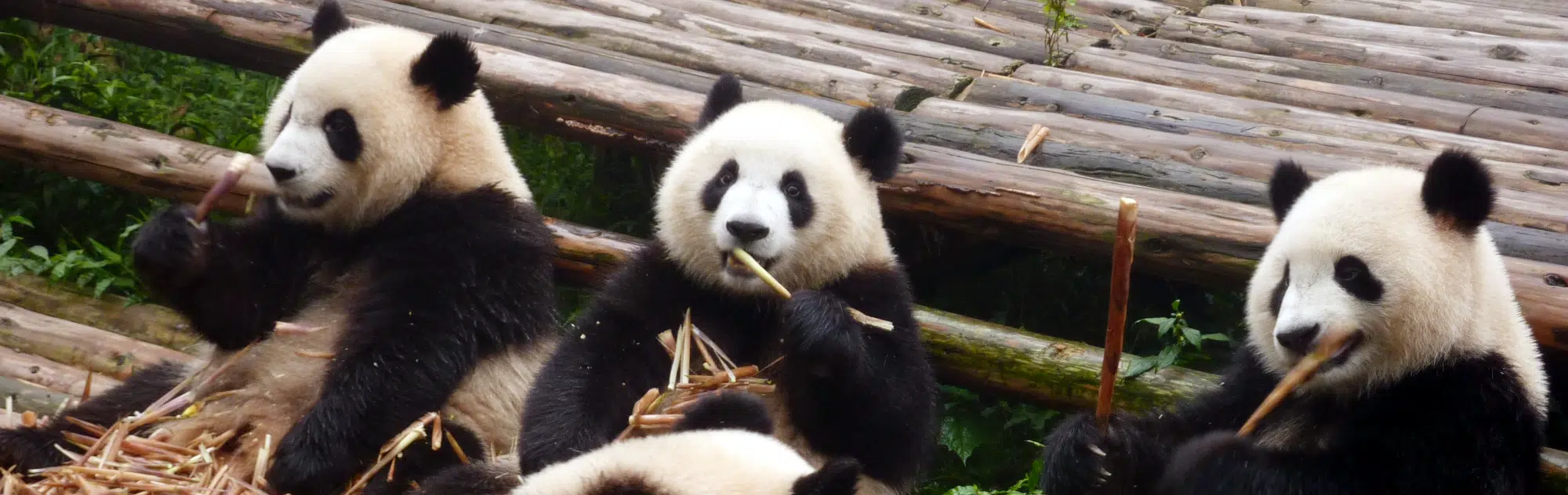
At around 4-6 years old, pandas will welcome their adulthood, and they’ll naturally get to live in solitary, even in captivity. They’ll mark their territories with scent glands to avoid conflicts over living spaces.
Giant Panda Reproductive Cycle and Challenges
Despite advances and achievement, panda breeding still remains difficult due to a lot of reasons such as their narrow mating season and low birth rates. All these challenges have further emphasized that conservation efforts are vital.
Stage 6 – Later Life and Lifespan
How Long Do Pandas Live?
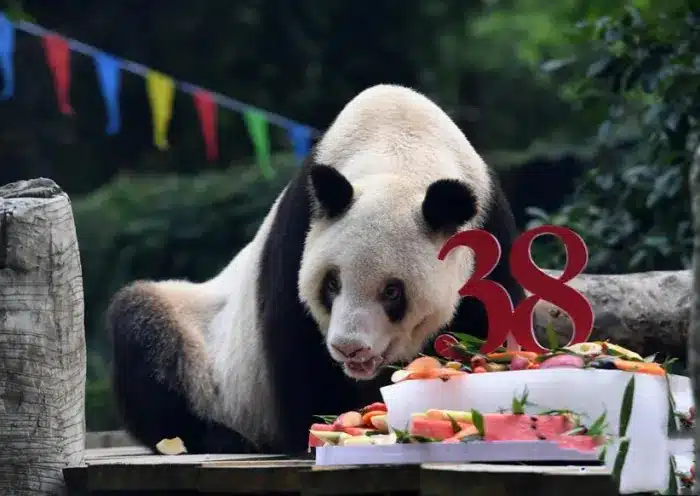
The giant panda life expectancy varies greatly depending on where the panda lives. In the wild, pandas live about 14-20 years due to threats ranging from habitat loss, disease, and food shortages. While in captivity, with veterinary care and all sorts of techniques that can help them stay healthy, pandas here can live up to 30 years or more.
Panda Lifespan in the Wild vs. in Captivity
There’s a significant difference between the lifespan of wild and captive pandas. In the wild, pandas face natural predators since they’re young, and they only have limited access to medical help, while bamboo forests are also being increasingly fragmented. In contrast, pandas in captivity can always benefit from:
- Nutritionally balanced meals and bamboo supplied year-round
- Advanced veterinary care and early disease detection
- Protection from injury, poaching, and environmental stress
These conditions significantly increase their longevity and quality of life. As a result, captive pandas generally live about 8–12 years longer than wild ones.
Common Health Issues in Older Pandas
As pandas gain ages, they will more and more often face sickness like joint pain, worn teeth, and slower digestion. Many also become less active, which is possible to end with muscle loss. In research centers, caretakers would closely monitor pandas condition, and try their best to help pandas feel better.
Adjusting diets, providing pain relief, and offering basic physical support are some common measures which allow older pandas stay comfortable in their final years. However, those living in wild are unlikely to get such cares.

Fun & Interesting Facts About Panda Life Cycle
From blind, hairless newborns and then become playful cubs and solitary adults, the giant panda life cycle is full of challenges and surprises. Below are some fascinating facts that showing the uniqueness of panda development and behavior—especially when it comes to parenting, reproduction, and famous panda stories.
Topic |
Fun Fact |
Surprising Panda Facts |
Newborn pandas weigh only about 1/900th of their mother’s weight. |
Mother’s Role |
The mother raises the cub alone; the father takes no part in parenting. |
Why Breeding Is Difficult |
Female pandas are fertile only 2–3 days a year, making timing crucial. |
Famous Panda Births |
“Mei Xiang” in Washington D.C. gave birth at age 22—one of the oldest cases. |
Cub Survival Rate |
In the wild, if twins are born, usually only one survives without help. |
Panda Milestones |
Cubs start crawling around 3 months and eat bamboo by 6–7 months. |
Wild vs. Captive Pandas
Aspect |
Wild Pandas |
Captive Pandas |
Average Lifespan |
About 14 – 20 years |
About 20 – 30 years, sometimes even longer |
Diet Composition |
Main Food: Various types of bamboo (accounting for 99%)
Occasional Behavior: May consume animal carcasses or hunt lambs to supplement specific nutrients (like calcium) |
Main Food: Various carefully provided fresh bamboo
Supplementary Food: Scientifically formulated feed (such as “wo wo tou”), fruits (such as apples), vegetables (such as carrots), and trace element supplements |
Social Life |
Typical Solitary Life: Has a vast territory, lives alone, mainly communicates through scent marking, only briefly interacts during the breeding season |
Group Life: Multiple individuals are often housed together, leading to more intimate interactions like playing and grooming each other, more frequent social behaviors |
Reproductive Success Rate |
Natural Reproduction: Follows natural laws, with free competition and mate selection during the mating season. Cubs are raised by the mother in the natural environment, with a relatively high survival rate |
Artificial Intervention: Often requires artificial insemination. Females may exhibit abandonment behaviors, and cubs need to be hand-fed. Survival rate is high, but natural reproductive behaviors are weaker |
Main Threats |
1. Habitat loss and fragmentation (due to human activities)
2. Food shortages (e.g., bamboo flowering) 3. Threats from predators (such as leopards, jackals) and diseases 4. Risks of inbreeding (due to “islandization” of habitats) |
1. Loss of survival skills (such as strength in the forepaws, tree-climbing abilities, and the ability to identify toxic plants)
2. Risks of reduced genetic diversity (requires scientific management to prevent) 3. Digestive system diseases (intestinal flora may be weaker than that of wild pandas) |
Helpful Information and Tips for Visitors
Calendar for The Best Time to Visit
In the mating season from March to May, the adult pandas are particularly active. It is golden time to observe the social interactions of pandas clearly. Tourists may also see male pandas competing for partners through yelling and fighting.
June to August is the birthing season. In the captive environment like the panda base, it is the best time to see precious newborns that are all pink with unopened eyes in the nursery. Besides, the cooling facilities are arranged so that pandas can have fun in the water or avoid heat under the trees on hot days.
Another active period is from September to November. To store enough energy to get through the cold winter, pandas usually eat more during this time. The feeding scene is quite spectacular. Autumn is also the time to moult, so you may find their hair appears exceptionally thick and neat.
When the weather is cold in winter, pandas prefer to stay in the indoor shelters, which facilitates tourists to observe them eating and resting closely.
In Chengdu Research Base of Giant Panda Breeding, there are pandas of different stages. And it is undoubtedly the top one choice to see the newborns and cubs among all the panda bases. Dujiangjian Panda Valley have more sub-adult and adult pandas. Shenshuping Base is located in the natural heritage site. There are many cubs and sub-adult pandas that are active and natural in their behaviors.
Where to See Pandas at Different Life Stages
If you want to see the giant pandas at different life stages up close—no matter it’s tiny pink newborns or playful juveniles and majestic adults — China’s top-rated panda conservation centers can offer you such opportunities year-round.
The Chengdu Research Base of Giant Panda Breeding is one of the most accessible and popular spot, and it’s really easy to visit for travelers coming to Sichuan. However, if you prefer a quieter and more immersive experience, the Bifengxia Panda Base in Ya’an (also a city in Shichuan) can be your best choice. It allows you to see pandas in a forest-like environment, where both older cubs and sub-adults are roaming in larger and more natural enclosures.
For those people who are particularly interested in baby pandas, the best time to see newborn cubs is from July to September, when most births of pandas occur. During this time, you might catch a glimpse of tiny, wiggling cubs in incubators or in their mothers’ arms.
To get a hands-on experience, some Chengdu pandas bases are now offering panda volunteer programs, where you can help clean enclosures, prepare bamboo meals, and even get a Panda Volunteer Certificate after a day’s work. These programs provide a rare chance for you to contribute to panda conservation while learning about each stage of the panda’s development.
Related reading: Best Places to See Pandas in China
Have a Panda Tour with China Xian Tour
Having a panda tour with us is not only about seeing pandas. With expert local guides, hassle-free reservation, and private transfers, China Xian Tour is here to make your panda visit smooth and stress-free. Whether you’re considering a family-friendly day at the Chengdu Panda Base or a deeper journey to Dujiangyan or Wolong, we’ll tailor every detail to match your pace and interests. Let us handle all the planning — all you need to do on this journey is enjoying a wonderful time with the adorable pandas.