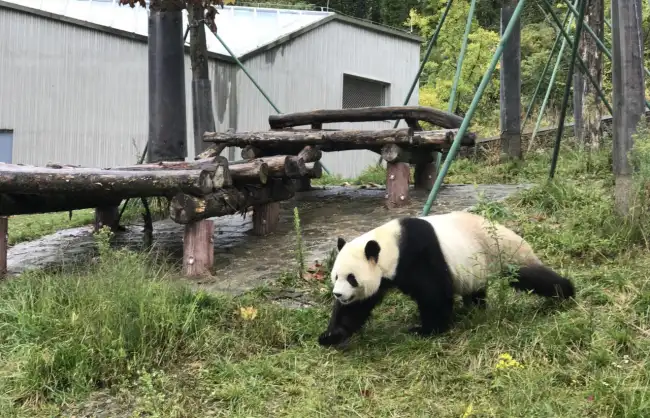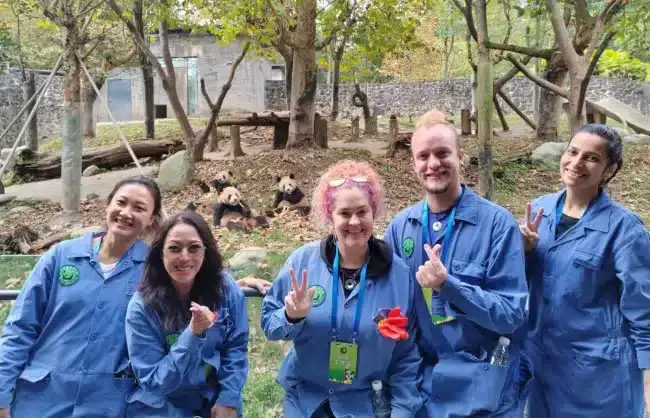







🍼 Baby Panda Growth Timeline: From Pink to Fluffy
Age Stage |
Appearance |
Milestones & Behavior |
|---|---|---|
Newborn (Day 1) |
Pink, blind, hairless |
Weighs only 100g (1/900th of its mother’s weight). It looks like a pink stick of butter and cries loudly for milk. |
1 Month |
Black & white patches |
The classic panda pattern hairs finally grow in. Eyes are still closed, completely dependent on mom. |
3 Months |
Fluffy cub |
Eyes fully open. The cub begins to take its very first clumsy, unstable steps. |
6 Months |
Active toddler |
Starts climbing trees, playing with siblings, and mimicking mom by chewing on soft bamboo leaves. |
Imagine a creature so small that it could even fit in the palm of your hand—pink, hairless, and not ready to open its eyes. Surprisingly, that could be a newborn giant panda cub. Contrast that with the black-and-white bear we know, and you’ll understand why these early weeks of their life are nothing short of miraculous.
In this guide, we’ll unpack 15 unforgettable facts about baby panda—from their surprisingly small size at birth to their first steps toward independence. Whether you’re a wildlife enthusiast who is curious about this adorable creature or someone who’s excited about planning a China panda tour, this article will tell you all the facts about baby pandas you may want to know.
🐼 Panda Myth-Busters: Quick True or False Quiz!
❌ False! Unlike standard bear species, giant pandas do not hibernate because their primary diet—bamboo—doesn’t provide enough stored body fat to sustain long seasonal sleep blocks.
❌ False! Newborn cubs are born completely pink and hairless. Their dark eye patches, ears, and shoulder bands don’t sprout until they reach about 2 to 3 weeks old.
Content Preview
- 1. How Big Are Baby Pandas When Born? Weight & Size
- 2. Why Are Baby Pandas So Small?
- 3. Are Baby Pandas Born Pink?
- 4. Early Development: When Do Baby Pandas Open Their Eyes?
- 5. When Are Baby Pandas Born?
- 6. Best Months to See Newborns: August–December
- 7. What Do Baby Pandas Eat?
- 8. Life with Mom: How Long Do Baby Pandas Stay with Their Mother?
- 9. A Detailed Timeline on How Baby Pandas Grow Up – Baby Panda Development Stages
- 10. How Are Panda Babies Born?
- 11. Do Pandas Kill Their Babies?
- 12. The Survival Rate of Baby Pandas in the Wild – About 60%
- 13. What Do Panda Cub Sounds Sound Like?
- 14. Best Places to See Baby Pandas in China
- 15. Is It Possible to Hold a Panda Cub?
- FAQs about Baby Pandas
- Plan a China Panda Tour with China Xian Tour
1. How Big Are Baby Pandas When Born? Weight & Size
One of the most asked questions about baby panda is how big they are at birth? Well, they could be incredibly tiny that beyond your imagination—often weighing just 90–210 grams (3–7 ounces). To make it more clear and specific, they’re about 1/900th the weight of their mother, who typically weighs 80-120 kg (176–265 lbs). Their size is so small that keepers sometimes can only weigh them by using a kitchen scale.
2. Why Are Baby Pandas So Small?
Newborn giant pandas are premature—a result of two key evolutionary adaptations for survival.
First, their embryos will “wander” in the mother’s womb for months after conception, which would delay the baby’s full development. This means most growth of a panda cub happens in just the final stretch of pregnancy (far shorter than other bears’ 5-month term), and the baby is unlikely to get adequate nutrient to grow bigger.
Second, shorter pregnancies and longer nursing period is verified as a more suitable reproducing pattern for pandas. As pandas eat almost only bamboo—an extremely low-calorie food, building a large fetus has thus become way more difficult than converting bamboo into milk. Experts call this early arrival “evolution’s doing”—a smart strategy to thrive when resources are scarce.
For wild pandas, smaller cubs mean safer births and better odds of both mom and baby surviving.
In short, their tiny start isn’t a flaw—it’s nature’s way of keeping pandas going, even with a tricky diet.
3. Are Baby Pandas Born Pink?
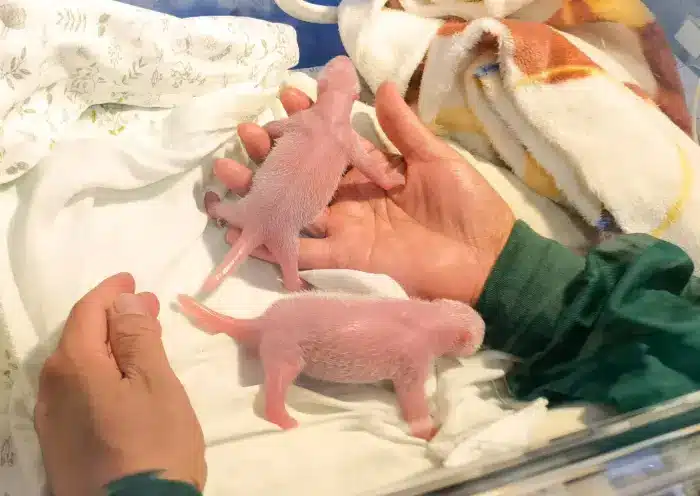
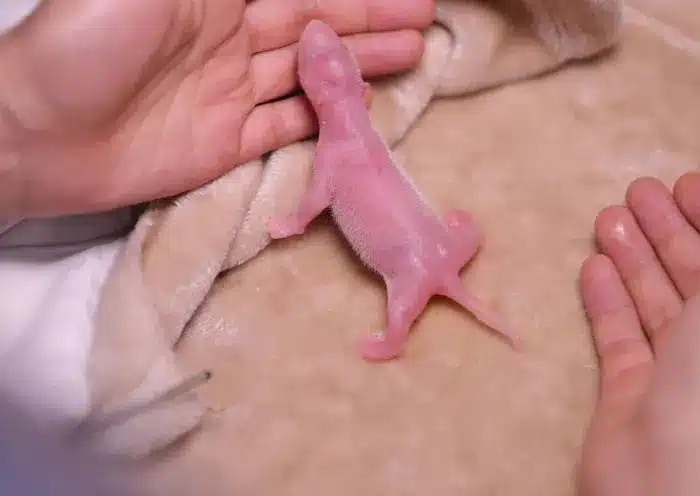
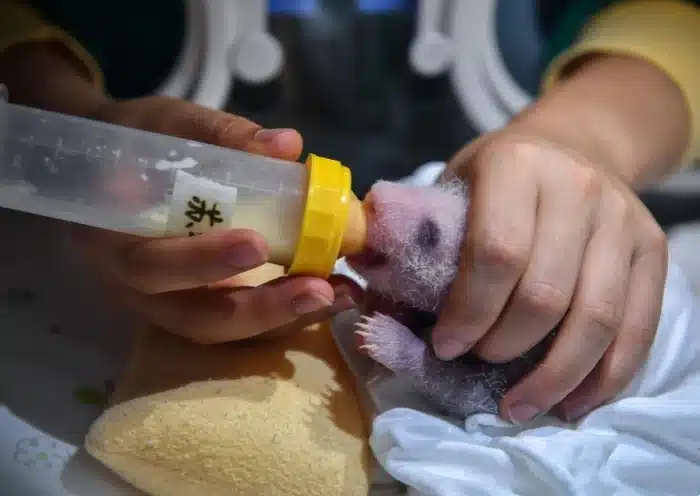
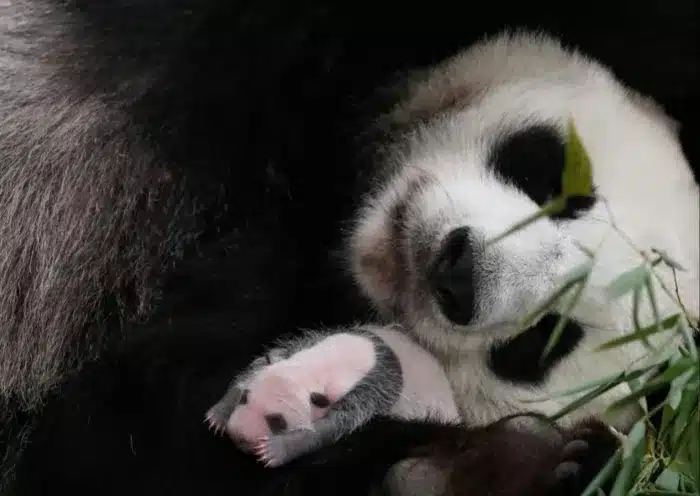
Yes—and it’s one of their most endearing traits. Newborn panda cubs are pink, hairless, wrinkly, and typically fragile, just like a plump little mouse. And their skin is so thin that you can even see their blood vessels.
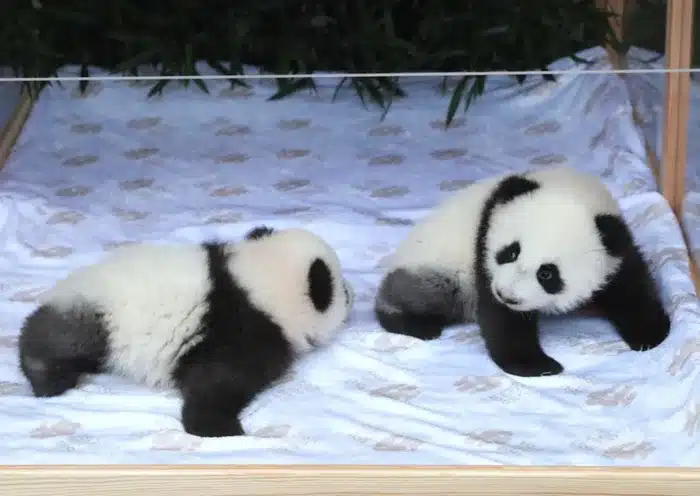
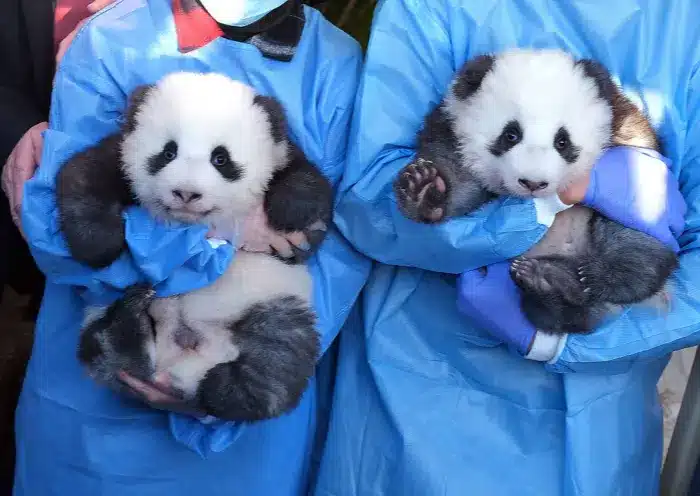
When they grow to 3 weeks old, their iconic black-and-white fur begins to sprout, while black patches also appear around their eyes and ears. By 2 months, they’ll become fully coated and finally look like the panda we’re familiar with and love.
4. Early Development: When Do Baby Pandas Open Their Eyes?
One interesting fact about baby pandas is that they are born blind, and their eyes would stay closed for 6–8 weeks. During this time, they rely completely on touch, smell, and sound to navigate the world.
At around 3–4 weeks, their ears start to open, and by 2 months, they are finally able to see their surroundings. However, the babies’ vision would remain blurry until they’re 4–5 months old.
🐼 Bring the Facts to Life: Meet the Panda Cubs Face-to-Face!
Reading about these fragile growth cycles is fascinating, but nothing compares to watching a fluffy 6-month-old toddler cub tumble out of a wooden crib in real life. As local China tour specialists, China Xian Tour designs worry-free, seamless journeys directly to the heart of Sichuan’s primary sanctuaries.
5. When Are Baby Pandas Born?
Pandas usually mate from March to May. After baby pandas staying in its moms’ wombs for about 3-5 months, their birth would occur around August–September. As a result, late summer to early autumn is the best time to see panda cubs.
6. Best Months to See Newborns: August–December
If you want to spot a baby panda, it would be better to plan your China tour between August and December. By late summer, many cubs are 3–4 months old, which means they’ll just be at an active age while still stay small and adorable.
7. What Do Baby Pandas Eat?
For the first 6–12 months, panda cubs survive almost entirely on their mother’s milk. Panda milk is rich in fat and protein, which is perfect to fuel panda babies’ rapid growth.
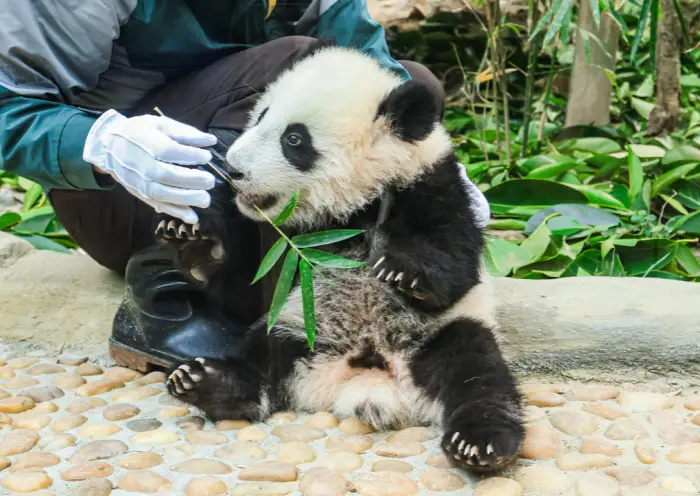
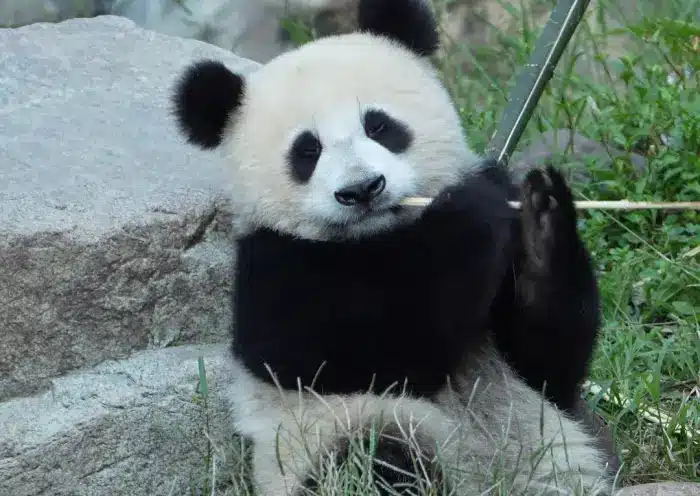
By 6 months, they’ll start exploring solid food—usually bamboo shoots and leaves. However, they’ll continue be nursed by their moms for up to 18 months, as milk remains a key part of their diet.
8. Life with Mom: How Long Do Baby Pandas Stay with Their Mother?
Baby pandas stay with their mother for 18–24 months. During this time, not only they are nursed, they also learn critical skills: climbing trees, foraging for bamboo, and avoiding predators.
Mothers are fiercely protective, but they also teach their cubs to be independent. By 18 months, most cubs are ready to fend for themselves, though some may stay with their mother for a few extra months.
Related reading: Giant Panda Life Cycle: Key Stages from Birth to Adulthood
9. A Detailed Timeline on How Baby Pandas Grow Up – Baby Panda Development Stages
Age Range |
Development Highlights |
|---|---|
Week 1–4 |
Pink, hairless body; begins to grow black patches on ears, eyes, shoulders |
Month 2–3 |
Eyes open (6–8 weeks); begins crawling; body covered in black and white fur |
Month 4–6 |
Starts teething; able to walk shakily; playful behavior emerges |
Beyond 6 Months |
Eats bamboo; moves freely; develops personality |
1 Year |
Weaned; begins growing permanent teeth |
1.5 Years |
Gains independence from mother |
Over 1.5 Years |
Enters sub-adulthood; activity increases; diet transitions to mainly bamboo |
5–18 Years |
Adult stage; sexually mature |
Over 18 Years |
Enters old age; lifespan rarely exceeds 20 years in the wild |
Weeks 1–4: Helpless Beginnings
Baby pandas are born completely helpless. They come to this world with pink, hairless skin, closed eyes, and immature immune and digestive systems. In the first week, they entirely depend on their mothers, as they even need stimulation to urinate and defecate. In terms of appearance, their ears, shoulders, and limbs will gradually darken. Around the third week, white and black hairs begin to grow, giving them their signature panda look.
Month 2–3: Senses and First Steps
Between 6–8 weeks, baby pandas slowly open their eyes and begin to respond to sound. By the end of the second month, their iconic black-and-white fur will be fully developed. Around 3 months, they could finally attempt crawling with growing limb strength, though movement is clumsy. They also begin to weigh several kilograms at this stage and get the strength to interact more with their surroundings.
Month 4–6: Growing Mobility and Personality
Cubs start to grow baby teeth around 4 months. By 5 to 6 months, they’ll be able to walk short distances and actively explore a bit of the world around them. Their panda characters will shine—some are curious, others cautious, but all show stronger emotional reactions.
Beyond 6 Months: Weaning and Independence
At around 6 months, panda cubs begin eating bamboo, gradually shifting away from exclusive milk feeding. Even though they still need nursing, bamboo now becomes a larger part of their diet. Their physical coordination improves dramatically, as now they can climb, run, and interact socially with other cubs.
1 Year: Major Milestone
At 1 year old, panda cubs are weaned and grow their permanent teeth. They can weigh over 30 kg by now. Though they’re still living with their mothers, they now spend more time in exploring things independently and eating bamboo.
1.5 Years: Leaving the Nest
By 18 months, panda cubs begin to live independently—this happens naturally on pandas living in the wild, especially if the mother need to give birth again. They are now considered as sub-adults, both physically and behaviorally, which means they are capable of fending for themselves.
Over 1.5 Years: Sub-Adult Stage
From 18 months to 4–5 years old, pandas are in their “teenage” phase. They now shift to a bamboo-dominated diet, their strength grows, and they spend much of their time climbing trees, exploring their territory, and playing. Physiologically and psychologically, they are prepared for adulthood.
5–18 Years: Adulthood
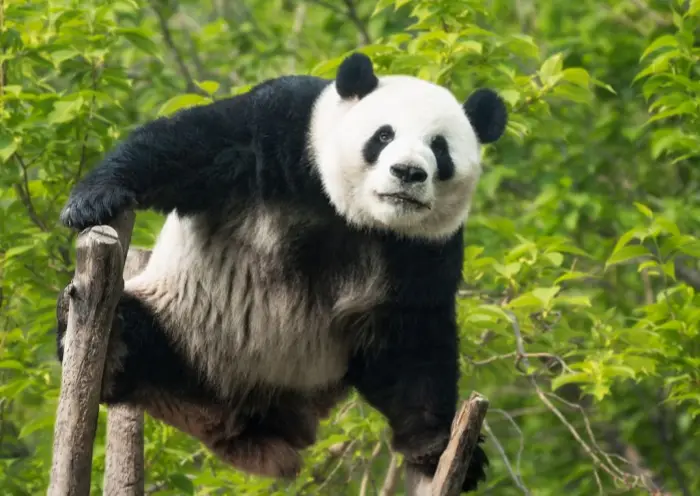
Fully grown adult pandas weigh between 80–120 kg and measure up to 180 cm long. They will reach sexual maturity between 5–7 years. These years are their most active and fertile stage, and it is also the time they often get focused in conservation breeding programs.
Over 18 Years: Senior Years
Pandas are considered as elderly when they get over 18 years old. In the wild, only few pandas live past 20 years, but in protected environments, they could make it up to 30 years. Their physical activity and reproduction would decline significantly in this period.
10. How Are Panda Babies Born?
Giant pandas give birth to live young, but the process is quite difficult. In fact, the mother’s birth canal is so narrow that the cub has to be pushed out with a great force (almost like being “launched”), and this could never be easy. After the baby is out, the mother will quickly pick up the fragile cub with her mouth and cradles it carefully.
However, in some cases, if the mother stops pushing the baby due to pain or stress, the cub can get stuck in the canal and may not survive. This makes panda births quite risky, especially in the wild.
11. Do Pandas Kill Their Babies?
No, panda mothers don’t intentionally harm their cubs. However, if she gives birth to a twin (especially in the wild), the mother would likely choose to keep the stronger one and abandons the weaker. This cannot be said as cruelty but a survival instinct—she simply doesn’t have enough milk or energy to care for both.
However, if a twin is born in breeding centers, caretakers will rotate the cubs between the mother and an incubator, which allows both of them to survive. This method has raised twin survival rates from just 30% in the past to over 90% today.
12. The Survival Rate of Baby Pandas in the Wild – About 60%
In the wild, the survival rate for baby pandas is roughly 60%, this rather low figure is defined by vulnerability in the early weeks, such as risk of abandonment, environmental threats, and disease. However, in captivity, this rate is significantly higher thanks to round-the-clock care, medical support, and controlled environments.
13. What Do Panda Cub Sounds Sound Like?
Though tiny in shape, panda cubs are quite vocal. For a long time, they make four main sounds daily: “wa wa” (crying when hungry or uncomfortable), “gu gu” (grumbling when held awkwardly), “wang wang” (a bark-like warning sound when frightened), and “zi zi” (a soft chirp of contentment).
As they grow older, their range of sounds expands, which greatly helps keepers monitor their needs and mood.
14. Best Places to See Baby Pandas in China
If you want to see cute baby pandas in a close distance, Chengdu (located in Sichuan Province) would be your ultimate destination. for it’s home to a lot of famous panda bases like Chengdu Research Base of Giant Panda Breeding, this world-renowned center offers the best chance to view panda cubs up close—especially between August and December.
Other great places to spot panda cubs include:
- Dujiangyan Panda Base – great for volunteer programs
- Wolong Panda Center – deep in the natural panda habitat
- Chongqing Zoo – often hosts newborns in summer
- Beijing Zoo – has housed several famous pandas

15. Is It Possible to Hold a Panda Cub?
No, holding a panda cub is not allowed. And this restriction is made for protecting both the animal’s health and human safety. Even though panda cubs are undoubtedly adorable, they are still wild animals: dangerous in nature and require professional handling.
However, you can interact closely with pandas through volunteer programs at designated panda bases like Dujiangyan or Bifengxia. These programs allow you to:
- Prepare panda cub meals
- Help with enclosure cleaning
- Learn about baby panda care
- Observe feeding and playtime
For more facts about baby panda volunteer programs, please check: Chengdu Panda Volunteer Tours
FAQs about Baby Pandas
What are the survival challenges for a baby panda born in the wild?
For baby pandas, the first year is a cruel survival test. In the first 14 days after birth, they can not hear and listen, and even are unable to move independently. Mother is their only support, who will protect them without leaving for a moment. Before 3 years old, the threats from the natural enemies are everywhere, such as the leopard, jackal, etc. So mother will teach them to climb trees. Besides, the natural environment is changeable and unpredictable, so accidents may occur unexpectedly.
How often does a panda mother feed her cub in the first month?
In the first few days, it is 6 – 12 times in one day. After 15 days, it decreases to 3 – 4 times.
What specific skills does a mother panda teach her cub before they separate?
The first lesson is to climb the trees. The mother panda will show them how to hold the tree trunk tightly with the front limbs and climb hard with the hind limbs. This skill can help them escape from natural enemies and observe the surrounding environment. How to find food and water is also an important thing to teach. The mother panda will lead their babies to recognize the bamboo kinds and teach them to distinguish which parts are the most delicious and how to find the best food in different seasons. Meanwhile, they will teach them to find and confirm the clean water resources. Territory is important for all wild animals. So the mother panda will travel around with their cubs so that they can be familiar with the living area. Baby pandas will be taught to establish a sense of territory and demarcate boundaries through odor markers. This will be helpful in avoiding unnecessary conflicts.
Why is it so difficult for giant pandas to successfully breed in captivity?
After all, the captive environment is man-made and is quite different from wild environment, so giant pandas may have problems like incorrect mating postures, aggression or insufficient maternal behavior. And the sound, lights and tourists may interfere with their mating behaviors. Another factor is the complex child-rearing behaviors. Some captive pandas may abandon their babies due to a lack of experience or pressure. To protect the babies, the keepers will take care of them for 24 hours every day for a long time. This process itself is challenging and fraught with risk.
What role does the father panda play in raising the cubs?
It may be unbelievable, but the fact is that the father pandas basically do not take part in caring for the babies. Except for the short breeding season, the female and male pandas do not meet each other at all.
At what age do baby pandas start developing their distinctive black-and-white fur pattern fully?
7 days after birth, the skin around their eyes, ears, forelimbs and shoulders begins to darken slightly, and the white hairs start to thicken. And around the third month, their outlook is almost the same as the pandas we see.
Plan a China Panda Tour with China Xian Tour
Ready to meet China’s most iconic animal? Whether you’re looking to spot pandas up close, or learn about panda cub development, as a local travel expert, China Xian Tour is good at designing custom itineraries. We can offer you tailor-made China panda tours that combine wildlife, culture, and convenience.