






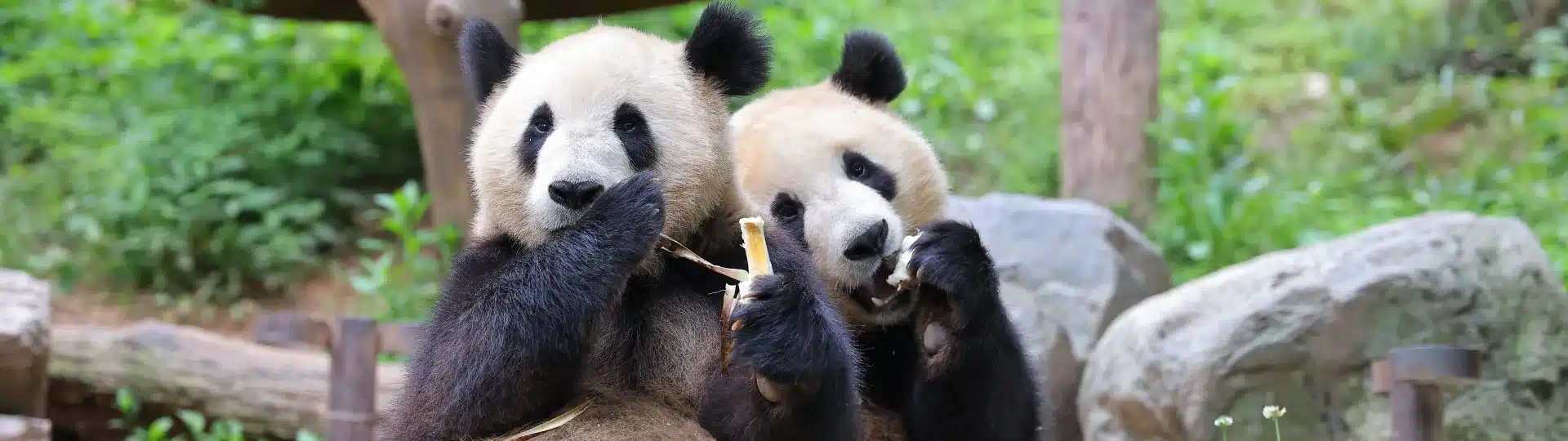
Giant pandas are beloved around the world, but they hold an extra special place in China. They’re also one of the world’s most iconic species under conservation, since giant panda habitats are constantly shrinking in size and population numbers are low. Fortunately, however, their population has been growing over the years, with over 1800 wild pandas now living in 67 Chinese nature reserves and an additional 800 in captivity.
But where exactly do those wild giant pandas live? And what makes them so special that they’ve captivated the world? Well, you’re in luck, because this article will answer all your questions about giant pandas and their habitats.
Content Preview
- Characteristics of a Giant Panda Habitat
- A Shrinking Refuge – Threats to Giant Panda Habitats
- Where Do Giant Pandas Live in the Wild in China? – Main Areas of Giant Panda Habitat
- Panda Adaptations to Their Habitat
- Visiting Giant Pandas in China
- Plan a China Giant Panda Tour with China Xian Tour
Characteristics of a Giant Panda Habitat
Climate and Elevation
Giant pandas are a little bit picky about their habitat, preferring to live in cooler deciduous broadleaf, mixed conifer and sub-alpine coniferous forests between 1,200m and 3,400m elevation. In China, that means they tend to live in small populations scattered across 6 mountainous regions, primarily in Sichuan but also in Shaanxi and Gansu. Their preferred locations tend to have few humans and lots of bamboo.
Importance of Bamboo in the Ecosystem
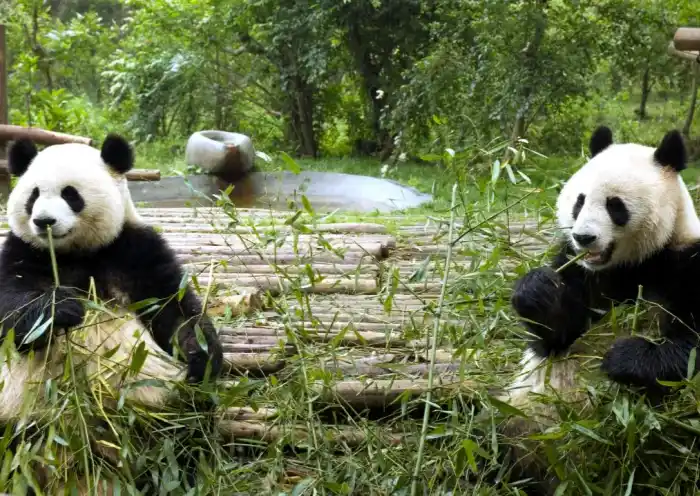
As giant pandas eat a diet of almost exclusively bamboo and bamboo shoots (a whopping 99% of what they consume), the plants are extremely important to the giant panda’s habitat. They typically eat 9-14kg of bamboo a day but, due to still having a digestive system best suited to carnivorous diets, they don’t process the plants very efficiently. That’s why it’s fortunate that they’re able to eat any of 25 wild bamboo species that flower and wither at different times – if they didn’t, they might not find anything to eat.
So, how many different species of bamboo do pandas rely on? There are 12 genera and over 60 kinds in total, and they prefer arrow bamboo, bashania and fargesia more.

Seasonal Patterns and Habitat Shifts
Giant pandas at different elevations according to season, preferring lower, warmer elevations in winter and higher, cooler elevations in summer. Giant panda’s choice of habitat is also partially determined by bamboo growth, as they seek out nutritious shoots from April to August and then rely more on leaves during the rest of the year. As a result, they tend to be more active in winter as it takes more effort to find food sources. Additionally, giant pandas’ breeding season takes place from March to May, at which point they abandon their more solitary lifestyle to seek out mates.
- Related reading: Fascinating Baby Panda Facts
Territory Size
Most giant pandas have a territory size of around 4-6 square kilometers, though different pandas’ territories tend to overlap. This is part of why giant pandas have scent glands and mark their territory: to communicate to other nearby pandas both that they’re in the area and basic information about who they are.
A Shrinking Refuge – Threats to Giant Panda Habitats
Unfortunately, one answer to “where do giant pandas live” is “in fewer places each year”. Their territory used to extend throughout southeast China and even into Myanmar and Vietnam, though nowadays they’re only found in approximately 20 isolated bamboo forests, mostly in the Minshan and Qinling mountains. The majority of giant panda habitat loss is due to human activities, and it’s the greatest threat to the species’ continued existence today.
What Is the Biggest Threat to the Giant Panda’s Habitat Today?
The biggest threat is the fragmentation of their habitats. To deal with it, China is committed to build ecological corridors and promote rewilding in recent years.
Why Do Pandas Only Exist in China?
During the Quaternary ice Age, the complex terrain of high mountains and deep valleys in Hengduan Mountains in China blocked the expansion of glacier and several microclimates are formed. For pandas, it is a natural shelter. And the forests in China can offer pleasant climate and enough bamboos for pandas. Besides, China has devoted many efforts to protect them.
Why Habitat Protection is Key to Panda Survival & Conservation Successes
Fortunately, UNESCO’s Sichuan Giant Panda Sanctuaries offer a safe home to over 30% of the world’s pandas, as well as other endangered species such as the red panda and the clouded leopard. These sanctuaries are not only nature reserves and scenic parks full of biodiversity, they’re also a model for giant panda protection efforts worldwide. A hugely collaborative effort in the Wolong Nature Reserve as well as the Mount Siguniang and Jiajin Mountains, UNESCO’s Sichuan Giant Panda Sanctuaries are giving the giant pandas and their habitats new hope of survival.
Where Do Giant Pandas Live in the Wild in China? – Main Areas of Giant Panda Habitat
What three provinces in China are home to the wild giant panda population? The wild giant pandas mainly live in Sichuan, Shaanxi and Gansu Provinces now.
Giant panda’s main habitats in modern China lie primarily in Sichuan, though there are also areas in Shaanxi and Gansu that the animals call home as well. Because giant pandas prefer to live at higher elevations, they’re often found in the Minshan and Qinling mountain ranges.
So, what is the typical elevation range of a giant panda’s natural habitat? Pandas usually inhabit in areas at an altitude of 1,200 to 4,100 meters. And the main scope of activity is at an altitude of 2,000 to 3,700 meters.
Another matter that people often concern themselves with is what kind of forest giant pandas prefer to live in. Well, the luxuriant bamboo forests are beloved by pandas, which are located in the subalpine coniferous forest belt.
Related reading: Giant Panda Life Cycle: Key Stages from Birth to Adulthood
The Min Mountains
The Minshan (岷山) mountain range is currently home to the largest and most concentrated giant panda population. In 2006, when conservation efforts began, that only amounted to around 720 pandas, around 45% of the species’ entire population. Some of the most important areas of this mountain range include Wolong National Nature Reserve, Fengtongzhai National Reserve, and Wanglang Nature Reserve, all of which are home to a variety of animal and plant species and ecosystems.


The Qin Mountains (Qinling 秦岭)
The Qinling (秦岭) mountain range is another important giant panda habitat. Interestingly, the giant pandas in these mountains are actually a unique subspecies, having separated from main populations around 300,000 years ago. These giant pandas feature light brown or yellowish-brown chest and belly fur. Their black fur appears slightly lighter, and their snout is shorter. Their current population is estimated to be around 200-300 pandas, up from around 100 in 2001.
Sichuan Panda vs Qinling Panda
Sichuan Panda and Qinling Panda are the two important subspecies in China. From 300,000 years ago, they have already separated from each other due to the high mountains, so there are many differences between them.
The most obvious aspect is the appearance. Sichuan Panda has a longer head and a sharper snout, and the face is more like a bear. While Qinling Panda is characterized by a round head and a shorter snout, and the face is like a cat. So Qinling Panda is renowned as “the beauty among national treasures”. Another difference is the fur. Sichuan Panda is black and white, while Qinling Panda is light brown.
Panda Adaptations to Their Habitat
1. Physical Adaptations
Despite being a part of the larger Ursidae or bear family, giant pandas habitats and lifestyle have led them to develop unique physical adaptations. For example, one interesting fact about giant pandas is that they have a “false thumb” on their front paws, bringing them to a total of six fingers. These thumbs are used to hold bamboo in place while the giant pandas are gnawing on it.
Another interesting fact about pandas is that they have one of the strongest bites of all land-based carnivores. But of course, their powerful jaws aren’t used to eat meat – instead, it developed to help them crunch through tough bamboo. Their large molar teeth and unique chewing pattern are further adaptations to their unique diet.
Additionally, due to the fact that they live at higher elevations, pandas have also evolved to have thick fur coats which are especially useful during cold mountain winters.
2. Behavioral Adaptations
Even more interesting than the way giant pandas’ habitat has changed their appearance is how it’s changed their behaviour as well. For example, because giant pandas eat bamboo despite it being a relatively poor source of nutrition for them, they’ve had to develop a variety of energy conservation strategies. Overall, they move less than other bears, and even when they do move they move more slowly, which explains their smaller territory size.
Furthermore, because they live in such dense forests, they’ve had to adapt their communication strategies. Sound carries poorly, so giant pandas also scent their environment and scratch trees to mark their environment rather than relying on other animals hearing them.
Related reading: Behavior of a Giant Panda
Visiting Giant Pandas in China
Best Places to See Pandas in Chengdu and Shaanxi
If you want to see giant pandas in real life, both Chengdu and Shaanxi are the best places to visit. In Shaanxi, you can see giant pandas in a relatively natural environment at Foping Panda Valley or in a more controlled environment at the Shaanxi Wild Animal Breeding and Protection Center.
Chengdu is also famous for its pandas. You can find them in a more natural environment at Dujiangyan Panda Valley or in research and conservation institutions like Dujiangyan Panda Base or the Chengdu Research Base of Giant Panda Breeding.
Suggested Tours:
One-Day Xian – Chengdu Panda Tour by High Speed Train


Volunteer as a Panda Zookeeper!
Another great way to grow your appreciation for giant pandas is by taking care of them yourself. Some institutions that are home to giant pandas allow visitors to volunteer for them, preparing food for giant pandas and cleaning their habitats. It’s a one in a lifetime experience you won’t find anywhere else (unless you’re already a zookeeper), so make sure not to miss out.
Suggested Tours:
One-Day Private Chengdu Panda Volunteering Tour from Xian by High Speed Train
4-Day Chengdu Panda Volunteer Experience
6-Day Chengdu Leshan Mt. Emei Tour with Panda Volunteer
City Zoos across the Country
It is also possible to see pandas even if Shaanxi or Sichuan is not on your itinerary to China. The many city zoos across the country will offer you a close encounter with this lovely creature. In Chongqing Zoo, you may encounter 22 pandas, in the panda house of Beijing Zoo, the over 10 pandas, including the famous panda star in China – Meng Lan, will delight you.
Related reading: How to Plan a Panda Tour in China
Best Time to Visit
The best time in the year is spring and autumn. During these two periods, the pandas usually stay in the outdoor area for a long time, so you can see more lively pandas. In one day, 08:00 – 10:00 is the breakfast time for pandas, so they are very active. It is easy to catch the moments of eating and playing. And during 15:00 – 16:00, some pandas may enjoy a afternoon tea. It is also suitable to observe the pandas. It is not recommended to visit at noon, because most pandas enjoy a rest during the period.
Panda Viewing Logistics: A Comparison of China’s Best Panda Bases
Panda Bases |
Distance to the Downtown Area |
Price |
Best For |
Chengdu Research Base of Giant Panda Breeding |
About 10 km |
CNY 55 |
First-timers, see famous pandas (such as “Hua Hua”) and panda cubs |
Dujiangyan Panda Valley |
About 60 km |
CNY 55 |
Fewer people and quiet environment, observe pandas closely and encounter lesser pandas |
Wolong’s Shenshuping Base |
About 110 km |
CNY 90 |
Original ecological natural environment, watch panda cubs, in-depth experience |
Ya’an Bifengxia Panda Base |
About 150 km |
CNY 100 |
A tour combines panda with canyon hiking and wildlife park |
Foping Panda Valley |
About 180 km |
CNY 35 |
Admire the unique Qinling giant pandas and explore the natural scenery |
Plan a China Giant Panda Tour with China Xian Tour
Now that you know where giant pandas live, why not go and see for yourself? Planning a China panda tour on your own can be a bit intimidating, but luckily, China Xian Tour is here to help. With both preset and custom tours offered all across China and hosted by local guides, you can rest assured that you won’t an authentic experience that suits your needs perfectly.
Whether you want to visit giant pandas, taste all the local delicacies, or see all the most classic sites, we’ve got you covered. So what are you waiting for? China and the giant pandas are waiting – book your China trip with us today!