
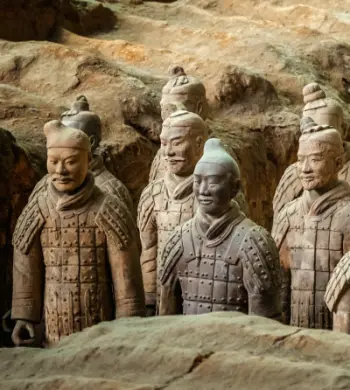
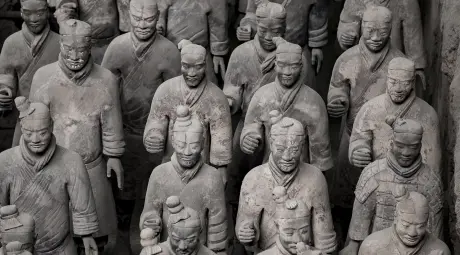
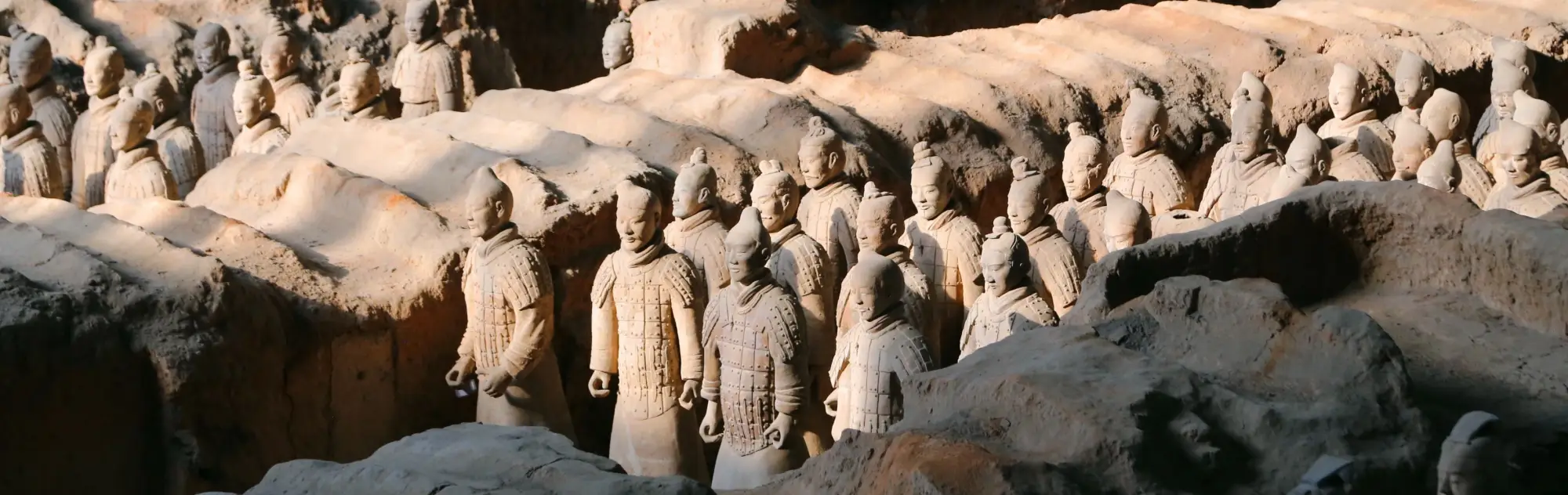
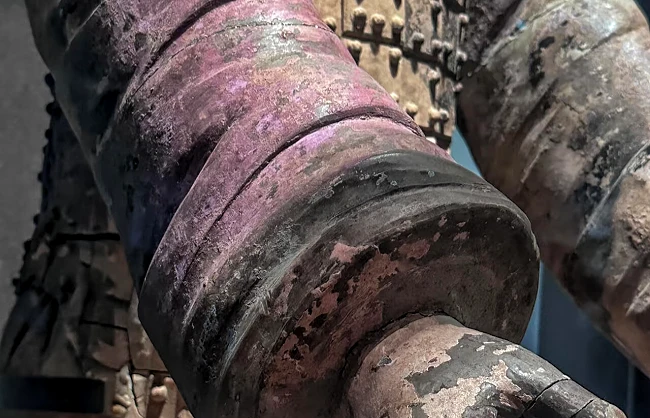
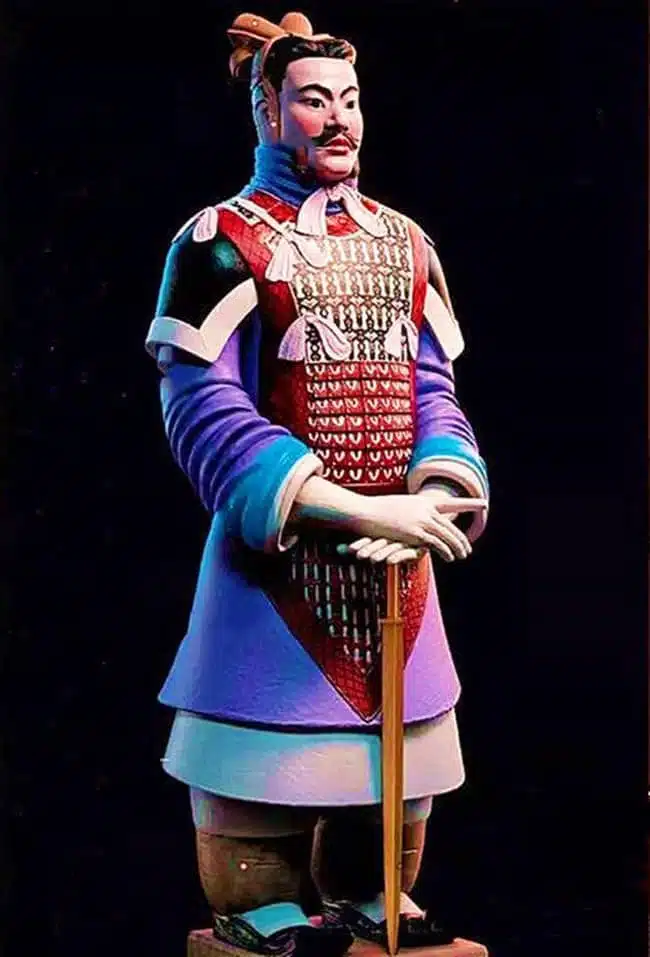
Most Terracotta Warriors today are gray or brown. But that’s not how they looked over 2,000 years ago. Archaeological research shows that they were originally painted in bright shades of red, green, blue, purple, pink, black, and white.
So, what happened to all those colors? Well, when the warriors were unearthed, the lacquer layer beneath the paint reacted with the outside air. The fragile paint soon peeled off, leaving most figures bare.
Don’t be too disappointed, though – you can still spot traces of the original colors on your trip to visit the Terracotta Warriors in Xi’an.
Capture the essence of Xi'an in two days — stand before the vast Terracotta Army, cycle the ancient City Wall, explore the unique Great Mosque, and taste the Muslim Quarter's famous street food.
Content Preview
- What Colors Did the Terracotta Warriors Originally Have?
- What Did the Terracotta Warriors Really Look Like in Color?
- Why Are the Terracotta Warriors Gray Today?
- Can You Still See the Original Colors Today?
- Where to See the Original Colors of the Terracotta Warriors
- Are the Colorful Terracotta Warriors Online Real?
- Quick Tips for Seeing the Colors
- See Real Colors of the Terracotta Warriors with China Xi’an Tour
What Colors Did the Terracotta Warriors Originally Have?
Were the Terracotta Warriors originally colorful? Yes. Just like some Roman and Greek statues, the Terracotta Warriors were originally very colorful. So far, more than ten colors have been identified in remaining traces of paint. The most common include:
- Red and vermilion: Commonly found on clothing and armor straps
- Green: Used on clothing and other decorative details
- Blue: Found in details such as some collars
- Purple: Including the famous Chinese Purple
- Pink: Seen on the faces and skin of some figures
- Black: Used for hair, eyebrows, beards, and eyes
- White and ochre: Found on clothing, decorations, and other details
The warriors weren’t all painted the same way. Figures with higher status, such as generals, often featured brighter and more colorful designs. Qin artisans used contrasting colors to make the details stand out, so the warriors would have looked far more vivid than they do today.
What Is Chinese Purple?
Chinese Purple is one of the most unusual pigments found on the Terracotta Warriors. It’s a synthetic barium copper silicate pigment, rather than a natural mineral pigment. The warriors also offer researchers valuable clues about this ancient synthetic color.
What Did the Terracotta Warriors Really Look Like in Color?
Simply listing the colors doesn’t really help you picture what the warriors looked like, of course, so take this kneeling archer as an example. His reconstructed look features a pink face, dark armor, bright red straps, a blue collar, and other colorful details.
While these images aren’t of the actual originals, they’re researchers’ best approximation of their colouring based on the statues pigments and features, as well as other clues the past has left us.
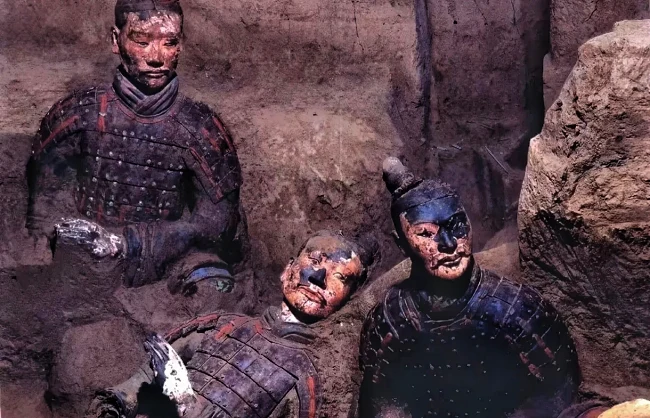
Why Are the Terracotta Warriors Gray Today?
The colors didn’t just fade away with time. While fires, collapsing soil ceilings, and other factors also took a toll on the paint over the centuries, they lasted fairly well until the statues were finally uncovered.
The original paint was applied over a layer of raw Chinese lacquer, but not onto the clay’s surface. After centuries underground, the lacquer couldn’t handle the sudden change in temperature, humidity, and exposure to air when the warriors were unearthed. As the lacquer dried, it shrank and curled, pulling the fragile paint off with it.
According to the museum’s research, the process began within just 15 seconds of excavation.
The head of the museum’s conservation department once said the colors faded so quickly that people on site could only stand there and watch in amazement. Some didn’t even have time to take a photo before the colors vanished.
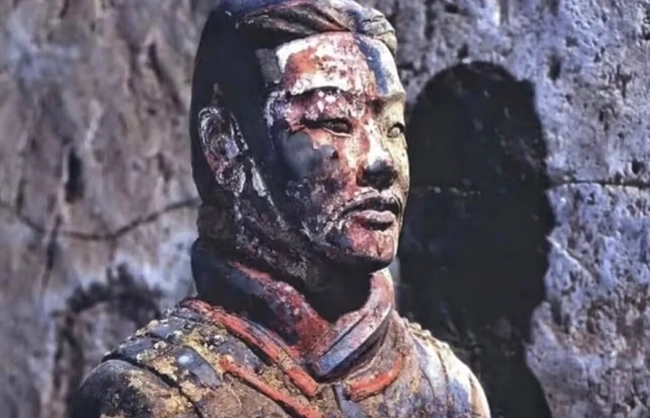
Can You Still See the Original Colors Today?
Yes. But only on a small number of exceptionally preserved or protected figures and fragments.
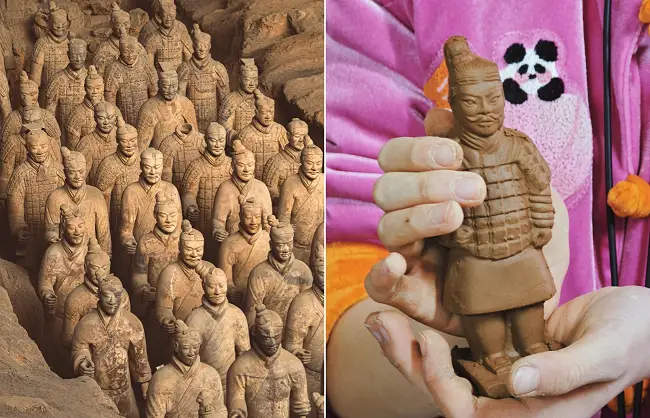
Don’t expect to see rows of brightly painted warriors in Pit 1. Most figures there still look gray or brown today. Some warriors have held on to more of their original paint than others, however. For example, the painted kneeling archer we mentioned above, which is found in Pit 2 and which retained large patches of its original paint. The best-known is the Green-Faced Kneeling Archer, with green paint still visible on its face.
Spend four days exploring Xi'an's greatest treasures — the Terracotta Warriors, ancient pagodas, and City Wall — plus a thrilling day on Mount Huashan's precipitous peaks.
Where to See the Original Colors of the Terracotta Warriors
Cultural Relics Exhibition Hall: Look for Painted Fragments
The exhibition hall has warrior heads and pottery fragments with bits of paint still clinging to them. Look closely, and you’ll spot traces of purple and pink that have survived for thousands of years.
Pit 1: Take in the Scale of the Army
Pit 1 is less about spotting surviving paint and more about taking in the sheer scale of the army, with rows of warriors stretching across the pit. If this is your first visit, don’t forget to take a closer look at:
- Battle Formations: How the warriors are lined up
- Different Troops: The variety of figures in the army
- Poses: How each warrior stands or holds their body
- Scale: Just how many figures fill the pit
Pit 2: Look Closer at the Details
Pit 2 has a mix of figures, including kneeling archers and cavalry. Some are displayed in ways that allow for up-close views, so keep an eye out for details in their clothing, armor, and even the soles of their shoes.
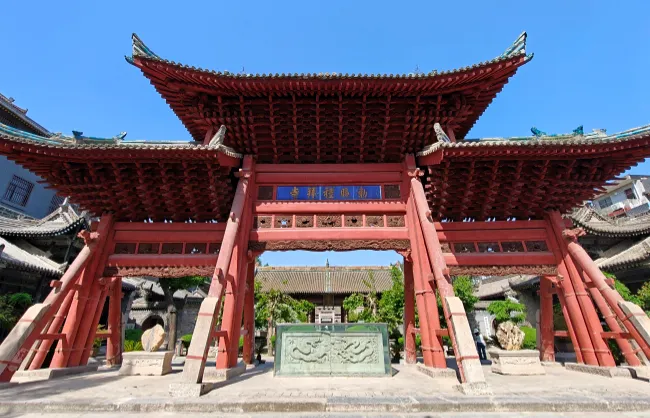
Hit Xi'an's holy trinity in one perfect day — the awe-inspiring Terracotta Warriors, a bicycle ride atop the ancient City Wall, and a food crawl through the Muslim Quarter.
Are the Colorful Terracotta Warriors Online Real?
Those brightly colored Terracotta Warriors you see online aren’t always what they seem. Some images show real artifacts, while many are reconstructions. Here are the different kinds of images you might come across:
Image Type |
What It Shows |
Original Painted Artifacts |
Real figures with some original pigment still intact |
Conserved Painted Figures |
Original paint preserved through conservation |
Scientific Reconstructions |
Images recreated from archaeological evidence |
Artistic or Digital Renderings |
Visual interpretations that help show how the warriors may have looked |
Even if those colorful images look pretty convincing, don’t necessarily expect the warriors at the museum to look quite the same.
The Mausoleum of the First Qin Emperor Museum makes it clear that the goal of conservation is to preserve the original paint that remains on unearthed artifacts, not to repaint them.
Quick Tips for Seeing the Colors
- Don’t Expect a Colorful Army: Most of the figures are gray and brown today.
- Look at the Close-Up Displays: Small traces of pigment are easier to make out in close-up displays than on figures across the excavation pits.
- Pay Attention to the Details: Check the faces, collars, armor straps, and edges of the clothing. These small details offer clues to how colorful the warriors once were.
See Real Colors of the Terracotta Warriors with China Xi’an Tour
Excited to learn more about the Terracotta Warriors? Given their enormous scale and fascinating history, we wouldn’t be surprised. If you need any help planning your Terracotta Warriors tours, please feel free to contact China Xian Tour. Now, you can get inspired by some of our Xi’an tours with the Terracotta Warriors.