





Written by Clementine |
Located in Wuhou District of Chengdu, Sichuan province, Wuhou Temple (Chengdu Wuhou Shrine Museum) is a memorial to Zhuge Liang, a chancellor of Shu Han in the Three Kingdoms period. At the beginning of construction, it was adjacent to the temple of emperor Liu Bei. Later, it was incorporated into the Hanzhaolie Temple in the early Ming Dynasty.
It is the only temple that commemorates the emperor and ministers together in China and the most influential Three Kingdoms heritage museum. Covering an area of 150,000 square meters, Wuhou Temple in Chengdu enjoys the great reputation of “Holy Land of the Three Kingdoms”.
Fast Facts About Wuhou Shrine
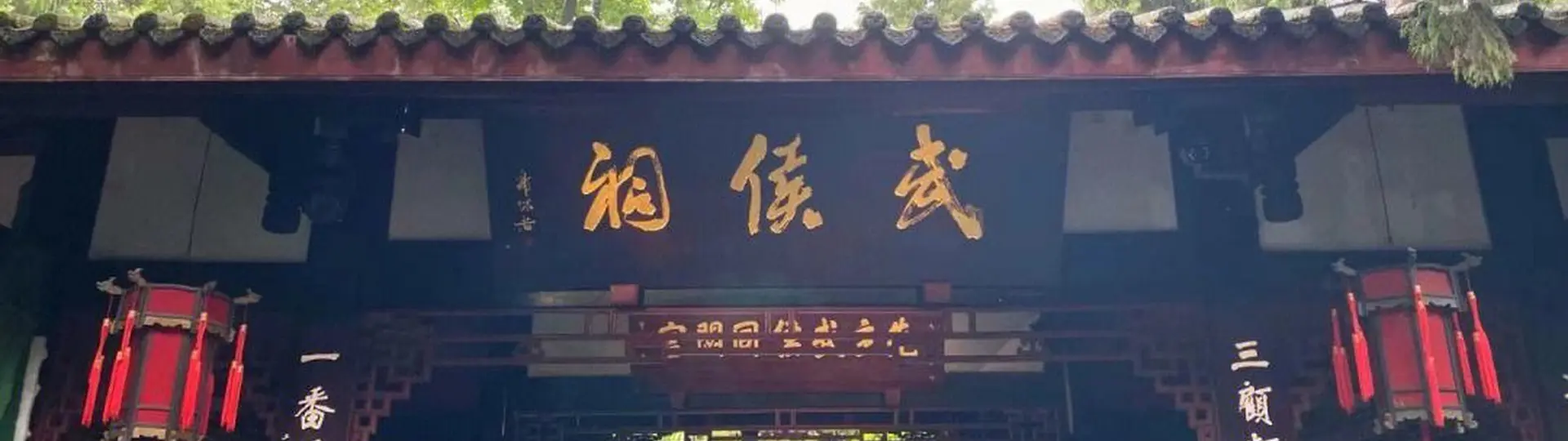
- Chinese Name:武侯祠
- Location: 231, Wuhouci Street, Chengdu City, Sichuan Province
- Tickets:RMB 50 per adult
- Opening Hours:09:00 -18:00 (Stop entry after 17:00) Note: Western Garden Zone Opening Time is 7:00 – 22:00 except for special cases.
- Time Needed:2-3 hours
History & Story of Wuhou Shrine
Wuhou Temple is a memorial to Zhuge Liang – a chancellor in the Three Kingdoms period. In August, 234, Zhuge Liang became ill due to fatigue and died of illness at Wuzhangyuan (in Baoji City, Shaanxi Province) during the Northern Expedition. He was 54 years old at that time. Zhuge Liang was granted the title of “Wuxiang Hou (marquis)”. After death, he was posthumously awarded the title of “Zhongwu Hou” by Liu Shan, the later ruler of Shu Han. Therefore, his temple was honored as “Wuhou Temple” in history. The earliest Wuhou Temple in China is located in Hanzhong City, Shaanxi Province, but the most influential and popular one is Chengdu Wuhou Temple which is a must-visit place on Chengdu tours nowadays.
The Chengdu Wuhou Shrine was constructed as a temple to commemorate Liu Bei, his chancellor Zhuge Liang and other eminent Shu Han figures. Its existence originates from 221, when Shu Han Emperor Liu Bei’s Hui Mausoleum was being built, together with the Hanzhaolie Temple. Around 500, Wuhou Shrine was relocated from the “Shaocheng City” of Chengdu to a site next to Hui Mausoleum and Hanzhaolie Temple, which was a move that lasted up to the Ming dynasty. In 1390, the Prince Shuxian of Ming, came to the temple to pay homage, he decided to unify Hui Mausoleum, Hanzhaolie Temple and Wuhou Shrine together for the reason that “emperor and ministers are suitable to be one”. Since the magnificence of Zhuge Liang overshadows that of Liu Bei in the hearts of many common folks, in general the complex is referred to as “Wuhou Shrine”.
Why Is Wuhou Temple Worth a Visit?
Wuhou Temple is a spiritual holy land for enthusiasts of Three Kingdoms culture worldwide. Not only does this place have a rich historical and cultural heritage, but its architectural style and natural beauty are also quite distinctive.
Cultural Concentration MAX: boasting the densest relics of the Three Kingdoms period in China, with over 50 statues that recreate the heroic figures of Shu Han.
Highlights to See & Experience
Wuhou Memorial Temple can be divided into three parts: Three Kingdoms Cultural Relics Zone, Three Kingdoms Cultural Experience Zone (Western Garden Area) and Jinli Folk Customs Zone (Jinli Street).
The cultural relic area of Wuhou Temple in Chengdu is mainly composed of Hui Mausoleum, Hanzhaolie Temple, Wuhou Shrine and Sanyi Temple. The main building is Wuhou Shrine, which was reconstructed in 1672 (Qing Dynasty).
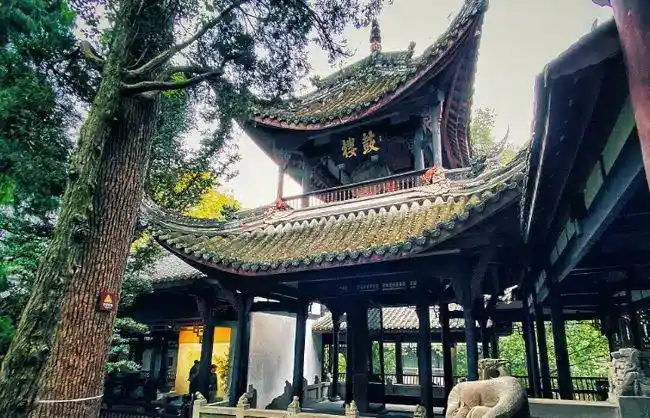
Wuhou Temple includes the Main Gate, the Second Gate, Liu Bei Hall, lobby, Zhuge Liang Hall, Sanyi Temple and Jieyi Tower, and all of them are located on the central axis from south to north. The temple is dedicated to over 50 statues of Shu Han heroes, such as Liu Bei, Zhuge Liang, etc. There are also many inscriptions and plaques about Zhuge Liang and the culture of Three Kingdoms, especially the most renowned one – “Triple-Success Stele” of the Tang Dynasty.
The garden area of Wuhou Temple is located on the west, which is the only cemetery complex with northern style in southwest China.
The World’s Only Temple Where Emperor and Ministers Are Worshiped Together
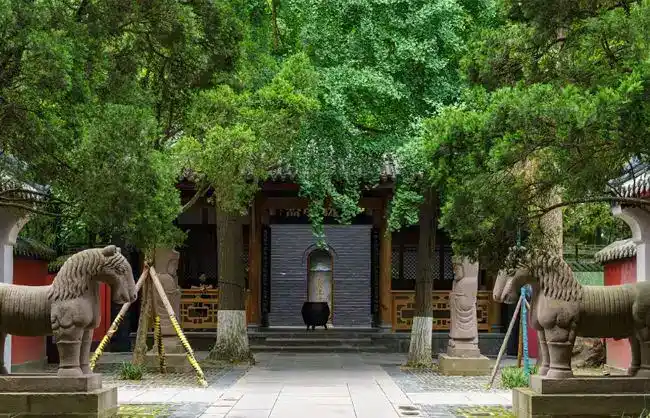
The Liu Bei Hall and the Zhuge Liang Hall stand opposite each other. This layout of emperor and virtuous official coexisting in one temple is unparalleled in the world. The ancient cypress trees in front of halls are lush and dense, and it is said that they were planted by Zhuge Liang himself, and are over 1700 years old.
The Famous “Red Wall and Bamboo Shadows” in Chengdu
The 500-meter-long red wall lane in Wuhou Temple surrounds Hui Mausoleum, creating a unique red wall and green bamboo background, which is a hot spot to take photos during Chengdu travel. At four or five o’clock in the afternoon, the bamboo shadows on both sides of the lane pushed the beautiful scenery to the extreme.
How to Visit Wuhou Temple: Recommended Routes
There are three official tour routes based on different travel hours, and visitors can choose according to their own preferences.
A 2–hour tour
Main Gate→Tang Stele→Liu Bei Hall→Zhuge Liang Hall→Sanyi Temple→Red Walled Alley→Luyu Hall→Hanzhaolie Temple
A 3–hour tour
Main Gate→Tang Stele→Liu Bei Hall→Zhuge Liang Hall→Red Walled Alley→Hui Mausoleum→Kongming Garden→Sanyi Temple→Jinli Ancient Street→Jieyi Tower→Guojie Tower →Jinli
A 4–hour tour
Main Gate→Tang Stele→Liu Bei Hall→Zhuge Liang Hall→Sanyi Temple→Red Walled Alley→Central Gate→Jingzhong Gate→Sifang Pavilion→Wuhou Shrine Art Gallery→Liuxiang Tomb→Jinli Ancient Street→Jieyi Tower→Guojie Tower→Jinli
Best Time to Visit
As a renowned historical tourist attraction in Chengdu city, Wuhou Temple is a desirable place for visiting all year around. But the best time to visit is spring (March – May) and autumn (September – November). The weather in these two seasons is quite pleasant, making it very suitable for outdoor sightseeing. You can better appreciate the ancient charm of Wuhou Shrine and feel its rich historical atmosphere.
Tips: It is strongly recommended to avoid China public holidays, as they are peak travel periods with most attractions being overcrowded and traffic jams being common.
How to Get to Wuhou Temple?
Public Transportation
By Bus
From downtown Chengdu, bus lines No.1, No.57, No.77, No.82, No.334 and No.335 all go directly to the Wuhou Temple (Jinli).
By Subway
Take Chengdu Metro Line 3, Line 5 and get off at the Gaoshengqiao Station (Exit C), then walk for about ten minutes to reach the Chengdu Wuhou Shrine Museum.
Scenic Area Shuttle
There are direct shuttles that can ferry visitors to Wuhou Shrine at locations including Chengdu Shuangliu International Airport, Chengdu East Long Distance Bus Passenger Transport Terminal, Panda Base, Kuanzhai Alleys, Du Fu Thatched Cottage, Jinsha Site, Chengdu International Finance Square (IFS), Chunxi Road, Taikoo Li, Dujiangyan and Sanxingdui Site.

From Chengdu Airports
Chengdu Shuangliu International Airport |
About 18 kilometers away from Wuhou Temple |
Around 35 minutes’ driving or taxi (about RMB 45) |
Chengdu Tianfu International Airport |
About 70 kilometers away from Wuhou Temple |
Around 75 minutes’ driving or taxi (about RMB 190) |
Nearby Attractions
- Jinli Street:A bustling block adjacent to Wuhou Temple, based on the style of Sichuan dwellings in the late Qing Dynasty. There are various specialty snacks, handicrafts, and performances here, especially worth a visit at night.
- Du Fu Thatched Cottage:The former residence of the Tang Dynasty “Poet-Sage” Du Fu, who lived in Chengdu after the An-Shi Rebellion. It condenses the wartime poetic dwelling and millennium cultural context into a serene world.
Travel Tips
Chengdu Wuhou Shrine Museum tickets can be reserved 14 days in advance. Daily tickets are limited, so it is recommended to book tickets in advance through the official website or WeChat account.
Best Chengdu Tours including Wuhou Temple


