






Written by Clementine |
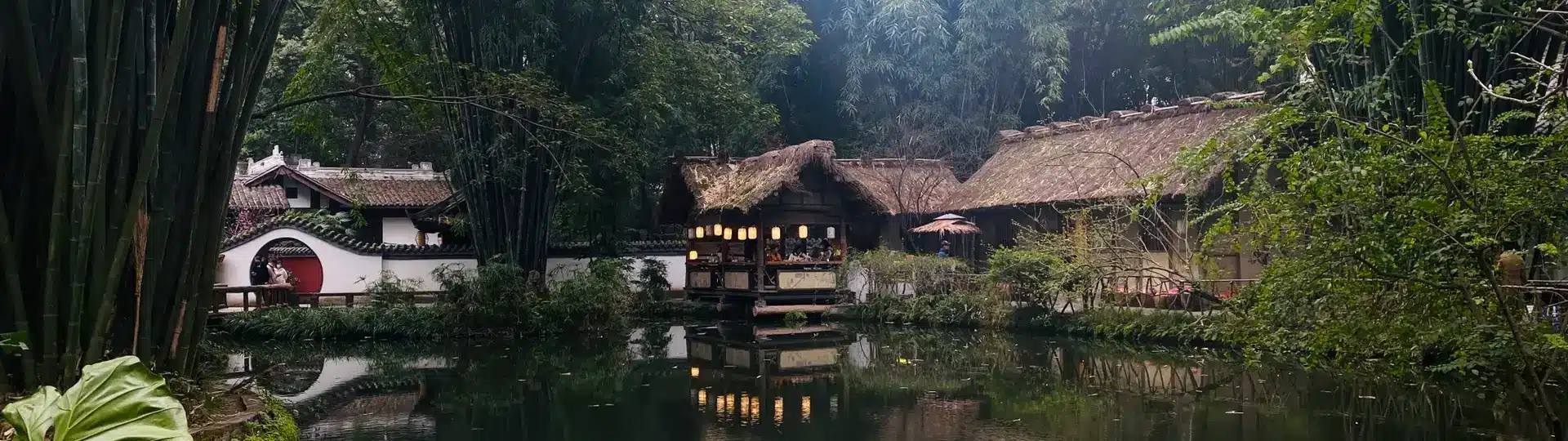
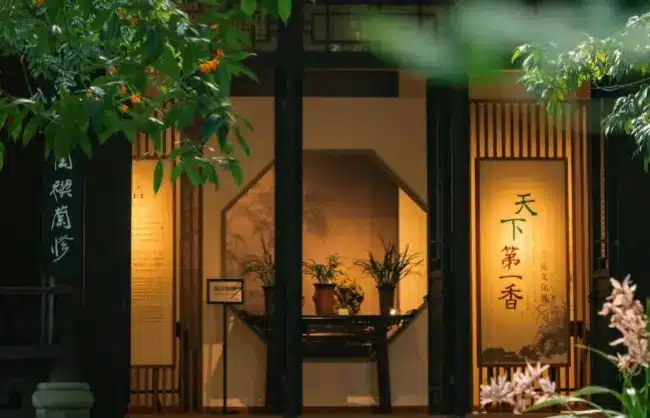
Thatched Cottage of Du fu, located at Qinghua Road, Qingyang district, was the former residence of the famous poet Dufu in the Tang dynasty when he was living in Chengdu. He lived here for nearly four years and wrote more than 240 poems. Thus, this building is regarded as a holy land in the history of Chinese literature.
The current thatched cottage of Dufu covers an area of 200,000 square meters and was restored many times back in the Song, Yuan, Ming and Qing dynasties. It is the largest, best-preserved, most famous and most distinctive place that Dufu lived. As a renowned cultural landscape, it is a must-visit distinctive scenic area for people traveling to Chengdu.
Content Preview
- Fast Facts about Du Fu Thatched Cottage
- History of the Dufu Thatched Cottage
- Why Du Fu Thatched Cottage Worth a Visit?
- Highlights to See
- How to Visit: Recommended Route
- Best Time to Visit
- How to Get to
- Nearby Attractions
Fast Facts about Du Fu Thatched Cottage
- Location: 37 Qinghua Road, Qingyang District, Chengdu, Sichuan Province
- Chinese name: 杜甫草堂 (Dù Fǔ Cǎo Táng)
- Entrance fee: 50 yuan
- Opening hours: 8:00 – 19:00 (Summer), 8:00 – 18:30 (Winter)
- Time needed: 2 – 3 hours
- Best time to visit: Spring & autumn
History of the Dufu Thatched Cottage
Who Is Dufu
Dufu (712 – 770), a great realistic poet of the Tang dynasty, enjoys a great reputation “the poem saint”. Although he didn’t realize his own ambition throughout his lifetime, he had always concerned people and national affairs no matter where he was. With faithful thought of Confucianism, he created many famous works. Although not famous at his time, Dufu enjoyed a fame that spread far and wide after his death.
Why Was the Thatched Cottage Built
In the winter of 759 AD, Dufu came to Chengdu from southern Gansu province with his family in order to escape wars. In the spring of 760 AD, with the help of a friend of him, he built a cottage to live by the picturesque Huanhua river. In the spring of AD 761, the thatched cottage was completed and given name Chengdu cottage. In 765, Yanwu, who is the only person that Dufu can rely on, died of illness. Helpless and lonely, Dufu left Chengdu and went to Hubei, Hunan and other provinces in next two years. After him leaving Chengdu, the cottage was destroyed.
Reconstructions
At the end of the Tang dynasty, the poet Weizhuang found the ruins of the thatched cottage and rebuilt it. The cottage was also restored later in the Song, Yuan, Ming and Qing dynasties.
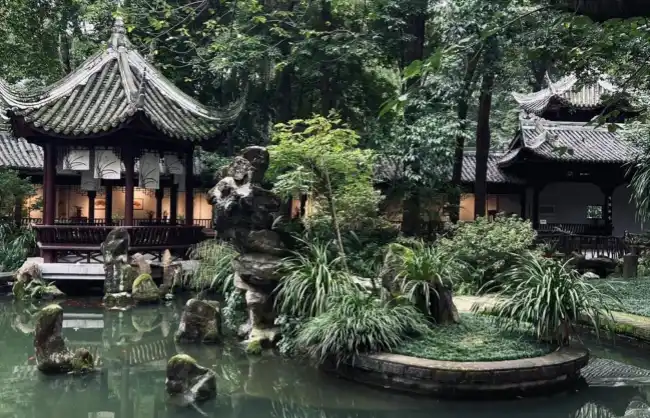
After the reconstruction and extension in the Song, Yuan, Ming and Qing dynasties, Thatched Cottage of Du Fu has become a place integrating the commemoration of ancestral hall and the conservation of the poems. The architectures are simple and elegant with beautiful garden and fresh air, still retaining the pattern of reconstruction of Jiaqing period in the Qing dynasty.
Why Du Fu Thatched Cottage Worth a Visit?
The Du Fu Thatched Cottage Museum in Chengdu is the former residence of Du Fu, a great poet of the Tang Dynasty, during his stay in Chengdu. Du Fu lived here for nearly four years and composed over 240 poems. At the end of the Tang Dynasty, the poet Wei Zhuang found the ruins of the thatched cottage and rebuilt it, thus preserving it. It is a key national cultural relic protection unit, a first-class national museum, and a key national ancient book protection unit.
Highlights to See
The Great Elegance Hall
The Great Elegance Hall was originally the main hall of the Thatched Cottage Temple. It was officially opened in 2002. Inside the hall, there are large-scale colored glazed inlaid lacquer murals and 12 sculptures of famous poets throughout history, vividly presenting Du Fu’s life and the development of Chinese classical poetry.
The Great Hall
The Great Hall is an open hall-style building and the second building on the central axis. “Xie” means an official office, which was the place where local officials worked in ancient times. Du Fu had a difficult career and was never given an important position. In the center of the hall stands a bronze statue of Du Fu, created by the renowned Chinese sculptor Qian Shaowu.
The Poetry History Hall
The Poetry History Hall is the third building on the central axis and the main building. The over 1,400 poems left by Du Fu vividly depict the social life of the Tang Dynasty before and after the An Shi Rebellion, reflecting the decline of the Tang Dynasty from its peak.
The Ministry of Works Shrine
The Ministry of Works Shrine is the fifth and last main building. Because Du Fu was recommended by Yan Wu as the Inspector of the Ministry of Works during his stay in Chengdu, he was later respectfully called Du Gongbu, and the shrine dedicated to him was named the Ministry of Works Shrine. Inside the shrine, there is a shrine dedicated to Du Fu in the center. There are also two stone carvings of Du Fu in the hall. The stone carving portrays Du Fu as plump and dignified.
The Straw Gate
The Straw Gate is the fourth building on the central axis and a small and simple one. It was originally the gate of the thatched cottage built by Du Fu. Due to its low and simple structure, the poet named it so. The plaque on the gate, inscribed with the characters “Straw Gate”, was written by the famous painter Pan Tianshou.
How to Visit: Recommended Route
- Recommended Route 1: North Gate → Waterside Pavilion → Panoramic Pavilion → Grand Hall → Poem and History Hall → Firewood Gate → Ministry of Works Shrine → Thatched Cottage Area → Spring Rain at Night Garden → Wuhua Shrine → Flower Path (Red Wall) → Thatched Cottage Shadow Wall → Daya Hall → Ten Thousand Buddha Tower → Yanzhi Hall → Du Fu’s Thousand Poems Stele → Orchid Garden → Tang Dynasty Ruins → North Gate
- Recommended Route 2: South Gate → Grand Hall → Poem and History Hall → Firewood Gate → Ministry of Works Shrine → Thatched Cottage Area → Panoramic Pavilion → Waterside Pavilion → Spring Rain at Night Garden → Tang Dynasty Ruins → Orchid Garden → Wuhua Shrine → Flower Path (Red Wall) → Thatched Cottage Shadow Wall → Daya Hall → Ten Thousand Buddha Tower → Yanzhi Hall → East Gate
Best Time to Visit
The best time to visit Sichuan is Spring. During the April, May and June, the weather is pleasant and the scenery is charming. It is very comfortable for people to stroll around the bamboo forest and feel the profound history in the warm breezing.
How to Get to
From |
How to get to |
Downtown |
Take bus Nos. 19, 35, 58, 82, 151, 165, 170, 309, and 319. The museum also has dedicated tourist shuttles linking it to Wuhou Shrine, Jinsha Relics, and Yongling. |
Chengdu East Railway Station |
The most convenient way is by taxi. The distance is about 14 km. It takes about 30-35 minutes, and costs around 37-40 yuan. |
Chengdu North Railway Station |
The most convenient way is by taxi. The distance is about 8.5 km. It takes about 20-25 minutes, and costs around 40-50 yuan. |
Shuangliu Airport |
The most convenient way is by taxi. The distance is about 20 km. It takes about 30-35 minutes, and costs around 50-65 yuan. |
Tianfu International Airport |
The most convenient way is by taxi. The distance is about 63 km. It takes about 70-80 minutes, and costs around 200 yuan. |
Nearby Attractions
- Jinli Ancient Street: One of the oldest and most commercially vibrant streets in Western Shu during the history. It was already renowned throughout the country during the Qin and Han Dynasties and the Three Kingdoms period.
- Wuhou Temple: It is the only temple in China where both a monarch and his minister are worshipped together, commemorating Liu Bei and Zhuge Liang. This place carries the culture of the Three Kingdoms and the history of Shu Han, and is a cultural treasure of Chengdu.


