
As the “Happiest City in China” and the “city where you won’t want to leave once you arrive”, Chengdu holds many astonishing little-known facts. Before embarking on a Chengdu tour, let’s learn some interesting facts about Chengdu:
Content Preview
- Quick Overview About Chengdu – Where Is Chengdu and Why Is It So Special?
- 1. Chengdu Is the Official UNESCO City of Gastronomy
- 2. Chengdu is the Main Hub for Giant Pandas in China
- 3. Chengdu’s Tea Culture is One of the Oldest in China
- 4. The City Has over 10,000 Teahouses
- 5. Chengdu is the First City in the World to Use Paper Money
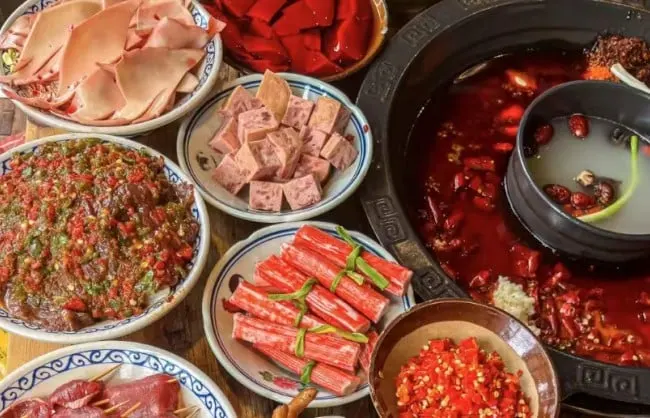
- 6. Chengdu is Known for Its Hot Pot and Spicy Food
- 7. Chengdu is a Gateway to Tibet and Sichuan’s Natural Wonders
- 8. Local People in Chengdu are Known for Their Laid-back Lifestyle
- 9. Chengdu Tianfu International Airport is One of the Busiest Airports in Western China
- 10. Its Attractions are Extremely Accessible Thanks to the Developed Metro System
- 11. Chengdu Has Five UNESCO World Heritage Sites Nearby
- 12. Its Nightlife Scene Is Both Vibrant and Authentic
- 13. Chengdu Was a Filming Location for Kung Fu Panda Inspiration
- 14. You Can Find Some of China’s Best Street Food in Chengdu
- 15. The “Face-Changing” Sichuan Opera Originated in Chengdu
- 16. It Was Once the Capital of Shu Han During the Three Kingdoms Period
- 17. The Integration and Coexistence of Taoism and Buddhism in Chengdu
- 18. It’s Home to the World’s Largest Building: the New Century Global Center
- Explore Chengdu with Us
Quick Overview About Chengdu – Where Is Chengdu and Why Is It So Special?
Chengdu is the capital of Sichuan Province and also a Chinese megacity. Located in the western Sichuan Basin with a current permanent population of 20.9378 million, Chengdu has been the economic center and famous cultural city of Southwest China since ancient times.
Chengdu is the only city in China that has not been relocated or changed its name for over 2000 years. It is also a “City of Splendor” that amazed even Marco Polo. The name’s meaning in Chinese: 成都 comes from the allusion of “one year a settlement, two years a town, three years a metropolis”. You can go to the Jinsha Site Museum to see the “Sun Bird” gold decoration, which is a city symbol of Chengdu!
What is Chengdu famous for? Delicious food, giant pandas, tea houses, mahjong… These Chengdu features have made it a popular destination in China.
1. Chengdu Is the Official UNESCO City of Gastronomy
Chengdu was officially awarded the title of “City of Gastronomy” by UNESCO in 2010, becoming the first city in China to receive this honor. With the cultural heritage of Sichuan cuisine’s birthplace, rich classic dishes and a mature catering industry, as well as the ongoing food festival activities, Chengdu food has successfully won international recognition.

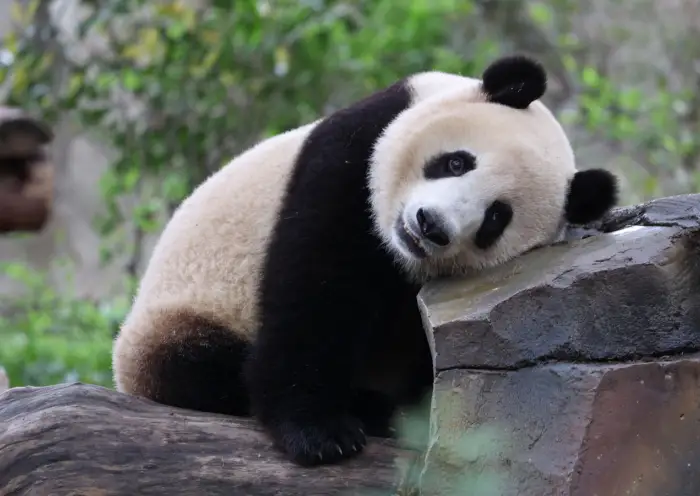
2. Chengdu is the Main Hub for Giant Pandas in China
Giant pandas are a national treasure of China, Sichuan is the hometown of giant pandas, and Chengdu is the only city in the world with both wild and captive giant pandas – one of the most well-known Chengdu facts. The Giant Panda Breeding and Research Base here has a captive population of over 200 giant pandas, allowing you to observe adorable giant pandas up close. The Chengdu Giant Panda Museum is the world’s first interactive experience museum themed around giant pandas.
3. Chengdu’s Tea Culture is One of the Oldest in China
If you ask what to do in Chengdu specifically? Going to a tea house! Sichuan is a birthplace of tea. The tea culture in Chengdu has a long history. Chengdu and its surrounding areas are one of the earliest regions in China to plant tea and form the custom of drinking tea. During the Western Han Dynasty, Chengdu had become a tea distribution center. During the Tang Dynasty, Chengdu’s position as the center of ancient tea culture had already been established. Chengdu tea culture is represented by lidded tea, which includes tea lids, tea bowls, and tea trays.
4. The City Has over 10,000 Teahouses
One of the coolest facts about Chengdu: it has the world’s largest number of tea houses, and the tea consumed by Chengdu people each year can fill seven West Lakes.
There are over 10,000 tea houses in Chengdu, with a density three times that of cafes in New York. Teahouses are not only leisure places, but also important carriers of social interaction.
Among them, the oldest tea house “Heming”(鹤鸣) was founded in the Ming Dynasty and still retains the tradition of bamboo chairs and low tables paired with covered bowls of tea. It is an excellent place to experience Chengdu tea culture. Besides, Chengdu people drink tea with melon seeds and peanuts, but seldom with dim sum!
5. Chengdu is the First City in the World to Use Paper Money
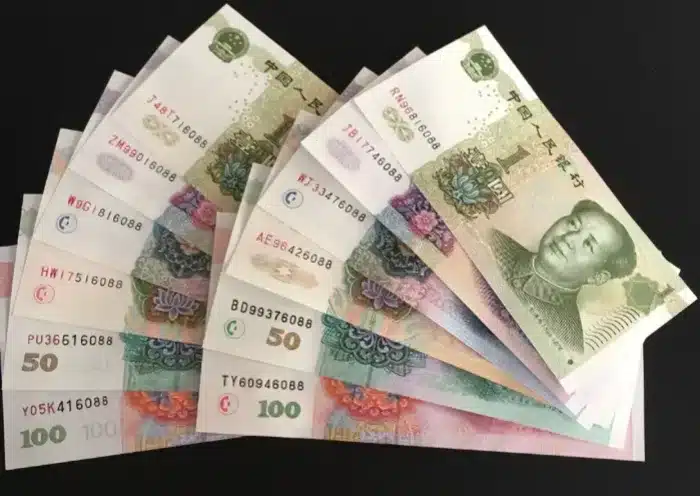
More than a thousand years ago during the Northern Song Dynasty (1023 AD), Chengdu gave birth to the world’s earliest paper currency “Jiaozi”, which was over 600 years earlier than European paper currency. But Zhang Yong, who invented “Jiaozi”, was not from Chengdu, but from Shandong, and was then the governor of Yizhou.
The Jiaozi of the Song Dynasty was made using specially-prepared paper made from mulberry bark, embedded with metal anti-counterfeiting thread, and employed complex woodblock printing technology. This anti-counterfeiting concept has been borrowed by central banks of various countries today.
During your Chengdu travel, you can visit the Jiaozi Ruins at the Jiaozi Financial Museum located next to Tianfu Square.
Cool Fact: Chengdu people still love to use cash, but the popularity of “scan code payment” is globally leading!
6. Chengdu is Known for Its Hot Pot and Spicy Food
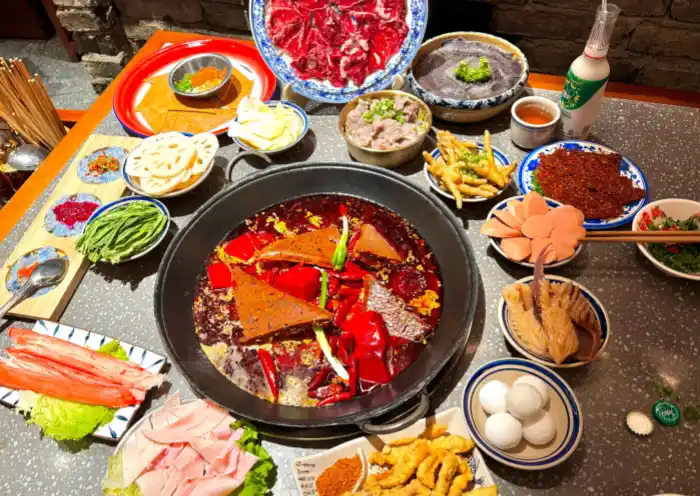
The early form of Chengdu hotpot is the “cooking pot” of the ancient Yangtze River boat trackers. They threw offals and wild vegetables into spicy soup base to boil and eat at the same time. The first hotpot restaurant in Chengdu opened in 1936, with an interesting name called “Hollywood”, and was founded by a person from Chongqing. Before the trip, learn some tips on how to eat Hot Pot in Chengdu like a local.
Although Sichuan cuisine is famous for its spiciness, chili peppers were not introduced to Sichuan until the mid-Qing Dynasty. Before that, Shu people mainly used cornel and Sichuan peppercorns for seasoning. It can be said that Chengdu people have been eating numbing for 3000 years and spicy for only 200 years. The earliest Sichuan cuisine did not include chili peppers.
If you visit Chengdu on your China tour, go to Chen Mapo Tofu store to taste the authentic numbing and spicy flavor!
Facts about Chengdu Mapo Tofu: The founder of Mapo tofu is surnamed Chen rather than Ma. The reason why it is called Mapo tofu is that there are pockmarks (麻) on Grandma Chen’s face.
7. Chengdu is a Gateway to Tibet and Sichuan’s Natural Wonders
Located at the western edge of Sichuan Basin, Chengdu is a transitional zone between the Qinghai-Tibet Plateau and the the Yunnan-Guizhou Plateau, surrounded by mountains, forming a natural barrier. It is a key gateway to Tibet, the starting point of the Sichuan-Tibet Highway 318, and plays an important role in connecting Tibet and the inland China.
Besides, Chengdu’s unique geographical conditions have nurtured rich biodiversity and formed a unique ecological wonder. The Sichuan region where Chengdu is located has world-class natural heritages such as Jiuzhaigou Valley, Mount Emei, and Three Gorges of the Yangtze River. These scenic spots are all distributed on the tourism loop line with Chengdu as the core.
Suggested tours from Chengdu:
8. Local People in Chengdu are Known for Their Laid-back Lifestyle
The public impression of life in Chengdu: easy, comfortable, and happy. The “slow life” philosophy of Chengdu people is reflected in both daily routines and social activities. Drinking tea and reading newspapers in the morning, and taking a walk in the park in the evening have become the norm. People often gather at hot pot restaurants and tea houses to spend leisure time. One can often see Chengdu locals playing mahjong, chess, and sunbathing in teahouses and parks, which create a unique urban leisure scene. This leisured and unhurried attitude towards life is a gentle response to this fast-paced era.
9. Chengdu Tianfu International Airport is One of the Busiest Airports in Western China
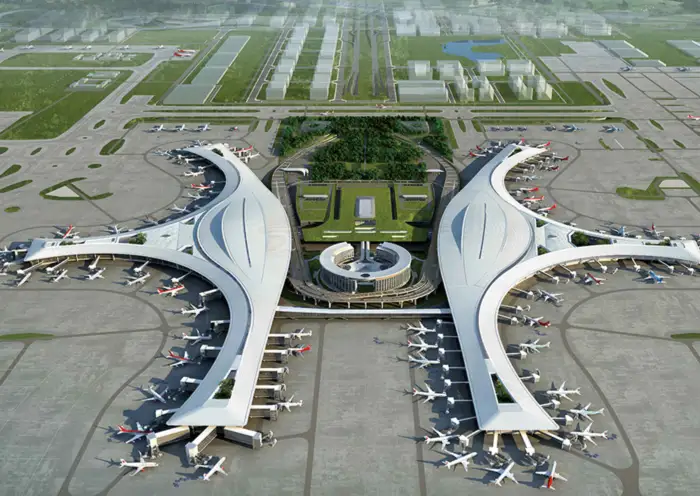
Chengdu is one of the cities in China with two 4F-level international airports. In terms of urban air passenger throughput, Chengdu ranks third in the country after Beijing and Shanghai. After the opening of Chengdu Tianfu International Airport in 2021, it forms a “dual hub” with Shuangliu Airport.
Compared with Shuangliu Airport, although Tianfu International Airport is relatively far from downtown Chengdu, it is larger in scale and more modern, mainly running international routes and some domestic long-distance routes. The two airports enable Chengdu to fully take its advantages in opening up to the west and south, thus achieving rapid growth as a major economic and transportation hub in Western China.
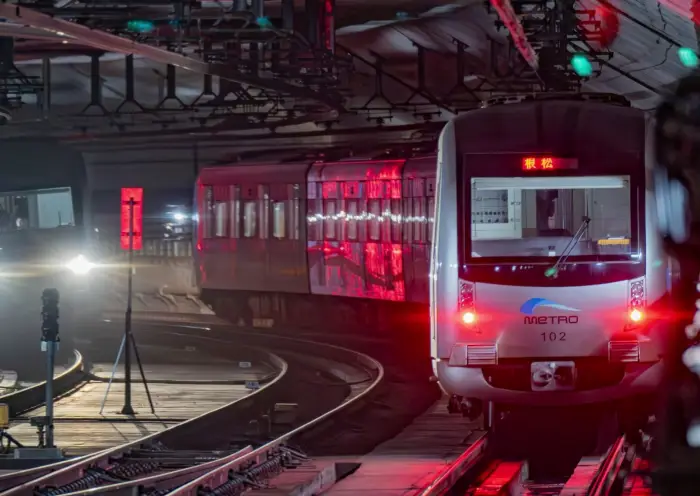
10. Its Attractions are Extremely Accessible Thanks to the Developed Metro System
At present, there are more than 10 subway lines in Chengdu, which cover 90% of the scenic spots. You can use Alipay directly to scan the code to take the subway.
Line 1 provides direct access to the museum complex in Tianfu Square, Wenshu Temple, and New Century Global Center. Line 2 connects Chunxi Road, People’s Park, IFS Panda Sculpture, Daci Temple, and Jiuyan Bridge. Line 3 connects popular landmarks such as Panda Base, Wuhou Shrine, and Jinli. Line 4 runs through Kuanzhai Alley, Du Fu Thatched Cottage, Qinglong Lake Wetland, etc.
Subway stations are generally equipped with shared bicycles, and most scenic spots can be reached within a 10-minute walk from the station. The developed subway network makes Chengdu scenic spots easily accessible.
11. Chengdu Has Five UNESCO World Heritage Sites Nearby
One of the top things to know about Chengdu – there are five world heritage sites in Chengdu and its surrounding areas:
- Jiuzhaigou Valley: Located in the northwest of Sichuan Province, Jiuzhaigou is famous for 108 alpine lakes (Haizi), waterfalls and colorful forests, and is known as the “Fairy Tale World”.
- Huanglong: Located in the northwest of Sichuan Province, it is known as the “Earthly Jade Pool” consisting of spectacular calcium carbonate pools, snow mountain canyons, primitive forests, waterfalls, and hot springs.
- Mount Emei – Leshan Giant Buddha: Mount Emei is not only beautiful in scenery, but also one of the four famous Buddhist mountains. The Leshan Giant Buddha is the largest rock carved statue in the world, 71 meters high.
- Mount Qingcheng and Dujiangyan Irrigation System: Dujiangyan Irrigation Project was built in the 3rd century BC and still plays a role in flood control and irrigation. Mount Qingcheng is the birthplace of China’s Taoism, and is renowned as “the Most Tranquil Place Under Heaven”.
- Sichuan Giant Panda Sanctuaries – Wolong, Mt Siguniang and Jiajin Mountains: Covering seven nature reserves such as Chengdu, Ya’an and other areas, preserving more than 30% of the world’s wild giant panda population.
12. Its Nightlife Scene Is Both Vibrant and Authentic
The nightlife in Chengdu, China is a unique blend of traditional culture and modern vitality, which not only continues the bustling of the thousand-year-old Shu capital, but also bursts with the trend pulse of a cosmopolis. As night falls, the neon lights of the Chunxi Road complement the fashionable landmarks of Taikoo Li.
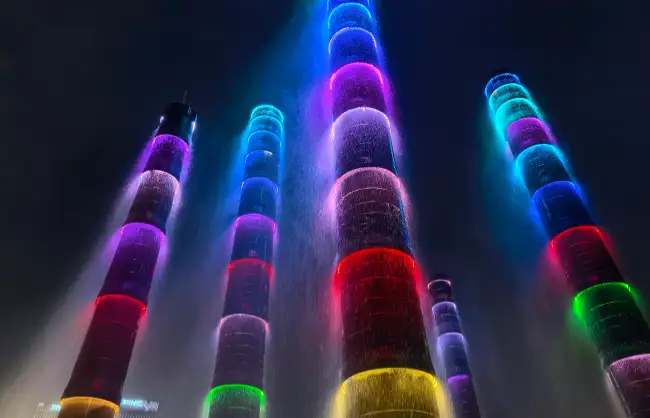
The old tea houses are adjacent to the internet-famous cafes, and food stalls such as hotpot and skewers are crowded with diners. The night market on Jinli Ancient Street, the bar street by Nine-Arch (Jiuyan) Bridge, the Sichuan Opera Face Changing in Liyuan Teahouse, the cyber light show at 339 Tianfu Panda Tower, and the spicy food on Kuixing Tower Street… all embody the rich and unique nightlife of Chengdu.
13. Chengdu Was a Filming Location for Kung Fu Panda Inspiration
One of popular Chengdu facts for kids: The production team of the Kung Fu Panda film series has repeatedly publicly stated that Chengdu is an important source of inspiration for them. The scene of “Panda Village” in Kung Fu Panda 3 is inspired by the natural landscape of Mount Qingcheng, including clouds, vegetation, and green moss on the roof. Scenes such as the Peach Blossom Forest and the Anlan Rope Bridge in Dujiangyan Irrigation System were also used as filming sites. Kung Fu Panda 2 adds at least eight Chengdu elements such as Mount Qingcheng, Mapo Tofu, Dandan Noodles, etc. The Chengdu Giant Panda Breeding Base provides rich panda life materials for movies. The success of the Kung Fu Panda series has further enhanced the international popularity of Chengdu and Mount Qingcheng, just like Avatar to Zhangjiajie.

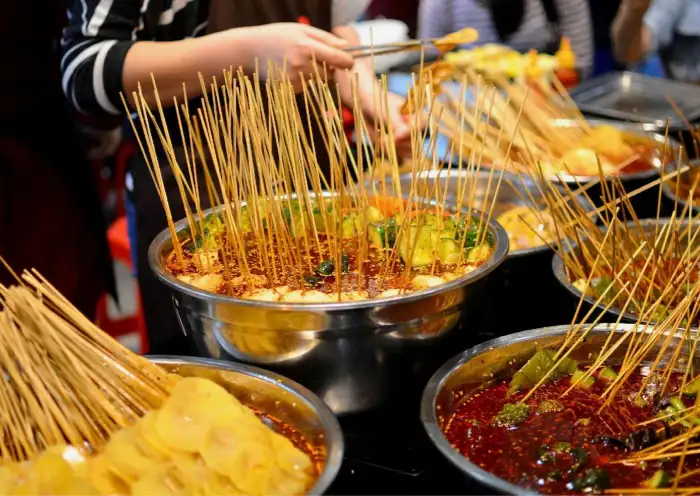
14. You Can Find Some of China’s Best Street Food in Chengdu
The hustling of Chengdu is hidden in the snack stalls on the streets and alleys. Chengdu street foods can be regarded as the epitome of delicious Chinese food, renowned for their spicy and diverse flavors. There are Chuanchuanxiang (Skewered Food Served in Hot Pot), Long Wonton, Chung Dumplings, Dandan Noodles, Couple’s Sliced Beef in Chili Sauce (Fuqi Feipian), Eggy Cake, Fat Intestine Noodles, Three Cannonballs, Guokui (Sichuan-style Pie), Bingfen (Iced Jelly), Spicy Rabbit Head, Hot Pot Duck, Pig’s Trotter Soup, Lai Tangyuan, etc. Every bite is a taste footnote of Ba-Shu culture, truly reflecting the attitude of Chengdu people towards life – casualness, tolerance, and enjoyment. Jianshe Road, Kuixing Building, Yulin Street… are all must-visit Chengdu food streets.
15. The “Face-Changing” Sichuan Opera Originated in Chengdu
What to see in Chengdu, one of the most famous cities in China? The exciting Sichuan Opera Face Changing performances at the Liyuan Guild Hall, Furong National Essence, Jinjiang Theater, etc. The emergence of Sichuan Opera can be traced back to the pre-Qin period and even earlier. Sichuan Opera Face Changing is a unique traditional technique to quickly change characters by changing masks during performances by folk artists in Sichuan region. It originated in the late Qing Dynasty and began to take shape during the Qianlong and Jiaqing periods (late 18th century to early 19th century). Chengdu, as the cultural center of Sichuan Opera, plays a crucial role in its development.
Nowadays, Chengdu has numerous professional Sichuan opera performance groups and theaters. Chengdu’s Sichuan Opera Face Changing has gained worldwide recognition as an important symbol of Ba-Shu culture.
16. It Was Once the Capital of Shu Han During the Three Kingdoms Period
In the late Eastern Han Dynasty, Liu Bei established the Shu Han regime in Chengdu (221-263 AD), forming a tripartite power with Wei and Wu. During Zhuge Liang’s governance of Shu, he vigorously developed agriculture and handicrafts, making Chengdu the political, economic, and cultural center of the southwestern region.
Nowadays, Chengdu still preserves many historical relics related to the Shu Han Dynasty, such as Wuhou Shrine, Jinli, Zhuge Well, Wanli Bridge, Yiguanmiao Temple, Huanhou Lane, etc. The most famous one is undoubtedly the “Holy Land of the Three Kingdoms” – Wuhou Shrine, which is an important place to commemorate Zhuge Liang and the only temple in China where the emperor and ministers are worshipped together. These historical relics are important windows for experiencing the Three Kingdoms culture.
During the Tang Dynasty, Chengdu developed into one of the most prosperous cities in China, with a highly-developed economy and culture, and was known as “Yangzhou the First, Chengdu the Second”.
17. The Integration and Coexistence of Taoism and Buddhism in Chengdu
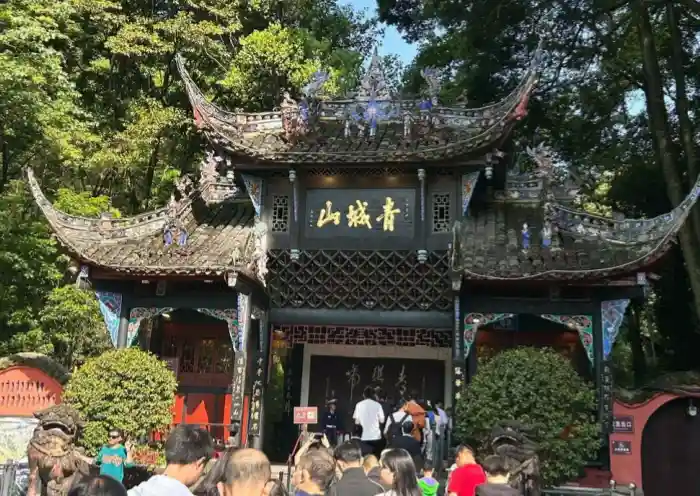
Chengdu is the birthplace of Taoism which promotes health culture and nature worship. Mount Qingcheng is known as “the First Taoist Mountain”, and Qingyang Palace is known as “the Premier Taoist Temple in Western Sichuan”. Buddhism was officially introduced to Chengdu during the Eastern Jin Dynasty, and famous temples such as Wenshu Temple and Daci Temple (where Xuanzang was ordained) promoted the spread of Zen Buddhism. Taoism and Buddhism jointly influence the architecture, folk customs, art and philosophical ideas, and citizen lives of Chengdu, shaping an inclusive social atmosphere.
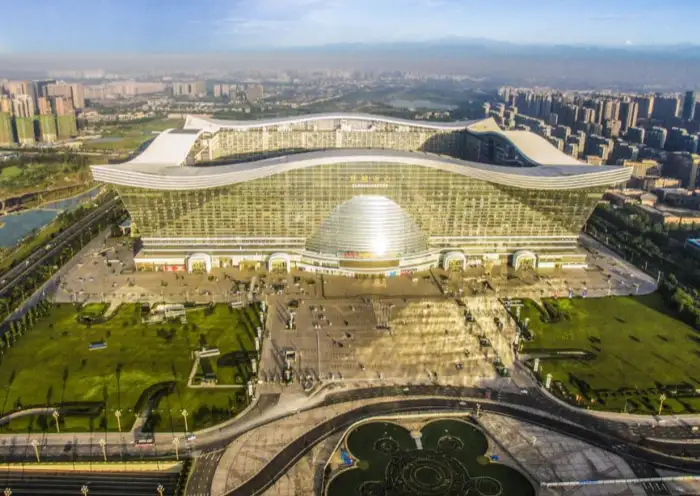
18. It’s Home to the World’s Largest Building: the New Century Global Center
The New Century Global Center is located at No. 1700, North Section of Tianfu Avenue, Chengdu City, Sichuan Province, with a total construction area of 1.76 million square meters, equivalent to seven Beijing Bird’s Nest stadium. It includes Paradise Island Water Park, shopping center (best Chengdu shopping destination), office building cluster, super five-star Intercontinental Hotel, and 8,000 parking spaces. After opening in 2013, it was certified by Guinness World Records as the “world’s largest single building” and hailed as a new landmark in Chengdu, attracting a large number of tourists every year with the spectacular image of “Aqua Treasure Basin”.
Below are some other Chengdu facts and figures:
- In China, the number of private cars in Chengdu ranks second only to Beijing.
- Chengdu is a chessboard-like city, but its urban layout is not exactly north-south.
- The city center of Chengdu, ChengDu Zero Point, is not Tianfu Square, but the bronze plate at the intersection of Tongluo Lane and Wenwu Road.
- Chengdu Shishi Middle School, founded in the Han Dynasty (about 100 BC), is the oldest surviving school in the world!
- Tianfu Avenue is currently the longest known urban central axis in the world, with a total length of 150 kilometers, connecting cities such as Deyang, Chengdu, Meishan, and Renshou.
- Chengdu is the city with the largest altitude difference in the world, reaching 5,005 meters!
Related reading: Top Reasons to Visit Chengdu
Explore Chengdu with Us
After learning about the above top facts about Chengdu, are you eager to travel to Chengdu? Join our tour package and explore Chengdu’s adorable pandas, spicy food, the leisurely tea houses, and the wisdom of Dujiangyan in a relaxed and enjoyable way!