



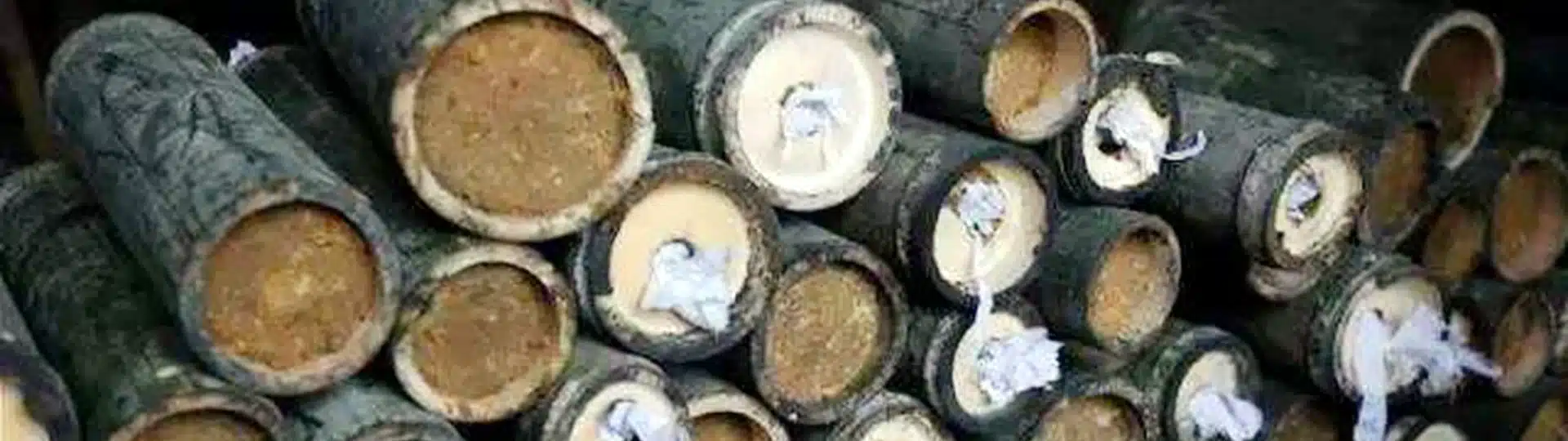
Having revolutionized areas like warfare, mining, construction, and even entertainment across the globe, gunpowder proudly stands as one of the most transformative and significant inventions in human history. While many people associate its origins with medieval Europe, the invention of gunpowder, in fact, traces back to ancient China, where it emerged not from a…
Xi’an Top Travel Tips & Advice
Dedicatedly prepared travel tips, tricks, advice, culture and lifestyle articles, inspiration ideas, etc. to inspire your China vacation plan!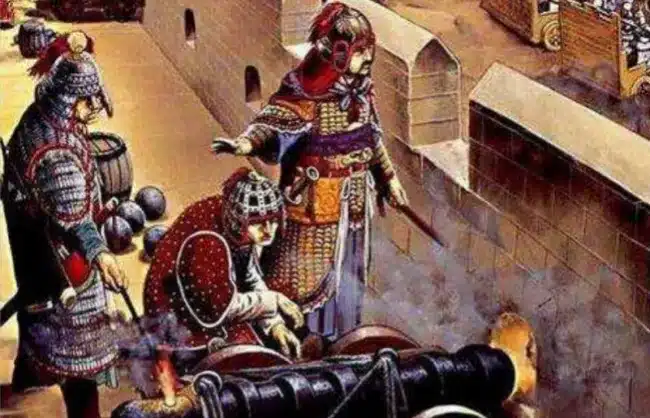

Kites were invented by the Chinese people over 2,000 years ago. In the 12th century, Chinese kite spread to the West. Oriental and western kite cultures were formed after years of development. The traditional Chinese culture integrated legends and auspiciousness with the kite craft and finally formed Chinese kite culture with unique characteristics. 1…

Known as “mother of civilization”, the art of printing is the technology of producing printed images according to the original script or picture. In 1900 a scroll of Diamond Sutra was discovered in Dunhuang grottos, which was printed at the 9th year of Xiantong in the reign of Emperor Yi (868) in the Tang…

The Yueyang Tower standing on the west gate of the Yueyang city wall, looking down at the Dongting Lake, facing the Junshan Island in the distance, and linking the Yangtze River to the north and the Xiangjiang River to the south, is listed as one of the Three Great Towers in the south of…

For thousands of years, Chinese people have kept surprising the world with their infinite creativity and wisdom. The inventions and masterpieces born on China’s vast land had greatly shaped world history. Among the Four Great Inventions – the compass, papermaking, printing, and gunpowder – the Chinese compass greatly reflects the nation’s deep intellect and pursuit of harmony between humanity and…

Paper-cutting is one of the most popular forms of Chinese traditional folk art. Its materials arc easy to get and low in cost. Paper-cuttings not only reflect the aesthetic interest of the folk artists, but also represent the national mentality of Chinese people. 1 ) History of Paper cutting Paper-cuts are patterns cut on…
Paper making stemmed from the necessity of cultural development and exchange. Prior to its invention, the Europeans wrote on sheep skin (and it is said that the copy of the Bible needed 30 or more pieces of sheep skin), the Egyptians wrote on thin barks of stalks of papyri, and the Chinese resorted to…

Bordering on the Yangtze River and crouching on the top of the Snake Hill, the Yellow Crane Tower enjoys the fame of“The First Scenery under Heaven”and is listed as one of the three most famous towers on the south bank of the Yangtze River Its cultural significance led to its being made the symbol…

We use many abbreviations in our daily life, but do we really know what they stand for? Imagine you will visit Xian this December and decide to book an airport pick-up service online. You provided the travel agency with the arrival time of your flight like 8:30 am on December 25. So the question…

The ancient pagodas of Beijing have been built before Sui and Tang Dynasty accompanied spreading of Buddhism. The existents are mostly after Tang Dynasty, especially outstanding pagodas of Liao and Jin period. The period of Ming, Yuan and Qing also have its distinguished works. Different from what I saw in my trip to Xian…

Friendship Store. The easiest way to shop is to visit the Friendship Store, but it does not convey a Chinese atmosphere. It is located on China’An Jie near the International Club, and stocks a substantial range of goods: food (caviar is excellent and cheap), wine, clothing, leather coats, furs, silks, jade, jewelry, expensive): and…

Visitors to Guangzhou who are traveling outside the fair period will probably first choose to visit the Friendship Store set aside for for eign visitors. It is located in the four-story building to the left of the Bai Yun Hotel. There you may purchase a wide range of goods; foodstuffs, wines, teas, candy, dried…

The Huaisheng Mosque is located at 56 Guangta Lu(south of Zhong Shan Lu) and is reputed to be the longest-established mosque in China. Iron gates bar the entrance, but inside the archway high up on the right-hand side is a button which the visitor should press to gain entry. You will be ushered through…

Guangzhou’s best-known park is Yue Xiu, located a few minutes’ walk to the east from the Done Fang Hotel. There is a five-story tower on a hilltop in the park known as the Zhen Hai Lou, or “Tower Overlooking the Sea.” The tower dates from the fourteenth century the Ming Dynasty period and is…

In the north China city of Chengde is a scenic spot called by the quaint name: “Mountain Hamlet for Escaping the Heat.” This was the summer resort of the Qing dynasty(1644-1911)imperial family. Located in northern Hebei(Hopei) Province 250 kilometers from Beijing(Peking), Chengde occupies a small basin some 350 meters above sea level. The summer…

The Memorial Temple of Jin in Shanxi Province is located at the fountain-bead of the Jin River in the foothills of the Suspending Jar Hill, 25 kilometers southwest of the provincial capital city of Taiyuan. About ten kilometers to the southwest are the Tianlong Hill Grottoes, another famous spot. The Memorial Temple of Jin…

The Yangtze River Delta boasts global hard-power cultural appeal. It is not only a major economic engine in China but also a favorite destination known for the excellent transport links for travelers. As self-driving travel in China has become more and more popular, the region has issued the Self-Driving Tour Guideline in response. By…

There is an ancient Chinese myth about a fathomless pit east of Beihai where the waters of all the rivers on earth are supposed to converge. Rising above them fire three mountains where the gods live. Seeking immortality, many emperors in Chinese history built lakes and islet-hills behind their pa!aces where they hoped to…

The Western Hills(Xishan), outside Beijing(Peking), offer five major attractions-the Fragrant Hills(Xiangshan), Temple of Azure Clouds(Biyunsi), Cherry Dale(Yingtaogou), Temple of the Sleeping Buddha (Wofosi) and the site of the Eight Temples(Badachu). An excursion to Western Hills offers relief from the hubbub of the city and from man—made landscapes such as are seen at Beihai and…

China has more than 2,000 museums at the national, provincal and city levels. In the past few years many private museums have opened in various parts of the country. The museums are of great varieties and their sponsors are from different social strata. Even the 12 provinces and autonomous regions in comparatively poor west…

It is over the Dadu River to the west of Luding County in Sichuan Province in southwest China. The construction of this suspended cable bridge started in 1705 or the 44th year of the Kangxi reign of the Qing Dynasty and was completed five years later. The bridge is 101 meters long and three…

At 201 People’s Road and at the southern end of the People’s Square, Shanghai Museum is a large museum of ancient Chinese art. It was opened in 1952 and moved here in 1994. The new museum has a floor space of 38,000 saquare meters and has five stories above the ground and two stories…

Also known as the Wind and Rain Bridge, the Yongji Bridge is in Chengyang Village, 20 kilometers north of Sanjiang Dong Autonomous County in Guangxi Zhuang Autonomous Region in south China. It was built in 1916 and was rebuilt twice after being destroyed by floods. The current bridge was rebuilt two years after it…

Painted pottery Chinese traditional painting dates back to the Neolithic Age about 6,000 years ago. The excavated colored pottery with painted human faces, fish, animal and plants reflect various aspects of the life of primitive clan communities. The line patterns on unearthed pottery ware resemble ripples, fishing nets, teeth. The animal and human figures,…

Playing Kongzhu Kongzhu (meaning empty bamboo), known abroad as diabolo or Chinese yo-yo outside of China, is originally a Chinese folk toy in which a round wooden box, dotted with several holes, is set at one end of a bamboo cylinder(single-domed)or both ends of it (double-domed) and when played with using a string, the…

Lion Dance and Dragon Dance Lions live in Africa and South America. After the han Dynasty, it was introduced into China. It is generally accepted that Lion Dance came into being as long ago as in the Three Kingdom, which was initially prevalent in the army and spread among the ordinary people afterwards. Lion…

In China, students are always assigned with excessive amount of homework. I remember when I was in my primary school years, I was always tied with the homework. Once the homework is not finished, I will be punished seriously — writing the same passage for ten or even hundred times. For thousand years, China…
Swinging Swing, as a traditional sport and program on festive occasions, is very popular among the Hans and other minorities such as the Korean nationality and the Lahu nationality. In the Han and Wei Dynasties, swing already evolved from a military training program into an entertainment enjoyed by both the imperial palace and the…

A. Painter of Northern and Southern Dynasties Northern and Southern Dynasties were an important period in the history of painting. China plunged into a situation of divided states from the third to the sixth century, where incessant wars and successions of dynasties sharpened the thinking of Chinese artists which, in turn, promoted the development…

The “writing” of Chinese characters first requires a medium. As today’s writings are mostly on paper, one may wonder: What came before that? In the Shang Dynasty, characters were carved on oracle bones or bronze wares. The Spring and Autumn Period was a time when the amount of writings and characters increased in great…


