




If you are planning an impressive trip to Xi’an, the Small Wild Goose Pagoda is definitely worth visiting.
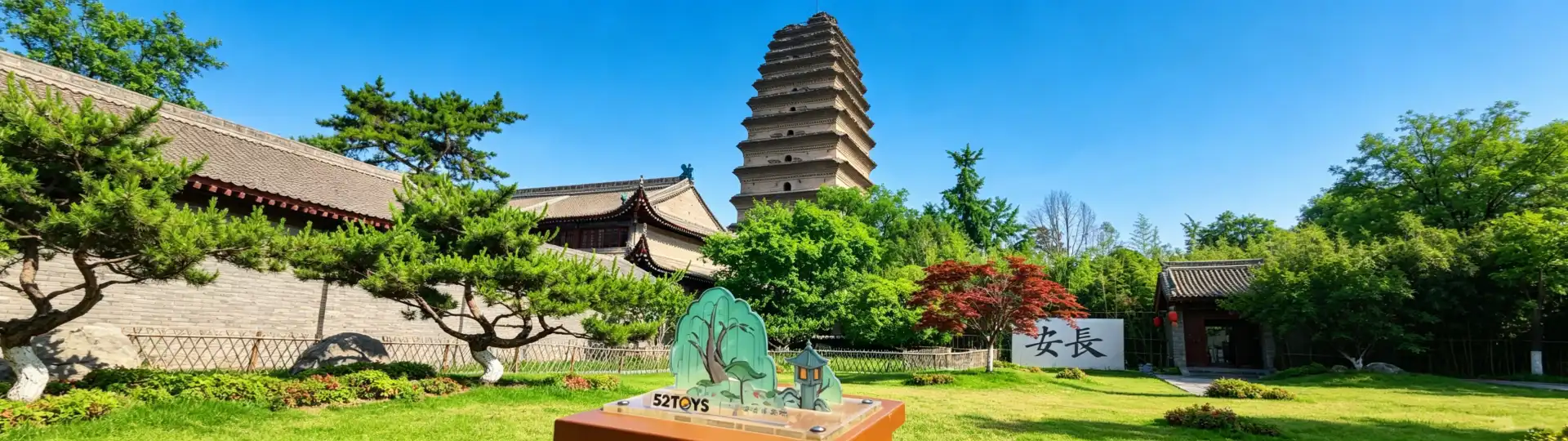
Just a 10-minute ride from Xi’an’s Bell Tower, the Small Wild Goose Pagoda (Xiaoyanta in Chinese) Scenic Area consists of three main parts: the Tang Dynasty Small Wild Goose Pagoda, the historic site of Jianfu Temple and the Xi’an Museum.
Listed in UNESCO World Heritage Site, the pagoda has a long history of over 1,300 years. Meanwhile, it offers a quieter and more peaceful environment than the Giant Wild Goose Pagoda, allowing visitors to fully immerse in the charm of the ancient glory of Tang Dynasty.
Quick Travel Information:
- Opening Hours: 8:00-17:00 including 5 appointed time periods
- Address: 72 Youyi West Road, Beilin District, Xi’an
- Height:4 meters, 13 stories (originally 15 stories)
- Construction Period: Tang Dynasty (built between 707 and 710 AD)
- Time Needed: about 2 hours
- Tickets: Free (advance reservation required)
Content Preview
- What Can You Do in the Scenic Area?
- Suggested Route & Itinerary Planning
- Giant Wild Goose Pagoda vs. Small Wild Goose Pagoda: Which One Should You Visit?
- How to Reserve a Visit to the Small Wild Goose Pagoda
- Recommended Photography Spots at the Small Wild Goose Pagoda
- Why Is It Called the “Small Wild Goose Pagoda”? Why Was It Built?
- Best Time to Visit – Spring & Autumn
- Traveling Options to Small Wild Goose Pagoda
- Practical Travel Tips
- Explore the Pagoda and More of Xi’an with China Xian Tour
What Can You Do in the Scenic Area?
Admire the Ancient Pagoda
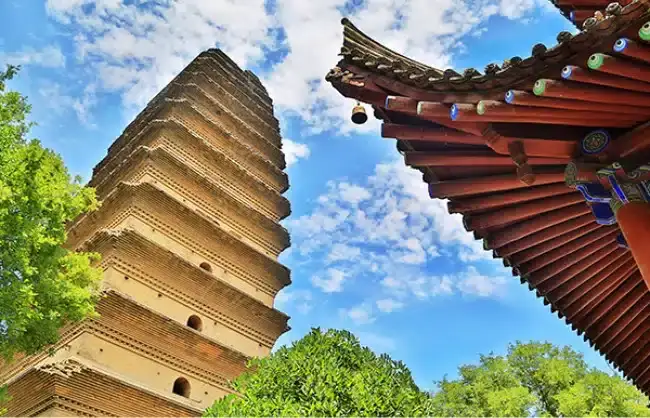
Built during the Tang Dynasty in 707 AD, this dense-eaved brick pagoda has survived more than 70 earthquakes without collapsing.
Around the pagoda, you can also see ancient scholar trees that are rare to be seen overseas towering into the sky. It is estimated that they were already planted when the Small Wild Goose Pagoda was first constructed.
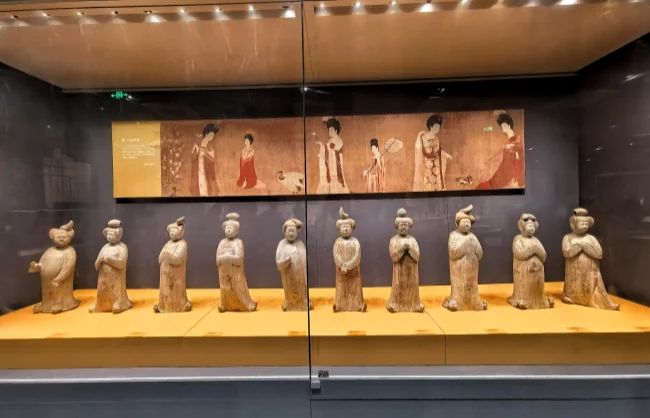
Explore 3,000 Years of Xi’an History at the Museum
Located in the same complex as the pagoda, the Xi’an Museum is one of China’s first-class national museums with a collection of more than 130,000 cultural relics. After visiting the pagoda, you can continue your journey through Xi’an’s glorious history, from the Zhou, Qin, and Han dynasties to the Tang Dynasty.

Ring and Hear the “Morning Bell of the Wild Goose Pagoda”
A giant iron bell is cast during the Jin Dynasty (1192 AD) and placed inside Jianfu Temple. It is in total 3.55 meters tall, carrying a clear and resonant sound. The bell was traditionally rung in the morning, and the “Morning Bell of the Wild Goose Pagoda” is one of the eight famous sights of the Guanzhong region. During the visit, visitors can ring the bell and praying for good fortune by themselves.
Enjoy a Peaceful Stroll
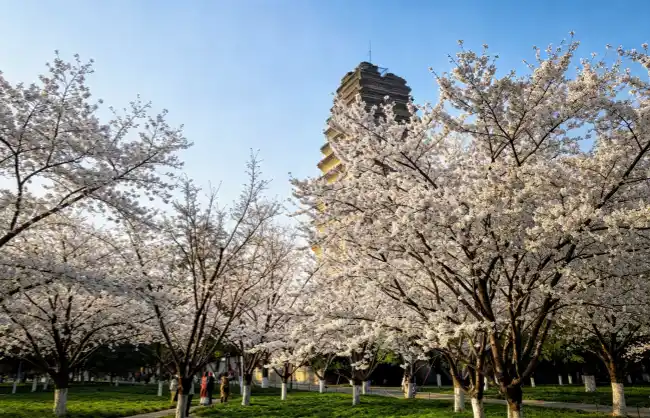
You can stroll leisurely in the classic gardens while admiring the pagoda, towering ancient trees and seasonal oriental flowers, such as cherry blossoms, crape myrtles, and ginkgo trees. It is a tranquil moment for you to escape the bustle of the city.
Experience Local Morning Life
In the early morning, the garden of Jianfu Temple comes alive with locals practicing tai chi, dancing, or playing chess. You can feel free to join in activities that you are interested in or just observe quietly aside to experience local life. It is a refreshing start of a day and an unforgettable memory for you.
Suggested Route & Itinerary Planning
Route Inside the Scenic Area
North Gate entrance → Morning Bell experience (bell ringing and praying) → walking around the Small Wild Goose Pagoda (viewing the pagoda from different perspectives) → visiting Xi’an Museum (permanent exhibits about ancient Chang’an) → West Gate/North Gate Exit
Recommended Xi’an Travel Routes with Small Wild Goose Pagoda
Half-Day Tour (genuine cultural experience in the scenic area)
It is recommended to spend either a whole morning or afternoon exploring the Small Wild Goose Pagoda Scenic Area and immersing yourself fully in its rich history and peaceful atmosphere.
One-Day Tour (classic combo)
- Morning:Small Wild Goose Pagoda + Xi’an Museum
- Afternoon:Xi’an City Wall
- Evening:Bell Tower Square and Muslim Quarter

Discover Xi'an's cultural core in one day — from the serene Small Wild Goose Pagoda to the mighty City Wall, the Great Mosque, and the vibrant food stalls of the Muslim Quarter.
Two-Day Tour (glorious Tang Dynasty theme)
Day 1:
Terracotta Army → Xi’an City Wall → Giant Wild Goose Pagoda North Square → Grand Tang Dynasty Ever-Bright City (experience Hanfu with traditional makeup)
Day 2:
Small Wild Goose Pagoda + Xi’an Museum → Anrenfang Heritage Exhibition Area (within walking distance, experience Tang Dynasty urban life) → Bell Tower Square (landmark of Xi’an) → Muslim Quarter (food court)
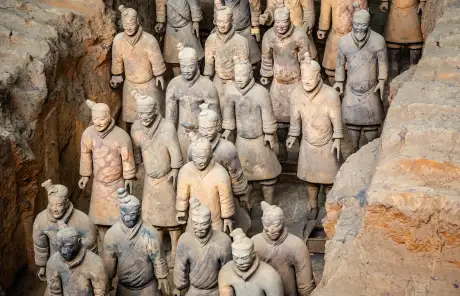
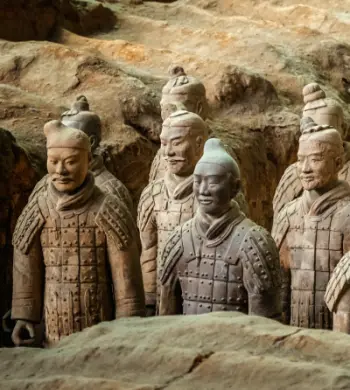
A two-day private Xian tour covering Terracotta Warriors, Yongxingfang food street, City Wall, Shaanxi History Museum, and Big Wild Goose Pagoda.
Giant Wild Goose Pagoda vs. Small Wild Goose Pagoda: Which One Should You Visit?
Feature |
Small Wild Goose Pagoda |
Giant Wild Goose Pagoda |
Style |
Elegant and tranquil |
Grand and magnificent |
Atmosphere |
Peaceful
Rich in locals’ leisure life |
Lively
More commercialized Popular with tour groups |
Main attractions |
Ancient pagoda
Jianfu Temple Free museum |
Da Ci’en Temple
Xuanzang heritage story exhibit Musical fountain |
Tickets |
Free (reservation required)
|
Da Ci’en Temple’s ticket: 10 RMB (approximately USD 1.4)
Climbing the pagoda: an additional ticket |
Best For |
Visitors preferring Quiet surroundings, an in-depth exploration;
history & architecture enthusiasts |
First-time visitors to Xi’an;
Buddhist culture enthusiasts; Visitors interested in symbolic landmarks. |
If time permits, both pagodas are worth visiting. They offer very different experiences.
- Choose Small Wild Goose Pagoda if you prefer a quieter environment, engaging in local culture or a richer historical atmosphere.
- If you are especially interested in Buddhist heritage and general famous landmarks, Giant Wild Goose Pagoda is a better option.

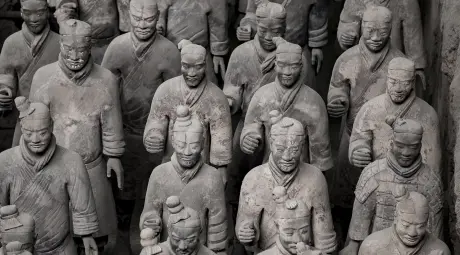
Dive into 3,000 years of history on this 3-day Xian group tour combining the legendary Terracotta Warriors with the city's vibrant Muslim Quarter food scene.
How to Reserve a Visit to the Small Wild Goose Pagoda
The Small Wild Goose Pagoda Scenic Area is free to visit but an online reservation is required.
You can book tickets through the official WeChat account, Meituan, or Ctrip by searching “西安博物馆”. Completing the online reservation is easy by using your passport.
After booking, remember to present your passport at your time slot (15 minutes in advance is allowed) to exchange for a paper ticket at the service counter before entering. The ticket machines generally do not accept passports.
- Ticket Release Policy:
Individual tickets can be reserved up to 5 days in advance. And new tickets are released daily at 6:00 PM.
- Tips for Reservation:
During public holidays and travel seasons, please reserve your ticket online as early as possible to avoid heavy foot traffic.
Recommended Photography Spots at the Small Wild Goose Pagoda
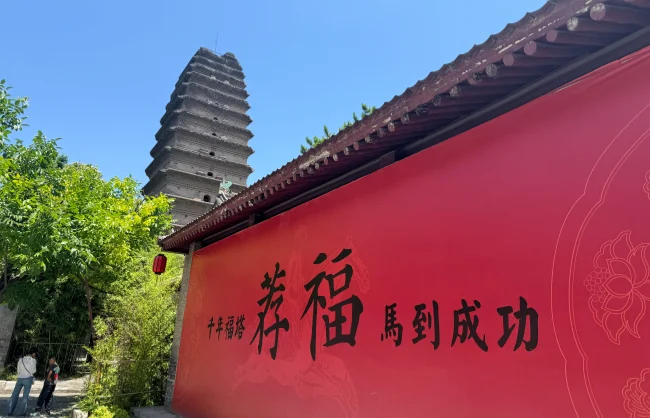
In Front of the Jianfu Temple Red Wall
This is the most iconic and ideal location for photography in the scenic area. The combination of historical temple wall and the ancient pagoda creates a classic Chinese aesthetic.
For the best photos, always consider a Hanfu outfit with traditional makeup or wearing a light-colored dress that can flutter in the breeze. Shooting from a low angle can help to frame the pagoda from the best perspective, creating a poetic and elegant composition.
In Front of the Mahavira Hall
If you want to capture a full view of the Small Wild Goose Pagoda alongside the surrounding temple architecture, this is an ideal spot.
With Mahavira Hall, temple corridors, and the pagoda all captured in one single shot, it creates a strong sense of depth.
On the Stone Arch Bridge
Standing on the stone bridge allows you to capture the pagoda’s stunning reflection in the water. On clear days, the surrounding willow trees serve as a natural foreground for photography, creating a poetic scene.

Among the Cherry Blossoms (late March-early April)
Each year, masses of white Somei Yoshino cherry blossoms bloom around the pagoda. Together, the blossoms and the ancient pagoda form a picturesque spring landscape that showcases the charm of the season.
Under Golden Ginkgo (late October to mid-November)
In late autumn, the ginkgo trees in Jianfu Temple turn a brilliant golden color. The contrast between the golden leaves and the gray-brick ancient pagoda creates a rich and picturesque autumn atmosphere.

Why Is It Called the “Small Wild Goose Pagoda”? Why Was It Built?
In fact, when it was first constructed, the Small Wild Goose Pagoda was named the Jianfu Temple Pagoda. It was built to house Buddhist scriptures and statues brought back from India by the monk Yijing.
Built over fifty years after the Giant Wild Goose Pagoda, the Small Wild Goose Pagoda shares a similar architectural style and many architectural characteristics. Since it is smaller in size, people gradually call it the “Small Wild Goose Pagoda” to distinguish it from the larger one. The name eventually became its official title, and the two pagodas are often regarded as “twin pagodas.”
Best Time to Visit – Spring & Autumn
The Small Wild Goose Pagoda is worth visiting year-round, but spring, summer and late autumn are the best seasons for visiting.
Spring (March – early April)
Enjoy the cherry blossoms in bloom. The white blossoms are framed with the ancient pagoda beautifully, showcasing an elegant and tranquil atmosphere. Compared with Qinglong Temple ( Xi’an’s most famous cherry blossom viewing spot), the foot traffic here is usually less heavy.
Summer (June – July)
Lotus flowers bloom widely throughout the scenic area. You can capture vibrant lotus blossoms alongside the ancient millennial-old pagoda.
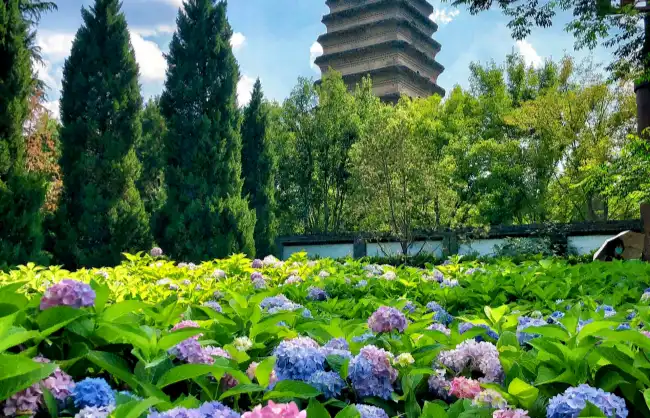
Late Autumn (Late October – Mid-November)
Late autumn is often considered the most beautiful season at the Small Wild Goose Pagoda. The golden ginkgo leaves and the ancient pagoda together create a classic and poetic scene of a traditional Chinese landscape painting.
Best Time of Day (around 8:30 & after 3:30)
It is recommended to enter the site right after opening at 8:30 AM or later after 3:30 PM. Early mornings are more peaceful with fewer visitors and you can join the locals for morning practices. Afternoon is ideal for sightseeing and photography leisurely. You can enjoy the tranquility of the late afternoon and stay until the site closes.
Traveling Options to Small Wild Goose Pagoda
Metro (Most Recommended)
Traveling by metro is always recommended. You can take both Metro Line 2 and Line 5 and get off at Nanshaomen Station. Exit from Exit F and walk approximately 700 meters (about 10 minutes), then you can get to the North Gate of the scenic area.
Taxi or DiDi Service (for Families)
If you are traveling with senior family members or young children, it is suggested to take a taxi or hail a car with DiDi for more convenience. Set your exact destination as:
- Small Wild Goose Pagoda (North Gate)
- Xi’an Museum (West Gate)
Practical Travel Tips
What to Wear
As there is a lot of walking involved, bringing comfortable walking shoes is essential. During summer, also be sure to protect yourself from sunburn.
For photography enthusiasts, it is recommended to wear solid-colored clothing or a Hanfu outfit (especially in Tang-style designs). They complement the historic architecture and garden scenery beautifully.
Exploring with a Guide
If you prefer an in-depth understanding of the site’s history and cultural context, Xi’an Museum offers paid guided-tour services covering:
- Xi’an Museum permanent exhibitions
- Jianfu Temple Scenic Area
- Small Wild Goose Pagoda
Technology Experience–XR Journey Experience
Since 2026, the scenic area has introduced the “XR Journey to Explore the Pagoda” digital experience. Using XR technology, visitors can experience a virtual climb of the pagoda and enjoy immersive historical interpretation which is friendly to visitors with limited mobility. Please note that the availability may be limited and subject to special events.
Luggage Storage
If you are carrying large or heavy luggage, free storage is available at the Visitor Service Center near the North Gate.
If the free lockers are full, paid luggage storage is also available near Nanshaomen Metro Station. It takes about a 5-minute walk from the scenic area.
Visiting the Nearby Anrenfang Heritage Exhibition Area
Exit through the West Gate and walk approximately 400 meters, you can reach the Anrenfang Heritage Exhibition Area. Through modern exhibition techniques, the site recreates the lifestyle of ancient elites from the Tang Dynasty. It also enriches the religious and cultural atmosphere of the Small Wild Goose Pagoda.


Explore the Pagoda and More of Xi’an with China Xian Tour
The charm of the Small Wild Goose Pagoda lies in its profound history and cultural context. Unlike other heavily commercialized tourist attractions, it is more like a living historical courtyard where the past and present coexist.
Based in Xi’an, we are well acquainted with the pagoda and many other highlights of Xi’an. Joining a trip with China Xian Tour means you will gain insights into many historical highlights and enjoy authentic cultural experiences only locals know.


