
Located 23 km (14 miles) north of Dali Ancient Town and just 5 km north of Xizhou Town, Zhoucheng Village (周城村) quietly sits beneath the peaks of Cangshan Mountain, facing Erhai Lake and adjacent to Butterfly Spring. Home to more than 1,500 Bai households and over 10,000 residents, it is officially the largest traditional Bai ethnic minority village in Dali, Yunnan Province, China.
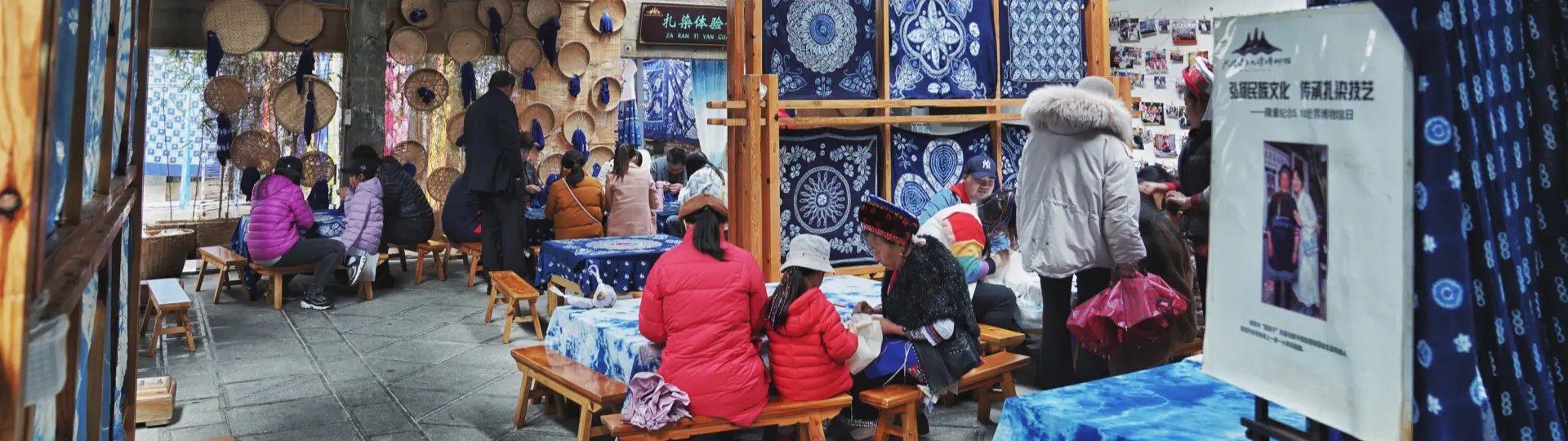
Zhoucheng is internationally renowned as the “Hometown of Bai Tie-Dyeing Art” (白族扎染之乡). For most travelers on a Dali tour, spending a half-day participating in a hands-on DIY tie-dye workshop, exploring stone-paved alleys, and admiring historic Bai courtyard residences (“Three Buildings and One Screen Wall”) stands out as an unforgettable cultural highlight.
📍 Fast Facts & Travel Overview: Zhoucheng Village Dali
- Chinese Name: 周城村 (Zhōuchéng Cūn / Hometown of Bai Tie-Dyeing)
- Location: Zhoucheng Village, Xizhou Town, 23 km north of Dali Old Town, Dali Prefecture, Yunnan Province, China
- Village Admission Fee: Free to enter and explore all public alleys and markets
- DIY Tie-Dye Experience Cost: CNY 80 – 150 ($12 – $22 USD) for small fabric items (handkerchiefs, tote bags); CNY 150 – 300 ($22 – $44 USD) for large custom textiles (silk scarves, dresses, wall tapestries) at Pu Zhen Bai Tie-Dye Museum. Tip: Dozens of family-run courtyards in the village offer the similar experience for CNY 30–100 ($5 – $15 USD).
- Opening Hours: Village public areas accessible all day; tie-dye museums and artisan workshops operate 08:30 – 18:00 daily
- Recommended Visiting Time: 3 to 4 hours (Half-day excursion; ideal when combined with Xizhou Ancient Town)
- Best Time to Visit: Year-round, especially Spring (March – May) and Autumn (September – November); afternoon hours (14:00 – 18:00) for the local street market
- Suited To: Cultural travelers, families, DIY craft lovers, photographers, and independent road trippers
🗺️ Key Spot GPS Navigation Coordinates (for Didi / Maps):
Landmark |
GPS Coordinates (Latitude, Longitude) |
|---|---|
Pu Zhen Bai Tie-Dye Museum (璞真扎染博物馆) |
25.8821° N, 100.1294° E |
Ancient Opera Stage Square (古戏台广场) |
25.8805° N, 100.1281° E |
Butterfly Spring Scenic Area Entrance (蝴蝶泉) |
25.8892° N, 100.1225° E |
🏛️ Traditional Bai Courtyards
🌿 Natural Indigo Botanical Dyeing
🛍️ Authentic Village Square Market
📖 Content Preview
- 1. How to Get to Zhoucheng Village
- 2. What to See and Do in Zhoucheng Village
- 3. Hands-on DIY Tie-Dye Workshop Experience
- 4. Traditional Bai Architecture (“3 Houses & 1 Screen Wall”)
- 5. Old Theater Stage Square & Local Market
- 6. Best Time to Visit & Daily Schedule
- 7. How to Plan a Dali Day Trip with Zhoucheng
- 8. Practical Travel & Souvenir Shopping Tips
- 9. Nearby Attractions
- 10. Frequently Asked Questions (Xizhou vs Zhoucheng)
How to Get to Zhoucheng Village
Zhoucheng Village sits along National Highway 214 in Xizhou Town, roughly 23 km north of Dali Old Town and 40 km north of Dali Railway Station. Most travelers arrive in Dali first before transferring to the village via private car, taxi, or local minibus.
Transport Method |
Route & Boarding Points |
Travel Time & Distance |
Estimated Cost |
|---|---|---|---|
Taxi / Private Vehicle (Didi) |
Direct pickup from Dali Old Town, Erhai hotels, or Dali Train Station directly to Zhoucheng village entrance. |
~30–40 mins (23 km from Old Town) |
CNY 45 – 60 ($7 – $9 USD) |
Local Minibus / Public Bus |
Board local Eryuan-bound minibuses near the West Gate (Cangshan Gate) of Dali Old Town or North Passenger Station. Get off at Zhoucheng Stop. |
~50–60 mins |
CNY 7 – 9 ($1.20 USD) per person |
From Xizhou Ancient Town |
Shared green shuttle car, electric scooter rental, or local taxi north along Highway 214. |
~10 mins (5 km) |
CNY 10 – 15 ($2 USD) / Taxi |
Ride along the Erhai Ecological Corridor, visit Xizhou Ancient Town, and experience hands-on Bai tie-dyeing in Zhoucheng Village.
What to See and Do in Zhoucheng Village
1. Learn and Experience Tie-Dyeing Art at Pu Zhen Bai Tie-Dye Museum
Zhoucheng Village has practiced the traditional craft of Bai Tie-Dyeing (白族扎染) since the Ming and Qing Dynasties. In 2006, the State Council officially listed Bai tie-dyeing as a National Intangible Cultural Heritage of China. Unlike synthetic commercial dyes, authentic Zhoucheng tie-dyeing relies exclusively on 100% natural plant dyes extracted from Isatis tinctoria (Radix Isatidis / 板蓝根 root), wild mugwort, and mountain herbs.
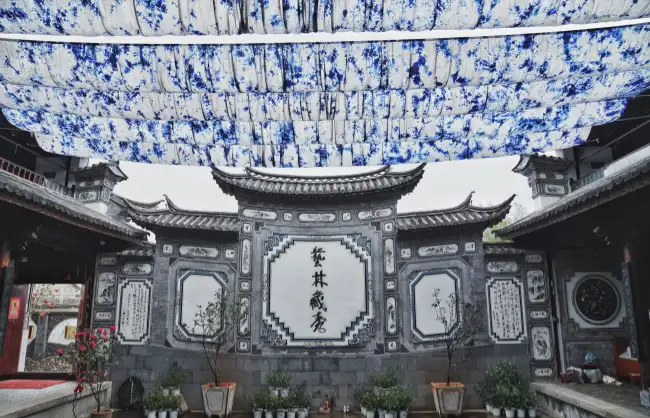
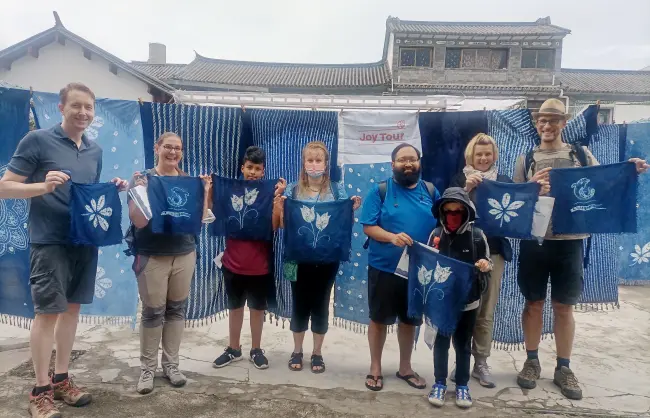
The premier destination to explore this history is the Pu Zhen Bai Tie-Dye Museum (璞真扎染博物馆). Transformed from a grand heritage Bai residence, the museum is free to enter. Upon stepping into the spacious courtyard, visitors are greeted by vibrant indigo blue and white fabrics hanging from tall wooden frames, drying gently in the breeze.
🧵 Step-by-Step DIY Tie-Dye Workshop Guide:
- Fabric Selection: Choose a raw white cotton, linen, or silk item (handkerchief, tote bag, scarf, or T-shirt).
- Pattern Threading & Knotting (扎缝): Guided by a local Bai master craftsman, fold the fabric and use needles and thread to tie tight, intricate knots. The tied sections resist the dye, creating white patterns such as butterflies, plum blossoms, water waves, or traditional Bai symbols.
- Natural Indigo Vat Immersion (浸染): Submerge the knotted fabric into giant earthenware vats filled with natural indigo liquor. The fabric emerges yellow-green and oxidizes in the air into deep indigo blue.
- Unbinding & Drying (拆线晾干): Snip the threads to reveal the crisp white patterns, rinse in water, and hang the fabric in the courtyard to dry. You get to keep your unique handmade souvenir!
- Workshop Duration: 1.5 to 2 hours for simple items (handkerchief or tote bag); 2.5 to 3.5 hours for complex custom garments.
- Workshop Fee: CNY 80 – 150 for small fabric items; CNY 150 – 300 for large scarves or clothing.
- Alternative Family Courtyards: In addition to Pu Zhen Museum, dozens of family-run courtyards along the main stone alleys offer quiet tie-dye instruction.
2. Wander Around to Explore Bai Courtyard Architecture
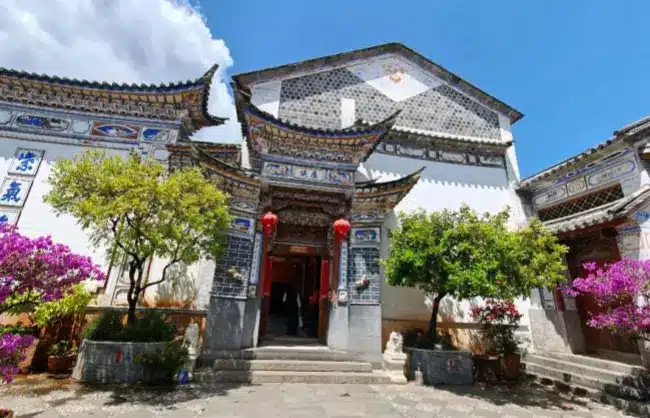
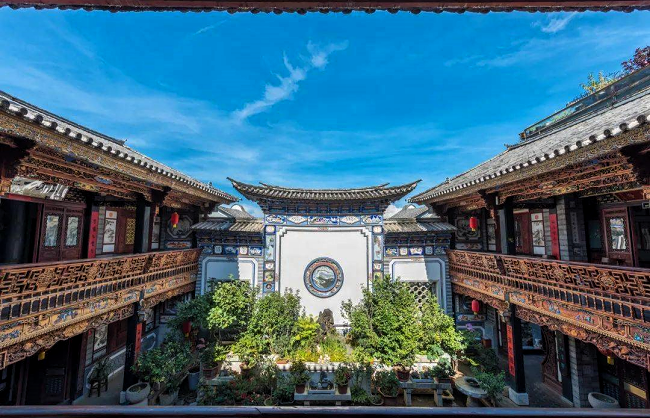
A famous local saying describes the tranquil setting of Zhoucheng: “Clear spring water flows before every doorway, and paved stone paths lead to every residence.” As you wander through the village lanes, you will observe well-preserved residential compounds constructed in the classic Bai architectural layout known as “Three Buildings and One Screen Wall” (三坊一照壁).
In this traditional layout, the main house faces east or south to capture maximum sunlight, flanked by two wing buildings where younger family members reside—reflecting traditional familial respect for elders. Opposite the main building sits the white-washed Screen Wall (照壁), engineered to catch late afternoon sunlight and bounce warm light back into the central courtyard while blocking mountain winds.
Look closely at the gate towers and eaves to admire delicate whitewash murals, carved marble lintels, and intricate wooden lattice doors depicting birds, flowers, and fortune symbols.
3. Experience Authentic Village Life at the Old Theater Stage Square
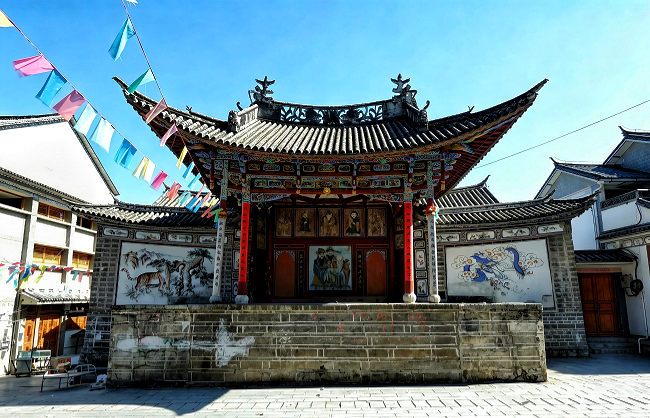
The social and spiritual heart of Zhoucheng is the Ancient Opera Stage Square (古戏台广场). Built in 1895 during the Qing Dynasty, the timber-framed opera stage features sweeping curved eaves and detailed woodcarvings. Shaded by two ancient, sprawling banyan trees, the square serves as a community gathering space for local Bai elders, children, and artisans.
In the late afternoon (from 15:00 to 18:00), local villagers set up an informal street market across the square, selling seasonal produce, wild mountain mushrooms, fresh fruits, handmade woven bamboo baskets, and local snacks. Visiting during these hours offers a glimpse into authentic rural life in Yunnan.
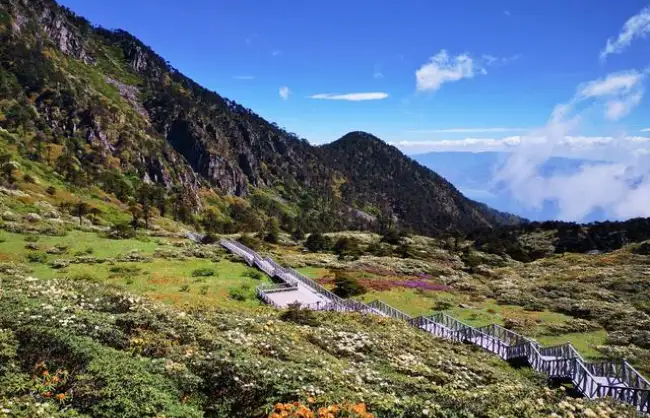
Immerse yourself in Dali Old Town, Cangshan Mountain cableways, Three Pagodas, Erhai Lake, and Zhoucheng tie-dye workshops.
Best Time to Visit Zhoucheng Village
Zhoucheng Village is enjoyable all year round thanks to Dali’s mild high-altitude climate (average annual temperature of 15°C / 59°F). The most scenic seasons are Spring (March – May) and Autumn (September – November):
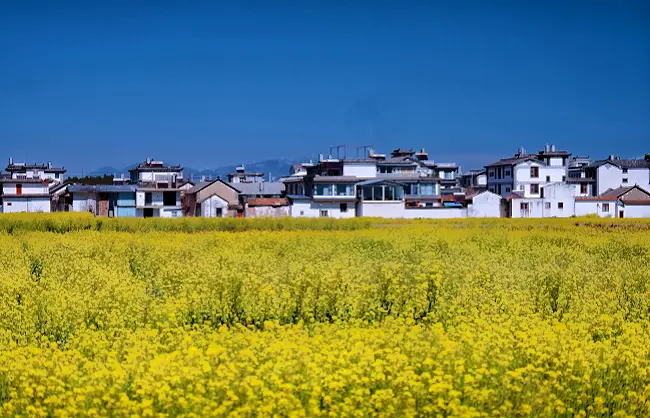
- Spring: Surrounding rapeseed flower fields bloom in bright yellow around the village borders, providing colorful backdrops for indigo tie-dye photographs.
- Autumn: Clear blue skies, comfortable temperatures (15°C – 22°C), and golden rice fields during the harvest season in nearby Xizhou.
- Best Daily Schedule: Visit between 09:00 and 11:00 for the softest light and fewest crowds. Complete your tie-dye workshop in the morning and explore the morning street market (especially vibrant on Tuesdays and Fridays) before the afternoon heat.
How to Plan a Dali Trip with Zhoucheng Village
Because Zhoucheng Village takes roughly 3 to 4 hours to explore and sits just 5 km north of Xizhou Ancient Town, the two destinations are ideally combined in a single day trip. Here is a recommended 3-day Dali itinerary:
🗺️ Recommended 3-Day Dali Classic Itinerary
Day 1: Arrival & Exploration of Dali Old Town
Arrive in Dali via high-speed train or flight. Check into a boutique courtyard inn in Dali Old Town, explore Foreigner’s Street, and walk the ancient city walls.
Day 2: Cangshan Mountain, Three Pagodas & Erhai Cruise
Take the Gantong Cableway up Cangshan Mountain. Visit the Three Pagodas of Chongsheng Temple in the afternoon, followed by a sunset boat cruise or e-bike ride along Erhai Lake.
Day 3: Xizhou Morning Market $rightarrow$ Zhoucheng Tie-Dye Workshop $rightarrow$ Butterfly Spring
Head north to Xizhou Ancient Town in the morning to explore the lively morning wet market and taste hot Xizhou Baba pancakes. Drive 10 minutes to Zhoucheng Village for a hands-on DIY tie-dye workshop at Pu Zhen Museum, wander the stone alleys, and visit nearby Butterfly Spring before departing.
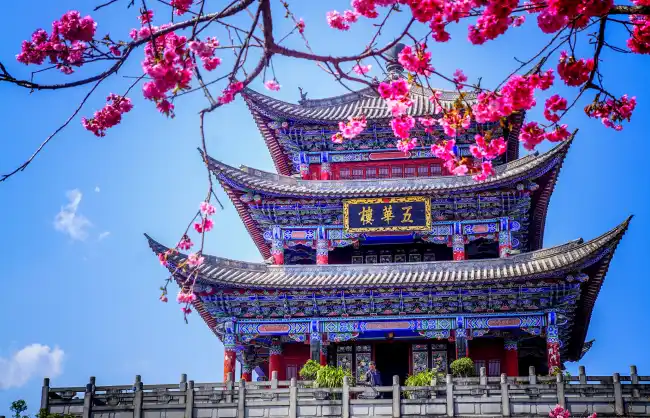
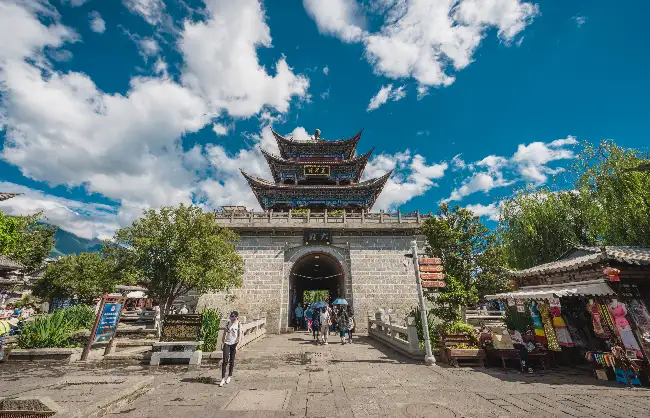
A complete 3-day tour package covering Dali Old Town, Erhai Lake, Three Pagodas, Xizhou, and Zhoucheng Village.
Practical Travel & Souvenir Shopping Tips
- How to Spot Authentic Natural Indigo Tie-Dye: When buying finished tie-dye souvenirs, check the cloth for subtle “ice-crack” veins (冰裂纹) and slight color gradations where the indigo bled naturally into the fibers. Authentic botanical dyes carry a subtle herbal/woody plant aroma (from Radix Isatidis root) rather than a harsh chemical scent.
- Workshop Attire: Wear dark or older clothing when participating in tie-dyeing, as liquid indigo dye can splash during the immersion process. Wear comfortable walking sneakers or closed-toe shoes for the cobblestone alleys.
- Booking Requirements: Reservations are generally not needed for individual tie-dye workshops. However, during peak summer holidays (July – August) and Golden Week, arriving before 11:00 or after 14:00 helps avoid tour groups.
- Language & Mobile Payments: Master artisans at Pu Zhen Museum speak basic English phrases and can guide you through visual demonstration. Translation apps work well. WeChat Pay and Alipay are accepted everywhere; keeping ~CNY 50 in small cash bills is helpful for street market stalls.
Dali Attractions Near Zhoucheng Village
- Butterfly Spring (蝴蝶泉): Located just 1 km (0.6 miles) north of Zhoucheng Village. A crystal-clear spring pool famed for thousands of blooming spring butterflies, shady ancient trees, and romantic Bai folk legends.
- Xizhou Ancient Town (喜洲古镇): Located 5 km (3.1 miles) south. Famous for preserved Bai commercial courtyards (Yan Family Mansion), morning produce markets, and vast seasonal rice paddies.
- Erhai Lake (洱海): Located 3 km (1.9 miles) east. Enjoy the 129 km (80.2 miles) car-free Ecological Corridor bike path, seaside cafes, and boat cruises.
- Three Pagodas of Chongsheng Temple (崇圣寺三塔): Located 22 km (13.7 miles) south. Dali’s iconic Tang-Style landmark with three ancient pagodas and a fully restored royal Buddhist temple complex.
- Cangshan Mountain (苍山): Located 32 km (19.9 miles) southwest. A 19-peak UNESCO Global Geopark with three cableways, flat Jade Belt hiking trail and panoramic lake views.
- Shuanglang Village (双廊古镇): Located 32 km (19.9 miles) northeast. A picturesque lakeside hamlet on Erhai’s east shore famous for sunset backdrops of Cangshan and stylish lake-view boutique homestays.
- Dali Ancient Town (大理古城): Located 23 km (14.3 miles) south. A historical walled city featuring vibrant pedestrian streets, craft shops, and ancient gates.
- Shaxi Ancient Town (沙溪古镇): Located 85 km (52.8 miles) north. A well-preserved living market town on the Ancient Tea Horse Road with Ming-Qing Bai buildings and the famous weekly Friday market.
- Shibao Mountain (石宝山): Approximately 95 km (59 miles) north near Shaxi. Nicknamed “Southwest Dunhuang”, it houses well-preserved Nanzhao-Dali Buddhist grottoes and annual Bai folk song festivals.
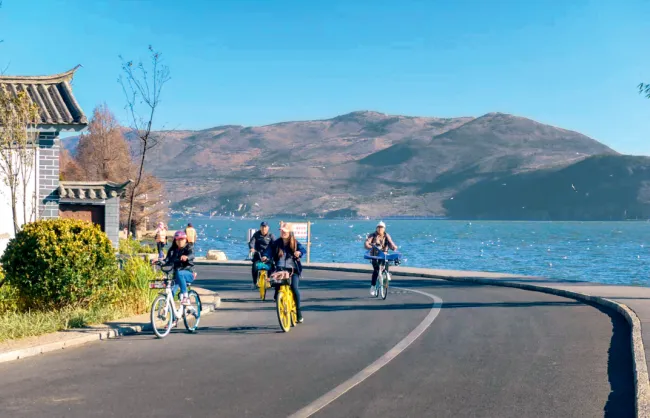
Plan a Dali Tour with Zhoucheng Village via China Xian Tour
Whether you want to try hands-on DIY tie-dyeing, photograph authentic Bai architecture, or buy genuine botanical indigo textiles directly from master artisans, traveling with China Xian Tour makes your journey seamless. We provide private air-conditioned vehicle transfers, expert English-speaking local guides, and pre-arranged workshop slots in Zhoucheng. Contact our travel specialists today to tailor a custom Yunnan itinerary!
Frequently Asked Questions about Zhoucheng Village
Xizhou vs Zhoucheng: Which one should I visit?
Because they are only 5 km apart (a 10-minute drive), we strongly recommend visiting both on the same day! Xizhou Ancient Town offers grand historical merchant mansions, scenic rice fields, and food markets. Zhoucheng Village offers a more authentic, residential atmosphere focused on hands-on tie-dye workshops and traditional village square life.
Is it necessary to hire a guide to explore Zhoucheng Village?
It is not strictly required because the village lanes and Pu Zhen Museum are easy to navigate independently. However, having a local private guide is highly beneficial for translating master artisan instructions during your tie-dye workshop and explaining the cultural symbolism behind Bai architecture.
What is the significance of “Three Buildings and One Screen Wall” in Bai architecture?
“Three Buildings” refers to a main house for elders flanked by two wing buildings for younger family members, symbolizing familial respect. The “Screen Wall” (照壁) sits opposite the main house to reflect sunlight back into the courtyard and block incoming winds, demonstrating the practical architectural wisdom of the Bai people.
Can travelers stay overnight in Zhoucheng Village?
Yes. There are several boutique guesthouses and comfortable homestays inside restored Bai courtyards in Zhoucheng. Staying overnight allows you to experience peaceful evening hours after day-trip travelers have departed.
What other traditional handicrafts are practiced in Zhoucheng?
In addition to botanical tie-dyeing, local Bai villagers practice traditional woodcarving, intricate Bai embroidery, bamboo weaving, and stone masonry.