
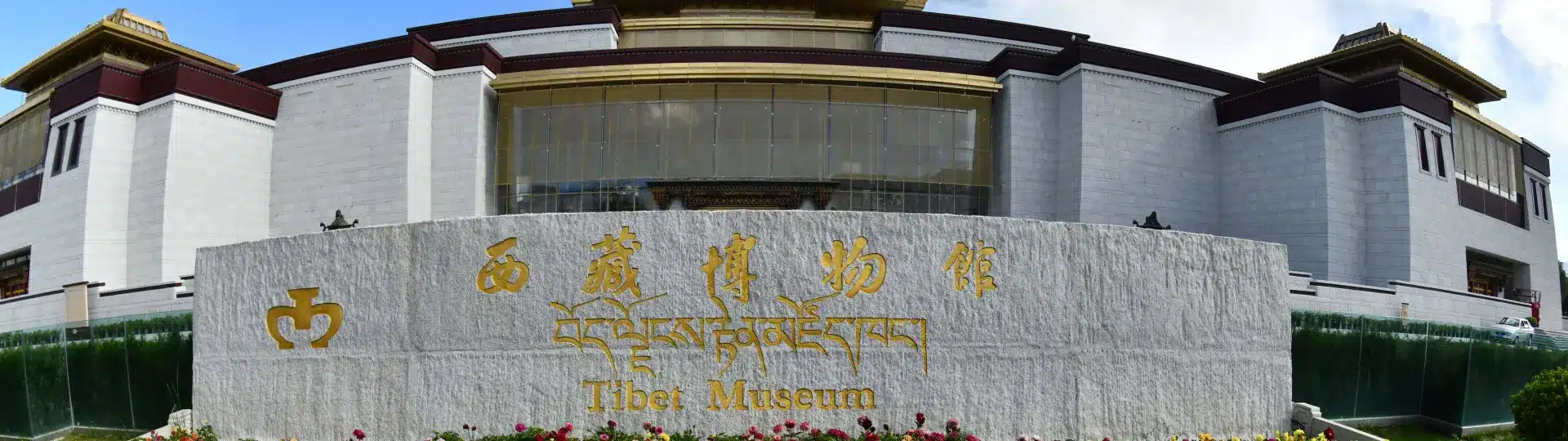
Tibet Museum, located on the opposite of east Norbulinka Palace in Lhasa, covering 53959m2 in total with gross area of 23508m2 and exhibition area of 10451m2. It is the first museum in Tibet bearing modern functions. Belonging to the the 62 Projects of Aid to Tibet for celebrating the 30th anniversary of Tibet Autonomous Region in 1994, Tibet Museum was completed and open in 1999 at 50th anniversary of establishment of the People’s Republic and 40th anniversary of Tibet Reform.
With such special meanings entitled, Tibet Museum not only collects the history and culture of Tibet but also represents its deep relationship with Central Chinese government and Han nationality. Don’t miss this incredible museum during your travel to Tibet.
Quick Facts about Tibet Museum
- Address:in the southeast corner of Norbulingka, Lhasa
- Valuable collections:Shell leaf sutra, birch bark written sutra, Dalai Lama seal, Thangka
- Open Time: 10:00-17:30 in summer; 10:00-16:30 in winter
- Admission Charges: Free
The Layout of Tibet Museum
The Tibet Museum is mainly consisted by exhibition area and stock area two parts. The exhibition hall holds three storeys which are functioning in the different way. The first storey is for common exhibiting halls and some souvenir shops; the second storey is the historical exhibiting area regarding four parts: prehistoric culture, undivided history, culture and arts as well as folk culture; the third storey is some special exhibition for Thangkas, flora and fauna and the things of jades, etc.
What to See in Tibet Museum
61,200 Pieces/Sets of Collections
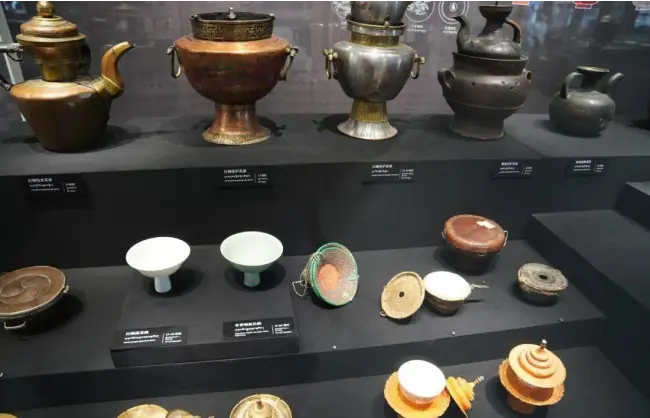
The collections of Tibet Museum is rich in both the quality and quantity, showing the splendid culture and long history of Tibet from religions, cultures, history and arts and folk traditional customs and so on. Visitors would feast their eyes at the all sorts of treasures, Buddhist images and statues, Tibetan classics written with mixtures material of gold or silver dust, golden seals to the Living Buddhas by Chinese government in ancient dynasties, Pot and bottle labelling paper of Jin Ping Che Qian (Drawing lots from the Gold Pot), colorful Thangkas, musical instruments and Buddhist ritual instruments and folk handcrafts, telling you the past and present Tibet.
Some stone daily tools on display, such as stone axes, stone arrowhead, bone needles and pottery, completely reflect these four stages before Tibet came into Age of Civilization, the Old Stone Age, the New Stone Age, the Bronze Age and the Iron Age.
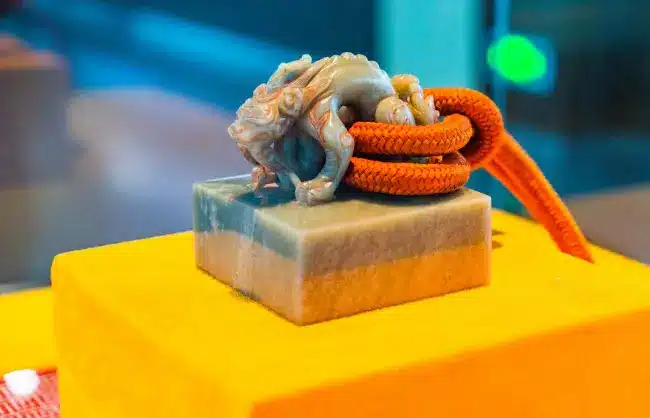
The gold seal of the 5th Dalai Lama is a collection that visitors should not miss when visiting Tibet Museum. It was given by the Emperor Shunzhi of Qing Dynasty to the 5th Dalai Lama when he came to Beijing for the support from the central government. The seal was made of 8.5kg fine gold with lettering in Chinese, Tibetan, Manchu and Mongolian words. From then on, the Dalai Lama of generations identified by the central government.
Besides, there is a Thangka in Tibet Museum about Tibetan geographical condition with a picture of “witch” said to be painted by Princess Wencheng. The witch is lying with her face upwards, and the point of all her joints and heart has been built with some monasteries and especially the Jokhang Monastery is right on her heart.
You may also be interested in:
The Distinguished Halls
The hall of undivided history by some rare historical materials directly reveals that Tibet has been an important integral part of China territory since the ancient time. The halls of culture and art as well as halls of folk culture shed a light vividly to the Tibetan history and culture of great splendor by the fine Buddha images, Thangkas, pottery and Buddhist classics and so on.
Tibet Museum Travel Tips:
- There are guide device in Tibetan, Chinese, Japanese and English for travelers which are available to rent at the entrance.
- There are professional and vivid introduction about the treasure in each exhibiting halls here with different language for visitors to learn about Tibet.
- Tibet Museum is closed on each Monday.
- It is not allowed to take water into the Tibet Museum, travelers could drink it out or just leave it at the entrance.
- Photos are prohibited in the Tibet Museumfor the protections to these historical objects.
- It needs your ID Card or passport when you rent a guiding device.


