


Written by Veronica |
The Mid-Autumn Festival, also known as the Moon Festival or Zhong Qiu Jie (中秋节), is one of the most important traditional festivals in China. It falls on 15th day of the 8th lunar month every year. And during this special day, people will sit together and celebrate the full moon, family reunion, and wish everything good in the rest of the year. In this guide, we’ll explore the most cherished Mid-Autumn Festival traditions and activities, as well as unique regional customs across China and Asia. My you’re now wondering how to celebrate Mid-Autumn Festival or looking for ideas for Mid-Autumn Festival activities to do with your family, stop here for minutes, this comprehensive overview has you covered.
Content Preview
- Core Mid-Autumn Festival Traditions and Customs
- Chinese Mid-Autumn Festival Activities for All Ages
- Regional Traditions and Activities Across China
- Celebrate the Mid-Autumn Festival in China with Us
Core Mid-Autumn Festival Traditions and Customs
1. Mooncake Gifting and Eating Mooncakes – The Most Central Tradition
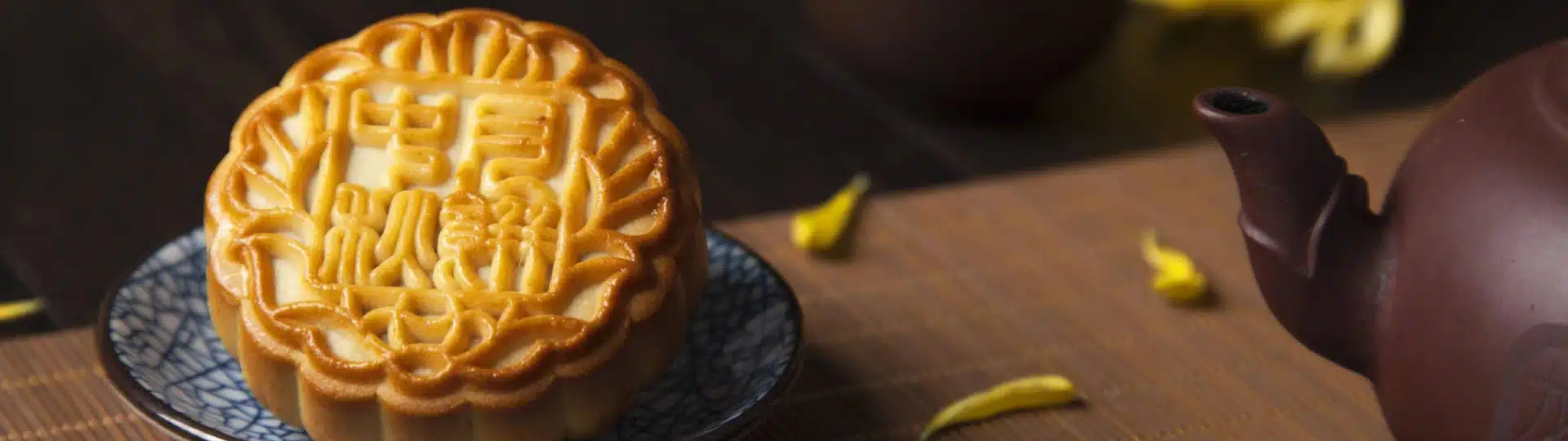
One of the most iconic Mid-Autumn Festival traditions is eating mooncakes. These round and tasty pastries have long carried the meaning of unity and completeness, making them a must-have for family reunions on such an important and special day.
Traditionally, they are all filled with lotus seed paste, red bean, or salted egg yolk, however, modern variations have infused the cakes with more creation and vibration. You can now find ice cream mooncakes, durian mooncakes, and even vegan options in different stores.
Gifting mooncakes to relatives, friends, and business partners is also a significant custom. This tradition has roots in ancient times and has evolved into a modern symbol of togetherness and cultural heritage. It is undoubtedly the most traditional Mid-Autumn Festival food.

2. Moon Gazing under the Autumn Sky
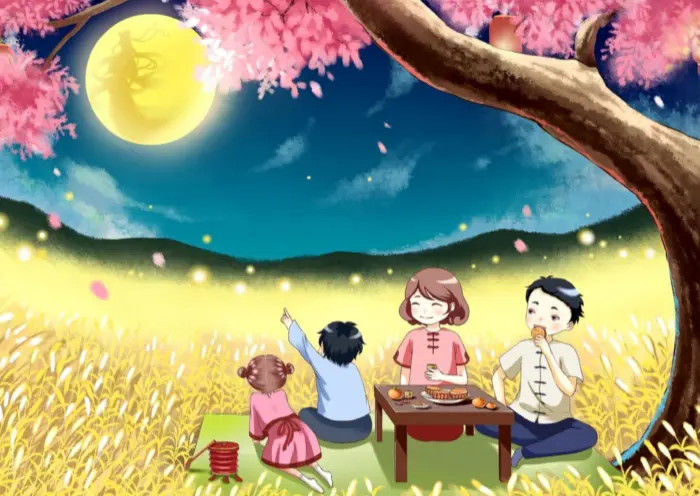
Moon gazing is recognized as one of the most poetic Mid-Autumn Festival traditions. In Chinese culture, the full moon represents family completeness. Families would gather on rooftops, balconies, or by the lake to admire the moon while sharing mooncakes and tea and talk to each other.
For better views, people in cities like Xi’an would head to scenic spots such as the Big Wild Goose Pagoda or Tang Paradise and in Beijing, people would go to popular moon-viewing spots include Beihai Park and the Summer Palace. Moon gazing is, indeed, a deeply spiritual part of the festival.
3. Reuniting with Family and Enjoying a Reunion Dinner
The concept of “family union” is the heart of the Mid-Autumn Festival celebration. Much like Chinese New Year’s Eve, family members will try their best to come together and share a sumptuous meal known as the “reunion dinner.” Traditional foods for Mid-Autumn Festival include mooncakes, taro, pumpkin, and sometimes seasonal crab.
The meal is often enjoyed outdoors or where the moon is visible. Sharing food under the full moon adds a sense of unity and completeness to the day. The gathering is a good time for bonding, storytelling, and passing on festival customs to younger generations.
4. Worshiping the Moon and Offering Sacrifices
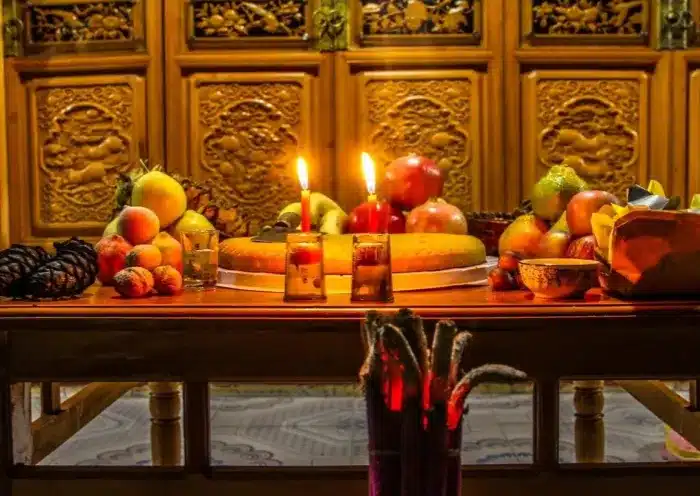
One custom with the most cultural heritage in the Mid-Autumn Festival traditions is moon worship. Historically, people set up altars under the open sky, placing offerings such as fruits, incense, and mooncakes to thank the moon goddess for the harvest and family blessings. In some regions, some girls would also pray for beauty and love. The tradition is rooted in ancient agrarian societies where the move of celestial bodies were closely tied to agricultural success. As a result, the act of gratitude and devotion remains an essential aspect of the moon festival customs.
5. Lighting Lanterns to Brighten the Moon Night
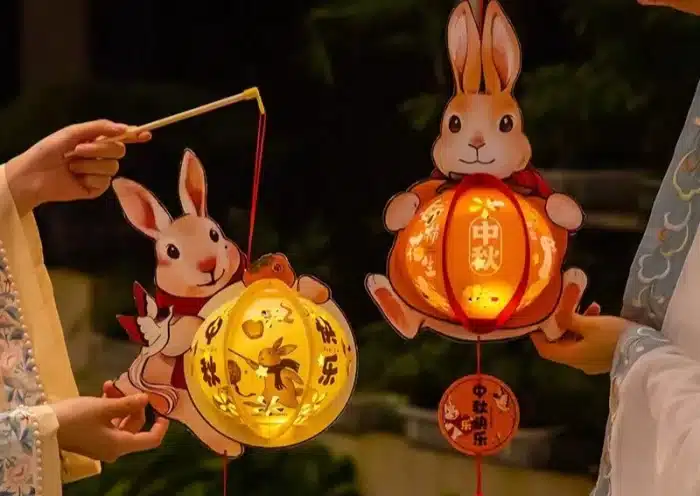
Lighting lanterns is absolutely a visually enchanting custom. Families (especially kids) would hang colorful lanterns on balconies, in courtyards, or even carry them in nighttime walks. Lanterns come in various shapes, such as rabbits, lotuses, or dragons.
Some people form characters or patterns with small lanterns on rooftops, this is a practice called “Shu Zhong Qiu” (竖中秋). Wealthier households once hung multi-story lanterns, while common families made simple ones. The glow of lanterns not only enhances the moonlight but also symbolizes hope, joy, and family unity.
6. Sending Mid-Autumn Festival Greetings and Wishes
Sharing wishes and greetings during traditional festivals (including Mid-Autumn Festival) is a custom that deeply rooted in Chinese culture. Common greetings like “Happy Mid-Autumn Festival!” (中秋快乐) or “All the best wishes to you and your family” (阖家团圆) can often heard on this specific day. In modern times, people send digital cards, WeChat messages, or post greetings on social media. Like always, sending warm wishes reflects the spirit of connection, even if families are miles apart. Whether formal or casual, these greetings are part of the intangible customs that define the holiday.
7. Telling Stories about Chang’e & Jade Rabbit: The Myths Behind the Moon
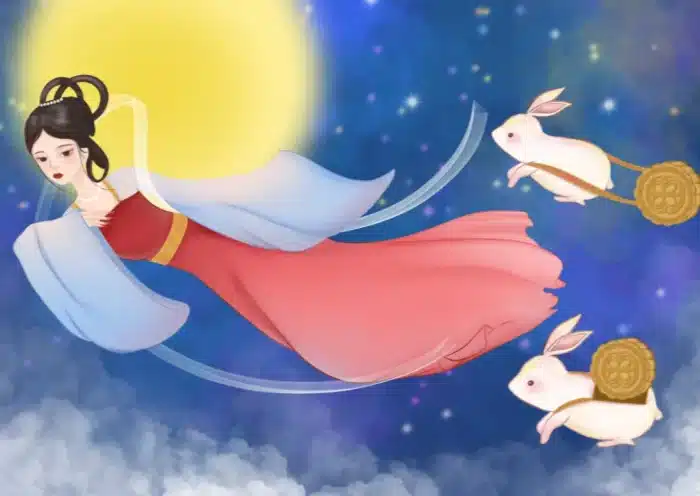
Mid-Autumn Festival is also inseparably tied with a lot of stories, such as Chang’e flying to the moon and the Jade Rabbit pounding elixirs. These Mid-autumn Festival legends and stories are retold again and again during the holiday, and they have inspired many lantern designs, performances, and storytelling sessions for kids. Though mythical, these stories do highlight cultural values such as sacrifice, devotion, and resilience.
Chinese Mid-Autumn Festival Activities for All Ages
1. Guessing Lantern Riddles
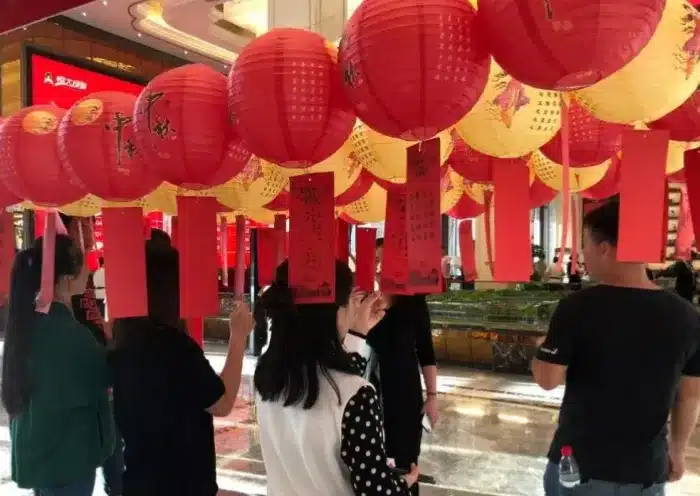
Guessing lantern riddles (猜灯谜) is a fun and intellectual-related activity that widely enjoyed by Chinese people during events like lantern displays. Riddles are often written on slips of paper and stuck on lanterns. Participants read the short questions within few minutes and then guess the answer, and the questions would involve wordplay, historical facts, or Chinese idioms. It brings much joy and interaction to Mid-Autumn evenings.
2. Lantern Fairs and Nighttime Parades
Lantern fairs are among the most exciting Mid-Autumn Festival activities. Parks and public squares will host parades with elaborate lantern floats, music, and dance. In cities like Guangzhou and Suzhou, where lantern fairs are held in a large scale, such activity can even draw thousands of visitors. Lanterns will be shaped like dragons, phoenixes, and mythical figures, vibrantly painting the night with magical colors.
3. Folk Performances and Cultural Shows
During the festival period, many local communities will host folk performances to provide people with a even lively mid-autumn memory. There are plenty types of shows, such as dragon dances, opera, traditional music concerts and more. All the events are designed to elaborate Chinese culture in different forms and they are often held in historical sites, parks, or temples. Indeed, the performances not only offer an immersive cultural experience for tourists and locals, but also link the past with the present through storytelling and art.
4. Making DIY Mooncakes with Family
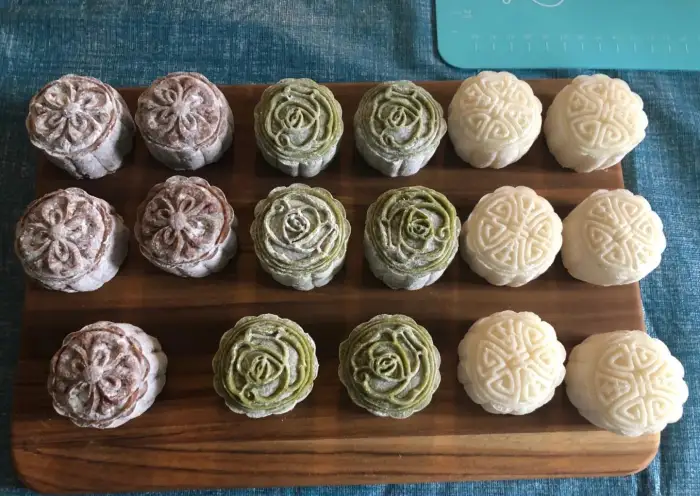
Preparing self-made mooncakes has become a trendy and cherished family activity in recent years, particularly popular among parents and young children. The making process is simple, which involves kneading dough, choosing fillings, and pressing mooncakes into molds (courses can be found online). It is such a tasty, interesting and educational activity that not only builds stronger connections between families, but also helps kids learn about the festival’s cultural and historical significance.
5. Enjoying Osmanthus Flowers and Osmanthus Wine
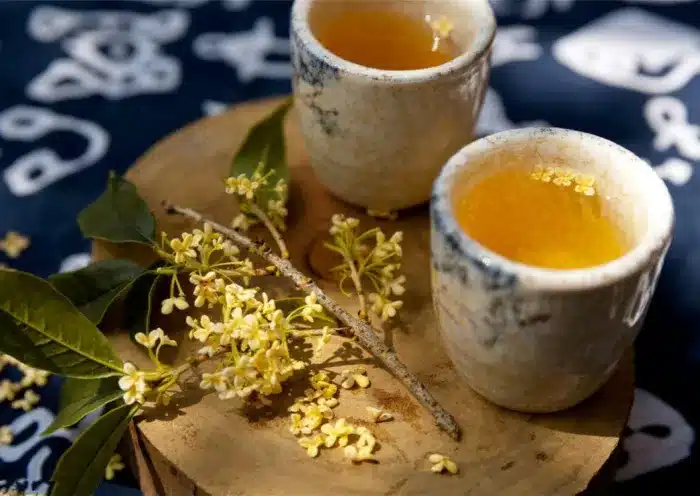
In many areas of China, the blooming period of osmanthus flowers would coincide with the arrival of Mid-Autumn Festival. Many families would go out and gather to admire these fragrant blossoms while enjoy seasonal delicacies like osmanthus cake and osmanthus wine. This elegant activity reflects the harmony between people and nature, and also adds sensory delight to the holiday.
6. Eating Seasonal Crab
Hairy crabs are a sought-after delicacy in the Mid-Autumn season. As a rather luxurious traditional Mid-Autumn Festival food, they are best enjoyed steamed with ginger and vinegar. Eating crab has become a modern addition to the holiday feast, especially in cities like Shanghai and Suzhou. It reflects autumn’s harvest bounty.
7. Dressing in Hanfu and Taking Moonlit Photos
Nowadays, more and more new trends during the festival have existed, and one of most popular is definitely wearing Hanfu (traditional Chinese clothing) for photos under the moon. People would dress in Tang or Han dynasty-style outfits and save the moments of posing near lakes, temples, or gardens in their cameras. It’s both a fashion and cultural revival, with young people starting to embrace ancient customs through modern expression.
8. Watching the Tides in Coastal Cities
In coastal regions like Zhejiang, watching the Qiantang River tidal bore is a time-honored activity. While the powerful wave rushes inland like a silver dragon, thousands of people would be attracted and gather to witness the spectacle. It’s a reminder of nature’s grandeur and also adds a dramatic twist to the festival.
9. Sharing Mid-Autumn Stories with Kids
Basically all the families will take time to share stories of Chang’e and the Jade Rabbit with children. These bedtime tales can teach them great morals and explain the origins of Mid-Autumn Festival. Many schools also incorporate storytime or themed performances in their curriculum.
Recommended Family Tour Packages:
- 13 Days China Educational Family Tour
- 10 Days China Family Tour with Kids
- 4 Days Huangshan Family Tour
- 5 Days Guilin Family Tour
10. Releasing Sky Lanterns with Wishes
Releasing sky lanterns is a beautiful Mid-Autumn tradition in some regions. People write wishes on the lanterns and release them into the night sky. Watching hundreds of glowing lights rise toward the full moon creates a dreamlike scene. It’s especially popular in Taiwan and parts of Southeast Asia. Safety precautions are a must to prevent fires.
Related reading: When is Mid-autumn Festival: Mid-autumn Festival Dates, Calendar & Celebrations
Regional Traditions and Activities Across China
1. Beijing: Playing with the Clay Figurine “Tu’er Ye”
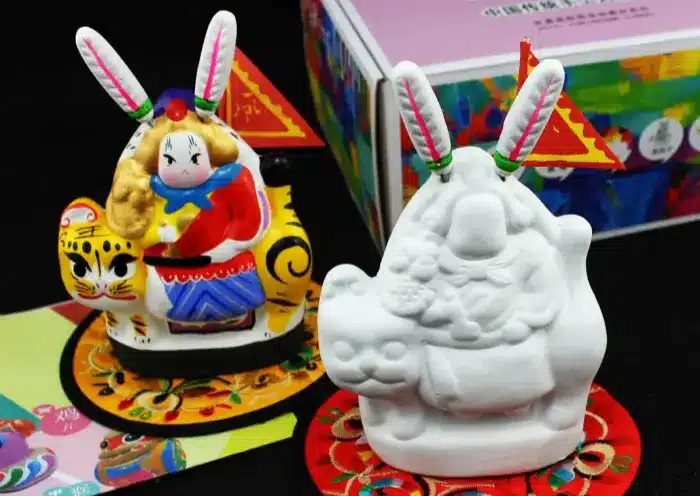
One unique Mid-Autumn Festival tradition kept in Beijing is making or buying clay figurines of “Tu’er Ye”. Inspired by the Jade Rabbit legend, it is in the shape of a rabbit deity with human body, and it was originally used in moon worship rituals. Most figures are carefully handcrafted and painted in vibrant colors, and they are now becoming more and more exquisite with the help of modern techniques. It’s a symbolic toy and collectible during the Mid-Autumn Festival, especially for children.
2. Hong Kong: Fire Dragon Dance
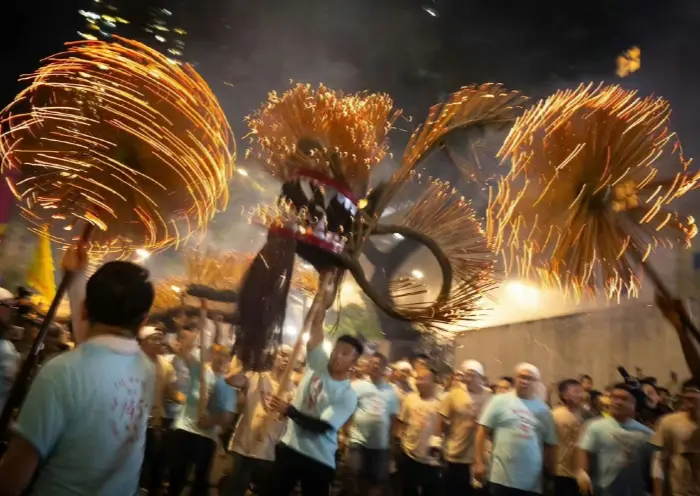
In Hong Kong, the Tai Hang Fire Dragon Dance is a spectacular Mid-Autumn Festival activity that spans three nights. In this event, a massive straw dragon will be studded with burning incense and paraded through the streets of Tai Hang to ward off evil and bring blessings. Apart from that, this event also includes drumming, lion dances, and a festive atmosphere. It is one of the most dramatic and culturally rich Mid-Autumn Festival traditions in the region.
3. Fujian & Jiangxi: Tower Burning (Shao Ta)
In parts of Fujian and Jiangxi, you can also see a special celebration. Locals will build hollow towers from brick or stone and fill them with firewood and straw days before the festival. On Mid-Autumn night, people light all towers on fire and sprinkle salt into the flames to create crackling sounds. This ancient Mid-Autumn Festival custom symbolizes prosperity and is believed to drive away evil spirits. The sight of a roaring tower flame under the full moon is truly impressive.
4. Jiangnan Region: Walking Under the Moon (Zou Yue)
“Zou Yue” (走月) or moonlit strolling is a traditional custom in the Jiangnan region. On Mid-Autumn night, women will dress in elegant attire and walk outdoors with friends, enjoying the wonderful moments while chatting, or even boating under the moon light. This practice dates back to the Han Dynasty and reached popularity during the Tang and Song dynasties. It is one of the most graceful way to embrace the festival’s romantic and poetic spirit.
5. Xi’an: Tang-style Moon Worship Performances
In Xi’an, historical parks like the Tang Paradise will recreate a range of ancient rituals and performances which are passed down from the Tang Dynasty. These events include traditional moon worship ceremonies, costume displays, and musical acts that transport visitors back in time. Such activities are a beautiful fusion of cultural heritage and modern entertainment, and they are designed to offer tourists a deeper understanding of Chinese Mid-Autumn Festival traditions.
6. Other Asian Countries
- Vietnam: Children parade with carp-shaped lanterns, which is an activity symbolize transformation and good fortune.
- Japan: The festival has been renamed as “Jugoya.” During this time, people eat rice dumplings and admire pampas grass as symbols of longevity and good harvest.
- Singapore: To celebrate, Chinatown will host colorful lantern displays and light shows that combine traditional art with modern lighting.
Celebrate the Mid-Autumn Festival in China with Us
No matter you’re a first-time visitor or a returning traveler, celebrating the Mid-Autumn Festival in China will surely offer you unforgettable memories. Here are some of the best destinations for you to experience the festive vibe:
- Hangzhou’s West Lake: Here you can admire the moon at the famous “Three Pools Mirroring the Moon.”
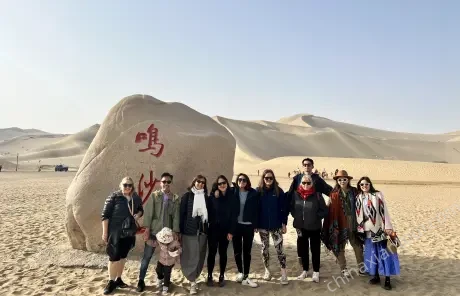
- Dunhuang’s Singing Sand Dunes: This place provides a chance to enjoy moon gazing in a mystical desert landscape.
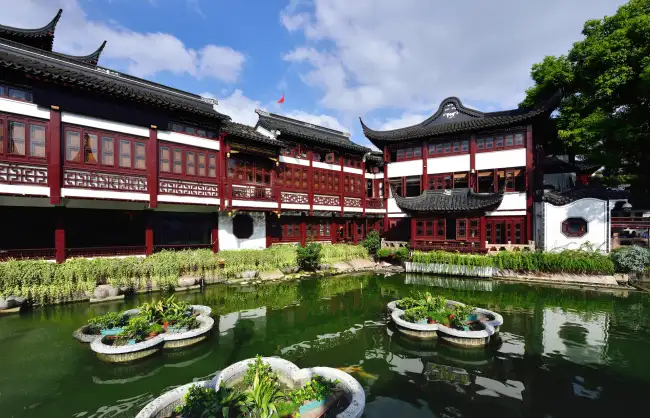
- Suzhou: It’s time to visit classical gardens which are illuminated for the festival with traditional performances.
- Beijing, Guilin, and Hong Kong: Perfect to join locals in lantern fairs, food markets, and public celebrations.
Book one of our China tour packages to explore authentic Mid-Autumn Festival customs and traditions. With our experts’ help, tailor your journey, you can fully immerse yourself in local Chinese culture without any rush, and experience the flavors of Chinese food during this special season. Contact us now to start your Mid-Autumn cultural exploration.