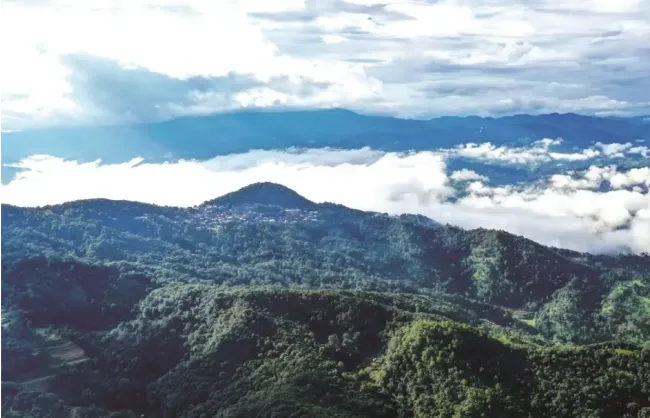


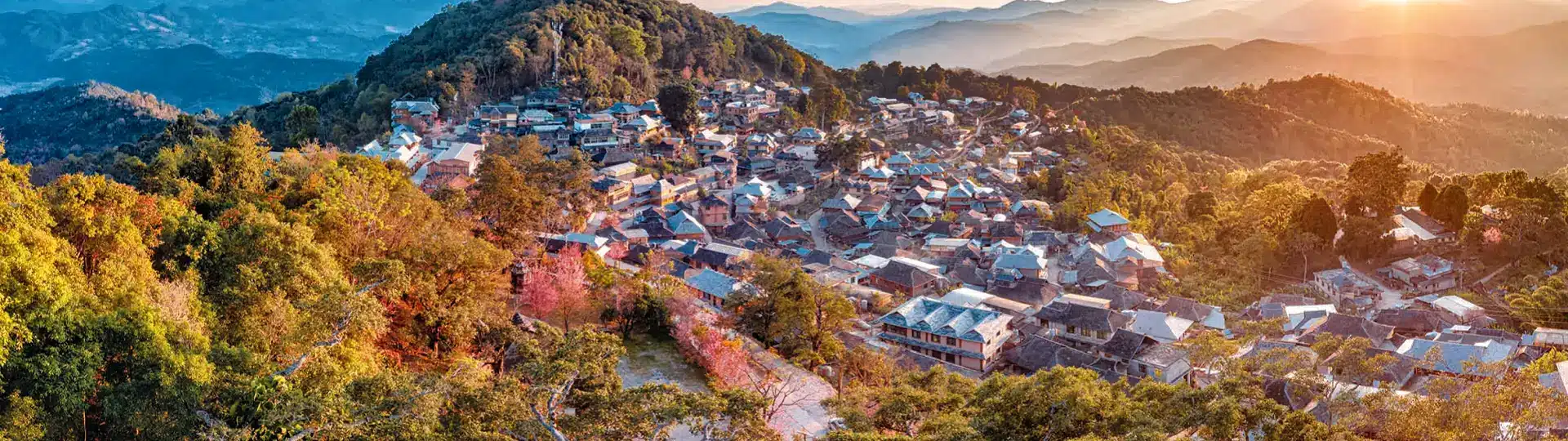
In the far hidden corner of Pu’er, Yunnan, there’s still a place that has not been touched by commercialized tourism. And that is Jingmai Mountain, a place known for a mysterious and natural vibe, ethnic culture and stories of tea.
Even though you may have never heard of it, this small landscape is actually a World Heritage Site that specifically dedicated to its tea culture. If you’re interested in natural and cultural heritage, or looking forward to an off-beaten experience, Jingmai is a perfect destination for you.
Keep reading, this article will lead you to discover Jingmai’s unparalleled tea culture and ethnic villages, while giving you all the information needed for a smooth Jingmai Tour.
Fast Facts
- Location: Huimin Town, Lancang Lahu County, Pu ‘er City.
- Chinese name: 景迈山
- Altitude: ~1200-1700m
- Recommended Visiting Time: 2-3 days
- Highlights: Tea Culture. Ethnic Villages. Untouched Natural Scenery.
Content Preview
- What Makes Jingmai Mountain a Living Heritage of Tea Culture?
- Is Jingmai Mountain Worth Visiting?
- What to Do in Jingmai Mountain
- How to Get to Jingmai Mountain
- Where to Stay in Jingmai Mountain
- How to Plan Your Jingmai Visit
- Travel Tips for Jingmai Mountain
- FAQ about Jingmai Travel
- Having a Relaxing Jingmai Journey with China Xian Tour
What Makes Jingmai Mountain a Living Heritage of Tea Culture?
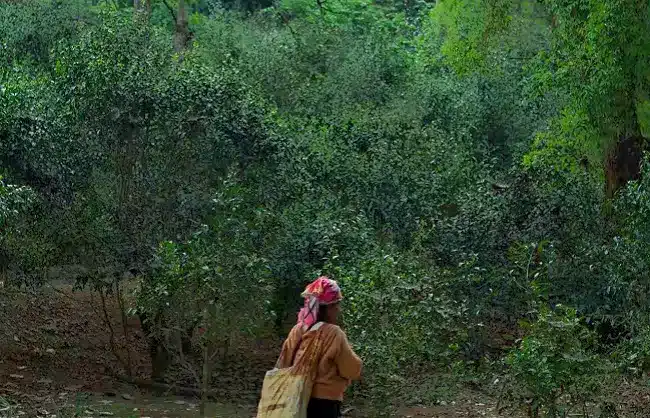
In Jingmai, there are many wild or semi-wild tea trees growing in ancient tea forests rather than layered fields cultivated by man. These trees have been guarding this land for hundreds, thousands, or even millions of years. As a result, Jingmai’s tea culture is something more authentic and primitive, which you cannot find elsewhere.
Besides, this place is also home to local Blang and Dai communities. They’ve lived with the tea trees for a long passage of time. In their culture, nature is a living and sacred existence that protects them, so they stress the importance of protecting it in both tea forest managements and village life through generations.
That’s one of the major reasons for Jingmai’s tea landscape to survive as a true “living heritage” till today. On this land, people and nature always remain closely connected.
Is Jingmai Mountain Worth Visiting?
Why it’s worth visiting
- One of the last truly untouched tea landscapes. Jingmai is highly valued for its authentic vibe. You won’t see any “theme park” ancient town.
- A real, living tea culture. The profound tea history and culture are practiced in people’s everyday life.
- Authentic minority villages. If you want to explore Yunnan’s ethnic culture, this is also an ideal place to study the local Blang and Dai communities.
Why it may not be for you
- Remote and time-consuming to reach. The mountain is at a rather remote location. So there’s no direct connection from other cities.
- Limited infrastructure. Expect fewer high-standard hotels. Guesthouses and homestays are the mainstream.
- Not for quick sightseeing. Jingmai Mountain is a place to experience a slow, subtle, and not “Instagram-heavy” trip.
- Minimal nightlife or entertainment. The focus is on nature and culture, so there won’t be too many activities or nightlife.
What to Do in Jingmai Mountain
Explore the Ancient Tea Forests
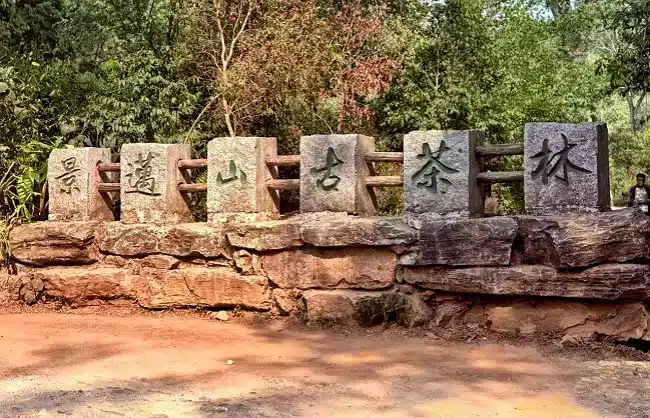
The heart of Jingmai lies in its ancient tea forests, and the core area to explore is Dapingzhang (大平掌). This is also the only ancient tea forest open to the public, and its name 大平掌 refers to “large and flat palm”, stressing it is also the largest ancient tea forest in Jingmai Mountain.
Tea trees here have been cultivated for over a thousand years, all growing tall and naturally within a forest ecosystem at an altitude of 1,500 meters. Such a landscape is often described as a “living tea museum.” Hiking through the shaded paths (2-3km/1-hour), you’ll feel like going back thousands of years to the point when Pu’er tea originates.
Don’t miss the “Sacred Tea Tree” living in this forest, which is over 1800 years old.
Wander Through Traditional Villages
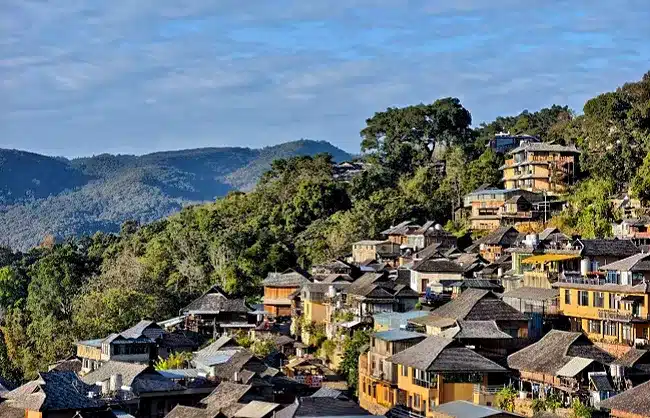
Jingmai Mountain is not only about walking through nature, but it is also rewarding to explore its distinct villages of local ethnic groups, each with its own atmosphere and cultural identity.
The villages are scattered in the mountain but generally they are not too far away from each other. The most convenient way to travel around is taking village cars and buses (not always punctual). More detailed information will be given in the section.
Nuogan Village (糯干)
- Time needed: depends on your walking pace, usually 3-4 hours.
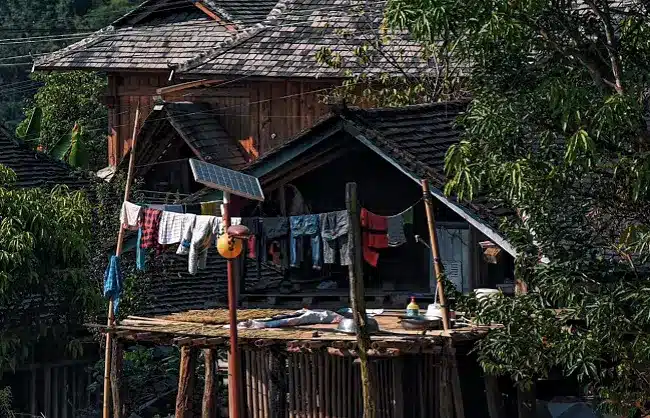
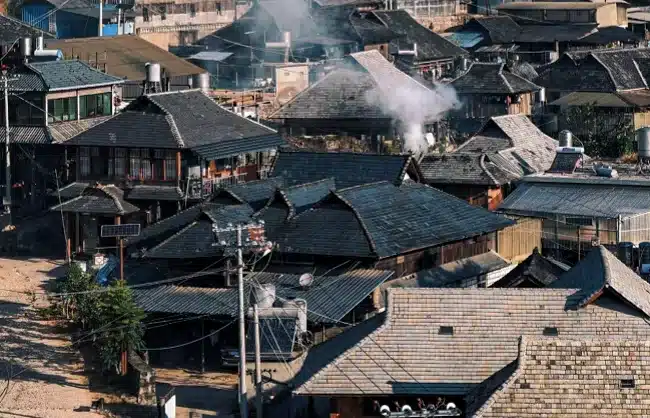
Nuogan Village is often considered the most authentic Dai village in the area. There are not too many modern constructions, but mostly traditional wooden stilt houses and a quiet, untouched rhythm of life.
You can walk through its narrow paths, see how locals sort tea leaves or sit outside their homes chatting and relaxing. Sometimes they’ll invite you to join them for tea or even a meal. It seems like the village has the magic power to easily narrow the distance between people, no matter where you from.
Wengji Village (翁基)
- Time needed: 2-3 hours.
Wengji Village represents the heritage of the Blang people, and it has a history of over a thousand years. Compared to Nuogan, Wengji is attached with a more modern atmosphere, by which I mean, you can find more cafes, restaurants, and shops selling traditional crafts.
Blang people are one of the earliest tea-growing communities in the region. Their wooden houses stretch along the contours of the land, showing their pursuit of harmony between human and nature.
Mangjing Village (芒景)
- Time needed: usually 2-3 hours or take it as your base to stay overnight.
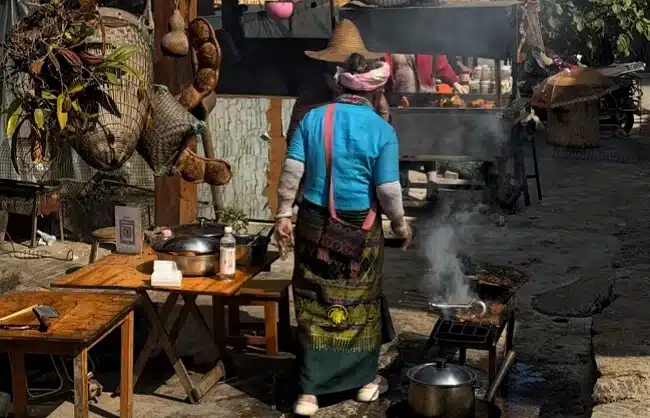
Mangjing village is home to some of Jingmai’s most iconic natural landmarks: Princess Banyan (Gongzhu Banyan, Queen Bee Tree (Fengwang tree), and Aileng Mountain. The area is ideal for slow walks, where nature and tea culture blend seamlessly. Also, don’t miss its incredible cloud-sea views and various ancient trees.
Manghong Village (芒洪)
- Time needed: usually 3-4 hours or take it as your base to stay overnight.
Manghong is the largest among all. It sits at a higher elevation and many visitors comment that it is the least commercialized village. There are guesthouses and open viewpoints, you can take a slow and relaxing exploration here. Iconic landmarks include Octagonal Pagoda, the Tea Ancestor Tree, and the Tea Ancestor Temple. Manghong and Mangjing (introduced above) are valued as the most suitable places for enjoying the sea of clouds views.
Jingmai Village (景迈大寨)
- Time needed: usually 2-3 hours or take it as your base to stay overnight.
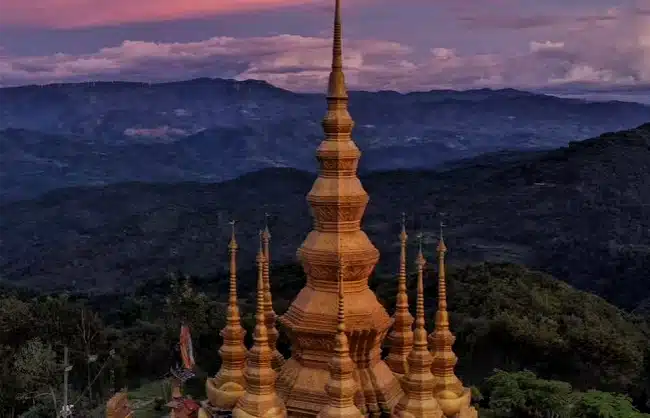
Jingmai is one of the main Dai villages and cultural hubs of the mountain, likely the first village you’ll see when you enter Jingmai Mountain. It features traditional Dai residential layouts centered on the Golden Pagoda Temple.
There’s also a large viewing area near the temple, from here, you can overlook vast stretches of the ancient tea forest. On clear days, you’ll also get to catch a sea of clouds rolling across the valley.
Jingmai Village acts as an important cultural and scenic node connecting other villages across Jingmai Mountain. Dapingzhang Ancient Tree Forest is also located here. If you happen to visit during the Kaimen Festival (around mid-September of the lunar calendar), you can go to see celebrations in the temple.
Slow Down with Tea Experiences
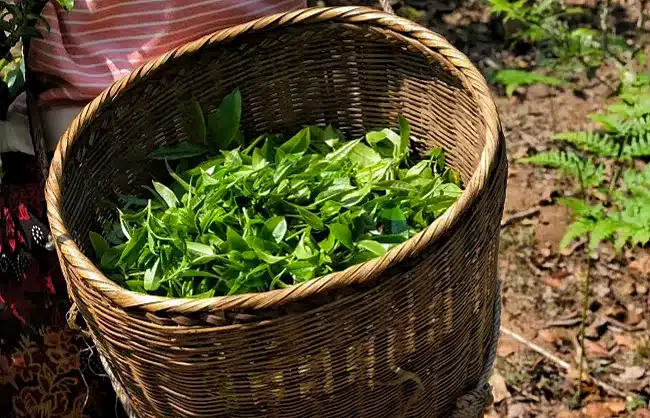
Tea culture is at the heart of Jingmai travel, and it has long been an immersive but subtle part of local life. In spring, you can see or join locals picking fresh tea leaves, while in other seasons, there will be chances to observe traditional process of treating teas, such as pan-firing and sun-drying.
Hands-on experience always makes your journey more memorable. If you want to have a try, ask the owner of the guesthouse you live in or the local tea shops whether they provide such services.
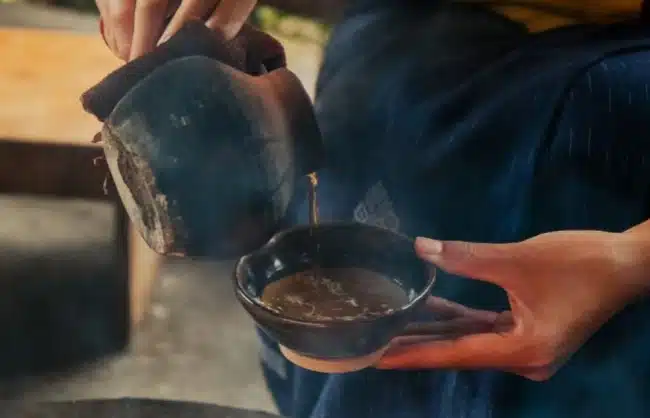
Another thing that you may often encounter is the “tea invitation” offered by local people. Most of them are super hospitable, they like to invite visitors to share tea with them and maybe even have a little chat. This is one of the most relaxing and authentic ways to study how tea and local culture get intertwined.
Watch the Sea of Clouds and Sunset Views
Jingmai is known for its frequent sea of clouds, especially in cooler seasons. Go to Manghong Village or around Jingmai Dazhai in the early mornings to catch the best views of clouds drifting between the hills.
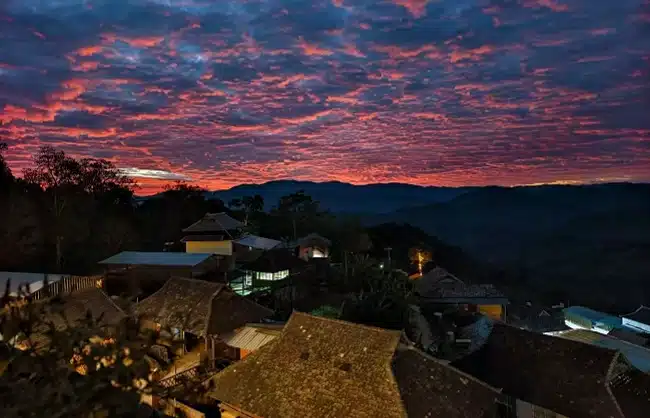
Sunset views are equally impressive, there will be soft light falling over tea-covered slopes and villages. You can sit in a cafe or tea shop to wait for the dream-like moment.
Best Viweing Spots:
- Sea of clouds+Sun rise: The Golden Pagoda in Jingmai Village.
- Sea of Clouds: Bean Great Cafe (北归咖仓) in Jingmai Village or Octagonal Pagoda in Manghong Village.
- Sunset: Manghong observation deck in Manghong Village.


Enjoy Local Food
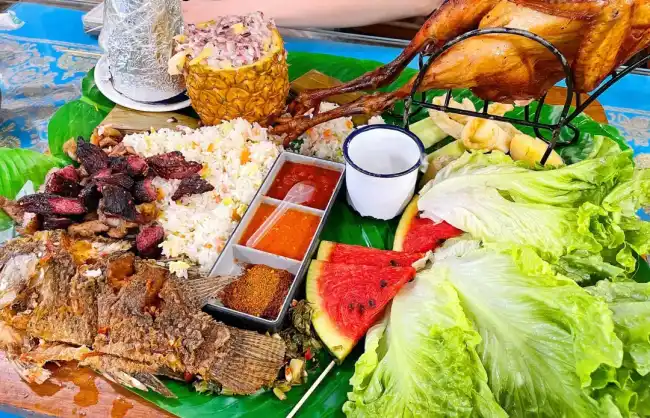
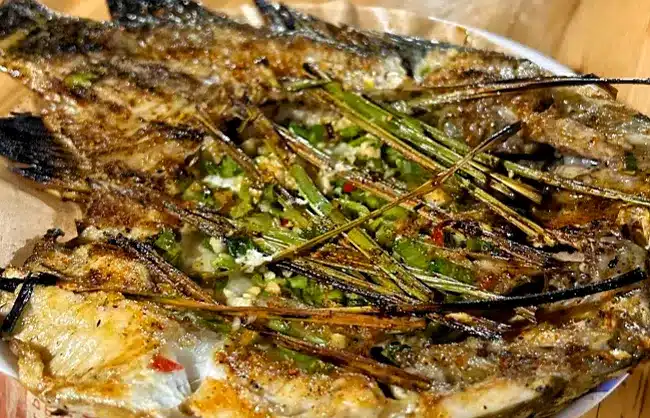
Jingmai has food that reflects its ethnic diversity. Iconic options include grilled chicken, sticky rice, peppermint pork ribs, fried beef with local spices and tea-infused dishes. They all have unique Dai and Blang flavors. Try hunting for the best tastes in small local restaurants or homestays.
You can find great restaurants in all villages, some of the best reviewed include: Wengji No.55 (翁基55号), Qiuyin Restaurant (秋胤饭店) in Manghong, Menghai Dai-Style BBQ (勐海傣味烧烤) in Nuogan.


How to Get to Jingmai Mountain
The closest gateways to Jingmai Mountain are Pu’er and Xishuangbanna. Pu’er is slightly closer, with a travel time of around 3–3.5 hours to Jingmai. If traveling from Xishuangbanna, it takes about 4 hours by road. Both cities have airports with frequent domestic connections, so most visitors take them as the main entry points.
Transfer to Jingmai Mountain
- Golden Peacock Bus from both Pu’er and Xishuangbanna
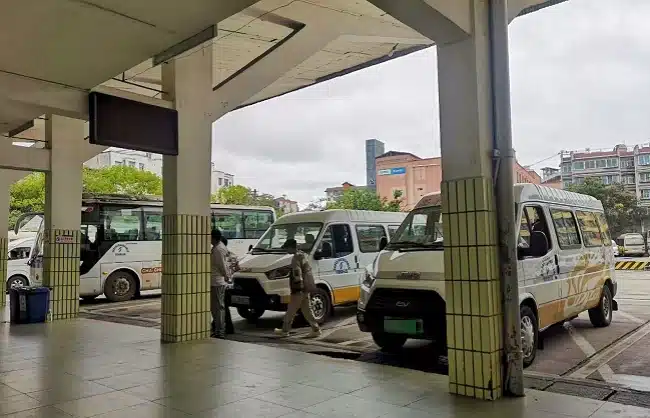
The most reliable option is using the “金孔雀 (Golden Peacock)” bus. You can take it from both Pu’er and Xishuangbanna to Jingmai Mountain, and it’s also available for the return trip. Drop-off spot is chose by yourself (Huimin Town, Jingma, Mangjing, Village entrances).
From Pu’er (Simao / Wuyi Bus Station):
- Duration: ~3–3.5 hours
- Price (per person): RMB 120–150/USD 16.55-20.69
From Xishuangbanna (Jinghong Bus Terminal):
- Duration: ~3.5–4 hours
- Price: RMB 100–120/USD 13.79-16.55
Golden Peacock Vehicle Types
Vehicle Type |
Comfort Level |
Features |
Notes |
8-seat business van (Best Option) |
5/5 |
Spacious seats. Dedicated luggage space. |
Most stable and comfortable. |
7-seat business van (Backup Option) |
4/5 |
Spacious seating space. |
Still comfortable. Less consistent |
17-seat minibus |
2/5 |
Limited spaces.
Luggage placed in aisle. |
Some say it has smell issues and it can be cramped.
Less comfortable than the other two. |
Booking & Boarding Details of Golden Peacock
- Booking platform: WeChat mini program “金孔雀票务”.
- Book earlyis necessary. 2–3 days ahead of time is common. During holidays, even the 17-seat option are sold out quickly.
- Tip: Seat 1 and 5 on the 8-seat van are most recommended, try to secure them.
- Public Bus Option (Budget Route via Huimin, less recommended)
If you want a cheaper option, you can first travel to Huimin Town (惠民镇), then take Jingmai Mountain local shuttle. However, this route takes a longer time and it’s less convenient.
Costs:
- Pu’er → Huimin: ~RMB 80–100/USD 11.03-13.79
- Huimin → mountain: ~RMB 15/USD 2.07
Frequency: About 5–6 buses per day. The schedule is fixed but not always punctual.
Getting Around Jingmai Mountain
Transport Option |
Price |
Availability |
Pros |
Cons |
Official mountain shuttle bus |
RMB 15/USD 2.07 per ride (fixed) |
~5–6 departures per day.
Can be flagged down if there are still seats available. |
Cheap.
Official. Covers main villages. |
Not punctual.
May be full or skipped. |
Village cars / private drivers |
RMB 15–25/USD 2.07-3.45 per person
(short distance) |
Arranged via homestays or restaurants. |
Door-to-door pickup.
Flexible timing. |
Price varies slightly.
Needs coordination (mainly in Chinese). |
Electric bike rental |
RMB 60–90/USD 8.28-12.41 per day |
Mainly in Mangjing / Manghong areas |
Free exploration.
Good for short scenic rides |
Not allowed in some core village areas like Wengji.
Difficult and relatively dangerous on gravel roads. Not suitable for long distances |
- Your accommodation or restaurants can easily help you arrange or contact the village car services.
Where to Stay in Jingmai Mountain
There are no luxury hotels on Jingmai Mountain. Staying here is more about living an authentic village life and waking up in a place surrounded by ancient tea forests. In general, rooms are clean but simple. Basic equipment is all available and the ethnic architectural style will make your stay extremely memorable.
Choices are mostly guesthouses or homestays. And one of the most important things you have to decide is which village to stay in.
Tips for you to choose which village to stay
There are no luxury hotels on Jingmai Mountain. Staying here is more about living an authentic village life and waking up in a place surrounded by ancient tea forests. In general, rooms are clean but simple. Basic equipment is all available and the ethnic architectural style will make your stay extremely memorable.
Choices are mostly guesthouses or homestays. And one of the most important things you have to decide is which village to stay in.
Wengji Village: More well-developed Blang-style homestays. Close to sunset platforms and village center.
Nuogan Village: Most are authentic Dai-style wooden houses. Options are limited but very immersive and photogenic.
Mangjing Village: There’s a mix of homestays and small boutique stays. Easily connected to tea heritage sites and cultural landmarks like Octagonal Pagoda.
Manghong Village: One of the best places to appreciate sunrise and sea of clouds views. Fewer accommodation but quite and peaceful.
Jingmai Dazhai: the most convenient base. Good for visitors planning a flexible village-hopping itinerary.


How to Plan Your Jingmai Visit
Best Time to Visit
The best time to visit Jingmai Mountain varies largely depending on your preference. Generally, the dry season, from November to April, is the most recommended for the pleasant weather and the best sea of clouds views. Besides, there are also months providing special travel experience, for example:
- Sea of Clouds plus cherry blossoms: Mid–late December.
- Special Mushroom Season: June. An exciting time for foodies. Please only enjoy them at local restaurants. Many wild mushrooms are poisonous and difficult to identify.
Important tips:
- Nov–Apr: if traveling in these months, remember to book accommodation at least 15 days in advance. It is hard to secure the room in peak seasons.
- You may want to avoid rainy season (June-Spetember), since it adds more travel difficulties, such as slippery roads and higher humidity. Those who want a more scenic experience may be disappointed by the low visibily in rainy and foggy days.
Recommended Trip Length
1–2 nights is the minimum to enjoy Jingmai’s life at a slow pace. With more days and nights, you’ll be able to really go deeper into the local culture and communities.
Common combinations:
- Pu’er + Jingmai → easier logistics, more relaxed
- Xishuangbanna + Jingmai → more variety, more long-distance travel
Suggested Itinerary:
Day 1: Travel from Pu’er or Xishuangbanna in early morning. The afternoon is for a slow exploration of ethnic groups’ tea fields and the sunset over the villages. If time allows, take a break at a cafe and immerse yourself in the relaxing vibe of the town.
Day 2: Although getting up early is a little bit painful, don’t miss the sunrise and sea of clouds at Manghong or nearby viewpoints. Then plan a visit to the ancient tea forest and traditional villages like Jingmai Grand Village for tea culture.
Day 3 (optional): Enjoy a relaxed morning in the village or a short walk before heading back to Pu’er or Xishuangbanna.
Travel Tips for Jingmai Mountain
Local Culture & Etiquette
- Feel free to join locals if they invite you to have tea. In such situations, tea is usually free and there’s no need to have pressure to buy anything.
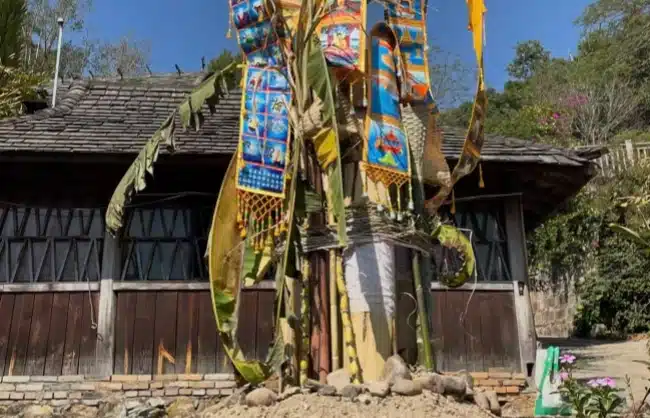
- Respect village customs: “village heart” (sacred ritual area) should not be stepped on or disturbed. They mean a lot in local culture.
Food & Daily Life
- Some ingredients are limited due to mountain transport. Thus, it’s common to see “seasonal price (时价)” dishes on the menu. Always confirm the price before ordering, as it can be more expensive than you imagined.
- Jingmai is famous for its Pu’er Tea. However, Blang ethnic minority sour tea is also a local specialty. Have a try since it’s hard to find elsewhere. If you want to buy some, expect it to have higher prices than other teas.
- No food delivery here and very limited nightlife on the mountain, although sometimes there are cultural performances, and visitors are welcomed to join them.
Transport & Costs
- Taxi-style rides are usually charged per person, not by distance, which can feel relatively expensive.
- Parking and road access is limited in villages, better looking for parking lot outside the villages (usually at the entrance).
- For more affordable supplies, food, or fruits, head down to Huimin Town.
Practical Essentials
- Mosquito protection is really necessary, sometimes the general protection can feel useless when hiking in the forests. In addition to insect repellent, consider wearing long-sleeve clothes to cover your body.
- Mountain weather changes quickly, even in summer. Bring a light layer.
- Public toilets and trash bins are limited on the roads, and please carry your own waste carefully to protect the environment.
FAQ about Jingmai Travel
Is Jingmai Mountain safe for solo travelers?
Yes. The area is generally safe, and locals are very welcoming. However, some areas’ also face problems like limited transport or patchy signal. If you’re going hiking alone, do inform your accommodation of your plans and contact methods.
Is there mobile signal and internet?
Yes, but sometimes unstable. Most villages have nice 4G/5G coverage, however, if you’re in the tea forests or hiking areas, you may suffer from weak or even no signal.
Can I use credit cards or do I need cash?
Cash and mobile payment (WeChat Pay / Alipay) are both widely used. However, credit cards may not be accepted.
Having a Relaxing Jingmai Journey with China Xian Tour
Jingmai is one of the most unique destinations you can visit in a Yunnan tour. It’s a hidden gem that has not been overly commercialized, and the tea culture here is one of a kind. Traveling through the villages and attractions is truly impressive, and you can consider having China Xian Tour as your travel partner for the best experience.
We can help you solve probably the most bothersome problems like transfer and accommodation, and we’ll manage everything for you from the journey’s beginning to the end. Don’t hesitate to reach out, your perfect Jingmai tour is here waiting for you.