

Speaking of China’s “Snow City” or winter destinations, Harbin may firstly come to your mind. Most people know Harbin for the annual Harbin International Ice and Snow Festival, but the city boasts more things to see and do. If you are planning a Harbin tour and don’t know what to expect or where to begin, this article with all important facts about Harbin will be your ultimate guide. Read on to discover this charming city’s history, featured culture and activities, weather, food, accommodation, etc.
Content Preview
- Introduction to Harbin in Heilongjiang – The Ice Capital of China
- Facts about Harbin’s History & Culture
- Facts about Harbin Ice and Snow Festival
- Harbin Tourism: What to See and Do
- Harbin Weather & Best Time to Visit – It is not always Cold
- Harbin Transportation
- Recommended Harbin Itineraries
- Harbin’s Food Scene – Dumplings and Russian-Chinese Fusion
- Hotels in Harbin
- Explore Harbin with Us
Introduction to Harbin in Heilongjiang – The Ice Capital of China
- Harbin in Chinese: 哈尔滨 (hā ěr bīn)
- Location: Capital of Heilongjiang province, in Northeast China
- Population in 2024: 9.33 million
- Area: 53,100 square meters
- Nicknames: Ice city, oriental Moscow, little Paris of the east, the pearl on the swan’s neck
- Climate & Weather: Temperate continental monsoon climate. Features short, cool summers and long, extremely cold winters.
- Annual Temperature: -14.6℃ during December-next February and 22.3℃ in June-August
- Weather: frigid and long winter, short and cool summer

Where is Harbin Located?
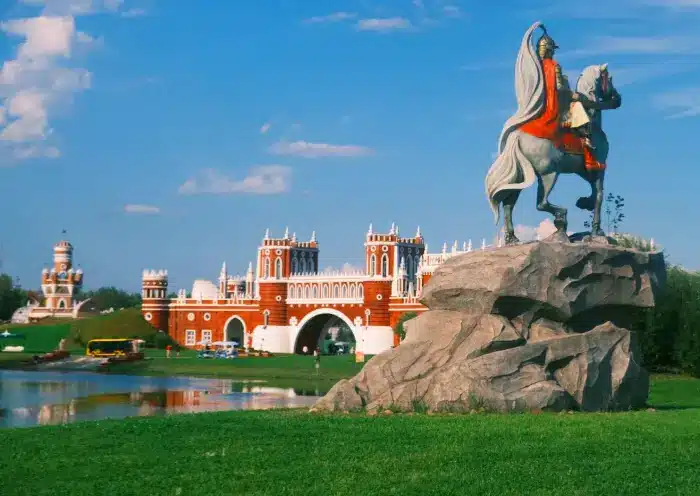
The geographical coordinates of Harbin range from 125°42′ to 130°10′ East longitude and 44°04′ to 46°40′ North latitude. It is the capital of Heilongjiang Province and cultural hub in Northeast China. The city covers an area of 53,100 square kilometers, making it the largest provincial capital city in China by land area.
Population
The latest population statistics in 2024 displayed that the total registered population in Harbin is 9.33 million. The urban and rural population is 5.259 million and 4.071 million respectively. Harbin, as the most populous city in northeast China, contains 45 ethnic minorities. It is the only one city that integrates Buddhism, Taoism, Christianity, Catholicism, Islam, and the Eastern Orthodoxy throughout the country.
What is Harbin Famous for?
Harbin is internationally renowned for its distinctive ice culture, European architecture, music tradition, industrial history and featured cuisine.
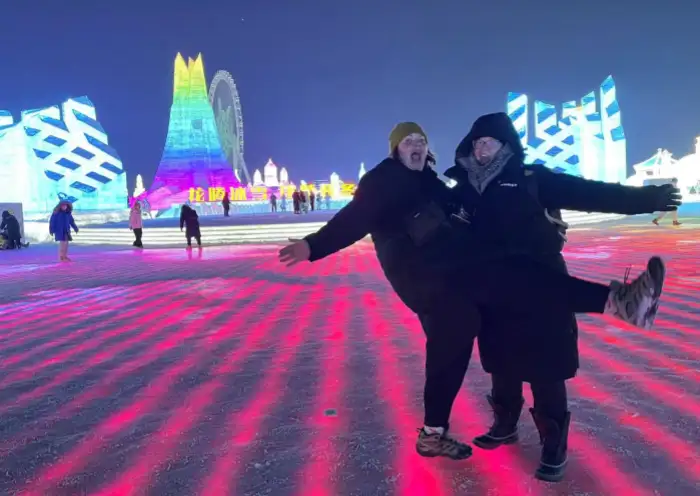
- Ice and snow culture: The dynamic ice and snow culture should be the most dazzling symbol of Harbin. It is home to the largest ice and snow theme park in the world – Harbin International Ice and Snow World, and the Sun Island International Snow Sculpture Art Expo that features numerous huge snow sculptures. Each winter, the city will attract tourists from around the world with its enchanting winter spectacles, ancient ice traditions, thrilling ice sports, and much more.
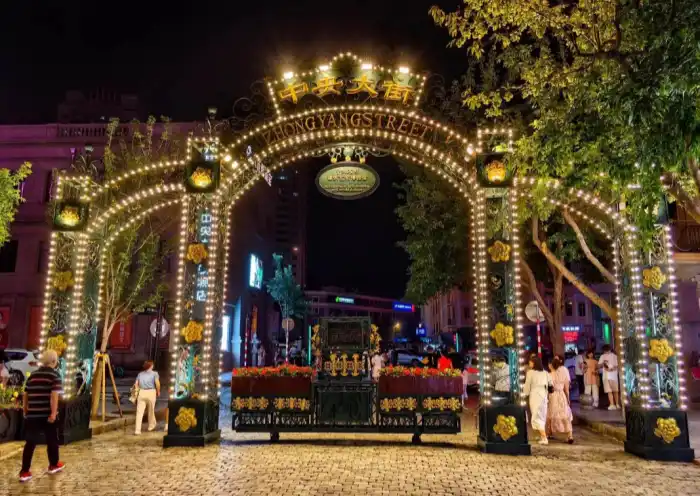
- Rich European architecture: Harbin is hailed as “Oriental Moscow” and “Little Paris of the East” because of European architectures. 71 architectural complexes that are designed in the style of Baroque and the Renaissance stand on the Pedestrian Zhongyang Street. Thus, the outdoor museum of international architecture takes shape.
- Music tradition: Harbin is acclaimed as the never-ending music hall and has witnessed Harbin Summer Music Concert for 36 years in a row. Whenever you roam the city, you can easily find music sculptures, theme parks and balcony performances around the corner.
- Industrial history: Harbin truly made the greatest contribution to national industrial development since the establishment of new China. It undertook 13 major projects helped and built by the Soviet Union in 1953-1957, and produced the first steam turbine and high-pressure boiler of China.
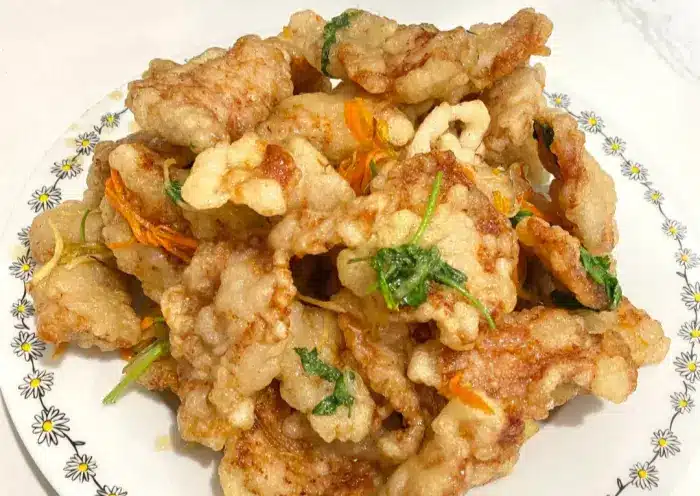
- Harbin food: Local specialty is also an indelible mark of Harbin, such as Hongchang (red sausage, 红肠), Dalieba (Russian bread, 大列巴) and Guobaorou (the fried pork in scoop, 锅包肉). In addition to that, the food culture centering on sweet is developed into a salient experience, like sweet-flavored Tofu pudding, liqueur chocolate and local beer.
Facts about Harbin’s History & Culture
Harbin’s history can be traced back to the Jin Dynasty. The ruler had its capital founded in Huiningfu (where Harbin stands now) and turned it into the center of politics and military affairs in the year 1115 AD.
Since the construction of the Middle East Railway in 1898, this fishing village along the Songhua River was developed into the transportation hub.
In the 20th century, Harbin has evolved into an international commercial port due to the influx of foreign residents from 33 countries and the establishment of consulates general from 19 countries.
Harbin possesses abundant architectural arts and intangible cultures. If your Chinese travel plans include Harbin, you can visit 71 European buildings featuring the Renaissance, Baroque and Art-Nouveau. Or, you can walk along the Chinese Baroque Historical Cultural Preservation Areas to enjoy the Chinese style quadrangle courtyard in the disguise of Western carvings and explore the origin of local ethnic industry and commerce.
Facts about Harbin Ice and Snow Festival
Harbin Ice and Snow Festival is the first international festival on the theme of ice and snow in China, which enjoys equal popularity with Sapporo Snow Festival, Québec Winter Carnival and Oslo Holmenkollen Ski Festival.
It was established on January 5, 1985 and basically lasts from December to next late February, covering the New Year’s Day, the Spring Festival and the Lantern Festival.
During the festival, it mainly revolves around ice and snow art landscape and featured projects, such as the Ice and Snow World, the Sun Island International Snow Sculpture Art Expo, Harbin Ice Lantern Festival, Songhua River Ice and Snow Carnival, international competitions, and folk cultures. Currently, the festival has became one of the top things to do in Harbin and the best highlight of the city.
History of the Ice and Snow Sculpture Festival
The Ice and Snow Sculpture Festival, inspired by ice lanterns, originated from the garden party of ice lanterns in 1963-1984, during which it transformed folk customs into public art exhibitions. In 1985, the snow festival was firstly created. Later, it was further expanded and improved. In 1999, Harbin Ice and Snow World was officially founded so as to push ahead with the commercialization of ice sculpture.
Today China Harbin Ice and Snow Sculpture Festival has been developed into an international ice and snow art hall based on international competitions and technological innovation.
When and Where is the Harbin Ice and Snow Festival Held?
The opening day of Harbin Ice and Snow Festival Held legally falls on January 5 each year and will be conducted in Harbin Ice and Snow World. But, the whole festival will run through the whole winter, lasting about one month.
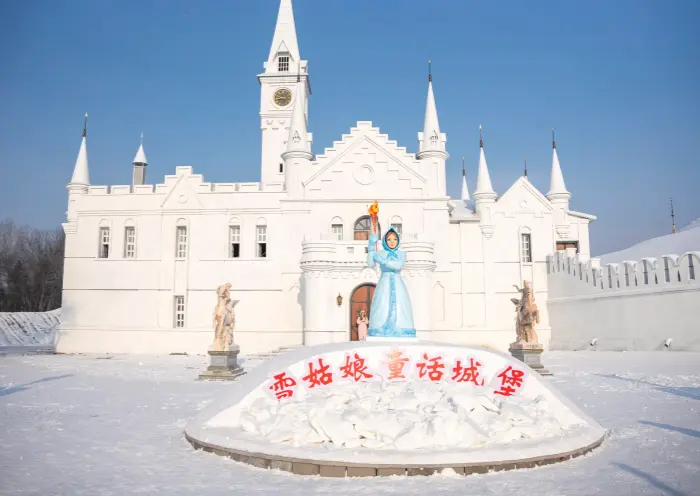
Highlights: Ice Carvings, Snow Castles & Night Light Shows
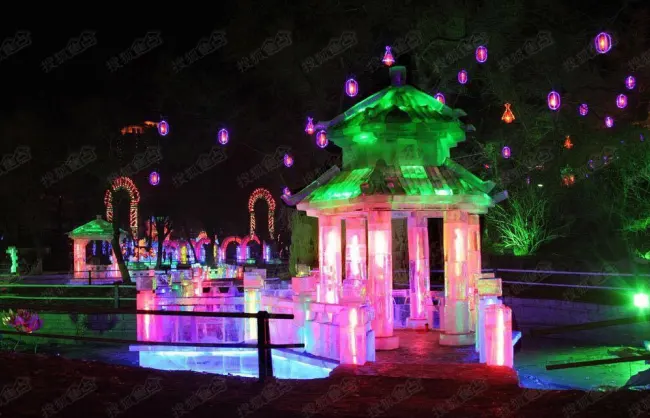
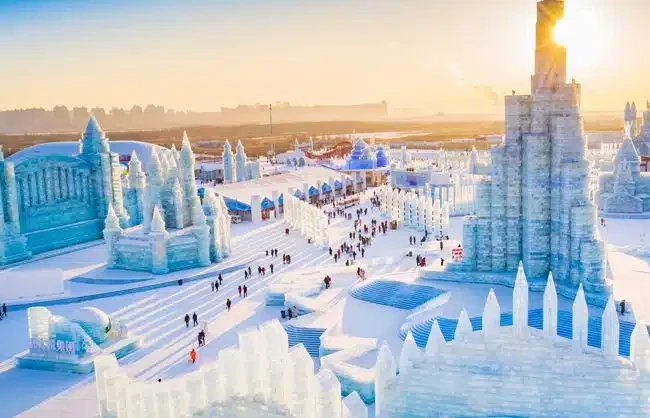
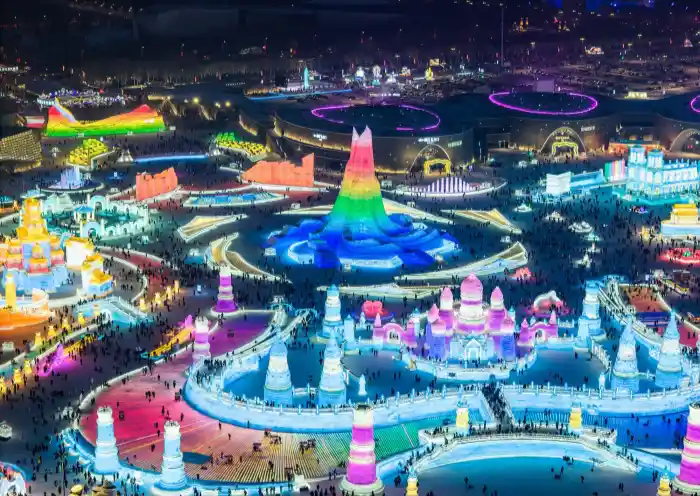
Harbin Ice and Snow World possesses over 3,000 ice carvings and 14 ice slides of 500 meters in length and will display a wide range of ice and snow sculptures and entertainments every winter. The Sun Island International Snow Sculpture Art Expo will present an art feast of giant snow castle. The night view in Harbin is never inferior to the scenery in daytime. You can see that Saint Sophia Church and glass walkway of the East Railway Bridge will be lighted at night.
Harbin Tourism: What to See and Do
Top Tourist Attractions in Harbin
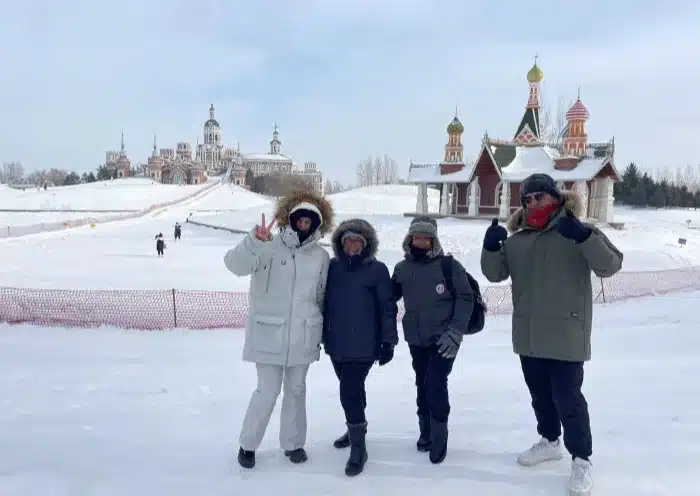
- Russian-style Architecture: Saint Sophia Church and Volga Manor.
- China Snow Town: snow-covered mushroom house, winter sports and hot spring.
- Zhongyang Pedestrian Street: this is the longest pedestrian street in Asia.
- Sun Island: Huge snow sculptures
- Harbin Ice and Snow World: this is the biggest theme park of ice and snow in the world, covering one million square meters.
- Siberian Tiger Park: take a vehicle with the iron net window to feed tigers → walk along the glass walkway→ visit tiger cubs → feed black bears
Harbin Skiing
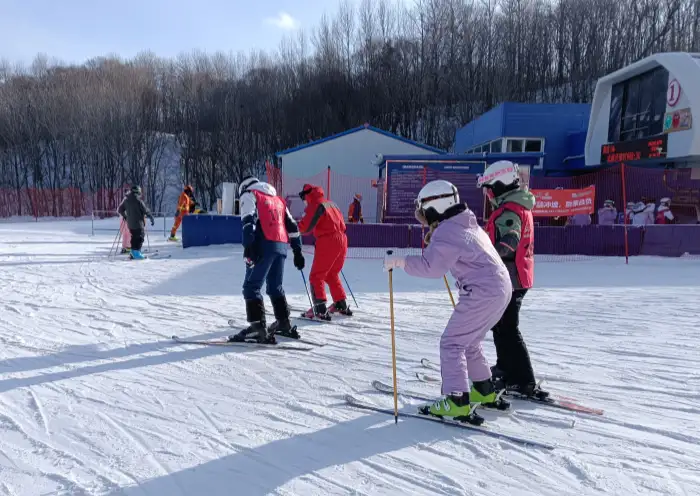
Skiing is a must-go recreational activity if you travel to Harbin. The best season is from December to next March, but January and February will give the optimal snow quality for skiers. In Harbin, skiing parks can satisfy your demands, including parent-child entertainment, competitive challenge, night view, folk culture and so on.
If you are a senior skier, 46 trails complying with international certification in Yabuli Ski Resort will be your optimal choice. The largest elevation difference of 804 meters will give you a fantastic adventure.
If you are brave to ski at night, Tianhengshan Ski Resort will be a nice option because it offers handy urban shuttle bus and affordable ticket. Here you can admire snow scene at night while skiing.
Related reading: Top Ski Resorts in Harbin
Hot Springs
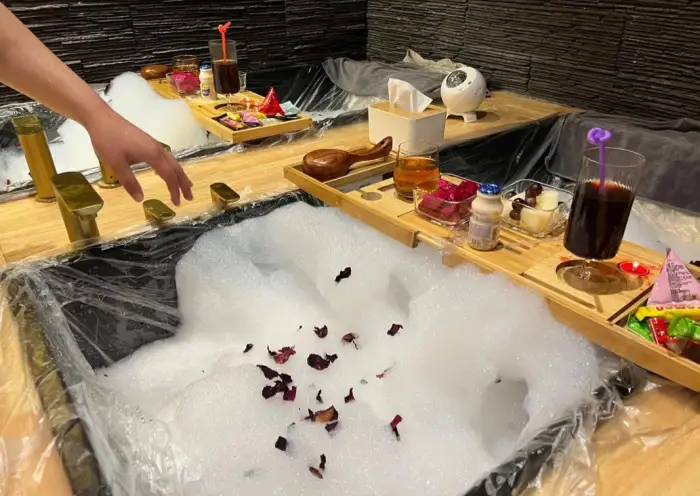
Harbin boasts resourceful hot springs and thus develops the culture of body scrubbing. It is not only a cleaning but also a social relax. Consumers can enjoy buffet, billiards, cinema and others while scrubbing body.
Harbin body scrubbing skillfully stresses the compressive rubbing and cleaning, including the front and back from head to foot. Consumers can select milk bath and red wine bath, etc. Relying on unique experience and considerate service, body scrubbing amasses much popularity among tourists.
Other Seasonal Events & Harbin Festival Celebrations
Here is a table showing seasonal events festival celebrations in Harbin.
Season |
Events |
Highlights |
Winter |
Harbin Ice And Snow World |
14 ice slides and the main tower of 43 meters in high |
Winter |
The Sun Island International Snow Sculpture Art Expo |
All kinds of giant snow sculptures are provided for free |
Summer |
Night Tour along the Songhua River |
Admire sunset glow on boats |
Summer |
The performance of Meet Harbin on the river |
Show the city history on the stereoscopic stage and provide the laser fountain show |
Spring and Autumn |
Autumn Scenery of Volga Manor Spring Scenery of The Sun Island |
Russian architectural complexes in the sea of lilac flowers during May |
Harbin Weather & Best Time to Visit – It is not always Cold
Harbin is well-known for avoiding heat in summer and appreciating snow in winter. Which season to have a trip is determined by your cold resistance and preference for natural landscape.
If you are averse to coldness, you can visit Harbin in summer. The average temperature is kept around 22-28℃ from June to August, and the day-and-night temperature difference is 8-10℃. If you travel to Harbin in July, especially the full blossom of lotus, you are bound to be packed like sardines.
If you attempt to challenge the extreme cold weather 30 degrees below zero, winter will be a better season. The average temperature is from -15℃ to -30℃ in winter. The highlights include Harbin Ice and Snow World, ice and snow sculpture exhibitions, and skiing in Yabuli Ski Resort.
Related reading: Harbin Weather Guide: Best Time to Visit & Seasonal Tips
Harbin Transportation
How to Get to Harbin
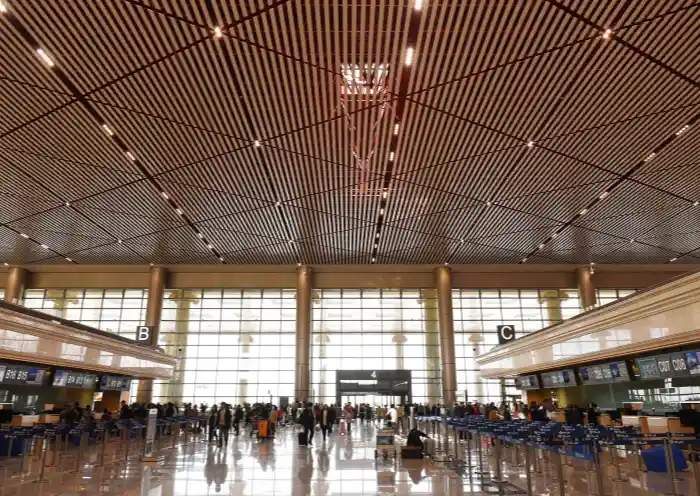
Harbin is served by Taiping International Airport which offers international direct flights to or from Seoul, Singapore and Tokyo, and frequent domestic flights to most major cities, like Beijing, Shanghai, Xian, Shenzhen, Chongqing, Guangzhou, Xiamen, etc. The airport is about 38 kilometers from the city center, taking about CNY 100-150 by taxi.
If you are traveling to Harbin from Beijing, Jilin, Changchun, Dalian or other cities in northeast China, taking high-speed trains is also a convenient option. Generally, the high-speed train ride takes about 4.5-5 hours from Beijing to Harbin, and about 3.5 hours from Dalian. From other nearby northeast cities, the trip takes about 1-2 hours.
Thanks to the 240-hour visa-free transit policy in Harbin, you don’t need to have visa if your country is applicable. But, make sure that your passport is valid for three months at least and you have bought the connecting ticket flying to the third country.
How to Travel Around Harbin
The metro system is the top choice for getting around Harbin. Currently, the city operates three subway lines that cover many of its most popular attractions, including Central Street, Ice and Snow World, and Harbin Railway Station. Operating hours generally last from 6:00 AM to 10:30 PM, providing reliable service throughout the day. Fares are based on distance, typically ranging from 2 to 5 RMB, making the metro both convenient and affordable.
Public buses are also economical options (1-2 RMB) to traveling around, but the snowy roads in winter can cause delays. Taxis and ride-hailing services are also readily available to offer travelers more flexibility. The initial fare for Harbin taxi is 8 RMB for the first 3 kilometers. After it, an additional CNY 1.9 is charged for every kilometer.
See the transportation to popular attractions in Harbin below:
- Central Street and Saint Sophia Cathedral: Metro line 2 and get off at “Central Street Station” or “Shangzhi Street Station.”
- Harbin Ice and Snow World: Take Metro Line 2 and get off at Ice and Snow World Station.
- Sun Island Intersection Station: Take Bus 29, 47, and 80 and get off at Sun Island Intersection Station.
- Siberian Tiger Park: Take Bus 5 or 122 and get off at Tiger Park Station.
Related reading: Harbin Transportation: How to Get to and Travel around
Recommended Harbin Itineraries
How to travel to Harbin, here are recommendations.
One-day Harbin Itinerary:
Morning: visit the Pedestrian Zhongyang Street (century-old cobblestones” + Madier popsicle) + Saint Sophia Cathedral (mosaic murals).
Afternoon: look at the Songhua River from the Flood Control Memorial Tower → enjoy red sausage and Kvass in Daoli Vegetable Market.
Evening: admire the light show of Saint Sophia Cathedral → enjoy the night view of lanterns in Chinese Baroque Historical Cultural Preservation Areas.
Three-day Harbin Itinerary:
Day 1: Ice and Snow World (book tickets on Trip APP in advance) → take pictures with ice blocks along the Songhua River.
Day 2: Yabuli Ski Resort (skiing + hot spring) → enjoy the heated brick bed and horse-drawn sleigh in Snow Town.
Day 3: Volga Manor (Russian style architecture + white birch forest in the snow)→ The Sun Island (sealing interaction).
Harbin’s Food Scene – Dumplings and Russian-Chinese Fusion
Harbin’s food culture integrates the agricultural civilization of Central Plains, northern nomadic tradition and Russian style. Local food, especially Jiaozi, is essentially the wisdom of immigrants because it embraces stewing and fire-curing.
Russian cooking techniques and food ingredients (beetroot and sour cream) reconstruct the food culture of Harbin. But, this reconstruction is not a simple duplication but a unique recreation based on local food ingredients and flavors.
Related reading: Harbin Travel Tips: Winter Dress, Transport, Must-do, Budget
Dumplings
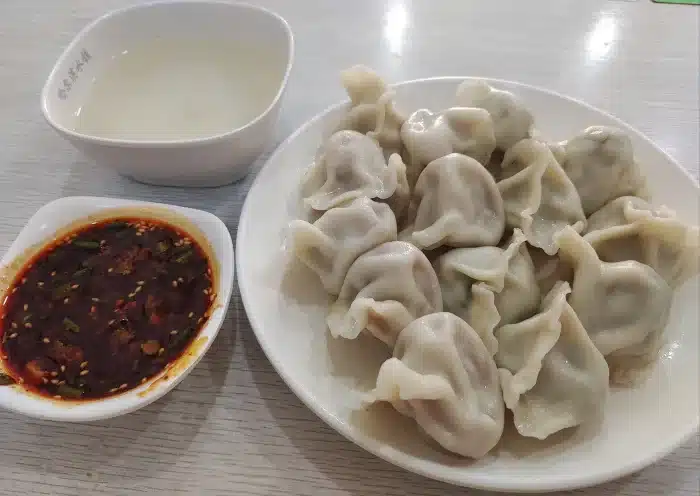
Harbin Jiaozi (dumpling, 饺子) originally results from the integration of Russian condiment sauce and local food ingredients. Jiaozi, as a symbol of reunion and best wishes, has become an indispensable food in Harbin during festivals and important occasions. Jiaozi is not only a mirror of Harbin’s inclusiveness but also its gustatory mark.
If you have a travel plan to Harbin, you are recommended to enjoy the boiled dumpling with shredded meats in Fanyongji (范记永) and Laodu Yichu (老都一处).
Fanyongji makes dumplings with shrimp egg, dried scallop and tenderloin. Laodu Yichu has sea cucumber, dried scallop and shrimp stuff into dumpling wrappers. If you prefer the latter one, you are advised to get up early because many diners stand in a queue.
Other Must-try Food
Besides dumplings, there are many other must-try foods in Harbin, which are:
- Red sausage is a meat product fumigated with fruitwood. It has a rich scent of garlic and tastes chewy and crispy.
- Guobaorou is fried pork tenderloin with sweet-and-sour tomato-flavored juice.
- Dalieba refers to Russian bread with crispy crust and soft flesh. Jam or red sausage will make it taste better.
- The production of Madier popsicle is mediocre, but eating ice cream in a -30°C winter day in Harbin is a unique experience.
- Kvass is a beverage fermented with dried breads. It tastes sour and sweet and relieves summer heat if it is served chilled.
- The frozen pear essentially keeps pears frozen. Before eating, you need to firstly soak them into cold water for defrosting. The taste is dense and refreshing.
Related reading: Harbin History – From Ancient Roots to Modern Time
Russian Influence on Harbin Cuisine
Russian culture imposes a profound and far-reaching influence on Harbin diet.
With the introduction of smoke curing and fermentation, Dalieba and red sausage are case in point. The former is listed as the intangible cultural heritage, while the latter becomes a city card.
Affected by Russian wine culture, local people are obsessed with fruit wine and beer. Taking Kvass for example, this drinking fermented with Russian bread becomes a local special beverage.
Hotels in Harbin
Whatever style you like, Harbin hotels have various options to offer.
If you prefer the Pedestrian Zhongyang Street and old town, you can select nearby HUATE HOTEL that follows industrial style and leases Russian aristocratic costumes. And, you can directly walk to Saint Sophia Cathedral and Flood Control Memorial Tower. Mansion 1903 Hotel (Harbin Central Street) is also a nice choice. It embraces the antique elevator erected in 1903 and displays genuine Russian oil paintings in guest rooms.
If you take fancy to the landscape along the Songhua River, don’t miss Aoluguya in the Unbound Collection by Hyatt Hotel. The northern perspective of the Songhua River enables you to overlook the river view and the city skyline from the floor-to-ceiling windows of 42 stories high. Also, Shangri-La Hotel Harbin won’t disappoint you because it provides full-fledged SPA facilities and allows you to directly admire the whole Songhua River.
If snow and ice resorts mostly appeal to you, you can choose Club Med Harbin and Wanda Realm Harbin. They are adjacent to ski slopes and provides ski courses. If you travel to Harbin with your kids, they will give you an unforgettable family tour.
If you particular about business districts, JW Marriott Hotel Harbin River North and Sofitel Harbin Hotel can cater for your demands.
If you are sensitive to price, you can choose Ibis Harbin Central Street Hotel and True Go Hotel because they has an affordable price and well-equipped devices.
Explore Harbin with Us
If you decide to set off now, we will be your best choice. We’re able to provide a custom tourist route, experienced guide, and local driver, and handle all the logistics during your journey, like hotel and attraction bookings and transfers between different attractions, to ensure your hassle-free experience. Just contact our travel consultants with your specific preferences and requirements; they will help you create your ideal Harbin tour package accordingly.