

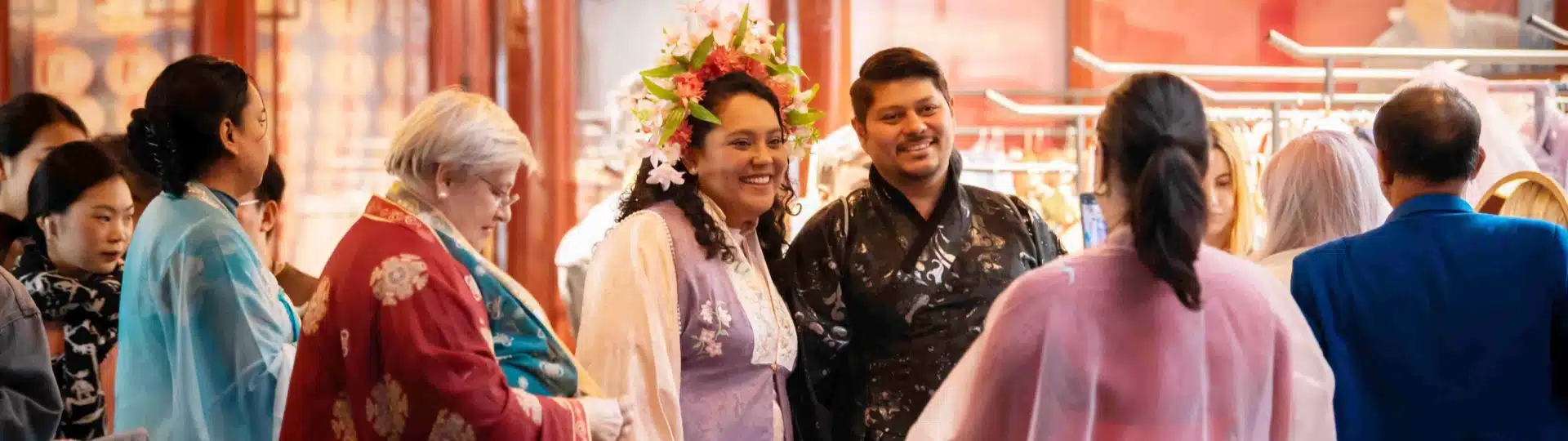
Have you ever seen someone wearing a beautiful traditional dress in China and wished you knew more about it? If so, this is the perfect article for you. From the history of Chinese clothing to its symbolism and even where you can try it for yourself, this is the perfect guide for anyone looking to expand their understanding of Hanfu, qipao, and more.
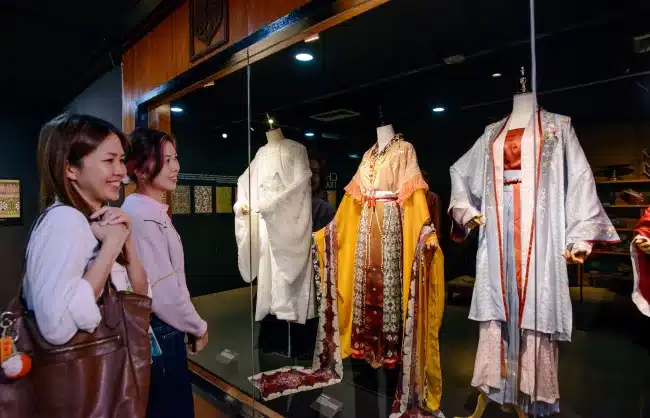
Content Preview
- History and Evolution: Chinese Clothing in Major Dynasties
- Main Traditional Chinese Clothing Types
- Cultural Significance and Symbolism in Traditional Chinese Dress
- Basic Forms of Traditional Chinese Clothes
- Where to Experience and Buy Traditional Dress in Modern China
- Experience Traditional Chinese Clothing and Culture with China Xian Tour
History and Evolution: Chinese Clothing in Major Dynasties
Early Chinese Clothing in Shang Dynasty
The earliest traditional Chinese clothing can be traced back to the Shang Dynasty, since that’s the first dynasty we know for sure existed. The dynasty lasted from 1600 BCE to 1046 BCE, but despite how long ago it was, clothing already held great importance as a marker of social status through various dyes and embellishments. The main materials used at this time include leather and especially woven textiles like silk and hemp and men and women’s clothes were more or less similar, consisting of an upper and lower garment, though women also wore aprons.
The Dawn of Hanfu: Early Chinese Dress in the Zhou, Qin, and Han Dynasties
During the Zhou Dynasty, Confucian ideas of etiquette were formalised and ritualised, further reinforcing the role of clothes for ceremonial, political, and cultural purposes. After that, the next most interesting period for the development of Chinese dress were the Qin and Han dynasties as this was when China finally became a unified country with a shared language. During this period, Hanfu was the most popular clothing, with clothing that consisted of wide, voluminous sleeves and layers of robes and skirts.
A Cultural Boom and Colorful Evolution in Tang Dynasty
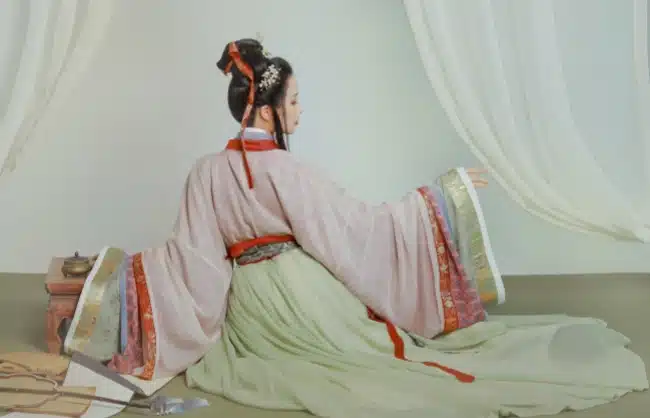
The Tang Dynasty is known for its explosive cultural and artistic growth, and clothing was no different. Thanks to China’s many interactions with other cultures at this time, clothing styles became more diverse and experimental and fashion “trends” became a cultural phenomenon. There were few restrictions around what colours could be used, with only yellow reserved for the emperor and his family, so colours became brighter and more varied. As for fabric, the continued evolution and refinement of popular textiles like silk, linen, and wool led to increasingly thin and even transparent fabrics becoming part of Chinese fashion.
The Evolving Styles of Chinese Dress from Song to Qing Dynasty
Following the Tang Dynasty, the rise of Neo-Confucianism and its associated values of elegance and simplicity led Song Dynasty clothing to be more subtle and restrained. Then, from the Yuan Dynasty to the Qing Dynasty, the most interesting developments in Chinese dress were a result of cultural shifts. While the Yuan Dynasty saw influences of the Mongolian clothing of the ruling class on Hanfu, the pendulum swung the other way in the Ming Dynasty with an ethnically Han emperor who brought back more traditional styles. This trend once again flipped during the Qing Dynasty, with Manchurian rulers bringing their traditional ethnic clothing to China, including the confusingly named Tang suit (or Tangzhuang) and the world-famous qipao (or cheongsam).
Popular Clothing Styles after the Qing Dynasty
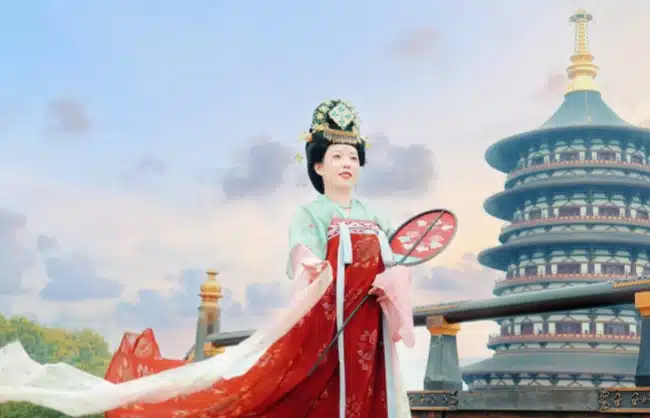
Traditional fashion largely fell out of use after the Qing Dynasty. So, when did Chinese people stop wearing traditional clothing daily? It happened gradually in modern times, especially since the 20th century. Due to the development of society, people prefer more convenient clothing, while the traditional clothing is relatively complicated and inconvenient to wear, so it is abandoned gradually.
During the Republic of China, the Zhongshan suit (also known as the Mao suit) became a popular form of dress. Later, as China reopened to the world, it took on many styles popular in the rest of the world, especially streetwear. Nowadays, though, there’s a movement to revive traditional Hanfu clothing, so don’t be surprised if you see some people wearing it on the street the next time you’re in China!
Main Traditional Chinese Clothing Types
Among all the traditional Chinese clothing, Hanfu, Qipao, Tangzhuang and Zhongshan Suite are the main types that still can be seen and popular till now. Follow the article to learn more about them.
Hanfu – The Garment of the Han People
Hanfu collectively refers to the traditional clothing of Han nationality, and does not refer to the clothes of Han Dynasty. It already has a history of more than 4,000 years. The core features are the cross-collar and right lapel (the left lapel pressing the right lapel), broad and flowing sleeves, and the usage of ties instead of buttons. The overall style is solemn and elegant. When wearing, it usually matches with specific headwear, footwear and accessories.
Nowadays, people prefer to wear it in the traditional festivals and celebrations or just wear it as an everyday dressing. Why is there a revival of interest in Hanfu in modern China? It is the result of several factors, the enhancement of cultural confidence, the promotion of social media, the revival of traditional festivals and activities and the various modern designs of Hanfu, etc. In recent years, Hanfu has been a fashion trend in China.
Many tourist cities have rental shops, you can rent one suit to try on and take memorable photos.
Further reading: Tang Dynasty Hanfu
Qipao (Cheongsam) – The Modern Icon
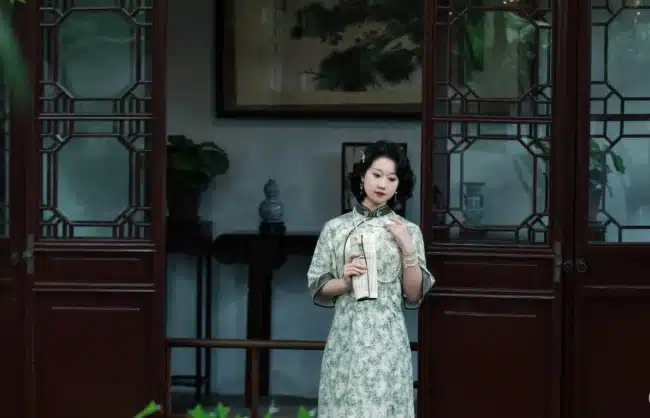
Originating from 1920s, Qipao has been a traditional and classic clothing for females for a long time. Combining the aesthetic elements from both the East and the West, it not only showcases the feminine curves but also embodies the implicit beauty of the East. Its main features are the slim cut, right lapel, mandarin collar, pankou knots and side silt. It is widely seen in weddings, banquets and diplomatic activities nowadays. People also prefer to wear it in daily life. Usually, Qipao is paired with high heels and an updo. Tourists can rent or even tailor one suit in a store when travelling in Beijing, Shanghai and other tourist cities.
Tangzhuang – The Modern “Tang Suit”
Tangzhuang does not refer to the clothes of Tang Dynasty. Its name originates from overseas. Due to the influence of the prosperous Tang Dynasty, the traditional clothing worn by overseas Chinese are called “Tang suit” by foreigners. In fact, it is improved from the mandarin jacket of Qing Dynasty and integrated Western three-dimensional cutting techniques. The most characteristic features include mandarin collar, seamless sleeves, straight opening or crossed opening and pankou knots. The men’s wear is usually simple and concise and the women’s wear highlights the beautiful feminine curves.
Zhongshan Suite
Zhongshan suite is a representative modern clothing for males and was mainly designed in the early 1920s by Sun Yat-sen, a pioneer of China’s democratic revolution. The design of Zhongshan suite is simple and elegant with a standing collar, five front buttons, four patch pockets, three cuff buttons and a seamless back. All these details have their own unique meanings and show solemnness. Usually, it is paired with western-style trousers and leather shoes. Now, Zhongshan suite is often worn by Chinese leaders at major state affairs events and diplomatic occasions.
Traditional Wedding Costumes
In China, red color is always the main color for weddings, because it symbolizes joy, good luck and auspiciousness in our mind. The most classic should be the phoenix coronet and robes of rank, that is popular in the Ming Dynasty. Its overall design is magnificent and decent. Dragon and phoenix gown and xiuhe dress are more iconic styles. The former one is more fitting and exquisite and the latter one is loose and comfortable. The costumes are usually embroidered with patterns such as dragons, phoenixes, peonies and mandarin ducks. Each pattern has its implied meaning and expresses best wishes to the married couple. The bride will also wear a red bridal veil to hide her shame and ward off evil spirits.
Ethnic Minorities Costumes
The costumes of different ethnic minorities in China retain their own characteristics, meanwhile, having some common features. For example, the flat pattern making and a loose fit are the basic features. Integrity is emphasized, so the clothes are basically paired with decorations. To express best wishes for life, auspicious patterns are widely used by them, such as dragon, phoenix, flowers and birds. Besides, they are good at using natural materials to make clothes, like silk, linen, cotton and wool. The skills are also diverse, including weaving, dyeing, embroidery and patchwork. Its purpose is to make the best use of everything.
What Occasions Are traditional Chinese Garments Typically Worn for?
Nowadays, Chinese usually wear the traditional clothes in traditional festivals like Spring Festival, in celebrations like temple fairs, in some important ceremonial occasions, such as weddings and graduation ceremonies, and in business receptions and cultural exchange activities.
Cultural Significance and Symbolism in Traditional Chinese Dress
As we mentioned above, Chinese traditional clothing conveyed a lot of information about its wearer just through its colours and designs… But what were those meanings exactly? Well, here are a few examples.
Colours in Ancient Chinese Clothing
What is the significance of the colors and patterns used on traditional clothing? The colors and patterns are rich in cultural meaning and auspicious blessings. Red symbolizes auspiciousness, celebration, passion, and prosperity. Yellow represents supreme status and authority. Blue is associated with scholarship and solemnity. White is the representative of purity, elegance, and brightness. And black symbolizes solemnity, mystery, and depth. The above five colors are the basic colors of traditional clothing. And most common patterns convey people’s yearning and wishes for a better life.
Yellow Symbolized Power and Purity in Ancient China
We mentioned that golden yellow cloth was reserved for the emperor during the Tang Dynasty, but do you know why? Well, it’s because the colour is said to be the most prestigious colour in China, similar to how purple is viewed in many western colours. In Chinese mythology, the Yellow Dragon is seen as the center of the universe, so you can see why emperors would want to wear the same colour. Being at the centre of everything, however, yellow is also seen as neutral, which explains why it’s common to see worn by Buddhist monks: it implies impassiveness and distance from worldly affairs.
The Complex Meanings of Black and White
Black and white are another interesting pair of colours in traditional Chinese clothing. Rather than being associated with darkness and negativity like in Western cultures, black isn’t seen as entirely good or bad in China. It can be associated with everything from formality to even the colour of Heaven.
White has similarly complex connotations. It often symbolizes grief and separation, serving as the main color for mourning clothes. But also, it is widely seen as a symbol of elegance and purity, just like in the West. Many Chinese brides wear white these days as a result of Western influence, though it’s not the most traditional colour for Chinese wedding attire!
Red: A Symbol of Auspicious Celebrations
That would be red, which is associated with good luck and happiness in China. If you’re looking for a traditional Chinese outfit to wear during Chinese New Year, red is no doubt the perfect choice – but definitely skip it for funerals, unless you want to offend people.
The Special Meanings of Qing
Finally, one of the most interesting colours in China: qing (青), a colour that includes shades of both blue and green. You can think of qing as the colour of nature, covering everything from the deep blue of the sea to the bright green of budding leaves. Given that association, it shouldn’t come as too much of a surprise that qing is associated with health, prosperity, and harmony… Unless it’s a hat! Let’s just say that a green hat is a bold fashion choice in China, and unless you want the locals to laugh at you, it’s probably better to skip it.
Embroidery in Ancient Chinese Clothing
China is still known for its exquisite embroidery today, with the most famous style being delicate Su embroidery. While it’s made to be admired these days, however, embroidery carried much deeper significance in the past.
Dragons, for example, were symbols of power and luck, so they were reserved for the imperial court. Interestingly, though, the definition of a dragon depended on its claws! At a certain point, it was decided that true dragons had to have exactly 5 claws, so that became the symbol of the emperor while 4-clawed “pythons” were often embroidered on clothing for nobles and other important people.
Empresses also needed a symbol of their status, of course, which is why phoenixes were reserved for their clothing during imperial China. In fact, the more you look into it, the more you’ll realise that every design has a special meaning. Nature patterns often symbolise peace and harmony, plum flowers represent the winter and longevity, red bats are associated with good fortune…
The list is endless! We can’t cover everything here, but the good news is this: no matter what design is on traditional Chinese clothing, it won’t have negative connotations. After all, if it did, nobody would buy it!
Basic Forms of Traditional Chinese Clothes
Most traditional Chinese clothing is sourced from the following two forms. One is composed of an upper garment and a lower skirt. It is one of the most traditional forms of clothes and is said to have originated in the era of the Yellow Emperor. The feature is that the upper and lower parts of one clothing are tailored separately and are fixed by a belt. The commonly seen Ruqun Dress is a representative. This form has a far-reaching influence on the clothes of the later generations and is the basis of the Hanfu.
The other one is a long robe. The upper garment and lower skirt are sewn together to form a single robe. It originated in the Zhou Dynasty. Usually, it is used as the everyday attire for scholars and officials and the formal dress for normal people. This form also affects profoundly, even today’s dresses are regarded as a reform of it.
Where to Experience and Buy Traditional Dress in Modern China
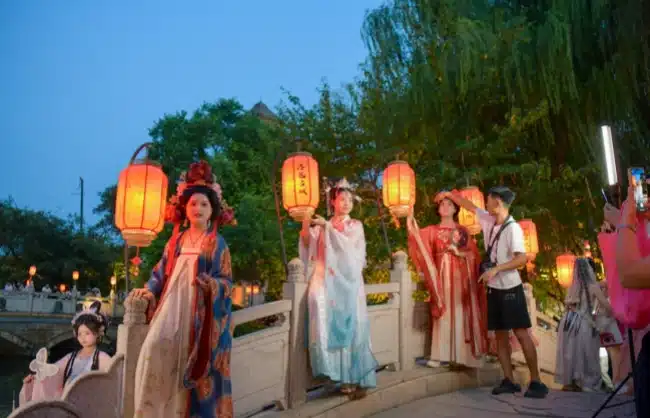
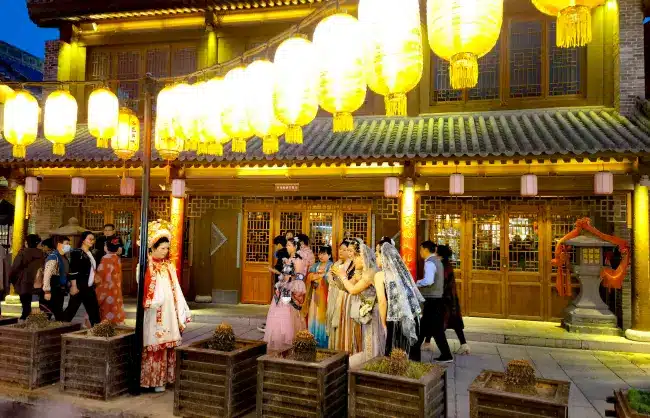
These days, relatively few people wear traditional Chinese clothing on the street… but that doesn’t mean it never happens! It’s increasingly common for brides to wear Hanfu or qipaos, other people wear them for holidays or special events, and yes, some people even wear them for everyday life, which can make for an interesting sight in the subway!
So, is traditional Chinese clothing suitable for everyday wear today? A fully restored traditional dress is usually not suitable for daily life. But most traditional clothes we can buy today are improved, the clothing is simplified with fewer layers and shorter sleeves and skirts, so it is convenient for activities and can be worn every day.
The Best Cities to Experience Traditional Dress (Xi’an, Luoyang, Suzhou, Shanghai)
The best way to experience Chinese traditional clothing, however, is to go places like Xi’an or Luoyang. There, it’s common to find stores that loan and/or sell traditional clothing for people to take pictures in the cities’ many beautiful historical locations. Don’t worry if those aren’t on your travel list, though! Most large cities and especially those with a long history will have traditional cultural streets, such as Shantang Street in Suzhou and Hefang street in Hangzhou.
In Suzhou and Shanghai, Qipao is more popular. You can not only rent, but also tailor a suit of Qipao in some offline stores. It will be a nice choice to wear it and take photos in the Jiangnan gardens.
Renting vs. Buying: A Tourist’s Guide
For most travelers, renting is a better choice. Because it is very convenient. The service usually includes clothing, makeup and accessories, allowing you to experience a variety of styles. The price is also acceptable, ranging from CNY 200 – 400. And you do not have to worry about carrying and daily storage. But if you are an enthusiast or want to wear it in daily life, then buying is also recommended.
Dressing Up: Tips for Wearing Hanfu and Qipao Correctly
Tips for Hanfu: For beginners, you can choose Hanfu according to occasions. On formal occasions, the Ming-style horse-faced skirt is more suitable. And for photography during the tour, the Song-style Hanfu will be a more popular choice. As for the matching, choose the clothes of the same color scheme or pair neutral tones with brighter colors. The most important is the right lapel, which means that the left side overlaps the right.
Tips for Qipao: Choose the simple styles made of cotton or linen for casual outings, which are comfortable and practical. But for photographs and on formal occasions, a luxurious silk or satin Qipao will be more preferred. Usually, a vintage hairstyle and subtle, elegant makeup suit the clothing more.
Experience Traditional Chinese Clothing and Culture with China Xian Tour
Chinese culture is of great charm and appealing to not only Chinese, but also many foreigners. And traditional clothing is the representative and worth trying. For tourists fond of traditional Chinese clothing and culture, China Xian Tour is always pleasant to tailor a trip for you. Just tell our travel consultant your preferences, she will arrange a reasonable itinerary and a knowledgeable guide for you. Then you can immerse yourself in the culture tour. So contact us right now.