



Planning a trip to China can be incredibly exciting, but still, timing should be your primary concern. With over 1.4 billion people and numerous national holidays throughout the year, visiting during the wrong period can lead to a tour packed with overwhelming crowds, inflated travel costs, and unpredictable weather. Generally speaking, most public holidays, especially Spring Festival, National Holiday and Labor Day Holiday, and summer holidays are considered the worst times to visit China.
This guide highlights these times in order to help you identify dates you should avoid when crafting your China tour plan. Its busy holidays, climate-related challenges, and worst times in major destinations and alternative periods to the bad times are all included. Whether you’re expecting a trip to China, or comparing China tour packages, this article is designed to help you plan a smarter journey, so that you can save money while also enjoy a more relaxed and rewarding experience.
Content Preview
- Why Timing Matters When Planning a Trip to China
- How Do We Define Bad Travel Times for China?
- Worst Times to Visit China
- Other Busy or Inconvenient Travel Periods
- Climate-Related Challenges: When Weather Can Ruin Your Trip
- Worst Time to Visit China’s Top Destinations
- When Should You Visit China Instead?
- How to Plan a China Trip Around Bad Dates
- FAQs about Traveling to China around Bad Times?
- Plan Your China Tour with Us
Why Timing Matters When Planning a Trip to China
Weather, Crowds, and Costs Shape Your Travel Experience
In China, the country’s vast size creates huge variations in climate—from frigid winters in the north to tropical summers in the south. Traveling to the northern region during December and January or to the southern cities during June and August could make your experience less pleasant. Similarly, holidays like China public holidays or China school holidays (particularly summer/winter holidays) would trigger massive waves of domestic travel. These timeframes often lead to:
- Extreme Weather: Summer heatwaves, winter blizzards, rainy seasons, or sandstorms depending on the region.
- Overwhelming Crowds: Major holidays like Chinese New Year and Golden Week often see record-breaking statistics—millions people taking domestic travel at the same time.
- Price Surges: Hotel and flight costs may jump by 30–100% during national holidays.
Understanding China’s Peak Travel Seasons
Travel seasons in China are generally divided into four categories: peak season, shoulder season, low season, and regional counter-seasons. While May to October is widely seen as peak season, however, it’s not an absolute conclusion as some destinations would buck the trend—like Harbin or Sanya, which thrive during the so-called “low season” months.
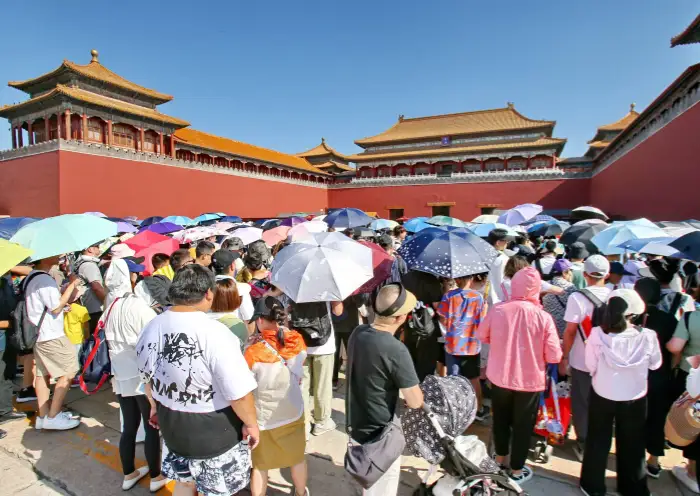
The three Golden Weeks (Chinese New Year, National Day, and Labor Day) are the absolute busiest times nationwide. Additionally, China school holidays—especially in summer (July–August) and winter (late January to February)—also see increased crowds.
Travel Season |
Key Characteristics |
Typical Travel Experiences & Recommended Destinations |
National Peak Season (May–October) |
Warm temperatures, active tourism, prices increase 30%–50%, crowded tourist sites |
Mountain and canyon hiking (Zhangjiajie, Huangshan)Ethnic village tours and lake scenery (Guizhou, Jiuzhaigou, Qinghai)Summer Tibet tours (July–September) |
Shoulder Season (March–April, November) |
Tourist volume drops by ~40%, cooler temperatures, lower prices |
Flower-viewing trips (Luoyang peonies in March, Wuxi cherry blossoms in April)Autumn foliage trips (Beijing’s Fragrant Hills, Yunnan terraces in November) |
Absolute Peak Periods (Golden Weeks) |
Nationwide travel surges, transport congestion, inflated hotel and ticket prices |
Overcrowded landmarks: Forbidden City, Great Wall, Lijiang Old Town
High-demand cities: Beijing, Xi’an, Chengdu Chinese New Year (Feb 17–24), May Day, National Day |
Reverse Peak Season (Nov–early March) |
Off-season for most, but some regions are busiest due to snow or tropical climate |
Ice & snow tours (Harbin Ice Festival, Changbai Mountains)Tropical getaways (Sanya from Oct–Apr)Warm winter retreats (Xishuangbanna, Yunnan highlands) |
How Do We Define Bad Travel Times for China?
The two main factors that contribute to the worst times to visit China are the extreme climate conditions and large-scale population movement due to national holidays. In summer and winter, there is more extreme weather in China. Most cities in the southern region of China are very hot and humid in summer. And in winter, the northern region is usually too cold to bear, while the southern region is not equipped with heating in some places. Both periods of time are not suitable for outdoor activities.
As for the large-scale population movement, every year, during Spring Festival, National Holiday and Labor Day Holiday, the air tickets and hotel prices across the country increase significantly, even double. The most important is that you can’t guarantee getting the tickets. All the transportation hubs and hot attractions are crowded with people. The travel experience is really worse.
Worst Times to Visit China
Chinese New Year (Spring Festival) – Late January to Mid-February
Dates: February 17–24, 2026 (the date could be different in every year)
Crowd Level: ★★★★★
Price Impact: Flights and hotels increase by 50%–100%; high-speed train tickets must be booked 30 days in advance
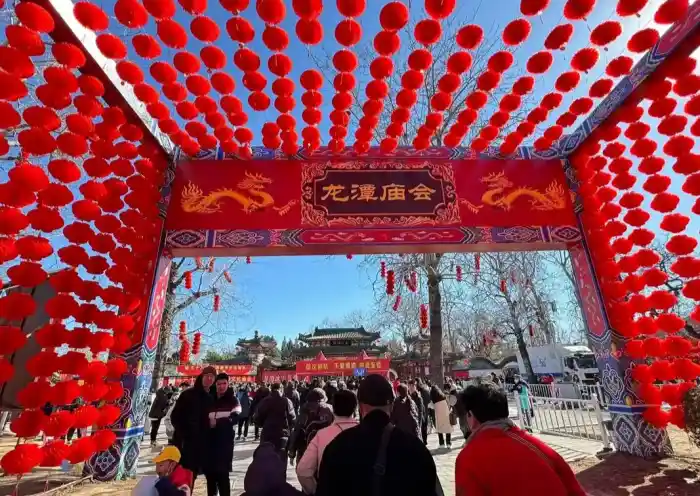
Chinese New Year is the most important holiday in China and the busiest travel season of the year. While it’s a great time to experience authentic Chinese traditions and festival atmosphere, it’s also the worst time to visit China if you’re looking for a budget-friendly, efficient and less crowded tour.
In 2026, around 5.13 billion domestic trips are expected during Spring Festival travel rush (“Chunyun”), especially during the 3 days before the holiday and also the return peak (February 21-24, 2026). Airports in large cities like Beijing, Shanghai, and Guangzhou will become extremely congested, with up to 1.8 million travelers per day.
- Transport: Flight prices rise 50–100%, train tickets are scarce even a month out
- Accommodation: Hotel rates in top cities like Beijing often double (e.g., courtyard hotels: ¥1200/night vs. ¥600 off-season)
- Spending: Scenic ticket prices remain stable, but food and souvenir prices may rise 20–30%
National Day Holiday (Golden Week) – October 1–7
Dates: October 1–7, 2026
Crowd Level: ★★★★★
Price Impact: Hotel and flight prices are at yearly highs; train tickets are hard to get
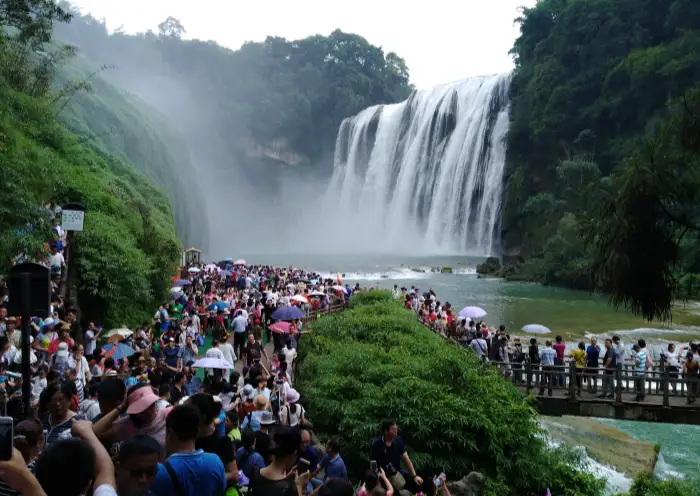
The National Day Golden Week is another least recommended time to travel to China, as nearly every family takes advantage of this 7-day national holiday to go for a trip. Major cities and tourist sites would operate at full capacity, with long queues, jammed public transport, and steep prices.
Train tickets to popular destinations like Beijing, Shanghai, and Zhangjiajie often sell out immediately. Hotel rates also skyrocket, and if you’ve decided to travel in this period, must remember to book early, last-minute bookings are nearly impossible.
- Transport: Overcrowded buses, subways, and trains; high-speed rail tickets sold out fast
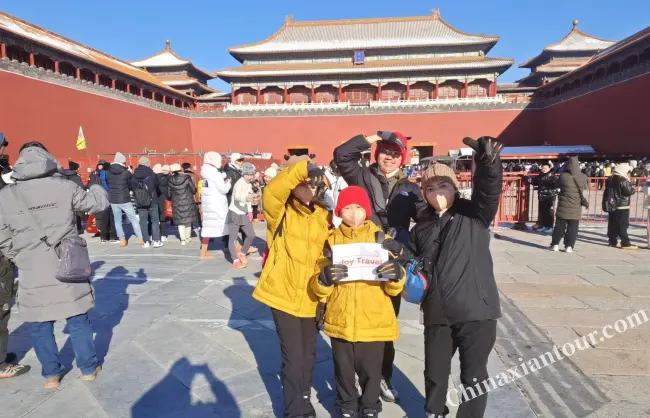
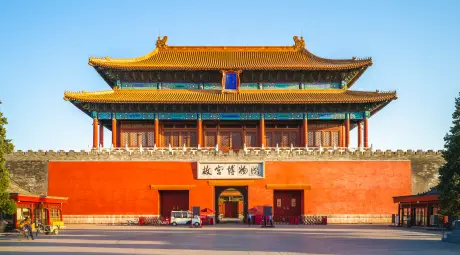
- Tourist Attractions: Full to bursting—expect massive crowds at the Great Wall, Forbidden City, etc.
- Costs: Accommodation and flights are among the most expensive of the year
Labor Day Holiday – May 1–5
Dates: May 1–5, 2026
Crowd Level: ★★★★☆
Price Impact: Hotel and flight prices rise moderately to high levels
Labor Day, also known as May Day Holiday, marks the first major public break in spring. It is an incredibly popular time for domestic travel. Though not as intense as Chinese New Year or National Day holiday, this 5-day holiday still brings large crowds especially in major cities and well-known scenic areas.
Though the pleasant weather across the nation encourages travel, this period will bring busy train stations, traffic congestion, and long queues at top attractions. Train tickets to popular cities like Xi’an, Chengdu, or Hangzhou sell out fast, and prices for mid-range hotels typically rise 30–60%.
- Transport: High-speed rail and flights book up fast; expect congestion on highways if traveling by car
- Tourist Attractions: Busy and crowded, but slightly more manageable than in Golden Week or Spring festival
- Costs: Higher prices than average, as a result, advanced booking is essential for good deals
Other Busy or Inconvenient Travel Periods
Summer Vacation (July–August): Hot Weather and Family Crowds
China’s school summer break typically spans from early July to late August making this one of the busiest travel seasons of the year (basically the same time for all levels of student, from primary school to college). Families with children often plan domestic trips during this time, which would lead to incredibly crowded tourist attractions, higher hotel prices, and fully booked trains or flights. And this phenomenon is dominant in popular destinations like Beijing, Shanghai, Chengdu, Guilin, and Xi’an.
In addition to crowds, many regions—particularly in the east and south—would experience high temperatures and humidity. Cities like Chongqing, Shanghai, Nanjing, Guangzhou and Hangzhou frequently top national heat rankings, with temperatures reaching over 35°C (95°F). For those sensitive to heat or seeking a more peaceful travel experience, this period is unlikely to be the right time for you to travel to China.
However, if you’re bound by school schedules or other conditions, don’t be discouraged. Even though the listed situations may affect your travel experience, it’s still possible for you to enjoy a wonderful trip with smart planning. Consider booking a China family tour that includes air-conditioned transportation, family-friendly hotels, and well-paced itineraries. Destinations like Yunnan, Qinghai, or the grasslands of Inner Mongolia can also offer cooler weather and more space to breathe during this peak season.
Recommended Family Tour Packages:
13 Days China Educational Family Tour
10 Days China Family Tour with Kids


Mid-Autumn Festival / Dragon Boat Festival / Qingming Festival (Variable Dates)
Crowd Level: ★★★★☆
These three holidays are all important official public holidays in China and, while not as extreme as Chinese New Year or National Day Golden Week, they still cause significant spikes in domestic travel and the accordingly rise in ticket prices, and attraction crowd levels.
Mid-Autumn Festival usually falls in September or early October (based on the lunar calendar). It’s a time for family reunions, and major cities and cultural attractions often see heavy traffic. While some are traveling back home, other will be using this time to have a short trip.
Dragon Boat Festival typically takes place in June (based on the lunar calendar), with crowds gathering in scenic river cities such as Guilin or Suzhou to watch dragon boat races or enjoy a typical Chinese snack: sticky rice dumplings (zongzi).
Qingming Festival (Tomb-Sweeping Day) falls on or around April 4–6 (based on the lunar calendar). This is when people honor their ancestors by visiting cemeteries and outdoor parks. However, since this festival also comes with a three-day-break, tourist spots, especially those near major cities, will be packed during the 3-day holiday.
Although these holidays are shorter than the two “Golden Weeks,” travel demand still surges. Travelers who prefer fewer crowds and lower costs should consider avoiding these dates. For more crowd-friendly alternatives, explore off-the-beaten-path destinations like Guizhou, Ningxia, or Qinghai.
Climate-Related Challenges: When Weather Can Ruin Your Trip
China’s vast territory means seasonal weather extremes could vary dramatically across regions. While spring and autumn are called as the best times to visit most places, still, every season sees certain weather patterns can make your travel uncomfortable, risky, or simply inconvenient. Below are two major climate-related periods that travelers should consider to avoid.
Typhoon and Meiyu (Plum Rain) Season in Southern China (June–September)
From June to September, southern and coastal China will frequently be affected by heavy rainfall, high humidity level, and even typhoons caused by the Meiyu season (particularly cities like Shanghai, Guangzhou, Shenzhen, Fujian, and Zhejiang). While the constant showers and lingering humidity may affect your mood severely, typhoons sweeping in from the South China Sea can cause even serious travel disruptions, including flooded roads, canceled flights, and attraction closures.
The Plum Rain season is especially challenging for family vacations or outdoor-heavy itineraries. If you’re planning a trip to southern China, it’s best to avoid these months or shift your focus to inland southwest destinations like Chengdu, where summer weather tends to be more stable (though still very hot).
Sandstorms in Northern China (March–April)
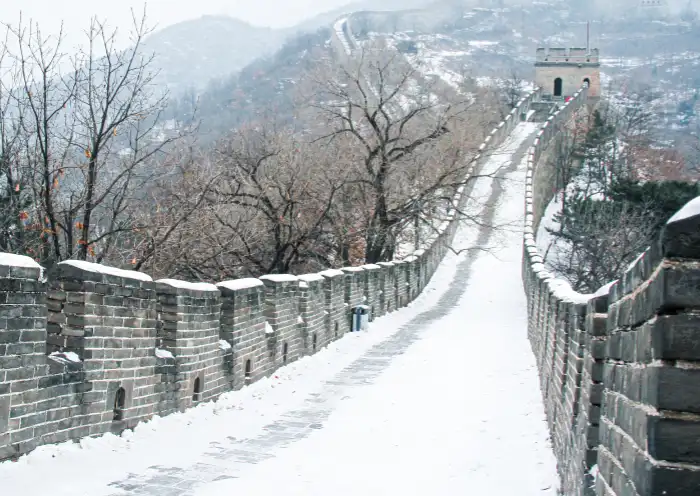
Early spring, especially March to April, often brings sandstorms to northern regions such as Beijing, Inner Mongolia, Gansu, Ningxia, and even Xi’an. These dust-laden winds originating from areas like the Gobi Desert can severely impact air quality and visibility in northern cities. This would make it difficult for people to explore outdoor landmarks like the Great Wall.
In this period, air pollution levels can also be particularly harsh on sensitive travelers, children, or elderly visitors. If you want to visit northern China in spring, it’s wise to schedule your trip for late April or May, when the weather becomes clearer and cooler for sightseeing.
Traveling to China in summer vs winter weather extremes
In summer, the central, eastern and southern areas of China are basically featured by high temperature and high humidity. When exploring the outdoor attractions, it is easy to feel discomfort. Some tourists may even suffer from sunstroke. It is also the rainy season for most cities. Sometimes, the southern coastal areas will also be affected by typhoons. This will disrupt your travel plans.
In winter, in the northern region of China, the chill seems to pierce into the marrow and the climate is very dry. Another important factor is the snow. The heavy snow can cause traffic delays and the closure of scenic spots easily. Though the southern region is not dry, it is also cold. Because some places are not equipped with heating and you may feel cold even in the rooms, let alone outdoor attractions and activities.
Worst Time to Visit China’s Top Destinations
Since China’s vast geography would lead to varying seasonal conditions across regions, timing your visit can be considered crucial for a smooth and rewarding travel experience. Below are some of the worst times to visit several China’s most popular destinations, along with suggestions for better alternatives.
Beijing (Great Wall) & Xi’an
Avoid:
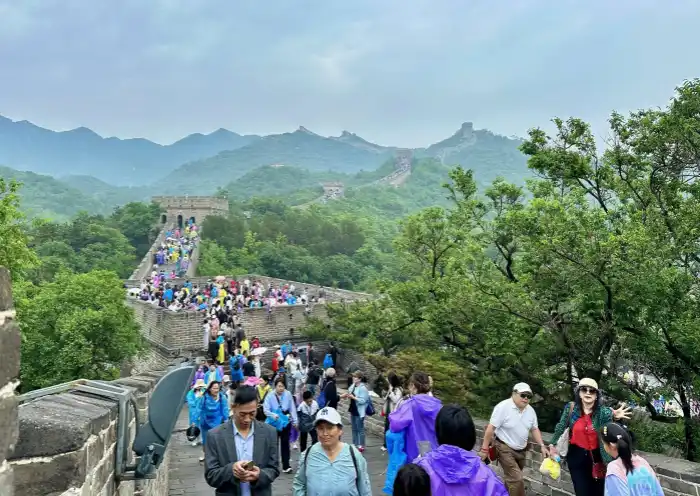
- July–August: Extremely hot and crowded, particularly on weekends.
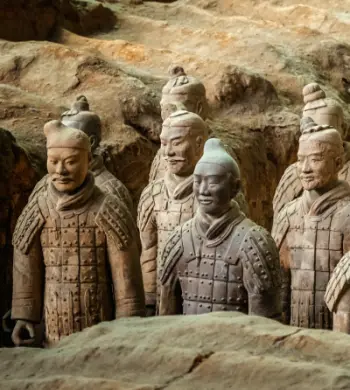
- Golden Week (October 1–7): Overwhelming crowds at the Great Wall, Forbidden City, and Terracotta Warriors; long queues and inflated prices.
Better alternatives:
- May: Pleasant spring weather and fewer crowds.
- Early September to late October (excluding National Day holiday): Mild autumn climate and clearer skies.
- Early November: Crisp air, golden foliage, and much smaller crowds.
Shanghai, Suzhou, Hangzhou & Xiamen
Avoid:
- July–August: Intense heat, high humidity, and risk of typhoons disrupt outdoor sightseeing and make walking tours uncomfortable.
- Chinese public holidays: Including festivals listed above such as the Mid-Autumn Festival or National Day, all of these special days with short or long breaks can bring a surge of domestic travelers.
Better alternatives:
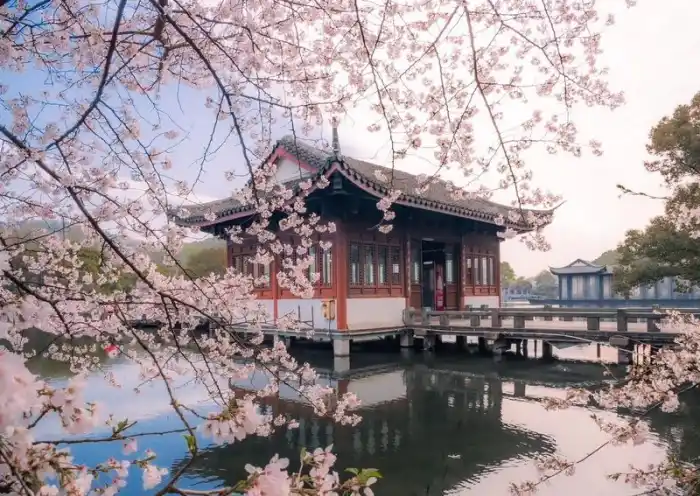
- March–April: Cherry blossoms in Suzhou and Hangzhou, with mild weather and scenic parks.
- Late October: You can enjoy cooler temperatures and beautiful fall foliage during this period, especially in places like Hangzhou’s West Lake and surrounding hills.
Guilin & Yangshuo
Avoid:
- May–June: The most typical rainy season; prone to heavy rain and flash floods, especially in the Li River area.
- July–August: Still rainy, extremely humid, and packed with domestic tourists during school holidays.
Better alternatives:
- Late March to mid-April: Spring blossoms in full bloom, comfortable weather for biking and river cruising.
- Late September to mid-November: Clear skies, harvest season at Longji Rice Terraces, and ideal conditions for hiking and photography.
When Should You Visit China Instead?
Although certain periods are best avoided, China still offers a wide range of optimal travel windows in different seasons. Generally speaking, late March to early June and mid-September to mid-November are considered the best times to visit China. In these days, you will travel with pleasant weather, fewer crowds, and more rewarding cultural experiences.
For a detailed month-by-month guide, see our full article: Best Time to Visit China: Weather by Season & Month
How to Plan a China Trip Around Bad Dates
If you don’t have other choices but have to travel during peak periods or unavoidable public holidays, don’t worry—there are still ways to enjoy a memorable and captivating China trip:
- Adjust expectations: Be prepared for some harsh conditions you may encounter, including longer lines, higher prices, and larger crowds. A flexible mindset goes a long way.
- Choose a trusted travel agency: Local experts can help you optimize and plan a most suitable route, while also booking your tickets early, and allowing you to avoid known bottlenecks.
- Book in advance: Trains, hotels, and scenic area tickets often sell out weeks before peak holidays.
- Consider alternatives to hot spots: For example, if Guilin is packed during summer, we recomend you to head to Southeast Guizhou (Qiandongnan) for similar karst landscapes, ethnic culture, but with fewer tourists and cooler temperature.


FAQs about Traveling to China around Bad Times?
What are the worst times for budget travelers to visit China due to high costs?
For budget travelers, Spring Festival, National Holiday and summer holidays are definitely the worst times, the cost may reach twice the usual amount during this time.
What should I consider when thinking about worst travel times to China?
Your budget and experience preference should be considered, since the cost is always higher and the attractions are very crowded during these times.
How does Golden Week affect travel prices and crowd levels in China?
Due to the sudden growth of demand in a short time, the hotel prices and air tickets generally double or even nearly triple in hot tourist cities. And the passenger flow in train stations and attractions usually reaches its peak.
Plan Your China Tour with Us
Organizing a trip to China can be overwhelming and that’s where we come in. Chinaxiantour’s experienced travel advisors are here to make your journey easier from start to finish. We are experts in making tailored journey, and we’re confident in building a trip that fits your schedule, interests, and budget. With flexible itineraries, responsive support, insider knowledge, and anything you want for a China tour, we make sure you enjoy the best of China—stress-free.