

January in China offers a fascinating contrast, especially when it comes to weather. While you may experience bone-chilling winters in the north, with temperatures averaging around -15°C to -5°C, you can also have surprisingly mild escapes in the south (average around 0°C~15°C (59°F)). It’s a month marked by spectacular ice festivals, quieter cultural sites (outside peak holidays), and unique snowy landscapes. In some southernmost places in the country, like Sanya and Xishuangbanna, warm sunbath vacations are also possible.
Besides the varied weather and activities to cater to different preferences, January in China is also the off-peak season for most tourist destinations. This means reduced cost for accommodations and activities, shorter lines in popular attractions, more relaxed sightseeing, and a quieter tour.
Smart planning your China tour in January is key to enjoy winter wonders. This guide covers everything you would need for a successful trip, aiming to help you discover all the best experiences and landscapes China offers in January.
Content Preview
- What is the Weather Like in China in January?
- Where to Go in China in January? Top 8 Places
- What to Do in January in China?
- Top Festivals and Events in China in January
- Crowds and Costs in January
- China Travel Tips for January
- How to Plan a China January Tour?
What is the Weather Like in China in January?
January is normally China’s coldest month, but will all the cities experience the same level of coldness?
The answer is no. Average temperature in China in January varies sharply across regions. Northern areas like Beijing and Harbin endure sub-zero temperatures, heavy snow, and biting winds. Northwest regions, like Xian and Dunhuang, are typically dry and cold, with occasional snow. Eastern and central areas, like Shanghai, Suzhou, and Hangzhou, face damp, overcast chill. Southern and southwestern regions (e.g. Guangzhou, Yunnan) stay mild temperature (8–20°C) with cool nights. The Qinghai-Tibet Plateau (Lhasa, Xining) sees bitter cold at night despite strong daytime sun.
All in all, January in China will paint a diverse winter canvas, from icy north to subtropical south.
January Weather in North China – Beijing, Harbin, Shenyang, Jilin
January in North China is extremely beautiful as it is defined by bone-chilling coldness and snow-draped landscapes. Temperatures range from Beijing’s average -5°C (23°F) to Harbin’s -18°C (-0.4°F), with dry, snowy weather blanketing the region.
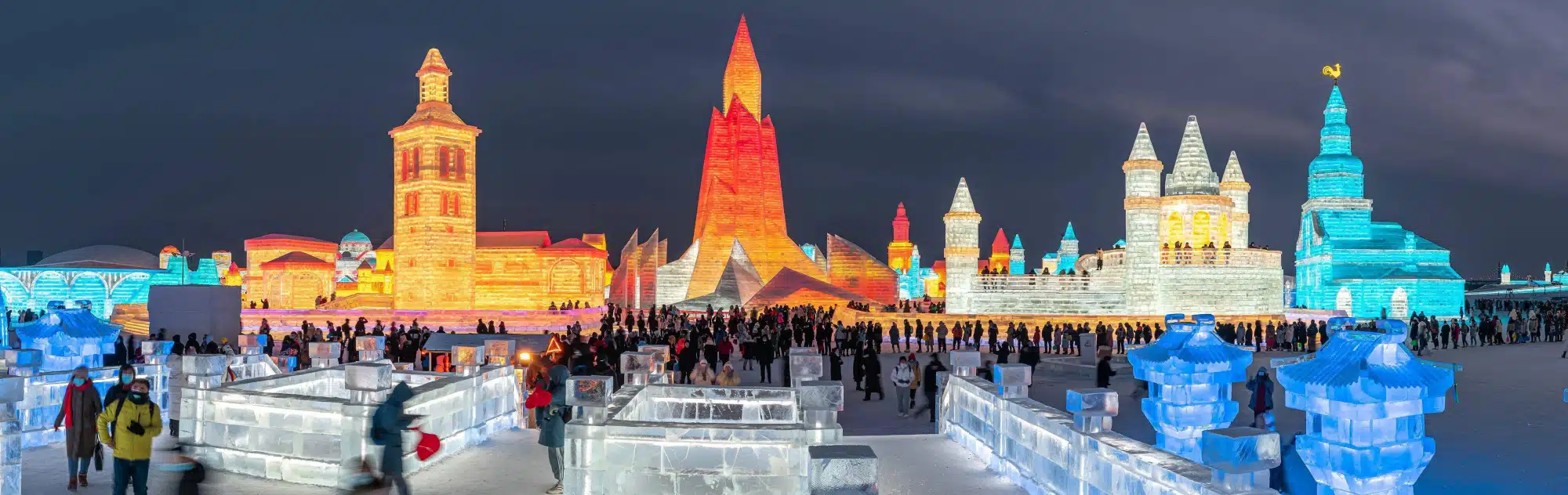
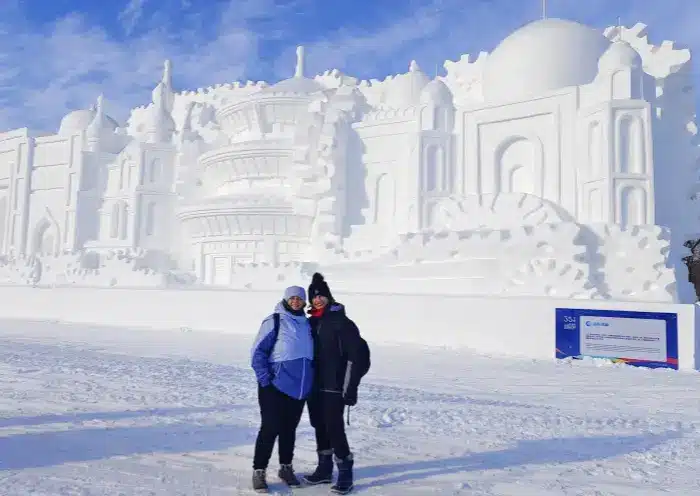
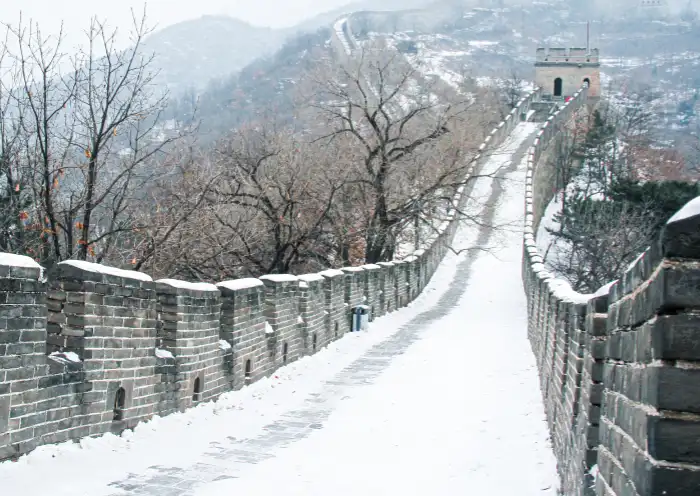
This is the prime time for winter activities, such as climb the snow-covered Great Wall, ski slopes in Shenyang, ice skating on frozen rivers and lakes, and Harbin’s iconic Ice and Snow Festival (start from Jan 5).
Bundle up: thermal layers, windproof down jackets, insulated boots, and gloves are musts to fend off the chill. Though frigid, North China’s January offers a unique, frosty beauty.
Related reading: Harbin Weather Guide: Best Time to Visit & Seasonal Tips
January Weather in Northwest China – Xian, Dunhuang, Urumqi
Northwest China’s January is a month of dry, biting cold, less extreme than China’s northeast but still frosty and crisp. Across cities like Xi’an, Dunhuang, and Urumqi, weather in January is characterized by significant day-night temperature differences and occasional heavy snowfall.
Temperatures would vary by city, for example, Xi’an hovers around freezing, averaging around -5°C/23°F, while Dunhuang and Urumqi are much colder, dipping to -15°C to -5°C/-5°F to 23°F. Dry air amplifies the constant chill, making exposed skin like hands or ears prone to frostbite.
Winds would make the cold even more worse. Days are short and gray, with weak winter sunlight offering little warmth. Despite the biting cold, January in Northwest China is a month of quiet, icy stillness. It is a ideal time to savor history, nature, and warmth of local culture amidst winter’s understated beauty. Also, you can expect less interruptions of large crowds during this period.
January Weather in South China – Shanghai, Shenzhen, Guangzhou, Chengdu, Chongqing, Yunnan
January in South China is a world apart from the north—here, winter is mild, humid, and surprisingly varied, with temperatures ranging from cool to pleasantly warm depending on the region.
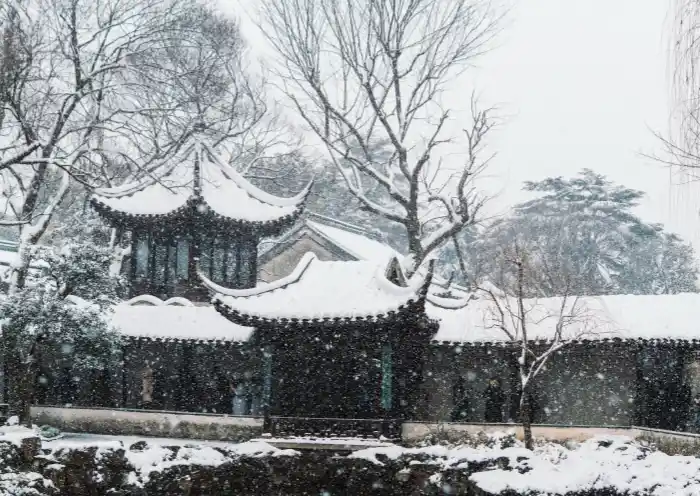
Shanghai and nearby areas, such as Suzhou, Hangzhou, Huangshan, see average temperatures of 1°C–8°C (34°F–46°F), with chilly, damp days and overcast skies. Humidity sometimes makes the cold even sharper, as light rain is common but brief. Further south cities like Guangzhou and Shenzhen enjoy milder weather in January (9°C–19°C/48°F–66°F). Days will be dry and sunny, which cool and warmer evenings, ideal for outdoor strolls.
Inland Chengdu and Chongqing stay cool (3°C–10°C/37°F–50°F) but persistently overcast, their “Fog City” reputation shining with misty mountain views. However, about 800 km away from Chengdu, you’ll see Kunming in Yunnan, which is also called the “Spring City.” It stands out with sunny, dry days (3°C–16°C/37°F–61°F) and cool nights, offering year-round comfort to visitors. Moving further south, the warm sunshine and tropical vibe in Xishuangbanna and Sanya, with daytime temperature hovering around 20-25°C, are waiting to offer you a relaxing vacation.
Across South China, winter’s humidity softens the cold, and while rain or mist may linger, it rarely feels harsh. It’s a season of understated warmth—perfect for savoring local culture without the harsh experience of northern ice.
January Weather in Qinghai-Tibet Region
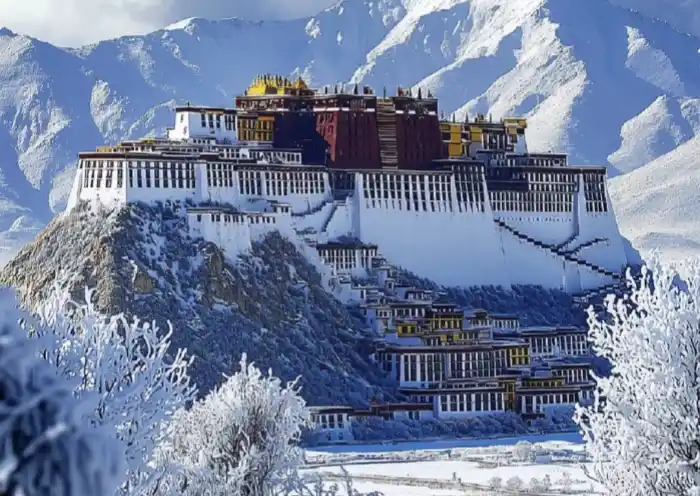
January in China’s Qinghai-Tibet Region is marked by the extreme high-altitude weather—cold, dry, and shaped by the plateau’s unique climate. The temperature swing is dramatic, with daytime brings intense sunlight, nights suddenly plunge into bitter cold within a short time.
Lhasa, the region’s heart, sees average temperature from -8°C to 7°C (18°F to 45°F). While bright, sunny days feel deceptively warm, temperatures will suddenly nosedive after sunset, often dropping below freezing. Xining, farther north, is harsher—avg. -15°C to 2°C (5°F to 36°F)—with relentless cold, dry winds, and little respite from the chill. Besides, both areas suffer from low oxygen levels, a hallmark of high-altitude life. As a result, it requires visitors to acclimate slowly and be sure to consult a doctor right away if you’re not feeling well.
Where to Go in China in January? Top 8 Places
Harbin
Average temperature: -18°C (-0.4°F) (lows to -30°C).
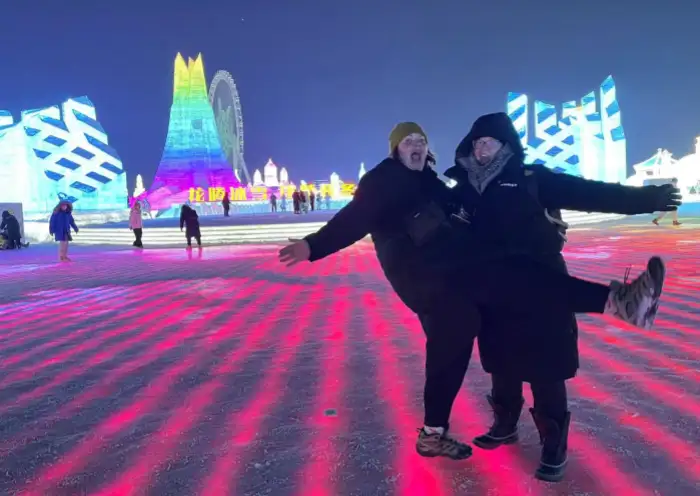
Home to the world-famous Ice & Snow Festival (starts from every Jan 5th), in winter seasons like January, Harbin transforms into a frosty wonderland where imagination turns to reality with the magic of ice. Beyond seeing giant sculptures, visitors can also glide down snow mazes, ride ice slides, or try ice skating on the frozen Songhua River.
Local workshops show how intricate ice lanterns are made, while street vendors sell steaming bingqilin (shaved ice desserts) topped with sweet bean paste. Don’t miss the “Ice Lantern Park,” where thousands of colored ice lights are used to create a nighttime spectacle. You can also watch ice hockey matches and snow sculpture competitions during the festival. It is a wonderful event which draws visitors from all over the world to witness this winter marvel.
Beijing
Average temperature: -5°C (23°F) (highs up to 3°C).
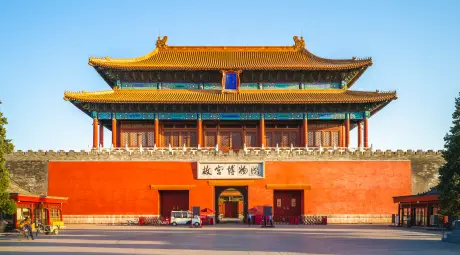
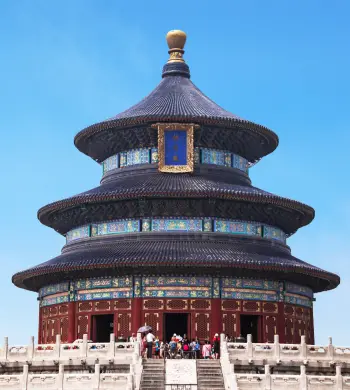
Winter in Beijing blends imperial grandeur with cozy local charm. Beyond snow-dusted Great Wall sections and the Temple of Heaven’s frosty pavilions, it is also worth a try to wander through hutongs where red fu couplets flutter beside steaming hot pot stalls.
Try Beijing specialties like zhajiangmian (fried sauce noodles) or mutton hotpot in Nanluoguxiang, then visit the National Art Museum’s winter-themed exhibitions. The city’s winter also brings crisp, clear skies—perfect for photographing the snow-covered Forbidden City or strolling along the frozen moat of the Summer Palace.

Jilin & Mount Changbaishan
Average temperature: -15°C (-5°F).
January transforms Jilin into a snow kingdom. The famous “Water Curtain Cave” at Changbai Mountain also freezes into a glittering cascade, with its icicles refracting sunlight into rainbows. Nearby, the Songhua River’s “rime forests” create another fairy-tale landscapes. Drive along the Tumen River, where border villages host winter fishing festivals (fishermen cut holes in ice to catch carp), or hike the “Snowy Dragon” trail for panoramic views of snow-capped peaks.
Yunnan
Average temperature: 8–15°C (46–59°F).
Yunnan’s is a “spring” escape from January’s cold in China. In Yuanyang, mist curls over 1,000 terraced rice fields, turning them into mirrored pools reflecting the sky—best viewed at sunrise when the first light paints the paddies in golden hues.
Lijiang’s Old Town, with its cobblestone lanes and wooden courtyards, blooms with winter roses and camellias, while nearby Baisha Village hosts Naxi cultural performances (pipe dances, bronze drum rituals) that tell stories of the region’s ancient history.
Also oak in the region’s hot springs: the sulfur-rich waters of Anning Hot Springs greatly soothe your muscles. Or you can visit the “Tiger Leaping Gorge” for icy waterfalls and rare birdwatching.
Sanya
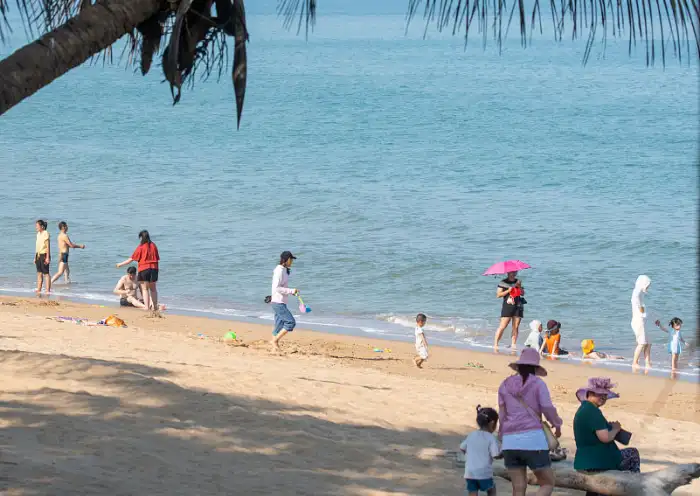
Average temperature: 20–25°C (68–77°F). This is one of the warmest places in China in January.
In January, Yalong Bay’s powdery sand and turquoise waters invite people to try snorkeling, where you can spot parrotfish and sea turtles darting through coral reefs. When warm days turn dark, go savor local cuisines at Dadonghai’s night market, which bustles with all kinds of street food: grilled shrimp skewers, coconut ice cream, and hainanese chicken rice (fragrant with ginger and scallions).
For adventure, hike the Nanshan Temple’s 108-meter-tall Guanyin statue, where the goddess’s serene expression overlooks the vast South China Sea. Explore the underwater world at Atlantis Waterpark, or rent a jet ski to zip across the waves. For a more relax experience, stay in a beachfront villa with a private pool, or cycle along the coastal road at dawn, winter here feels like a permanent vacation, with temperatures warm enough for barefoot walks on the sand.
Xiamen
Average temperature: 12–18°C (54–64°F).
Xiamen’s mild weather in January is perfect for leisurely exploration. Gulangyu Island, a car-free haven, charms every visitor with its unique colonial-era buildings. Go visit the 19th-century Piano Museum houses a 1920s Steinway, and walk along the island’s cobblestone lanes which are lined with art galleries and café.
Nearby, the Hulishan Fortress showcases Qing Dynasty artillery, with cannons pointing toward the sea. End your day at Zhongshan Road Pedestrian Street, where modern neon lights illuminate traditional tea houses (try tieguanyin oolong tea) and boutique shops selling local handicrafts.
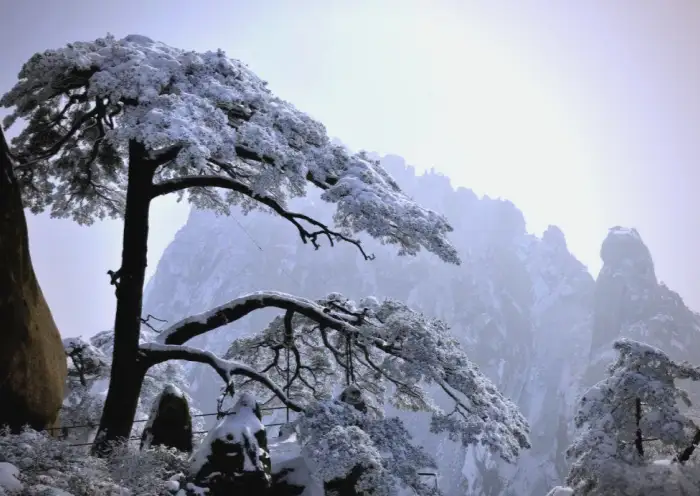
Huangshan (Yellow Mountain)
Average temperature: -3°C (27°F).
Huangshan’s winter is a snow artist’s masterpiece, a natural wonder. Peaks are cloaked in white, presenting an ethereal “sea of clouds” views in front of you. This scene is best witnessed at sunrise from Bright Summit (Guangmingding), where clouds roll in like waves.
Also, the hot springs of Tangkou, heated by geothermal energy, will offer visitors with relief after hiking. Soak your body in the mineral-rich waters while admiring snow-draped pines. Don’t miss the “Oddly-shaped Pines” (gnarled trees frozen in snow, their roots gripping rocky cliffs), or the West Sea Grand Canyon, where ice formations cling to vertical walls, glinting in the winter sun.
Zhangjiajie
Average temperature: -2°C (28°F).
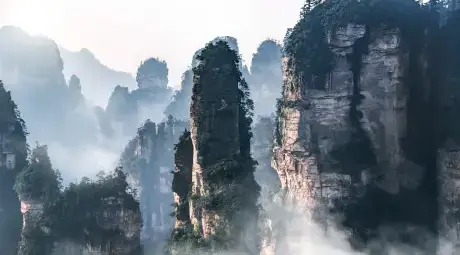
Zhangjiajie in January still wraps its sandstone pillars in frost, turning them into “fairyland lace.” Tianzi Mountain’s “Avatar Hallelujah Peaks” will vanish into clouds, creating dreamlike vistas, while the Glass Skywalk shimmers with ice crystals, offering a thrilling (but safe) walk above the valley.
Visit the Zhangjiajie National Forest Park’s Winter Fairyland Scenic Area, and you’ll see rime coats every twig, turning the forest into a crystal garden. Then ski at Wulingyuan Ski Resort (with slopes suitable for beginners), or take a cable car to the top of Tianmen Mountain for panoramic views of the snow-blanketed landscape. At night, enjoy the amazing “Millennium City” light show, which projects Han Dynasty-inspired patterns onto mist, blending history with winter magic.
Recommended China Winter Tour Packages:
- 10 Days Shenyang Dalian Dandong Changbaishan Harbin Tour
- 8 Days China Winter Tour of Beijing, Harbin, Shanghai
- 4 Days Huangshan Winter Tour with Hot Spring
What to Do in January in China?
Traveling to China in January offers you a rich and exciting travel experience. If you haven’t made a clear plan for what to do in your winter tour in China, then get some inspirations from the following section of top things to do in January in China.
Marvel at Harbin’s Ice & Snow Festival
Every year, starting from Jan 5th, Harbin’s most iconic Ice & Snow Festival will be hold. It usually lasts for a moth, however, sometimes longer till the end of February if the weather permits. It will transform the city into a frosty wonderland. Here you can see giant ice sculptures—towering up to 30m—glow with colorful lights at night, while snow mazes and ice lanterns create a whimsical atmosphere. Ideal for family outings, January makes Harbin a photographer’s paradise and a celebration of winter creativity.
Witness Winter Snow Scenery at Yellow Mountain
January paints Huangshan in monochrome beauty. Snow falls down on peaks and ancient pines, turning the mountain into a serene black-and-white canvas. Pair your Yellow Mountain hike with a visit to nearby hot springs. Feel the moment of steam rising from the waters contrasting beautifully with the icy landscape.
Explore China Snow Town
Tucked in Heilongjiang’s Shuangfeng Forest Farm, this lesser-known gem is a winter fairytale. Wooden cottages, buried under thick snow, beautifully dot the village, while crackling bonfires keep visitors warm. Stroll through snow-laden lanes, chat with locals, and savor homemade treats. These are the purest, and the most uncomplicated winter charm you can ever have.


Ski at Yabuli Ski Resort – China’s Largest
Located 120km from Harbin, Yabuli is China’s top ski destination. With slopes for all skill levels, it caters to every skiing enthusiast. After a day on the slopes, you can warm up in cozy log cabins, sipping hot cocoa as you gaze at snow-capped pines.
Hike the Snow-Capped Great Wall in Beijing
One reason to travel to China in January is that it’s a good time to escape the summer crowds, especially in some top attractions like Mutianyu Great Wall. In January, snow dusts the ancient bricks, creating a stark, majestic backdrop. The crisp air and fewer visitors make it easier to soak in the rich historical atmosphere.
Capture the Rime Scenery of Zhangjiajie National Forest Park
Early mornings in January bring magic to Zhangjiajie. Thick frost clings to the sandstone pillars and trees, transforming the park into a “fairy tale forest.” The soft light of dawn enhances the frost’s sparkle, making it the perfect time for photography.
Photograph Yuanyang Rice Terraces in Yunnan
Winter turns Yuanyang’s terraces into a mirror of the sky. Flooded fields will reflect the misty mountains, creating dreamlike patterns on the water surface. Visit at sunrise for the most ethereal light.
Top Festivals and Events in China in January
New year
Falling on every January 1, Chinese people would have a short holiday to celebrate this festival. It’s a time for family reunions or moments with friend, lavish dinners (with fish for prosperity), and hanging New Year scrolls. Fireworks paint the sky to welcome the fresh start, blending age-old traditions with the excitement of a brand-new year.
International Ice and Snow Festival in Harbin
Running Jan. 5–20, this 17-day festival transforms Harbin into a frosty wonderland. Zhaolin Park has giant 30m ice sculptures glowing with LED lights. Ice slides, snow mazes, and folk performances are some of the most attractive events.

Laba Festival
Laba festival marks the traditional start of spring (Jan 18, 2024). It is a Han Chinese festival of renewal. Families cook Laba porridge (rice, beans, nuts) which symbolizes unity. Temple fairs feature is celebrated for the traditional crafts and folk performances, they are the testament to old rituals with modern gatherings.
Crowds and Costs in January
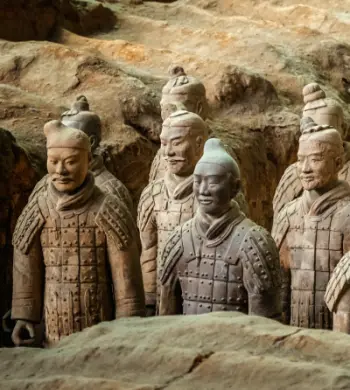
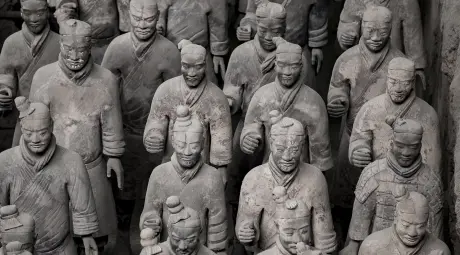
January is the low-season for tourism in China, which means you’ll face fewer crowds and lower prices for flights, hotels, and tours. Most attractions, like the Great Wall, Forbidden City, or Terracotta Army, are less busy than peak summer months. It would be easier and more comfortable to explore. However, costs rise slightly in late January as a lot of people will be preparing for the Chinese New Year vacation, so book flights/hotels 2–3 weeks in advance to secure deals.
China Travel Tips for January
- Pack Accordingly: Clothing depends on your destination. Northern cities (Harbin, Beijing) require heavy winter gearlike down jackets, thermal pants, gloves, hats, and thick scarves. Southern areas (Guangzhou, Yunnan) need lightweight layers—sweaters, light coats, and waterproof shoes for misty or rainy days.
- Bundle up when visiting northern cities:Most northern indoor spaces will be heated, but outdoor activities demand full layers. Carry hand warmers and other gears for long walks in Harbin or Zhangjiajie.
- Transport Tips: Book high-speed rail tickets (e.g., Beijing to Harbin) 2–3 weeks ahead. Flights to Sanya may be pricier—consider alternative airports like Haikou.
How to Plan a China January Tour?
Now you know that China in January offers diverse experiences, from thrilling ice festivals to serene cultural retreats and warm sunshine vacations.
If you seek ultimate snow scenery and outdoor activities, choose an ice & snow route to Harbin, Changbai Mountain, and other winter highlights in northeast China. Planning 7-8 days for this journey is recommended, spending 2-3 days in Harbin, 2 days in Snow Town, and 3 days for the Changbai Mountain adventure in Jilin.
For some warm retreat and leisure routes, Sanya, Yunnan, Xiamen in Fujian, and Guangzhou will all be great choices. These destinations are the best places to enjoy beaches, rice terraces, cultural immersion and mild weather.
It is also okay if you are traveling to China for the first time and just want to cover some iconic destinations like Beijing, Xian, and Shanghai. These cities are good to visit year-round, including January. Generally, 8-10 days is recommended for a classic tour: 3-5 days in Beijing, 2-3 days in Shanghai, and 3-5 days in Xian.
Chinaxiantour offers tailored tours in all destinations in winter. Feel free to contact us if you want some unique experiences or a personalized journey based on your preferences.


