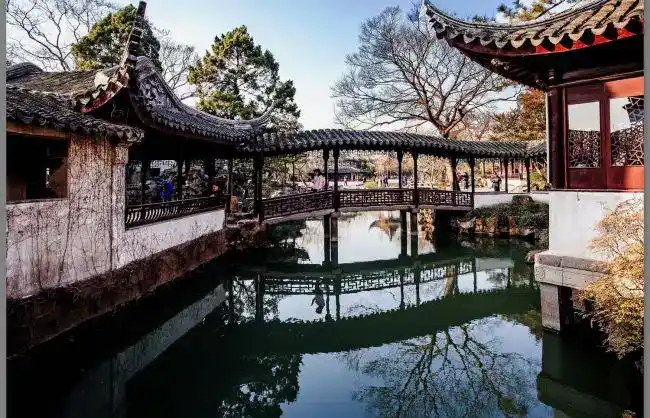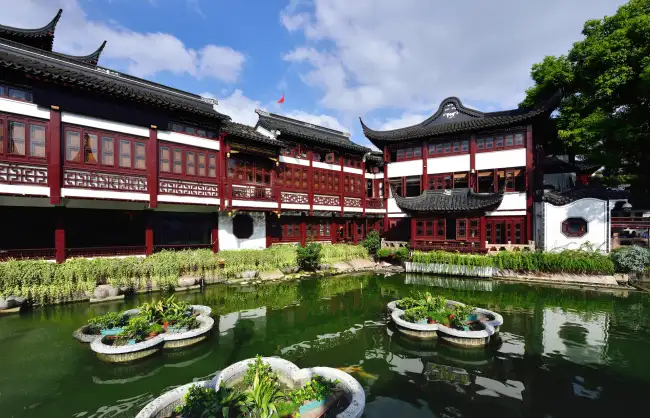

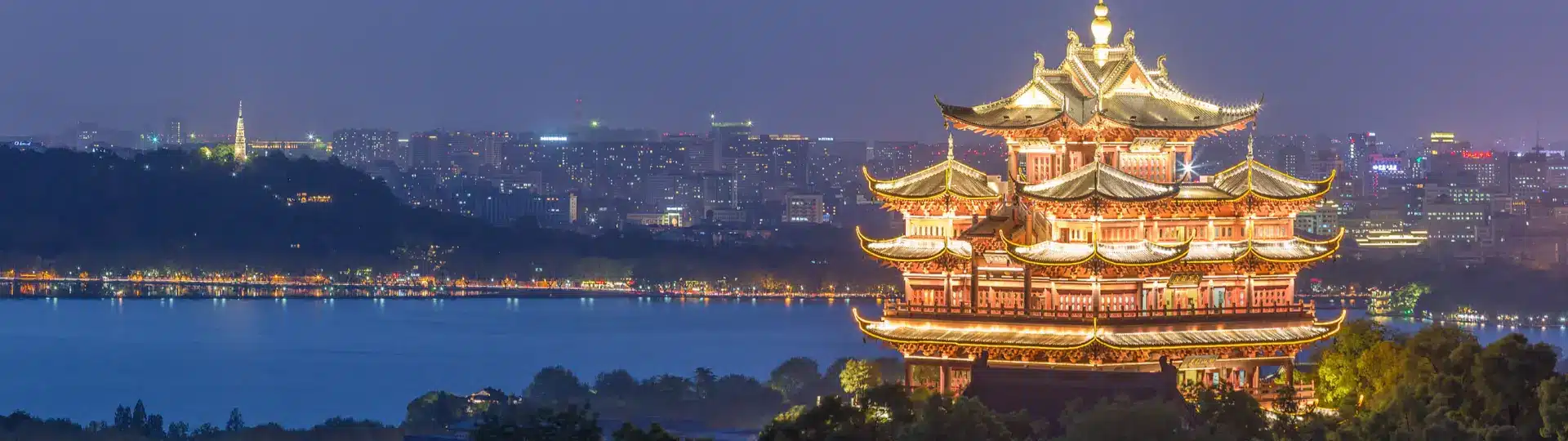
When taking a walk in a Chinese garden like the Humble Administrator’s Garden in Suzhou, you may constantly be amazed by the poetic landscape and traditional Chinese architecture. You may find the garden structures look somewhat similar in design but different in details. Here come some of the most interesting concepts in Chinese Garden history: the “Four Treasures”. They are “Pavilion (亭ting),” “Terrace (台tai),” “Storeyed Building (楼lou),” and “Waterside Pavilion (榭xie) “.
Do not worry if you feel confused right now. This guide will not only define some key Chinese garden structures, but also explore their symbolism and the architectural principles of Feng Shui applied to them, and recommend excellent examples of each for your itinerary.
Content Preview
- Chinese Pavilion (亭 ting): A Place to Rest and Reflect
- Chinese Terraces (台 tai) – Elevated Platforms in Ancient Architecture
- Storeyed Buildings/Towers (楼 lou)– The Art of Layers
- Chinese Storeyed Pavilions (阁 ge)– Libraries in the Clouds
- Chinese Waterside Pavilions (榭 xie)– Romance of Chinese Gardens
- Chinese Covered Corridor (廊 lang)–The Gardens’ Veins
- Chinese Verandas/Studios (轩xuan)– For Literati’s Inner Peace
- Chinese Floating Pavilions (舫 fang)– Still Boat Houses
- Symbolic Meanings of Shape, Direction, and Location
- Symbolism and Feng Shui in Chinese Pavilion Architecture
- Where to See Chinese Pavilions, Terraces, and Classical Architecture
- Admire Chinese Architecture with China Xian Tour
Chinese Pavilion (亭 ting): A Place to Rest and Reflect
Pavilion Definition: Form, Function, and Design
The form of Chinese Pavilions can be quite flexible yet consistent: a building with a delicately carved roof but without any walls. And what makes them different is their design. The design of their shapes and roofs shows great diversity, and thus, pavilions are classified into different categories (will be introduced in the next section).
Initially, pavilions were used as checkpoints, with soldiers guarding inside. After the Han dynasty (202 BCE-220 AD), some pavilions served as stations near the major roads or ferries for travelers to take a break during long journeys. Therefore, historically, Pavilions have been linked with “taking a rest” and “farewell”.
If they are located near beautiful natural landscapes, people inside can have a panoramic view of their surroundings due to their “wall-less” feature. That makes them wonderful spots for literati to appreciate scenery, enjoy refined wines, and reflect on their life experiences in poetry and literature.
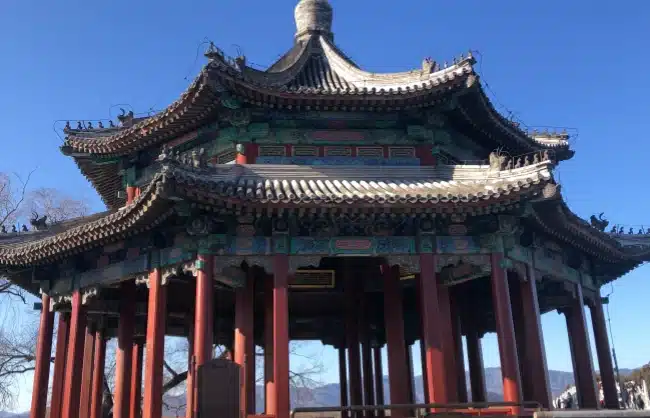

What Does a Chinese Pavilion Look Like?
To make an analogy, a Chinese Pavilion is like a wooden or stone-made giant umbrella or a “wall-less” shed, which is artistic and even fancy. You may come across it in the woods, on a mountain or just on a quiet hiking trail. It stands there, drawing you to sit under its roof to relax your sore muscles, chat with your friends, and enjoy this peaceful moment of nature.
Classical Chinese Pavilion Styles
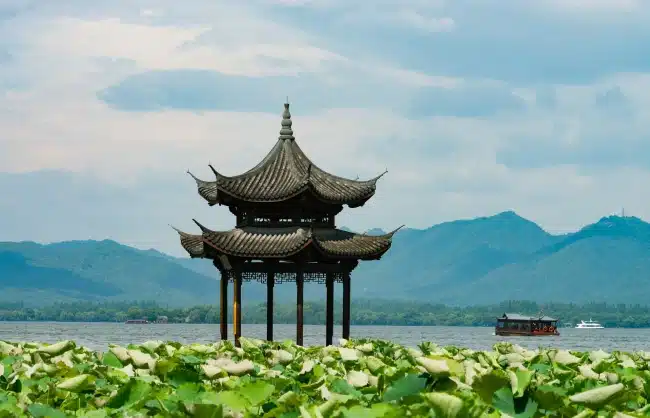
Chinese Pavilions in the Tang dynasty (618-907 AD) were largely applied in the imperial gardens, and their shapes became more varied: square, round, hexagonal, and octagonal are the popular ones.
By the Ming and Qing dynasties (1368-1912 AD), the developing design moved on to more complicated shapes: triangular, fan-shaped, quincunx, and so on. The roofs may be shaped like a single pyramid or take the traditional hip-and-gable style.
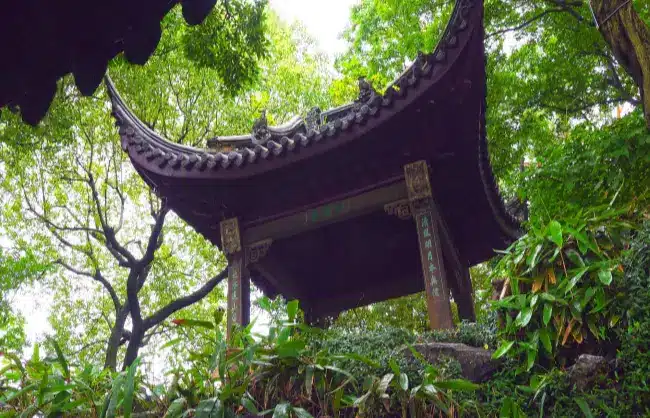
In southern China, where Pavilions are more exquisite, the roofs usually have tiny upward curves at the tips. Moreover, the Pavilions usually have decorative elements on them: some have statues of mythical beasts on the roofs, some may have patterns of scenery, flora, or historical figures painted or carved on the beams, and others may contain calligraphy or reliefs on the pillars. These all express Chinese people’s best wishes and efforts to blend Pavilions into the views of traditional Chinese gardens.
Famous Chinese Pavilions
Name |
City |
Location |
Description |
Canglang Pavilion |
Suzhou |
Gusu District |
It is Suzhou’s oldest gardens. Its excellent layout of “double corridors” and “ornamental perforated windows” lets visitors see the view of mountain and stream before entering the pavilion. |
Huxin Pavilion |
Hangzhou |
One of China’s “Four Great Pavilions”. It is famous of an Ming article about a poet watching beautiful snowfall in it. |
|
Langru Pavilion |
Beijing |
Summer Place |
China’s biggest extant ancient Pavilion. It is supported by 40 pillars and becomes one of the key attractions in the Summer Palace. |
Suggested tour
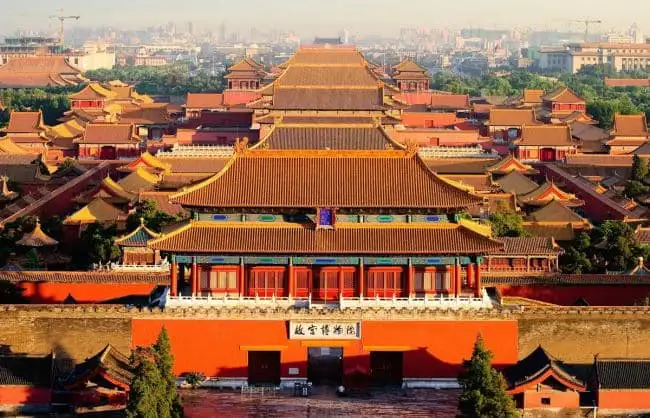
Visit Beijing Forbidden City and Great Wall, Xi'an Terracotta Warriors, Hangzhou West Lake, Suzhou classical gardens, and Shanghai Bund in this ten-day cultural journey.
Chinese Terraces (台 tai) – Elevated Platforms in Ancient Architecture
What Is a Chinese Terrace?
A Chinese Terrace is a manually built flat platform made by piling up stones/wood/soil. It is usually elevated above the ground, with or without a structure on it, to provide an unobstructed view. Because of this, a Chinese Terrace could be used as a lookout or observation deck. Or it could be a stage where the spectators below could see the performances clearly.
Traditional Chinese Terrace Design
A Chinese Terrace may be built to accommodate the terrain, for example, on a peak or along the water, to get the best view at the most efficient cost. Most roofless Terraces serve exactly as platforms, while others may be bases of palaces or altars. This design follows the principles of Rites and hierarchy to show the authority and divinity of the figures on it.
Famous Chinese Terraces
Name |
City |
Location |
Description |
Round City Terrace |
Beijing |
Beihai Park |
It used to be an isle in the Taiye Pond and then re-constructed as city wall in the Ming dynasty. On it is the Ming Chengguang Palace. There are also 17 old trees aged over 300 hundred years. That is why it is called the “smallest castles” and a “garden in the air”. |
Great Wall Beacon Terraces |
Across the Northern Cities |
Along the Great Wall |
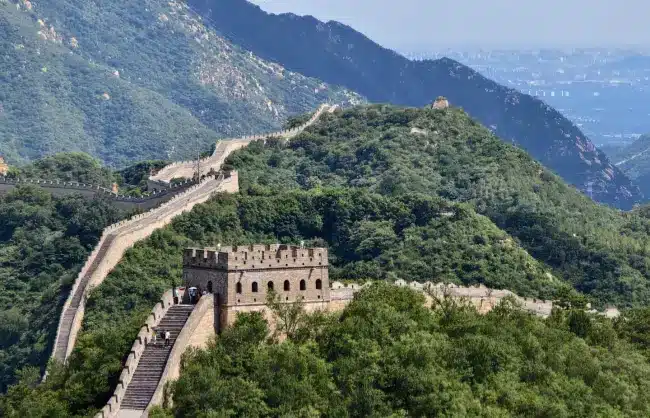
They are internationally known observation terraces that once enabled the soldiers to convey information through beacon-fires. |
Taihe Palace Terrace Base |
Beijing |
The Forbidden City |
The three-layered Terrace Base is made of white Jade. It lifted the Taihe Palace to a supreme position so as to present the superiority of the imperial power. |

Storeyed Buildings/Towers (楼 lou)– The Art of Layers
What makes a Lou Special?
Unlike a Pavilion or a Terrace that may lack a roof or walls, Chinese Storeyed Buildings/Towers are more enclosed cubic structures with multiple floors, windows on the walls, and winding corridors in the air. Among the Chinese garden structures, the Chinese multi-storey architecture is probably the most prominent one. They contain rich spaces and undertake various functions, for instance, as a residence, a restaurant, or for storage.
Famous Multi-Storey Chinese Lou Buildings/Towers
Name |
City |
Location |
Description |
Yellow Crane Tower |
Wuhan |
Snake Mountain |
It is one of the “Great Chinese Buildings in the South of Yangtze River”. In the Three Kingdoms Period (220-280 AD), it worked as an military observation deck. Then it is famous of a Tang poem using its name as the title. |
Yueyang Tower |
Yueyang |
The West City Wall of the Yueyang City |
It is the only one that preserves its original location and appearance among the “Great Chinese Buildings in the South of Yangtze River”. It is known for an article written by a famous talent in the Song dynasty, Fan Zhong Yan. |
Guanque Tower |
Yongji |
Puzhou Old City |
It is 73.9 meters in height, the highest in the “Four Great Buildings”. It was initially constructed during the Northern Zhou dynasty (557-581 AD), but the extant one is a 2002 duplicate. It is also famous of a poem named after it. |


Chinese Storeyed Pavilions (阁 ge)– Libraries in the Clouds
Storeyed Pavilions vs Towers
A Storeyed Pavilion is also a multi-storey enclosed structure with windows and winding corridors. Although it sounds similar to storeyed buildings/towers in definition, they have two essential differences.
There is always a Ping Zuo– a wall-less winding corridor or terrace on its ground floor in a Storeyed Pavilion. Different from any of the rooms in a storeyed building/tower, Ping Zuo does not count as an interior space. What’s more, if a storeyed building/tower is more likely to accommodate people, a Storeyed Pavilion functions mostly as a home for books and scriptures. It gives Storeyed Pavilions an unworldly and elegant vibe.
Famous Storeyed Pavilions in China
Name |
City |
Location |
Description |
Nanchang |
The East Bank of the Gan River |
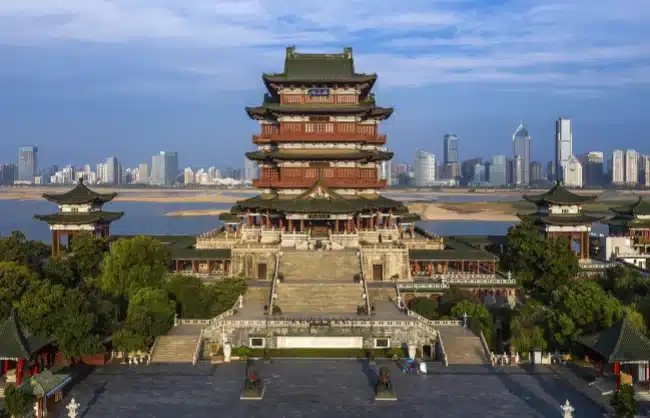
It is the first of the “Great Chinese Buildings in the South of Yangtze River. It is famous of a Tang article using its name as the title. The extant one is a 1989 duplicate. |
|
Penglai Pavilion |
Yantai |
Danya Mountain |
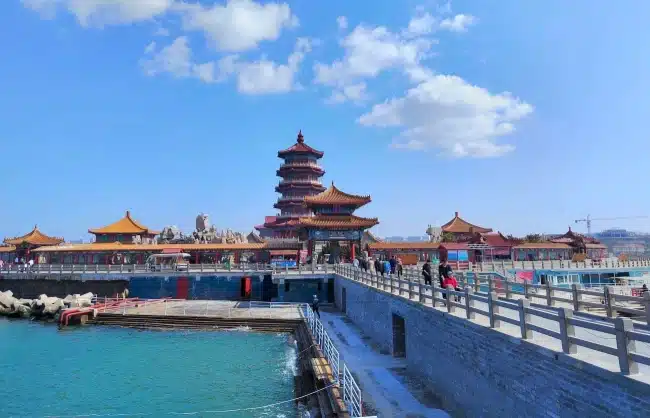
It is a Song pavilion complex. The main pavilion still preserves its original appearance. It is famous for the scene of mirage and the legend of “Eight Immortals Crossing the Sea”. |
Tianyi Pavilion |
Ningbo |
The West of the Moon Lake |
It is the oldest extant privately-owned library pavilion from the Ming dynasty. Its design and principles even influences some imperial libraries. |
Recommended Tour
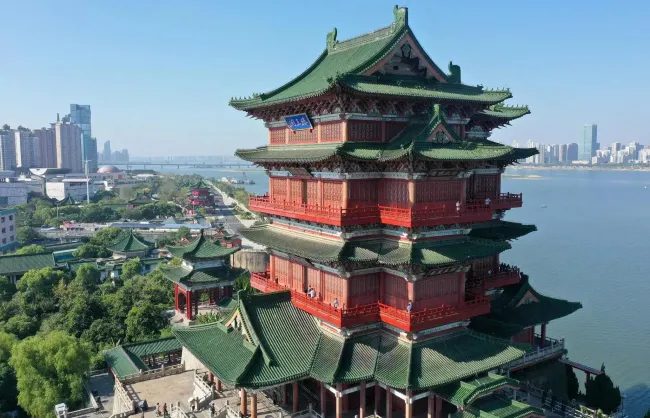
Visit Nanchang's Tang-era Tengwang Pavilion, hike Lushan Mountain's poetic waterfalls, explore Jingdezhen's porcelain kilns, and wander Wuyuan's Huizhou-style villages.
Chinese Waterside Pavilions (榭 xie)– Romance of Chinese Gardens
What is a Chinese Waterside Pavilion?
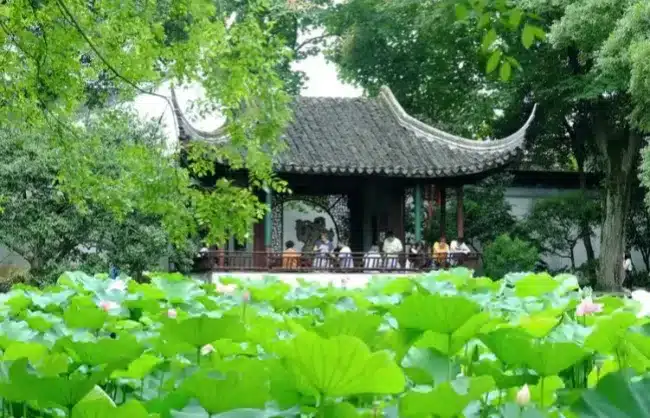
A Chinese Waterside Pavilion, as its name indicates, is usually located along water, with its base under the surface. A part of its body would protrude out of the ground and suspend above the water due to the support of stone beams. Its design of a suspended platform and railings makes it a perfect place to enjoy the waterside scenery. It breaks the boundary between water and ground, creating a poetic imagery.
Famous Chinese Waterside Pavilions
Name |
City |
Location |
Description |
Furong Waterside Pavilion |
Suzhou |
The Humble Administrator’s Garden |
It is a classic attraction in the Garden. In its west, a circular light shield frames the water below into a picture. It is a popular place for appreciating lotuses in summer. |
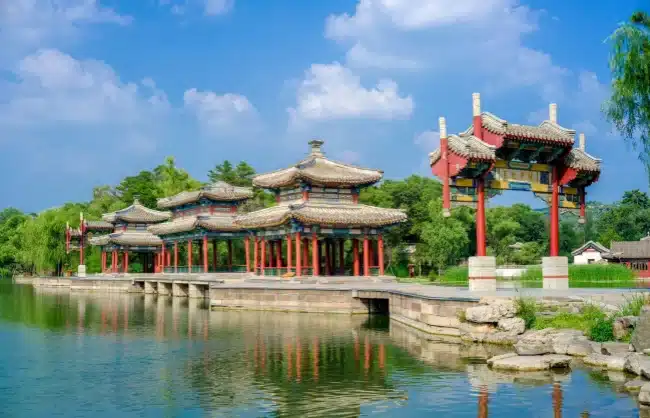
Shuixin Waterside Pavilion |
Chengde |
The Imperial Summer Resort |
It is a landscape bridge with three waterside pavilions in a line. Therefore, it is one of the “Thirty-Six Views of the Qianlong Era”. It serves as a channel between the palace and landscape lakes. |
Zhonghai Shuiyun Waterside Pavilion |
Beijing |
Zhongnanhai |
It is built on a stone terrace in water, one of the “Eight views of Yanjing”. There stands the Emperor Qianlong’s handwriting “Autumn Breeze over Taiye Lake” on a stele. |
Chinese Covered Corridor (廊 lang)–The Gardens’ Veins
What is a Chinese Covered Corridor?
A Chinese Covered Corridor is a long channel with a roof. It connects the architecture and divides the space in a Chinese garden. Its shape could be straight, curved, or even wavy, as long as it fits the garden’s layout. It is like a thread that links all the beads–the key attractions in a garden, while using the design of pillars and perforated windows to create vision effects (even illusions). Whenever the visitors walk across the corner of a Covered Corridor, they may encounter a refreshingly new view unfolding in front of them.
Famous Covered Corridor in China
Name |
City |
Location |
Description |
Long Covered Corridor |
Beijing |
The longest painted Corridor in the world. Its length is 728 meters in total. Painted on its beams are over 14,000 Suzhou style patterns, including themes from scenery in the West Lake to historical tales. |
|
Water Covered Corridor |
Suzhou |
The Humble Administrator’s Garden |
It is an exemplar of the wavy covered corridors. Its ground and roof waves like a flying Chinese loong following the change of the terrain. |
Double-Passage Covered Corridor |
Yangzhou |
Ho Family’s Garden |
It is called the “world’s longest curved corridor, with a length of more than 1500 meters. Through it, every sector of the garden becomes accessible. Some believe that it is the rudiment of China’s first overpass. |
Recommended tour

AM: Our guide and the driver will pick you up from your hotel at 8:00 (early at 7:00 in summer time or public holidays).
Chinese Verandas/Studios (轩xuan)– For Literati’s Inner Peace
A xuan could be an exquisite veranda (with a roof like lang) or a compact studio. It is usually elevated a bit above the ground and has windows on each wall. It is not as tall as a Storeyed Building and not as “exposed” as in a Pavilion. Its core feature is open, well-lit, and elegant. It is commonly located on a mountain, along water, or somewhere shaded by dense vegetation.
Since it offers shelter while still being close to nature, it is ideal for literati to read, compose poetry and paintings, and hold a tea party with friends. A famous xuan is the “Beyond the Bamboo” Studio in Suzhou Master of the Nets Garden. The three sides are surrounded by water and a bamboo grove, so people inside can see the bamboo sway gently.
Chinese Floating Pavilions (舫 fang)– Still Boat Houses
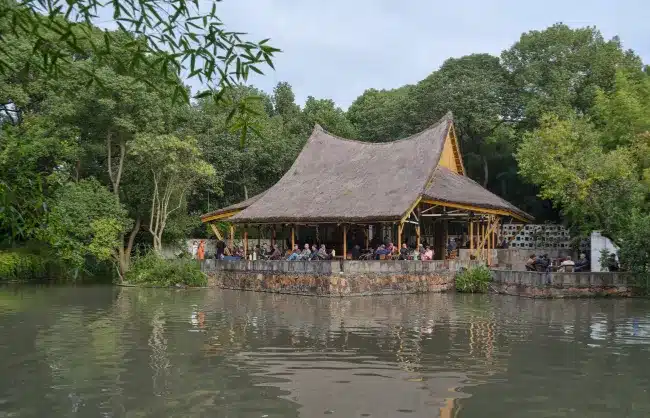
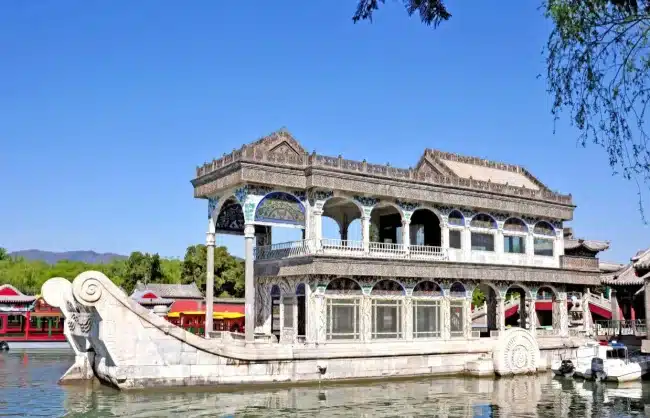
A Chinese Floating Pavilion is also known as a “stone” or “painted” floating pavilion. It imitates the appearance of a rowboat and can be divided into three parts: a pavilion-style head, a xuan-style middle cabin, and a storeyed building or pavilion-style rear cabin. They are mainly made of wood and decorated with intricate paintings or carvings. Its stone base often sits along or in water, making it a “boat” that never sails.
Embodying the literati’s aspiration of “living in the moment but spiritually roaming the world”, it is often used to hold noble banquets. The biggest extant Floating Pavilion in China is the Qingyan Floating Pavilion in the Beijing Summer Palace. It is 36 meters long, and the tiling in the cabin is in the Western style. It bears the good wish of peace and tranquillity.
Symbolic Meanings of Shape, Direction, and Location
All of these Chinese garden structures conform strictly to the traditional Chinese philosophy and rites. The core is to express the harmony between heaven and humanity. Most of them are round and square, to respect the traditional belief of “round sky and square earth”. And following the principle of rites, they tend to face the south, which is believed as a direction of honor.
Some structures, like Terraces and Storeyed Buildings, have been important symbols in imperial gardens. They occupy the most advantageous position in a city to serve the imperial figures. Their elevation symbolizes the authority, nobility, and even immortality of the figures inside. Other structures, such as Pavilions, xuan, and fang, focus more on building connections between people and nature, escaping earthly desires while reflecting on oneself for deeper thoughts and inner peace. That is why they choose more secluded locations with beautiful scenery.
Symbolism and Feng Shui in Chinese Pavilion Architecture
Chinese Pavilion architecture is always attached significance of symbolism and Feng Shui. Firstly, 亭(ting) is a homophone of “stop” in Chinese, which encourages travelers to slow down and take a rest in their journey, physically and mentally, so that they can feel the beauty of life. Then, its open structure expresses a warm welcome to and inclusiveness of everyone passing by. Helping and caring about others is a traditional Chinese virtue.
The exquisite design and special location of a Pavilion do not just make it an eye of a picturesque scene but also a convergence point of “Qi” in Feng Shui– its “umbrella” gathers and activates vital energy. Similarly, a Pavilion along the water is believed to lock in vital energy and neutralize negative disturbances so that it restores the harmony of “Qi” and safeguards the surrounding areas.
Where to See Chinese Pavilions, Terraces, and Classical Architecture
Hangzhou: A Perfect Blend of Nature and Cultural Heritage
The core of Hangzhou garden arts is the West Lake, a natural garden. The various cultural heritage of bridges, pavilions, and towers becomes part of the landscape.
Suzhou: A Pearl of Chinese Garden Arts
Suzhou represents the glory of the private Chinese literati gardens. Within a confined space, it creates an artistic realm through arrangements of rocks, mountains, water, plants, and architecture. Tourists can enjoy the serenity of nature in the city walls.
Beijing: The Imperial Temperament
Chinese gardens in Beijing are mostly imperial palaces characterized by their magnificence and symmetry. The Summer Palace only as a “museum of imperial gardens”, gathers Pavilions, Storeyed Towers, Floating Pavilions, and other traditional garden structures.
Xi’an: A Dream of Tang
Chinese Gardens in Xi’an contribute to the recreation of the golden age of the Tang Dynasty. The structures revive the original layout of the Tang imperial gardens. For example, the Ziyun Tower is a duplicate of the Tang-style Garden architecture complex. The bright and colorful lights at night make it breathtakingly gorgeous.
Admire Chinese Architecture with China Xian Tour
The variety of traditional Chinese garden structures is a dazzling diamond that decorates the mesmerizing Chinese garden landscapes. They are not just vessels of spatial aesthetics but also embody the traditional Chinese wisdom and ideals of living. Have a wonderful garden architecture tour in China with China Xian Tour today! Our consultation team has over 20 years of experience designing personalized tours for tourists. Suzhou, Beijing, Xi’an… as you name it. Our professional guides are always ready to offer knowledge and stories about these architectural treasures and help you enjoy the legendary beauty of Chinese gardens.