


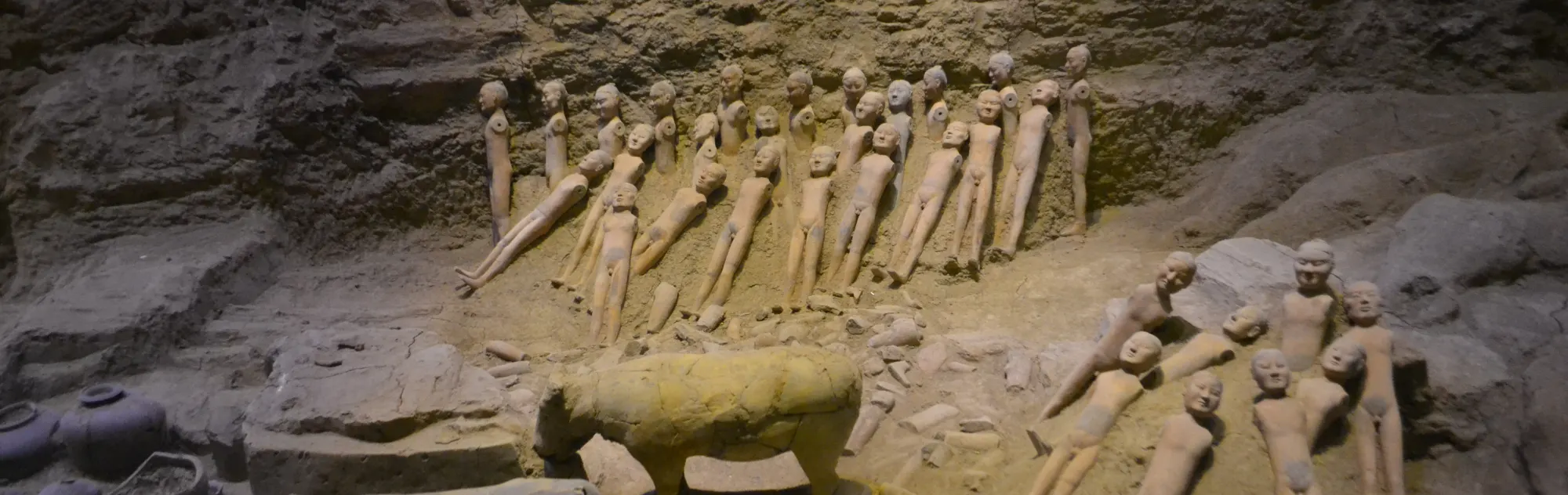
The Han dynasty (202 BCE-8 AD; 25-220 AD) rose in the chaos of the Qin collapse. In 202 BCE, the Emperor Gaozu of Han founded a regime that would stabilize China for centuries. Historians often consider this period a “Golden Age” in terms of its political, institutional, and cultural achievements. The rulers revised Qin’s harsh centralized system by weaving in Confucian governance ideals. This combination of authority and morality is proved remarkably durable.
The Han era also had practical achievements beyond ideology. The empire’s borders were further extended, and the opening of the Silk Road, a major trade corridor, connected China to its distant western neighbors. The institutions built in this era, from law codes to the scholar-official bureaucracy, created a template, a foundation that every subsequent dynasty would recognise, adapt, and build upon for the next two thousand years.
Now, follow us to learn some amazing and fun facts about this legendary dynasty.
Content Preview
- The name “Han” comes from the Han River
- A brief break split the Han dynasty into two phases: the Western Han and the Eastern Han
- The Han Dynasty was as powerful as the Roman Empire
- “Han” is why most Chinese people are called Han Today
- Paper was invented during the Han Dynasty
- The Han dynasty had an ancient “earthquake detector”
- Government officials were recruited based on talent, not their backgrounds
- Confucianism became the leading doctrine
- The main attire of the Han Dynasty, shenyi became one of the exemplary styles of traditional Han dress
- The Silk Road started as a Han dynasty project
- Han people believed in the “afterlife”
- Salt and iron were controlled by the government
- Medical books from the Han dynasty are still referenced today
- Peasants received more respect than merchants during the Han dynasty
- Cuju (the ancient football) was a popular sport in the Han Dynasty
- Han Dynasty Timeline
- Have a Historic Trip to China with China Xian Tour
The name “Han” comes from the Han River
The first fun fact about the Han dynasty is that it took the name “Han” from the Han River. It flowed through the territory where its founder, Emperor Gaozu, first held power. Originally known as the King of Han, he governed a region that covered parts of nowadays southern Shaanxi and Sichuan. It was this geographic connection that provided the name for his dynasty after he unified the empire.
As recorded in the earliest Chinese dictionary, the river—originally called the yang shui —was historically known as the “Han River”. More than a simple label, the name “Han” came to signify the heartland from which Emperor Gaozu launched his rule, anchoring his authority in a tangible landscape.


A brief break split the Han dynasty into two phases: the Western Han and the Eastern Han
Emperor Gaozu (Lord of Pei at the time) waged a rebellion with his ally, King Xiang, to overthrow the Qin regime. He eventually turned on his ally and defeated him at Gaixia. Emperor Gaozu unified the realm with flying colors, established his capital at Chang’an, and founded the Western Han dynasty in 202 BCE.
Here is a fun fact about the fall of the Western Han dynasty. Wang Mang, a politician related to the imperial family, ended the dynasty and proclaimed the Xin dynasty (8-23 AD). His reign was short. In 25 AD, Liu Xiu, a Han imperial descendant, restored the dynasty as Emperor Guang Wu and moved the capital to Luoyang, beginning the Eastern Han.
The Eastern Han lasted nearly two centuries before yielding to a new order. In 220 AD, Cao Pi, King of Wei, led to the last Han emperor’s abdication and founded the state of Cao Wei. It marked the formal ending of the Eastern Han era.
The Han Dynasty was as powerful as the Roman Empire
Just like the Roman Empire, the power of which was unstoppable during its prime, the Han dynasty, in its peak, had once shown its invincible strength. A fun fact about the powerful period is that the heyday was created by two rulers of the Western Han, with disparate governance styles.
The first contributor was Emperor Wu. He pushed back the northern nomadic ethnic group Xiongnu, opened the Western Regions through ambassador Zhang Qian’s journeys, and consolidated central power by retrieving power from the regional lords and establishing state monopolies. His promotion of Confucianism as the state religion and the creation of the Imperial Academy left enduring cultural and administrative influence.
Emperor Xuan, the other important ruler, aimed at restoration. He cut down taxes and invested in agriculture and waterworks. In this way, he stabilized the economy. Also, through both diplomatic and military approaches, he secured a lasting peace on the northern frontier. His reign (praised as the “Xuanxian Revival” ) saw population growth, institutional refinement, and sustained national stability.
Emperor Wu and Xuan represent two sides of Han greatness. Their legacy provided the dynasty not only with territory and systems but also with the resilience that defined its golden age.
“Han” is why most Chinese people are called Han Today
Here comes another fun fact about the name “Han”: it not only named an ancient empire, but also later the majority of the Chinese community.
After Emperor Wu made Confucianism the state religion, it became the ideological anchor of the empire. At the same time, a blend of Huang-Lao thought, celestial beliefs, and divination wove a kind of sacred narrative around the dynasty, turning “Han” into more than a political title, but an icon of civilization.
It was through constant contrast with neighboring ethnic groups that the people of the Central Plains began calling themselves “Han people.” Over time, it formed a shared identity rooted in a common speech and writing system and evolved into the lasting label of a people.
Paper was invented during the Han Dynasty
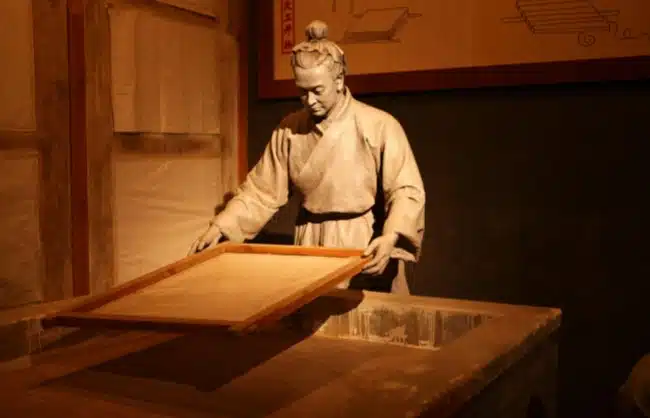
One of the “Four Great Inventions,” paper was a Han dynasty invention first emerging in the Western Han. It was made from hemp fibers. In 105 AD, the Eastern Han court official Cai Lun improved it further. By steaming and bleaching accessible materials like bark and rags and inventing a reusable paper mold, the continuous production of high-quality paper (Known as “Cai Hou paper”) became possible for the public.
The Han dynasty had an ancient “earthquake detector”
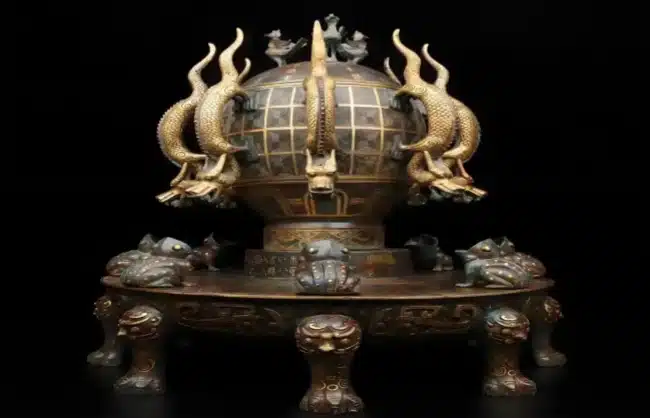
The Han dynasty inventions also included another member of the “Great Inventions”. In 132 AD, the world’s first seismoscope was invented by Eastern Han scholar-official Zhang Heng. It was made of bronze and looked like a ceremonial vessel, but with a precise internal mechanism.
When seismic activity occurred, the instrument would release a bronze ball from one of eight directional openings to indicate the tremor’s origin. Its precision was confirmed in 138 AD by successfully detecting an earthquake in nowadays Gansu. More than an engineering achievement, it demonstrated the advanced scientific outlook of the Han dynasty and represented an early milestone in the systematic study of natural phenomena.
Related reading: Ancient Chinese Compass – One of the Four Great Inventions of Ancient China
Government officials were recruited based on talent, not their backgrounds
Another remarkable achievement in the Han dynasty was the establishment of an official selection system. It valued talent over noble birth. Talents can be promoted through military service, or through specialized knowledge. The government also hired capable men from ordinary backgrounds, including later key advisers such as Xun Yu and Guo Jia. This merit-based method, which was backed up by regular performance assessments, helped ensure a stable supply of qualified administrators and sustained Han authority for centuries.
Confucianism became the leading doctrine
As mentioned in the previous sections, Confucianism had the status of the state religion and governing philosophy in the Han dynasty. Its principles were applied to political, social, and cultural life. Politically, the official selection system of “Three Ministers and Nine Scholar-Officials” secured the emperor’s authority. Additionally, to educate and select talents, the government founded the Imperial Academy to teach the Five Classics. Scholarly achievement was linked to public office. This system impacted the imperial examinations in the future dynasties.
Socially, civilians’ behaviors and interactions strictly follow the absolute doctrines of virtues like “benevolence”, “filial piety”, and loyalty. It reinforced the order between parents and children, spouses, and the ruler and his subjects. These values were also expressed in the literature and arts to present Confucianism’s stress on morality and humanity.
The main attire of the Han Dynasty, shenyi became one of the exemplary styles of traditional Han dress
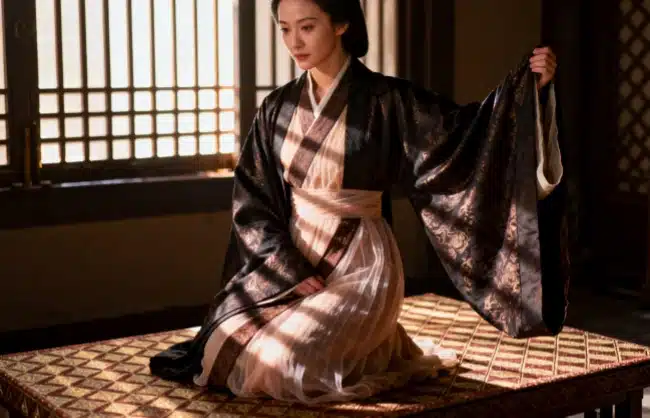
The most standard way to wear a shenyi was to join the upper and lower garments into a single garment with overlapping fronts. It typically featured a cloth cut as one piece, a cross-collar fastened to the right, and wide sleeves. quju was its most recognized style. It wrapped diagonally across the body and was secured only by layered fabric and ties. Yes, no buttons or stitches were used! This design reflected Han beliefs in harmony between heaven and humanity.
shenyi was commonly worn at big ceremonies like rituals, court gatherings, and weddings. Although its material and decoration varied according to its owner’s status, its basic form remained consistent. It helped reinforce social hierarchy while unifying Han culture under a shared tradition of dress and ceremony. Today, its design continues to inspire the hanfu revival, connecting historical elegance with contemporary identity.
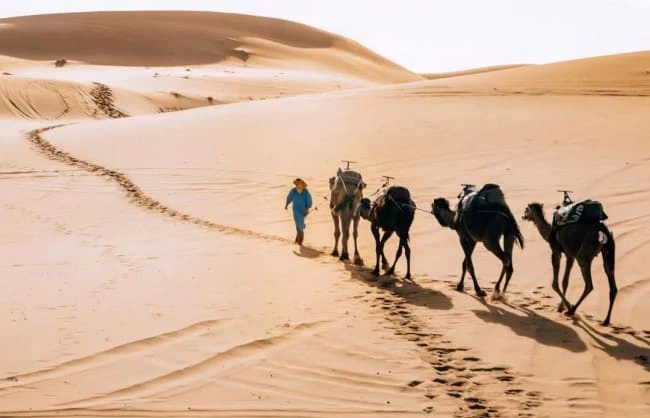
The Silk Road started as a Han dynasty project
The stability and ambition of the Han empire don’t just mean a vast territory, but also contribute to the prosperous trade on the Silk Road. In 138 AD, Ambassador Zhang Qian began his exploration of the western world beyond the empire. Zhang’s journeys established two reliable routes. One went through the Hexi Corridor, from Chang’an into Central Asia; the other was maritime, which allowed ships to sail from southern ports toward Arabia and Africa.
When Chinese merchants traveled via these routes, local goods like silk, tea, and porcelain traveled westward with them. In return, glass, metals, and wine were brought to the East. But the exchange went deeper than trade. On the Silk Road, cultures from the two sides met. Buddhism, art, and technology from the West were absorbed into Chinese culture and thought. Chinese writing, craft, and ideas, nevertheless, also left an indelible brushstroke on Western culture.
Recommended Silk Road tour
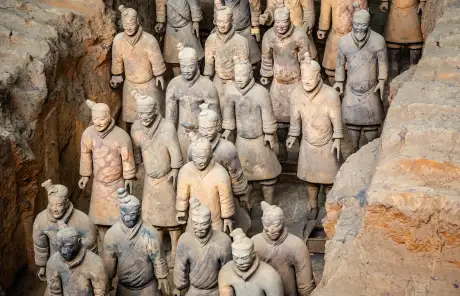
Travel the entire ancient Silk Road from Xi'an's Terracotta Warriors through the Hexi Corridor to Kashgar's vibrant old city and Central Asian bazaars in ten days.
Han people believed in the “afterlife”
Tombs and Death have always been taboo in some cultures. But the Han people had a unique vision of the afterlife. Han tombs were always designed as a miniature of the imperial palace with symbols like dragons and tigers for prestige, and birds or winged figures representing immortality. It was believed the dead could continue their spiritual journey after reincarnation. Historical stories of courage, like those of Jing Ke (who tried to assassinate the First Emperor of Qin), were also curved on the walls to highlight the era’s values.
Earthly ranks were erased in the tombs. Common people could carve noble-style gates, and images of owls marked these places as belonging only to the dead. Furthermore, the deceased would seek wisdom from sages, receive sacred writings, and finally gain entry to the immortal realm with the Queen Mother of the West’s approval.
Recommended tour with Han Dynasty Mausoleum
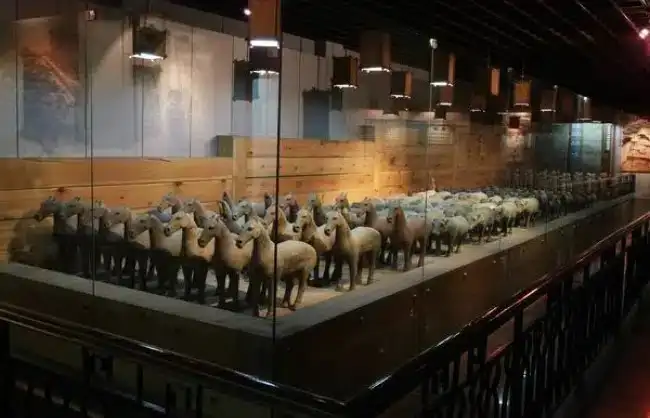
Compare the burial customs of two ancient dynasties — the colossal Terracotta Army of Emperor Qin Shihuang and the intimate underground galleries of Emperor Jingdi's Hanyangling Mausoleum.
Salt and iron were controlled by the government
Since nowadays we can buy a pack of salt or a piece of an iron tool easily, this fact about the Han dynasty may sound fun: in 119 BCE, Emperor Wu placed the salt and iron industries under state control. Before this, both had been run mainly by private merchants and local powers. The new policy indicated that the government was in charge of salt production and sales through appointed officials. Meanwhile, the officials oversaw every step of iron-related work, from mining to making tools. The changes were not totally unjustifiable: for one thing, the empire needed steady funding for the protracted war against the Xiongnu; for the other, the local elites’ profits from the salt and iron industries should be limited. As a result, the court gained both financial strength and greater political control across the empire.
Medical books from the Han dynasty are still referenced today
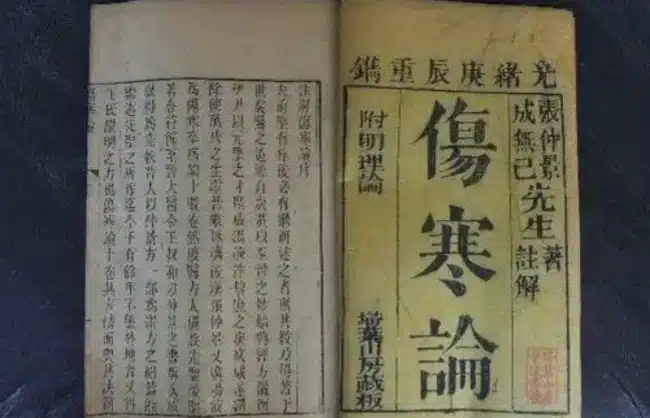
Han-dynasty medical books are still used for reference in traditional Chinese medical practice today. One of the precious legacies is the Yellow Emperor’s Inner Canon. It structured the core concepts of Yin-Yang, the “Five Elements”, and the organ-meridian system. These are the very foundation of holistic and personalized treatment methods of Traditional Chinese Medicine.
Zhang Zhongjing’s Treatise on Cold Damage and Miscellaneous Diseases is another influential piece of work. It lists the six-meridian diagnostic framework and herbal prescriptions that are still routinely applied in clinics. For reference of surgery, Hua Tuo pioneered techniques using the anesthetic “Mafeisan”. It marked an early advance in operative care. Finally, the system was completed by the Shennong’s Classic of Materia Medica, the first dedicated pharmacopoeia, which established enduring principles for classifying and combining medicinal substances.
Peasants received more respect than merchants during the Han dynasty
At the beginning of the Han dynasty, years of war had left the economy in depression. The Emperor Gaozu was born in a peasant’s family and used to be a peasant revolutionary leader. He knew the importance of agriculture clearly. Therefore, he introduced policies to support farming, such as lowering taxes, encouraging families to farm new land, and returning lands and fields to peasants. Strict controls were applied to merchants to prevent them from possessing excessive wealth or land. It was seen as a threat to the emperor’s authority.
This focus on agriculture helped ease social conflicts and accelerate the recovery of the economy. It also laid the groundwork for the prosperous era known as the “Rule of Emperor Wen and Jing”.
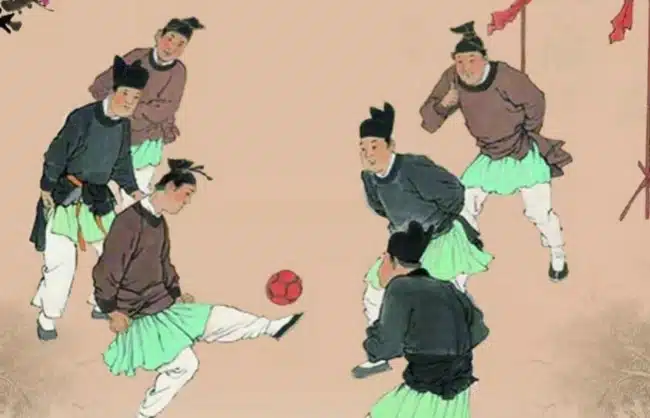
Cuju (the ancient football) was a popular sport in the Han Dynasty
The first “cuju trend” arose in the Han dynasty. Initially, the sport was integrated into army training to build soldiers’ strength, endurance, and coordination. The Book of Han recorded how General Huo Qubing used cuju to maintain morale in the troops and complimented it as a “military skill.”
But its appeal was not confined to the barracks. cuju became a widespread pastime in both the imperial court and the public area. The Records of the Grand Historian even mentioned a story of a cuju enthusiast. He was so obsessed with cuju that he even neglected the treatment of his chronic disease. It told how deeply the game had won the Han people’s hearts. Thus, cuju thrived in Han society not only as a training for soldiers but also as a fashionable public entertainment.
Han Dynasty Timeline
Year |
Event |
Description |
202 BCE |
Founding of the Han Dynasty |
Emperor Gaozu defeated King Xiang and established the capital at Chang’an. It marked the beginning of the Western Han period. |
141-87 BCE |
Emperor Wu’s Reign |
Emperor Wu expanded the territory and established the state monopolies on salt and iron. |
138 BCE |
Zhang Qian’s Exploration of the West |
This journey paved the way for the opening of the Silk Road. |
136 BCE |
Establishment of the Five Classics Professors |
Official academic positions for the Confucian classics was set up. The learning of Confucianism was institutionalized. |
119 BCE |
Battle of Mobei |
Wei Qing and Huo Qubing defeated the Xiongnu. This victory eliminated nomadic threats from the north. |
104 BCE |
The Records of Grand Historian was completed |
Sima Qian finished the first biographic-historiographic work of general Chinese history. |
8 AD |
End of the Western Han Dynasty |
Wang Mang overthrew the Han emperor and founded the Xin dynasty. The Western Han ended. |
9-23 AD |
Wang Mang’s reforms |
Wang implemented “revival” reforms. These reforms triggered social unrest and conflicts. |
23 AD |
Battle of Kunyang |
Liu Xiu’s forces defeated the Xin army in a decisive victory. It led to the collapse of the Xin dynasty. |
25 AD |
Founding of the Eastern Han |
Liu Xiu took the throne as Emperor Guang Wu and moved the capital city to Luoyang. The Eastern Han was established. |
73-102 AD |
Ban Chao’s Campaigns in the Western Regions |
Ban Chao secured the Han’s control over the Western regions and the Silk Road. |
92 AD |
The fall of the Dou Clan |
The eunuch Zheng Zhong eliminated the powerful Dou Family. It began the rise of eunuch influence in the imperial affairs |
105 AD |
Improvement of Paper Production |
Cai Produced “Cai Hou” paper. It was a big leap in technological development. |
132 AD |
Invention of the First Seismoscope |
Zhang Heng invented the first seismoscope for detecting earthquakes. |
184 AD |
Yellow Turban Rebellion |
Zhang Jiao organized a massive peasant uprising. It severely weakened the national power of the Eastern Han. |
189 AD |
Warlord Rivalry |
Dong Zhuo occupied the capital city and plunged the empire into warlord rivalry. |
220 AD |
End of the Han Dynasty |
Cao Pi forced Emperor Xian to abdicate and established the state of Cao Wei. The Han Dynasty was formally ended. |
Have a Historic Trip to China with China Xian Tour
The Han Dynasty was an unprecedentedly powerful and unified empire in Chinese history. With its broad territory, prosperous economy, and profound cultural influence, the Han empire has always been a shining star in world history and has been regarded as a model of China’s proud golden age.
When you step onto the land of the Han—standing before the grand ruins of Chang’an or hearing the echo of Silk Road caravans—you’re witnessing more than artifacts. You’re experiencing the ambition to unify a vast land and the spirit to embrace the world.
Let China Xian Tour’s expert consultants design a personalized Chinese culture tour for you—a trip back 2,000 years into the heart of the Han. Our professional guides will lead you through the empire that gave the Chinese people their name. We will show you that an immersive Han culture journey is easier than you think. Begin your adventure tour with us today!