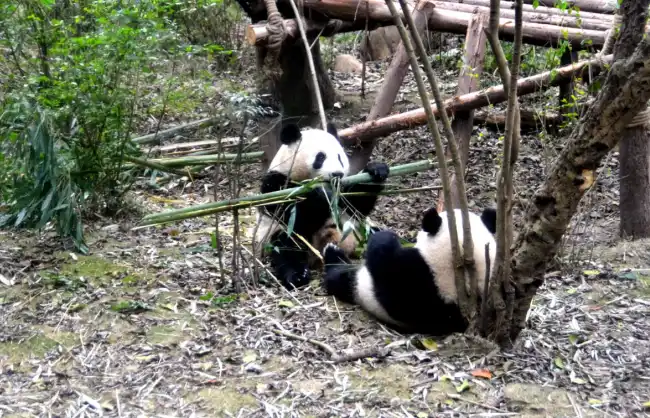






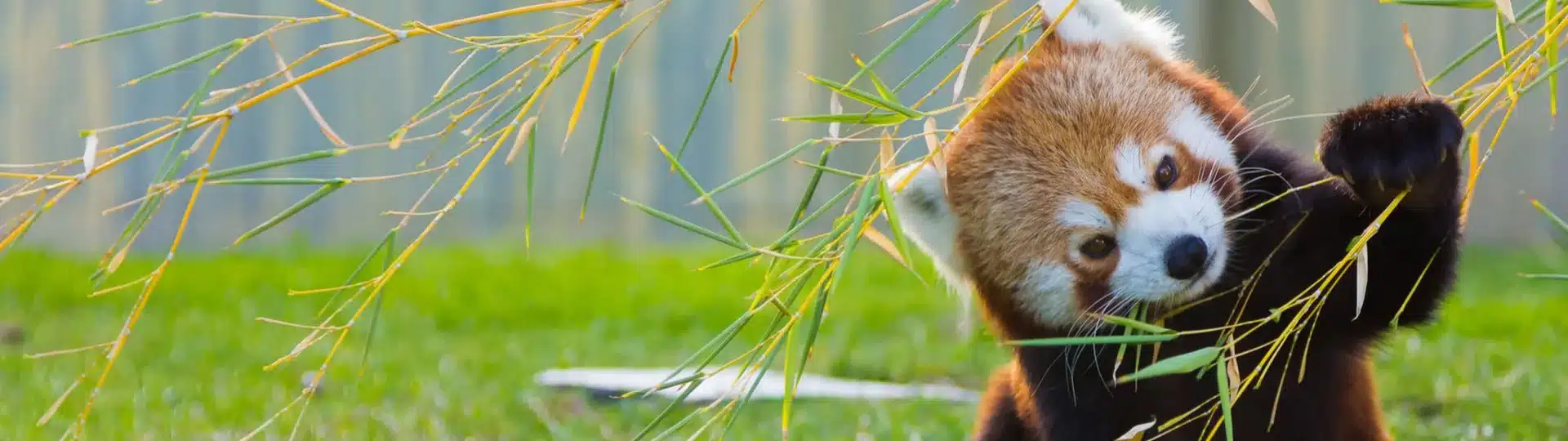
The red panda is a small arboreal mammal belonging to the Ailuridae family. It is an important component of Asia’s alpine forest ecosystems. In appearance, they resembles a raccoon, with reddish-brown fur on its back. Since they share similar diet and habitat as the giant pandas, they were once considered to belong to the same family. Though this classification were finally disproved.
The same with the giant pandas, the red panda is also classified as an endangered species by the International Union for Conservation of Nature. Their total global adult population is estimated fewer than 10,000 individuals in the wild. As the main habitat country for red pandas, China is home to about 6,000-7,000 red pandas.
Red pandas live in subalpine jungles in southwest China at altitudes of 2,000 to 3,000 meters, similar to the giant pandas. This makes it easy and convenient to visit the red pandas during your panda tour.
Content Preview
- Basic Information of Red Pandas
- Red Panda Habitat: Where Do They Live?
- Red Panda Diet & Behavior
- How Long Do Red Pandas Live?
- Red Panda Fun Facts & Myths
- Conservation Status of Red Pandas
- Where to See Red Pandas in Real Life
- FAQs About Red Pandas
- China Red Panda Tour with Us
Basic Information of Red Pandas
Here are some facts about red pandas to help you understand this precious creature.
What Do Red Pandas Look Like?
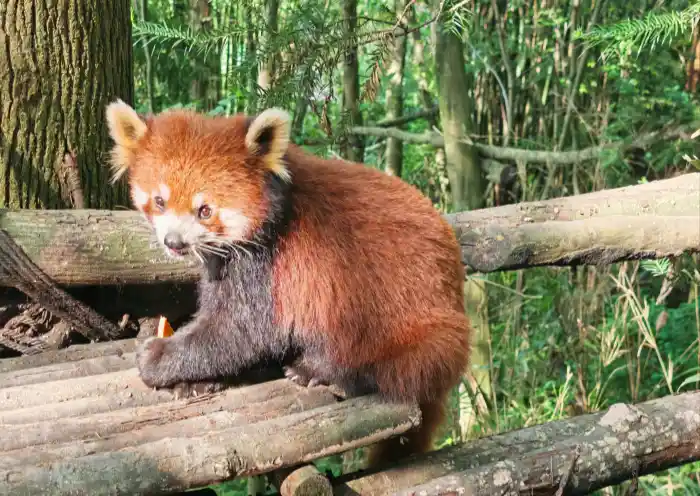
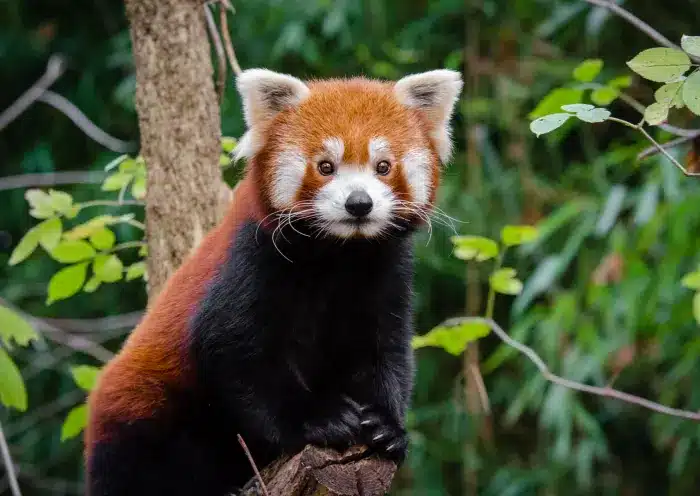
Red panda and giant panda are not the same species, so their appearance is not related. Red Panda is also known as “fire fox”, “lesser panda” and “panda in red”. The fur on the back of the red panda is rust-red, and the fur on the belly is brown-black. The size of red pandas is usually much smaller than that of giant pandas. Its body length is 40-63 centimeters, with a tail exceeding half of its body length.
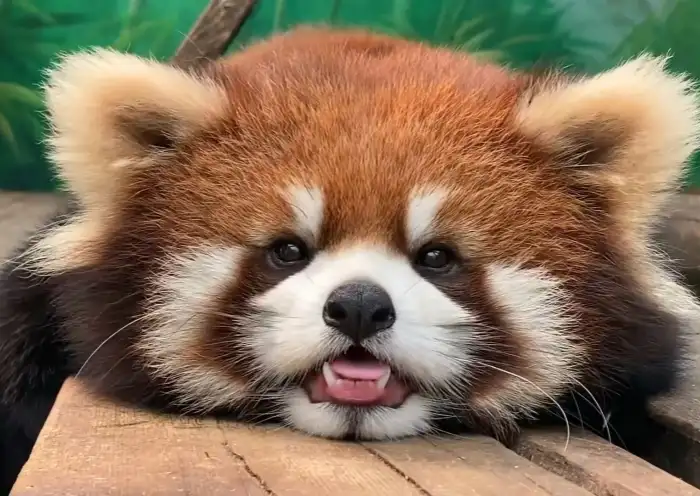
The red panda’s face is round with a short snout. White markings on the cheeks are an important feature of them. Their tails are long and fluffy with alternating red and white rings. The red panda’s paws are covered with thick fu,r and its claws are curved and sharp. In addition, due to the remarkable enlargement of wrist bones, red pandas have evolved “pseudo-thumbs”.
Are Red Pandas Related to Giant Pandas?
Although red pandas have the word “panda” in their name, they are not closely related to giant pandas. They are two animals that evolved from different ancestors in ancient times. The giant panda belongs to the order Carnivora, family Ursidae, subfamily Ailuropodinae, and genus Ailuropoda. While the red panda, on the other hand, belongs to the order Carnivora, family Ailuridae, subfamily Ailurinae, and genus Ailurus.
Red Panda Origin
Where do red pandas come from? The fossil record shows that early relatives of the red panda originated in Asia and Europe about ten million years ago. In ancient times, the ancestors of the red panda were not yet fully differentiated and were found in Europe, Asia and North America. However, these creatures were not true red pandas in the modern sense. Until about 17 million years ago, a long period of evolution allowed them to evolve into the direct ancestors of today’s red pandas.
The Red Panda’s Scientific Classification
Modern science classifies the red panda to its own family: the Ailuridae. This means that the red panda is not a bear or a raccoon. They are also the only extant species in the Ailuridae family which represents a unique evolutionary path. Although the red pandas share some similar characteristics with bears and raccoons, its genetic makeup confirms its unique status.
Red Panda Habitat: Where Do They Live?
Existing red pandas are distributed only in the southern foothills of the Himalayas. Wild red pandas in China are found only in three provinces: Sichuan, Yunnan and Tibet.
Natural Habitat: The Himalayan & Southwest China Ranges
The red panda lives in northern Myanmar, Nepal, the western Sichuan and Yunnan regions of China. Its main habitat is in the Himalayan Mountains at an altitude of 2,200 to 4,800 meters.
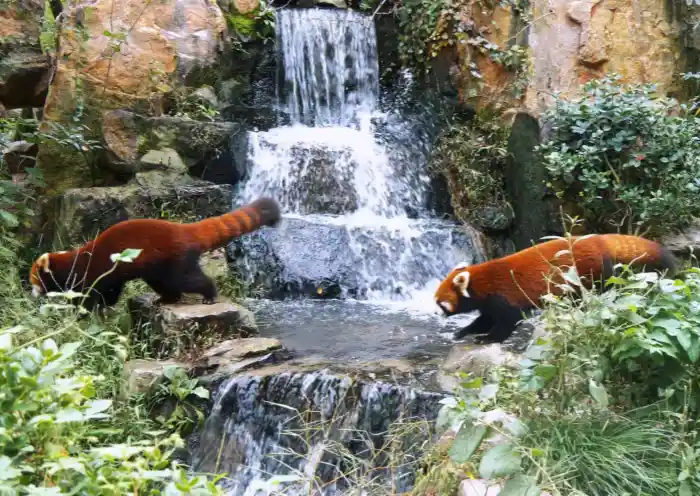
Red pandas usually live in alpine forests or bamboo forests. They inhabit large tree cavities, rock caves or rock crevices. Their activity area is large. In summer, red pandas tend to be active in river valleys, while in winter they are active in river basins.
Key Regions: China’s Role in Red Panda Conservation
China listed the red panda as a key wildlife under national secondary protection in 2021. In addition, the country has established more than 30 protected areas in the distribution area of the red panda, with a protected area of 15,846.9 square kilometers.
As the main habitats of the Chinese red panda, Sichuan and Yunnan Provinces provide important reserves. The Gaoligong Mountain National Nature Reserve is one of the main red pandas habitats in Yunnan. Wolong National Nature Reserve is one of the main habitats for giant pandas and red pandas in Sichuan Province. The abundant plants and mild climate here create a suitable environment for red pandas to live.
Red Panda Diet & Behavior
Red pandas have distinctive eating habits and behaviors.
What Do Red Pandas Eat?
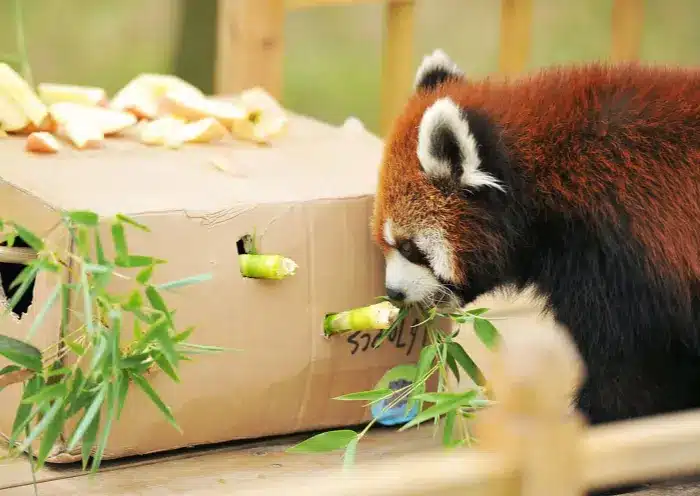
The food of red pandas is mainly the leaves of bamboo, this is similar to the giant panda’s daily diet. To meet their daily energy needs, red pandas consume large quantities of bamboo leaves for energy. However, due to the low caloric value of bamboo, they usually spend 10-12 hours a day eating. In summer and fall, red pandas also like to eat bamboo shoots, fruits, flowers and some berries. In addition, red pandas sometimes eat insects and small birds.
Red Panda Adaptations: Survival in Harsh Environments
Sharp claws help red pandas climb high and thin branches to rest or hide from enemies. Their thick fur helps the red panda hide and regulate its body temperature. The furry red panda tail is used for balance and warmth. And the thick fur on the soles of their feet makes them suitable for walking on slippery wet rocks in the forest. Also red pandas have “pseudo thumbs” on their forepaws, which help them grip bamboo flexibly.
Red Panda Behaviors: Solitary Lives and Nighttime Activity
Red panda behaviors are very similar to giant panda behaviors. Like giant pandas, red pandas are mainly solitary creatures. They are more active at dawn, dusk and at night. That’s why they usually move around and forage for food at night, while sleep during the day in their caves or in the shade of the forest.
How Long Do Red Pandas Live?
In the wild, the lifespan of red pandas is usually 8-10 years. The captive red pandas can live up to 12-15 years. They reach full maturity at 2 to 3 years old. And show signs of aging at about 12 to 14 years old.
The life cycle of giant pandas is longer than that of red pandas. The average lifespan of a wild panda is generally 18 to 20 years. Giant pandas in captivity live to be 25-30 years old.
Red Panda Fun Facts & Myths
Here are some fun red panda facts to help you learn about the life of a red panda.
What Sound Does a Red Panda Make?
Although red pandas rarely make noises, they make a variety of sounds to communicate. When they are excited, they will make a “hissing” or “grunting” sound.
Their Fur isn’t Just Red
The red panda’s fur is overall reddish-brown. However, the fur around its eyebrows, mouth and ears is white. And the limbs and belly are black-brown.
Appearance of Baby Red Pandas
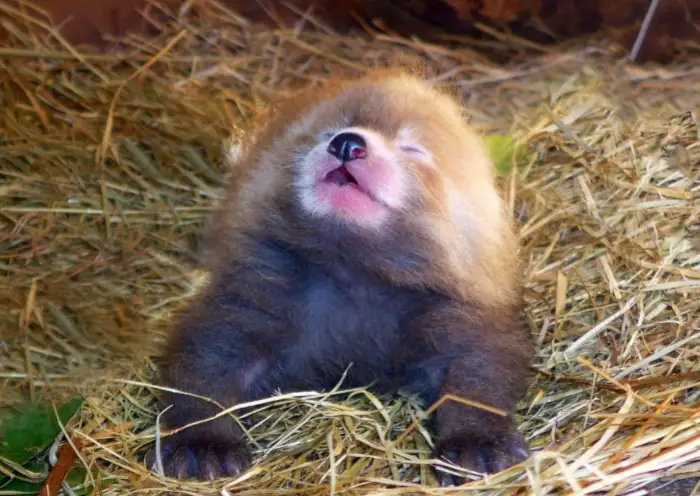
Baby red pandas are very small at birth, measuring only 10 to 15 centimeters in length. The back and sides of the body are covered with soft gray-brown fur.
✔Related reading: Baby Giant Panda Facts
A Cool Fact about Red Pandas
In June 1825, F. Georges discovered the red panda in the Himalayas and named it “Ailurus fulgens”, referred to as “Panda” in English. Since scientists later discovered the existence of the giant panda, it became necessary to distinguish the two species in English, leading to the terms “Lesser Panda” or “Red Panda” being adopted for the original panda.
Red Pandas in Pop Culture: From Kung Fu Panda to Zoo Stars
The prototype for Master Shifu in Kung Fu Panda is a red panda. In the movie, this red panda is small in size yet agile in movement.
Red Panda Sleeping Habits
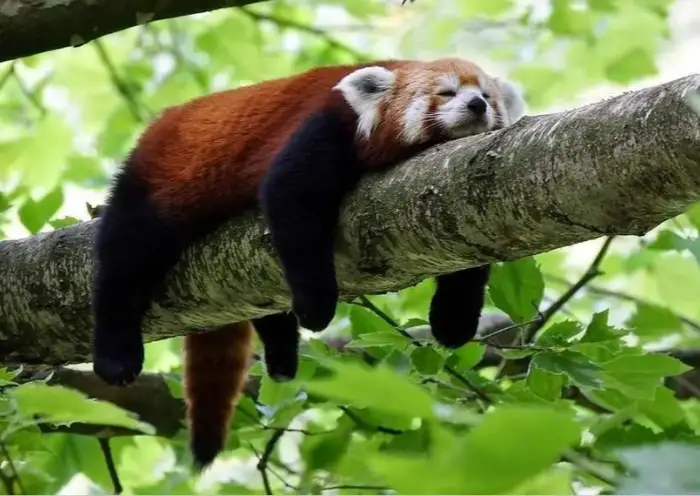
Red pandas prefer to sleep and rest in certain tree trunks. They typically sleep for up to 13 hours a day. But their sleep schedule is not continuous.

Conservation Status of Red Pandas
According to the World Conservation Union (IUCN) Red List, the red panda is classified as an endangered species.
Population Numbers: How Many Red Pandas Are Left?
It is difficult to determine the number of red pandas due to their scattered populations. The World Wide Fund for Nature estimates that there are fewer than 10,000 red pandas in the wild. According to the latest assessment, the number of red pandas continues to decline.
Threats to Survival: Habitat Loss, Poaching, and Climate Change
What do red pandas need to survive? Red pandas need to live in areas with dense vegetation, abundant bamboo and well-drained terrain. But in recent years, habitat loss has become one of the biggest threats to red panda populations. Human deforestation can lead to a significant decline in red panda habitats. Agricultural development has also taken over some of the habitat of the red panda.
Poaching has also become a serious problem for the endangered red panda. In addition, with global warming, red pandas are being forced to move to higher altitudes. This will isolate their populations from each other. Similarly, giant panda habitats also face these threats.
Conservation Efforts of Red Pandas
China has established nature reserves and wildlife corridors, which can provide stable habitats for red pandas. For example, both red pandas and giant pandas are fully protected in more than 20 nature reserves in Sichuan. The implementation of monitoring and research programs can also help to understand the population and habits of the red panda. Besides, the Chinese Government has established strict regulations prohibiting the hunting, killing, purchasing and selling of red pandas.
Where to See Red Pandas in Real Life
During your China tours, you can observe these cute little pandas in a number of places to learn about their daily lives.

Zoos with Red Pandas
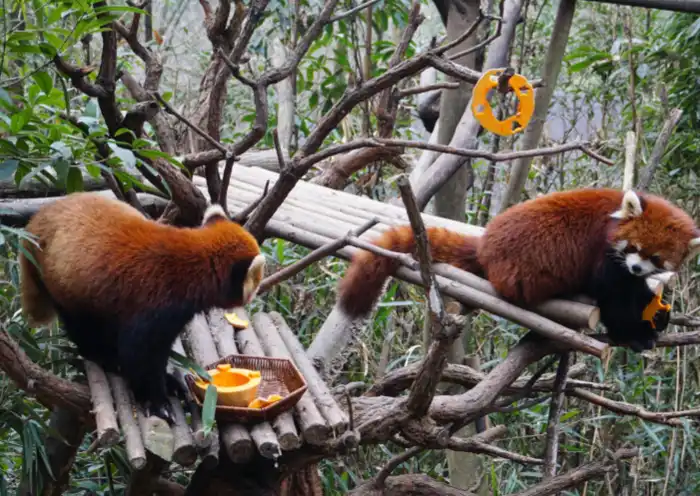
There are many zoos in China where you can see red pandas. It is recommended that you can visit Yunnan Wild Animal Park, Beijing Zoo and Xian Qinling Wildlife Park. At Yunnan Wild Animal Park, visitors have the opportunity to feed red pandas apples under the guidance of staff. The Beijing Zoo provides facilities such as trees and climbing frames in the red panda house for their activity and rest. The red pandas in Qinling Wildlife Park live in the walking tour area. This area is circled by a wooden fence so visitors can observe them closely.
Recommended China Panda Tours:
Red Pandas in Chinese Panda Reserves
China has listed the red panda as a nationally protected animal and has established a number of nature reserves within its distribution area. Dujiangyan Panda Base is one of the must-see attractions on your Chengdu panda tours. Visitors can stroll along the circular walkway to see the red pandas closely. Located in Ya’an, Sichuan Province, Bifengxia Panda Base is also an important conservation and research base for red pandas.
Volunteer Programs with Red Pandas
Visitors can also learn about these precious animals by becoming a red panda volunteer. Volunteers need to make delicious food for the red pandas using bamboo leaves and apples. Participate in daily care works such as cleaning their enclosure to learn the behaviors of red pandas. Also participate in habitat research to learn about red panda conservation.
FAQs About Red Pandas
Can You Have a Red Panda as a Pet?
Some people may ask if there are red pandas for sale in the world? The answer is no. People are not allowed to take red pandas as pets because they are endangered animals. Both selling and buying red pandas will be subject to criminal penalties.
What are the Red Pandas Enemies?
The natural enemies of the red panda are mainly snow leopards and martens. And the biggest threats to wild pandas are eagles, pythons and jackals.
China Red Panda Tour with Us
Whether you are interested in red pandas or any other wildlife in China, we can help you customize your perfect route. We can arrange for you a close-up encounter with these adorable creatures in either bases in natural habitats or simple and convenient visits in some city zoos. Besides wildlife experience, you can also enrich your trip by adding some culture and natural wonders.