



The highly developed and extensive subway network in Beijing has made traveling around the city much easier. Now, 28 lines are in operation, allowing visitors to reach nearly all major attractions, like the Forbidden City and Summer Palace, and transportation hubs, such as airports and train stations, efficiently and conveniently.
In this article, we will introduce you to everything to know about Beijing subway, including its main subway lines, updated metro map, operating time and fares, and practical tips on how to use Beijing subway.
Content Preview
- Overview of Beijing Subway
- Subway Lines in Operation 2026
- Ticket Fares
- How to Buy Subway Tickets
- Tips
- Travel with China Xian Tour
- FAQs
Overview of Beijing Subway
Opened on January 15, 1971, Beijing Subway, or Beijing Metro, boasts one of the earliest and largest urban rail transit networks in China. As of July 2026, the total length of the Beijing subway network has reached 909 kilometers, ranking as one of the longest in the world. It currently has 28 subway lines in operation, serving 423 stations, including 106 interchange stations.
These subway lines can be divided into rapid lines (around 100-120 km/h), metro lines (common subway lines, around 50-80 km/h), suburban rail lines (around 50-80 km/h), and airport lines (up to 160 km/h), ensuring easy connection between districts within the city and its outskirts. And the announcements are in both Chinese and English to make them easily accessible to visitors from around the world.
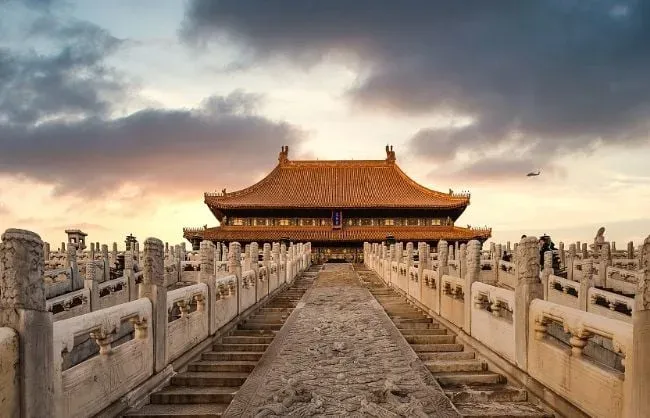
Discover Beijing's imperial heritage visiting Tiananmen Square, Forbidden City, Summer Palace, Temple of Heaven, and Mutianyu Great Wall on a comprehensive private tour.
Beijing Subway Lines in Operation 2026
Currently, Beijing metro lines in operation include Line 1 – 19, Daxing Airport Express, Capital Airport Line, Changping Line, Yizhuang Line, Fangshan Line, S1 Line, Yanfang Line, Yizhuang T1 Line, Xijiao Line, etc.
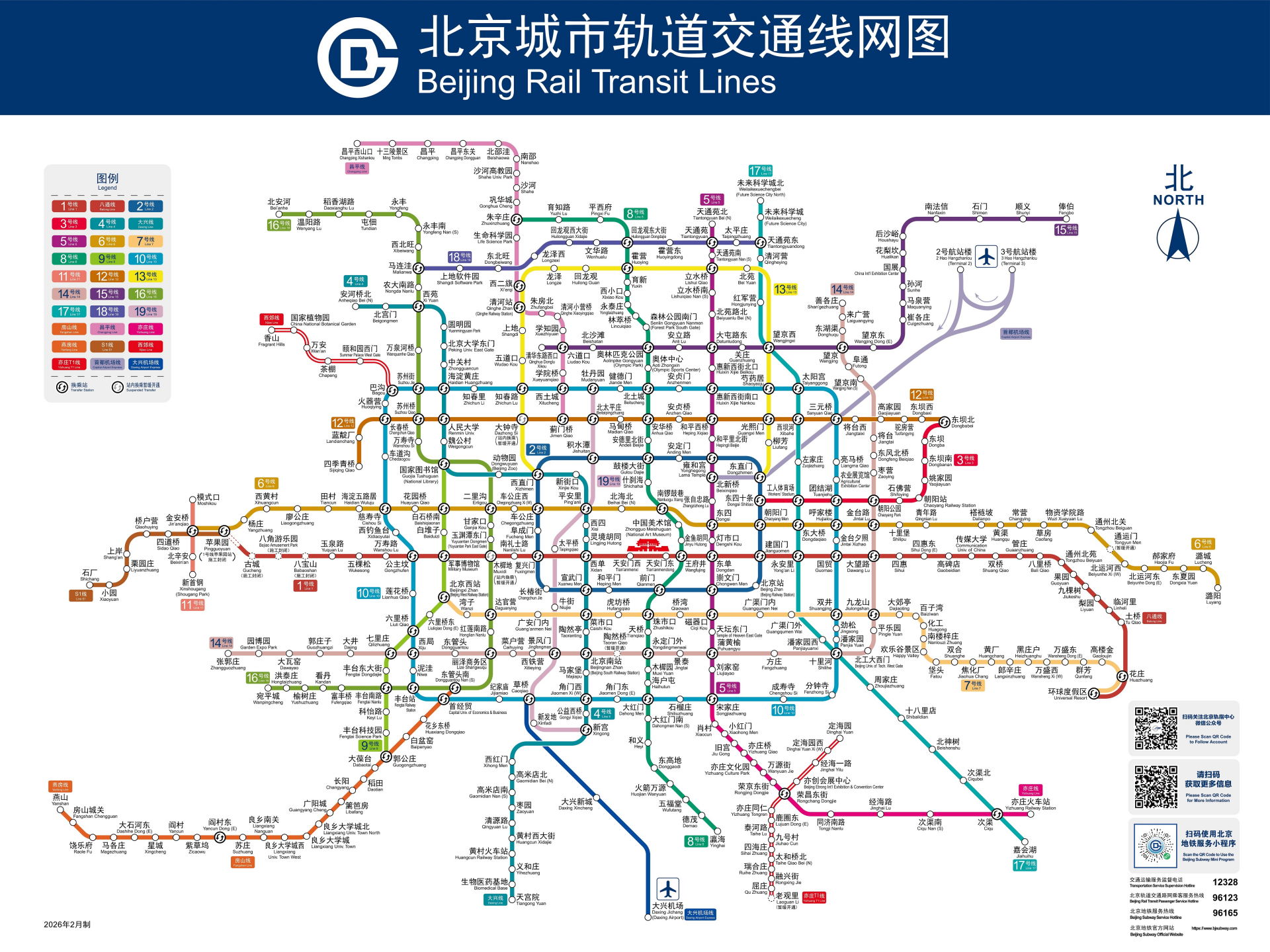
How to Travel Around by Subway in Beijing
Travel to Major Attractions in Downtown Beijing by Subway
Most attractions in downtown Beijing can be reached by subway directly with major lines including 1, 2, 4, 5, and 8.
Attractions |
How to Get to by Metro |
Tiananmen Square |
Metro line 1: Tian’anmen East Station Exit A or Tian’anmen West Station Exit B
Metro line 2 or 8: Qianmen Station Exit A |
Forbidden City |
Metro line 1: Tian’anmen East Station Exit A or Tian’anmen West Station Exit B. After arrival, walk about 15 minutes to the entrance |
Temple of Heaven |
Metro line 5: Tiantan Dongmen Station Exit A1 or A2 |
Summer Palace |
Metro line 4: Beigongmen Station Exit D or Xiyuan Station Exit C2. The north entrance and east entrance of Summer Palace are 5 – 10 minutes’ walking, respectively.
Metro Xijiao Line: West Gate of Summer Palace Station |
Yonghe Temple (Lama Temple) |
Metro line 2 or 5: Yonghegong Lama Temple Station exit F |
National Museum of China |
Metro line 1: Tian’anmen East Station Exit C or D |
Wangfujing Pedestrian Street |
Metro line 1 or 8: Wangfujing Station Exit A, B1, C1, C2, E1, E3 or F1 |
Older Summer Palace |
Metro line 4: Yuanmingyuan Park Station Exit A or B |
Nanluoguxiang |
Metro line 6 or 8: Nanluogu Xiang Station Exit E or F |
Beihai Park |
Metro Line 6: Beihai North Station Exit D |
Bird’s Nest, Water Cube and Olympic Park |
Metro line 8: Olympic Green Station Exit C, D, E, I, G, or Aoti Zhongxin Station Exit B1 or B2
Metro line 15: Olympic Green Station Exit C, D, E, I, G |
Qianmen/Dashilan |
Metro line 2 or 8: Qianmen Station Exit I |
Bell Tower and Drum Tower |
Metro line 2 or 8: Gulou Dajie Station Exit G, then walking about 10 minutes to reach the towers |
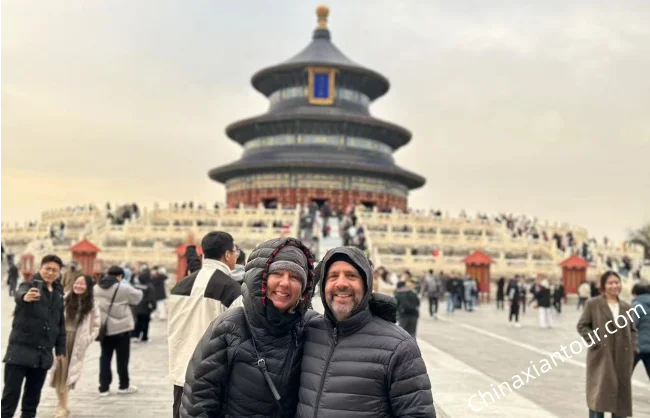
Travel from Airports and Major Train Stations to Downtown Area (Tian’anmen Square) by Metro
Airports and Train Stations |
How to Transfer by Subway |
Duration |
Cost |
From Capital Airport |
Take Capital Airport Line to Dongzhimen – Transfer to line 2 – Get off at Jianguomen – Transfer to line 1 – Get off at Tiananmen East Station |
About 1 hour |
CNY 29/USD 4 |
From Daxing Airport |
Take Daxing Airport Line to Caoqiao – Transfer to line 10 – Get off at Gongzhufen – Transfer to line 1 – Get off at Tiananmen East Station |
About 1 hour and 15 minutes |
CNY 39/USD 5 |
Beijing Railway Station |
Take Subway Line 2 to Jianguomen – Transfer to line 1 – Get off at Tiananmen East Station |
About 20 minutes |
CNY 3/USD 0.4 |
Beijing South Railway Station |
Take Subway Line 4 to Xidan – Transfer to line 1 – Get off at Tiananmen East Station |
About 30 minutes |
CNY 4/USD 0.6 |
Beijing West Railway Station |
Take Subway Line 9 to Military Museum – Transfer to line 1 – Get off at Tiananmen East Station |
About 30 minutes |
CNY 4/USD 0.6 |
Beijing North Railway Station |
Take Subway Line 2 to Fuxingmen – Transfer to line 1 – Get off at Tiananmen East Station |
About 30 minutes |
CNY 4/USD 0.6 |
Most attractions in downtown Beijing can be reached by subway directly with major lines including 1, 2, 4, 5, and 8.
List of All Beijing Subway Routes: Schedules, Key Stations
Below is a comprehensive list of all Beijing subway routes, detailing their starting and terminating stations, operating hours, and key stations along their routes to ensure a smooth travel in Beijing.
Please note that this information is updated as of July 20, 2026, and is for reference only. The actual schedule may change according to operational adjustments, holidays, or unforeseen circumstances. Always refer to the official Beijing Subway timetable for precise timings.
Line Name |
Route |
Operating Hours |
Major Attractions & Important Stations |
Line 1 Batong Line |
Pingguoyuan – Universal Resort |
From Pingguoyuan: 05:09 – 23:29
From Universal Resort: 05:09 – 22:34 |
Tiananmen Square, Forbidden City, Wangfujing, Military Museum, Universal Studios |
Line 2 |
Jishuitan – Xizhimen |
From Jishuitan: 05:09 – 22:59
From Xizhimen: 05:03 – 22:18 |
Yonghe Temple (Lama Temple), Qianmen Dashilar, Gulou (Bell Tower), Beijing Railway Station |
Line 3 |
Dongsi Shitiao – Dongbabei |
From Dongsi Shitiao: 05:35 – 23:25
From Dongbabei: 05:05 – 22:50 |
Workers’ Stadium, Chaoyang Park. Chaoyang Railway Station |
Line 4 Daxing Line |
Anheqiao North – Tiangongyuan |
From Anheqiao North: 04:58 – 22:35
From Tiangongyuan: 05:05 – 22:45 |
Summer Palace, Old Summer Palace, Peking University, Beijing Zoo, Beijing South Station |
Line 5 |
Tiantongyuan North – Songjiazhuang |
From Tiantongyuan North: 04:59 – 22:47
From Songjiazhuang: 05:19 – 23:10 |
Temple of Heaven Park, Yonghe Temple (Lama Temple) |
Line 6 |
Jin’anqiao – Luyang |
From Jin’anqiao: 05:06 – 23:35
From Luyang: 05:29 – 22:44 |
Beihai Park, Nanluoguxiang, Beijing Zoo |
Line 7 |
Beijing West Railway Station – Universal Resort |
From Beijing West Railway Station: 05:29 – 23:14
From Universal Resort: 05:09 – 22:59 |
Beijing West Railway Station, Happy Valley Theme Park, Universal Studios |
Line 8 |
Zhuxinzhuang – Yinghai |
From Zhuxinzhuang: 05:09 – 22:40
From Yinghai: 05:06 – 23:01 |
Olympic Park (Bird’s Nest, Water Cube), China Science and Technology Museum, Shichahai Park, Nanluoguxiang |
Line 9 |
Guogongzhuang – National Library |
From Guogongzhuang: 04:59 – 22:39
From National Library: 05:38 – 23:18 |
Beijing West Railway Station, Military Museum, National Library |
Line 10 |
Bagou – Huoqiying |
From Bagou: 04:37 – 22:55
From Huoqiying: 04:49 – 00:19 |
Sanlitun, Panjiayuan |
Line 11 |
Moshikou – Xinshougang |
From Moshikou: 05:38 – 22:28
From Xinshougang: 05:28 – 22:18 |
Shougang Park |
Line 12 |
Sijiqing Qiao – Dongbabei |
From Sijiqing Qiao: 05:52 – 23:25
From Dongbabei: 05:23 – 22:30 |
Suzhou Bridge, Big Bell Temple |
Line 13 |
Xizhimen – Dongzhimen |
From Xizhimen: 05:34 – 22:41
From Dongzhimen: 05:26 – 22:49 |
Wudaokou, Qinghe Railway Station |
Line 14 |
Zhangguozhuang – Shan’gezhuang |
From Zhangguozhuang: 04:55 – 22:42
From Shan’gezhuang: 04:55 – 22:42 |
Beijing Garden Expo Park, Beijing South Railway Station, Chaoyang Park |
Line 15 |
Tsinghua East Road West Exit – Fengbo |
From Tsinghua East Road West Exit: 05:29 – 23:14
From Fengbo: 05:12 – 22:10 |
Olympic Forest Park |
Line 16 |
Beianhe – Wanpingcheng |
From Beianhe: 05:13 – 22:34
From Wanpingcheng: 05:00 – 22:39 |
Yuyuantan Park |
Line 17 |
Weilaikexuechengbei (Future Science City North) – Jiahuihu |
From Weilaikexuechengbei: 05:08 – 22:30
From Jiahuihu: 05:19 – 22:31 |
Workers’ Stadium, Panjiayuan |
Line 18 |
Tiantongyuandong – Malianwa |
From Tiantongyuandong: 05:29 – 22:39
From Malianwa: 05:39 – 22:49 |
Huilongguan Dongdajie |
Line 19 |
Mudanyuan – Xingong |
From Mudanyuan: 05:30 – 23:10
From Xingong: 05:30 – 23:25 |
Jishuitan, Niujie |
Capital Airport Line |
Beixinqiao – Terminal 3 |
From Beixinqiao: 05:56 – 22:26
From Terminal 3: 06:22 – 22:52 |
Capital Airport (Single fare 25 CNY/USD 3, transfer requires exiting) |
Daxing Airport Line |
Caoqiao – Daxing Airport |
From Caoqiao: 05:30 – 22:30
From Daxing Airport: 06:00 – 23:00 |
Daxing Airport (Partially elevated) |
Xijiao Line |
Bagou – Xiangshan |
From Bagou: 05:25 – 22:30
From Xiangshan: 06:00 – 23:06 |
Summer Palace West Gate, Botanical Garden, Fragrant Hills Park (Ground light rail) |
S1 Line (Maglev) |
Pingguoyuan – Shichang |
From Pingguoyuan: 05:51 – 23:32
From Shichang: 05:24 – 23:06 |
Mentougou Scenic Area (First maglev line) |
Yanfang Line |
Yanshan – Yancun East |
From Yanshan: 05:30 – 22:55
From Yancun East: 05:05 – 22:30 |
Yancun East Station |
Changping Line |
Changping Xishankou – Jimen Qiao |
From Changping Xishankou: 05:00 – 22:51
From Jimenqiao: 05:21 – 23:21 |
The Ming Tombs, Qinghe Railway Station |
Fangshan Line |
Yancun East – Dongguan Tounan |
From Yancun East: 05:03 – 22:19
From Dongguan Tounan: 05:47 – 23:14 |
Changyang Park |
Yizhuang Line |
Songjiazhuang – Yizhuang Railway Station |
From Songjiazhuang: 05:59 – 23:19
From Yizhuang Railway Station: 05:19 – 22:39 |
Yizhuang Cultural Park |
Yizhuang T1 Line |
Dinghaiyuan – Quzhuang |
From Dinghaiyuan:
From Quzhuang: |
Rongchang Dongjie |
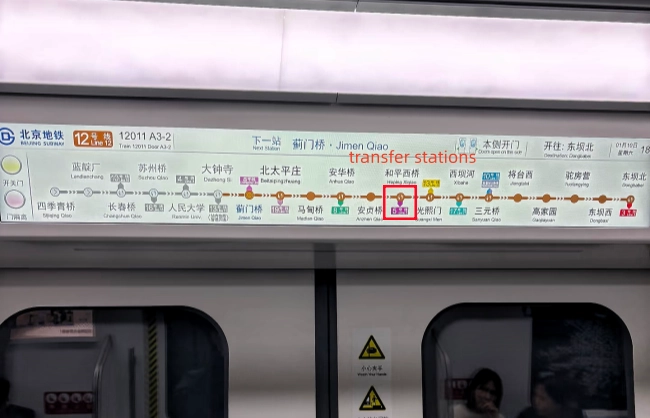
How to Distinguish the Metro Lines and Transfer Stations on the Map
Since there are so many metro lines, how do you find the one you take? Besides the line number, you can also recognize the color. Each line of the Beijing subway has its own unique color so that passengers can distinguish between them easily.
About the difference between normal stations and transfer stations, those marked with double rings or thick circles are transfer stations.
Popular Subway Lines for Tourists
Subway Line 1: Gucheng ↔ Universal Beijing Resort
- Length: 52.7 km
- Main Stops: Gongzhufen, Tiananmenxi, Tiananmendong, Wangfujing
- Time for the First Train and Last Train: Gucheng (04:57-22:51); Universal Beijing Resort (05:10-22:55).
- Ticket Price: CNY 3-7

Subway Line 4: Anheqiaobei ↔ Tiangongyuan
- Length: 50 km
- Main Stops: Yuanmingyuan, Beijing Zoo, Xizhimen, Xidan, Beijing South Railway Station,
- Time for the First Train and Last Train: Anheqiaobei (05:00-22:20); Tiangongyuan (5:30-22:38).
- Ticket Price: CNY 3-7
Subway Line 5: Tiantongyuanbei ↔ Songjiazhuang
- Length:6 km
- Main Stops: Temple of Heaven East Gate, Beixinqiao, Lama Temple.
- Time for the First Train and Last Train: Tiantongyuanbei (5:00-22:48); Songjiazhuang (5:20-23:10).
- Ticket Price: CNY 3-6
Subway Line 6: Jinanqiao ↔ Lucheng
- Length: 1 km
- Main Stops: Beihaibei ( Shichahai), Nanluoguxiang, Tongzhou Beiguan
- Time for the First Train and Last Train: Jinanqiao (5:08-22:25); Lucheng (4:52-22:50).
- Ticket Price: CNY 3-8
Subway Line 9: National Library ↔ Guogongzhuang
- Length: 5 km
- Main Stops: National Library, Beijing West Railway Station, China Military Museum
- Time for the First Train and Last Train: National Library (5:39-23:19); Guogongzhuang (5:00-22:40).
- Ticket Price:CNY 3-5
Subway Line 10: cricle line with Bagou as terminal
- Length:1 km
- Main Stops:Bagou (near Summer Palace), Beitucheng (connecting Line 8 for Olymic Park), Guomao (CBD), Panjiayuan (Antique Market), Beijing Fengtai Railway Station.
- Time for the First Train and Last Train:4:49-22:44
- Ticket Price: CNY 3-6
Daxing Airport Express: Beijing Daxing International Airport ↔ Caoqiao
- Length: 36 km (about 30 mins for a single trip)
- Main Stops: Daxing Airport, Daxing Xincheng, Caoqiao (connecting Line 10).
- Time for the First Train and Last Train: Caoqiao (06:00-22:30); Daxing Airport (06:00-23:00 or 23:30 on Sundays)
- Ticket Price:CNY 35
Capital Airport Express: Terminal 2 ↔ Beixinqiao
- Length: 8 km (about 30 mins for a single trip)
- Main Stops: Terminal 2, Terminal 3, Sanyuanqiao (connecting Line 10), Dongzhimen (connecting Lines 2 and 13), Beixinqiao (connecting Line 5)
- Time for the First Train and Last Train: T2 (6:36-23:10); Beixinqiao (5:56-22:26)
- Ticket Price:CNY 25
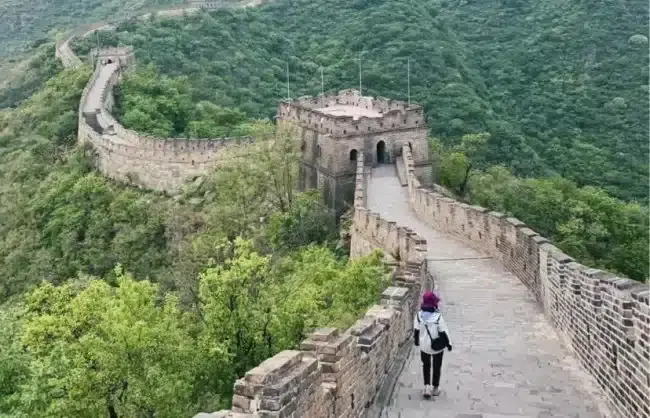
Capture the essence of Beijing covering Tiananmen Square, Forbidden City, Temple of Heaven, Summer Palace, and Mutianyu Great Wall on this five-day private tour package.
Beijing Subway Ticket Fares
Beijing’s subway fare is based on the distance traveled and is affordable for local commuters and tourists. The general fares are as below:
- CNY 3 for trips within 6 km;
- CNY 4 for trips between 6–12 km;
- CNY 5 for trips between 12–22 km;
- CNY 6 for trips between 22–32 km;
- For trips over 32 km, an additional CNY 1 is charged for every 20 km traveled, and the maximum is CNY 10.
- Beijing Capital Airport Express and Daxing Airport Express lines are exceptions, costing CNY 25 and CNY 35 separately for a single trip.
- Children with a height of 1.3 meters or below can ride the metro for free, but must be accompanied by an adult, and the adult need to pay for their ride.
How to Buy Beijing Subway Tickets: Payment Methods
Beijing Pass (Top recommended for international tourists)
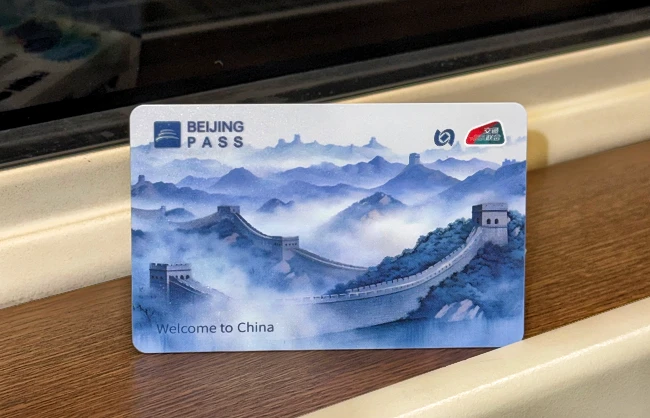
To enhance the travel and daily life experience of international visitors in Beijing, the Beijing municipal government has introduced the Beijing Pass in 2024. It is a multifunctional smart card that can be used to pay for transportation, attraction tickets, and shopping at retail stores. Currently, foreign visitors can purchase the Beijing Pass at 15 key transportation hubs, including Beijing Capital International Airport, Beijing Daxing International Airport, Beijing Railway Station, and Beijing South Railway Station.
Visitors can easily recharge the card at 490 stations across all 27 subway lines in Beijing. Or top up online via the “SilkPass” App. Besides subway lines, some attractions and shops, the card is also usable on buses and taxis.
Purchase Physical Tickets
There are ticket counters inside the metro stations. Visitors can purchase the ticket in cash or via WeChat or Alipay through the ticket agent. Also, they can buy the tickets from automated ticket vending machines. Simply select your destination on the machine’s screen, and insert cash (CNY 1, CNY 5, or CNY 10) or pay via WeChat, Alipay, or bank cards. As of June 1, 2024, 335 stations across 17 lines have installed POS machines accepting foreign bank cards, such as MasterCard.
After purchasing, you will receive a physical subway card. Simply tap your card at the turnstile when entering the subway. When exiting, drop the card into the designated slot for recycling.
Using Alipay for Ticketless Travel
If you have an Alipay app, simply set up subway travel through the “Travel” section of Alipay. You should select “Beijing” as your destination and follow the setup instructions. When entering the subway, open Alipay and scan the travel QR code at the turnstile. When exiting, scan the code again at the exit gate.
Related reading: How to Pay in China As a Foreigner: Popular Payment Methods
Use the Beijing Subway Official “Yitongxing” App (亿通行APP)
By using the Beijing Subway Official “Yitongxing” App, you can enjoy cumulative fare discounts. This app works on any phone, you just need to download it and link a bank card or bind it to Alipay or WeChat. To take a subway ride, you can either scan the QR code at the entry gate to enter or buy a ticket online through the app and collect a physical ticket at the station. Currently, this app is accepted across the entire subway network in Beijing.
Beijing Transportation Card (Ideal for Frequent Travelers)
The Beijing Transportation Card (Yikatong) only works on phones supports NFC (Near Field Communication) functionality, and require a 20 RMB deposit. You can easily apply for and return the card online. With the Yikatong electronic card, you can not only enter the subway without internet connection but also enjoy fare discounts. Currently, this electronic card is accepted on all Beijing subway lines and many bus routes. It is recommended for people who travel to Beijing frequently.
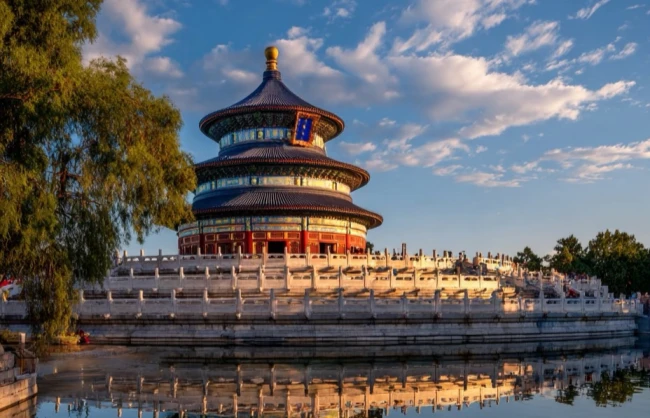
Cover Beijing's top highlights including the Great Wall, Forbidden City, Summer Palace, Temple of Heaven, and Hutong Alley on this efficiently designed three-day private tour.
Tips to Use the Beijing Subway
- Please note that the subway can be very crowded during rush hours. Avoid these periods if possible. The morning rush hour is from 7:00 to 9:00, and the evening rush hour is usually from 17:00 to 20:00.
- Although the operating times for each subway line may vary slightly, typically, the first trains for most lines depart at around 5:00 to 6:00, and the last trains depart at around 22:00 to 23:00.
- Use some online maps, such as the Google Map app to plan your journey. These apps can provide some quickest routes for you.
- Before entering the subway station, a security check is required for every passenger.
- After the security check, you can tap your card or physical ticket or scan your QR code as we mentioned above at the turnstile.
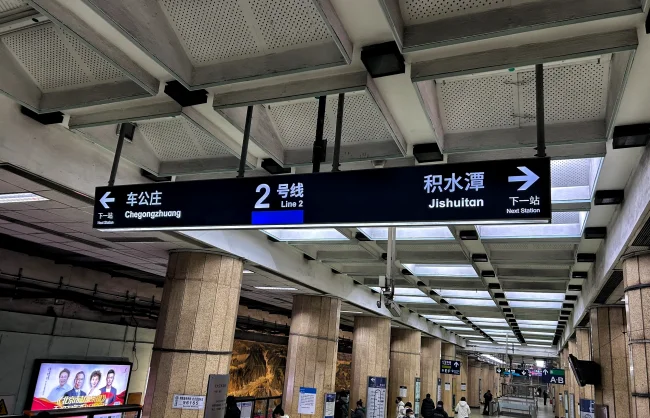
- When at the platform, don’t forget to check overhead signs to make sure you are at the waiting area for the correct direction.
- At the waiting area, queue up for the train, and let passengers alight before boarding.
- During the ride, the announcements are made in both Chinese and English. Listen carefully for your station to avoid passing it.
- In the subway car, the name of each station is clearly marked in both Chinese and English, with indicator lights signaling the next stop.
- If you need to transfer lines, just follow the signs. The walkways and overhead signs will clearly mark the direction and guide you to your transfer platform.
- When exiting the station, check the station maps on the wall to make sure you take the correct exit. Multiple exits are available at most stations.
- If you need assistance, don’t hesitate to ask for help at the information desks in stations.
Though free Wi-Fi is not available on most metro lines, mobile data works well to ensure you stay connected.
Explore Beijing with China Xian Tour
Beijing covers such a large area with scattered attractions. It may be challenging for international travelers to transfer between the scenic spots and plan the itinerary. China Xian Tour has over 20 years of experiences in tailoring a trip based on tourists’ needs and preferences.
We will also arrange a knowledgeable guide to explain the history and story of attractions to offer you an in-depth experience. Besides, private transfers, ticket and hotel booking are all included to ensure you can immerse yourself in the tour completely.

Experience Beijing's top imperial highlights on a 2-day layover tour visiting the Great Wall at Mutianyu, Forbidden City, Summer Palace, and Temple of Heaven.
FAQs about Taking Subway in Beijing
What are the rules and regulations for riding the subway?
Every passenger must first go through a security check before going to the boarding area. You’re not allowed to bring any dangerous item such as knives, flammable goods, and other strictly prohibited things.
Eating inside subway cars is also not allowed, and passengers are encouraged to keep their voices down (no matter you’re talking or watching videos on phone), give priority seats to the elderly, pregnant women, and people with disabilities (see the signs of “priority seat” in each car), and please queue politely when boarding.
Can I bring alcohol to the Metro of Beijing? What daily items are prohibited from being carried?
According to the “Catalogue of Prohibited Items on Beijing’s Rail Transit”, ethanol is a flammable liquid/it is classified as a dangerous item. (Regardless of the quantity), It is completely prohibited from being carried. You can bring alcohol onto the Beijing subway, but if the alcohol content is above 50 degrees, no more than 2 bottles (1000 milliliters) can be carried; if the alcohol content is below 50 degrees, no more than 6 bottles (3000 milliliters) can be carried.
- Prohibition of carrying any form of knives (special cases for work purposes require proof and proper packaging)
- Flammable and explosive pressure containers (such as hairspray, mousse) should not exceed 120 milliliters per individual container.
- Nail polish and hair dye should not exceed 20 milliliters each
- Lighters should not exceed 2 units
- Matches should not exceed 2 small boxes
- Pets are prohibited (except for guide dogs)
Is there an official app for the Beijing Subway?
Yes. The official app is called “Yitongxing” (易通行 App) but you can also use the “Travel” feature on Alipay. Both provides QR-code ticketing, fare discounts, route planning, and service updates. For payment on Yitongxing, you can link it with Alipay, WeChat, or a bank card. It works across the entire Beijing subway network.
Can I use the subway to get to the Great Wall?
Unfortunately, there’s no direct subway line which can connect people from Beijing downtown to the Great Wall. However, there subways able to take you to several transfer points, and at these points, you can continue your journey by train or bus. For example, take Metro Line 13 to Qinghe Station, and then catch a highs-peed train at Beijing North Railway Station to Badaling Great Wall. The whole trip will only costs about CNY 20-30.
What is the process for a security check?
Before entering the boarding area, all passengers must place their bags/luggage through an X-ray machine for inspection, and passengers themselves will need to go through a security gate. Security staff may also conduct random manual checks. Bottled liquids must be specifically tested, and any prohibited item will be confiscated. Only after completing the security check can you proceed to the ticket gates.


