




Shanghai noodles have long earned their place as one of the city’s most beloved comfort foods and they can reflect the soul of Shanghai cuisine—hearty and always satisfying. On a China food tour, you’ll encounter a wide variety of noodle dishes, but Shanghai-style noodles stand out for their unique texture and deep local flavors.
This guide will walk you through everything you may want to know about Shanghai noodle—from the its origins and some common preparation steps to the most iconic types and where to find the best bowls in town. Whether you’re a street food lover or prefer refined dining spots, there’s a perfect noodle experience waiting for you in Shanghai.
Content Preview
- All About Shanghai Noodles: Origin, History, Features
- Best Shanghai Noodle Dishes
- 12 Must-Try Noodle Dishes in Shanghai at a Glance
- How to Cook Shanghai Noodles at Home
- How to Order Like a Local: Tips and Terms for Eating Noodles in Shanghai
- Practical Tips for Eating Noodles in Shanghai
- Shanghai Noodles FAQ
- Eat Your Way Through Shanghai with China Xian Tour
All About Shanghai Noodles: Origin, History, Features
The Origins of Shanghai Noodles
As one of China’s most important economic and cultural centers, Shanghai has long become a melting pot for people from different regions. During the Ming and Qing dynasties, the prosperity of the Jiangnan area attracted waves of migrants to move to Shanghai, and their arrival is accompanied with a variety of culinary traditions, among which, noodle-making techniques were one of the most significant.
This influx of diverse food cultures gradually helped shape Shanghai’s own noodle identity. Today, you can still taste the engrained influences on this dish from neighboring provinces when having a bowl in a random Shanghai noodle house. It’s style is both distinctive and typical of the city’s urban history.
Characteristics of Shanghai Noodles
A signature feature of Shanghai noodles is the rich, soy-based sauces and lightly sweetened broths that would soak the noodles. In terms of the noodle itself, Shanghai-style noodles typically use thick, chewy wheat noodles, served either dry with jiaotou (toppings) like scallion oil, braised pork, or stir-fried seafood, or coming to you in a light but flavorful broth.
Unlike Sichuan’s fiery dan dan noodles or the sour-spicy flavors of Yunnan rice noodles, Shanghai style noodles focus on providing a balanced, umami-rich taste with a hint of sweetness. This feature makes them stand out in a huge number of Chinese noodle and becoming especially popular among all locals and visitors as a comfort food. You can find it in a lot of homestyle restaurants or local diners across the city.
A few key characteristics include:
- Texture: Medium-thick, smooth, and chewy; not overly soft
- Base: Always wheat-based (no rice noodles in traditional versions)
- Cooking Style: Mostly boiled, while sometimes it will get stir-fried after being boiled for a short time.
- Toppings (浇头): A defining feature—ranging from braised pork belly, shredded eel, scallions, to seafood
- Soup vs Dry: Can be served in broth or as dry noodles with rich sauce
Are Shanghai Noodles Spicy?
Generally speaking, Shanghai noodles are not spicy. This dish’s flavor profile is centered around umami, slight sweetness, and savory depth. Common ingredients include light or dark soy sauce, sugar, cooking wine, and scallion oil. Many type of noodles feature a subtle hint of maltose or sweetened soy glaze, especially in braised varieties.
Typical Shanghai noodle flavors with some examples:
- Sweet & savory: Braised pork noodles (hong shao rou mian)
- Aromatic & mellow: Scallion oil noodles (cong you ban mian)
- Seafood-forward: shrimp or eel noodle dishes
Best Shanghai Noodle Dishes
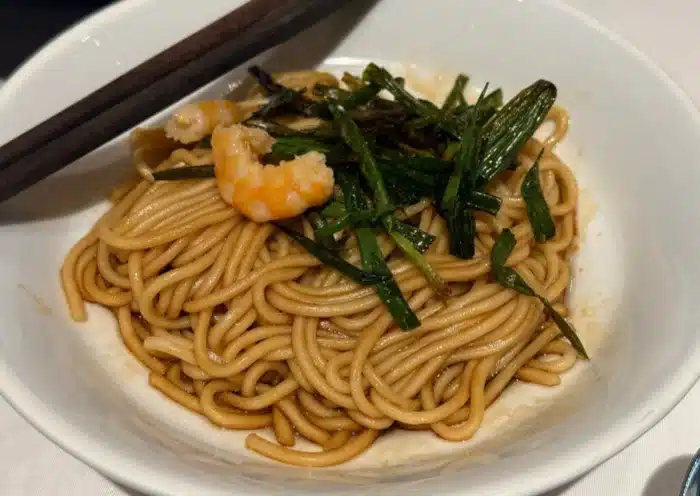
1. Scallion Oil Noodles (葱油拌面)
A classic Shanghai noodle dish which is about springy wheat noodles mixed with hot scallion-infused oil, soy sauce, and a touch of sugar. Simple yet aromatic, it’s usually served plain — no meat or toppings — letting the savory-sweet sauce and crispy scallions shine.
- Where to try: Old Shanghai Noodle House
- Address: 233 South Xiangyang Road, Xuhui District (near Yongkang Road)
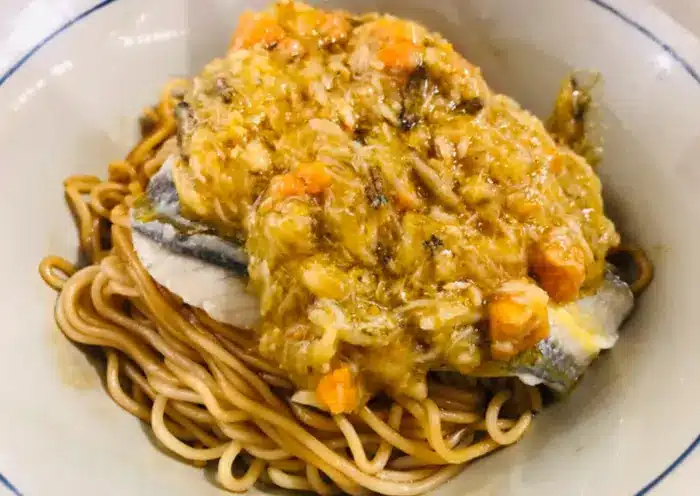
2. Crab Roe Noodles (蟹黄面)
This is a luxurious seasonal favorite topped with rich hairy crab roe and fresh crab meat, and it will be served in a thick golden sauce. The creamy, briny topping will cling to chewy noodles, allowing this dish to have an incredible flavor, so that it becomes a must-try during autumn crab season.
- Where to try: Yuxingji Crab Roe Noodle House
- Address: 686 Jiujiang Road
3. Shanghai Fried Noodles (上海炒面)
Shanghai fried noodles are wheat noodles stir-fried with pork, shrimp, or vegetables in a soy-based sauce. This type of noodle are mostly chewy and lightly charred, with an amazing savory umami flavors and a wok-seared aroma. It’s a comforting street food favorite often compared to lo mein, but firmer and bolder.
Standing apart from the sour and spicy zest of Northeast cold noodles and the light elegance of Korean cold noodles, Shanghai cold noodles bases its uniqueness on the noodles themselves (authentic alkaline noodles), sauce (upheld by soy sauce, Kangle vinegar, and peanut butter), and toppings.
- Where to try: A-Jie Fried Noodles & Pork Cutlet
- Address: 117 Yunnan South Road
4. Cold Noodles (冷面)
Shanghai cold noodles is a refreshing summer dish which is served in a chilled way, with toppings like shredded chicken, cucumber, ham, and a tangy dressing of sesame paste, vinegar, soy sauce, and sugar. Some versions are vegetarian. It’s light, nutty, and perfect for humid Shanghai days.
- Where to try: Dexing Guan (Dexing Restaurant)
- Address: 471 Guangdong Road
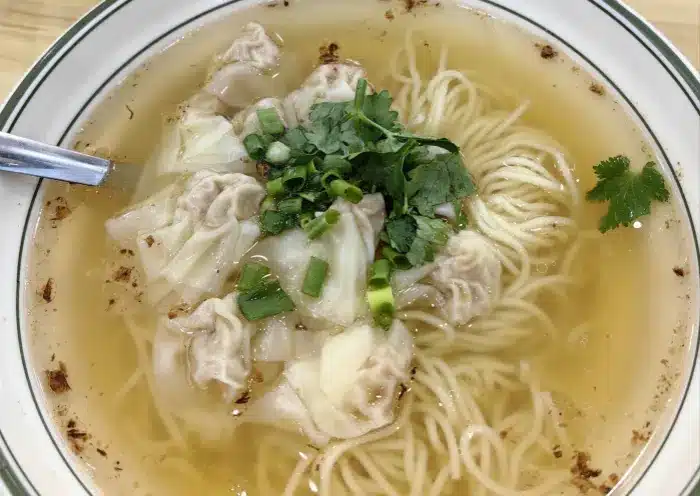
5. Wonton Noodles (馄饨面)
This is a rather special type of noodles which include delicate pork or shrimp wontons and thin wheat noodles in a light, flavorful broth. This comforting combo is widely loved across Shanghai, especially for breakfast. Sometimes it’ll also be garnished with dried shrimp, seaweed, or scallions.
- Where to try: Old Shanghai Wonton Noodles
- Address: Guohe Second Village, Guohe Road, Yangpu District
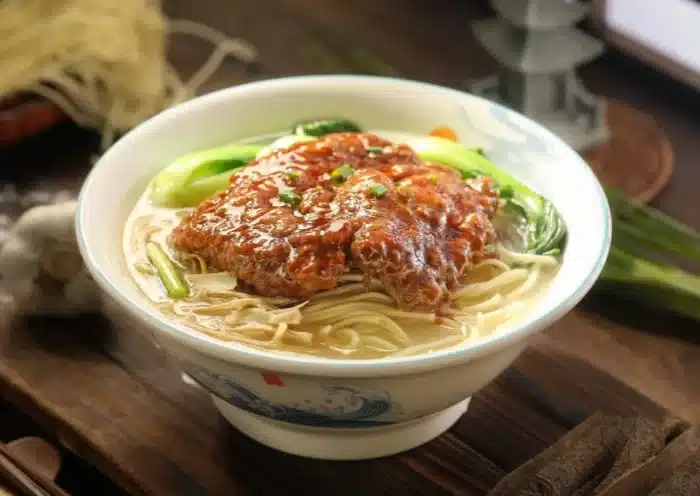
6. Pork Chop Noodles (大排面)
As one of the most popular Shanghai soup noodle dishes, just like its name, it is typically topped with a large, crispy fried pork chop. The crunchy meat, the soft noodles and rich soup together makes it a satisfying and no-frills local favorite.
- Where to try: Abao Noodle House
- Address: 1219 Xinzha Road (near Jiangning Road)
7. Spicy Minced Pork Noodles (辣肉面)
Chewy noodles topped with minced pork cooked in a spicy, oily, soy-based sauce. It’s Shanghai’s answer to dan dan noodles—less numbing, more savory. Sometimes garnished with pickled vegetables or scallions for extra punch.
- Where to try: Hongye Spicy Pork Noodles
- Address: 158 Xilingjiazhai Road
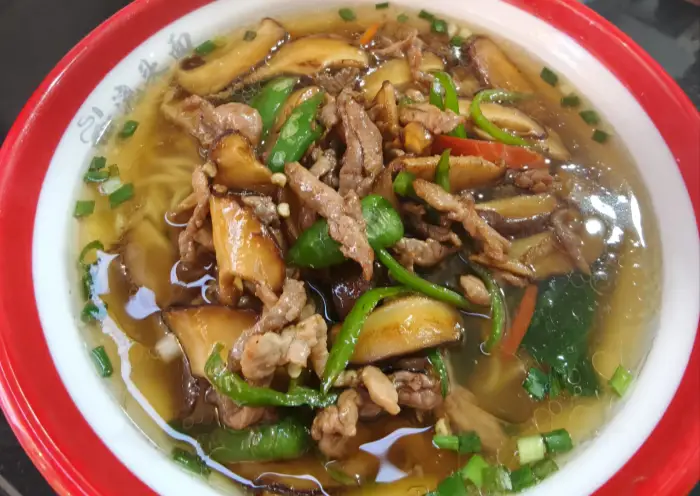
8. Vegetarian Luohan Noodles (罗汉上素面)
A Buddhist-inspired noodle bowl topped with a medley of seasonal vegetables like mushrooms, tofu, bamboo shoots, and greens. The clear broth is light but flavorful, which can better emphasize its freshness and natural sweetness. It’s definitely a wholesome, meat-free option.
- Where to try: Longhua Vegetarian Noodles
- Address: 2787 Longhua Road (east side of Longhua Temple), near Longhua West Road
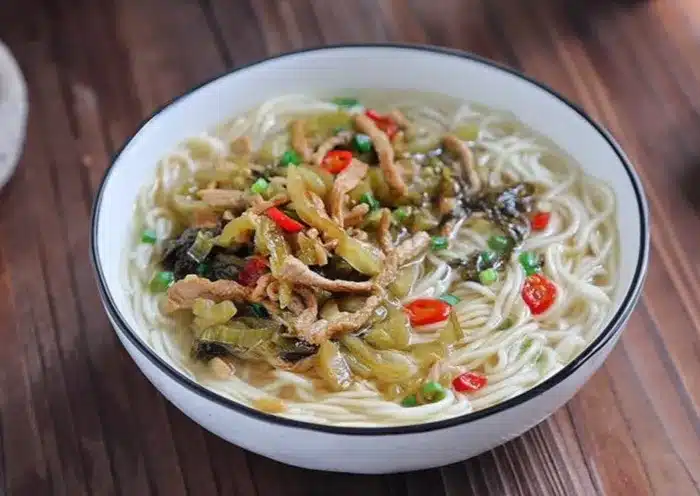
9. Pickled Mustard and Shredded Pork Noodles (雪菜肉丝面)
Noodles in clear broth with stir-fried shredded pork and xuecai (pickled mustard greens). The soup is tangy and savory, with a comforting balance of meatiness and pickle sharpness—very Shanghai.
- Where to try: Canglang Pavilion (Xuhui Branch)
- Address: 323 Tianyaoqiao Road, Xuhui District (at Nandan Road intersection)
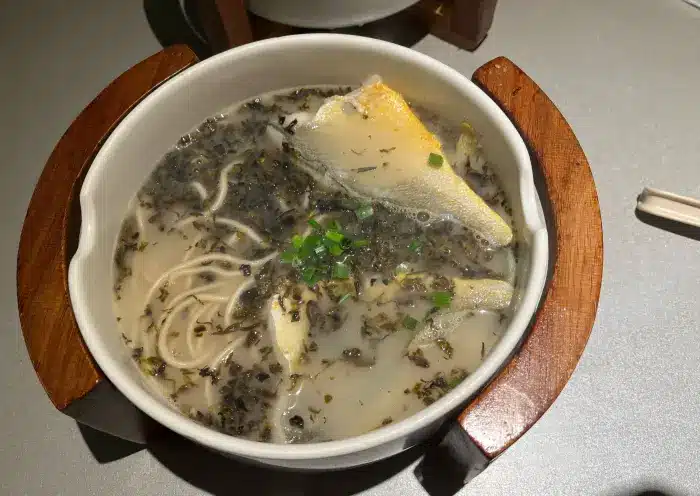
10. Yellow Croaker Noodles (黄鱼面)
This type of noodle features a fresh yellow croaker fish that served in a rich milky-white soup with soft noodles. The fish is usually deboned and fried before simmering, and this step is the key point for making the broth thick, slightly sweet, and deeply umami.
- Where to try: Mingcheng Yellow Croaker Noodle House
- Address: 1370 Xietu Road
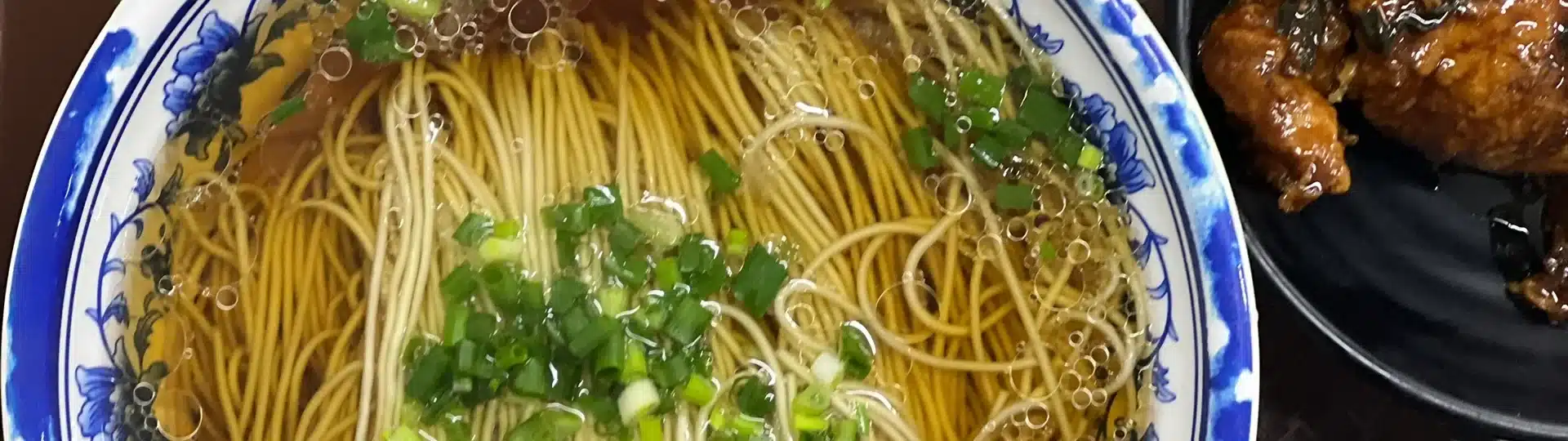
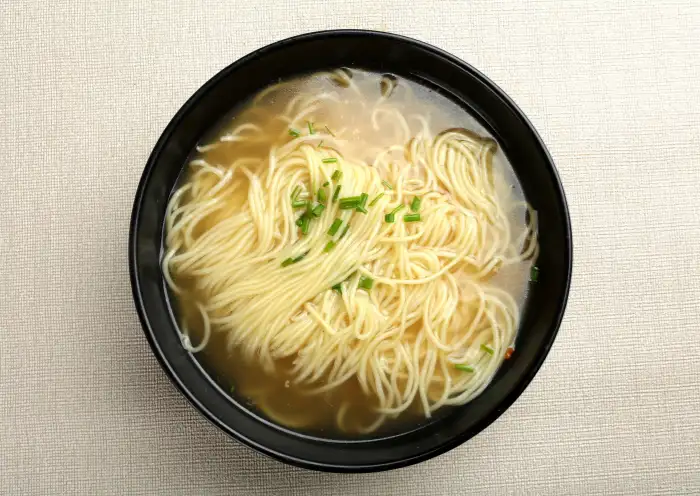
11. Yangchun Noodles (阳春面)
The ultimate minimalist noodle—just noodles and a light broth, often with scallions and soy sauce. It’s budget-friendly, nostalgic, and widely eaten for breakfast or a light lunch in Shanghai homes and stalls.
- Where to try: Kaili Shanghai Yangchun Noodle House
- Address: 422–426 Guangxi North Road
12. Eel Noodles (鳝丝面)
Stir-fried shredded yellow eel served over noodles in a dark, thick sweet-savory sauce. The eel is soft and rich, with a touch of heat from ginger or pepper. This is one of the most prized and expensive Shanghai noodle dishes, but it will also offer you a luxurious experience.
- Where to try: Luxiangji Noodle House
- Address: 501 Liyuan Road
13. Other Popular Shanghai Noodles
- Braised Fish Noodles (爆鱼面): Noodles topped with sweet soy-braised fried fish slices.
- Braised Pork Noodles (焖肉面): This features the tender pork belly that served in a rich, slow-cooked sauce.
- Shrimp & Kidney Noodles (虾腰面): Unique mix of prawns and pork kidney in savory broth.
- Vegetarian Gluten Noodles (素鸡面): Uses braised wheat gluten slices with vegetables.
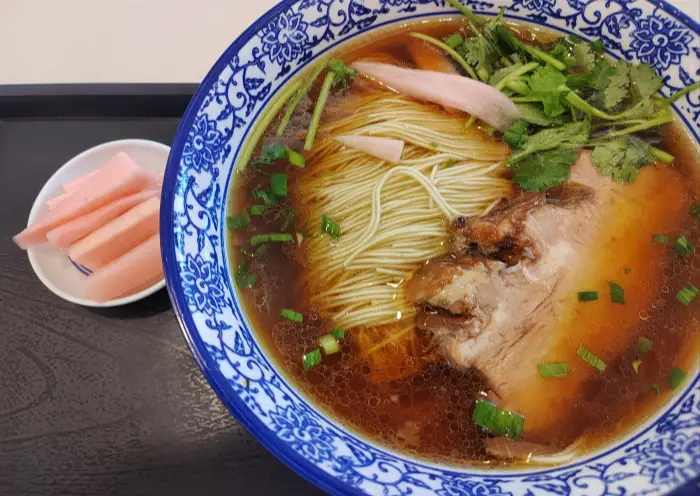
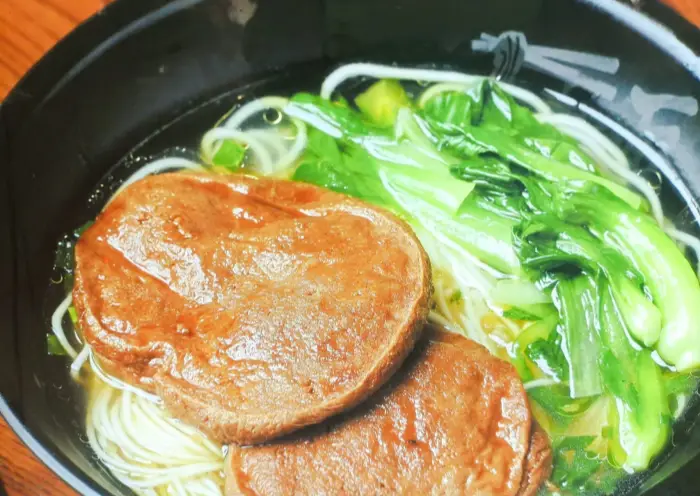
12 Must-Try Noodle Dishes in Shanghai at a Glance
English Name |
Chinese Name |
Main Topping / Highlight |
Flavor Profile |
Typical Where to Try |
Scallion Oil Noodles |
葱油拌面 |
Hot scallion-infused oil & soy sauce |
Aromatic, sweet-savory |
Old Shanghai Noodle House –-233 South Xiangyang Road, Xuhui District |
Crab Roe Noodles |
蟹黄面 |
Hairy crab roe + fresh crab meat in golden sauce |
Rich, briny, creamy |
Yuxingji Noodle House – 830 Weihai Road (near Shaanxi North Rd), Jing’an District |
Shanghai Fried Noodles |
上海炒面 |
Pork or shrimp with vegetables in stir-fry |
Umami, wok-seared, chewy |
A-Jie Fried Noodles & Pork Cutlet – 117 Yunnan South Road |
Cold Noodles |
冷面 |
Shredded chicken, cucumber, ham + cold tangy dressing |
Nutty, light, refreshing |
Dexing Guan – 471 Guangdong Road, Huangpu District |
Wonton Noodles |
馄饨面 |
Pork or shrimp wontons in light broth + wheat noodles |
Comforting, mild savory |
Old Shanghai Wonton Noodles – Guohe Second Village, Guohe Road, Yangpu District |
Pork Chop Noodles |
大排面 |
Crispy fried pork chop atop noodles in soup |
Hearty, no-frills local favorite |
Abao Noodle House – 1219 Xinzha Road (near Jiangning Road) |
Spicy Minced Pork Noodles |
辣肉面 |
Minced pork in spicy soy-based sauce |
Slightly spicy, savory |
Hongye Spicy Pork Noodles – 158 Xilingjiazhai Road |
Vegetarian Luohan Noodles |
罗汉上素面 |
Seasonal vegetables and tofu in clear broth |
Fresh, light, wholesome |
Longhua Vegetarian Noodles – 2787 Longhua Road (east side of Longhua Temple) |
Pickled Mustard & Shredded Pork Noodles |
雪菜肉丝面 |
Shredded pork and pickled mustard greens in clear broth |
Tangy, umami balance |
Canglang Pavilion (Xuhui Branch) – 323 Tianyaoqiao Road, Xuhui Distric |
Yellow Croaker Noodles |
黄鱼面 |
Fried yellow croaker in milky-whit |
Rich, slightly sweet, deep umami |
Mingcheng Yellow Croaker Noodle House – 1370 Xietu Road |
Yangchun Noodles |
阳春面 |
Plain wheat noodles in soy-scallion broth |
Simple, nostalgic, light |
Kaili Shanghai Yangchun Noodle House – 422-426 Guangxi North Road |
Eel Noodles |
鳝丝面 |
Shredded yellow eel in sweet-savory thick sauce |
Luxurious, soft, flavorful |
Luxiangji Noodle House – 501 Liyuan Road |
How to Cook Shanghai Noodles at Home
Ingredients You’ll Need
- 200g fresh Shanghai-style wheat noodles (or thick udon as substitute)
- 1 pork chop (boneless, about 150–200g)
- 1 egg
- 1 tablespoon soy sauce
- 1 tablespoon oyster sauce
- ½ tablespoon Shaoxing wine
- ½ teaspoon sugar
- 1 teaspoon cornstarch
- 1 scallion (chopped)
- A pinch of white pepper
- Cooking oil
- Optional: bok choy or other green vegetables for garnish
Step-by-Step Recipe for Classic Shanghai Pork Chop Noodles (大排面)
1. Marinate the pork chop
First, you need to pound the pork chop, which is a crucial step to tenderize it. Then mix soy sauce, Shaoxing wine, oyster sauce, sugar, white pepper, and cornstarch in a rather large bowl. Then soak the pork chop in the mixed sauce and coat it evenly. Let it marinate for 30 minutes.
2. Prepare the noodles
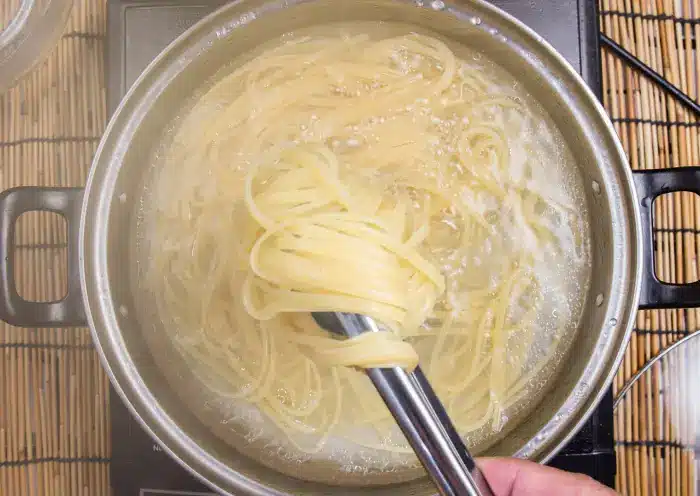
Boil the noodles until it’s al dente, then rinse the noodles with cold water and drain them. After that, set them aside.
3. Fry the pork chop
Beat an egg and coat the marinated pork chop in it. Heat oil in a pan and fry the chop on medium heat until it gets a golden brown outer side and cooked through. Set it aside as well.
4. Assemble the dish
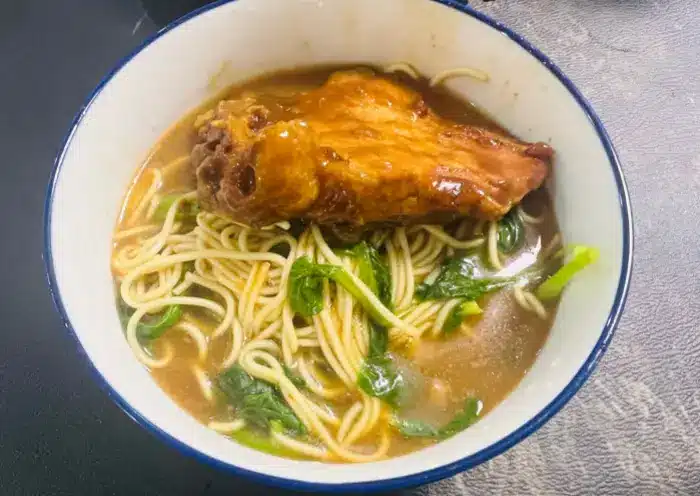
Boil a separate pot of water and quickly blanch bok choy or leafy greens. Place cooked noodles in a bowl, pour a ladle of light broth or hot water over (optional) it, top it with the pork chop and greens. Garnish with scallions.
Tips for Achieving Authentic Taste
- Use fresh wheat noodles if available—frozen or dried substitutes won’t replicate the chewy texture.
- The pork chop should be crispy outside, juicy inside. Don’t skip the egg coating.
- For a richer taste, use a light broth made from chicken bones instead of plain water when cooking the noodles.
- Add a splash of scallion oil or lard to add extra fragrance.
Related reading: Top 8 Tips for a Gluten-Free Trip to China
How to Order Like a Local: Tips and Terms for Eating Noodles in Shanghai
When you order noodles in Shanghai, don’t just say the name of the dish, master these terms and you’ll express your requirements for the noodles like a Shanghainese:
- 宽汤 (kuān tāng) – Extra broth
- 紧汤 (jǐn tāng) – Just a little broth
- 干挑 (gān tiāo) – Dry-tossed, no broth
- 香头 (xiāng tóu) – Fragrant garnish like scallions or garlic. Say “免香头” to remove it.
- 硬面 (yìng miàn) – Firm noodles with a chewy bite
- 软面 (ruǎn miàn) – Soft noodles
- 烂面 (làn miàn) – Very soft, almost mushy noodles
- 过桥 (guò qiáo) – Toppings and noodles are served separately so you can mix as you like.
Practical Tips for Eating Noodles in Shanghai
Noodle pairings for each meal
- Breakfast: It would be better to have some light yet satisfying bowls for breakfast, which can make you energetic for a whole morning while not being too heavy for your body. Yangchun noodles (阳春面) or Wonton noodles (馄饨面) are the best choices, and these are also the local people’s picks.
- Lunch / Dinner: Lunch and dinner are time to havericher styles such as Pork Chop Noodles (大排面), Crab Roe Noodles (蟹黄面) or stir-fried versions like Shanghai Fried Noodles (上海炒面).
- Hot & humid days: There are actually chilled versions just served for hot summer days, such asCold Noodles (冷面), which is also good to beat the humidity.
Busy periods & peak hours
7:00–9:00 a.m., 11:30 a.m.–1:30 p.m., and 6:00–8:00 p.m. are some of the rush hours in noodle shops. So that If you arrive right at peak time, you’ll probably miss the best experience. To enjoy the noodles in a more relaxing way, have your meal a little earlier or later than the peak times, for example, mid-afternoon or after 8:00 p.m. would be the best.
Price range & expectations
- A simple bowl (like Yangchun noodles) in a local noodle shop can cost RMB 10–
- Mid-range dishes (e.g., pork chop noodles or pickled mustard & shredded pork noodles) might cost RMB 25–
- Premium bowls (e.g., crab-roe noodles, eel noodles) may run RMB 80–150 or more depending on ingredients and restaurant.
Etiquette & norms
- Sharing bowls: Less common in Shanghai noodle-shops.Usually each person would order at least one bowl.
- Slurping: Yes, it’s fine.It shows you’re enjoying the dish, don’t worry.
- Tipping:Not expected in neighbourhood noodle houses in Shanghai.
- Ordering special requests: Use terms like 硬面 (yìng miàn) for firmer noodles, 软面 (ruǎn miàn) for softer ones, 宽汤 (kuān tāng) for extra broth, or 干挑 (gān tiāo) for dry-tossed version with no broth.
Shanghai Noodles FAQ
What’s the best sauce for Shanghai noodles?
Most Shanghai-style noodle dishes use a light soy-based sauce, and it is often enhanced with scallion oil, oyster sauce, and a touch of sugar. Unlike spicy Sichuan noodles, Shanghai-style favors a mild, umami-rich base. For cold noodles, peanut and sesame sauce is commonly used.
Shanghai noodles vs lo mein?
While both are made with wheat noodles, they do have differences. Shanghai noodles are typically thicker and chewier, often boiled and served with hearty and freshly cooked toppings. Lo mein, which is more popular in American Chinese cuisine, uses softer, thinner wheat noodles, served with a more saucy texture and sweeter flavor profile.
Taiwan noodles vs Shanghai noodles
When talking about Taiwan noodles, people would often refer to braised beef noodles with a deep, spicy soup base. In contrast, Shanghai noodles focus on lighter broths or dry stir-fried styles, with rather saviry toppings like pork chop, scallions, or crab roe. Flavor-wise, Taiwan styles are bolder, while Shanghai flavors are more delicate and sweet-savory.
Eat Your Way Through Shanghai with China Xian Tour
Indeed, Shanghai has some of the best styles of noodles but its highlights are going way beyond just bowls. No matter you’re searching for foods or cultural and historical immersions, a customized Shanghai tour with China Xian Tour can make all your expectations come true. Our professional guides will take you to go deeper into Shanghai’s soul while also trying all the best local flavors. Let us handle the details for you, and what you need to do along the way will only be preparing yourself for the most unforgettable and pleasant moments.