



Written by Catherine |
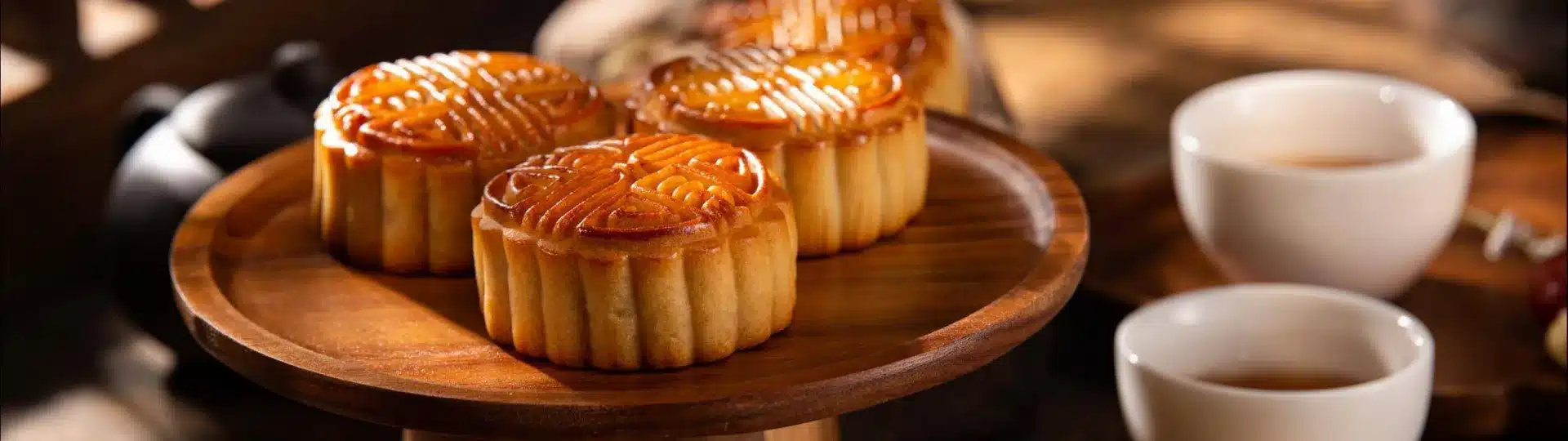
On August 15th of the lunar calendar, China and many other east-Asian cultures celebrate Mid-Autumn Festival or Mooncake Festival. On this day, when the moon is said to be the largest and brightest, families get together to celebrate the fall and harvest. As the star of the show, moon cakes, are no doubt the most iconic food of Mid-Autumn Festival.
Mooncake in Chinese is Yue Bing. It is a literal translation. It has a long history and has evolved into different types across different regions. This article will be all about Chinese mooncakes including a simple recipe if you wish to make it yourself.
Content Preview
- What is a Mooncake?
- The Meaning behind Mooncakes
- History of Mooncakes
- Different Types of Mooncakes – Regional Varieties
- Top 10 Mooncakes Flavors
- Simple Mooncake Recipe
- New and Modern Varieties
- Storing and Serving Mooncakes
- FAQs about Chinese Mooncakes
- Travel with China Xian Tour for in-depth Culture Experiences in China
What is a Mooncake?
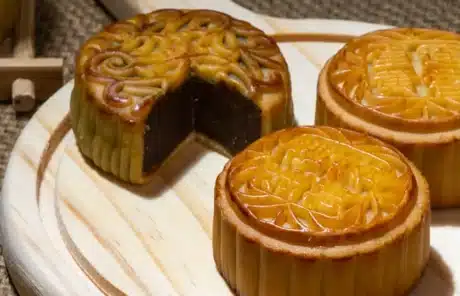
Mooncake (月饼, yuèbǐng) is a kind of round baked pastry with various sorts of flavors. It is an indispensable element for celebrating Mid-Autumn Festival and people always regard it as a symbol of family reunion and completeness. From past to present, mooncakes are always gifts among families, friends, and colleague.
The Meaning behind Mooncakes
Beyond the delicious taste, mooncakes are also filled with cultural significance. Their round shape are designed to mirror the full moon, while their delicate flavor echoing with the joy and happiness of reunion. It shows how deeply Chinese people value a complete and harmony family relationship. Today, this delicate pastry still serves as a tangible link to tradition and family bonds, bridging generations through shared rituals of eating and gifting.
History of Mooncakes
Moon cakes have more than 3,000 years of history in China. It plays a major role in many Mid-Autumn Festival stories. It began as a worship offering to the moon god and was passed down to become a festival tradition. Trying out the mooncakes is one of the best things to do on your China culture tour.
According to historical records, in as early as Shang and Zhou Dynasties, Jiangsu and Zhejiang region had a thin-crust pastry called “Taishi cake,” which is considered the ancestor of Chinese moon cakes. In Han Dynasty, Zhang Qian brought back sesame seeds and walnuts from his mission to the West on the Silk Road. They became new additions to the pastry called “Hu cake.” It was in Tang Dynasty when “Hu cake” became “moon cake.”
Mooncakes became a prevalent snack in the palace in North Song Dynasty, but not as a seasonal or festival food. In late Yuan Dynasty, Zhu Yuanzhang, the founder of Ming Dynasty, put notes with the time of the uprising, August 15th, inside the fillings of mooncakes to secretly deliver to his allies. The Mooncake Uprising made it a signature food of Mid-Autumn Festival ever since.
Our Top Recommended China Culture Tours:
- 8 Days Silk Road Tour from Lanzhou to Dunhuang
- 9 Days China Cultural Tour of Beijing-Datong-Pingyao-Xi’an
- 13 Days China tour of Beijing – Xian – Hangzhou – Huangshan – Shanghai
Different Types of Mooncakes – Regional Varieties
As mentioned before, different regions in China have their own style and flavors of mooncakes, with different ingredients in the fillings and different skins. Here are some of the most popular types of moon cakes that you should try when you travel to China.
Cantonese-Style Mooncakes
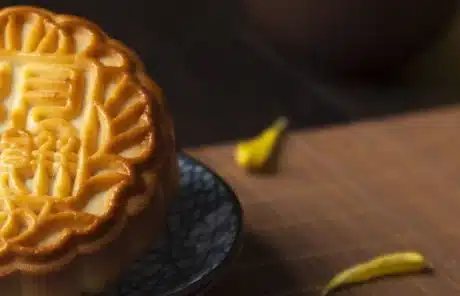
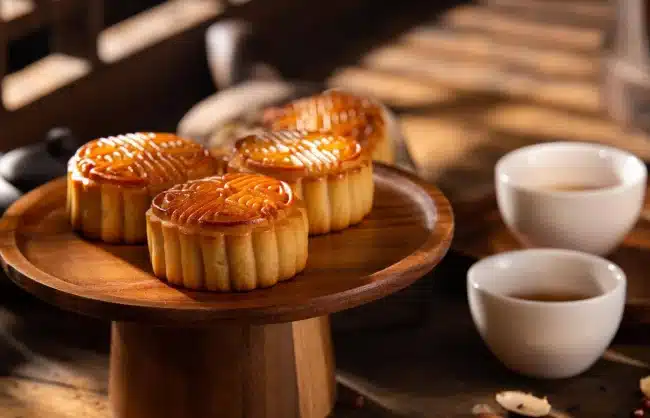
Canton refers to Guangzhou, the capital city of Guangdong. Cantonese-style mooncakes are the most popular type in China. They have thin skin and thick, soft fillings. It’s quite a heavy snack. They are also unique in their delicate patterns. These mooncakes are particularly popular as gifts because they don’t tend to fall apart, are often individually packed, and are best suited for mailing or traveling.
Cantonese-style mooncakes come with a wide range of fillings. The most common ones are red bean paste, lotus seed paste, salted egg yolk, and five kernels. The red bean mooncakes are sweet with the fine texture of beans. The salted egg yolks bring hints of savory flavors to the subtly sweet lotus seed. And the five kernels have the texture and scent of nuts. These are probably the most classic moon cake flavors.
Jing-Style Mooncakes
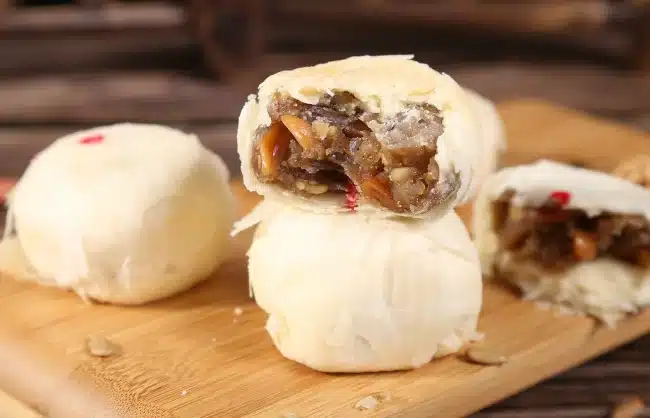
Jing-style mooncakes are specialties of North China, particularly Beijing, Tianjin, and Hebei. It is characterized by heavy use of sesame oil and less sugar, which makes the moon cakes crispy and not as sweet. People in Beijing like to have tea with their moon cakes to balance out the grease and flavors. Popular Jing-style mooncake flavors include white mooncake, red mooncake, and five-kernel mooncake.
Su-Style Mooncakes
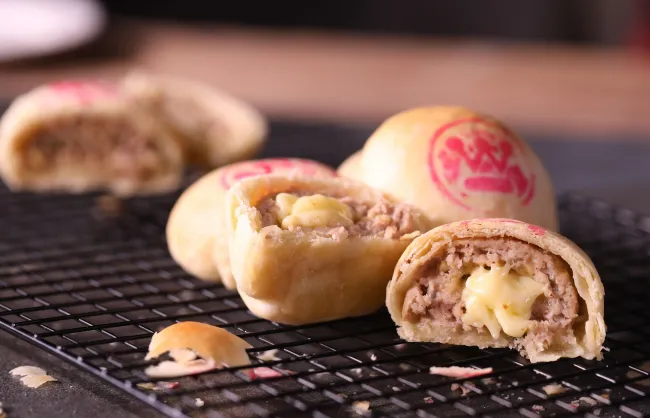
Su-style mooncakes are traditional mooncakes of Suzhou, Jiangsu Province. It is well-loved by people in Yangtze Delta region around Shanghai. They are best known for their crispy, flaky skin and rich layers. Su-style Mooncakes have both sweet and savory flavors.
Among them, fresh pork meat moon cakes are very popular. They are the best when freshly baked with the meat still juicy. Another famous kind has a salt and pepper filling with melon seeds. The smell of the melon seeds complements the savory flavors really well. If you’re lucky enough to walk past a mooncake bakery on your China tour, make sure you try one fresh and warm out of the oven.
Dian-Style Mooncakes
Dian refers to Yunnan. Dian-style mooncakes are unique because they incorporate many locally produced ingredients. The two most representative flavors are ham mooncakes and flower mooncakes. You have to try them on your China food tour.
Ham mooncakes have fillings made of diced local ham with honey, sugar, and lard. They are crispy, soft with the delicious aroma of ham. The flower mooncakes are made of an edible rose of Yunnan, which gives them a sweet fragrance and refreshing taste.
Chao-Style Mooncakes
Chao-style mooncakes are specialties of Chaozhou, Guangdong. They are easily identifiable because their crust is usually in the shape of spiral rings. They are characterized by crispy skin and fine fillings. There are a variety of flavors. The filling paste can be made of mung bean, black beans, taro, or others with egg yolk or seafoods and so on.
Snow Skin Mooncakes
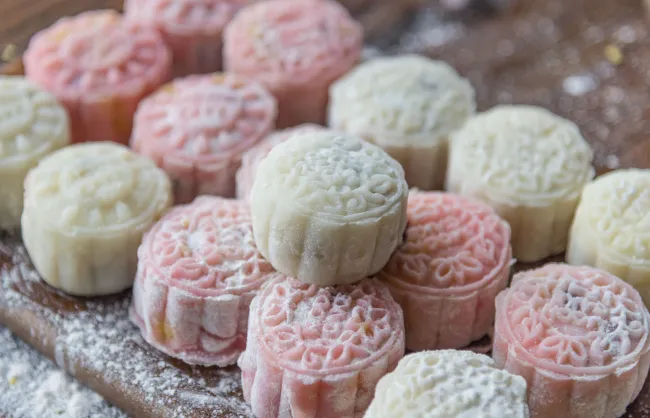
Snow Skin Mooncakes, or Ice Skin Mooncakes in Chinese, originated from Hong Kong. They are different from the traditional sense of moon cakes in their ingredients and making process. Traditional moon cakes are baked with skin made of flour and sugar, but Snow Skin Mooncakes has glutinous rice in their skin, so they’re chewy and soft. They are a cold, refrigerated dessert instead of baked goods.
Our Top Recommended China Food Tours:
- 3 Days Chengdu Food Tour with Cooking Class Experience
- 5 Days Xian Food Tour
- 13 Days China Food Tour: Beijing Xian Chengdu Guilin Hong Kong
Top 10 Mooncakes Flavors
Chinese Name |
English Name |
Flavor Profile |
五仁月饼 |
Five-Nut Mooncake |
A traditional classic with a mix of five nuts (peanuts, almonds, walnuts, melon seeds, sesame seeds), offering a crunchy texture and moderately sweet flavor. |
莲蓉蛋黄月饼 |
Lotus Seed Paste with Salted Egg Yolk Mooncake |
The most popular Cantonese variety, featuring smooth lotus seed paste wrapped around a savory salted egg yolk, balancing sweetness and saltiness in layers. |
豆沙月饼 |
Red Bean Paste Mooncake |
A mild, sweet option made with red bean paste, known for its soft, fine texture and subtle earthy flavor. |
冰皮月饼 |
Snow Skin Mooncake |
A modern, non-baked variety with a chewy, glutinous rice crust, often filled with sweet or fruity fillings (e.g., mango, matcha) for a refreshing taste. |
奶黄月饼 |
Cream Cheese Mooncake |
A trendy choice with a creamy, eggy filling (mixed with cream cheese and butter), known for its rich, slightly sweet flavor and smooth texture. |
叉烧月饼 |
Barbecued Pork Mooncake |
A savory-sweet Cantonese classic, featuring tender, juicy barbecued pork mixed with honey and spices, offering a flavorful, meaty filling. |
枣泥月饼 |
Jujube Paste Mooncake |
A sweet, fruity option made with jujube (red date) paste, boasting a rich, natural sweetness and soft, sticky texture. |
云腿月饼 |
Ham Mooncake |
A Yunnan specialty, using spicy-sweet cured ham (e.g., Xuanwei ham) mixed with sugar and lard, creating a savory, aromatic filling. |
绿茶月饼 |
Green Tea Mooncake |
An innovative flavor infused with matcha or green tea powder, offering a fresh, slightly bitter taste that balances the sweetness of traditional fillings. |
松露月饼 |
Truffle Mooncake |
A luxurious option featuring black truffle paste or truffle-infused fillings, known for its earthy, aromatic profile and premium quality |
Simple Mooncake Recipe
There’s no better Mid-Autumn Festival gift than home-made moon cakes for your loved ones. Here’s an easy Cantonese-style lotus paste mooncake recipe for first timers.
Ingredients
For lotus paste filling:
- 200g dried lotus seeds (you can find them in Asian grocery stores or online)
- 150g sugar
- 80g vegetable oil (you may substitute for peanut oil or grapeseed oil for different flavors)
For mooncake skin:
- 200g all-purpose flour
- 140g golden syrup
- 50g vegetable oil (same as before)
- 1 tsp alkaline water (optional, but gives the skin a richer color)
For egg wash:
- 1 egg yolk
- 1 tsp water
Preparing the Lotus Paste
- Rinse and soak the dried lotus seeds in water overnight.
- Drain and boil them in fresh water. Simmer for about 2 hours until they’re soft.
- Drain the boiled seeds. Blend them with a little water until smooth.
- In a non-stick pan, heat up 1 tbsp of oil. Add the blended lotus seed puree and sugar. Stir continuously on low heat.
- Keep stirring and add the oil in portions over 20-30 minutes. The mixture will thicken into a smooth paste. When it’s no longer sticky, remove from heat and let it cool in the fridge for at least an hour.
Preparing the Mooncake Dough
- In a large bowl, mix the golden syrup, oil, and alkaline water.
- Gradually add flour to the wet mixture, stirring until it forms a dough.
- Cover the dough with plastic wrap and let it rest in the fridge for 30-60 minutes.
Putting the Mooncakes Together
- Weigh and divide the lotus paste and dough into small portions (e.g. 20g dough and 30g filling for a 50g mold).
- Flatten each dough piece into a disk, roll the lotus paste into balls. Wrap the skin around the filling, sealing the edges.
- Dust a mooncake mold with a little flour, place the wrapped dough inside, and press to form the shape. Put your mooncake on a parchment paper.
Baking
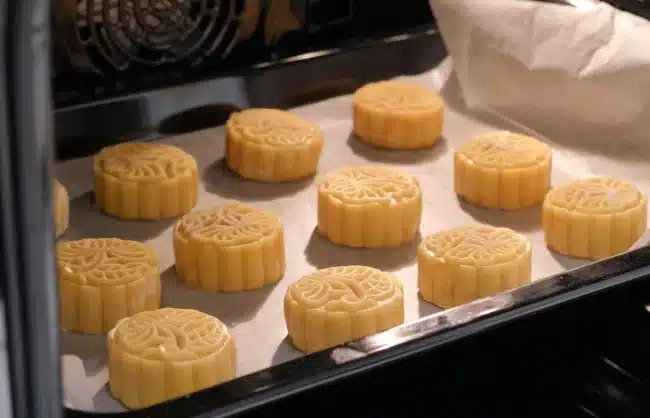
- Preheat your oven to 350°F (175°C).
- Brush the mooncakes with a light layer of egg wash.
- Bake for 10 minutes, then take it out. Let the mooncakes cool for 10 minutes, apply a second egg wash, and bake for another 10-15 minutes or until golden brown.
Resting the Mooncakes
Let the moon cakes cool completely and store in an airtight container. After 1-2 days, the skin will be soft and smooth. Enjoy your home-made moon cakes!
New and Modern Varieties
Except for the traditional flavors, people have also created many modern mooncakes with incredible flavors in recent years:
- Ice Cream Mooncakes: Popular among younger generations, featuring ice cream inside raped with glutinous rice skin (snow skin).
- Chocolate Mooncakes: Sweet variations which hasboth chocolate-flavor crusts or centers.
- Fruit-Flavored Mooncakes:Mango, durian, blueberry, and strawberry can all used as fillings.
- Healthier Innovations: Low-sugar, vegan, or whole-grain crust mooncakes.
Storing and Serving Mooncakes
To best enjoy mooncakes:
Storage:
- Traditional baked mooncakes: Store in a cool, dry place for 1–2 weeks.
- Snow skin or ice cream mooncakes: Refrigerate and consume within 5–7 days.
- Once opened: Finish within 1–2
Serving:
- Even though mooncakes are basically all made in small portions, but it’s still better to sliceit into wedges to share with others, since it’s a quite rich and heavy dessert.
- Try to pairit with tea, especially green tea or oolong tes, to balance out the richness.
FAQs about Chinese Mooncakes
1. How are mooncakes made?
Traditional mooncakes are baked, first using a sweet pastry crust (made with flour, syrup, and oil) to enclose a filling (sweet or savory). Then the pastry is stamped with decorative patterns, like flowers or festive words. Modern variations like snow skin mooncakes skip baking—their glutinous rice dough is steamed or chilled before shaping, making it sticky and with tenacity. Homemade recipes (e.g., Cantonese lotus paste) involve process like soaking, blending, and slow-cooking fillings, then wrapping them in dough and baking.
2. Where to buy mooncakes?
Mooncakes are sold everywhere at malls, supermarkets, hotels, traditional bakeries, or even buy them online. Popular brands like Daoxiangcun and Wing Wah offer pre-packaged sets, while local markets often sell homemade or regional varieties. For fresh and warm options (e.g., Suzhou-style or fresh pork mooncakes), visit street-side bakeries during the festival. However, if you feel shopping on street markets is a bit overwhelming, online shopping would be a great choice. You can even buy it on food delivery app, where you can choose the flavors, brands, and getting within an hour.
3. Price range of mooncakes?
Mooncakes’ prices could vary by brand, size, and ingredients:
Mass-produced: ¥50–¥300 per box (4–6 pieces).
Premium/handmade: ¥400–¥800+ per box (e.g., luxury brands, truffle, or abalone fillings).
Regional specialties (e.g., Yunnan ham or flower mooncakes): ¥100–¥300 per box.
4. How long can a Chinese mooncake last before going bad?
Store-bought mooncakes (baked) can normally last for 1–2 weeks at room temperature (avoid humidity). Homemade or snow skin mooncakes, sometimes ice-cream mooncakes should be refrigerated and consumed within 5–7 days. Once opened, finish within 2–3 days.
5. Why are mooncakes so rich in calories?
Mooncakes are calorie-dense due to their ingredients: sugar-heavy fillings (e.g., lotus paste, red bean), oil-rich crusts, and high-fat additions like salted egg yolks or nuts. A single 100g mooncake can contain 400–500 kcal—equivalent to 2–3 bowls of rice. However, it is also because of these rather high-calorie ingredients, it can have an amazing taste.
6. Is the mooncake healthy?
Traditional mooncakes are high in sugar, oil, and calories, so don’t eat too much of it in just one time. However, their cultural and symbolic value outweighs nutritional concerns for festival occasions, and usually people would share the mooncakes together.
7. Are there healthier mooncake alternatives?
Yes. Low-sugar, whole-grain, and vegan mooncakes are increasingly popular nowadays. Many measures have been done, such as replacing ingredients like lard with vegetable oil. Snow skin and fruit mooncakes are also lighter options compared to traditional baked varieties.
Travel with China Xian Tour for in-depth Culture Experiences in China
Mooncakes are a good starting point for you to dive into China’s rich cultural and historical heritage. To fully experience traditions like Mid-Autumn Festival, we would recommend you to have a guided journey with China Xian Tour. With the help of our local travel experts, you’ll get a perfect journey which is made completely based on your own preference, and we’ll also provide you with private transfers and professional guides. From start to finish, we’ll take care of all the preparation for you so that you can fully enjoy the unforgettable festive vibes.