
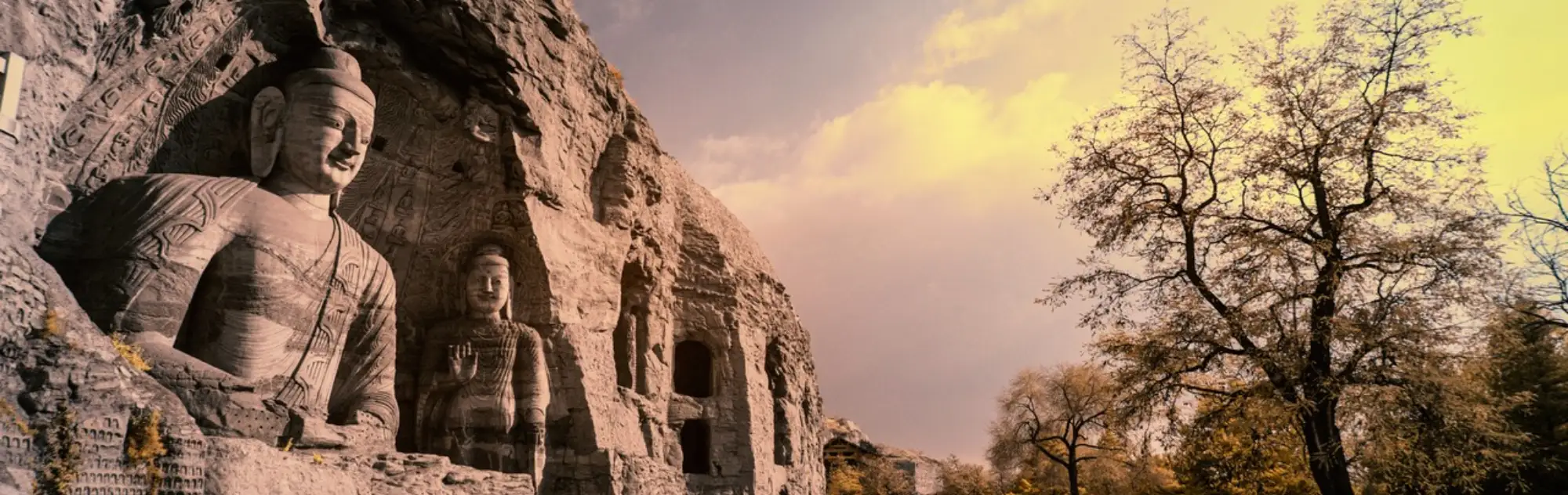
Along the Silk Road, there are several Buddhist caves and grottoes in the northwest of China, which is the crystallization of cultural exchanges along the silk road in ancient China. From these cultural relics of caves and grottoes in China, you will know about how Buddhism is spread from India to ancient China.
Through thousands years of revolution, the Buddhist art has transformed from the Western Regions style to the Central Plains style. And the statues and murals show the coexistence and prosperity of various religions and culture communication between countries in ancient China. So for tourists interested in Buddhism culture and Silk Road, these precious caves and grottoes are high recommended to be included in your China tour.
Content Preview
- Buddhist grotto art in ancient china
- Mogao Caves (Dunhuang, Gansu) – Top One Major Grotto in China
- Longmen Grottoes (Luoyang, Henan) – the Peak of Chinese Stone Carving Art
- Yungang Grottoes (Datong, Shanxi) – Combination with Indian, Greek and Persian Styles
- Maijishan Grottoes (Tianshui, Gansu) – Oriental Sculpture Museum
- Dazu Rock Carvings (Chongqing) – Integrating Buddhism, Taoism and Confucianism
- Bingling Temple Grottoes (Lanzhou, Gansu) – Model of the Integration of Grottoes and Nature
- Kizil Grottoes (Xinjiang) – Unique Central Asian Artistic Influence
- Yulin Grottoes (Dunhuang Area, Gansu) – Best for Intact Buddhist Murals
- Tiantishan Grottoes (Wuwei, Gansu) – Gallery in the Sky
- Bezeklik Thousand Buddha Caves (Turpan, Xinjiang)
- Tips for Visiting Grottoes in China
- Plan your Buddhist Grotto Tour with Us
Buddhist grotto art in ancient china
The Buddhist grotto art in China has a long history, which can be dated back to Northern Wei Dynasty when the grottoes are introduced into central China by the governor. The carving of Yungang Grottoes marks the starting point of large-scale grotto statues in China. During this time, the architectural styles mainly imitate the Indian pagodas.
From Northern Wei to Sui and Tang Dynasties, it has been in the golden era. During this period, the most famous Yungang Grottoes, Longmen Grottoes and Mogao Caves are built. And it has integrated with Chinese architecture like tower and roof.
Localization is completed from late Tang to Song Dynasty, when the murals include real life scenes as themes. It represents the late peak of grotto art in China.
Mogao Caves (Dunhuang, Gansu) – Top One Major Grotto in China
- Location: 25 kilometers southeast of Dunhuang City, Gansu Province
- Time Needed: 3 – 4 hours
- How to Get to: Take Bus No.12 at the opposite of Dunhuang Silk Road Yiyuan Hotel or take tourist shuttle bus at Dunhuang Railway Station.
- Best Time to Visit: April – June and September – October.
- Highlight: The nine-story temple, Library Cave
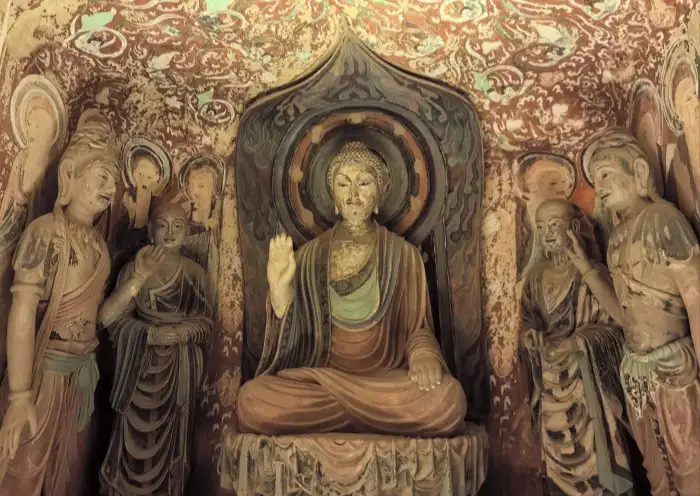
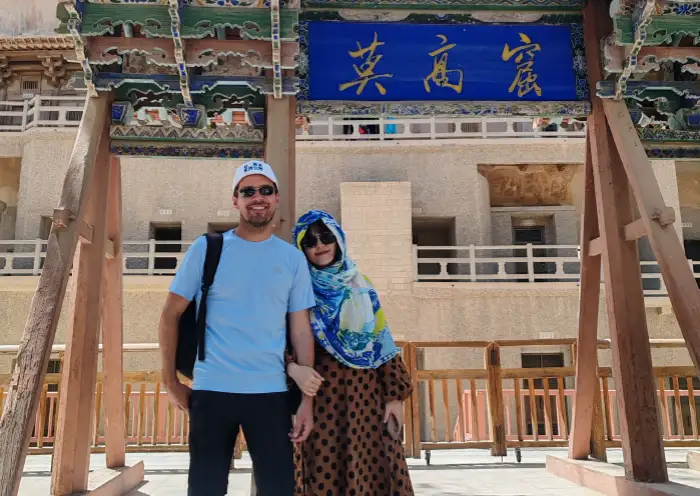
Mogao Caves or Mogao Grottoes, commonly known as “Caves of a Thousand Buddhas”, are located on the cliff at the eastern foot of the Mingsha Mountain. They are the largest, longest-lasting and richest Buddhist art treasure that are still exist in the world.
Through excavation for nearly a thousand years in more than 10 dynasties, it now preserve 735 caves, 45,000 square meters of murals and 2,415 clay painted sculptures. The themes of murals cover Buddhist scriptures and stories, social life scenes, ancient architecture, music and dance, etc. The cultural relics unearthed from Library Cave prove the integration of civilizations along the Silk Road.
It has been listed as the world cultural heritage in 1987. Besides, it ranks top one among the four major and famous grottoes in China, so it is quite worth visiting.
Recommended Tours:
3 Days Dunhuang Tour with Mogao Caves and Yulin Caves
5 Days Best Xian Dunhuang Culture-Tracing Tour
Longmen Grottoes (Luoyang, Henan) – the Peak of Chinese Stone Carving Art
- Location: No. 13, Longmen Middle Street, Luolong District, Luoyang City, Henan Province, 12 kilometers from city center
- Time Needed: 3 – 4hours
- How to Get to: Take bus line 89, 118 or Baiyuan – Bailitang subway station line. The ticket price is CNY 1 – 3 and the duration is about 1 hour.
- Best Time to Visit: April – Mayand September – October.
- Highlight: Xishan Grottoes
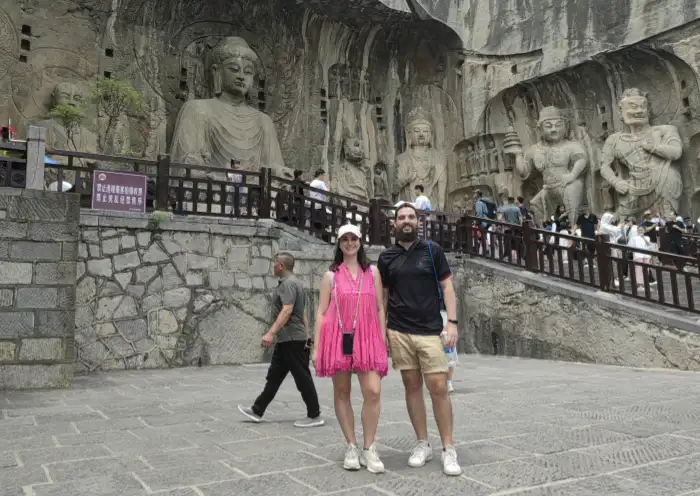
As the world’s largest stone carving art treasury with the most statues, Longmen Grottoes has been reputed by UNESCO as “the peak of Chinese stone carving art”.
It was first built in Northern Wei Dynasty and was continuously constructed over more than 1,400 years by more than ten dynasties. Most grottoes there are royal statues, making it one of the rare royal grottoes in the world.
The scale of Longmen Grottoes is the largest among caves in China and even in the world, where 2,345 caves, 110,000 statues and 2,800 inscriptions are discovered. During the tour, you will know about the process of the localization of Buddhist art.
Recommended tours:
Luoyang Highlight Day Tour: Longmen Grottoes and Shaolin Temple
2 Days Best Luoyang Tour with Local Experts
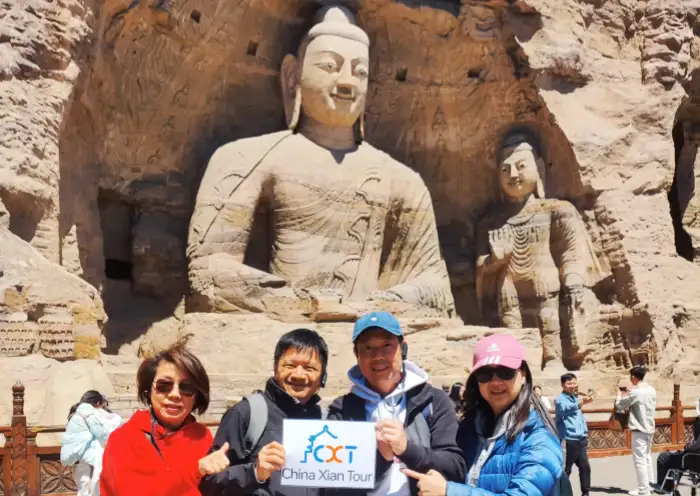
Yungang Grottoes (Datong, Shanxi) – Combination with Indian, Greek and Persian Styles
- Location: Wuzhou Mountain, Datong City, Shanxi Province, about 16 kilometers to the west of city center
- Time Needed: 2 – 3hours
- How to Get to: Take the No. 3 or 12Bus from the center of city to Yungang Grottoes or take a taxi directly.
- Best Time to Visit: April – October.
- Highlight: Five Grottoes of Tanyao, Lingyan Temple
Representing the peak work of world’s stone carving art in the 5th century AD, Yungang Grottoes is also one of the four major and famous grottoes in China. Till now, there are 45 main caves and 254 niches of various sizes and over 51,000 statues.
It is the only royal grotto in the world that integrates Indian Gandharan art, Greek column styles and Persian patterns, posing great influence on the grottoes in later eras. Besides, due to the innovation in the middle period, the statues change the kasaya to Han-style wide robes, and the flying apsaras transform from robust to elegant and graceful.
Recommended tours:
- 2 Days Datong Cultural Heritage Tour
- 5 Days Shanxi Highlights Tour: Pingyao, Wutai Mountain & Datong
Maijishan Grottoes (Tianshui, Gansu) – Oriental Sculpture Museum
- Location: Maiji District, Tianshui City, Gansu Province, 30 – 35 kilometers southeast of city center
- Time Needed: 3 – 4 hours
- How to Get to: Take the No. 34 bus from Tianshui Railway Station and No. 39 bus from Tianshui South Railway Station and Tianshui Airport to the scenic area.
- Best Time to Visit: April – June, September – October
- Highlight: Thousands Buddha Gallery, Seven Buddha Pavilions, Wan Buddha Hall, Heaven Cave
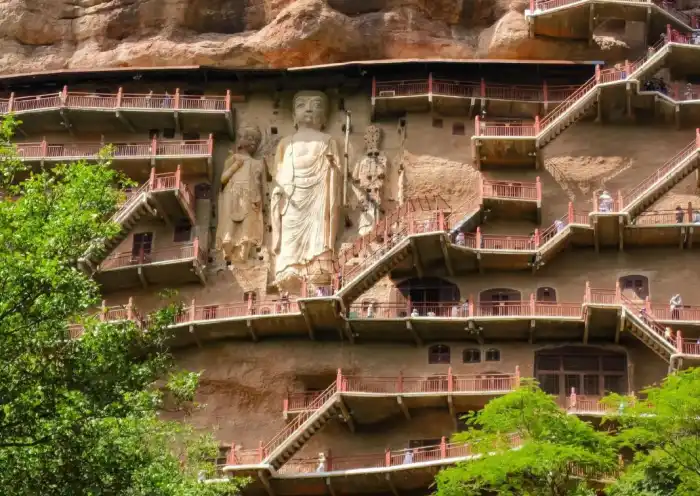
The existing 2221 niches, 10,632 statues and 979.54 – 1,300 square meters murals are built in over 10 dynasties in Chinese history. Carved into the vertical cliffs along the mountains, the caves are distributed from 20 to 80 meters high. The total length of the plank roads exceeds 1,300 meters, with the highest reaching 12 levels.
Since Maijishan Grottoes is a key node for the eastward spread of Buddhism along the Silk Road, its techniques of clay sculpture, cliff pavilion architecture and secular aesthetics have integrated the cultures of the Central Plains, the South and Western Regions. So the subsequent development of grotto in China has been profoundly influenced.
Recommended tours:
- Maijishan Grottoes Day Tour from Xian by Bullet Train
- 7 Days Silk Road Tour from Xian to Dunhuang by High-speed Train
Dazu Rock Carvings (Chongqing) – Integrating Buddhism, Taoism and Confucianism
- Location: Baoding Town, Dazu District, Chongqing City, 100kilometers from city center of Chongqing
- Time Needed: 3 – 6hours
- How to Get to: Take the bus line 205 from Dazu Bus Stationto the scenic area. If you set out from Chongqing, take high-speed train to Dazu South Station first, then transfer to the tourists bus to the scenic spots.
- Best Time to Visit: March – May, September – November
- Highlight: Boding Mountain, Stone Carvings on North Mountain
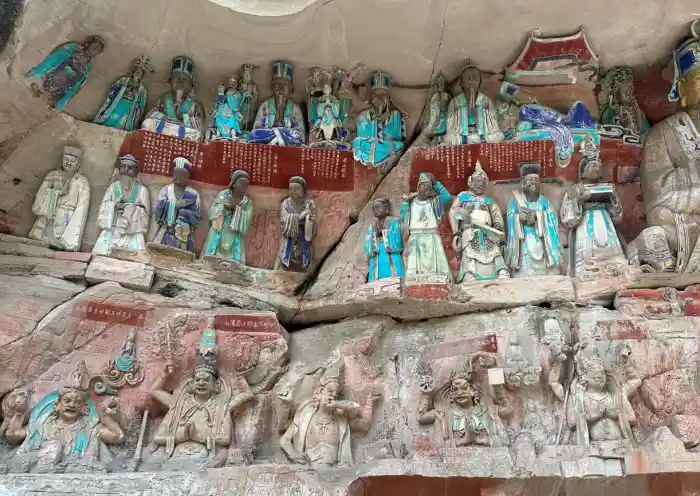
Dazu Rock Carvings are religious cliff carvings from the late Tang Dynasty to the early Song Dynasty. Its composition of statues of Buddhism, Taoism, and Confucianism is extremely rare in the world.
In addition, it is renowned for the large scale, exquisite carvings, diverse themes and intact preservation among the caves in China. The life of common people in the Song Dynasty is depicted through carvings. The core tourists areas are the Baoding Mountain and North Mountain where boasts over 50,000 status.
Recommended tours:
- 2 Days Chongqing Tour with Dazu Rock Carvings
- 5 Days Chongqing Tour with Dazu Rock Carvings & Wulong Karst
Bingling Temple Grottoes (Lanzhou, Gansu) – Model of the Integration of Grottoes and Nature
- Location: About 35 to 40 kilometers southwest of Yongjing County, Linxia Hui Autonomous Prefecture, Gansu Province
- Time Needed: 3 – 4hours
- How to Get to: Take the bus at Lanzhou West Bus Station and get off at Liujiaxia Dam, then transfer to the speedboatto the scenic spots.
- Best Time to Visit: May – October
- Highlight: Danxia landform, Sleeping Buddha Hall and the 171 niches of Maitreya Buddha from the Tang Dynasty
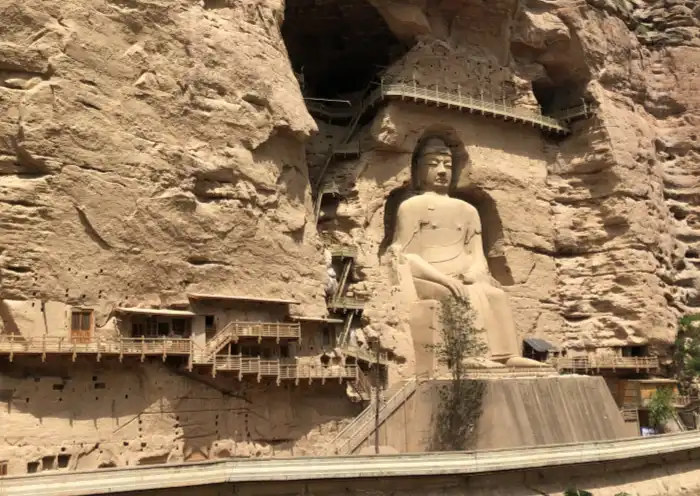
Bingling Temple Grottoes is located on the cliffs on the north bank of the Yellow River. The surrounding red mountains in Danxia landform and the Yellow River form a unique landscape of “Stone Forest over Yellow River”, which is hailed as “a model of the integration of grottoes and nature”. Although the terrain is steepness but the scenery is quite magnificent.
Bingling Temple Grottoes is an important Buddhist art relic along the Silk Road, which has combines the Indian Gandhara art and the style of the Central Plains Han region. And the style of murals and statues are significantly influenced by the Western Regions.
Kizil Grottoes (Xinjiang) – Unique Central Asian Artistic Influence
- Location: 7 kilometers southeast of Kizil Township, Baicheng County, Aksu Prefecture, Xinjiang
- Time Needed: 3 – 4 hours
- How to Get to: Take the “Kuche – Baicheng” bus from Kuche Passenger Transport Station,get off at the intersection of Kizil Township, then transfer to a local car to the scenic area.
- Best Time to Visit: April – June, September- October
- Highlight: Story paintings in diamond-type lattice.
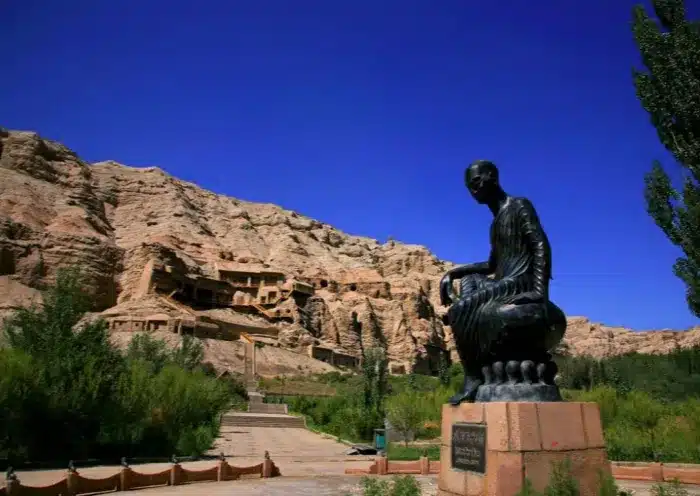
The Kucha Ancient Kingdom is an important transportation hub along the ancient Silk Road. The Buddhism is introduced into Xinjiang first and then transmitted into Central Plains, so Kizil Grottoes has been one of the birthplaces of Grottoes of Kucha kingdom. Also it holds an important position in Buddhist art in Central Asia and the Middle East.
About 300 years earlier than Mogao Caves, Kizil Grottoes is built in 3rd century AD and is one of the oldest Buddhist grottoes in China. Unfortunately, most statues are ruined and only a few clay sculpture and 10,000 square meter murals remain. But from the remaining murals, you can see the prosperous scene of the ancient kingdom.
Yulin Grottoes (Dunhuang Area, Gansu) – Best for Intact Buddhist Murals
- Location: about 70 kilometers south of Guazhou County, Jiuquan City, Gansu Province
- Time Needed: 3 – 4 hours
- How to Get to: The tourist bus line is available in the Guazhou County with one or two shifts every day. If you set out from Dunhuang, then the charted bus is recommended.
- Best Time to Visit: May- October
- Highlight: best-preservedmurals of Tang Dynasty
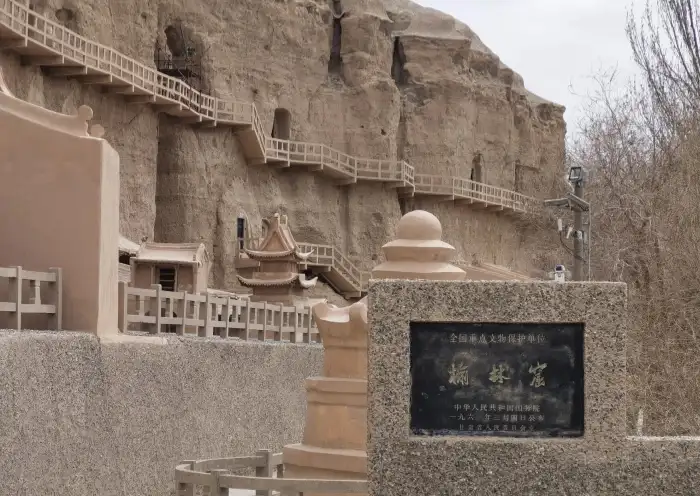
Belonging to Dunhuang Grottoes art system, Yulin Grottoes is the sister site to Mogao Cave, whose cave forms, contents and artistic styles are quite similar with Mogao Cave. Compared to the busy Mogao Grottoes, this site is much more serene.
The scenic area now preserves 43 caves, over 270 colored sculptures and 52,00 square meter murals. The murals in the 25th cave is the best-preserved representative work of Tang Dynasty. In the 3rd cave, you can see the mural of Xuanzang’s journey to obtain Buddhist scriptures.
Recommended tour

Explore Dunhuang's Mogao Caves and Mingsha Mountain dunes, then take high-speed train through Qilian Mountains to Zhangye's Rainbow Mountains and Giant Buddha.
Tiantishan Grottoes (Wuwei, Gansu) – Gallery in the Sky
- Location: Zhangyi Town, Liangzhou District, Wuwei City, Gansu Province, about 50 kilometers to downtown area.
- Time Needed: 2- 3 hours
- How to Get to: Take the shuttle bus “Wuwei – Haxi”at Wuwei Passenger Transport Center to Tiantishan Grottoes intersection, then call the scenic area hotline 0935-2980219 for free pick-up.
- Best Time to Visit: May – October
- Highlight: Buddha statue of Sakyamuni, sky ladder with snow
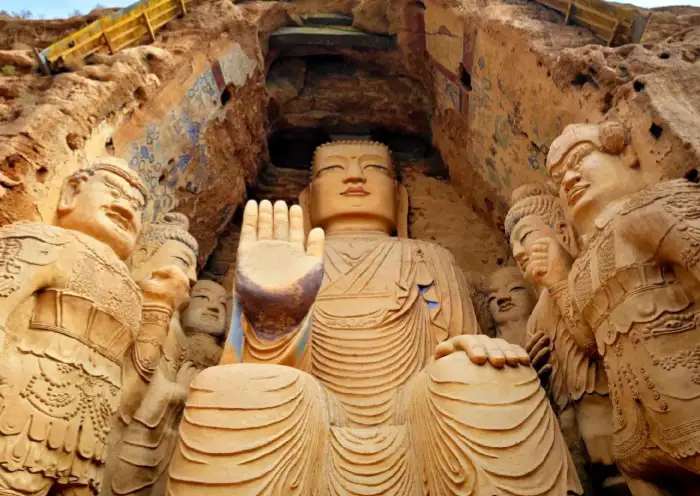
The innovation of integrating Western Regions carvings with Chinese art in Tiantishan Grottoes has directly influenced the construction of the Yungang and Longmen Grottoes, thereby establishing its status as the originator of grottoes in China.
Due to the steep terrain, it looks like a suspended ladder. And the peak is covered with snow all year round, forming the landscape of a sky ladder with snow. The 28-meter-high seated Buddha statue of Sakyamuni in the 13rd cave is the earliest Buddha Statue in traditional Chinese clothes. The statues is carved against the mountain and face the river. When the thin clouds entwine around the mountains, you will feel in a gallery in the sky.
Recommended tour
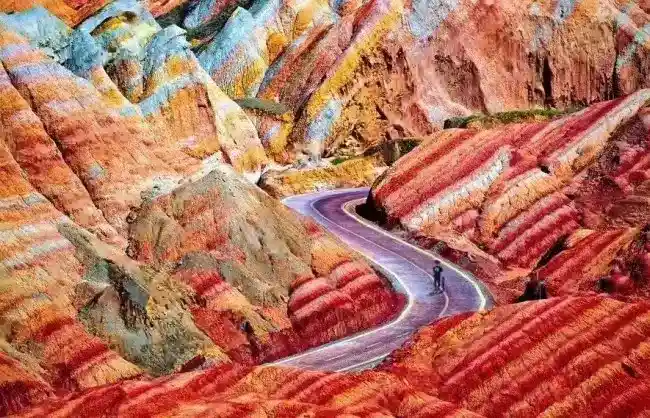
Trace the ancient Hexi Corridor from Lanzhou through Wuwei to Zhangye, exploring Confucius Temple, Leitai Han Tombs, and the stunning Danxia rainbow mountains.
Bezeklik Thousand Buddha Caves (Turpan, Xinjiang)
- Location: about 40 to 45 kilometers northeast of Turpan City, Xinjiang.
- Time Needed: 2 – 3 hours
- How to Get to: Take shuttle bus “Turpan – Shanshan”line to Shengjinkou, then transfer to a tricycle to the caves.
- Best Time to Visit: March – May, September – November
- Highlight: Rare Manichaean murals, statue of the King and Queen of Gaochang of the Uighurs
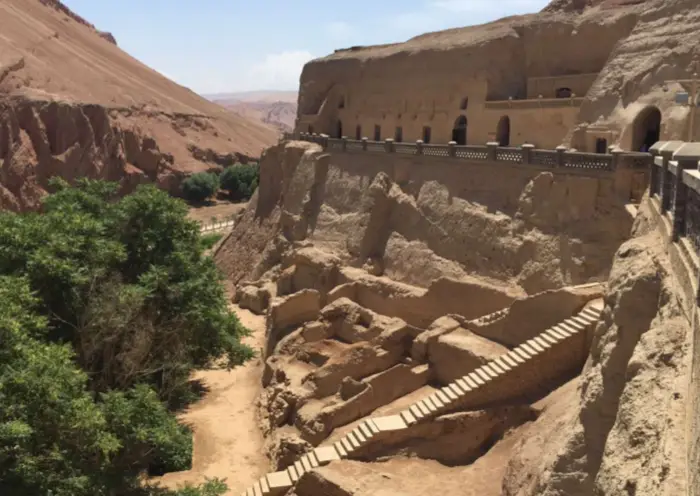
Bezeklik Thousand Buddha Caves is located on the west cliff of Murtuk valley in the middle section of the Flaming Mountains. With 57 caves and 40 pieces of murals, it has been the grotto complex with the largest number of existing caves and the richest mural content in Xinjiang.
Due to the plunder of the foreign exploration teams, most of the murals are damaged. But the scenes depicted in the remaining murals still prove the prosperity of Turpan as the hub of Silk Road and coexistence of Buddhism, Manichaeism, and Confucianism.
Related reading: Most Beautiful Karst Caves in China
Tips for Visiting Grottoes in China
Dress Code and Respectful Behavior
Since most grottoes in China are built on the cliff and require walking during the tour, so a pair of anti-slippery shoes is necessary. And to show the respect to the religion, please avoid wearing sleeveless clothes, shorts, short skirts, and slippers and avoid talking loudly. In consideration of the protection of statues and murals, touching, drinking, eating and smoking during the visit are strictly prohibited.
Photography Rules and Entry Fees
Inside all the caves, taking photos are not allowed since it may accelerate oxidation of the cultural relics. But you can take a panoramic picture from the outside.
The ticket of all caves in China need to book in advance, and it mainly covers the basic caves. If you need commentary and want to appreciate special caves, the extra fee will be charged.
Plan your Buddhist Grotto Tour with Us
With a long history, the Buddhist grottoes art is very abundant in China. But most scenic areas are relatively far from city center, so it is recommended to enjoy a tour with a reliable travel operator, like China Xian Tour. We can not only arrange the transportation for you, but also book the ticket, offer experienced and knowledgeable guide, and plan a detailed travel route for you, so contact with us right now to start your Buddhist art tour along the Silk Road.