
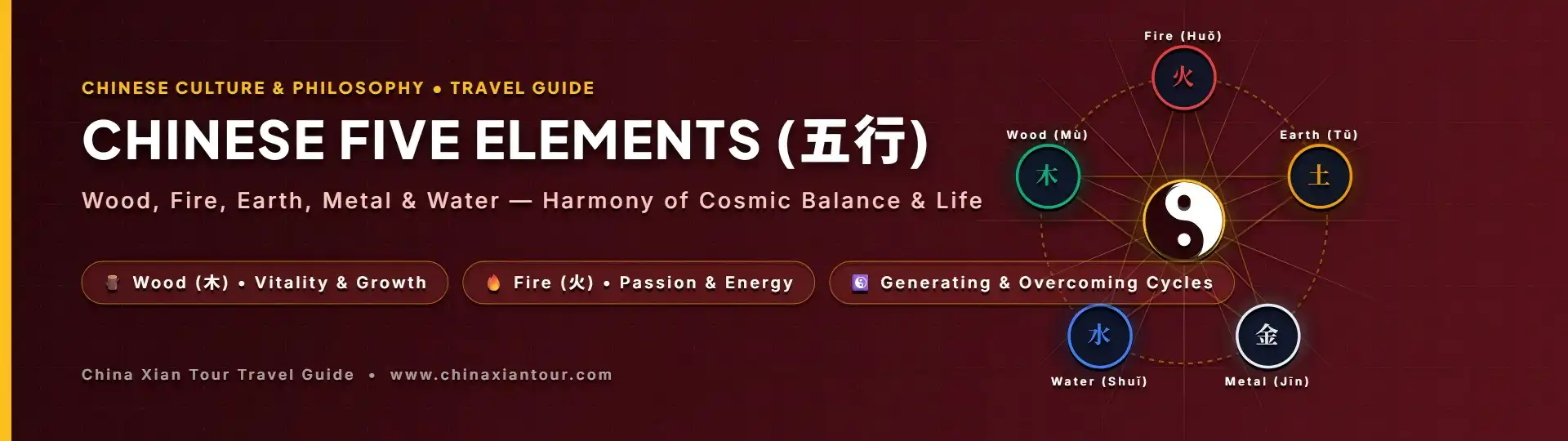
The Chinese Five Elements (Wuxing – 五行) represent a fundamental concept in ancient philosophy and a central pillar of Chinese culture. This system holds that all phenomena in the universe are composed of five basic dynamic energies: Wood, Fire, Earth, Metal, and Water. Rather than static chemical substances, these elements symbolize five dynamic phases, natural forces, and energy states.
☯️ The 5 Chinese Elements (Wuxing) At a Glance
The Wuxing system classifies natural phenomena into five cyclical energies:
To maintain balance across the universe, the five elements form a continuous cycle of mutual generation and mutual restriction. From ancient times to the present day, Wuxing theory has governed many aspects of daily life, including Traditional Chinese Medicine (TCM), Feng Shui, astrology, and martial arts.
Content Preview
- What Are the Chinese Five Elements?
- The History of the Five Chinese Elements
- Interactions Between the Five Elements: Cycles of Wuxing
- Five Elements in Traditional Chinese Medicine (TCM)
- Five Elements Theory & the Chinese Zodiac
- Using the Chinese Five Elements in Daily Life for Good Luck
- Frequently Asked Questions (FAQs)
What Are the Chinese Five Elements?
Overview of Wu Xing (五行)
In the term Wu Xing, Wu (五) signifies the five basic energetic forces—Wood, Fire, Earth, Metal, and Water—while Xing (行) means movement, process, or change. Together, they highlight the continuous flow and transformation of universal energy. Wuxing is a systematic framework used to describe natural laws, human body functions, seasonal shifts, and social developments, making it a key tool for understanding Chinese philosophy.
Summary of the Five Elements
Element |
Core Energetic Properties |
|---|---|
Wood (木) |
Growth, expansion, vitality, flexibility, spring energy |
Fire (火) |
Passion, light, ascension, dynamism, summer warmth |
Earth (土) |
Stability, nurturing, grounding, balance, transition phases |
Metal (金) |
Structure, clarity, restraint, harvest, autumn crispness |
Water (水) |
Fluidity, wisdom, adaptability, stillness, winter coolness |
The Role of Yin and Yang in Elemental Balance
The Five Chinese Elements represent specific physical manifestations of Yin and Yang energies. Each element contains both Yin and Yang aspects. When an imbalance occurs between Yin and Yang, it shows up as an abnormality within the five element cycle.
The mutual generation and restriction cycles are driven by the flow of Yin and Yang: the generation cycle is propelled forward by Yang energy, while the restriction cycle is regulated by Yin energy. In Taoism, the Five Elements theory was integrated into daily practice and spiritual doctrines, heavily influencing Chinese culture.
Taoist Travel Tip: To explore the living heritage of Taoism and Wuxing philosophy during your China tour, visit sacred mountains such as Longhu Mountain, Wudang Mountain, or Mount Qingcheng.
Recommended Taoist Culture Tours:
The History of the Five Chinese Elements
The origins of the five elements date back to the Shang Dynasty (1600–1046 BC) and Western Zhou Dynasty (1046–771 BC). Early ancestors categorized five basic daily resources to explain natural phenomena and life necessities. During the Western Zhou Dynasty, the elemental attributes were first systematically defined in historical texts.
In the Spring and Autumn Period (770–476 BC), philosophers developed Wuxing into a universal model for governance and natural science. By the Han Dynasty (202 BC–220 AD), Confucian scholars adopted Wuxing into ethics, social order, medical diagnostics, and divination.
During the Song Dynasty (960–1279 AD), Wuxing was integrated into Neo-Confucian cosmology. Today, while modern science views the physical universe through chemical elements, Wuxing remains the foundational logic for Traditional Chinese Medicine, martial arts, Feng Shui, and Chinese astrology.
Interactions Between the Five Elements: Cycles of Wuxing
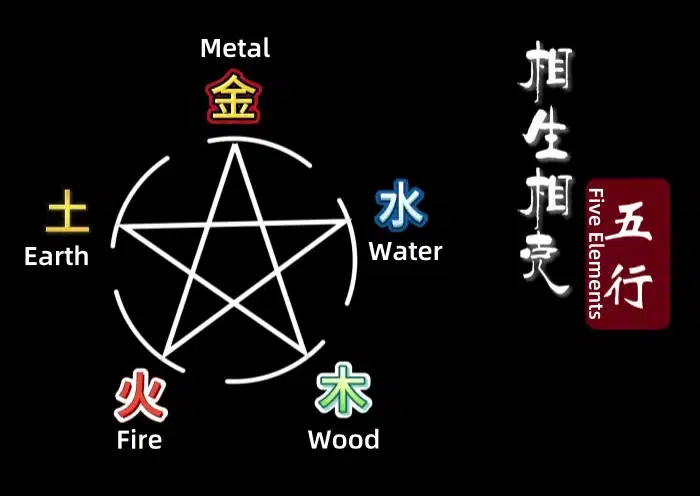
1. The Generating Cycle (Sheng / 相生)
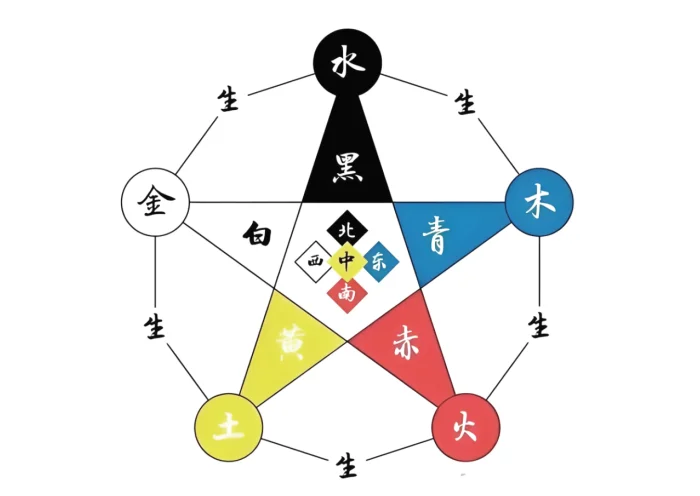
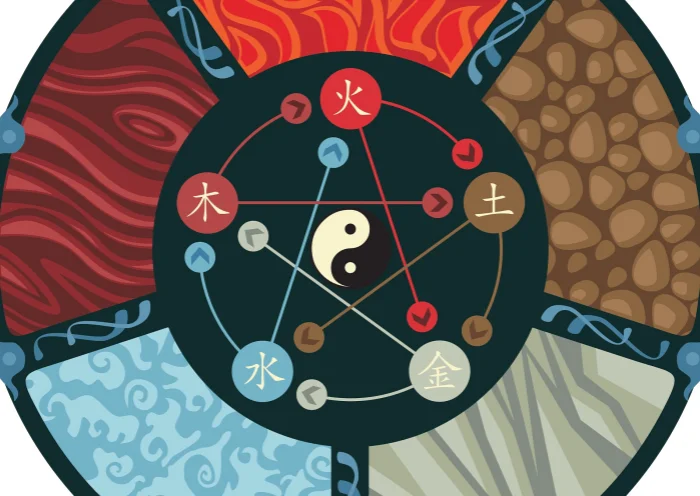
The Generating Cycle represents a nourishing relationship where one element promotes the growth of another: Wood → Fire → Earth → Metal → Water → Wood.
- Wood generates Fire: Burning wood feeds the fire.
- Fire generates Earth: Fire burns material into ash, enriching the earth.
- Earth generates Metal: Metal minerals form within the earth.
- Metal generates Water: Metals melt into liquid or collect dew condensation.
- Water generates Wood: Water nourishes trees and plant life.
2. The Overcoming / Restricting Cycle (Ke / 相克)
The Restricting Cycle represents a control system that prevents any single element from overexpanding: Wood → Earth → Water → Fire → Metal → Wood.
- Wood overcomes Earth: Tree roots break through and absorb nutrients from the soil.
- Earth overcomes Water: Soil absorbs, channels, and blocks water flow.
- Water overcomes Fire: Water extinguishes fire.
- Fire overcomes Metal: Heat melts and reshapes metal.
- Metal overcomes Wood: Metal blades chop down trees.
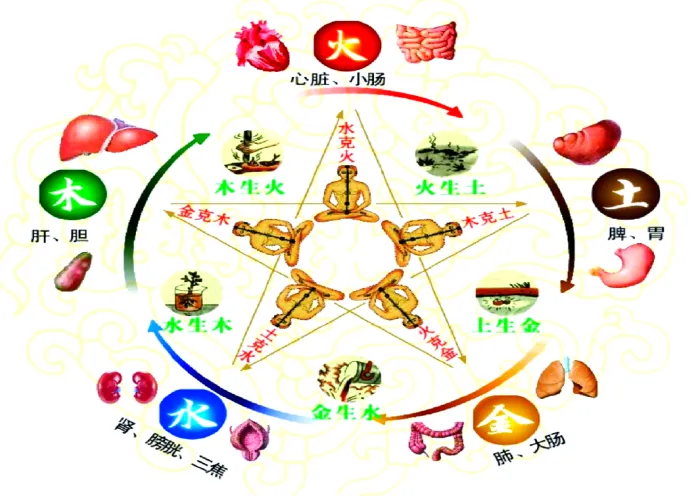
Five Elements in Traditional Chinese Medicine (TCM)
Element-Organ Correspondences
Element |
Zang Organ |
Associated Body Systems |
Health & Wellness Advice |
|---|---|---|---|
Wood (木) |
Liver |
Gallbladder, tendons, eyes |
Avoid chronic anger; manage stress through outdoor walks or meditation. |
Fire (火) |
Heart |
Small intestine, tongue, blood vessels |
Avoid extreme emotional highs; calm the heart with calligraphy or quiet study. |
Earth (土) |
Spleen |
Stomach, muscles, mouth |
Avoid overthinking and worry; take light walks after meals to support digestion. |
Metal (金) |
Lungs |
Large intestine, nose, skin |
Avoid deep grief and sadness; practice breathing exercises and stay hydrated. |
Water (水) |
Kidneys |
Bladder, bones, marrow, ears |
Avoid fear and panic; protect lower back warmth and ensure adequate rest. |
Symptom Identification & Elemental Balancing
Element |
Excess Symptoms |
Deficiency Symptoms |
Therapy (Excess) |
Therapy (Deficiency) |
|---|---|---|---|---|
Wood (木) |
Headaches, irritability, red eyes, hypertension |
Fatigue, blurred vision, brittle nails, numbness |
Eat sour foods; reduce spicy meals |
Eat green leafy vegetables to nourish liver blood |
Fire (火) |
Mouth ulcers, insomnia, restlessness, palpitations |
Cold limbs, pale complexion, shortness of breath |
Eat bitter foods (bitter melon) to clear heat |
Eat red foods (dates, berries) to warm heart energy |
Earth (土) |
Bloating, bad breath, constipation, heaviness |
Diarrhea, poor appetite, muscle weakness |
Eat light, fiber-rich foods; avoid raw or icy items |
Eat yellow foods (sweet potato, squash) to boost spleen Qi |
Metal (金) |
Dry cough, asthma, dry skin, rhinitis |
Frequent colds, low immunity, weak voice |
Eat moistening foods (pears, honey); avoid fried food |
Eat white foods (white fungus, radish) to support lung Qi |
Water (水) |
Fluid retention, edema, cold knee pain |
Lower back soreness, tinnitus, night sweats |
Eat warm, lightly salted dishes; avoid excessive raw salt |
Eat dark foods (black sesame, black beans) to nourish kidney Yin |
Five Elements Theory & the Chinese Zodiac
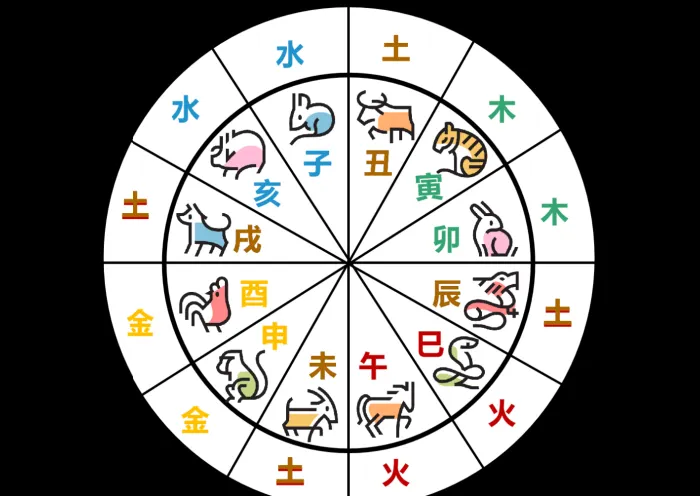
Combining the Five Elements with the 12 Chinese Zodiac animals creates a 60-year sexagenary cycle that provides a deeper analysis of individual personality traits, compatibility, and fortunes.
Zodiac Animal Element Correspondences
Element |
Fixed Zodiac Animal Association |
|---|---|
Wood (木) |
Tiger, Rabbit |
Fire (火) |
Snake, Horse |
Earth (土) |
Ox, Dragon, Goat, Dog |
Metal (金) |
Monkey, Rooster |
Water (水) |
Rat, Pig |
Determining the Element of a Birth Year
The year’s element is calculated using the 10 Heavenly Stems and 12 Earthly Branches. You can quickly find the Heavenly Stem element using the last digit of your birth year (Gregorian calendar):
Last Digit of Year |
4 |
5 |
6 |
7 |
8 |
9 |
0 |
1 |
2 |
3 |
|---|---|---|---|---|---|---|---|---|---|---|
Heavenly Stem |
Jia (甲) |
Yi (乙) |
Bing (丙) |
Ding (丁) |
Wu (戊) |
Ji (己) |
Geng (庚) |
Xin (辛) |
Ren (壬) |
Gui (癸) |
Associated Element |
Wood |
Wood |
Fire |
Fire |
Earth |
Earth |
Metal |
Metal |
Water |
Water |
Elements for Recent and Upcoming Years
Year |
Zodiac Animal |
Yearly Element Pair |
|---|---|---|
2025 |
Snake (Yi Si – 乙巳) |
Wood and Fire |
2026 |
Horse (Bing Wu – 丙午) |
Fire |
2027 |
Goat (Ding Wei – 丁未) |
Fire and Earth |
2028 |
Monkey (Wu Shen – 戊申) |
Earth and Metal |
2029 |
Rooster (Ji You – 己酉) |
Earth and Metal |
2030 |
Dog (Geng Xu – 庚戌) |
Metal and Earth |
Personality Traits by Element
Element |
Associated Zodiacs |
Main Personality Traits |
Typical Characteristics |
|---|---|---|---|
Wood |
Tiger, Rabbit |
Compassionate, creative, expansive, artistic |
Generous, cooperative, but can become indecisive under stress. |
Fire |
Snake, Horse |
Passionate, decisive, adventurous, charismatic |
Strong leaders and entrepreneurs; can be impatient or impulsive. |
Earth |
Ox, Dragon, Goat, Dog |
Grounded, reliable, practical, patient |
Dependable managers and partners; can be stubborn or conservative. |
Metal |
Monkey, Rooster |
Decisive, structured, persistent, ambitious |
Logical planners and problem solvers; can be overly opinionated. |
Water |
Rat, Pig |
Wise, intuitive, flexible, perceptive |
Highly adaptable and empathetic; can experience shifting moods. |
Using the Chinese Five Elements in Daily Life for Good Luck
1. Five Elements and Lucky Colors
In Feng Shui and personal styling, you can strengthen your energy by wearing or decorating with colors associated with your target element:
- Wood: Green, emerald, cyan
- Fire: Red, purple, pink, magenta
- Earth: Yellow, beige, tan, warm brown
- Metal: White, metallic gold, silver, bronze
- Water: Black, dark blue, charcoal gray
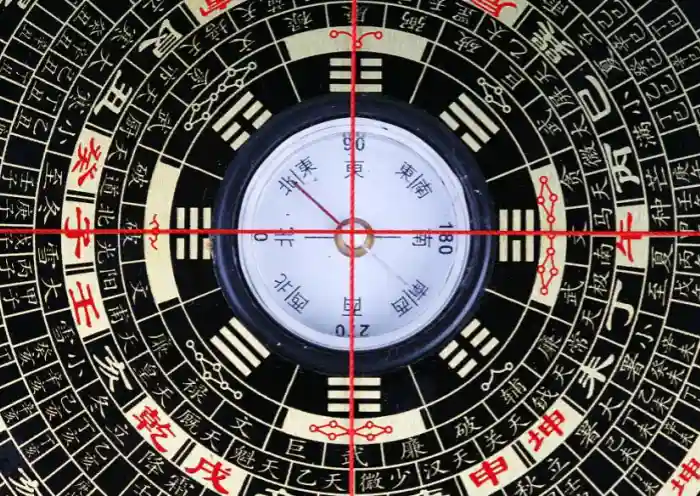
2. Feng Shui Interior Layout & Directions
In interior design, Wuxing links each direction with an element and color scheme:
- East (Wood – Green): Ideal placement for live houseplants to encourage growth.
- South (Fire – Red): Suitable for bright accent lighting or vibrant artwork.
- Center (Earth – Yellow): Best for grounding furniture like central rugs or stone coffee tables.
- West (Metal – White/Gold): Great for metal decor or structural organization.
- North (Water – Black/Blue): Suited for aquariums, water fountains, or dark blue tones.
Frequently Asked Questions (FAQs)
Are the Chinese Five Elements still used today?
Yes. As a cornerstone of traditional Chinese philosophy and natural science, the Five Elements are actively used today in Traditional Chinese Medicine (TCM), Feng Shui, Chinese astrology, martial arts, interior design, and dietary recommendations.
How to calculate my Chinese element?
Your element is determined by your lunar birth year based on the 60-year Heavenly Stems and Earthly Branches cycle. You can match the last digit of your lunar birth year to its corresponding Heavenly Stem and element.
Are the Five Elements literal elements like in Western chemistry?
No. Unlike physical chemical elements in Western science, Wuxing is a metaphysical classification system representing five dynamic energy phases, seasonal transformations, and relational movements in the universe.
Interested in Exploring Authentic Chinese Culture?
Let China Xian Tour help you plan a private cultural itinerary to Taoist holy sites, historic temples, and ancient cultural landmarks across China.