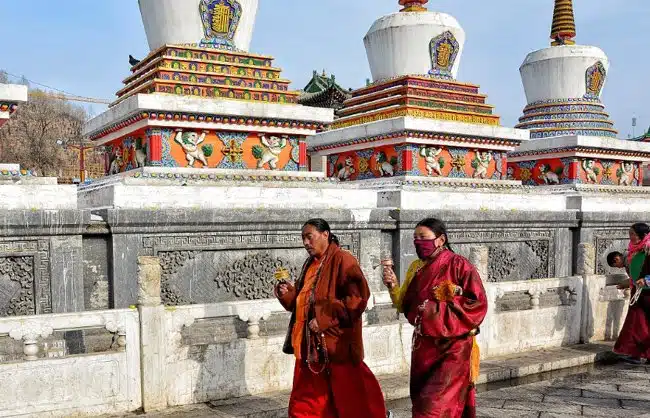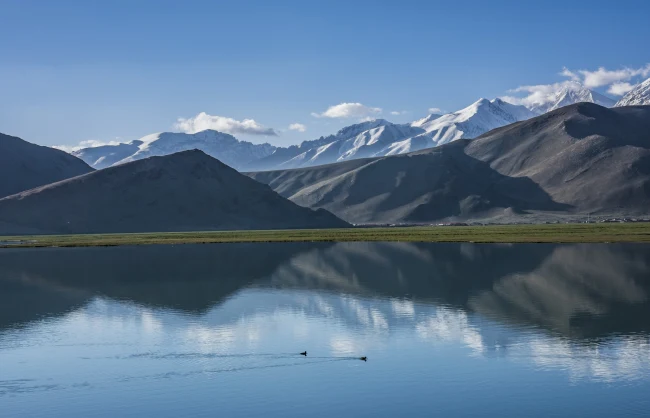


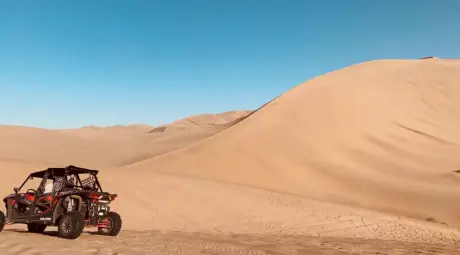
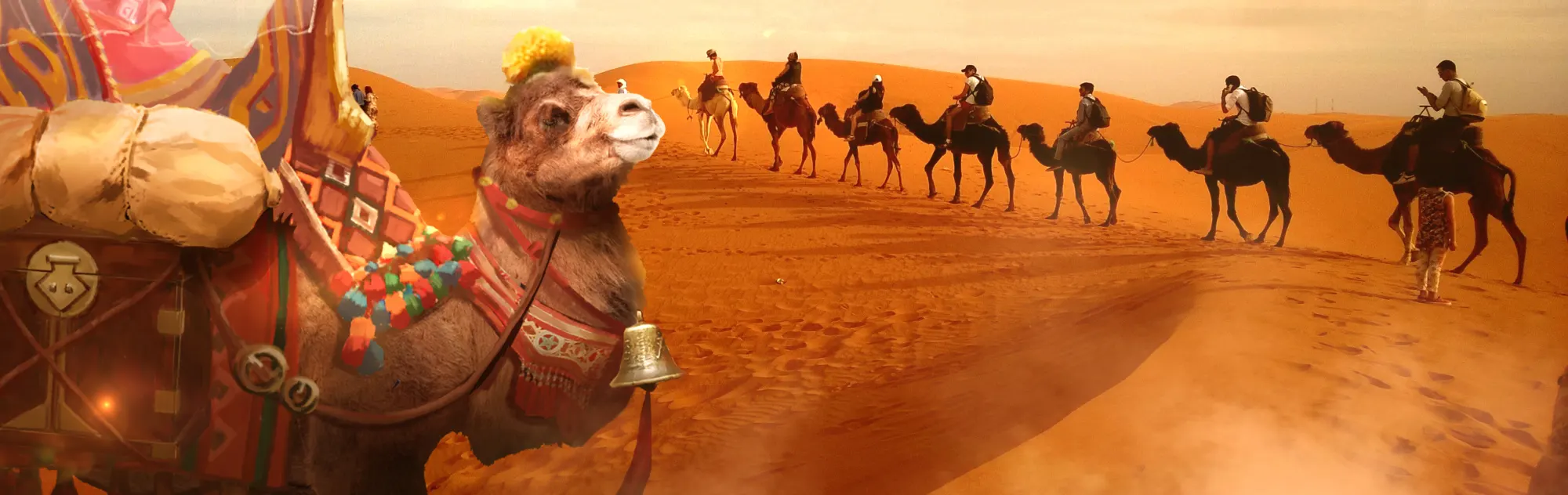
When Chinese people mention the Silk Road, we often picture the scene described in Wang Wei’s poem: “From silence of sand one smoke rises sheer, Past the endless river the round sun sinks low.” The original poem uses simple geometric descriptions like “straight/sheer” and “round” to convey the emptiness and simplicity of the desert, as well as the loss of words when the author’s thoughts dissolve into the vast, formless expanse of heaven and earth. To understand this legendary route, you should learn about the Silk Road stories.
The Silk Road was a miracle taking place in this background, breathing life and colour to the land where humans had barely set foot. Caravan merchants traversing the endless Taklamakan Desert, exchanging silk and spices at vibrant oasis markets—these images have shaped the romanticized vision of this ancient trade network. However, the reality of the Silk Road is far more intricate.
Content Preview
- Major Influential Figures & Their Stories in the Silk Road History
- Historical Context & Timeline
- Amazing Stories Along the Silk Road
- The Authenticity of Silk Road Narratives
- Archaeological Sites & Material Culture Along the Route
- Embarking on Silk Road Journeys Today
- FAQs About the Silk Road Legacy
- Travel the Silk Road and Trace Legendary Stories with China Xian Tour
Major Influential Figures & Their Stories in the Silk Road History
Zhang Qian: Han Dynasty Envoy Who Pioneered the Silk Road
The Silk Road’s history begins in the Han Dynasty when Emperor Wu sent Zhang Qian on a diplomatic mission to the Western Regions around 138 BCE. His expedition team started Chang’an (nowadays Xi’an), suffered extreme weather, famine and disease. When his steam reached the Hexi Corridor, the vast deserts of Central Asia, he and his entourage were captured by the Xiongnu. Held for eleven years, Zhang Qian refused to submit, waiting for an opportunity to escape. Eventually, he and his loyal attendant, Gan Fu fled, surviving on hunted animals as they crossed the desert and the snow-covered Pamirs. His resilience and determination carried him through the perilous journey.
Traversing through the Thirty-Six Kingdoms of the Western Regions, his expedition introduced China to new trade interests, as well as sowing cultural influence. Zhang Qian’s travels paved the way for further economic and political exchanges, making possible the trade of silk, tea, paper, and porcelain for walnuts, pomegranates, glassware, and exotic animals. His mission marked the true beginning of the Silk Road, leading to a new era of cultural prosperity along the way.
√Related reading: Top 10 Goods Traded on the Silk Road
Huo Qubing: The Military Genius and Guardian of the Silk Road
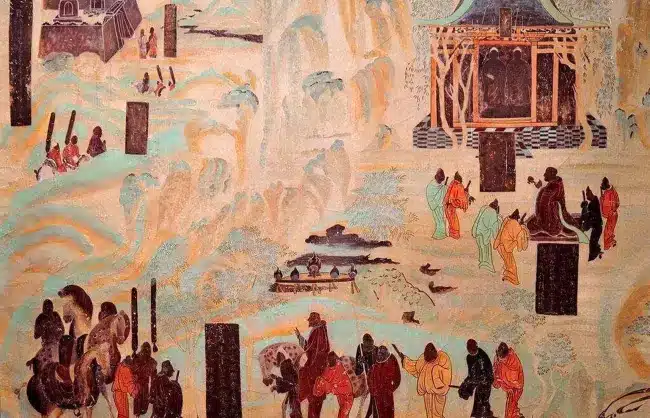
Huo Qubing was a remarkable general and military strategist of the Western Han Dynasty. He began his training in horsemanship and archery under his uncle, Wei Qing, and when he was only 18, he exhibited extreme martial talent, which catch the attention of Emperor Wu. He earned a palace appointment and later on joined the campaign against the Xiongnu. Throughout six expeditions against the Xiongnu, Huo Qubing killed over 110,000, expanded Han territory, and opened the Silk Road. His military brilliance was evident in his rapid, surprise tactics, applying the principles of “speed wins the battle” and “defeat the enemy by unexpected methods.” In the Hexi campaign, he used guerrilla tactics, outflanking and encircling the Xiongnu, forcing them to surrender. Without him, the Han Dynasty could not have capture the Hexi Corridor and pacify northern regions.
Zheng He: The Great Navigator of the Maritime Silk Road
While the land Silk Road was crucial, the Maritime Silk Road played an equally important role. During the Ming Dynasty, the Chinese admiral Zheng He led massive naval expeditions, sailing from nowadays Nanjing through Quanzhou, Guangzhou, Malacca, India, the Persian Gulf, and East Africa. His fleets carried silk, porcelain, and tea, exchanging them for spices, ivory, and rare woods. This route solidified China’s dominance in sea trade and strengthened diplomatic ties with distant lands.
√Related reading: 8 Fascinating Silk Road Facts
Marco Polo: The Venetian Explorer Who Bridged East and West
Among the many adventurers of the Silk Road, Marco Polo stands out as the most renowned ambassador from a foreign land. Born in Venice in 1254 into a family of merchants, Polo set out on an ambitious journey to the East with his father and uncle when he was still a 17-year-old teen, curious about anything. Their expedition led them through the vast expanse of the Mongol Empire, eventually reaching the court of Kublai Khan in China. He was treated with great hospitality by Kublai and even named as a member of the court, which allowed him to travel in China, India, Sri Lanka and other countries to collect information.
When he returned Venice, he pondered in nostalgia and wrote down detailed accounts of his traveling experiences, compiled in “The Travels of Marco Polo.” His Silk Road stories were like a lantern in the dark, which illuminated the splendor of Asia for Europeans to gain unprecedented insights – Eastern lands were calling, with a language so foreign yet alluring. Polo’s descriptions of Kublai Khan’s opulent court, the efficiency of the postal system, and the use of paper money captivated the European imagination and stirred the heart of many.
How did Marco Polo’s stories influence the Silk Road Trade, then? Apparently, his vivid descriptions highlighted the wealth and sophistication of Asian societies, and hence fueling a desire for direct trade afterwards. His narratives were likely seeds planted in the fertile soil of curiosity, sprouting into dreams of connection, as long as conquest. This newfound interest led to increased expeditions, the establishment of trade missions, and eventually, the Age of Exploration, during which European powers sought alternative routes to Asia.
Historical Context & Timeline
- Origins (Han Dynasty)
The Han Dynasty (206 BCE–220 CE) saw the initial formation of the Silk Road’s overland routes, which was marked by Zhang Qian’s mission (~138 BCE) into the Western Regions.
- Golden Age (Tang Dynasty)
During the Tang Dynasty (618–907), more and more trade and cultural exchanges had happened in this region. Important sites like Dunhuang had then became a crossroads and a major center whoever needed to travel further along the route.
- Ming & Decline
By the Ming Dynasty (1368–1644), sea routes raised up, and the old overland Silk Road gradually lost its past status. And over time, more factors like political instability and changing trade patterns then contributed to the decline.
- Modern Resurgence
In recent decades, China has revived interest in the Silk Road for tourism and heritage. And it has been visited by more and more people.
Amazing Stories Along the Silk Road
The Silk Road was not only a bridge for exchanging goods, but also a labyrinth for stories. Travelers and locals shared fables along the route, weaving dreams of lands unknown.
Romance Legends of Xi Wangmu
The legend of Queen Mother of the West (Xi Wangmu) and the Jade Pool (Yaochi, nowadays Heavenly Lake in Xinjiang) is deeply rooted in Chinese mythology. It is said that Xi Wangmu hosted a grand banquet here in Tianchi for the emperor, who promised to return but never did, leaving her longing by the lake. Since then, she’s been described in poems as a benevolent deity who bestows blessings, longevity, and wisdom.
Journey to the West and the Silk Road
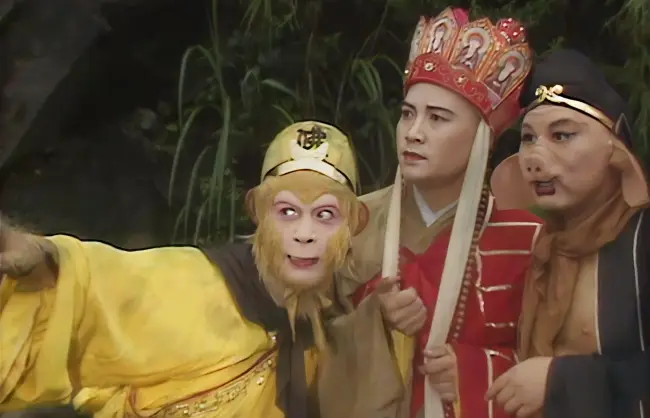
Journey to the West is the romanticism epic stories written by Wu Chengen. Its beauty can be described as a celestial tapestry woven with myth, history, and the spirit of the Silk Road. Written during the Ming Dynasty, the epic follows the Buddhist monk Xuanzang (a real figure in history, 602-664) and his fictional disciples—Monkey King Sun Wukong, Pigsy, and Sandy—on their pilgrimage to meet Śākyamuni.
Xuanzang’s journey to India was a real historical event during the Tang Dynasty. In 629, he left Chang’an in search of Buddhist teachings, traveling through hundreds of kingdoms despite great hardships. After studying in India for over two years, he returned to Chang’an with 657 pieces of Buddhist scriptures. Over time, people embellished his journey with myths to make it more and more legendary, eventually inspiring the famous story of Journey to the West.
The Silk Road is what breathed life into the story. Thousands years ago, winds from the distant lands carrying whispers of divine paths yet fraught with trials. Xuanzang’s journey is the embodiment of the cultural and spiritual exchanges that flourished along this ancient route, where earth led way to heaven, and the mundane fought with fate and the divine.
√Related reading: Why Was the Silk Road Important?
The Authenticity of Silk Road Narratives
The question arises to us: Is the Silk Road a true story? While the Silk Road itself is a historical reality, many narratives associated with it love to introduce a hint of mystery.Travelers’ tales, like those of Marco Polo, often included embellishments or second-hand accounts. However, these narratives, regardless of their factual precision, have significantly contributed to the mystique and allure of the Silk Road.
Despite written proof, we can also find material evidence that is scattered across the world. Just to say relics from Dunhuang alone, they have been discovered in over 26 languages, including Sanskrit, Sogdian, Old Uyghur, Tibetan, Arabic, and Hebrew. The British Museum has extensive Silk Road exhibition, and after researchers investigating over years, they reveals that the Silk Road was not a single trade route but a vast network spanning centuries, interwoven by both land and sea. The whole route of the Silk Road reached the Roman Empire in the west and Sri Lanka in the south—an expansive web that facilitated not only commerce but also intellectual exchanges across ancient civilizations.
Archaeological Sites & Material Culture Along the Route
- Mogao Caves (Dunhuang, Gansu)
One of the world’s greatest repositories of Buddhist art — murals, sculptures, and manuscripts from the 4th–14th centuries. The site’s UNESCO listing highlights its importance in the spread of religion and culture.
- Kizil Caves (Xinjiang)
The Kizil Caves some of China’s earliest major Buddhist cave complexes. They reflect and kept Central Asian influence in an art form.
- Yulin Caves (Guazhou, Gansu)
This complex is not far from Dunhuang, and they house hundreds of square meters of murals and statues. They together record the time spanning from Tang to Yuan dynasty.
- Jiayuguan Pass & the Great Wall (Gansu)
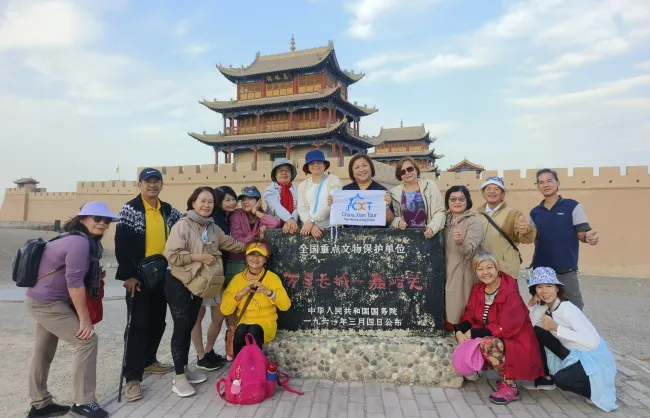
The Jiayuguan Pass was the western terminus of the Ming Great Wall. It was built in 1372 and it was made to guard a strategic Silk Road corridor.
Nearby is the Suspended Wall (“Overhanging Wall”), built on a 45° cliff. It is a dramatic and awe-inspiring site.
You can also see the Wei-Jin Tombs here, which vividly illustrate people’s daily life during that period.
- Silk Route Museum (Jiuquan, Gansu)
This museum preserves artifacts and relics from the Silk Road era: jade, tools, religious items, and more. It’s built over the tomb of an ancient Xiliang king and here you can have deep insights into the Hexi Corridor’s history.
Embarking on Silk Road Journeys Today
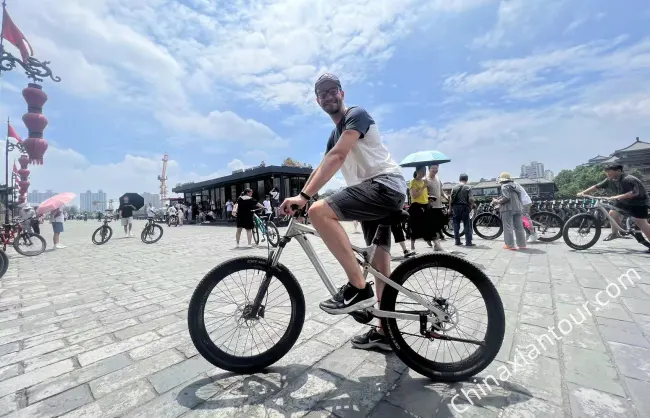
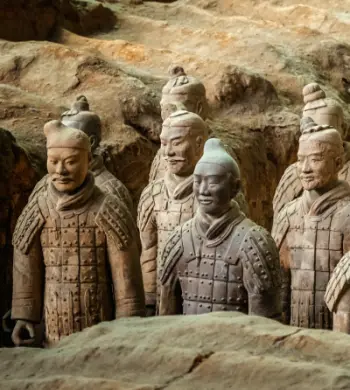
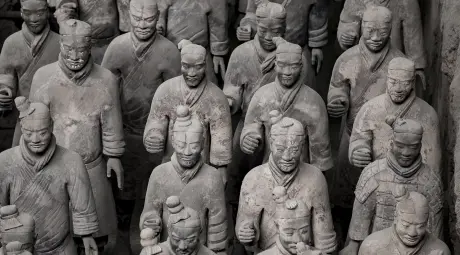
For those intrigued by the tales of the Silk Road, embarking on a China Silk Road tour offers an immersive experience into her historical dimension. Travelers can explore ancient cities like Xian, the starting point of the Silk Road and home to the Terracotta Army; Zhangye, with its stunning Danxia Landform and Rainbow Mountains; and Jiayuguan, the westernmost point of the Great Wall, marking the end of the road for ancient traders. You can consult our team for these most recommended Silk Road Tours.
FAQs About the Silk Road Legacy
How can modern travelers experience the Silk Road in China?
The best way is to take guided tours that trace the ancient routes. And normally they will take you to explore Xi’an or Xining and go through Zhangye, Jiayuguan, and Dunhuang.
Which Silk Road sites are “must-see”?
- Mogao Caves for Buddhist art
- Jiayuguan Pass for military history and dramatic Great Wall architecture
- Kizil Caves for early Central Asian Buddhist influence
- Danxia landscapes near Zhangye (the colorful rock formations)
- Yulin Caves for equally stunning murals but often less crowded
Are these sites protected and authentic?
Yes. For instance, the Mogao Caves are a UNESCO World Heritage Site with strict conservation measures.
How do I plan a Silk Road tour?
- Use a reputable tour company specializing in Silk Road routes (many are based in Xianor Xinjiang).
- Consider travel times: distances between sites (e.g., Jiayuguan ⇄ Dunhuang) can be large. Many tours use road transport.
- Book in advance for cave sitesas some have limited daily entries.
- Combine historical visits with natural beauty: e.g., the Zhangye Danxia landform is often part of tour itineraries.
Travel the Silk Road and Trace Legendary Stories with China Xian Tour
For thousands of years, there are countless stories being buried in Silk Road’s long and winding paths. The histories and cultures have shaped this route a unique character that you cannot find anywhere else. To deeply explore the grandeur of this site, we recommend you to travel with China Xian Tour. We’ve been offering customized Silk Road tour for over a decade and we know all the best way to explore the highlights. With our professional guides taking care of everything for you, you’ll get to see the most beautiful and rewarding side of this legendary region.