
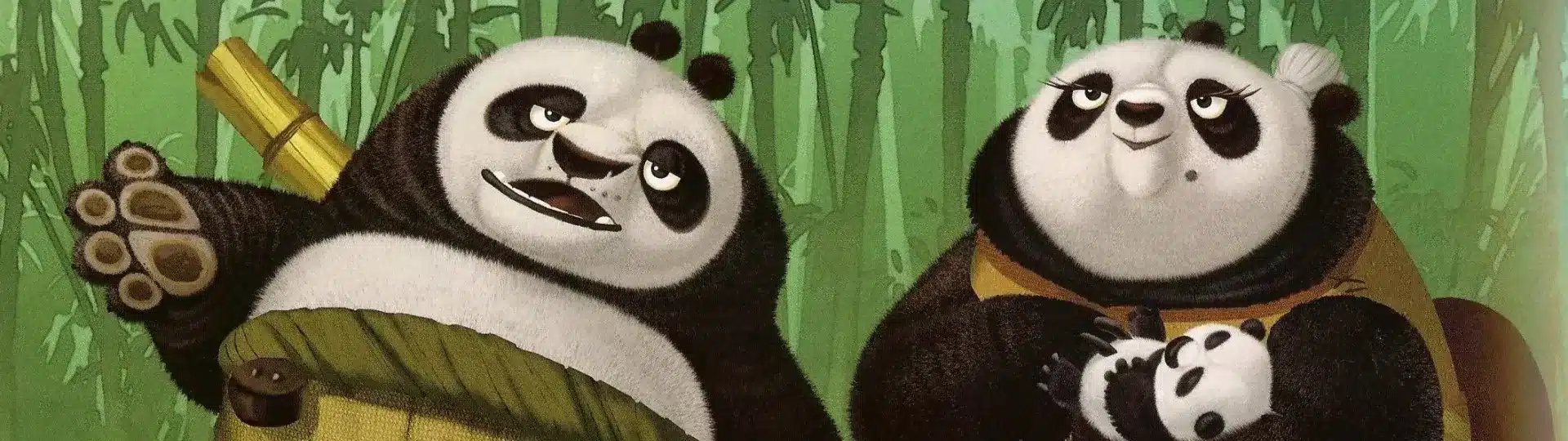
As a world-renowned animated film, Kung Fu Panda, embodying Chinese culture and landscapes, have sparked the admiration and curiosity of audiences around the globe.
And the film also reflects the culture and philosophy of Chinese Taoism, with distinctive Chinese characters and cuisine interwoven throughout.
Below, this article will carefully introduce the destinations, cultural elements, and specialty foods depicted in the film to help fans of the movie better plan their China tours.
Content Preview
- The Chinese Soul Behind the Film
- Martial Arts Temples That Inspired the Furious Five
- Cultural Symbolism: Chinese Philosophy, Clothing & Cuisine
- How to Visit These Kung Fu Panda Locations
- China Panda Volunteer Tour with China Xian Tour
The Chinese Soul Behind the Film
The four-part Kung Fu Panda series has become one of the most influential animated IPs globally through its unique Western narrative methods and Eastern charm. It contains many of China’s real landscape and cultural prototypes.
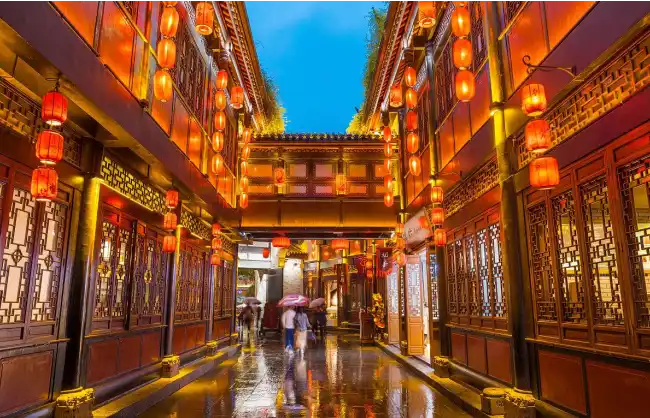
For example, the Valley of Peace in the film is modeled after Mount Qingcheng, Huangshan and landscapes in Guangxi. And some kung fu moves and Master Oogway’s philosophical words in the film reflect China’s Tai Chi culture and Taoist thought. Sichuan cuisine, the panda protagonist, and urban customs also embody rich Chengdu elements.
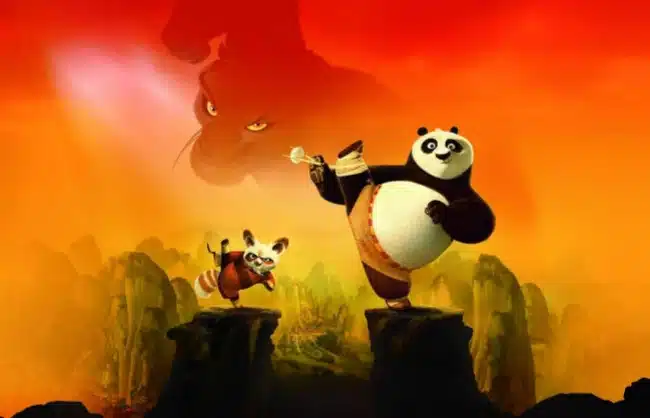
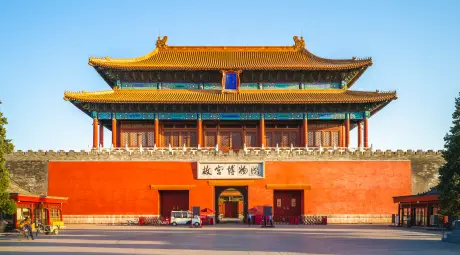
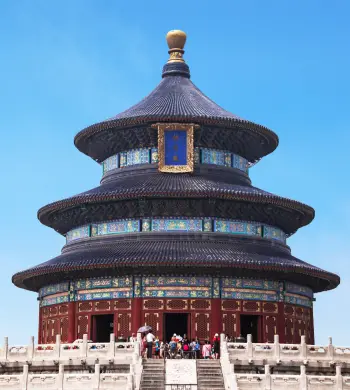
Moreover, the architectural style of the Jade Palace embodies the sense of layer and grandeur of the Taoist temples of China’s Wudang Sect. The natural scenery, such as mist-shrouded valleys and layered terraced fields, also reflects the karst landforms of the Lijiang River in Guilin, China. The grand and prosperous appearance of the Jade Palace are based on the architectural details of the Palace Museum in Beijing, showing royal grandeur.
More than that, the main characters in the film are also inspired by animal prototypes with strong Chinese characteristics. They are giant pandas, longevity turtles, South China tigers, green bamboo vipers, golden snub-nosed monkeys, red-crowned cranes, and mantises. Their personalities and kung fu styles are closely aligned with their animal features.
Recommended tour
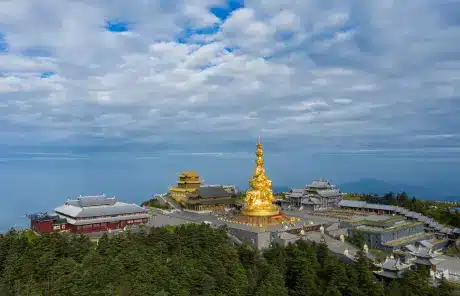
Discover China's diverse heritage on this 15-day tour through Beijing, Xian, Chengdu, Hangzhou, Huangshan, and Shanghai, covering imperial sites, giant pandas, and mountain scenery.
Where is Kung Fu Panda Based? The Fictional Valley of Peace & Its Real-Life Counterparts
Is the Valley of Peace Real?
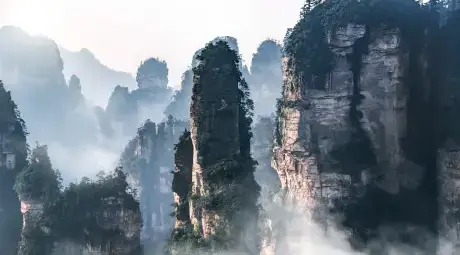
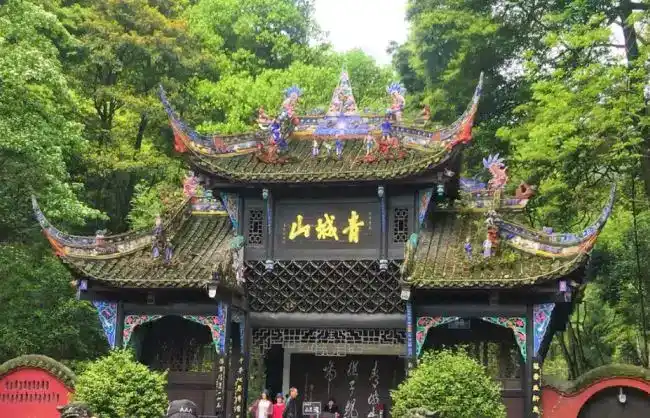
Actually, the Valley of Peace is not a certain place in China, but draws inspiration from the country’s dramatic karst landscapes found in several regions such as Guilin, the mist-covered peaks of Huangshan and the mountain gate of Mountain Qingcheng .
In the film, the mist-shrouded mountains and grotesquely shaped pines and cypresses of the Valley of Peace are inspired by the landscapes of Huangshan. The neatly arranged terraced fields in the valley and the poetic landscapes of mountains and rivers draw their inspiration from the beautiful scenery of Guilin and Yangshuo in Guangxi, China. As for the most iconic architecture – the Valley of Peace, its design takes cues from the mountain gates of Qingcheng Mountain in Sichuan Province.
The director’s team conducted on-location research across multiple regions of China. They combined these landscapes, rich in Chinese artistic style and ancient charm, to create a new “Kung Fu World”.
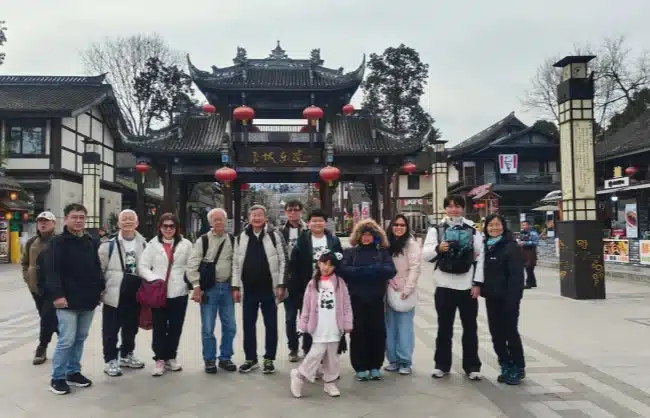
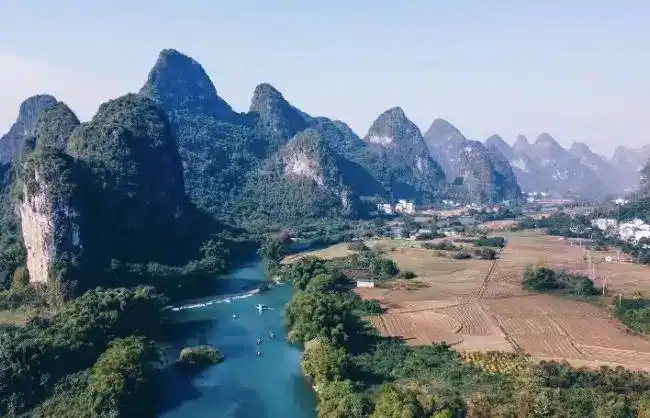
Mount Qingcheng – A Peaceful Taoist Mountain
When you indulge in the mist-shrouded Valley of Peace in Kung Fu Panda, watching Po practice kung fu in the lush green forest and grow up in the lively village, you are actually encountering a real fairyland mountain across time and space—it is Mount Qingcheng. Mount Qingcheng is the inspiration source for the core scenes of the Kung Fu Panda series and also a sacred place full of Taoist thought.
Located in Chengdu, Sichuan Province, the Mountain is famous for its serene and lush forest scenery. The director once stated that the scene where the mist dispersed and the village came into view when he first stepped into Mount Qingcheng provided inspiration for creation and was transformed into the scene where Po first saw the Panda Village.
As one of the birthplaces of Taoism in China, Mount Qingcheng’s profound Taoist cultural heritage has further propelled it to become an important soul in the film. The Taoist temples here are built along with the mountains, seemingly integrated with the natural environment, reflecting the Taoist philosophical thought of “Tao follows nature”.
Therefore, for foreign tourists, Mount Qingcheng is not only a check-in landmark for following the footsteps of Kung Fu Panda, but also a serene sacred place for experiencing Eastern philosophy.
Recommended tour
Around 8 am, your English-speaking tour guide will pick you up at your hotel in the center of Chengdu.
Sichuan Province – Home to Pandas and Po
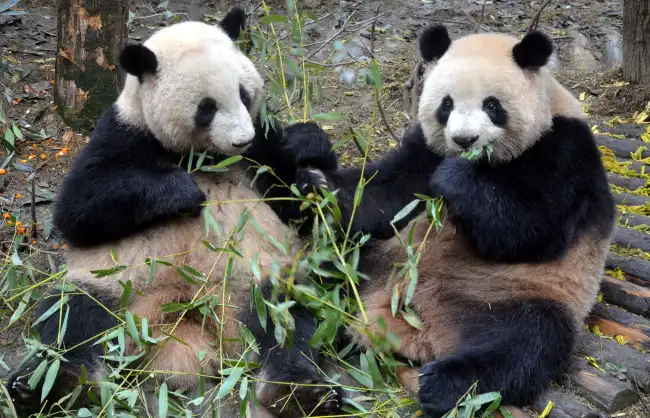
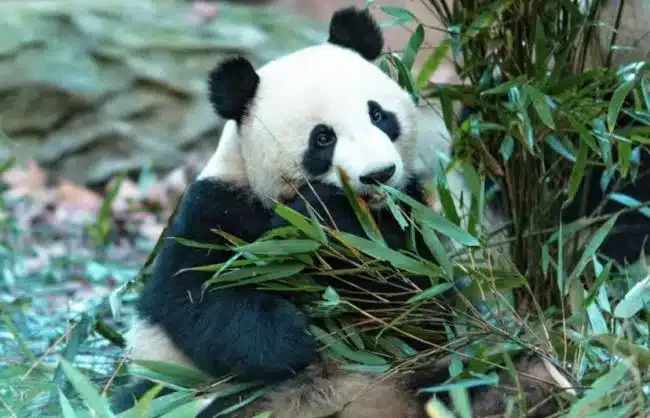
If you are touched by the charm and cuteness of Po, you must visit Sichuan—the hometown of giant pandas in China. Sichuan is the core hub of global panda conservation. The multiple wildlife sanctuaries here make it a must-visit for any China panda tour. The creative team conducted research at Chengdu Research Base of Giant Panda Breeding, observing the basic forms and movements of pandas to better portray Po’s demeanor.
Sichuan is a natural habitat for giant pandas. Over 50 species of bamboo edible for giant pandas grow here. The humid and cool climate and high altitudes of nature reserves further make it an ideal habitat for pandas. At some old villages in Sichuan, people share the same mountains and rivers with giant pandas and live a beautiful life of harmonious coexistence between humans and nature. No matter you are a fan of Kung Fu Panda or panda, Sichuan, with the most pandas and panda reserves in China, is a can’t-miss destination.
Ancient Villages of Anhui – Po’s Noodle Shop Roots
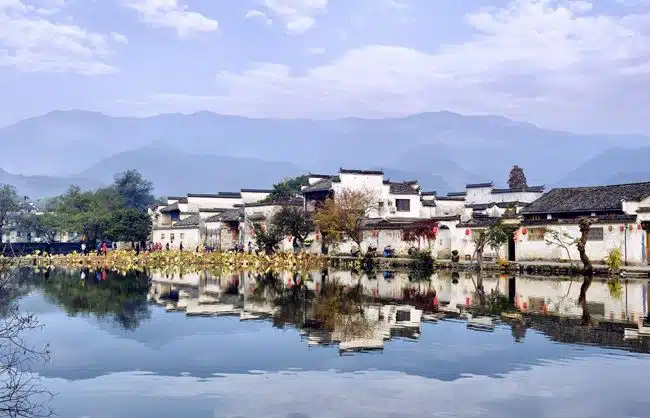
In the movie, Mr. Ping, Po’s adoptive father, runs a popular noodle shop in the village. Fresh soup base and hand-made noodles receive unanimous praise from the villagers. And the plot of this noodle shop is likely inspired by Anhui’s stewed noodles, which is a special type of Chinese noodles popular in Anhui Province.
You may find this cuisine in some old villages in the south of Anhui, such as Hongcun and Xidi. Here you can not only experience the authentic Anhui flavor, but also pay a visit to traditional hui-style architecture with cobbled streets and canals.
Recommended tour
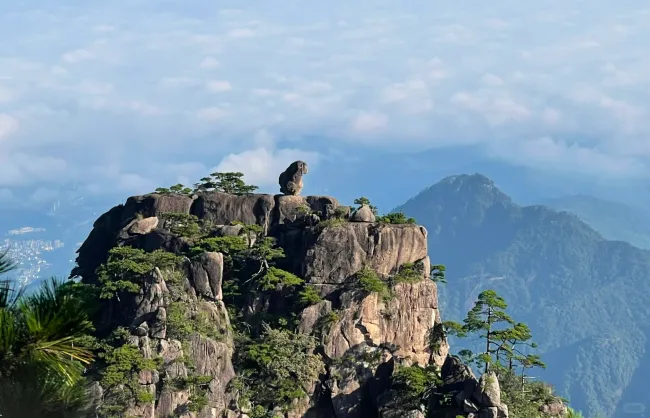
Hike the legendary granite peaks of Huangshan and wander through UNESCO-listed Hongcun and Xidi ancient villages.
Martial Arts Temples That Inspired the Furious Five
Shaolin Temple – The Birthplace of Chinese Kung Fu
In the movie, Po gradually grows into the Dragon Warrior under the guidance of Master Shifu. Countless training scenes have deeply shocked every audience. The creation of these training scenes is inspired by Shaolin Temple—the birthplace of Chinese martial arts.
Shaolin Temple was first built during the Northern Wei Dynasty in China. Shaolin Kung Fu is a martial arts school founded by generations of monks, which integrates Buddhist practice, folk martial arts and self-protection needs.
After continuous development, it has formed an independent and mature system and become one of the sources of Chinese martial arts. Dozens of boxing styles such as Hung Gar Kung Fu and Changquan have been derived from here.
Recommended tour
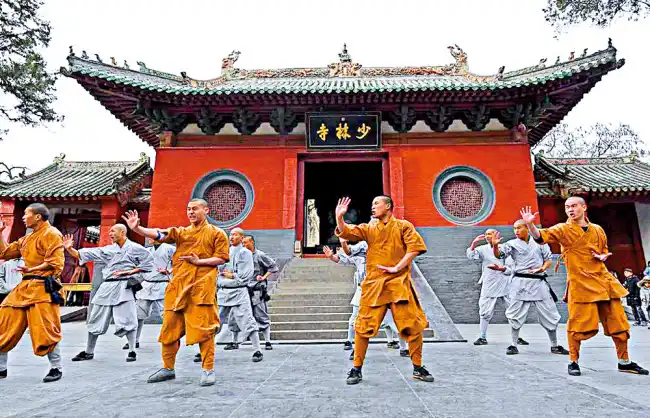
Witness an authentic Shaolin Kung Fu performance at the legendary temple, then explore Longmen Grottoes' tens of thousands of exquisite Buddha stone carvings.
Wudang Mountains – Taoist Martial Arts & Inner Peace
The mist-shrouded Wudang Mountains are a sacred site of Taoism in China and an important carrier of Taoist spirit, as well as the prototype of Wu Dan Mountains in the movie.
The spiritual practice of “Inner Peace” nurtured here stands in contrast to the powerful external strength of Shaolin Kung Fu. This unique Oriental wisdom is also reflected in the growth process of Po, and it is the core element that drives him to become the Dragon Warrior.
Furthermore, the Yin-Yang philosophy of Wudang Mountains runs through the entire process of Po’s growth. Po’s gluttonous and clumsy nature and his courage to protect the Valley of Peace constitute the soft and the hard, while his state of mind when meditating and comprehending and his flexible moves when facing enemies constitute the static and the dynamic. The combination of the two is the so-called Yin-Yang balance and transformation in Tai Chi.
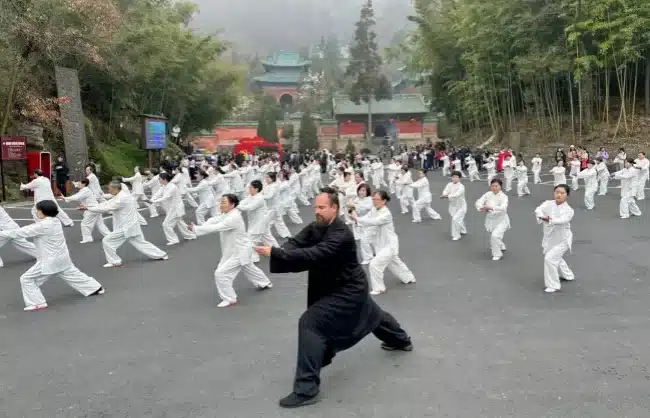
Come to Wudang Mountains, learn a set of Tai Chi, feel the Taoist spirit embodied in Po, and experience the Yin-Yang philosophy. Through this way, you may find inner peace and Oriental wisdom, and truly understand the true essence of Chinese martial arts.
Cultural Symbolism: Chinese Philosophy, Clothing & Cuisine
Taoism & Zen Principles
The core charm of Kung Fu Panda lies not only in the wonderful depiction of kung fu, but also in the Eastern philosophy contained in it.
The core principle of Taoism is “Tao follows nature”. This principle is reflected in Master Oogway’s choice of Po. Although the panda seemed not to be the best choice, he believed that destiny has its own arrangement and chose to respect the laws of things’ development.
In the film, Shifu once said: “Inner Peace. Inner Peace. Focus.” This directly embodies Taoist thought. Meanwhile, in the process of Po’s growth, the mutual balance of Yin and Yang within him is also the most crucial factor for his ultimate success.
The core principle of Zen Buddhism is to live in the present. This is also Master Oogway’s core philosophy. He guided Shifu to let go of past failures, prompted Po to get rid of self-doubt, and complete his spiritual transformation. Master Oogway once said: “Yesterday is history, tomorrow is a mystery, but today is a gift. That is why it is called ‘the present’.” This sentence profoundly reflects this principle.
These philosophical thoughts have not only shaped vivid characters, but also sublimated the theme of this film, showing the charm of Eastern philosophy in a way that is easy to understand across cultural barriers.
Hanfu & Traditional Chinese Attire
Kung Fu Panda has constructed an ancient martial arts world integrating multiple dynasties, and the costumes of various characters in the film also represent traditional Chinese costume culture.
For example, the costume worn by Master Oogway, which combines the Han Dynasty Shenyi and the Tang Dynasty Daopao, integrates the characteristics of these two dynasties and the design of Taoist costumes.
The steady short suit for martial arts practice worn by Shifu, which has the characteristics of both Song and Ming Dynasty costumes, reflects certain Zen characteristics.
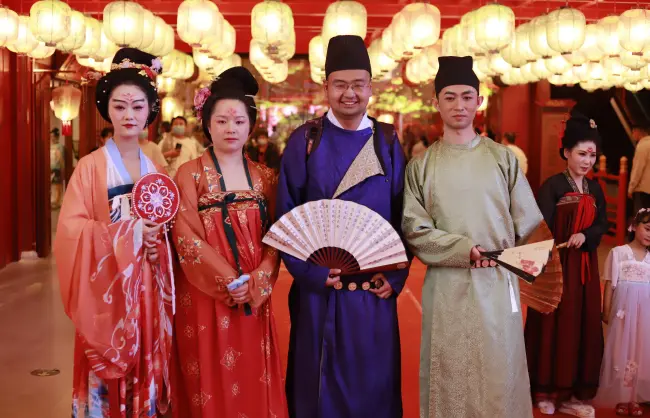
In addition, the short-style costume worn by Po has deeply adopted the core design concepts of Chinese Hanfu: wide robes and large sleeves, as well as a belted and tailored fit.
These costumes not only make the characters more vivid, but also intuitively show the costume characteristics and culture of various dynasties in China.
If you are very interested in Hanfu culture, you can visit destinations with profound Hanfu culture such as Xian or Suzhou, personally put on a Hanfu and wander through the ancient streets to experience the atmosphere in the film and the charm of ancient Chinese costumes.
Food Culture – Noodles, Dumplings, and Bamboo
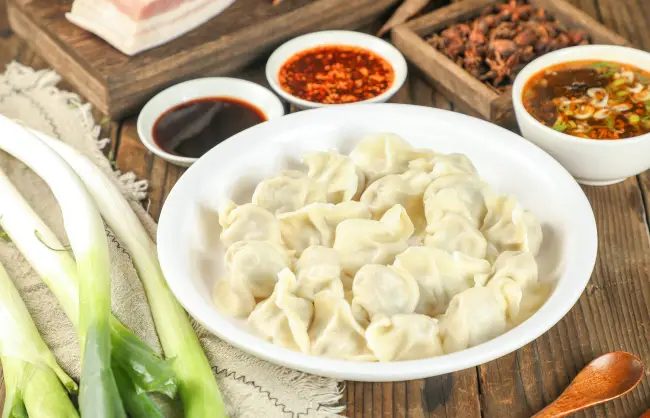
In the movie, Po has an extreme love for food, from the noodles made by Mr. Ping to the dumplings in the Jade Palace, and then to the bamboo in the Panda Village. These interesting plots not only make the character Po more full and vivid, but also let audiences all over the world know about China’s rich food culture.
If you also want to be a “fanatical gourmet” like Po, don’t hesitate to join a China food tour with abundant delicacies. The following cities are all highly recommended for a food tour:
- Chengdu (famous for Dan Dan Noodles, Hot Pot, Bamboo Leaf Cake)
- Xi’an(known for Oil-Splashed Noodles, Roujiamo, Yangrou Paomo)
- Beijing (top specialties include Dumpling Feast, Peking Duck, Zhajiangmian)
These famous food cities have a variety of dishes with different ingredients and flavors, which will definitely satisfy your taste buds!
How to Visit These Kung Fu Panda Locations
Below are some sample itineraries with major locations in the film of Kung Fu Panda. Inspire your travel ideas with these trips and contact us to craft a trip with all details be arranged based on your preference.
1. Sichuan Itinerary (3-5 Days)
Day 1: Chengdu (Panda Base + Qingyang Temple).
Day 2: Day trip to Mount Qingcheng (about 1 hour’ drive from Chengdu) and Dujiangyan Panda Base.
Day 3: Explore ancient Huanglongxi (another village inspiration).
2. Wudang & Shaolin Pilgrimage (4 Days)
Day 1: Wudang Mountain (Tai Po Slope + Zixiao Palace + Nanyan Palace).
Day 2: Wudang Mountain(The Tai Chi Morning Class + The Golden Summit
+The Gilded Bronze Hall + Wudang Traditional Taoist Martial Arts Hall).
Day 3: Wudang Mountain to Shaolin Temple ( Shaolin Monastery Main Hall + Forest of Stupas + The Official Shaolin Martial Arts Performance).
Day 4: Shaolin Temple ( Zen Meditation Experience Camp + Sanhuang Village).
China Panda Volunteer Tour with China Xian Tour
The Kung Fu Panda reflects Chinese Taoist culture and many great tourist destinations. If you want to visit Po’s hometown, Sichuan, for an immersive China Panda Volunteer Tour, or if you want to experience Sichuan’s local culture and cuisine, please feel free to contact China Xian Tour at any time. We have experienced consultants who can create a personalized ‘Kung Fu Panda’ journey for you and provide the most professional service.