

The Ming dynasty (1368-1644 AD) was the last unified feudal empire founded and ruled by the Han people. For Han Chinese, the Ming dynasty legacies that passed down Han cultural treasures were as invaluable as the strong national cohesion built from this hard-earned reunification.
Whether it is Zheng He’s voyages, the compilation of the Yongle Encyclopedia, or the construction of the Forbidden City, the 12 facts about the Ming dynasty in this guide aim to help you map out the trajectory of the development of the Ming Empire.
Although in the form of “quick facts”, the content contains critical and useful information, covering the Ming dynasty history, culture, major events, key achievements, and legacies, and mysteries.
Let us take a quick walk through the twists and turns of the legendary Great Ming.
Content Preview
- 1. Zhu Yuan Zhang, founder of the Ming Empire, originated from the grassroots.
- 2. Relocating the capital city to Beijing was a means of strengthening the northern border defenses.
- 3. Zheng He took seven voyages in total.
- 4. The Ming dynasty experienced a population boom and agricultural innovation.
- 5. The Yongle Encyclopedia was one of the most precious Ming dynasty legacies.
- 6. Yongle Emperor is the most well-acclaimed ruler of the Ming Dynasty.
- 7. The Grand Canal, constructed in the Sui dynasty, was rebuilt in the Ming dynasty.
- 8. The extant well-preserved part of the Great Wall was built in the Ming dynasty.
- 9. The Ming dynasty’s ceramic arts ushered in the global craze for Blue and White Porcelain.
- 10. Fiction represents the highest artistic accomplishment of the Ming dynasty literature.
- 11. The collapse of the Ming dynasty was driven by the combined effects of political corruption, frequent natural disasters, and peasant rebellions.
- 12. Tianqi Explosion (The Explosion at Wanggongchang) remains a mystery.
- Discover the Legacy of the Ming Dynasty with China Xian Tour
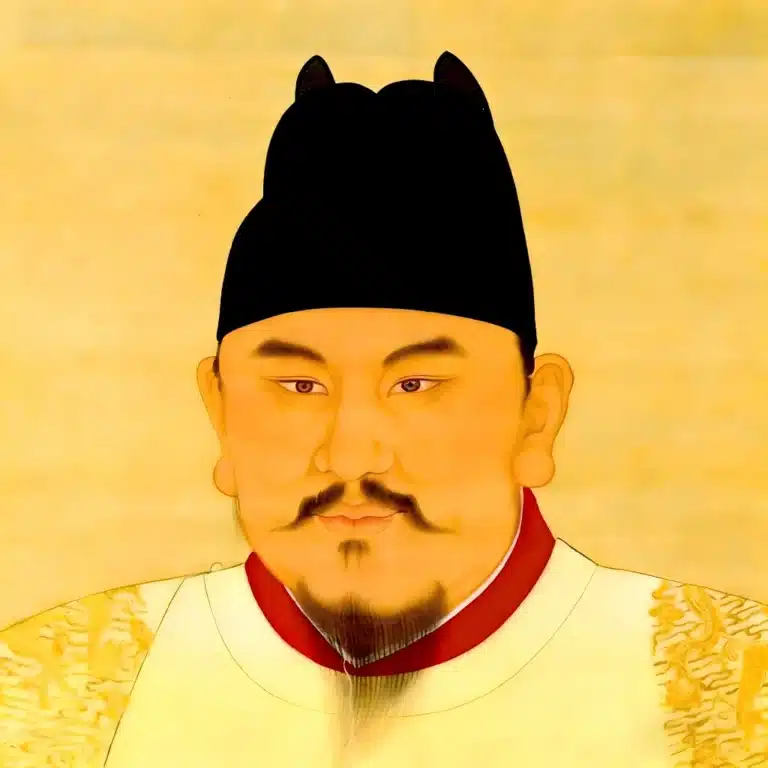
1. Zhu Yuan Zhang, founder of the Ming Empire, originated from the grassroots.
Zhu Yuan Zhang was born in a humble peasant family in 1328. Being the eighth child of his clan, he was given the name “Chong Ba” (ba refers to number eight). Zhu sought refuge at the Huangjue Temple and became a monk in 1343, after losing his close families in a severe drought.
However, the shortage of food compelled the seventeen-year-old Zhu to live a vagabond life. Back then, the Yuan dynasty’s tyranny had aggravated the ethnic and class conflicts, which led to the large-scale “Red Turban Rebellion”. At the age of twenty-five, Zhu joined the Red Turban Army and was promoted to the King of Wu in eleven years.
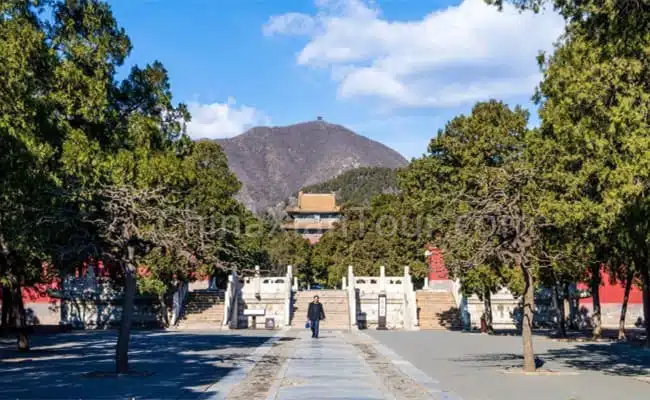
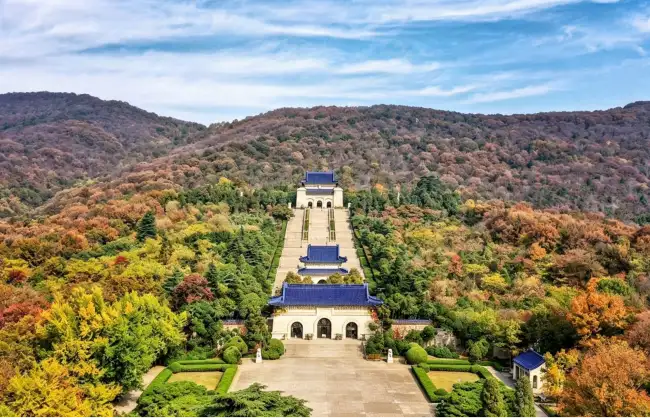
In 1368, Zhu rose to power as the Emperor of Ming at the Yingtian Prefecture (the current Nanjing). The Ming dynasty thus commenced. And later in the autumn, the Ming army captured Dadu, the capital city of the Yuan dynasty, and terminated the Yuan regime.
Therefore, the Ming dynasty became another (and the last) unified great empire established by the Han ethnicity in ancient Chinese history.
2. Relocating the capital city to Beijing was a means of strengthening the northern border defenses.
In 1403, Emperor Chengzu of Ming (Yongle Emperor) was advised that Beiping (the current Beijing) should be the Emperor’s cradle of power. For nearly a century, the region had been under foreign rule, yet a strategic stronghold for the Ming dynasty to resist the Mongol forces’ southward invasion.
To enable prompt troop deployment and a stable political situation, the Yongle Emperor decided to relocate the capital city to Beijing. Beijing thereby became the actual political and economic core. The Ming dynasty’s control over the northern territory was increasingly solid.
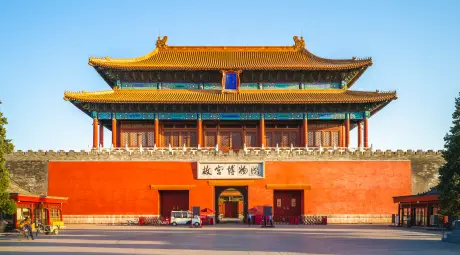
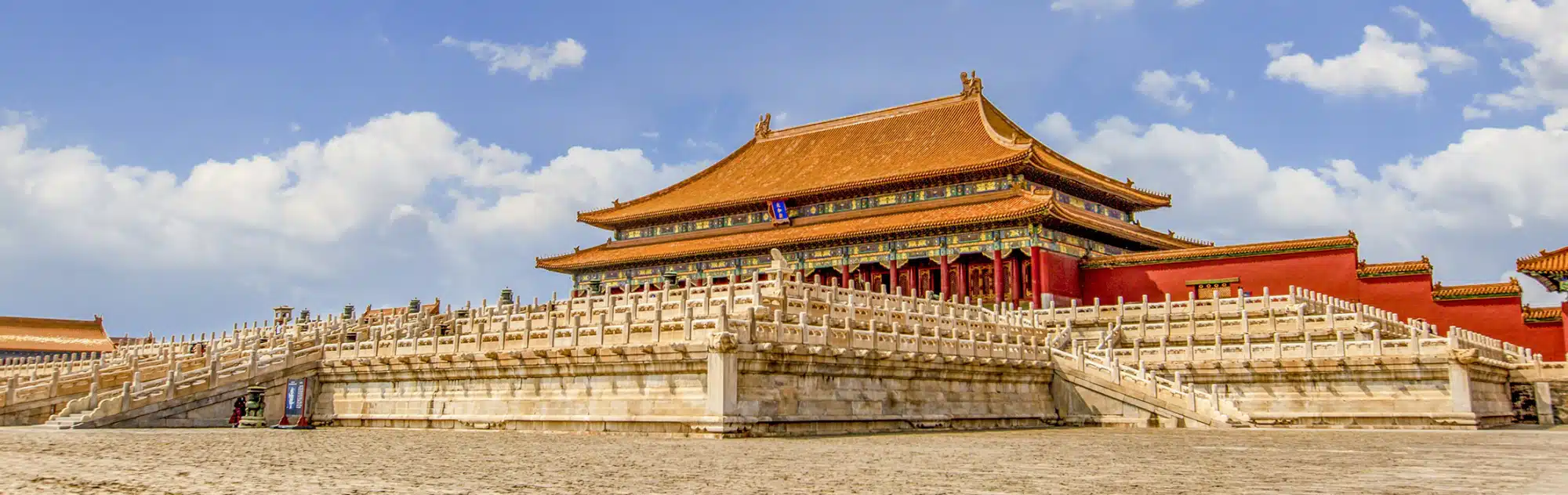
The construction of the imperial palace in Beijing was initiated in 1406, and it took 100,000 prominent artisans and 1 million laborers 15 years to complete the palace complex centering on the Forbidden City.
The Forbidden City is one of the largest and best-preserved ancient wooden structures. It rested at the center of Beijing’s central axis and represented the peak of ancient Chinese imperial architecture.
Its symmetrical structure and organized functional zoning (e.g., Fengtian, Huagai, and Jinshen Temples were where the emperors held court and imperial ceremonies) were revered as more than a template for future palace construction, but also a cultural symbol of traditional Chinese Rites.
3. Zheng He took seven voyages in total.
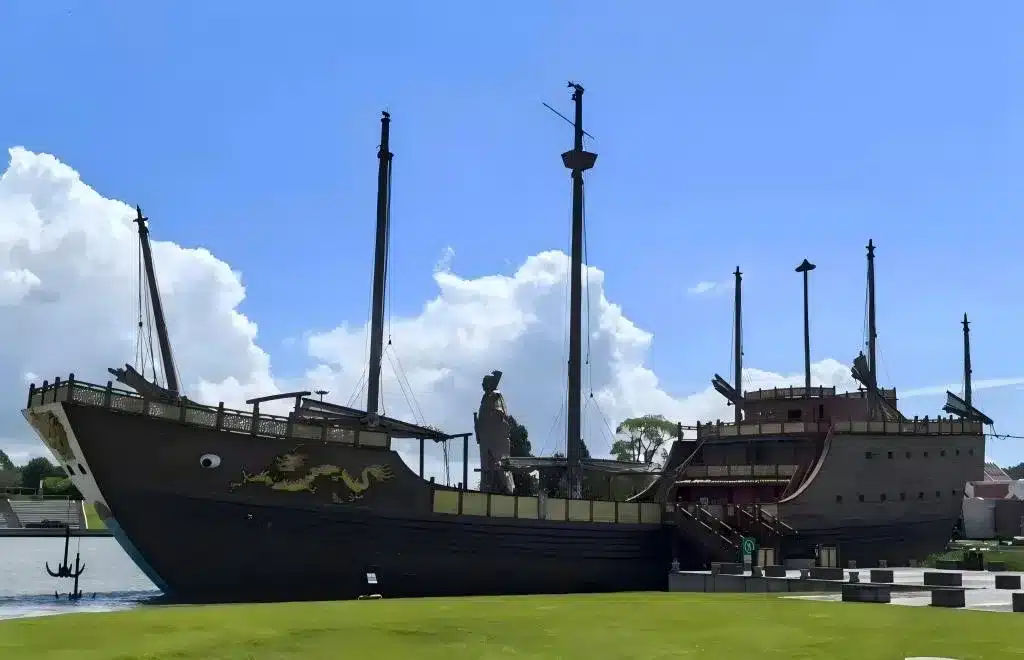
To show off the impressive national strength of the Great Ming and consolidate the connection with other countries, Emperor Chengzu sent a massive fleet on diplomatic voyages led by the envoy Zheng He.
From 1405 to 1433, Zheng He took seven voyages, the routes of which reached countries in South Asia, Southeast Asia, and Africa.
In fact, “boasting” was the least noteworthy achievement of the voyages– international trade flourished as valuable Chinese specialties, such as tea, silk, and porcelain, were popular in foreign markets, while various foreign goods like spices, jewellery, and ivory enriched the Ming dynasty’s daily consumption.
Meanwhile, the mastery of celestial and terrestrial navigation techniques, and instruments like compasses, along with the advances in materials and craftsmanship, enabled a rapid development of shipbuilding and seafaring during that period.
Moreover, Zheng He’s fleet served as a peacekeeper: it repelled the rampant pirate forces, for instance, the pirate group led by Chen Yizu entrenched in the Malacca Strait region, and guarded the personal and property security on the maritime routes and for the coastal states.
This might be one of the reasons why the Ming dynasty attracted loads of trading partners and tributary states.
4. The Ming dynasty experienced a population boom and agricultural innovation.
The policy of “rewarding land reclamation” at the beginning of the Ming dynasty successfully increased the arable land area, from less than 400 million mu to 850 million mu. However, the population surge from 60 million to 200 million caused a sharp decline in per capita arable land. Eventually, intensive cultivation and diversified management emerged as solutions.
On the one hand, the available crop varieties diversified– double-cropping of rice became widespread in the south, with triple-cropping of rice introduced in Guangdong and Fujian; in the north, the rotation of wheat and millet was promoted.
In Addition, the Yangtze Delta rose as a center for cotton textiles; sericulture in the Taihu Lake region significantly developed due to silk production; corn and sweet potatoes, which alleviated the pressure of famine, were cultivated in the mountains.
On the other hand, farm and irrigation tools underwent major improvements: curved plows and dragon-spine water wheels were widely used, while iron smelting and casting techniques took a big step forward.
5. The Yongle Encyclopedia was one of the most precious Ming dynasty legacies.
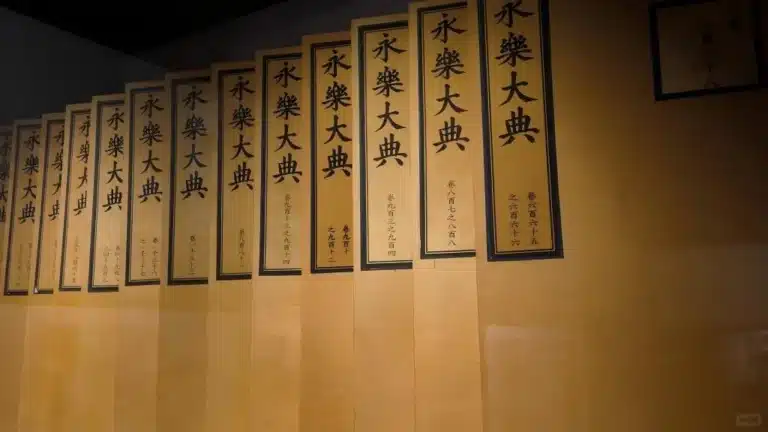
In an attempt to demonstrate the intellectual and military prowess of the Great Ming and promote Chinese culture, Emperor Chengzu commanded the compilation of an unprecedented, comprehensive encyclopedia after he rose to power.
Xie Jin and Yao Guangxiao were appointed as the chief editors of the Yongle Encyclopedia in 1403. The entire collection comprised 22,877 volumes, 11,095 books, and a total of 370 million characters. The content was drawn from over 7,000 ancient books, which spanned fields of Classics, History, Philosophy, Literature, Geography, Astronomy, Medicine, Divination, Religion, Arts, and so on.
With six years of painstaking efforts, the first draft of this tome came out in 1407. This marked the creation of the largest encyclopaedic compendium of ancient China. Beyond its manifestation of the cultural prosperity and inclusiveness during the early Ming dynasty, its profound influence on future historical and archaeological studies remains indisputable.
6. Yongle Emperor is the most well-acclaimed ruler of the Ming Dynasty.
Besides the relocation of the capital city, Zheng He’s voyages and the compilation of the Yongle Encyclopedia, Yongle Emperor (Emperor Chengzu) had made other outstanding contributions in political, military, and cultural spheres.
Through establishing the Cabinet and setting up the “secret police system,” Yongle Emperor carried out a thorough reform of the centralized administrative system.
Meanwhile, he led an expedition to the northern frontier, in which the Ming army significantly weakened the remaining Mongol forces.
In the south, an uprising in Annan (in present-day Vietnam) was suppressed. These military accomplishments served as a solid foundation for the Ming dynasty’s long-term national security. It was under Yongle Emperor’s rule that the discipline of “the emperor should guard the nation’s gates” was proposed.
Also, Yongle Emperor organized a series of large-scale compilation projects apart from the Encyclopedia. For example, Huang Huai and Yang Shiqi compiled the Memorials of Eminent Ministers Throughout the Dynasties, which recorded the evolution of institutional systems and the successes and failures of governance across dynasties. This 350-volume work is still a trusted reference for historians.
Some other compilation projects, such as the Full Collection of the Four Books and Five Classics, largely promoted the Cheng-Zhu Neo-Confucianism and the academy culture, which greatly improved the educational system.
Furthermore, Yongle Emperor commanded the dredging of the Grand Canal, and this project exerted a positive influence on the state economy (details in the next section). His rule was memorized as the Golden Age of the Yongle Reign.

7. The Grand Canal, constructed in the Sui dynasty, was rebuilt in the Ming dynasty.
The Beijing-Hangzhou Grand Canal was a tremendous legacy of the Sui dynasty (581-618 AD). As the name indicates, the 1794-meter Grand Canal stretched from Beijing to Hangzhou, flowed across seven major Chinese provinces and municipalities, and connected five major waters, including the Yangtze River and Yellow River. However, during the time of Yongle Emperor, the Huitong section of the Canal had been severely silted up.
To secure abundant food and other supplies in the north, Yongle Emperor commanded the dredging of the Canal. By 1415, the Ming dynasty halted maritime transport and enjoyed the convenience of inland waterway transportation.
The “revival” of the Grand Canal brought crucial resources to the north, especially the capital city, facilitated the circulation of goods and economic integration across regions, and marked another glorious era of this ancient relic in Chinese history.
8. The extant well-preserved part of the Great Wall was built in the Ming dynasty.
Similar to the Qin and Han dynasties, the Great Wall worked as an important military defense project on the (north) border during the Ming dynasty.
According to the available statistics in 2009, the Ming Great Wall stretches from Liaoning’s Hushan along the Yalu River in the east to the Jiayuguan Pass in the west.
The length of the artificial structure alone (natural barriers were used as materials too) reaches 6259.6 kilometers. Dressed stones and blue bricks form the main fortified wall in the eastern strategic section and make the structure firm and durable.
The Ming Great Wall has become a World Cultural Heritage site and shares the reputation of “The Four Great Wonders of the East” with the Pyramids, Borobudur, and Angkor Wat.
Recommended tour
At 08:00 in the morning, our English-speaking tour guide and driver will meet you at the hotel lobby.
9. The Ming dynasty’s ceramic arts ushered in the global craze for Blue and White Porcelain.
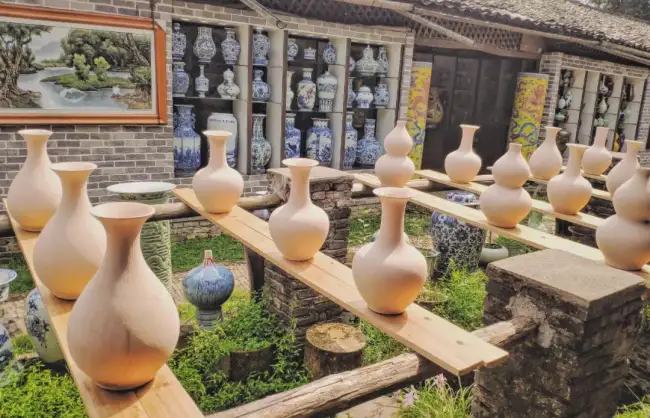
The Ming dynasty was another golden age for the development of Chinese ceramic arts, and the most representative work was the Blue and White Porcelain. Jingdezhen, now renowned for its magnificent Blue and White Porcelain, was already a leading folk kiln (opposite to those working exclusively for the imperial family) during the Ming dynasty.
Noticeably, the colouring technique and style of the Ming Blue and White Porcelain were not fixed and unchanged throughout time.
To be specific, during the time of Yongle and Xuan’de, imported Sumaliqing” cobalt pigment was a popular choice. It yielded deep hues with metallic tin spots, while the patterns were sparse yet splendid. After the Chenghua period, the iron-reduced Pitang Blue pigment became the mainstream, creating softer and more refined colors and enabling intricate patterns.
From the sixteenth century, Portuguese and Dutch merchants exported a large amount of the Blue and White Porcelain to Europe– the Clark Porcelain (glazed) was designed exclusively for the foreign markets and had a profound influence on Japanese Imari ware and European Meissen porcelain.
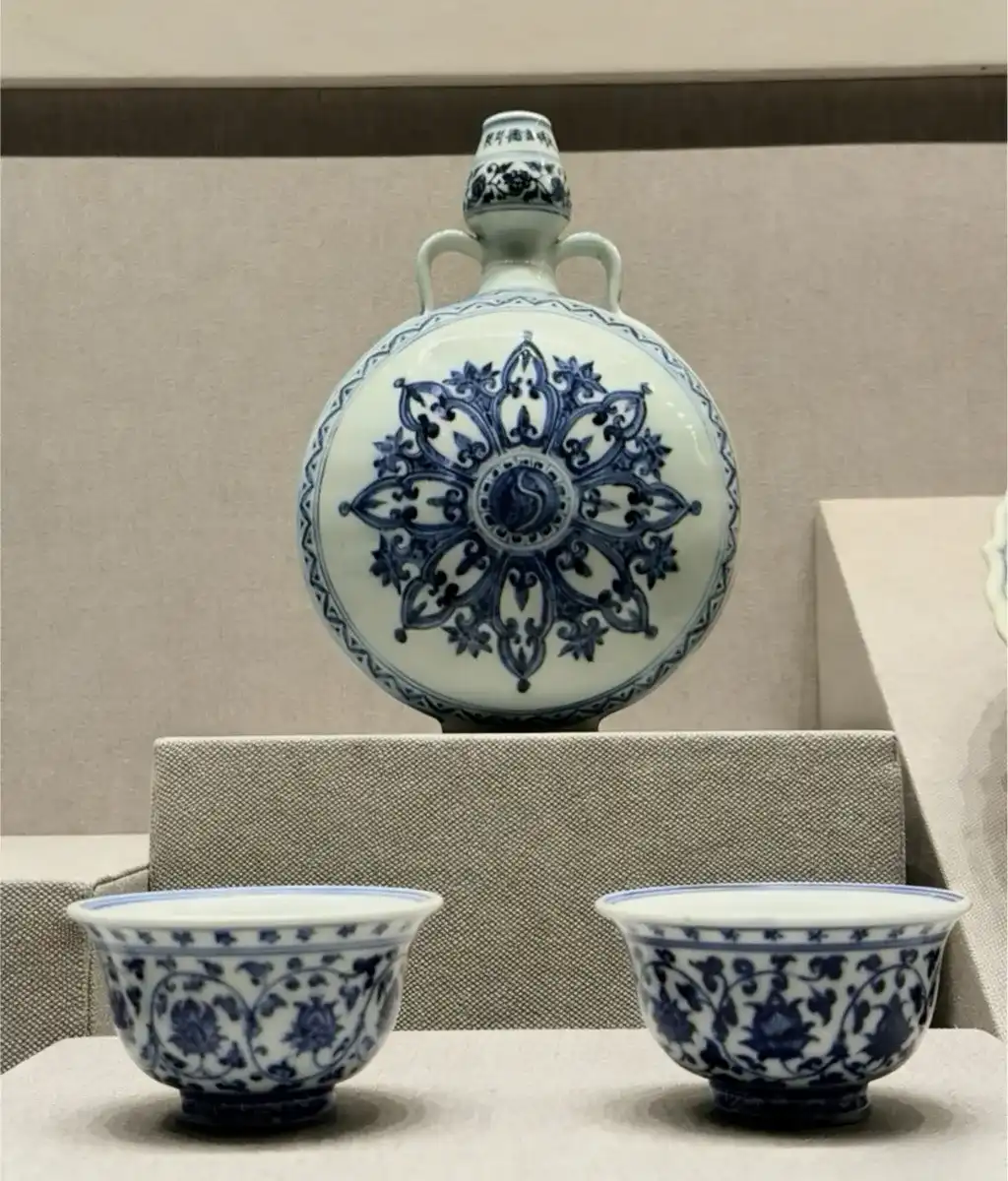
Recommended tour with blue and white porcelain
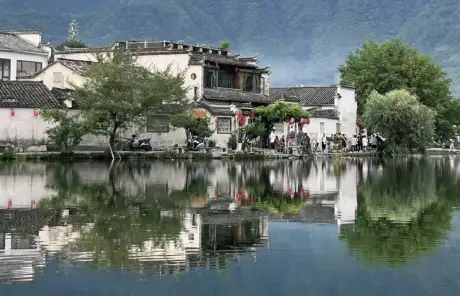
Dive into Jingdezhen's ancient kilns and ceramic workshops, then ascend Mt. Huangshan for its legendary granite peaks, twisted pines, and ethereal sea of clouds.
10. Fiction represents the highest artistic accomplishment of the Ming dynasty literature.
A vast number of serialized novels, short story collections, and narrative tales themed on history, supernatural creatures, detective, romance, and everyday life were created during the Ming dynasty. The most well-known narrative tales, for example, were San Yan (a three-volume collection) edited by Feng Menglong and Er Pai (a two-volume collection) edited by Ling Mengchu.
Besides, works that alluded to social reality, bureaucracy, and politics, like Journey to the West, Romance of the Three Kingdoms, and Water Margin, which were famous as the “Great Classic Novels”, are still regarded as shining gems in the history of Chinese literature.
11. The collapse of the Ming dynasty was driven by the combined effects of political corruption, frequent natural disasters, and peasant rebellions.
From the middle and late period of the Ming dynasty, the influx of silver into the markets boosted the development of industry and commerce while triggering a fierce competition between major power groups, including political factions and local bureaucrats, over the commercial and mining taxes that were not officially regulated.
Frequent land annexations and legislative disputes between the old and new parties accelerated the formation of warlord factions. Some local bureaucrats even accepted bribery from pirates to facilitate their smuggling activities and illegally accumulated properties.
Although the tax competition was terminated after Emperor Sizong cleansed out the eunuch faction’s influence, the corrupted political situation in the government and an imperial authority vacuum in the south had become an inevitable fact.
Another adversity was the extreme global climate change during the late sixteenth century. The sudden drop in temperature and the grotesque phenomenon of “drought in the north and flood in the south” caused devastating loss to the Ming dynasty’s agricultural economy. During the time of cold and famine, the lower classes struggled on the brink of death.
Even as the populace suffered in misery, the local governments refused to open their granaries for food relief; instead, they doubled the taxes. Peasants were forced to sell their lands at rock-bottom prices and were enslaved by landlords and gentry.
Consequently, some peasant leaders chose to kill the local officials, storm the granaries, and ultimately launched large-scale uprisings to resist the rule of the Ming regime. It was the dark political struggles and the government’s excessive exploitation that led to the complete loss of popular support.
12. Tianqi Explosion (The Explosion at Wanggongchang) remains a mystery.
In 1626, a bizarre explosion occurred at the Wanggongchang Powder Magazine, the southwestern corner of the capital city, Beijing. According to recent calculations, the Tianqi Explosion involved approximately 960 tons of TNT.
It destroyed 10,931 buildings and affected 10,000 people. The Qianqing Palace shook violently at the moment of the blast. The infant Prince Zhu Cijiong was so terrified by the explosion that he died shortly after the incident. This explosion caused more than losses to the Ming Imperial Palace, but also panic and unrest in society.
Opinions vary widely regarding the cause of this explosion: some attribute it to the spies of the Later Jin dynasty (a regime established by Nurhaci and co-existed with the Ming dynasty from 1616-1636); some believe that it was a natural catastrophe brought about by an earthquake, lightning strike, or meteorite crash.
Even today, the cause remains undetermined, making the Tianqi Explosion one of the world’s greatest natural mysteries.
Discover the Legacy of the Ming Dynasty with China Xian Tour
There is a Chinese line that says: What is gained from reading seems shallow. It may apply to these facts as well. Maybe only when you witness the splendor of the Ming Forbidden City in Beijing, or take a glimpse of the gloss of a piece of Ming porcelain, can you feel the real charm of the Great Ming.
Therefore, we encourage you to join China Xian Tour for an immersive tour of the Ming dynasty legacies today! Our consultant and guide team will tailor a personalized tour route based on your preferences. If you are interested in the Ming dynasty, we can help you craft one personalized itineraries that combines a variety of Ming dynasty-related attractions and cities, and enjoy a feast of intriguing history, landscapes, and culture in the most time-and cost-efficient way!