



Written by Natalia |
With well protected culture relics and one of the most preserved cultures, China enjoys popularity around the globe for its countless mountains. In the past centuries, renowned Chinese Emperors have made religious pilgrimages to these mountains, clearly defining their spiritual importance.
Here are the Six Famous Buddhist Mountains and Four Great Mountains to visit in China that are extremely outstanding.
Content Preview
- 1. Mount Wutai — Seat of Wisdom (Manjusri)
- 2. Mount Emei — Practice & Presence (Samantabhadra)
- 3. Mount Putuo — Island of Compassion (Guanyin)
- 4. Mount Jiuhua — Vows and Compassion (Ksitigarbha)
- 5. Mount Xuedou — Small, Quiet, Zen (Chan)
- 6. Mount Fanjing — Wild, Remote, and Strange
- Other Famous Mountains in China
- FAQs about Buddhist Mountains in China
- Join China Xian Tour for In-depth Exploration of China’s Famous Mountains
1. Mount Wutai — Seat of Wisdom (Manjusri)
- Location: Shanxi Province
- Highest peak: Yedou, 3,061 m
- Typical ticket: ¥140–160 (range varies by season/area)
- Hours: Temples vary; park accessible year-round
- Suggested time: 2–3 days
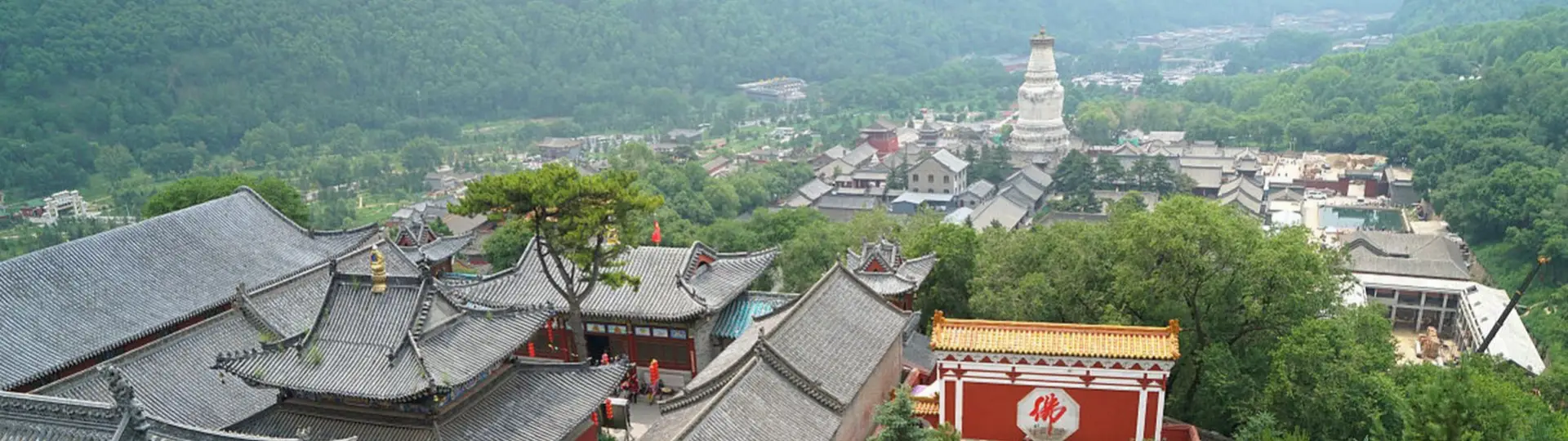
Mount Wutai’s five flat peaks give the place its name: Five Terraces. It is closely linked to Manjusri, the Bodhisattva of wisdom. Wutai has been a pilgrimage site for nearly two millennia. The feel is scholarly: libraries, study halls, and rituals alongside simple offerings.
Why go? For the temples and for the sense of continuity. Xiantong and Tayuan are the oldest draws. Foguang Temple holds Tang-dynasty architecture that still stands. Pilgrims come to study, chant, and make offerings; many stay several days.
Best Time to Go
May to September is the ideal time for a trip to Wutai Mountain. Winter is nice too — perfect for snow viewing if you can handle the cold. From May through September, the mountain wakes up. Trees turn lush, pines and cypresses get thick. Grass runs green across the slopes. Wildflowers pop up here and there. You’ll spot cattle, donkeys, and mules wandering about. When December arrives, snow covers everything. Wutai Mountain turns into a still, white world — quiet and peaceful.
Getting There & How Long to Stay
Many people start from Taiyuan, the capital and also gateway of the province. It’s just a 3-hour drive. You can also catch a flight or take a high-speed train from cities like Beijing, Xi’an, Shanghai, Chengdu, or Guangzhou. Flying takes around 1.5 to 3 hours. The train ride is about 2 to 4 hours.
Plan on spending 2 to 3 days at Wutai Mountain. It fits nicely into a longer China tour that includes Beijing, Datong, Pingyao, and Xi’an.
Top highlights of Wutai Mountain
- Xiantong Temple — oldest major temple on the mountain.
- Tayuan Temple — the Great White Pagoda is a landmark.
- Foguang Temple — Tang-era wooden structures and carvings.
- Five Peaks — different microclimates and sunrise spots.
Notes: Wutai blends Han and Tibetan Buddhist traditions; expect monastic diversity.
Suggested tours:
6 Days Datong Pingyao Tour with Wutai Mountain
5 Days Shanxi Highlights Tour: Pingyao, Wutai Mountain & Datong
2. Mount Emei — Practice & Presence (Samantabhadra)
- Location: Sichuan Province
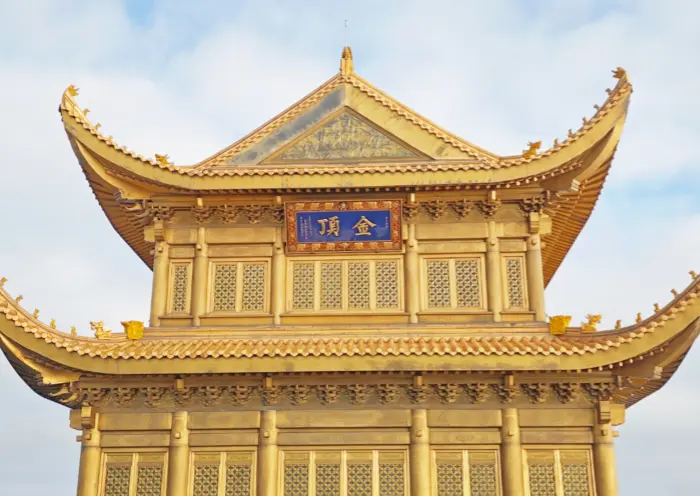
- Highest point: Golden Summit, ~3,099 m
- Typical ticket: ¥160 (main scenic area)
- Hours: Park open daily; temple times vary
- Suggested time: 2–3 days
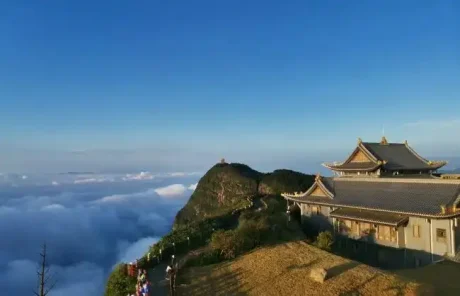
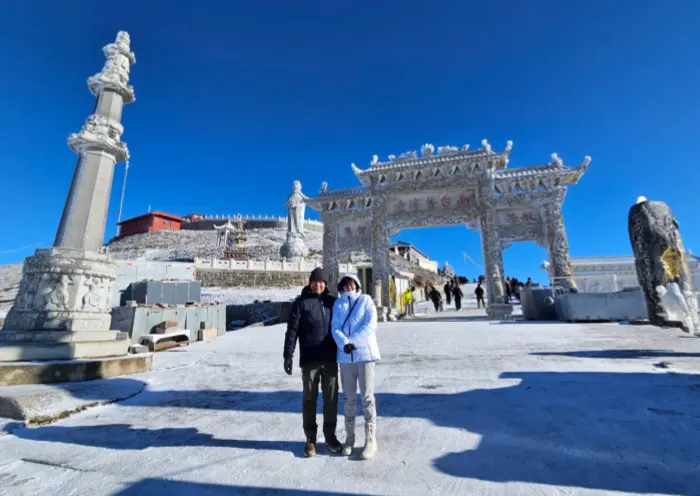
Mt Emei is both a natural park and a spiritual route. It is associated with Samantabhadra, a Bodhisattva that stresses practice and vows. The mountain is famous for its light phenomena—sunrises, cloud seas, and optical halos seen around visitors’ shadows on misty mornings.
Why go? Its mix of temples, old trees, and easy-to-reach viewpoints. The Golden Summit is the main draw; Baoguo Temple at the base is where many trips start. Monkeys live on the slopes; they are lively and you’d better keep food secure.
Best time to travel
Mount Emei is great to visit all year. Spring and autumn are especially pleasant. In April, the rhododendrons are in full bloom. From June to August, many locals come to escape the heat. In September and October, you can look down into the valleys. The frosty leaves are bright red. Mist often fills the mountains. It looks powerful and grand. From November to March, you can see snowy landscapes. The weather here is shaped by sunlight, air currents, and geography. The mountain’s terrain plays a big role, making it often cloudy and foggy. Rainfall is common. It snows about 83 days per year on average. There are foggy days about 322 days a year. At the foot of the mountain, sunshine lasts around 951.8 hours per year. At the summit, it’s about 1398.1 hours.
How to get there
Chengdu is the most popular gateway to Mount Emei. You can easily fly or take a high-speed train from many Chinese cities. There are also flights from Sydney, Amsterdam, Kuala Lumpur, Singapore, Seoul, and other international cities.
From Chengdu, you can rent a private car through a local agency. You can also take a public bus. Another option is the high-speed train. Trains run frequently, even early and late. The drive takes about 2 to 2.5 hours. The train takes just around 1 hour.
A trip to Mount Emei usually takes 1 to 3 days. You can also visit the Leshan Giant Buddha nearby. If you want to explore the mountain deeply, a 3-day trip is a good choice. Start from Baoguang Temple, you can walk all the way up to the Golden Summit.
Notes: Cable cars shorten long climbs; those with limited time can still see key sites.
Top highlights
- Golden Summit — panoramic views and the large statue of Samantabhadra.
- Wannian Temple — historic and architecturally significant.
- Baoguo Temple — main entry and services.
- Forest trails and monkey communities.
Suggested tours:
3 Days Mt.Leshan & Mt.Emei Hiking Tour
6 Days Chengdu Leshan Mt. Emei Tour with Panda Volunteer Program
3. Mount Putuo — Island of Compassion (Guanyin)
- Location: Zhoushan Archipelago, Zhejiang Province
- Highest point: Mount Foding, ~291 m
- Typical ticket: ¥160 (includes some ferry fees in package options)
- Hours: Temples open early to evening; island access varies by ferry schedule
- Suggested time: 1–2 days
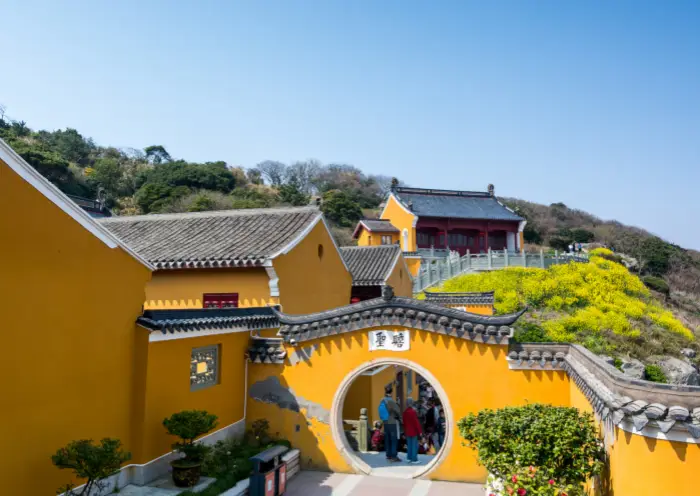
Putuo Mountain is compact and maritime. It is the island home to Avalokitesvara (Guanyin), the Bodhisattva of compassion. The island’s rhythm is shaped by the sea: ferries arrive with pilgrims, incense mixes with salt air, and small paths link temples.
Why go? It’s easy to reach from Ningbo or Shanghai, and it suits visitors who want spiritual sites without high mountain climbs. Putuo also hosts several festivals tied to Guanyin that fill the island with worshippers.
When to Visit
April through October are good months for Putuo Mountain. Followers of Buddhism may prefer the dates of Guanyin’s birth, enlightenment and ordination. The mountain has four distinct seasons. Summers stay cool. Winters remain mild. The coastal climate brings mild weather.
Rain falls more in spring and summer. Typhoons can arrive in July, August or September. Winters are relatively warm. Snow is uncommon.
How to get there
Most visitors start by flying. Direct flights operate daily from Shanghai, Beijing, Xi’an, Guangzhou and Chengdu. The nearest high-speed rail stations are in Hangzhou or Shanghai. Train connections cover most of China. The journey takes 4-5 hours. One to two days is usually sufficient. For overnight stays, choose accommodations near Puji Temple or Fayu Temple.
Top highlights
- Puji Temple — the island’s central monastery.
- Fayu Temple — known for its architectural tiles and halls.
- Huiji Temple — summit temple with sea views.
- Nanhai Guanyin statue — visible from several beaches.
Suggested tour: 2-Day Putuoshan Buddhist Pilgrimage & Scenic Discovery from Shanghai
4. Mount Jiuhua — Vows and Compassion (Ksitigarbha)
- Location: Anhui Province
- Highest peak: Tiantai, ~1,342 m
- Typical ticket: ¥160 (scenic area pass)
- Hours: Temples generally open from morning to evening
- Suggested time: 2 days
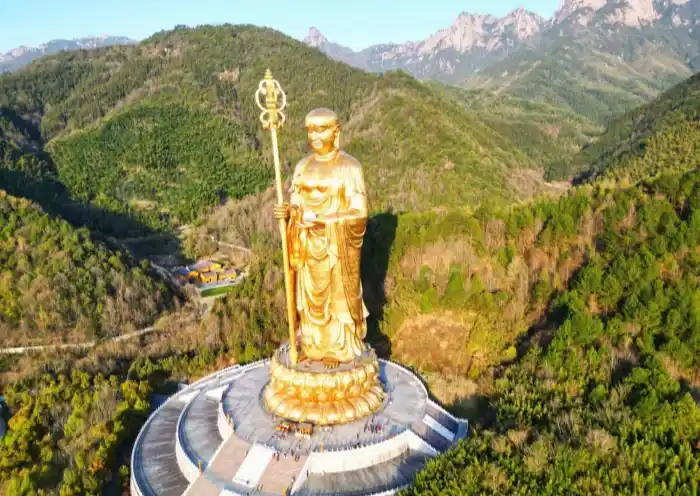
Jiuhua Mountain links to Ksitigarbha (Dizang), famed for vows to save beings in suffering. The site is quiet and heavily monastic, with dozens of temples spread across forested ridges. A notable practice here is veneration of preserved monk bodies (roushen), displayed in glass shrines as marks of devotion.
Why go? If you want a calm pilgrimage without steep, exposed climbs. Jiuhua’s paths are gentle and its temples welcoming.
Best Time to Visit
Jiuhua Mountain is worth seeing any time of year. Still, spring and autumn have something special.
In spring, clouds drift low over the valleys. Sometimes they hang just above the trails, sometimes they rise high and wrap the peaks. You can see them almost anywhere you walk. Autumn feels quieter. The wind moves through the pines, the sound soft but steady. Bamboo turns a pale gold. The air cools down, the light sharpens. The mountain sits in a mild monsoon zone — warm most of the year, rain mostly in summer, sunlight generous.
How to get there
The easiest way to reach Jiuhua Mountain is by plane or high-speed train. The nearest airport is Chizhou Jiuhuashan Airport which has direct flights from Hefei, Nanjing, Guangzhou, and Shenzhen, and it’s about a forty-minute drive to the foot of the mountain. Trains from Nanjing, Shanghai, Hangzhou, Wuhan, Hefei, and Huangshan run every day, with less than an hour’s ride from the station to the entrance.
Top highlights
- Huacheng Temple — the oldest and central to the site.
- Baisuigong — houses preserved monk remains.
- Tiantai Temple — the highest temple with views.
- Zhiyuan Temple — known for simple monastic food.
Notes: Modest clothing and quiet behaviour are especially appreciated here.
Suggested tour: 3 Days Jiuhuashan Mountain Tour from Shanghai
5. Mount Xuedou — Small, Quiet, Zen (Chan)
- Location: Fenghua, Ningbo, Zhejiang Province
- Highest point: ~1,086 m
- Typical ticket: ¥80 (modest)
- Hours: Scenic area daylight hours
- Suggested time: 1 day
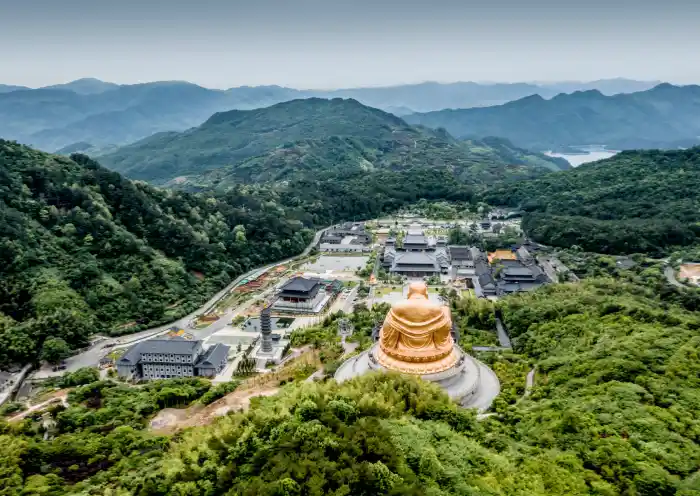
Xuedou is less famous but suited to those who prefer low crowds. It was an important site for Chan (Zen) practice. The temple complex is compact; trails are short and scenery is gentle rather than dramatic.
Why go? For a day trip from Ningbo or as a quieter stop after Putuo. The waterfall and the quiet courtyards make it easy to slow down.
Best time to go
Spring and autumn are best. In spring, flowers bloom and the hills turn green. Autumn brings colorful leaves—maples and ginkgos stand out. The weather is mild in both seasons.
How to get there
- By air: Fly into Ningbo Lishe Airport. From there, take a bus or taxi to Fenghua District, then go on to Xikou Town.
- By train: Arrive at Ningbo Station or Ningbo East Station. Then catch a bus from Ningbo South Bus Station to Xikou.
Top highlights
- Xuedou Temple — active, modest, well-kept.
- Qianzhang Waterfall — a long drop popular with local photographers.
- Maitreya statue & Nine Dragon Pool — quiet viewpoints.
Notes: Xuedou is good for low-key retreats and short hikes.
6. Mount Fanjing — Wild, Remote, and Strange
- Location: Tongren, Guizhou Province
- Highest point: Red Cloud Golden Summit, ~2,570 m
- Typical ticket: ¥110–160 (depends on season)
- Hours: Park opens early; upper areas on schedule
- Suggested time: 1–2 days
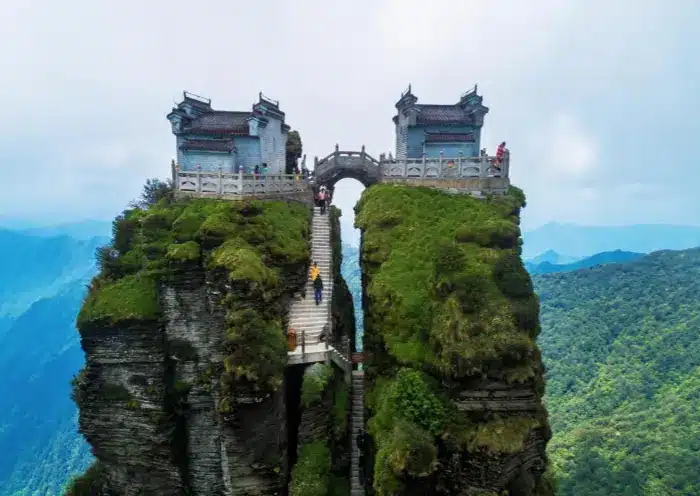
Fanjing Mountain feels different. The rock formations are sharp and isolated; the main summit is two stone towers with temples clinging to each. The narrow bridge and stairways give a sense of exposure and accomplishment. The area is also biologically rich; endemic species live in its forests.
Why go? For a dramatic landscape and a pilgrimage with physical challenge. The split summit gives Fanjing a clear visual identity.
Best time to go
The best time is from April to October. Spring has mountain flowers and green views. Summer is cool and good for avoiding the heat. In autumn, you can see red leaves across the mountains.
How to get there
- By high-speed rail: Take the train to Tongren Station. Then switch to a local bus to reach the scenic area.
- By bus: There are direct buses from Guiyang, Chongqing, and other cities to Tongren. From Tongren, take a shuttle up to the mountain.
Top highlights
- Red Cloud Golden Summit — the twin-peaked icon.
- Cheng’en Temple — main monastery.
- Virgin forest and rare wildlife — worth slower exploration.
Notes: Fanjing requires a bit more planning—roads are rural and services sparser than the more touristed mountains.
Suggested Guizhou tours including Fanjing Mountain:
6 Days Guizhou Cultural Tour with Mount Fanjing
5 Days Guiyang – Huangguoshu – Fanjingshan Tour
Other Famous Mountains in China
Here are four other well-known mountains in China. They belong to the group known as the Five Great Mountains (Wu Yue). Each has its own landscape and story. Many travellers add them to their trip to see a wider side of the country.
Mount Hua (Huashan, Shaanxi Province)
- Location: Huayin City, Shaanxi Province
- Elevation: about 2,154 m (South Peak)
- Ticket fare: around ¥180 in peak season (Mar–Nov); ¥100 off-season (Dec–Feb)
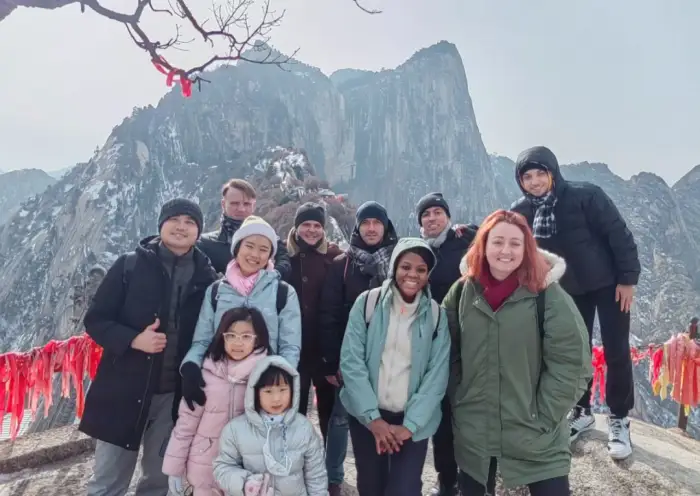
Mount Hua is known for its steep paths and narrow ridges. Some parts feel almost vertical. The trails are famous for their danger, but also for the views. You can see the valleys spread out far below. Old Taoist temples sit on the cliffs. The place feels quiet even with visitors around. It’s one of those mountains that stay in your memory after you leave.
Suggested tour: 4 Days Xian Classic Tour with Mt. Huashan
Mount Tai (Taishan, Shandong Province)
- Location: Tai’an City, Shandong Province
- Elevation: about 1,545 m (Jade Emperor Peak)
- Ticket fare: ¥127 in peak season; ¥110 in low season
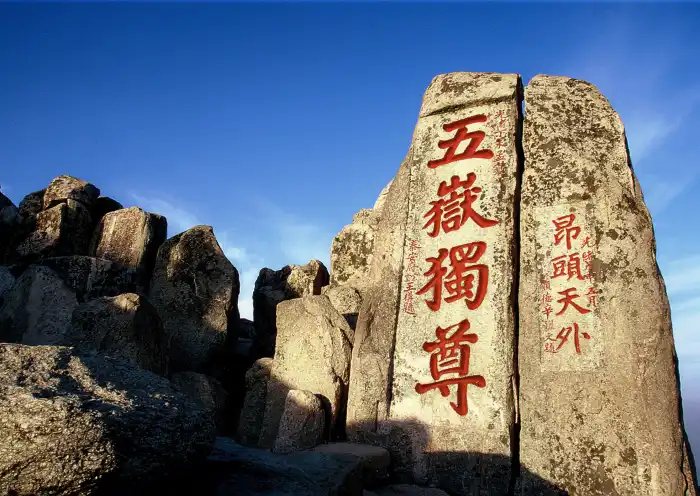
Mount Tai has been a sacred site for more than 3,000 years. Emperors once climbed it to pray to heaven. The old stone steps go on for miles, lined with pavilions and gates. The climb is long but steady. Many people start before dawn to catch the sunrise at the top. When the first light appears, the view is wide and calm.
Mount Heng (Southern Hengshan, Hunan)
- Location: Hengyang City, Hunan Province
- Elevation: about 1,300 m (Zhurong Peak)
- Ticket fare: ¥110 in peak season (May–Oct); ¥80 off-season (Nov–Apr)
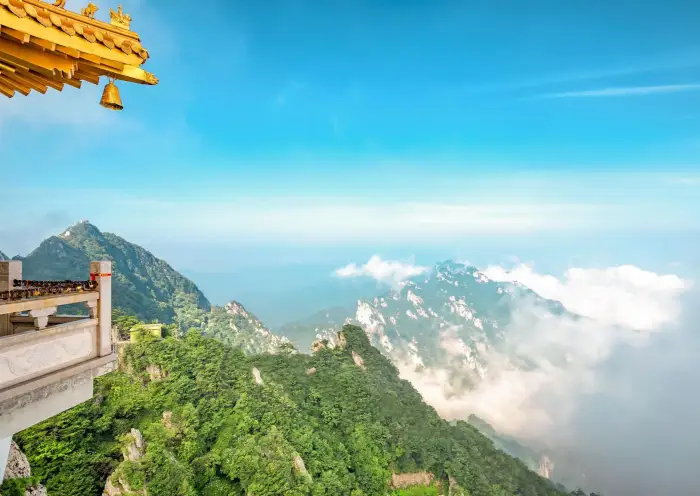
Mount Heng in Hunan is full of trees and small temples. The air is fresh and the trails are easier to walk. Many pilgrims come here, but it never feels crowded. Locals call it Nanyue, meaning “Southern Mountain.” It’s good for people who want quiet walks and time in nature. The place feels peaceful without being remote.
Mount Song (Songshan, Henan Province)
- Location: Dengfeng City, Henan Province
- Elevation: between 1,500 and 2,000 m, depending on the ridge
- Ticket fare: Shaolin Temple area ¥80; Songyang Scenic Area combo ¥79.9
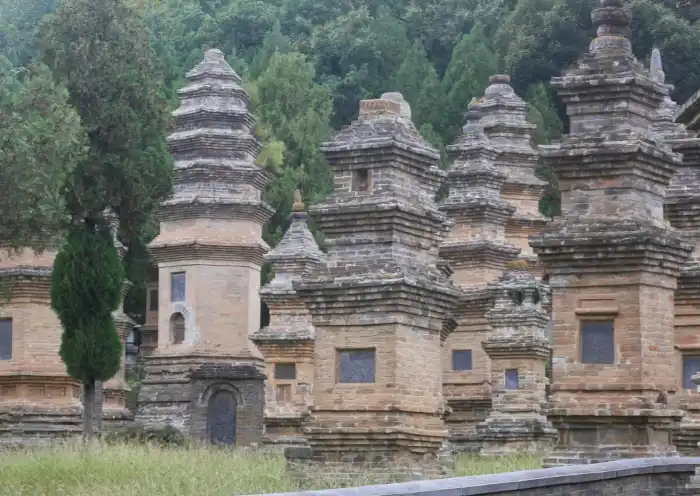
Mount Song is famous because of the Shaolin Temple. The temple sits at the base of the mountain. Monks still train there every day. Around it, you can visit old pagodas and stone halls. The paths are not hard, and you can walk between temples easily. Songshan is more about history than height. It’s a good mix of culture and simple mountain scenery.
Practical Tips for Visiting Buddhist Mountains in China
- Season matters. Spring and autumn are safest for weather and visibility.
- Dress simply. Cover shoulders and knees inside temple halls; remove hats when entering.
- Respect signs. If a hall is closed or marked no photos, follow instructions.
- Stay hydrated and fed. Bring water and modest snacks for long climbs.
- Use cable cars wisely. They save time but also cut into the walking experience.
- Watch belongings. Some mountains have mischievous monkeys or crowded temples.
- Take local transport. Trains and regional flights connect most hubs; buses fill the last leg.
- Be mindful at shrines. Bow if others bow; stand back during rituals.
FAQs about Buddhist Mountains in China
Which mountains are the four sacred Buddhist peaks?
Mount Wutai, Mount Emei, Mount Putuo, Mount Jiuhua.
Which Bodhisattva corresponds to each?
- Wutai — Manjusri (wisdom)
- Emei — Samantabhadra (practice)
- Putuo — Avalokitesvara / Guanyin (compassion)
- Jiuhua — Ksitigarbha (vows)
Is Mount Emei worth the trip?
Yes. It’s a good mix of nature, religious culture, and manageable trails.
Do I need to be Buddhist to visit?
No. Most sites welcome tourists. Respect and modest dress are the main requirements.
Join China Xian Tour for In-depth Exploration of China’s Famous Mountains
These ancient mountains offer more than stunning views. They invite you to slow down and step into a quieter rhythm. Walk paths smoothed by generations. Sit in a temple courtyard as bells echo, and wake at dawn to pure stillness. For centuries, these peaks have drawn travelers seeking something constant in a changing world.
Let China Xian Tour help you experience this yourself. With local guides, you’ll see more than scenery. You’ll feel the soul of these sacred spaces. Ready to walk with us?