

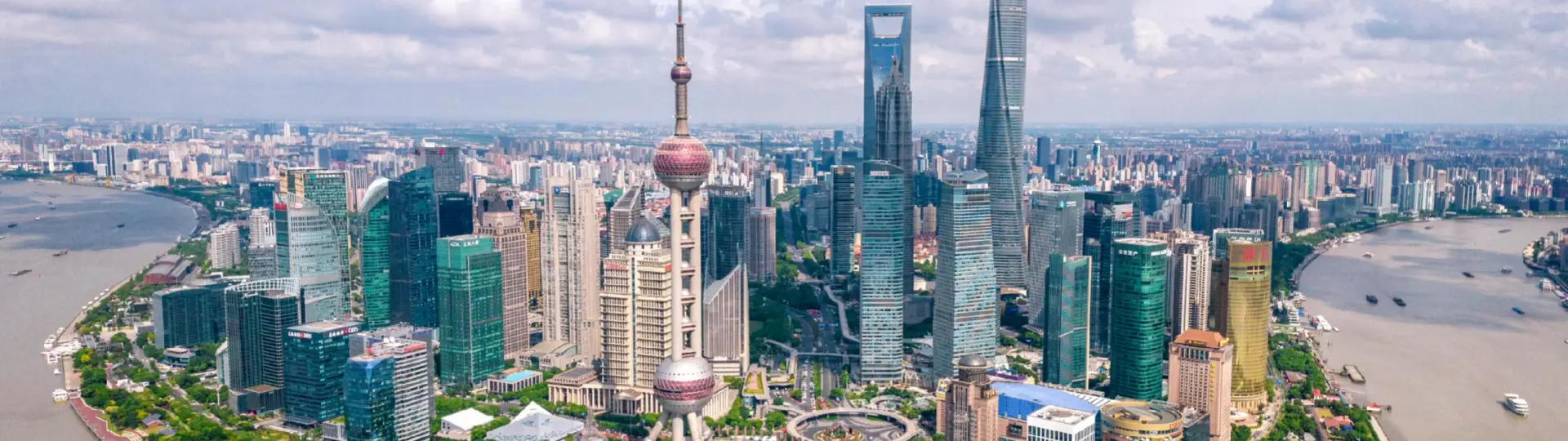
When thinking about Shanghai, the modern skyscrapers will come into mind. Most people can not believe this international metropolis was a small fishing village originally. And in fact, its abbreviation “Hu (沪)” also originates from the bamboo fishing tools used by the ancient fishermen, which is pronounced the same as the character.
You must be curious about how this small fishing village has grown into such a prosperous big city that is famous all over the world. Now, follow this article to learn about the history and culture of Shanghai. I believe after reading this article, you will enjoy a more in-depth and unforgettable experience during your Shanghai tour.
Content Preview
- What Makes Shanghai Unique?
- Early History of Shanghai
- Modern Shanghai: Growth and Transformation
- Cultural Heritage in Shanghai
- Shanghai Food Culture and Local Cuisine
- Essential Shanghai Travel Tips
- FAQs about History and Culture in Shanghai
- Explore Shanghai’s History and Culture with China Xian Tour
What Makes Shanghai Unique?
Nowadays, Shanghai plays an irreplaceable role as China’s financial center and international economic, financial, trade and shipping center. From Pudong New Area to pilot free trade zone, Shanghai is always the pioneer in China’s revolution. Besides, it is also the birthplace of the Communist Party of China, so it has witnessed and participated in many major historic events since modern China.
In modern Shanghai, the Chinese Concession, the International Settlement and the French Concession coexist here. Through years of development, Shanghai culture has perfectly combined Chinese culture with European and American cultures, forming an open, innovative and inclusive urban character. This integration has continued to now, enabling Shanghai to absorb advanced global elements while making creative transformations and forming a unique and charming modern urban culture.
Early History of Shanghai
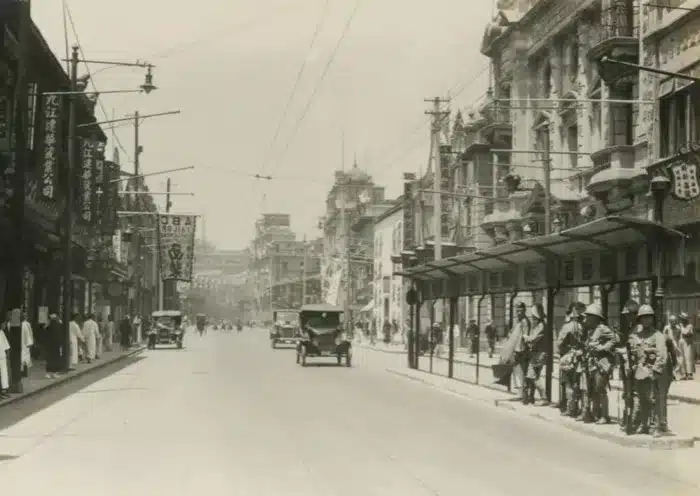
It is said that during the Spring and Autumn and Warring States Periods, Shanghai was already the fief of an official. From Tang to Yuan Dynasties, it transformed from Huating County to Shanghai Town. In 1292, it was established as a county formally. Thanks to its location in the Yangtze River delta, Shanghai port was basically formed in Song Dynasty and it gradually became an important foreign trade port in the region.
Till 1685, the Qing government established a customs office in Shanghai. By the middle of the 19th century, Shanghai had become a bustling port, where numerous merchants started and developed their own businesses. Its shipping routes have connected major ports along the north and south coasts as well as the Yangtze River.
The Influence of Foreign Powers
Since Shanghai was opened as a port in 1843 because of the Treaty of Nanjing, England, America and France all set concessions here one by one. Finally, Shanghai became an international settlement. Though it is a disgraceful history in modern China, objectively speaking, Shanghai had become a window for the introduction of modern civilization at that time. And the foreign investment and development of foreign trade made Shanghai an important economic and financial center in the Far East in a short time.
To learn about this period of Shanghai history, the Bund is the best witness, especially the complex of architecture from all over the world standing here. There are 52 classic buildings in various styles, such as the Neoclassicism, Renaissance, Baroque and Gothic. And visiting the Bund has been one of the top things to do in Shanghai.
Different Cultures in Shanghai
Due to its development history, Shanghai culture is also very abundant, including the following seven types.
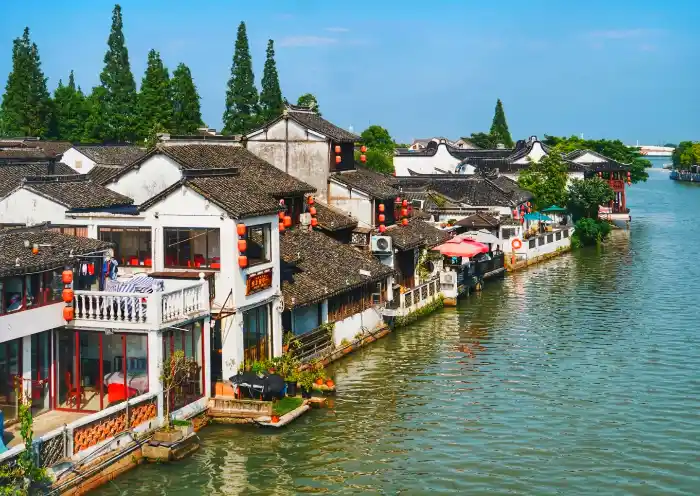
- Traditional Chinese Culture: It is mainly featured by the culture of south China and profound history, which is displayed through the classic gardens and folk arts like farmers’ To experience it, tourists can pay a visit to Yu Garden and Zhujiajiao Water Town.
- Western Influence (Colonial Legacy): The various western architectures in the Bund are the witness to Shanghai as the international settlement.
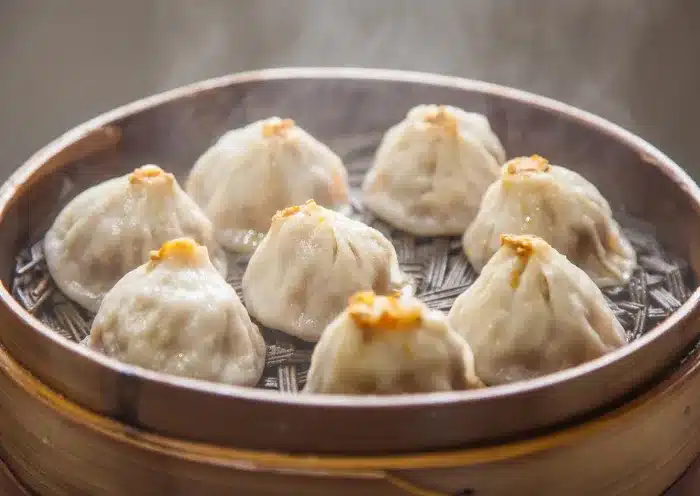
- Shanghainese (Local) Culture: Based on the south China culture, it integrates immigrant cultures from many places and forms the unique local culture. Try the local Xiaolongbao and experience the common life in the City God Temple. >> Also see Top Noodle Dishes in Shanghai
- Jews in Shanghai: During the World War II, Shanghai was the shelter for plenty of Jews. The Shanghai Jewish Refugees Memorial Hall is the best place to explore the history.
- Hakka Influence: The Hakka has played an important role in many major historic events in Shanghai in modern China. There are many rich Hakka cultural activities and foods till now.
- Haipai Culture: Haipai culture is regarded as the essence of Shanghai culture, which means all-inclusive. In aspects of architecture, art and lifestyle, it combines several elements like the south China culture and Western culture. So its characteristics include openness, innovation and diversity. The strong contrast between the historical buildings along the Bund and the modern skyline of Lujiazui is the most representative.
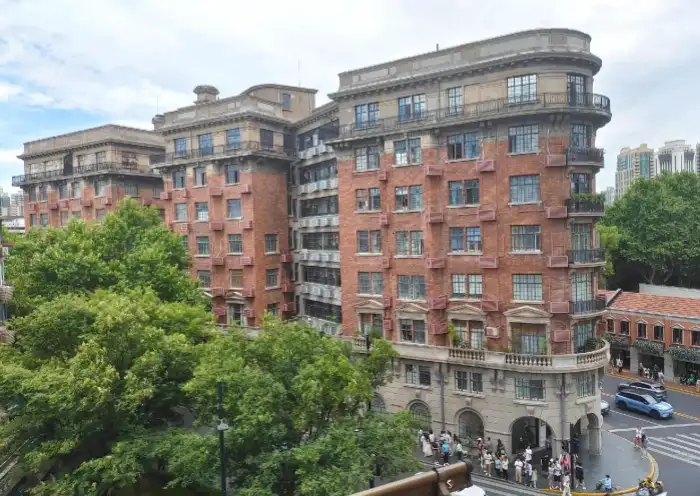
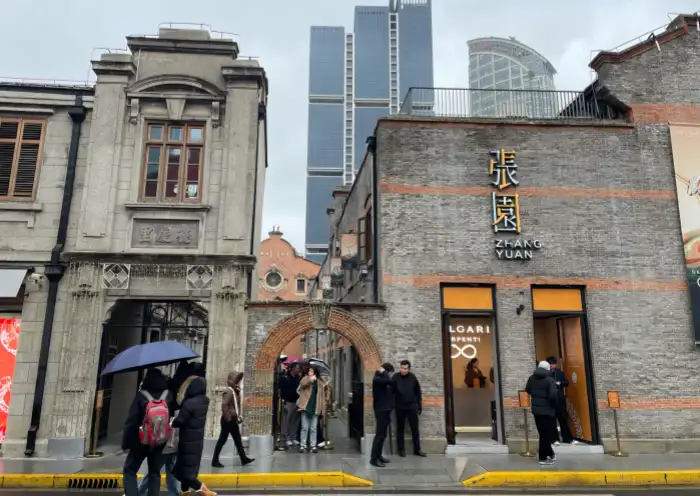
- Shikumen Culture: Shikumen is a unique residence in Shanghai. Its architectural style combines Chinese and Western elements, symbolizing the traditional lifestyle of Shanghai citizens and showing a strong urban life atmosphere. You can find it in Tianzifang.
Visiting Shanghai’s museums is a good way to glimpse into its diverse cultures and rich history.
Modern Shanghai: Growth and Transformation
In the early period of the reform and opening up in 1980s, Shanghai was a rear guard, which provided stable financial and industrial support for the reform pilot. In 1990, a turning point appeared in the history of Shanghai. A major decision was made this year, that is to develop and open up the Pudong New Area. Since then, Shanghai has transformed from a rear guard to a pioneer. Lujiazui Financial and Trade Zone, Waigaoqiao Free Trade Zone, Jinqiao Export Processing Zone and Zhangjiang Hi-Tech Park were established successively. Gradually, modern service industry has become the main economic support instead of industry.
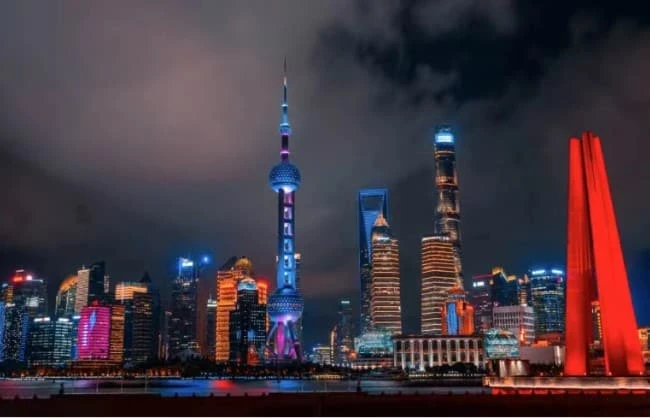
Besides, the construction of the three skyscrapers in Lujiazui, Jin Mao Tower, World Financial Center and Shanghai Tower, is the most direct proof of the development of Shanghai. And the Shanghai World Expo held in 2010 showed its modernization and internationalization to the world.
In terms of life, the rise of local designs and the influx of international brands have made Shanghai a source of fashion trends. As for food, besides local food, it is also easy to find delicacies from all over the world, as well as a variety of innovative dishes. The lifestyle in Shanghai is also diverse now. Tourists can experience both fast-paced business life and a leisurely time full of the petty bourgeois. And you can appreciate not only the high art in art galleries and concert halls, but also the trendy culture in streets.
Cultural Heritage in Shanghai
Yu Garden
- Location: 168, Fuyou Road, Huangpu District, Shanghai
- Opening hours:09:00 – 16:30, closed every Monday (except national holidays)
- How to get there: Take metro line 10 or 14 to Yuyuan Station, and then walk there in about 8 minutes.
Yu Garden is a private garden built by an official for his father in Ming Dynasty. The implied meaning of its name is that he hopes his father can enjoy the old age in peace. In this 2-hectare garden, there are more than 40 pavilions, towers, rockeries and pools, etc. The Great Rockery here is the largest and most exquisite yellow stone rockery that still exists in the regions south of the Yangtze River. Besides, the Wanhua Chamber, Huijing Tower, and Nine-zigzag Bridge are all landmarks of the garden. Now, it is renowned as the representative piece of Jiangnan gardens.
The Bund
- Location: From Waibaidu Bridge to Shiliupu Pier, Zhongshan Dongyi Road, Huangpu District, Shanghai
- Opening hours: All day, the night lights are on from 19:00 – 23:00 in summer and 18:00 – 22:00 in winter.
- How to get there: First, arrive at East Nanjing Road station by metro line 2 or 10, and then walk east for about 10 minutes to get there.
If you want to know what Shanghai is known for, then The Bund is the must-visit scenic spot. The architectures standing on both banks of Huangpu River witness the history of Shanghai. The 52 ancient buildings on the west of The Bund show various architectural styles, including Classical style, Neoclassical style, Renaissance style, Baroque style, Gothic style and so on. It is hailed as an exhibition of architecture from all over the world. While the modern skyline consisting of several skyscrapers in Lujiazui across the Huangpu River is the new city landmark. The strong contrast perfectly shows the integration of modernity and history in Shanghai.

Shanghai Museum
- Location: People’s Square Branch: No. 201, Renmin Avenue, Huangpu District, Shanghai; East Branch: No. 1952, Century Avenue, Pudong New Area
- Opening hours:People’s Square Branch: 09:00 – 17:00, closed on Mondays (except national holidays); East Branch: 10:00-18:00, closed on Tuesdays (except national holidays).
- How to get there: People’s Square Branch: Take metro line 1, 2, or 8 to People’s Square station (exit 1); East Branch: Take metro line 2 to Shanghai Science and Technology Museum station (exit 8).
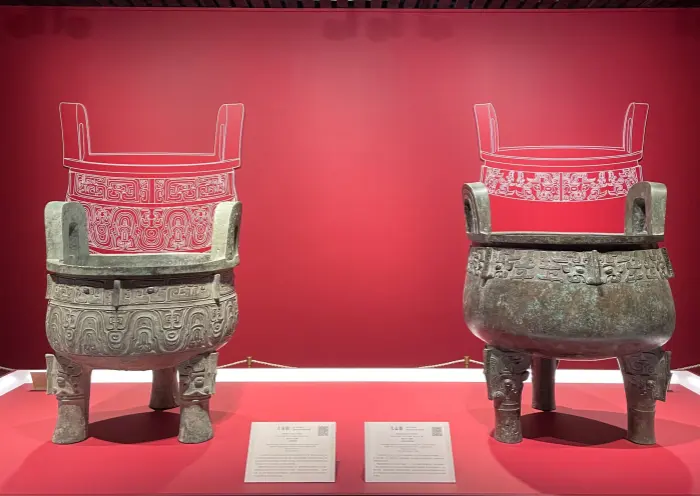
To learn about Shanghai’s history and culture, Shanghai Museum is definitely the top one among all the museums in Shanghai. Since its construction in 1952, the museum has already hosted over 1.02 million cultural relics with nearly 145,000 precious collections. And it covers 33 categories, including bronze, ceramics, calligraphy and painting, jade wares, etc. People’s Square Branch focuses on world civilization. Rotational exhibitions of its collections, cultural-themed exhibitions, and large-scale special domestic and international exhibitions are usually held here. And the permanent exhibition hall in the East Branch shows the most comprehensive display of the general history of ancient Chinese art.
Jing’an Temple
- Location: 1686, West Nanjing Road, Jing ‘an District, Shanghai
- Opening hours:07:30 – 17:00
- How to get there: Metro lines 2 and 7 can take you there directly and the station is Jing’an Temple Station.
Jing’an Temple is a historic Buddhist temple. Hidden in a bustling business center, it is a good place to understand the integration of Shanghai’s history and modernity. Its layout is very well organized, with temples in front and pagodas at the back. The main building materials are imported teak from Myanmar and copper tiles and the main ornaments are covered with gold. Under sunlight, the whole architecture is resplendent and magnificent. In the Muni Hall, there is a 3.87-meter-tall, 11-ton Sakyamuni Buddha carved from a single piece of Burmese white jade, which is regarded as the treasure of the temple.
The Former French Concession
- Location: Spans about 8 km wide in Huangpu District and Xuhui District, Shanghai
- Opening hours: All day, the scenic spots and stores vary a lot.
- How to get there: Tianzifang: Take metro line 9 to Dapuqiao Station (exit 1). Moller Villa: take metro line 2, 12, or 13 to Nanjing West Road Station (exit 12).
This Former French Concession is the earliest, largest and most prosperous one among the four French concessions in modern China. It is also a witness to Shanghai’s history. It used to be the most upscale residential area in old Shanghai. Influenced by the architectural style in Paris, the garden houses and rows of French Platanus stand neatly and elegantly on both sides of streets. Now, there are many cafes, bakeries and fashion stores. And it is very popular to wander along the street and step into one characteristic shop randomly. The famous scenic spots include Tianzifang , Moller Villa, etc.
City God Temple
- Location: 249, Fangbang Middle Road, Huangpu District, Shanghai
- Opening hours:08:30 – 21:00
- How to get there: Take metro line 10 or 14 to Yuyuan Station, and walk about 900 meters to arrive there.
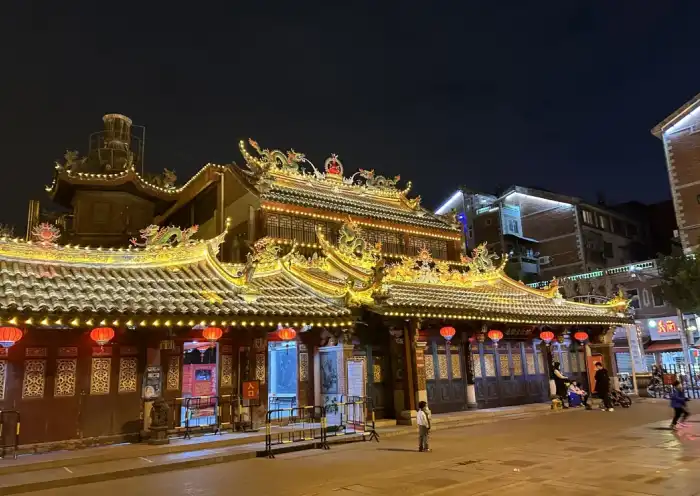
City God Temple is built to worship the god who protects the city and people living here. So many locals come here to pray for health, wealth, etc. The temple is in typical style of southern architecture with red walls and mud tiles. As a Taoist temple, it will always hold important celebrations in festivals. Around the temple is a famous business district where you can buy souvenirs and taste local snacks.
Zhujiajiao Water Town
- Location: 555, Kezhiyuan Road, Zhujiajiao Town, Qingpu District, Shanghai
- Opening hours: All day, the scenic spots usually open during 08:30 – 21:00.
- How to get there: Take metro line 17 to Zhujiajiao Station and leave from exit 1, then walk to the scenic area.
In Zhujiajiao Water Town, tourists can slow down the pace to feel its charm. In Song and Yuan dynasties, it was a market. Till Ming Dynasty, it had developed into an important business town. Now, the well-preserved Ming and Qing architectural complex has attracted many travelers. Standing on the Fangsheng Bridge, you can overlook the landscapes on both riverbanks, which will make you feel like travelling in a picture. The North Street is the best-preserved ancient street in Shanghai suburban area. And in Kezhi Garden, you can appreciate the delicate layout of Jiangnan gardens.
Recommended Shanghai Tours including the above cultural sites:
- 4 Days Shanghai Private Tour with Zhujiajiao Watertown Tour
- One Day Old Shanghai City Tour
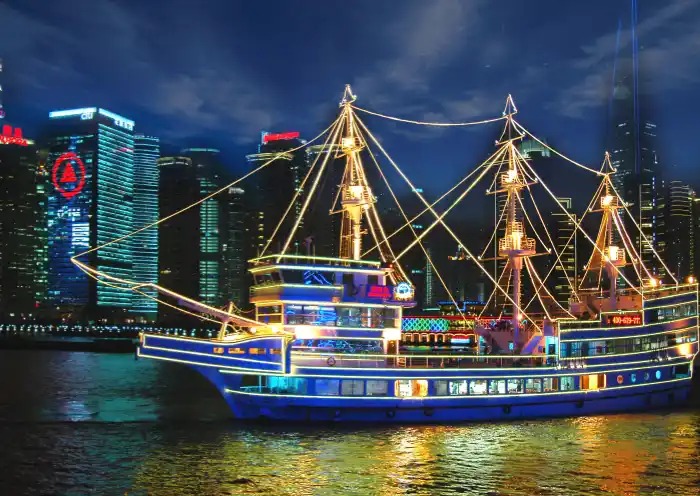
- Shanghai Night Food Tour with Huangpu River Cruise
- Shanghai Shuyanfu Dinner Show: Chinese Banquet, Dance & Music
Shanghai Food Culture and Local Cuisine
The most charming aspect of Shanghai food culture lies in its inclusive feature. Shanghai food has formed gradually based on its local flavor and integration of advantages of many regional cuisines. Many classic local dishes, like eight treasure duck, can be traced back to Suzhou cuisine. And Huiyang cuisine is an important part of high-end catering in Shanghai. Besides, the introduction of Western cuisine has led to the popularity of fusion cuisine, which also influences the coffee culture in Shanghai. Below are the unmissable local dishes.
- Xiaolongbao: It is famous for the thin skin, more filling and delicious broth.
- Pan-fried pork bun: Its bottom is golden and crispy, the top is sprinkled with sesame and scallions, and the meat filling is juicy.
- Braised pork in brown sauce: Made of streaky pork, this dish is fat but not greasy with a red color and a sweet taste.
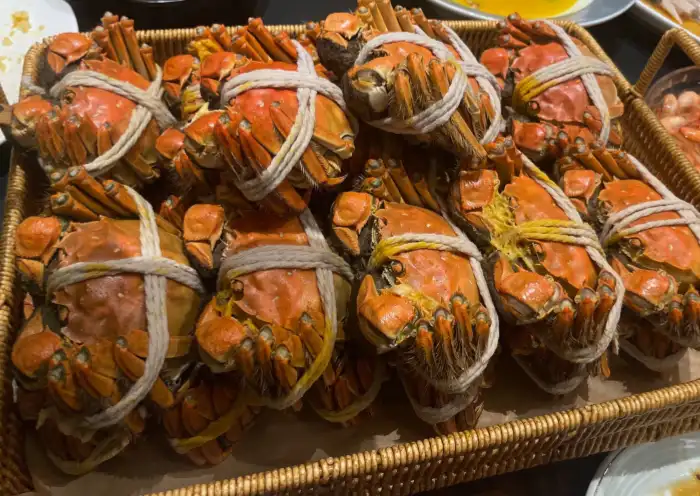
- Steamed Hairy Crab:A seasonal dish in autumn. After steaming, the natural and fresh flavor of the crab is best preserved.
Recommended Shanghai food tours:
- 6 Days East China Food Tour in Shanghai Suzhou Hangzhou
- Half Day Shanghai Food Tour with Zhujiajiao Water Town
Essential Shanghai Travel Tips
- Best Time to visit Shanghai: Spring and Autumn are the strongly recommended seasons, when the weather is most comfortable and pleasant. So it is very suitable to stroll in the city. In spring, you can enjoy the flowers, and in autumn, you can taste the hairy crabs.
- Cultural etiquette tips:1) The locals attach more importance to personal space and privacy, so do not take photos of others without permission; 2) It is an unwritten rule to queue up no matter you take a subway or go shopping; 3) In public places, do not speak loudly.
- Getting around: The subway has covered almost all hot scenic spots in the city, so it has been the first choice. Besides, the bus, taxi and on-line hailing service are important alternatives. To appreciate the landscapes of Huangpu River, the ferry is highly recommended. >> See more details about Shanghai Transportation
FAQs about History and Culture in Shanghai
Why is Shanghai different from the rest of China?
It is because of its fast speed of development, open and inclusive Haibai culture and vibrant city atmosphere.
What was Shanghai’s status before it became a major commercial port in the mid-19th century?
In Tang and Song Dynasties, the Qinglong Town located in today’s Qingpu District was already an important port. In Ming Dynasty, Shanghai was the cotton industry center. Till Qing Dynasty, it became an officially recognized trading port.
What is Shanghai well known for?
In brief, Shanghai is famous for the iconic modern skyline and the Bund, the charm of diverse cultural integration and exquisite cuisine and life. Besides, it is the highland of cutting-edge innovation and industry and an outstanding economic and open hub.
Why do tourists go to Shanghai?
For tourists, the core of Shanghai’s attraction is the unique integration of its stunning urban landscapes, profound historical and cultural heritages, and cutting-edge international vitality
What is the historical significance of the Bund (Waitan)?
It used to be a symbol of China’s humiliating history, but also became a financial center in the Far East. The various foreign architectures there and skyscrapers in Lujiazui show the development of Shanghai.
What food is Shanghai famous for?
The classic snacks are Xiaolongbao, pan-fried pork bun, spare ribs with rice cakes, etc. And the famous local dishes are braised pork in brown sauce, sliced cold chicken, hairy crab and more. As for pastries and desserts, pork mooncakes, butterfly cookies and pear-syrup candy are well-known.
What role did Shanghai play as a refuge for Jewish people during World War II?
During that period, Shanghai was one of the few cities in the world that could be entered without a visa. So it was the only hope for many Jews. From 1933 to 1941, about 30,000 Jewish refugees gathered here. And the locals shared food and provided shelters for them. So it is renowned as the “Oriental Noah’s Ark”.
Explore Shanghai’s History and Culture with China Xian Tour
Shanghai is not just a famous international metropolis, its profound history and diverse culture are also worth exploring. Follow China Xian Tour, we will tailor a Shanghai tour based on your needs, meanwhile including the historic sites and modern landmarks. During the tour, our guide will introduce the history and culture of Shanghai, so that you can immerse yourself in both the ancient and modern charm of the city. So do not hesitate to contact us.