


China is one of the world’s most captivating travel destinations which offer you an unparalleled experience as it blends ancient traditions and cutting-edge modernity in every heartbeat of the nation. With 5,000+ years of continuous civilization, 56 ethnic groups, and landscapes ranging from Himalayan peaks to tropical islands, every traveler can find their unique adventure here.
Highly-developed modern infrastructure like the world’s largest high-speed rail network makes exploring surprisingly convenient. Safety standards in tourist areas are excellent, and English signage in major cities and basically all public place like train/subway stations makes traveling around much easy. All of these precious identities have made China a good place to visit. Whether you call yourself a history buff, foodie, or nature lover, here are 15 compelling reasons to visit China on your next trip.
Content Preview
- 1. Impressive History and Ancient Heritage
- 2. A Culinary Paradise
- 3. Breathtaking Natural Masterpieces
- 4. Experience Ethnic Diversity
- 5. Marvel at Modern Engineering
- 6. Meet Giant Pandas
- 7. Vibrant Festivals and Celebrations
- 8. Trace the Ancient Silk Road
- 9. Living Craft Traditions
- 10. Affordable Luxury Experience
- 11. Convenient Transportation
- 12. Rich and Unique Tea Culture
- 13. Family-Friendly
- 14. Wander Ancient Towns
- 15. Feel Heartfelt Hospitality
1. Impressive History and Ancient Heritage
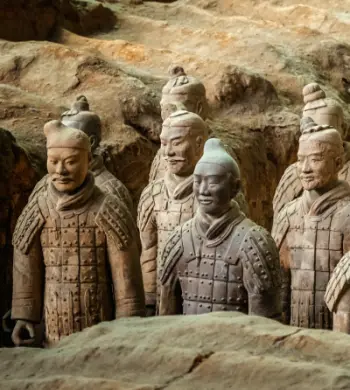
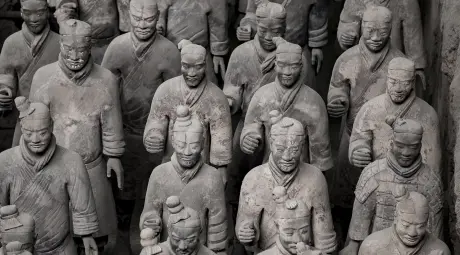
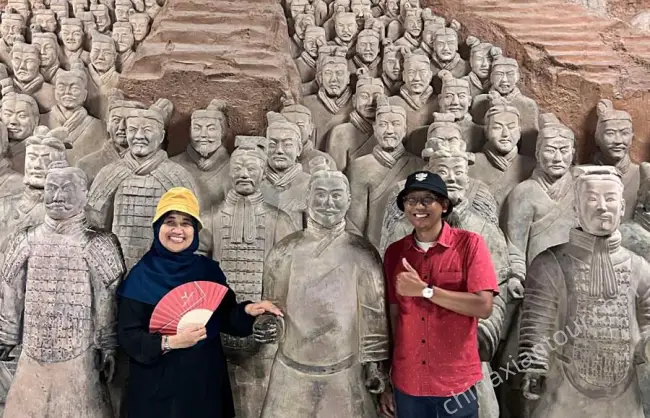
Speaking of reasons to have a China tour, the most important one emerges in most people’s mind would be its thousands years of history. China’s ancient sites aren’t just relics – they’re portals to dynasties that shaped China’s and even global civilization. While walking among the new and modern buildings, you’re also walking through histories hide in the Great Wall, which stretches over 21,000 km across mountain ridges, and Xi’an’s Terracotta Army, an attraction features 8,000 life-sized soldiers guarding an emperor’s tomb since 210 BCE. Unlike some Europe’s reconstructed castles, many Chinese historical sites maintain original materials and architectural techniques, so that they can serve as a testament of this unbroken civilization.
Ten of the Most Popular Historical Attractions:
Name (English) |
Name (Chinese) |
Location |
Period of Existence |
Highlights |
The Great Wall of China |
万里长城 |
Beijing, Hebei, Shanxi, etc. |
7th century BC – Ming dynasty |
Iconic defense wall with scenic mountain views. |
Terracotta Army |
兵马俑 |
Xi’an, Shaanxi |
3rd century BC (Qin Dynasty) |
Life-sized warrior statues guarding a tomb. |
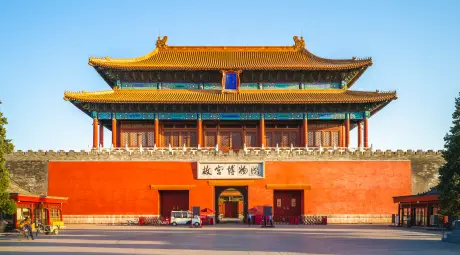
The Forbidden City |
故宫(紫禁城) |
Beijing |
1420 – 1912 (Ming–Qing) |
Largest imperial palace; now a museum. |
Mogao Caves |
莫高窟 |
Dunhuang, Gansu |
4th – 14th century |
Buddhist murals and sculptures in desert caves. |
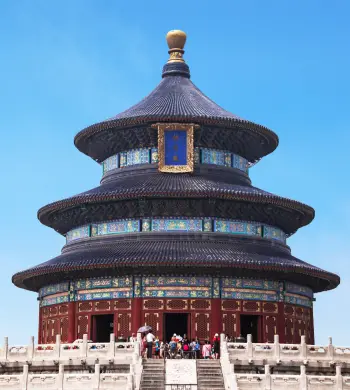
Temple of Heaven |
天坛 |
Beijing |
Built in 1420 (Ming Dynasty) |
Imperial altar with unique circular design. |
Summer Palace |
颐和园 |
Beijing |
Built in 1750 (Qing Dynasty) |
Classic Chinese gardens with lakes and halls. |
Potala Palace |
布达拉宫 |
Lhasa, Tibet |
7th century; rebuilt in 17th c |
Tibetan Buddhist landmark on a hillside. |
龙门石窟 |
Luoyang, Henan |
5th – 12th century |
Thousands of Buddha carvings in cliffs. |
|
乐山大佛 |
Leshan, Sichuan |
Completed in 803 AD (Tang) |
Massive cliffside Buddha near river junction. |
|
平遥古城 |
Shanxi Province |
Established in 14th century |
Preserved Ming-Qing walled city. |
2. A Culinary Paradise
Chinese food culture varies wildly across regions: Sichuan’s mouth-numbing spicy hotpot, Cantonese dim sum artistry, Peking duck‘s crispy perfection, and Xi’an’s savory lamb paomo, all of them are distinct and delicious. Street food culture thrives like always – try jianbing (savory crepes) for breakfast or spicy kebabs from night markets. If you’re interested, you can join the popular food tours in Chengdu or Guangzhou offer hands-on cooking classes with local chefs.
Eight Great Cuisines of China:
Cuisine (English) |
Cuisine (Chinese) |
Region |
Key Characteristics |
Signature Dishes |
Cantonese Cuisine |
粤菜 |
Guangdong |
Light, fresh, slightly sweet; focuses on natural flavor |
Dim Sum, Char Siu, Steamed Fish |
Sichuan Cuisine |
川菜 |
Sichuan |
Bold, spicy, numbing (mala); lots of chili and peppercorn |
Kung Pao Chicken, Mapo Tofu |
Shandong Cuisine |
鲁菜 |
Shandong |
Salty, crispy, hearty; strong in soups and seafood |
Sweet and Sour Carp, Dezhou Braised Chicken |
Jiangsu Cuisine |
苏菜 |
Jiangsu |
Light, slightly sweet, elegant presentation |
Lion’s Head Meatballs, Nanjing Salted Duck |
Zhejiang Cuisine |
浙菜 |
Zhejiang |
Fresh, mellow, delicate; emphasizes seafood |
Dongpo Pork, West Lake Vinegar Fish |
湘菜 |
Hunan |
Hot, sour, aromatic; uses fresh chili and garlic |
Chairman Mao’s Pork, Steamed Fish Head with Chili |
|
闽菜 |
Fujian |
Light, savory, umami-rich broths; seafood-heavy |
Buddha Jumps Over the Wall, Fish Ball Soup |
|
Anhui Cuisine |
徽菜 |
Anhui |
Earthy, rich, slow-cooked; uses wild herbs and mountain ingredients |
Braised Turtle, Stewed Soft-shell Turtle with Ham |
3. Breathtaking Natural Masterpieces
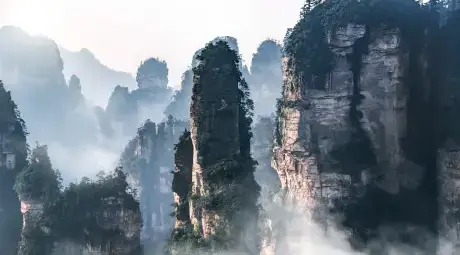
China’s landscapes are wild and diverse. From the rainbow mountains of Zhangye Danxia to the fairy-tale karsts of Guilin, China’s landscapes defy imagination but present a real wonderland to all the people. On a China tour, you’ll see the pinnacles of Zhangjiajie National Park tower over misty forests, and unveil the Yellow Mountains (Huangshan) through ancient pines that cling to granite peaks. If you wish to be inspired by raw power, visit Tibet’s Everest Base Camp or the thundering Tiger Leaping Gorge. In China, every horizon whispers stories of Earth’s primal past, inviting wanderers to witness its untamed beauty.
Ten of the Most Popular Natural Attractions:
Natural Site (English) |
Natural Site (Chinese) |
Location |
Highlights |
Key Appeal |
Zhangjiajie National Forest Park |
张家界国家森林公园 |
Hunan Province |
Sandstone pillars, Avatar mountains |
Stunning alien-like landscapes |
九寨沟 |
Sichuan Province |
Multicolored lakes, waterfalls |
Fairyland scenery, vibrant colors |
|
Huangshan (Yellow Mountain) |
黄山 |
Anhui Province |
Granite peaks, sea of clouds |
Classic inspiration for Chinese art |
Guilin & Li River |
桂林及漓江 |
Guangxi Province |
Karst mountains, river cruises |
Iconic Chinese postcard scenery |
Mount Everest (Qomolangma) |
珠穆朗玛峰 |
Tibet/Nepal border |
World’s highest peak |
Extreme trekking and mountain views |
云南石林 |
Yunnan Province |
Limestone formations |
Unique karst geology |
|
青海湖 |
Qinghai Province |
Saltwater lake, bird migration |
Largest lake in China, spiritual aura |
|
峨眉山 |
Sichuan Province |
Cloud sea, ancient temples |
Sacred Buddhist mountain with views |
|
喀纳斯湖 |
Xinjiang |
Alpine scenery, turquoise waters |
Pristine, less-crowded natural beauty |

4. Experience Ethnic Diversity
China’s 55 ethnic minority groups each preserve distinct traditions, crafts, and customs, greatly showing the nation’s cultural richness. Travelers can witness how these diverse cultures shape daily life across China’s landscapes.
Yunnan has a lot of ethnic minorities, you may want to join Bai women to stitch tie-dyed fabrics in Dali, and you can also try the 10kg hand-crafted silver headdresses in Miao village in Guizhou. Tibet’s monasteries echo with chanting monks, and Xinjiang‘s Uyghur bazaars overflow with raisins and naan bread. Time your visit for festivals like the Dai Water Splashing Festival (April) or Mongolian Naadam wrestling (July).
8 of the Most Popular Festivals of Ethnic Minorities:
Festival (English) |
Festival (Chinese) |
Ethnic Group |
Time |
Main Location |
Highlights |
Water Splashing Festival |
泼水节 |
Dai |
Mid-April (3–5 days) |
Xishuangbanna, Yunnan |
Water fights, blessing rituals, folk dancing |
Torch Festival |
火把节 |
Yi |
Late June or July (Lunar 24th/25th) |
Liangshan, Sichuan |
Torch parades, wrestling, horse racing |
Nadam Fair |
那达慕大会 |
Mongol |
July–August (varies) |
Inner Mongolia Grasslands |
Horse racing, archery, wrestling |
Third Month Fair |
三月三歌节 |
Bai |
Lunar March 15 |
Dali, Yunnan |
Folk songs, local bazaar, ethnic performances |
Sisters’ Meal Festival |
姐妹节 |
Miao |
Around April (Lunar 3rd month) |
Guizhou (Taijiang, Jianhe) |
Rice gift exchange, courtship traditions |
Tiaohua Festival |
跳花节 |
Miao |
Lunar February (varies) |
Guizhou |
Singing, flower dances, matchmaking |
Zhuanshan Festival |
转山节 |
Tibetan |
Lunar April 15 |
Tibet (Mt. Kailash, Yunnan) |
Pilgrimage, mountain circling, spiritual chants |
Panwang Festival |
盘王节 |
Yao |
Lunar October 16 |
Guangxi, Hunan, Guangdong |
Ancestral worship, music, ethnic costumes |
5. Marvel at Modern Engineering
China’s engineering legacy is a perfect testament of the fuse of ancient wisdom and futuristic innovation. It embrace a unique ability to honor tradition while getting progress. Historic masterpieces like the 1,400-year-old Zhaozhou Bridge, a stone marvel engineered with precise arches to withstand floods, can give people a glimpse of early technical brilliance.
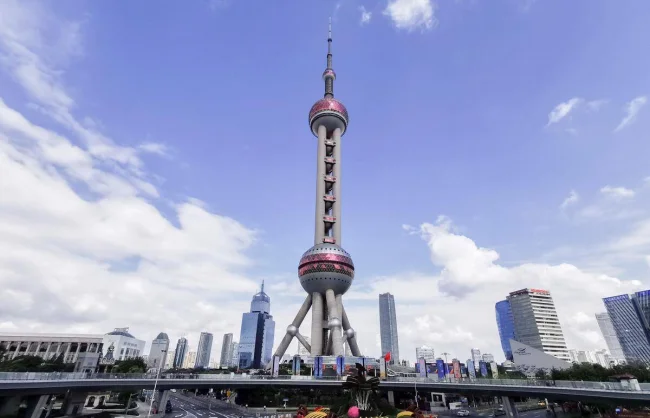
Meanwhile, modern skyscrapers such as Shanghai Tower, the tallest building in China, redefine urban skylines. It reaches heights over 600 meters with cutting-edge designs that blend sustainability and luxury. Other mega-projects like the Hong Kong-Zhuhai-Macau Bridge—a 24-mile engineering designed to connect cities across the Pearl River Delta—demonstrate a brave vision of people, using advanced materials and human work to conquer marine challenges.
Even nature-defying creations like the Three Gorges Dam and high-speed rail networks crisscrossing the whole country from urban areas to rural regions, revealing a culture that mix people’s ambition with a pursuit of pragmatism. From earthquake-resistant ancient structures to AI-powered transit systems, China’s engineering achievements from the past to now, this reflects they values both heritage and forward momentum, inspiring global admiration for its ability to innovate without erasing its roots.
6. Meet Giant Pandas
Chengdu’s panda sanctuaries offer a unique blend that highlight wildlife interaction while unshakably following ethical responsibility, which reflects China’s commitment to protect one of its most important national treasures. Visitors can get the chance engage in several meaningful activities organized with guidance, like preparing bamboo for pandas or assisting staff in habitat maintenance.
Unlike traditional zoos, ethical reserves such as Bifengxia are semi-natural habitats where pandas can roam freely, climb trees, and learn survival skills in forested enclosures which designed to mimic the real wild conditions. These programs emphasize rewilding the pandas, professors will use radio collars to track pandas’ adaptation progress before potential release into protected reserves.

Observe giant pandas in a pristine forest habitat at Bifengxia Panda Base, then hike through a subtropical gorge filled with waterfalls, streams, and lush rainforest scenery.
7. Vibrant Festivals and Celebrations
China’s festivals blend ancient traditions with intense community joy. During Chinese New Year (Jan/Feb), there will usually be dragon dances in Beijing hutongs and fireworks over Victoria Harbour. Families will reunite and all join family activities such as dumpling-making and red envelope exchanges. The Mid-Autumn Festival (Sept) transforms cities into lantern wonderlands – try mooncakes filled with lotus paste or salted egg yolk while watching performances.
10 of the Most Important Traditional Chinese festivals
Festival (English) |
Festival (Chinese) |
Time |
Main Location |
Highlights |
Spring Festival (Chinese New Year) |
春节 |
Lunar Jan 1 (Late Jan–Feb) |
Nationwide |
Family reunion, fireworks, red envelopes |
Lantern Festival |
元宵节 |
Lunar Jan 15 |
Nationwide |
Lantern displays, tangyuan, lion dances |
Qingming Festival (Tomb-Sweeping Day) |
清明节 |
April 4–6 |
Nationwide |
Grave cleaning, ancestor worship, spring outings |
Dragon Boat Festival |
端午节 |
Lunar May 5 |
Nationwide (esp. south) |
Dragon boat races, eating zongzi |
Qixi Festival (Chinese Valentine’s Day) |
七夕节 |
Lunar July 7 |
Nationwide |
Romance traditions, star-crossed lovers’ tale |
Mid-Autumn Festival |
中秋节 |
Lunar Aug 15 |
Nationwide |
Mooncakes, family gatherings, moon gazing |
Double Ninth Festival |
重阳节 |
Lunar Sept 9 |
Nationwide |
Climbing mountains, honoring the elderly |
Laba Festival |
腊八节 |
Lunar Dec 8 |
Nationwide |
Eating Laba porridge, temple rituals |
Winter Solstice Festival |
冬至 |
Dec 21–23 |
Nationwide |
Family meals, dumplings (north), tangyuan (south) |
Hungry Ghost Festival |
中元节 |
Lunar July 15 |
Nationwide |
Offerings to spirits, paper money burning |
8. Trace the Ancient Silk Road
Traveling along the Silk Road immerses you in a 2,000-year-old tapestry of human connection, where camel caravans carried not just silk and spices, but languages, religions, and innovations between different empires. Begin in Xi’an (ancient Chang’an), the bustling eastern terminus, the route kept stretching further westward. At the Western Market, Tang Dynasty merchants once loaded rhubarb and lacquerware onto Bactrian camels. That’s why nowadays the excavations can reveal Sassanian glassware and Roman coins underfoot.
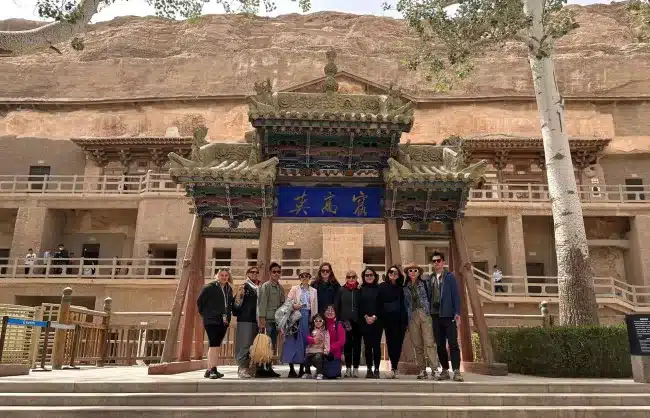
Journey 1,600km west to Dunhuang, a desert oasis where two Silk Roads converged. Here, the Mogao Caves safeguard 45,000㎡ of murals: Buddha figures draped in Persian fabrics, celestial musicians playing Central Asian lutes, and Taoist immortals painted over Uyghur inscriptions. The dry air preserved even the cobalt blue pigment, mined from Afghanistan.
Venturing deeper into Xinjiang to Turpan, Earth’s second-lowest depression. At Jiaohe Ruins, take a walk among adobe temples and cemeteries of a 2,300-year-old city-state. Going down into karez tunnels – an ancient underground irrigation system which can still water vineyards where locals dry grapes into raisins. Further west, Kashgar’s Id Kah Mosque echoes with calls to prayer, while Sunday markets keep buzzing with exchanges, a tradition for centuries: Kyrgyz felt hats for Khotan jade, steaming samovars traded beside Uyghur nan bread ovens.
9. Living Craft Traditions
China’s artisan heritage thrives in workshops where masters never give up preserving techniques passed down through generations. Time allows these once inexperienced to transform observation into participation. In Jingdezhen, the porcelain capital for over 1,700 years, you’ll shape clay alongside some fourth-generation potters working in the way unchanged since Ming Dynasty imperial kilns. Watch as cobalt oxide transforms into “blue-and-white” masterpieces in dragon kilns, then fire your own teacup, so that you can build a tangible connection to dynasties that once treasured these wares.
Travel to Suzhou, where silk embroidery artists split threads finer than human hair to “paint” landscapes with needles. Spend an afternoon in the Suzhou Embroidery Research Institute, to stitch lotus petals under guidance, learning how double-sided embroidery creates ethereal artworks with patterns like cranes taking flight on both sides of the silk.
Beyond these classics, you shall try to venture to Fujian’s tea terraces to hand-roll oolong leaves with growers, or join Miao batik artists in Guizhou learn why they have to sketch with molten wax before indigo dyeing—a 2,000-year-old resist technique. In Lhasa, Tibetan monks initiate visitors into grinding malachite together for sacred thangka paintings, each pigment symbolizing Buddhist cosmology. These crafts aren’t mere performances; they’re vanishing arts sustained by travelers’ engagement.
10. Affordable Luxury Experience
China redefines luxury travel as it can give tourists world-class experiences with an accessible prices, allowing people to enjoy the besr without straining their budgets. Five-star hotels like Shanghai’s Pudong Shangri-La, which offers iconic Bund views, costs from $150/night – a fraction of comparable New York or Tokyo accommodations. Beyond cities, immerse yourself in serenity at Nanjing’s hot-spring resorts, where private mineral pools and spa treatments start at $75.
For grand journeys, Yangtze River cruises have week-long suites with butler service and gourmet dining for under $1,200, some of the most worth-visit stops are the Three Gorges and Shibaozhai Pagoda. Culinary excellence shines at Michelin-starred venues, don’t forget to savor Peking duck banquets at Beijing Da Dong for $45/person or delicate Cantonese dim sum at Guangzhou‘s Jade River for $30. Even high-speed rail can provide you with a luxurious travel experience – business-class “soft sleeper” cabins from Beijing to Xi’an ($100) include complimentary meals and lounge access.
11. Convenient Transportation
The well-developed transportation infrastructure in China makes exploring its vast landscapes and dynamic cities easy and comfortable. The extensive high-speed rail (HSR) network is undoubtedly a distinguished highlights of the system. Spanning over 40,000 km, it boasts the largest and most extensively used of its kind in the world. “Fuxing Hao”, the most advanced high-speed train model, can consistently operate at speeds of 350 km/h, dramatically cutting travel times.
Take the train trip from Beijing to Xi’an as an example. Once an entire-day’s trip, the journey takes only 4.5 hours now. There are second-class, first-class, or business-class seats for you to choose from. Even second-class offers more space and comfort than economy airline seats, while first-class and business class provide enhanced luxury and relaxation.
Urban mobility within both China’s megacities and rather small regions is equally sophisticated and user-friendly. Extensive metro systems, exemplified by Shenzhen‘s modern network, provide clean, reliable, and frequent service. Designed with international visitors in mind, these systems feature comprehensive, clear English signage at stations and onboard, alongside contactless-payment integration.
China’s Major Public Transportation
Transportation Mode (EN/CH) |
Common Cities/Regions |
Key Features |
Typical Use Cases |
Subway / 地铁 |
Basically all major urban areas |
Fast, efficient, inexpensive |
Daily commuting and city sightseeing |
High-Speed Rail / 高铁 |
Nationwide, most of cities. (e.g., Beijing–Shanghai, Chengdu–Xi’an) |
Up to 350 km/h, modern, punctual |
Intercity travel across long distances |
Public Bus / 公交车 |
All cities and towns |
Extensive routes, low fares |
Local travel within cities |
Shared Bike / 共享单车 |
Nationwide |
App-based, convenient for short trips |
First/last mile transport, short city rides |
Didi (Ride-Hailing) / 滴滴出行 |
Nationwide |
App-based, various ride options |
Flexible rides, non-cash payment convenience |
12. Rich and Unique Tea Culture
In China, tea is not just a daily drink or refreshment—it’s a meditative art form that woven into philosophy and daily life. In Hangzhou, you can go with Longjing tea masters at dawn in misty plantations, where tender spring leaves are hand-plucked before sunrise. You can also learn the ancient “kill-green” roasting technique in iron woks, which is an essential process to transform leaves into emerald jewels.
Also, if you already rich knowledge reserves of Tea, try to discuss Chá Dào (茶道) with the masters, the Taoist principles of harmony in tea rituals. You can journey to Chengdu’s People’s Park, where elders practice kung fu tea ceremonies in normal daily life: swirling jasmine-scented blossoms in lidded bowls, pouring steaming streams from brass kettles to aerate the brew, and sharing wisdom like, “First sip bitter, second sweet, third brings clarity”
5 of the Best Traditional Chinese Tea
Tea Name (EN/CH) |
Origin (City/Region) |
Province |
Type |
Key Features |
West Lake Dragon Well / 西湖龙井 |
Hangzhou |
Zhejiang |
Green Tea |
Flat leaves, chestnut aroma, smooth taste |
Biluochun / 碧螺春 |
Dongting Mountain |
Jiangsu |
Green Tea |
Curly shape, floral and fruity aroma |
Huangshan Maofeng / 黄山毛峰 |
Huangshan |
Anhui |
Green Tea |
Slightly curled leaves, fresh and sweet |
Tieguanyin / 铁观音 |
Anxi |
Fujian |
Oolong Tea |
Floral fragrance, rich and lingering taste |
Da Hong Pao / 大红袍 |
Wuyi Mountains |
Fujian |
Oolong Tea |
Roasted aroma, bold and complex flavor |
13. Family-Friendly
A lot of Chinese attractions would combine hands-on discovery with educational purpose, making China an ideal travel destination for families with kids. In Xi’an, kids can make mini Terracotta Warrior replicas in workshops led by archaeologists, which can also teach them about Emperor Qin’s grand history and legacy. At Chengdu Panda Research Base, families can join sessions led by panda keepers to prepare bamboo meals and observe cubs tumbling in nurseries. Pair this activity with Sichuan cooking classes, where children can learn to make their own spicy “dandan noodles.”
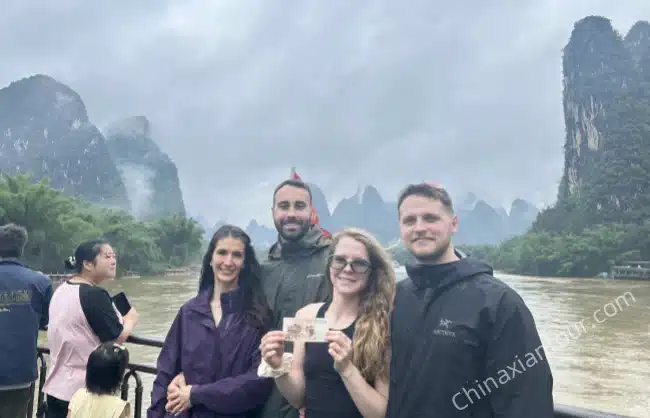
Shanghai’s Science and Technology Museum allows visitors to wonder with AI-powered robot guides and space station simulators, And In Guilin, the popular Li River Cruise on a bamboo raft takes people gliding past limestone peaks, with guides teaching kids how locals fish with cormorant birds.
14. Wander Ancient Towns
China’s ancient towns offer immersive tours into preserved local history, where centuries-old architecture, waterways, and traditions still thrive in daily life. Discover the old stories by wandering cobblestone alleys lined with Ming-era wooden homes, crossing arched stone bridges draped in lanterns, and witnessing artisans practicing silk-weaving or tea-roasting activities unchanged in time.
These living museums—hide in misty mountains, along canals, or behind fortified walls—carry the centries-old cultural heritage with community warmth. By staying overnight, travelers can experience authentic rituals like dawn tai chi sessions and night markets, connect yourself deeply with China’s enduring spirit beyond the daytime tourist crowds.
5 of the Most popular Ancient Towns in China:
Ancient Town (EN/CH) |
Province |
Established Era |
Key Features |
Wuzhen / 乌镇 |
Zhejiang |
Late Tang to Song Dyn. |
Picturesque canals, traditional folk culture |
Zhouzhuang / 周庄 |
Jiangsu |
Spring and Autumn Period |
Stone bridges, Ming–Qing residences, water town scenery |
Lijiang Old Town / 丽江古城 |
Yunnan |
Song–Yuan Dynasties |
Naxi culture, cobblestone streets, UNESCO World Heritage |
Pingyao Ancient City / 平遥古城 |
Shanxi |
Western Zhou Dynasty |
Ancient city walls, traditional finance center |
Fenghuang Ancient Town / 凤凰古城 |
Hunan |
Qing Dynasty |
Miao ethnic customs, riverside wooden houses |
15. Feel Heartfelt Hospitality
China’s most enduring and significant treasure lies in the profound kindness of its people – a hospitality that can transcend language barriers, and it also have the potential to transform your journeys into soulful exchanges. In bustling urban centers, it’s usual for locals to sketch maps on napkins for you, walk you to some hidden alleys that you’re struggling to reach, or even share umbrellas in sudden downpours.
Venture beyond cities, this warmth deepens into unspoken traditions: farmers will invite you to harvest lunches under persimmon trees, passing steaming jiǎozi (dumplings) into your hands as hospitality is floating in their blood and has been passed down through generations. Homestay grandmothers will mend your torn jackets by lamplight, while craftsmen pause work to teach children ancient knot-tying techniques – all without expecting reward.


